Peter Ryan
96.4K posts

Peter Ryan
@_PeterRyan
Research on economics, history, and tech @Ryan_Research | Special focus on Ireland


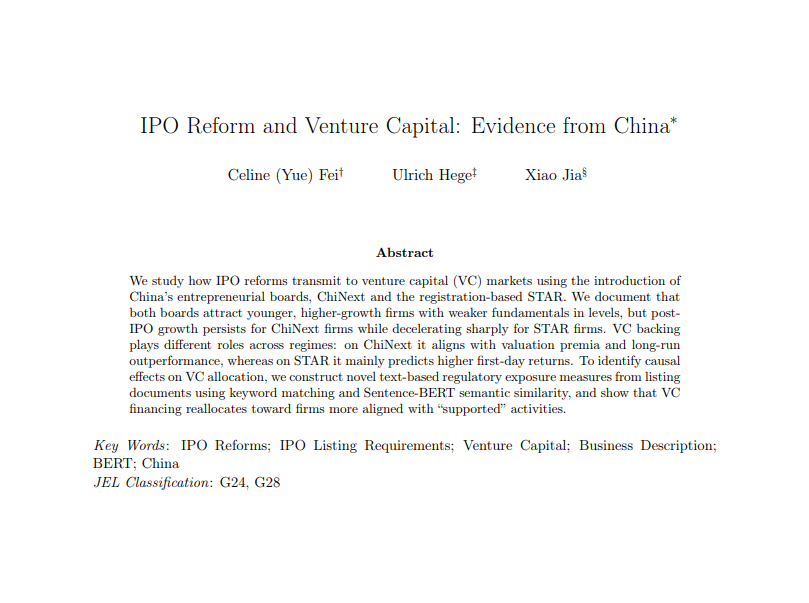
Beginning in 2009, China implemented a series of reforms aimed at encouraging high-growth technology companies to list on public markets earlier. As a result, younger tech companies have gained access to larger, cheaper pools of growth capital. This has contributed to stronger post-listing performance and more efficient allocation of venture capital. It is tempting to look at the outcome and wonder if the US would benefit from something similar, but the reforms largely brought Chinese public markets in line with their US equivalents. Today, the main source of divergence between the two, in terms of listing age, velocity, and subsequent performance, is the scale of private markets. In the US, where private markets are deeper, companies (especially top performers) are kept private for longer. Unfortunately, this erodes financial health and their long-term appeal to public investors. That said, there are still lessons to be learned, particularly from the ChiNext reform: Creating targeted listing categories for deeptech and biotech companies that allow them to list earlier (removing revenue or net income hurdles) based on the strength of their IP and technology could be a meaningful way to improve capital access for these sectors.


Yes, these platforms are negative sum. No money is magically created in the process, fees are extracted, and some people (insiders) win big. Implicitly, the vast majority of users are just dumb money to be exploited. It’s web3 tokenomics all over again.

it’s pretty wild that VCs poured billions into web3 and the category didn’t produce one breakout company

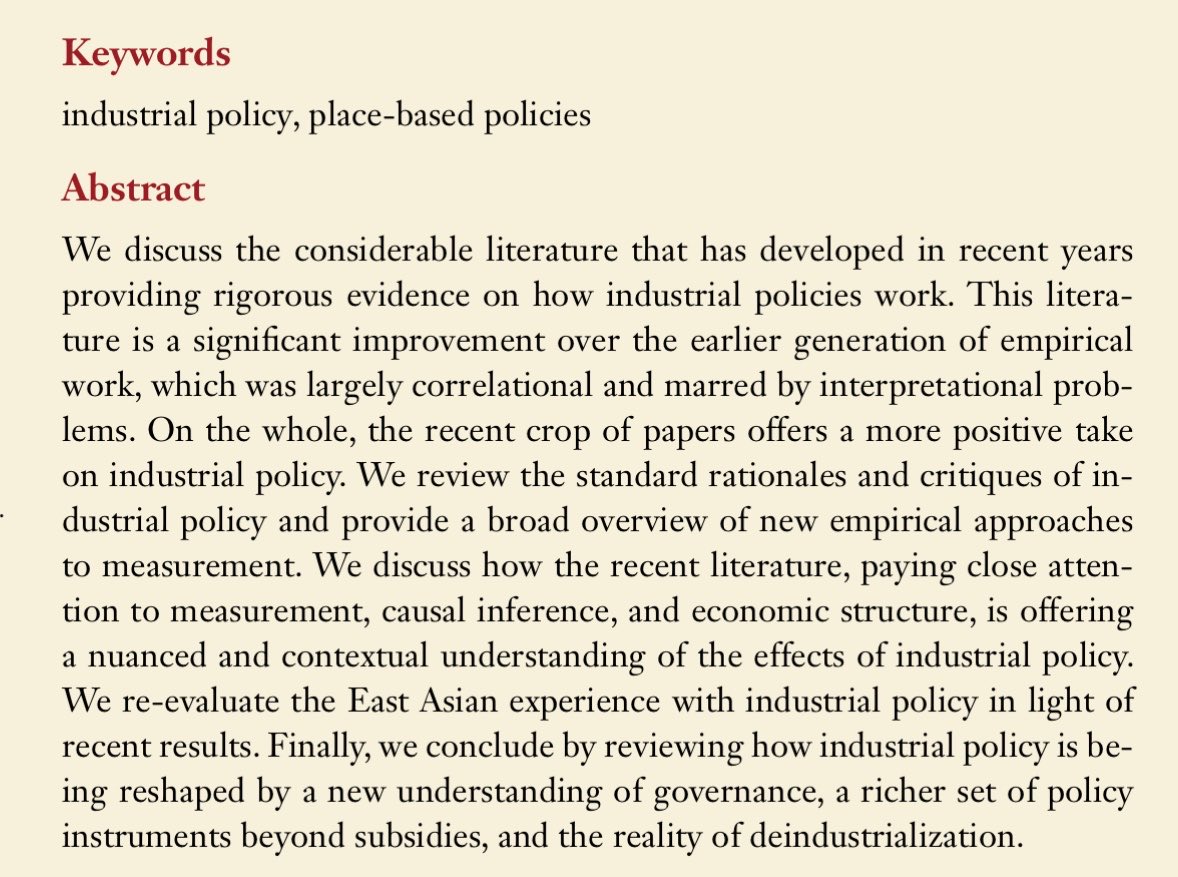
#IndustrialPolicy isn’t just about factories. It supports strategic activities across sectors like agribusiness, tourism, and professional services—key for development in today’s economy: wrld.bg/8KrQ50Yw4uG

Europe creates more new companies each year than the US — yet the US has built dozens of 100B+ companies in the last decades, while Europe has created ~0. No EU company founded in the last ~50 years has reached 100B+ at scale. Why? → Fragmentation of financial & regulatory systems How to fix it? → Unification → Capital Markets Union: connect Europe’s fragmented savings, pension funds, banks and investors into one deep pool of capital to fund scale → Single regulatory framework: one EU-wide company, tax, listing and compliance system so startups can scale across 450M consumers without rebuilding in 27 markets Act as a single economic bloc

📄 NOW ON THE BLOG Our President @joecguinan was invited to give the closing speech at the official launch of the Bohemian Cooperatives - a new not-for-profit building Community Wealth Building in Ireland. Read Joe's full remarks here 👉 democracycollaborative.org/blogs/building…

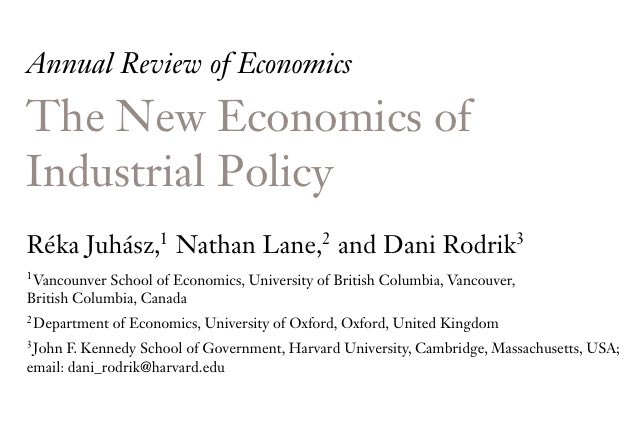
Some thoughts re: the profession’s so-called focus on RCTs and poverty versus industrial policy and growth, from someone who has hyper-fixated on this fact for some time. First it would help to read this review by Juhasz, Rodrik, & Lane, published in the Annual Review (1/n)


Since 2019, Spain doubled solar + wind capacity. Now electricity prices are some of lowest in EU. Ireland has increased RE capacity but all of this has been absorbed by DC growth. You can't talk about energy transition (including nuclear) in Ireland without talking about DCs.


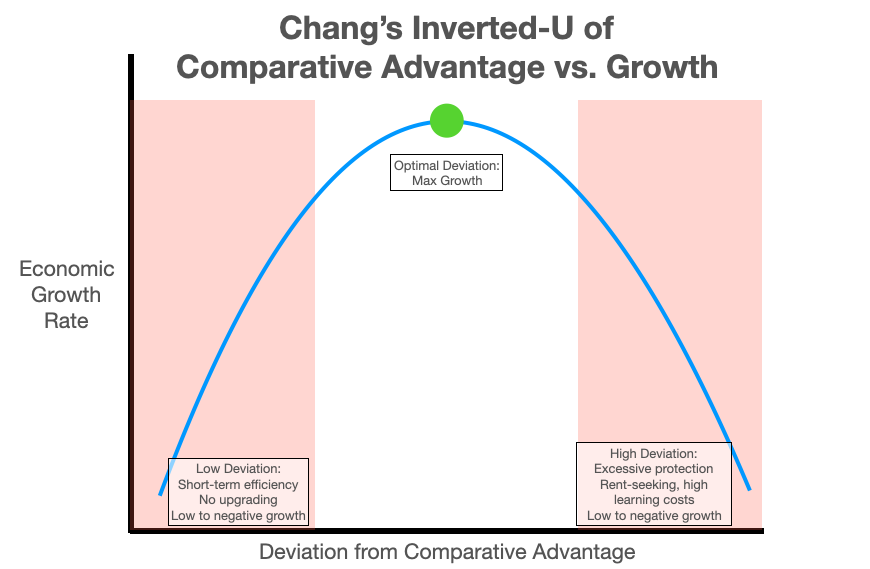
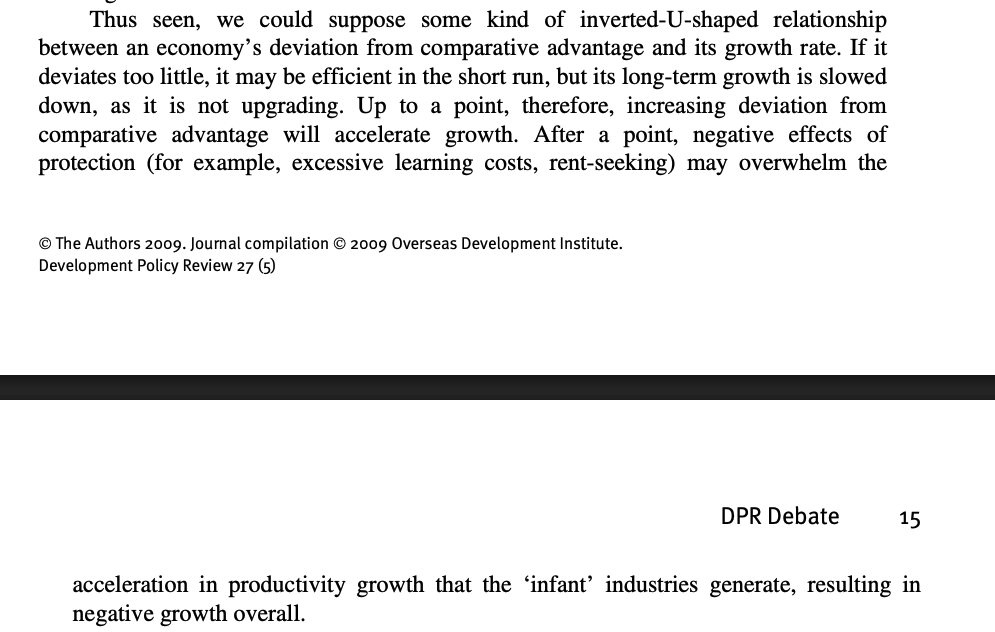
Chang: "Thus seen, we could suppose some kind of inverted-U-shaped relationship between an economy’s deviation from comparative advantage and its growth rate. If it deviates too little, it may be efficient in the short run, but its long-term growth is slowed down, as it is not upgrading. Up to a point, therefore, increasing deviation from comparative advantage will accelerate growth. After a point, negative effects of protection (for example, excessive learning costs, rent-seeking) may overwhelm the acceleration in productivity growth that the ‘infant’ industries generate, resulting in negative growth overall."


Should Industrial Policy in Developing Countries Conform to Comparative Advantage or Defy it? A Debate Between Justin Lin and Ha-Joon Chang hajoonchang.net/assets/papers/…


“Stargate has now had three or four permutations, I don’t know what it is right now. I can’t tell you. Maybe it never really existed in the first place" ft.com/content/664a57…