

crdx
16 posts

I’m disappointed in anthropic but I am PISSED at the openclaw / Hermes grifters trying to steal inference that made this necessary
The market is the market so if something is possible and valuable people will find a way to get at it
Tbh probably should have seen this coming despite the “sdk is still fine” post from @bcherny a month ago
Cheap inference was a Weird blip in an increasingly weird world
English
@lucasmeijer I agree there's a distinction between the two, but in claude code they've been merged into one, with a yaml frontmatter attr to prevent it from being callable by the agent. :/
English

i never use skills. almost everything is a pi slash command instead.
English

@doodlestein Cool. Gonna have to find a skill to create a business first...
English

Automate all your customer service and user support ticketing for your online business with this one weird trick (skill) and Claude Code:
Jeffrey Emanuel@doodlestein
I keep getting more and more abstract and general in my agent skills. I just finished two skills which are good examples of how far you can take abstraction and universality in skills. They're both for automating the process of customer service and user support via a ticketing system.
For months, I've been automatically triaging and responding to 50+ GitHub Issues and PRs per day across dozens of my open-source projects.
As I figured out good workflows from this, I ultimately turned these into agent skills which I've been using for a while now to manage the entire process for me a couple of times a day using Claude Code.
My skill uses my own custom tooling (repo_updater, which is a kind of wrapper on the gh utility) and only surfaces things for my attention that require my judgment. Otherwise, it tries to do everything it can by itself. If someone reports a bug, it tries to automatically diagnose and fix the bug and then responds to the user as needed.
When I created my jeffreys-skills.md site around 2 months ago, I included an elaborate user support ticketing system for it.
I knew that I wanted to have something similar to what I had been using for GitHub to automate the process, and I did finally end up with a skill that handles nearly everything, although there was an initial ramping process where things were only "semi-automatic" while I figured out the right policies and procedures with help from the agent.
Now things are nearly fully automated except that I still insist on reviewing every response to a user before it goes out. Eventually, this might prove to be too much of a bottleneck and I will fully automate it, but for now I like to preserve that degree of control and oversight because these are paying users and the ticket volume isn't high enough for it to be burdensome.
Anyway, this is already an extremely valuable and useful workflow that has enabled me to scale my site without needing to hire anyone to do support work for me, and it also makes it so that I spend very little of my own human time and mental bandwidth on support.
I wanted to find a way to provide this sort of skill in general to any SaaS business, but the problem is that the skill I developed for doing this on my own site is very tightly coupled to my own bespoke support/ticketing system.
There are obviously a lot of existing third-party systems for handling support ticketing that are popular, such as Zendesk, Intercom, Freshdesk, etc., and people generally want to stick with what they're already using.
So I created a completely general skill called /user-support-triage-for-saas-and-open-source-projects that integrates with 14 different services like these, and abstracts the higher-level workflows associated with dealing with user support requests of all kinds, be they about billing, technical issues, or anything else.
The skill comprises 85 files and is 912kb of reference files, scripts, runbooks, and subagents:
jeffreys-skills.md/skills/user-su…
What if you have your own custom, bespoke support ticketing system? Well, the skill knows to analyze your code and study what you have already and clearly document it all during the initial onboarding process, so it can figure out how it works and how to use it properly.
In fact, that's how it knows whether you're using one of the 14 different third-party providers. Then, when you invoke the skill in the future, it already knows how to navigate everything correctly and can jump right into action.
But what if you're just starting out with a new SaaS project and don't have any system at all, and don't want to use a third-party provider?
Well, if you're using NextJS to build your SaaS, the skill will ask you if you want it to build one for you, and if you agree, it will automatically install and invoke another skill called /user-support-ticketing-system-for-saas which is closely modeled on my own ticketing system:
jeffreys-skills.md/skills/user-su…
This skill is also massive at 76 files and 935kb. It's designed to work for essentially any kind of SaaS or internet-based business, and it's part of a series of skills I've made that abstract the principles behind sections of my own site and make them general so that they can work with any SaaS project based on NextJS (the other ones include /admin-page-for-nextjs-sites and /saas-customer-analytics).
The idea with these skills is to give proven systems for building out the kind of generic building blocks that tend to be useful in any SaaS project.
What I think is cool about the user support triage skill is that it can adapt; it comes armed with enough knowledge and expertise on the subject that it can custom-tailor what it does to your particular situation; it meets you where you are now instead of forcing you to change how you do things to fit a preconceived notion of how a user support ticketing system should work.
And that to me is what is most disruptive and exciting about skills versus traditional software: skills can leverage the intelligence and adaptability of the underlying frontier models and harnesses to act much more like an expert human consultant.
Developing these very abstract skills is more difficult because you really need to prove out the core concepts with a specific concrete implementation and revise and evolve it over time in response to experience and feedback.
Before I even attempted to make these two skills, I did numerous revisions of my own private user support skill (and before that, many revisions of my GitHub Issues triage skill that was the precursor).
These revisions were based on mining my own cass session history and seeing how I overruled or corrected the agent so that the next time it would just do the right thing without being told.
Only after you know that it's solidly working in a particular setting and implementation should you even attempt to generalize it for ALL settings.
And over time, as more people try these new skills and give me feedback using the same support ticketing system, I will feed that back into the skills to improve them to make them more robust and universal.
Here is GPT-5.5's take on what makes the main user support triage skill so special and compelling:
---
I studied the skill body, the core references, the runbooks, scripts, subagents, validators, and the prior repo memory about support-skill design. The short version: this skill works because it does not treat support as “write a nice reply.” It treats support as an evidence pipeline, risk router, owner-approved communications system, product-intelligence engine, and compounding operational memory.
Why It Works
The central move is the split between onboarding once and triaging forever. Onboarding builds
English
@mitchellh This is how beads is developed as well, but it's the agent's typos instead.
English

Pretty standard situation for my configs... everytime I hit a typo typing a command I just alias that typo. I have `jj` aliased to `j` and `jjj` and `hh` and `ll` too. Total madness. But it works.

English

Amusing how a surprising number of people I used to professionally respect have started to outsource all their writing to AI, not even bothering to change the horribly templated (and telling) writing.
To me it suggests they care more about "content" than quality, and poor taste
Armin Ronacher ⇌@mitsuhiko
I analyzed my coding sessions and on the text interactions some words stand out. And well, they also show up on Google Trends as spiking. Oh and so much slop in my Twitter mentions and on GitHub. Thus here are some updated thoughts on all of this. lucumr.pocoo.org/2026/5/4/conte…
English
Instead you need to worry about making technical errors, or speaking ambiguously.
Paul Graham@paulg
Even though nerds are socially awkward, its actually easier to hang out with them than with smooth people, because standards are lower. You don't worry that you might be making social errors; all of you always are; so it stops mattering.
English
@doodlestein I'm glad to see someone else use the word "disbelief" about all of this. I feel like I go through phases of taking for granted what we have now, to renewed excitement and disbelief, back 'n forth. It really is incredible.
English
These are so cool. We need a new kind of benchmark for visual IQ applied to these kinds of graphics. I’m still in complete disbelief that we can do this now.


sankalp@dejavucoder
chagpt images 2.0 can cook hard
English

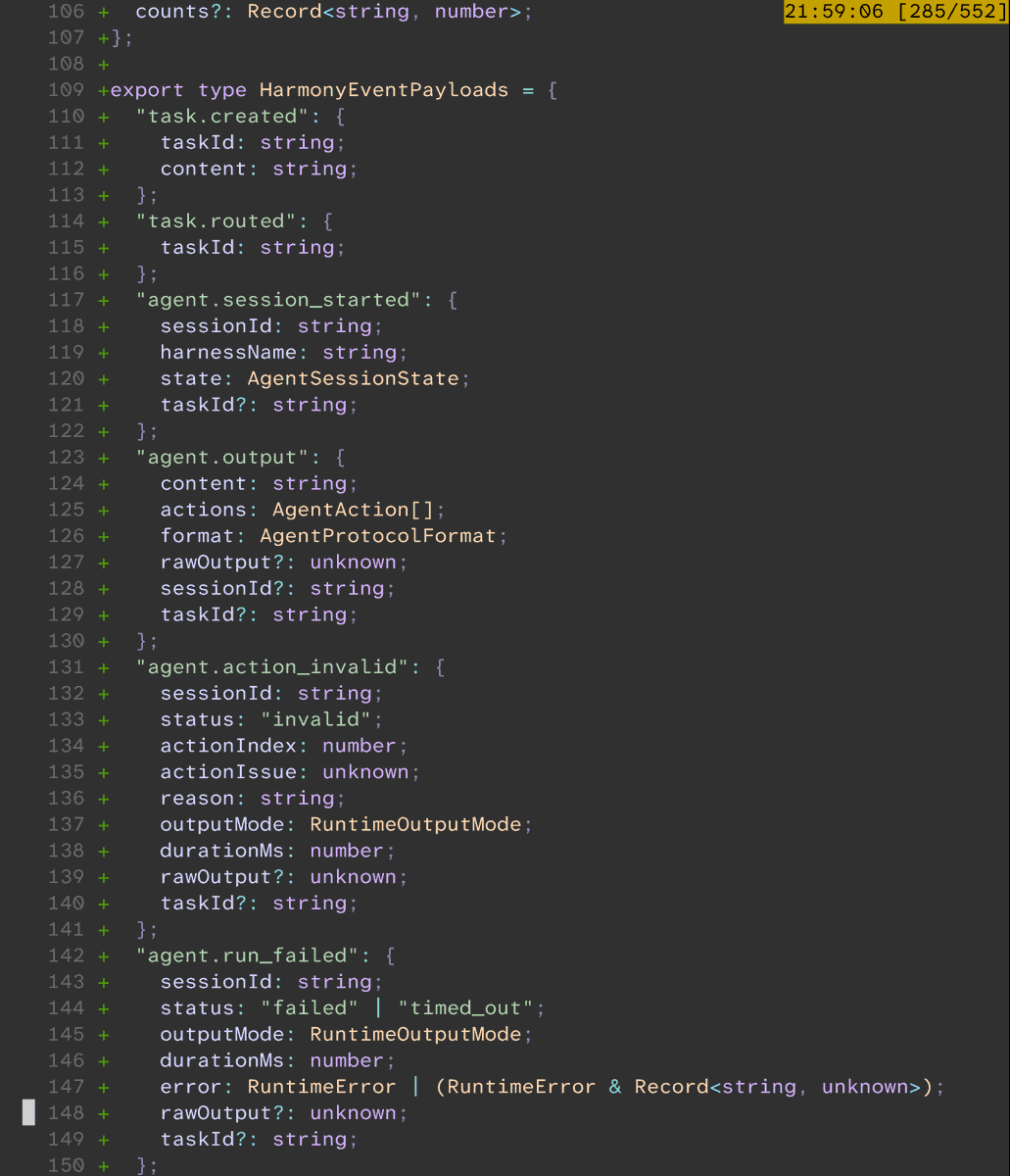
Why am I such a big AI fan? Because what it can teach you. For every 'they are making you dumber' posts, there are thousands of us (I'm just mouthier) getting better everyday. A year ago I would have had no idea what this meant, much less be able to iterate a plan for this. My point not about me, it's what AI can do for you!
It's a tool! Use it.
English
@RidgetopAI @badlogicgames It's not a hard rule but generally you want to avoid using exceptions (try/catch) for control flow. If you can call a function that checks if the file exists, then prefer that. Use exceptions for the unexpected.
English
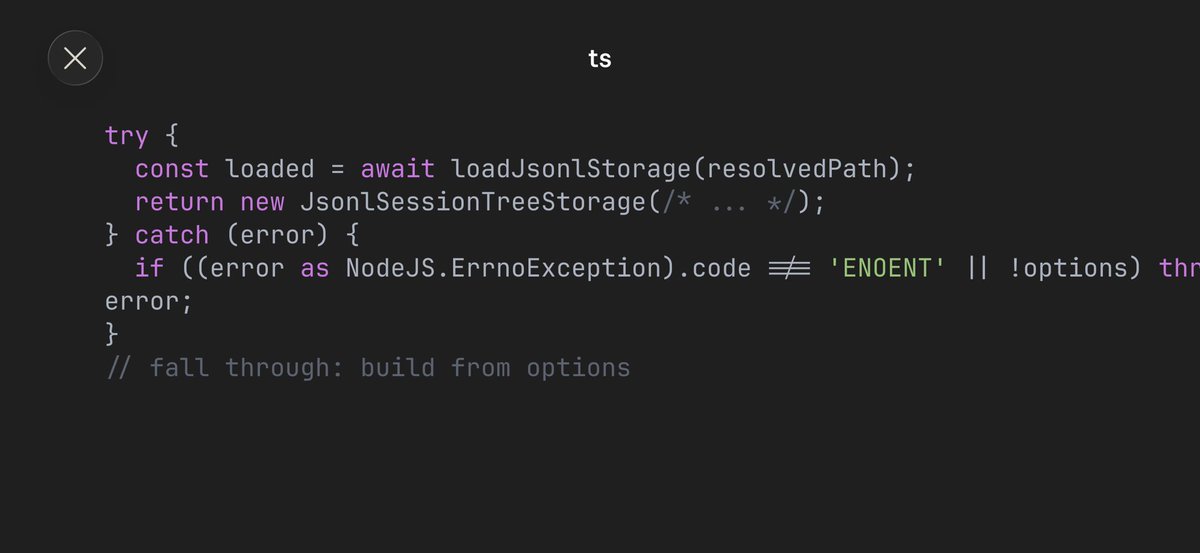
@badlogicgames Trying to learn everything I can. So is this better or still slop? Trying to see if I take bad code give it to model can they correct it.
English

how gpt 5.5 thinks it should do a "ok, if the file exists, load it, otherwise do a different thing"
this is absolutely demented.

English


Dear @sama
Please refer to GPT as gipidy (jipidy). It's much nicer to say that way
English

I suppose I'll try to summon the internet in a more traditional way:
Gastown has never been used to create any piece of software that has actually been used.
English
Are there any actual success stories for "software factories" like gastown? Anything I can see running, and preferably see code?
English
I've been messing around with agent sandboxing.
textplain.org/agent-sandbox
English
@badlogicgames Have you considered moving to another platform (codeberg, or whatever)?
An additional point of friction (registering an account) might reduce the slop.
Then again, it might not... with claws happy to register accounts, too.
English
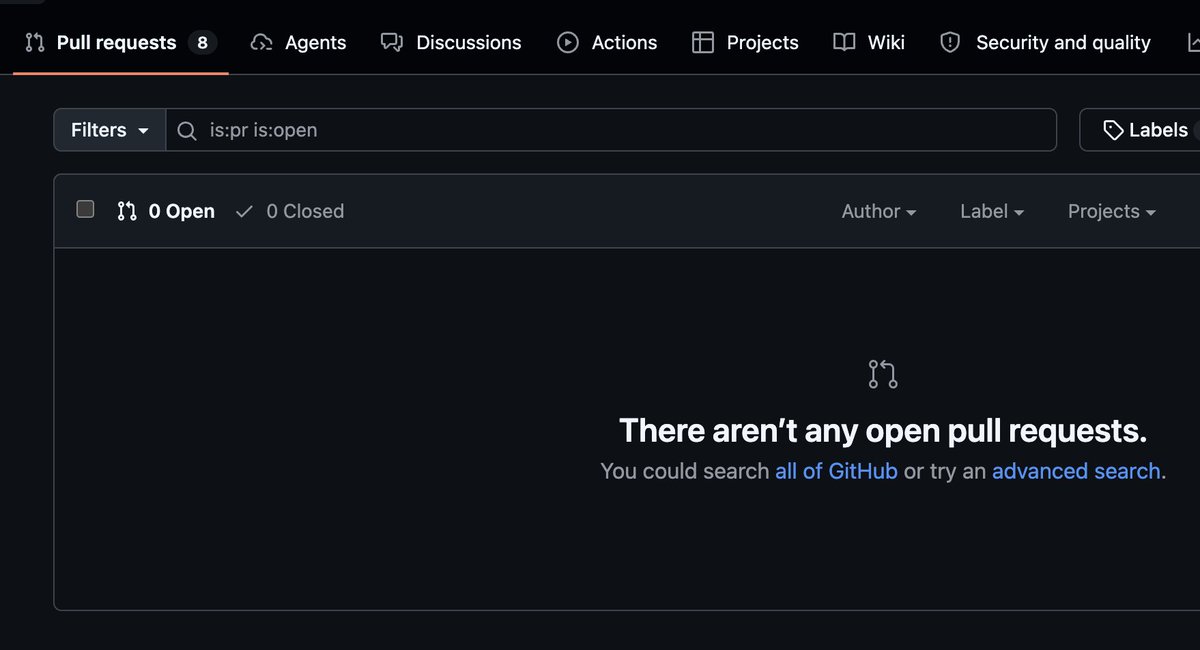
really tired of github. this is not a dependable platform anymore. every day something else is broken.
English
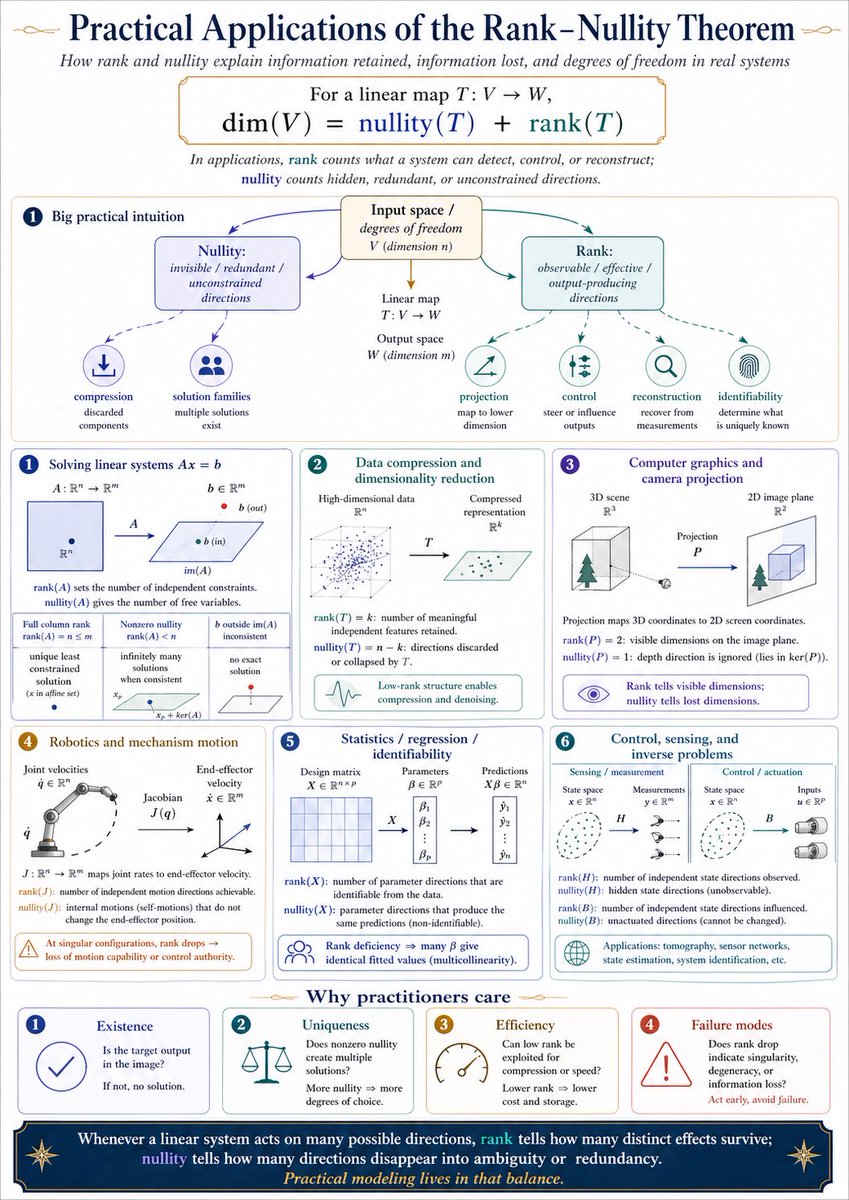
The beauty and utility of linear algebra, courtesy of the new ChatGPT image model (or: how the same few ideas and methods apply to just about any field in endlessly fascinating ways, including AI!).
No other subject in math has more practical explanatory bang for the buck.



English
English

@mitchellh @fxposter this is great, but curious, are they cases where 'grep' would not suffice? I thought go is pretty grepable
English
I'm writing Go again (for what, you'll see later...). `go doc` and `gopls` are like agent superpowers and its shocking how productive agents are out of the box at writing [good] Go code versus other languages I've used (including the JS ecosystem). Also, Go + Zig is a good mix.
Go for the higher level and concurrent stuff and then no-libc Zig code plus the Zig compiler for zero dependency cross-compiled cgo with high-performance characteristics (minimize cgo boundary crosses). Chefs kiss.
Its funny because a lot of the shitty ergonomics of Go CLIs like `go doc` and `gopls` (prev. stuff like `go oracle` or `guru`) are totally obviated by agents and not just that but in a twist of irony they're excellent for agents.
Don't worry, its not Ghostty. Ghostty and libghostty will remain pure Zig; it's a fantastic fit and a perfect pairing. This is for something else.
"Wait, I thought you said Go has no place anymore?" I was wrong, mostly because agents are so productive at Go. I won't bring in other languages in this discussion because I don't want to feed the crabs, so to speak. lol.
English