
Maximilian Kohl

80 posts

Maximilian Kohl banner
Maximilian Kohl

Maximilian Kohl

@__koma___

PhD student in ibmc Strasbourg 🇲🇫 Curious about RNA biology.

Katılım Eylül 2016
295 Takip Edilen111 Takipçiler
Maximilian Kohl retweetledi
Nicole Marino
Nicole Marino@Nicole_D_Marino·
I'm excited to share that our work on co-translational degradation of cas12a mRNA is finally out! Many thanks to all the authors who made it happen. nature.com/articles/s4158…
English
3
16
77
5.8K
Maximilian Kohl retweetledi
Kenneth Loi
Kenneth Loi@kenjmloi·
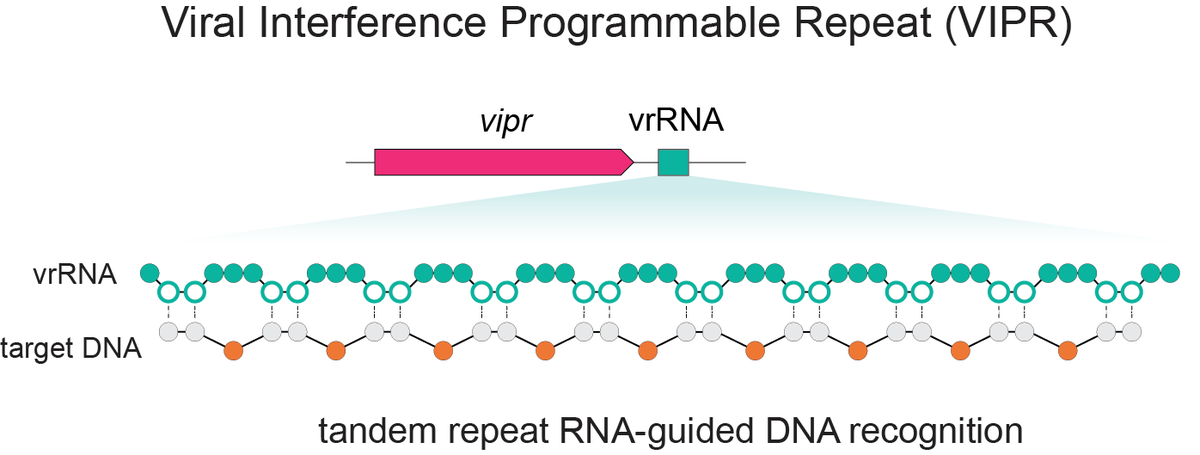
Excited to share our discovery of a new programmable RNA-guided DNA-targeting system hiding inside bacteriophages that predates CRISPR. We call it VIPR (Viral Interference Programmable Repeat), and it uses an entirely new logic to find its targets. Thread + link below.
Kenneth Loi tweet media
English
26
353
1.3K
238.3K
Maximilian Kohl retweetledi
Jorge Bravo Abad
Jorge Bravo Abad@bravo_abad·
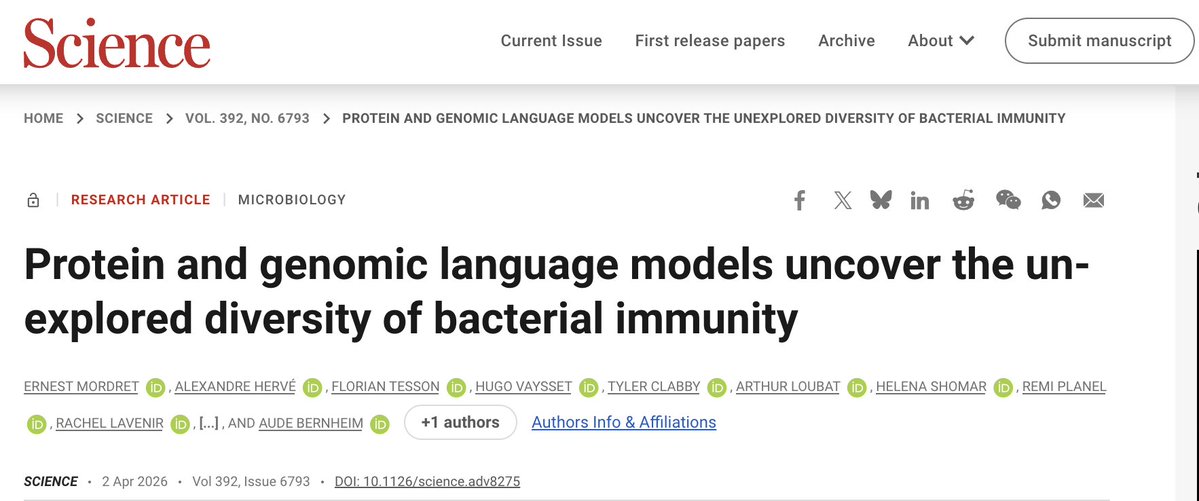
What happens when you train a transformer on 123 million bacterial proteins Bacteria have been fighting viruses for billions of years. To do it, they have evolved a remarkable diversity of antiphage defense systems — molecular immune machines that detect and destroy invading phages. Yet fewer than 250 such systems had been experimentally validated. A new study in Science suggests we've barely scratched the surface. Mordret and coauthors asked a simple but powerful question: can language models trained on protein sequences and genomic context learn the "grammar" of bacterial immunity well enough to predict entirely unknown defense systems at scale? They developed three complementary deep learning models. ALBERTDF adapts the ALBERT transformer architecture to treat genes as words and genome neighborhoods as sentences — learning defensiveness from genomic context alone, without any sequence information. ESMDF fine-tunes the ESM2 protein language model with LoRA adapters to classify proteins as defensive or non-defensive directly from amino acid sequence — trained on a dataset of 123 million proteins drawn from 32,000 bacterial genomes. GeneCLRDF combines both signals through contrastive learning: it teaches the model that a gene's identity can be inferred either from its sequence or from the genomic neighborhood where it lives. This joint embedding achieves 99% precision and 92% recall on held-out benchmarks — far outperforming each approach independently. The models aren't just impressive on paper. The authors experimentally validated 12 antiphage systems with no prior link to immunity, in both E. coli and Streptomyces albus. Some carry canonical defense domains; others involve proteins with no known association to antiphage function whatsoever. Applied to over 32,000 bacterial genomes, GeneCLRDF predicts 2.39 million antiphage proteins. Around 1.5% of a typical bacterial genome is devoted to defense — three times previous estimates — and more than 85% of predicted protein families have no prior link to immunity. The implications are immediate. The predicted atlas — including ~23,000 candidate operon families — is a ready-made discovery pipeline for novel nucleases, molecular effectors, and antimicrobial mechanisms directly relevant to phage therapy and programmable biologics. Language models are turning the bacterial pangenome into an actionable resource. Paper: Mordret et al., Science (2026) — Science license | science.org/doi/10.1126/sc…
Jorge Bravo Abad tweet media
English
5
69
296
16.5K
Maximilian Kohl retweetledi
alex meeske
alex meeske@alexjmeeske·
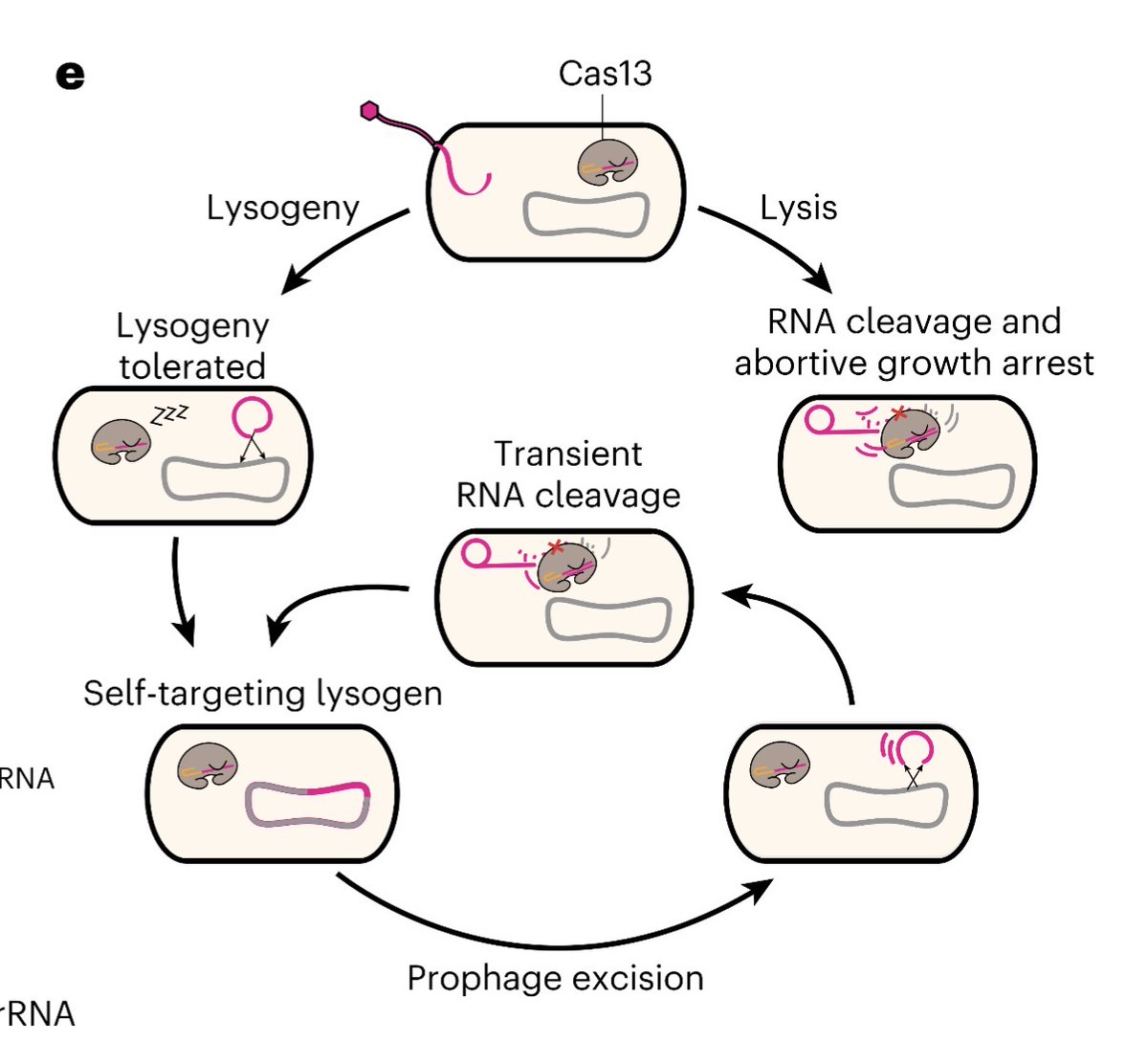
Our new paper on lysogeny enforcement by RNA-targeting CRISPR is out in Nature Micro! When prophages induce, Cas13 transiently activates and causes them to re-integrate. Link below for a great story from my student Marshall Godsil. tinyurl.com/ycv8593w
alex meeske tweet media
English
2
24
84
6.9K
Maximilian Kohl retweetledi
Sternberg Lab
Sternberg Lab@SternbergLab·
Out now! In collaboration with @LeifuChangLab, we uncover the molecular and structural underpinnings of CRISPR-Cas12f-like RNA-guided transcription systems! Links to the articles in the following tweet:
Sternberg Lab tweet media
English
3
53
201
31.5K
Maximilian Kohl retweetledi
News from Science
News from Science@NewsfromScience·
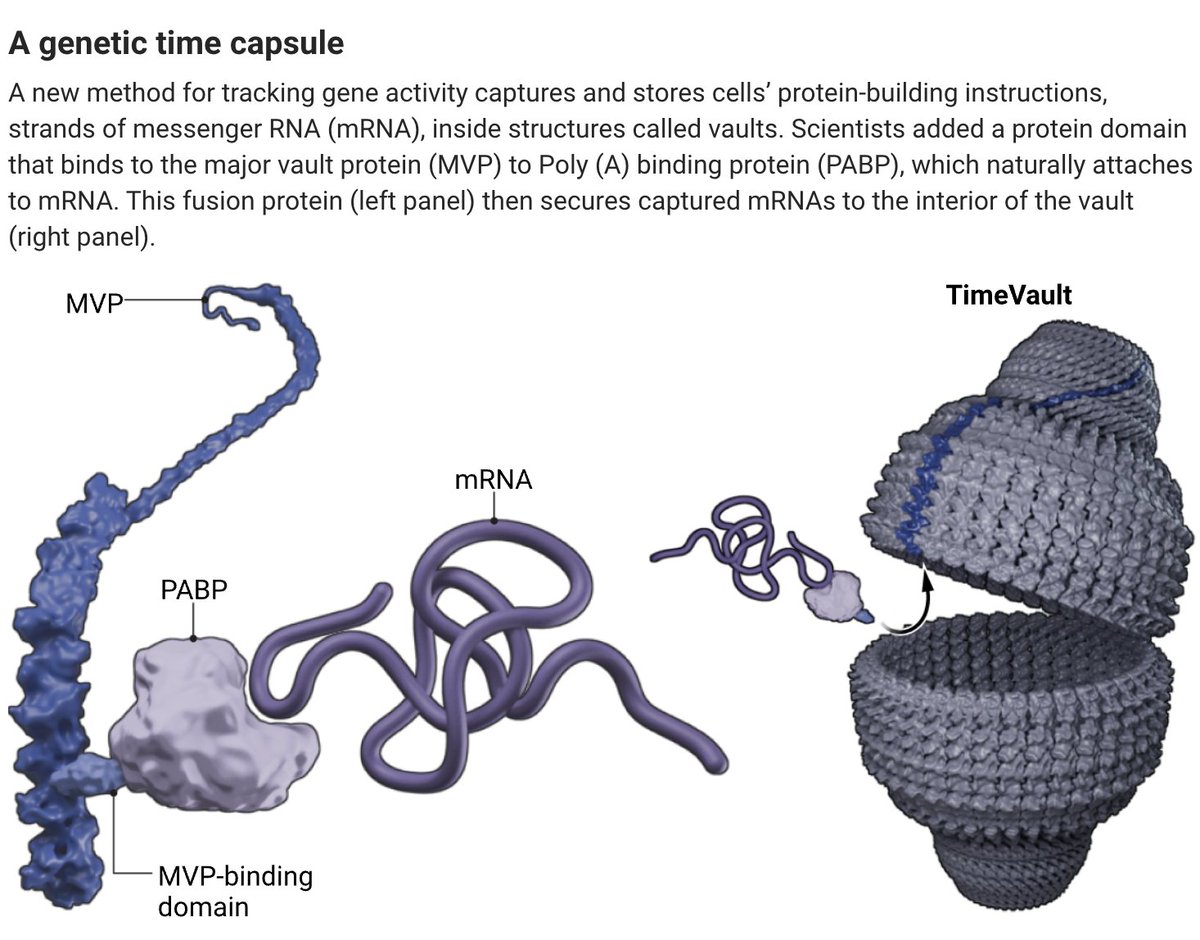
The barrel-shaped structures found by the thousands in most animal cells are one of biology’s biggest mysteries. But although researchers haven’t figured out the function of these “vaults,” they now report a new use for the puzzling particles. Learn more: scim.ag/3NKZXJQ
News from Science tweet media
English
8
82
382
25.6K
Maximilian Kohl retweetledi
David R. Liu
David R. Liu@davidrliu·
Today in @Nature we report a new prime editing strategy that can rescue a common cause of many genetic diseases in a disease-agnostic manner. This approach converts a redundant endogenous tRNA into an optimized suppressor tRNA, enabling a single prime edit to rescue premature stop codons across different diseases. (1/15) drive.google.com/file/d/1bSvkJW…
David R. Liu tweet media
English
40
397
1.4K
250.9K
Maximilian Kohl retweetledi
David Lalaouna
David Lalaouna@DavidLalaouna·
The iron-regulated small regulatory RNA IsrR modulates expression of genes utilized for dioxygen metabolism and heme synthesis in Staphylococcus aureus | mBio journals.asm.org/doi/10.1128/mb…
English
0
1
2
80
Maximilian Kohl retweetledi
Sternberg Lab
Sternberg Lab@SternbergLab·
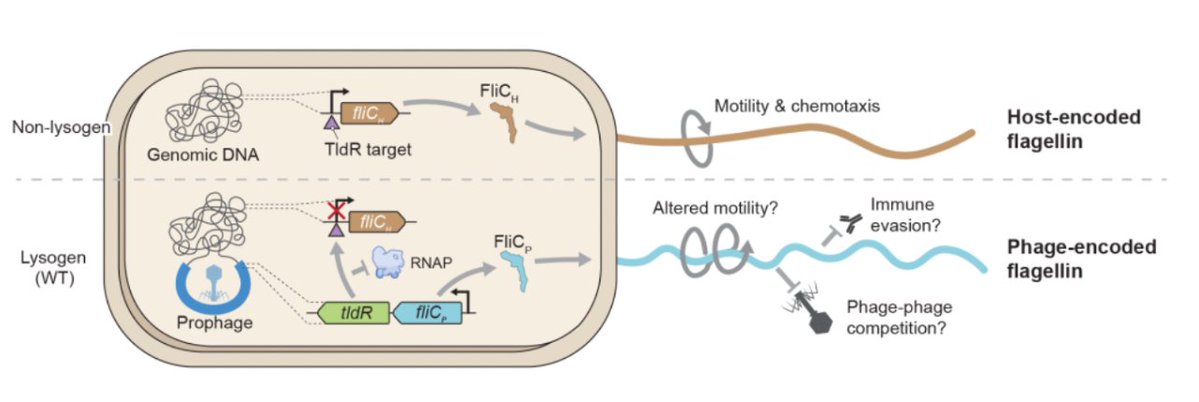
1/16 New pre-print from the Sternberg Lab! We uncover how temperate phages can use RNA-guided transcription factors to remodel the flagellar composition of their bacterial host and enhance their fitness. Find the preprint and full story here: tinyurl.com/mshwjd77
Sternberg Lab tweet media
English
1
44
160
23.2K
Maximilian Kohl retweetledi
Nitzan Tal
Nitzan Tal@Nitzan_T·
📢Preprint out! Excited to share my final work from the @Soreklab! We mined phage dark matter using structural features shared by anti-defense proteins (viral tools that help phages bypass bacterial immunity) to guide discovery. Found 3 new families targeting immune signaling!
Nitzan Tal tweet media
English
3
35
175
19.5K
Maximilian Kohl
Maximilian Kohl@__koma___·
@TrevorCampbell_ @arjunrajlab What's cool is that some bacterial genes use these degenerate start codons on purpose to modulate expression levels at the translational level. For example In e.coli this has been found for Poly (A) polymerase, an important player in mRNA decay.
English
0
0
9
885
Trevor Campbell
Trevor Campbell@TrevorCampbell_·
There are so many weird Biology quirks that I somehow missed before and am only just finding now... Apparently translation can and *does* initiate from EVERY codon With the caveat that any codon other than the canonical AUG / GUG / UUG options induce transcription at such wildly inefficient rates that they are nearly undetectable But they DO happen 🤯 I wonder what weird and rare products might be floating around in our bodies, some of which might even be really important
Trevor Campbell tweet media
English
18
102
667
45.7K
Maximilian Kohl retweetledi
Itai Yanai
Itai Yanai@ItaiYanai·
Contrary to popular belief, what is important in science is as much its spirit as its product: it is as much the openmindedness, the primacy of criticism, the submission to the unforeseen, however upsetting, as the result, however new that may be.– F Jacob nature.com/articles/s4158…
Itai Yanai tweet media
English
13
136
559
51.5K