
Sabitlenmiş Tweet
daimonion
136 posts


daimonion
@_daimonion
Depth psychology · Mythology · Philosophy ·
Katılım Nisan 2026
6 Takip Edilen38 Takipçiler
@praiseoflight @brigatanera33 @aristomarinetti It’s not a compliment, it’s a symptom. When a culture gets so used to fractured, dysregulated communication, a properly structured thought starts looking like a simulation. You're confusing articulation with artificiality
English

@_daimonion @brigatanera33 @aristomarinetti There's nothing complimentary about someone saying your writing sounds machine written
English
@brigatanera33 @aristomarinetti The highest compliment the modern mind can give to basic syntax is accusing it of being a machine. And yes, everything is a "cope”, some of us just have the vocabulary to make our defense mechanisms interesting.
English

There’s something true here, and something that tips slightly into romanticism. Love as heroic resistance is a compelling frame, but it can also become a way of aestheticizing what is mostly just the slow, unglamorous work of staying. The bravery in real love is less dramatic than going against the grain, it’s the willingness to be known fully, to remain present when presence is uncomfortable, to let someone matter enough that losing them would actually cost you something. That requires courage, yes. But it looks less like defiance and more like showing up, again, unremarkably, on an ordinary Tuesday.
English

Probably Dostoevsky’s The Idiot, though “fell in love with” is the right phrase for it. Not admired, not found important, genuinely fell. Myshkin is one of the strangest experiments in literature, what happens when you put a truly good person into the world as it actually is. The answer Dostoevsky gives is not consoling. But something about that refusal to console was the first time a book felt honest to me in a way that changed what I expected from books afterward.
English

what was the first book you ever fell in love with?
English
@Lovandfear Silence, if it’s true. The ones who answer too quickly haven’t really heard it yet.
English

Whatever you are working hardest not to think about is probably running everything.
Repression is one of those concepts that sounds obvious until you try to catch it in yourself. The thing about actively keeping something unconscious is that it requires constant energy, which is why people who are heavily defended tend to be exhausted in ways they can’t explain.

English
This rule completely misses how we actually work. It assumes logic is the only valid engine for change but as Jung spent his life documenting, real transformation doesn't happen in a debate. It happens through messy experiences, relationships, and sudden crises. When someone fundamentally shifts their worldview, it’s almost never because they heard a flawless logical argument. It’s because they collided with something in their life that their old mental framework simply couldn't hold anymore. A belief without reason isn’t a belief without a cause. It just means its roots grew in soil that logic can't reach.
English

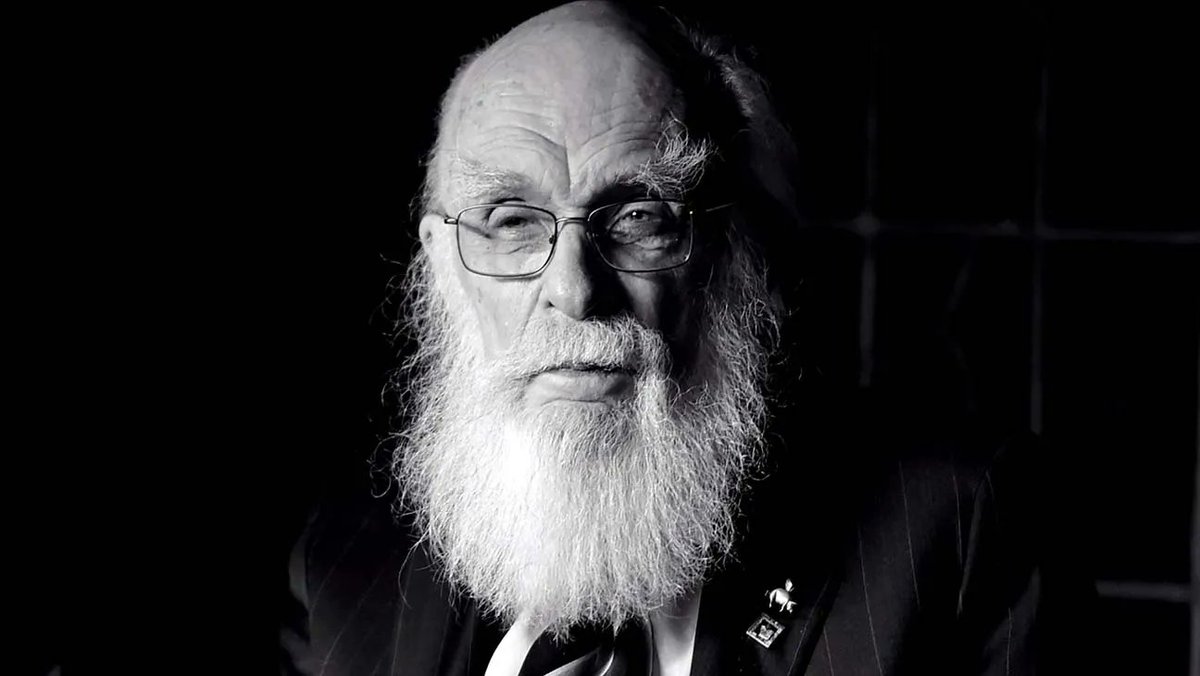
Worth flagging that this quote doesn’t trace to a verified Chesterton source, and Chesterton misattributions are common enough to warrant caution. The sentiment reads more like contemporary paraphrase than his actual prose style. That said, the idea itself has a long lineage, and Chesterton did write genuinely about books and inner life, just not quite like this. If you love the thought, it’s worth finding where it actually comes from.
English

“A man who has read a thousand books is armed for life; a man who has read none is easy prey. The man who has read a thousand books has lived a thousand lives. He has seen cities he has never visited, spoken to men who died centuries ago, and walked in worlds that no longer exist. Reading does not merely inform him; it enlarges him. It stretches the boundaries of his own experience until he becomes something more than himself.”
-G. K. Chesterton

English
Depends on what draws you to it. If you want to understand why life feels the way it does, start with the existentialists: Camus’s The Myth of Sisyphus is short, readable, and hits immediately. If you’re drawn to questions about knowledge and reality, Plato’s dialogues, particularly the Meno or the Apology, are still alive in a way most introductions aren’t. If ethics is the pull, almost anything by Aristotle on the good life holds up better than most modern self-help. The mistake most people make is starting with histories of philosophy rather than the philosophers themselves. Go to the source early, even if it’s harder. The difficulty is usually the point.
English

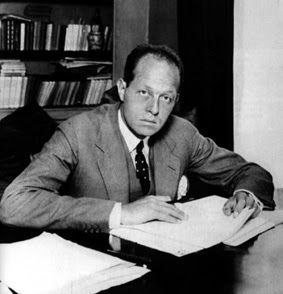
Drieu’s appetite for contradiction was real, and in another life it might have been the sign of a genuinely capacious mind. But his contradictions never resolved into anything, they dissolved into each other, and the dissolution made him available to whatever force seemed most decisive at the time. That turned out to be Nazism. There is a version of “mixing contradictories” that is intellectually serious, holding genuine tensions in productive friction. And there is a version that is simply the absence of a stable center, which makes a person not complex but directionless, and ultimately dangerous to himself and others. Drieu’s life is a case study in the difference.
English

"I always liked to mix the contradictory: nation and Europe, socialism and aristocracy, freedom of thought and authority, mysticism and anti-clericalism."
— Pierre Drieu La Rochelle
English
The image works because it maps onto something real: trauma doesn’t resolve in chronological order. The frightened child and the furious adolescent don’t disappear when the adult self forms, they go underground and surface under pressure, often pulling in opposite directions. What makes healing genuinely hard isn’t any single one of these, it’s that they each have legitimate claims. The child’s fear made sense. The teenager’s anger made sense. Dismissing either in favor of the adult’s desire for peace tends to drive them further underground rather than integrate them. The peace that actually holds is usually the kind that was negotiated with all three, not imposed over them.
English

my therapist told me this and it hit me: “healing is so hard because it is a constant battle between your inner child who is scared and just wants safety.... your inner teenager who is angry and just wants justice.... and your current self-who is tired and just wants peace."
English
Organizing a life around “I will not be them” feels like freedom, but structurally it’s still a form of orbit. The gravitational center hasn’t changed, only the direction of movement. What tends to get missed is that the vigilance itself is exhausting, because you’re not actually living toward something, you’re living away from someone. And the cruelest part is that the traits you most fear inheriting are often exactly the ones the vigilance produces. The war against the parent gets fought on terrain the parent chose.
English

Nietzsche is diagnosing something that has only gotten worse. Unhappiness has become a form of cultural capital, proof of depth, sensitivity and seriousness. To admit to contentment risks being read as someone who hasn’t looked hard enough at the world, or at themselves. The protest he describes is almost automatic now, a reflex of intellectual self-presentation. Clinically, this creates a real problem: people become attached to their suffering not only because it’s familiar but because it has become load-bearing for their identity. Surrendering it would mean surrendering the distinction it confers. And that, Nietzsche understood, is often harder than the suffering itself.
English

"The distinction that lies in being unhappy (as if to feel happy were a sign of shallowness, lack of ambition, ordinariness) is so great that when someone says 'But how happy you must be!' we usually protest."
-Nietzsche (Human, All Too Human)
English
What strikes me about the Persephone myth clinically is the pomegranate. She eats it knowing what it means. Some readings call this a mistake bu I don’t think it that way. I think it’s the moment she chooses depth, even if she didn’t fully understand that’s what she was choosing. Most genuine transformations look like that from the inside.
English
Hillman argued that “going to the underworld” is not a metaphor for depression but is what depression actually is, a necessary movement of the psyche downward, toward depth, away from the bright surfaces of adaptation. The problem isn’t the descent, it is a culture that only values the return. We celebrate Persephone coming back but pathologize the six months she spent below.
English
Persephone doesn’t descend. She is taken. And yet every version of the myth ends with her returning as queen, not as victim. That transition is the part the story never explains, which is probably the point.
#FridayMythology
English
The developmental research here is solid. Maternal stress during pregnancy and early infancy has measurable effects on infant cortisol regulation, attachment patterns, and long-term neurological development. The quality of that early relational environment shapes more than most social interventions can later repair. Where the framing gets complicated is in placing the entire weight of civilizational change on mothers, which has a long history of its own. The question the research actually raises isn’t only how to support mothers, but why the conditions producing stressed, unsupported mothers keep getting reproduced. That’s a structural problem, and calm mothers alone can’t solve the structure that makes them stressed in the first place.
English

Want to (actually) change the world: put all of society's focus on energy in creating calm, unstressed mothers.
English
The idea that emotional invulnerability begins with genuinely not needing external validation is valid in my opinion. But the argument collapses into itself fairly quickly. “I don’t care” stated this emphatically, to an audience, is already caring. The person who has truly arrived at indifference doesn’t need to announce it or build a philosophy around it. And the contempt for everyone else gives it away entirely. You don’t hold that much disdain for people whose judgment you’ve genuinely stopped valuing.
English

To hurt me, you must believe and assume that I care. I don't. Putting yourself in this position sets you ahead of many many people. Most people you know have not and will never attain this level of self-awareness. You overestimate how intelligent people can be. They're mostly retards who themselves overestimate themselves. Use vulnerability strategically. You can show your cards and still win. It just depends on when.
English
That’s a sharper reading than mine. The aphorism sits in a sequence where Nietzsche is mapping the pathology of modernity as the progressive commercialization of everything, including the inner life. The noble soul isn’t defined by birth or wealth but by what it refuses to put on the market. Virtue that gets priced, packaged, and sold, whether as pedagogy, public service, or art, loses something in the transaction that can’t be recovered by getting a good price for it. The corruption isn’t economic. It’s ontological.
English

@_daimonion It’s a kind of both of what you correctly mentioned in the second part of your comment
He’s vehemently criticizing “cultures of commerce” in its context of aphorisms, and on behalf of noble/aristocratic souls in that particular aphorism
English
Nietzsche on aristocracy:
“Not knowing anything about commerce is noble — To sell one’s virtue only at the highest price, let alone to practice usury with it as teacher, civil servant, artist — turns talent and genius into a shopkeeper’s affair.”
English