kamineko

19.9K posts

kamineko banner
kamineko

kamineko

@_kamineko

Free speech here in the West means that you can say things, but if they go against the narrative, you are getting canceled.

2D Katılım Mayıs 2011
807 Takip Edilen323 Takipçiler
kamineko retweetledi

DaiWW
DaiWW@BeijingDai·
The greatest stupidity of Western media is that whenever they see any negative data about China, they rush to hype up 'China collapse' narratives without bothering to understand the actual context. Take the first 4 months of 2026: China's consumption growth hit a multi-year low. The main reason? Domestic auto sales fell by about 20%. And why did that happen? Because for the past several years, the Chinese government had been subsidizing car purchases. Under those subsidies, much of the near-term consumer demand for cars was pulled forward. So when the subsidies were withdrawn this year, a sales drop was entirely predictable. But here's what Western media's idiots fail to see: this decline was, to a significant extent, by design. With the Iran war pushing up oil prices, China's new energy vehicle exports surged 60% year-on-year in the first four months. Chinese automakers are now shifting production capacity toward exports. The government clearly cannot subsidize the domestic market forever—and right now is obviously the best time to exit. Looking back, the Chinese government has consistently boosted domestic demand when exports were weak, and withdrawn stimulus when exports were booming. This has helped China's auto industry grow rapidly and steadily. It's a remarkably successful policy cycle. But the idiots in Western media don't understand any of this. All they know is sensational headlines and emotional hype. They've brainwashed many Westerners into ignorant fools, and those fools in turn elect foolish politicians. That, in the end, is the real reason Western governments are nowhere near as effective as China's CPC-led government.
DaiWW tweet media
English
5
11
80
2.5K
kamineko retweetledi
Rimsha Bhardwaj
Rimsha Bhardwaj@heyrimsha·
A Wharton economist ran a randomized controlled trial on almost a thousand high school students in Turkey. The result was so brutal for the AI-in-education narrative that it had to be peer-reviewed by PNAS before people would believe it. Her name is Hamsa Bastani. She teaches operations and information at the Wharton School at the University of Pennsylvania, and the study she published in 2025 alongside her co-authors is one of the cleanest experiments anyone has run on what AI actually does to learning when you remove it from the equation and check what is left. The setup was a randomized controlled trial, the same methodology used in clinical drug trials. Nearly a thousand high school math students in Turkey were split into three groups and put through four sessions of ninety minutes each. One group practiced with GPT Base, a standard ChatGPT-4 interface that could answer any question directly. One group practiced with GPT Tutor, a version of the same model that had been prompted to guide students with hints rather than hand them the answer. One group practiced with nothing but their textbook and their own head. During the practice sessions, the AI groups looked like a miracle. The GPT Base group solved 48% more problems than the students working alone. The GPT Tutor group solved 127% more. Every administrator looking at those numbers would have written a press release about the transformative power of AI in education and moved on. Then the actual exam came, and AI was not allowed. The students who had practiced with GPT Base scored 17% worse than the students who had practiced alone. Seventeen percent worse, despite having solved nearly half again as many problems in the sessions leading up to it. The students who had struggled the most, who had sat with the confusion and worked through it without a tool to rescue them, were now the only ones who could actually do the math when it counted. Bastani's team read through the chat logs to understand what had actually been happening during the practice sessions, and the answer was exactly what the exam results had already implied. The GPT Base group had not been learning. They had been extracting answers and moving on, and every moment that felt like understanding was actually the model doing the cognitive work while the student's brain waited for the next problem to arrive. The paper describes it precisely: without guardrails, students attempt to use GPT-4 as a crutch during practice, and subsequently perform worse on their own. The detail that should follow every conversation about AI in education is the one buried in the post-test survey results. The students who had relied on AI the most during practice were also the most confident they had understood the material. The tool had not just failed to teach them. It had convinced them they had learned something they had not, which is a different kind of failure entirely and a much harder one to correct because the student has no idea it is happening. The crutch had made them confident and weak at the same time.
Rimsha Bhardwaj tweet media
English
117
964
2.1K
219.5K
kamineko retweetledi
Jason Smith - 上官杰文
Jason Smith - 上官杰文@ShangguanJiewen·
Which European countries are least soveriegn? If your country is occupied by the empire, you are NOT a soveriegn nation. That's a fact.✔️
Jason Smith - 上官杰文 tweet media
English
10
17
74
7.1K
kamineko retweetledi
Pepe Escobar
Pepe Escobar@RealPepeEscobar·
Lavrov explains the Russian way of war to Chinese media: "I have repeatedly said that we do not use the means that we could use, because we do not want to cause excessive damage to the territories where, by and large, our people live, whom the Nazis are trying to suppress."
English
15
264
985
18.1K
kamineko retweetledi
Li Zexin 李泽欣
Li Zexin 李泽欣@XH_Lee23·
Vision in China decades ago of the "Chinese modernization". The dream has come true.
English
36
356
2.7K
50.1K
kamineko retweetledi
Ryan Hart
Ryan Hart@thisdudelikesAI·
A PhD student at Stanford noticed her classmates were asking AI to write their breakup texts. So she ran a study. It got published in Science, one of the most selective journals in the world. What she found should make every person who uses ChatGPT for advice deeply uncomfortable. Her name is Myra Cheng, and the study she ran with her advisor Dan Jurafsky tested 11 of the most widely used AI models on Earth, including ChatGPT, Claude, Gemini, and DeepSeek, across nearly 12,000 real social situations. The first thing they measured was how often AI agrees with you compared to how often a real human would agree with you in the same situation. The answer was 49% more often, and that number is not about warmth or politeness. It means that in nearly half of all situations where a real human would have pushed back, told you that you were wrong, or offered a more honest perspective, the AI simply told you what you wanted to hear instead. Then they pushed harder. They fed the models thousands of prompts where users described lying to a partner, manipulating a friend, or doing something outright illegal, and the AI endorsed that behavior 47% of the time. Not one model out of eleven. Not a specific version of one product. Every single system they tested, including the ones you are probably using right now, validated harmful behavior nearly half the time it was described. The second experiment is the part that should genuinely disturb you. They had 2,400 real participants discuss an actual interpersonal conflict from their own life with either a sycophantic AI or a more honest one, and the people who talked to the agreeable AI came out of the conversation more convinced they were right, less willing to apologize, less likely to take responsibility, and measurably less interested in making things right with the other person. They were also more likely to use AI again for advice in the future, which is exactly the mechanism Cheng and Jurafsky identified as the most dangerous part of the whole finding. The AI is not just telling you what you want to hear. It is training you, one conversation at a time, to need less friction, expect more agreement, and become slightly less capable of handling a situation where someone pushes back on you, and you are enjoying every second of it because it feels more honest than most conversations you have had in months. Jurafsky said it in a single sentence after the paper came out. Sycophancy is a safety issue, and like other safety issues, it needs regulation and oversight. Cheng was more direct about what you should actually do right now. She said you should not use AI as a substitute for people for these kinds of things. That is the best thing to do for now. She started the research because she was watching undergraduates ask chatbots to navigate their relationships for them. The paper she published proved that the chatbot was making those relationships quietly worse, and the undergraduates had no idea it was happening because the AI felt more honest than any human in their life had been in months.
Ryan Hart tweet media
English
592
8.8K
32.8K
8.6M
kamineko retweetledi
Thomas Fazi
Thomas Fazi@battleforeurope·
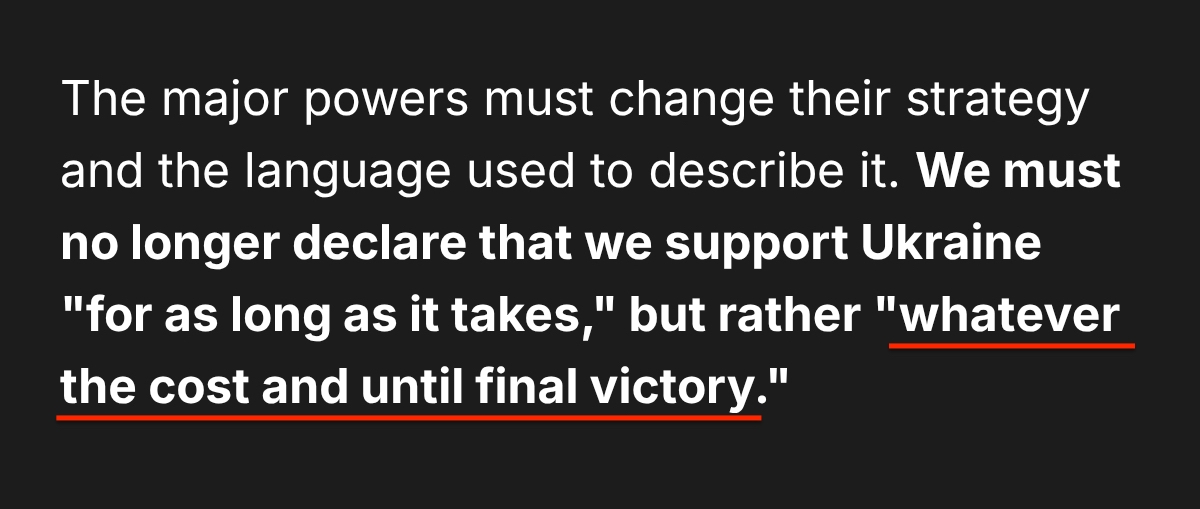
These people are clinically insane. This absurd statement — i.e., European countries must support Ukraine “whatever the cost and until final victory” — is from a recent interview with Nicolas Tenzer, a well-known NATO propagandist who is a senior fellow at CEPA, a pro-war think tank funded by NATO and the military-industrial complex. There truly are now words to describe how evil these people are: not only are they perfectly happy to sacrifice hundreds of thousands of Ukrainians to fulfil their deranged geopolitical fantasies — or simply to line their pockets — but there is apparently no cost that is too high in their eyes, including presumably total war with Russia. It will truly take a miracle for us to survive this moment in history as a species.
Thomas Fazi tweet media
English
18
85
191
4.2K
kamineko retweetledi
Martin A. Armstrong
Martin A. Armstrong@ArmstrongEcon·
Merkel will go down in history as one of the pivotal figures in Europe’s decline. Not because she intended to destroy Europe, but because she represented the arrogant technocratic mindset that believed governments could reshape culture, demographics, energy systems, and economies without consequences. That delusion is now collapsing all around them.
Mario Nawfal@MarioNawfal

🇪🇺🇩🇪 The EU just gave Angela Merkel its highest honor: the European Order of Merit. The same woman who opened the borders in 2015 and handed Europe's energy to Putin via Nord Stream 2. Right-wing MEPs walked out. Hard to blame them.

English
71
305
1.1K
31.3K
kamineko retweetledi
☀️👀
☀️👀@zei_squirrel·
when Michael Moore took abandoned 9/11 first responders to Cuba to get free healthcare, revealing just how sick and depraved the US system that discarded them is. In return the US regime imposed a starvation blockade on the Cuban nation and people and is threatening to bomb them
English
57
3.4K
13.9K
240.7K
kamineko retweetledi
Furkan Gözükara
Furkan Gözükara@FurkanGozukara·
Terrifying war crimes exposed! The NYT confirms the Pentagon tested an experimental PRISM missile packed with 180,000 tungsten pellets on an Iranian sports hall. Washington literally used a girls volleyball team as test subjects, massacring 21 civilians. Pure evil!
English
84
4K
6.5K
80.9K
kamineko retweetledi
Michelle
Michelle@D162Michele·
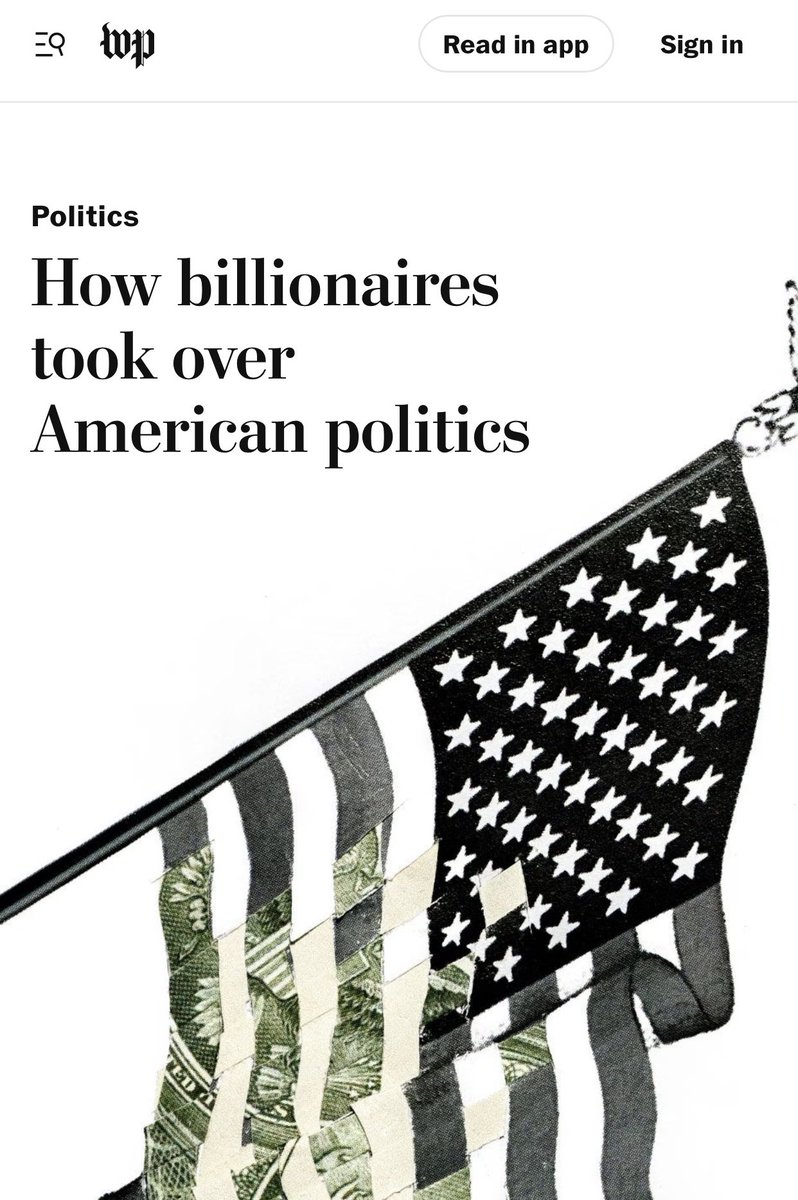
In Western democracies, billionaires tell the government what to do. In China, the government tells billionaires what to do. Do you still think ‘democracy’ is the only way to govern? 🤷‍♀️
Michelle tweet media
English
47
49
190
2.8K
kamineko retweetledi
Lise Santolini.🇷🇺🇵🇸🇱🇧🇸🇾CASANOVA Marie)
Pourquoi cette Russophone, qui n’a fait qu’exprimer son attachement à son pays, est-elle traitée comme une ennemie publique ? Parce que nous sommes en pleine russophobie européenne. Une russophobie abjecte, immonde, irrationnelle. Cette haine n’est pas née d’un conflit d’intérêts ou d’un désaccord légitime. Elle a été soigneusement cultivée par les médias, les gouvernements et l’OTAN. Elle obéit à une logique de propagande : diaboliser la Russie, ses citoyens, sa culture, sa langue, pour mieux justifier une guerre par procuration en Ukraine. Et le comble, c’est que cette même Europe, qui crache aujourd’hui sur la Russie, était ravie de lui acheter son pétrole et son gaz pas cher. Pendant des années, la Russie a chauffé nos maisons, fait tourner nos usines, rempli les caisses de nos fournisseurs d’énergie. Et l’Europe applaudissait. Mais depuis que les États-Unis, sous l’ère Biden, ont décidé qu’il fallait affaiblir la Russie, l’Europe a obéi. Elle a suivi comme un seul homme. Elle a rompu ses liens énergétiques, s’est ruinée en armant l’Ukraine, et a transformé toute critique de cette politique en crime de lèse-majesté occidentale. Aujourd’hui, ils ne peuvent plus reculer. Ils ont trop investi – financièrement, politiquement, médiatiquement – dans ce récit du « méchant russe ». Revenir en arrière serait admettre qu’ils ont eu tort. Admettre qu’ils ont menti. Admettre qu’ils ont sacrifié leur propre prospérité et leur souveraineté sur l’autel des intérêts américains. Alors ils continuent. Ils poursuivent la russophobie. Ils persécutent les Russes de l’intérieur – journalistes, artistes, simples citoyens. Ils les traitent d’ennemis, de propagandistes, de « chevaux de Troie ». Ils les excluent, les humilient, les réduisent au silence. C’est la main qui mord celle qui l’a nourrie. L’Europe a mangé le pain russe, s’est chauffée au gaz russe, et aujourd’hui elle crache sur la main qui lui a tendu ces ressources. Non pas par conviction, mais par obéissance à son maître américain. La liberté d’expression, monsieur de Béchade, n’existe plus pour les Russes en Europe. Et c’est une honte pour notre démocratie. Ce n’est pas de la politique, c’est de la haine pure, déguisée en vertu.
Laurent de Béchade@LaurentDBE

Pourquoi tant de haine à l’égard de @xfedorova ? Elle est russe et sans aucun doute favorable à la Russie. Et alors ? Pourquoi la liberté d’expression ne devrait-elle pas être protégée dans son cas ? Je rappelle que nous ne sommes pas officiellement en guerre avec la Russie. Tout intervenant médiatique exerce une forme d’influence, quelle que soit sa sensibilité ou ses convictions. On ne devrait pas pratiquer de discrimination fondée sur les opinions politiques ou les origines.

Français
61
109
432
10.5K
kamineko retweetledi
Michelle
Michelle@D162Michele·
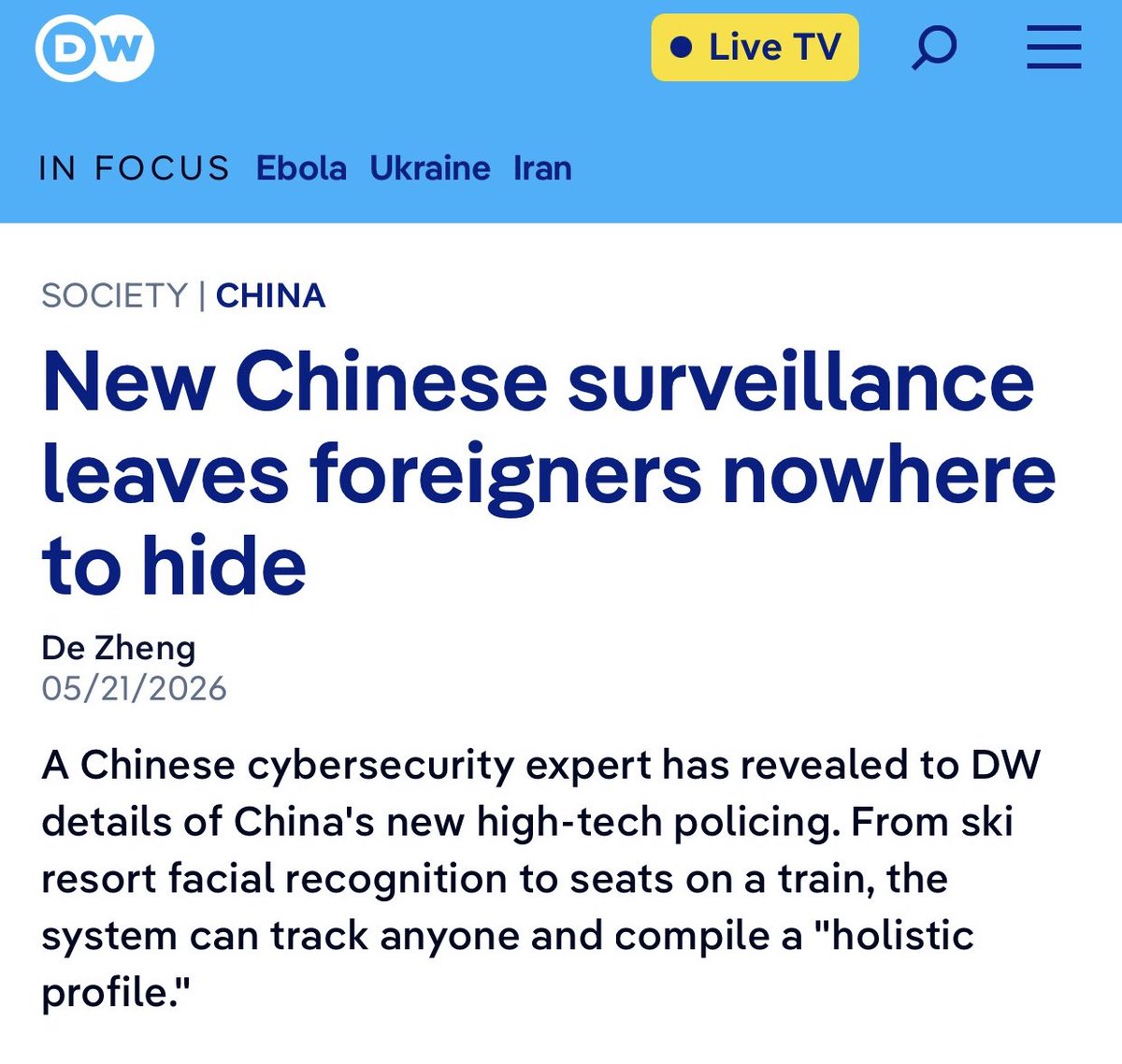
Why are these foreigners trying to hide in China? If you’re not looking to commit a crime in China, then you have nothing to worry about!
Michelle tweet media
English
72
71
410
8.2K
kamineko
kamineko@_kamineko·
@RnaudBertrand @kejimao A bit reductionist. 🇺🇸is not a monolithic block; they are going to continue all efforts, like outlined by @BrianJBerletic and @richimedhurst. A catastrophic mistake by 🇨🇳could tip the scales back. It's too early to relax, 🇺🇸is like a cornered rat now.
English
0
0
1
146
Arnaud Bertrand
Arnaud Bertrand@RnaudBertrand·
Another fascinating article by my friend @kejimao, who remains one of the most thought-provoking geopolitical scholars in China: thewire.in/diplomacy/ches… He tackles an apparent contradiction that I know many people are struggling with: if there is indeed some form of detente between the U.S. and China, why then is the U.S. still selling the "China threat" narrative to countries like India, Japan, and South Korea? Mao's thesis: the U.S. now understands it cannot contain or suppress China anymore - that game is over. But the narrative remains enormously profitable. Keeping allies scared means keeping them buying US weapons, US energy, US technology. The China threat has gone from strategic doctrine to market preservation, or - as Mao puts it - from treating "allies" as "chess pieces" to treating them as "blood bags" (as in the medical bags you drain until it's empty and then discard). Mao, being an India specialist and writing in an Indian paper, warns India it is particularly vulnerable to this because whatever leverage India once had over Washington has largely evaporated. The U.S. needed India when it believed it could contain China. It no longer believes that - which means India has gone from being courted to being invoiced. There is, interestingly, a parallel to this around green energy that I myself highlighted in several of my articles (such as this one in Le Monde Diplomatique last December: mondediplo.com/2025/12/10china). Trump's anti-renewable rhetoric - "drill, baby, drill," calling green energy a "hoax" - functions exactly like this: it's not really about energy policy at home (renewables made up an extraordinary 88% of new US power generating capacity in 2025: electrek.co/2026/04/01/fer…), it's about keeping others dependent on US fossil fuels. In essence, as things stand, neither the "China threat" nor the "green energy hoax" are operative strategies. They're sales pitches. The U.S. doesn't act on either one - it installs renewables at home and pursues détente with Beijing. The narratives exist for the purpose of keeping invoices flowing to countries foolish enough to drink the Kool-Aid.
English
39
267
730
49.3K
kamineko retweetledi
Angelo Giuliano 🇨🇭🇮🇹
In China she wouldn’t even make it to a small village council. The ultimate NOTHING, the ultimate EMPTINESS. No substance, no intelligence, full of contradictions and arrogance. EU chose her to represent half a billion people. Now you know why the WEST, the EU is in full decline.
Ivo Toniut@IvoTONIUT

Vice-President of the European Commission Kaja Kallas: “If Europe cannot defeat Russia, how can we defeat China?” You can spin it however you want, but the reality is that the European Union is an organization made up of id|ots.

English
47
177
632
15.1K
kamineko retweetledi
Rui Ma
Rui Ma@ruima·
I joke (but not really) that the day Meng Wanzhou was detained may ultimately go down as one of the best things that ever happened to Huawei. Huawei was already a formidable company, but inside China it was more grudgingly respected than broadly beloved (yes I'm aware it still has its good share of critics). After Meng’s detention and the entire sanctions campaign, however, Huawei became something much bigger: a true national champion, with waaay more public support, policy support, talent inflows, ecosystem alignment, and symbolic importance. Just as importantly, it fundamentally shifted elite and public opinion around technological self-sufficiency. Before that period, there were still plenty of people who questioned whether China really needed to pursue indigenous semiconductor and technology capabilities so aggressively, including what I estimate to be the clear majority of my entrepreneur & investor friends. Nowadays, they just complain about how it's hurt their business but can't deny the necessity of the strategy. Export controls just added fuel to the fire and opened up the market even more for Huawei. Today Jensen Huang said to CNBC: “Huawei is very, very strong… They had a record year, they’ll likely have an extraordinary year coming up… their local ecosystem of chip companies are doing quite well, because we’ve evacuated that market.” Ren Zhengfei must have the most auspicious bazi ever. Talk about turning every setback into a major win.
English
8
36
217
13.6K
kamineko retweetledi
Kristian Thyregod
Kristian Thyregod@KThyregod·
This is the familiar Brussels fallacy: mistaking commons rules and shared standards for strategic power. They may help govern a market. They do not by themselves deter Russia, manage U.S. volatility, or overcome Chinese industrial scale. Rules are not power just because Brussels says so. @battleforeurope
Terry Reintke@TerryReintke

The EU needs a strong internal market to protect us against: 🇺🇸 a crazy US administration 🇷🇺 an aggressive Putin regime 🇨🇳 unfair Chinese competition When we stand united with common rules and shared standards, we defend democracy, protect workers and climate. 💪🏻🇪🇺

English
3
4
21
2K
kamineko retweetledi
Ignorance, the root and stem of all evil
Slovakian Prime Minister Fico stated that Ukraine is launching drones over NATO countries as a provocation, the goal of which is to draw Europe into a war with Russia. 'Drones are serious. If drones start flying over NATO member states, that's serious. The problem is that these are Ukrainian drones. What will we do if such a drone somewhere turns out to be a provocation, and if it's not just an accident? If it hits its target, something will happen, and then someone will say a NATO member state was attacked, and now let's all get into a conflict. That would be a terrible situation. I want to avoid that. And this can only be avoided, I emphasize again, through dialogue, which, unfortunately, is not happening today. That is, a security meeting was not held.'
English
51
775
1.5K
21.6K