Yagnesh Revar

913 posts

Yagnesh Revar banner
Yagnesh Revar

Yagnesh Revar

@_max_entropy

Computing about computation to compute better computers so we can compute more efficiently about computation to computer better computers ...

Katılım Nisan 2010
377 Takip Edilen53 Takipçiler
Yagnesh Revar
Yagnesh Revar@_max_entropy·
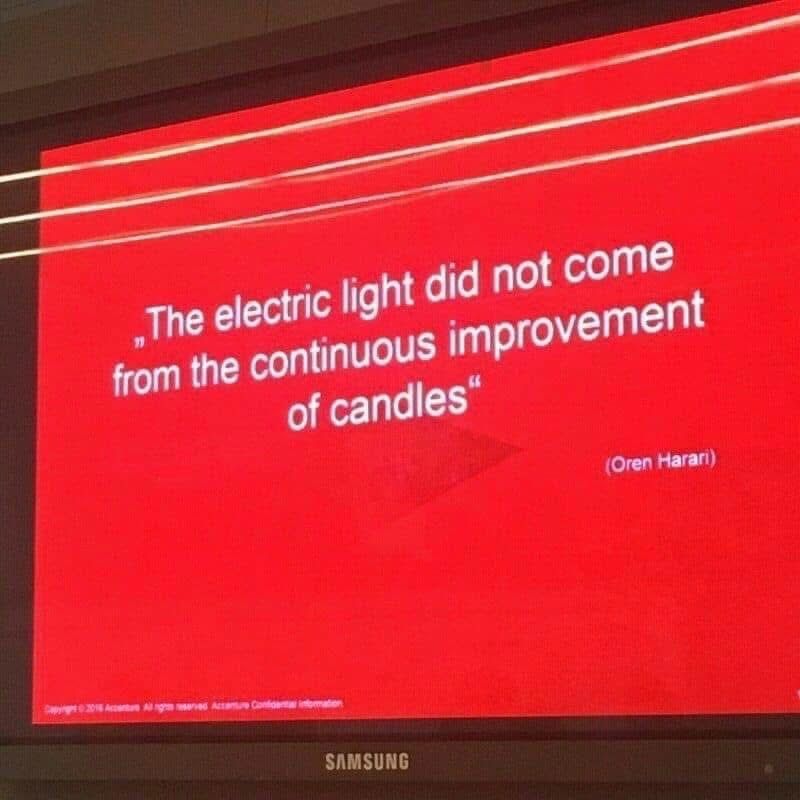
@alvinfoo Hasn't electric light come from working on the purpose of continuous improvement of candles?
English
0
0
0
4
Alvin Foo
Alvin Foo@alvinfoo·
At current pace of technology, companies can no longer survive through purely incremental improvement, u either choose to disrupt or be disrupted.
Alvin Foo tweet media
English
50
1K
5.6K
119K
Yagnesh Revar retweetledi
Miles Brundage
Miles Brundage@Miles_Brundage·
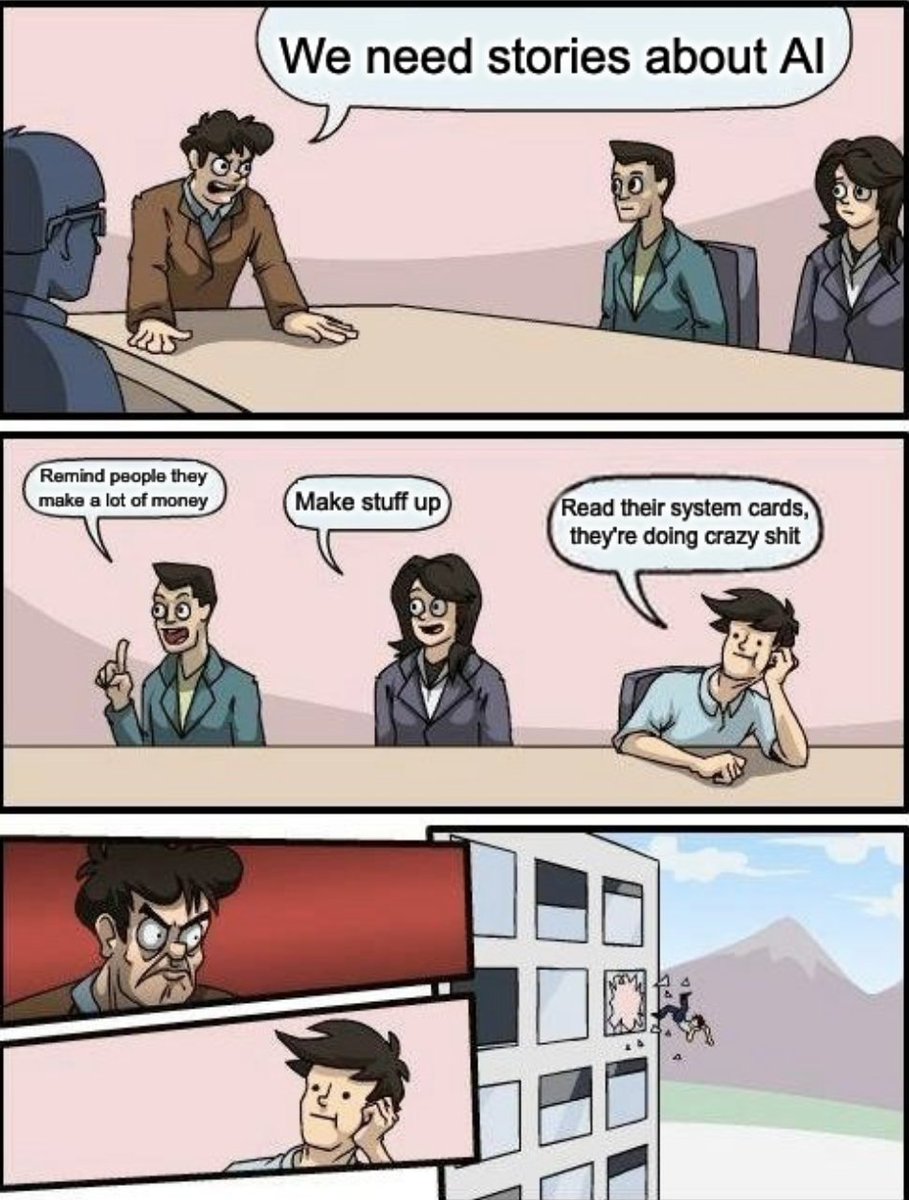
Miles Brundage tweet media
ZXX
6
23
290
14.8K
Yagnesh Revar
Yagnesh Revar@_max_entropy·
Love the counter-example you provided. Language loses its deeper and nuanced meaning without shared representations. Factoring this to your original claim we get that the utility of saying or compressing thoughts into typically spoken languages itself is quite limited, unless there's a strong experiential and cultural alignment, which is remarkable. Countries skewed more towards individualism, in-person communication would have lower utility -- implicitly encouraging people to stop yapping and get to work. Makes a lot of sense :)
English
0
0
1
11
Robin Debreuil
Robin Debreuil@debreuil·
Yes, there is definitely elements to cultures that are not translatable and they are fascinating. The semantics and mental models also differ quite a bit. But to be fair, we can get that going to an English speaking place with a different culture as well, as happens if I go to Ireland or Jamaica. Sometimes it makes them more apparent with the same language, because the differences are often very nuanced. But I agree, it’s these kinds of differences that make learning about a language/culture interesting.
English
1
0
1
36
Craig Weiss
Craig Weiss@craigzLiszt·
which language should i learn: chinese or hindi?
English
380
7
329
51.1K
Yagnesh Revar
Yagnesh Revar@_max_entropy·
That's quite an enlightening perspective. Some translations could be immune from how they're formed. I was considering immersive language learning and translations that aren't as immune. I wonder what metric and degree of similarity in semantics would be required for a successful translation.
English
1
0
1
37
Robin Debreuil
Robin Debreuil@debreuil·
@_max_entropy @craigzLiszt The benefits are not zero, but I don’t think the abstractions are all that different, even English to Mandarin. Otherwise translation would be impossible. . At leas the differences in viewing the world through math versus Shakespeare versus manufacturing are greater.
English
1
0
2
62
Yagnesh Revar
Yagnesh Revar@_max_entropy·
@debreuil @craigzLiszt How about the ability to see the world or its abstractions from a completely different linguistic perspective (abstractions)?
English
1
0
0
57
Robin Debreuil
Robin Debreuil@debreuil·
If you learn how to run a machine shop, or how to program, or learn electronics, it opens up a giant world of ideas. If you then learn a second language perfectly (very hard!), you can do those things with a second set of people. That's most useful if you're running out of sets of people to do things with. Plus sadly, their English is probably going to be better than your second language.
English
1
0
6
459
Yagnesh Revar retweetledi
Todd Saunders
Todd Saunders@toddsaunders·
I know Silicon Valley startups don't want to hear this..... But the combination of someone in the trades with deep domain expertise and Claude Code will run circles around your generic software. I talked to Cory LaChance this morning, a mechanical engineer in industrial piping construction in Houston. He normally works with chemical plants and refineries, but now he also works with the terminal He reached out in a DM a few days ago and I was so fired up by his story, I asked him if we could record the conversation and share it. He built a full application that industrial contractors are using every day. It reads piping isometric drawings and automatically extracts every weld count, every material spec, every commodity code. Work that took 10 minutes per drawing now takes 60 seconds. It can do 100 drawings in five minutes, saving days of time. His co-workers are all mind blown, and when he talks to them, it's like they are speaking different languages. His fabrication shop uses it daily, and he built the entire thing in 8 weeks. During those 8 weeks he also had to learn everything about Claude Code, the terminal, VS Code, everything. My favorite quote from him was when he said, "I literally did this with zero outside help other than the AI. My favorite tools are screenshots, step by step instructions and asking Claude to explain things like I'm five." Every trades worker with deep expertise and a willingness to sit down with Claude Code for a few weekends is now a potential software founder. I can't wait to meet more people like Cory.
English
353
707
7.4K
978.6K
Yagnesh Revar
Yagnesh Revar@_max_entropy·
Cute illustration. Data pollution is concerning. It's another reason why we need a separate internet, made just for humans x.com/i/status/15752… Although it warrants some clarification on what "bad" means in each case here. And could be made more complete by adding bad and no data contributing humans. The plus side of Gen AI is that it contributes something when asked, often promptly and of some relevance.
Cliff Pickover@pickover

Artificial Intelligence. (Meme circulating widely on the web.)

English
0
0
0
43
Yagnesh Revar retweetledi
MIT CSAIL
MIT CSAIL@MIT_CSAIL·
"A good programmer is someone who always looks both ways before crossing a one-way street." — Doug Linder
English
10
87
786
35.6K
Yagnesh Revar
Yagnesh Revar@_max_entropy·
Sometimes I end up saying "brilliant," I just did during a coding experiment, which clearly indicates that I must be very dumb at understanding brilliant.
English
0
0
0
15
Yagnesh Revar
Yagnesh Revar@_max_entropy·
I'd hate to admit that LLMs in its current form can be genuinely useful, given that they have very limited clue about utility and the depth of concepts it uses without "delving" too much into it. I still find them very useful in many everyday tasks like basic writing, coding, and research. They're dumb but they helps us achieve some very cool things. I find this combination quite fascinating.
English
1
0
0
22
Yagnesh Revar
Yagnesh Revar@_max_entropy·
Interesting thoughts on human-AI collaboration on math problems by Terrence Tao! I find myself between fascination and suspicion when I consider that CS is basically applied math and we're seeing benefits of applying CS (applied math) to solve math problems. It feels kind of circular but it makes a lot of sense given that 1) Not every mathematician starts their journey in a strict manner bottom up from the same set of axioms, and 2) Many abstract conjectures may require rephrasing or reframing for equivalence (same underlying structure) or reduction to some familiar problem. It'll be fun to see how this unfolds. It looks like the math landscape is going to have more interconnectedness (entanglement) and incorporation of new domains. Terrence Tao talks about improvements he's hoping to see from generative-AI models in the next year or two: "One very basic thing that would help the math community: When an AI gives you an answer to a question, usually it does not give you any good indication of how confident it is in this answer, or it will always say, I’m completely certain that this is true. Humans do this. Whether they are confident in something or whether they are not is very important information, and it’s okay to tentatively propose something which you’re not sure about, but it’s important to flag that you’re uncertain about it. But AI tools do not rate their own confidence accurately. And this lowers their usefulness. We would appreciate more honest AIs." This is the exact problem that sparked my curiosity in 2014/15 (raw and unrefined: github.com/yrevar/neuraln…). It's a tricky one to solve for LLMs. Not only does it require grounding but also much more sophisticated cognitive models if we're honestly talking about honesty and its honest assessment.
Steven Strogatz@stevenstrogatz

theatlantic.com/technology/202… Terry Tao, on AI's promise for math

English
0
0
0
45
Yagnesh Revar retweetledi
MIT CSAIL
MIT CSAIL@MIT_CSAIL·
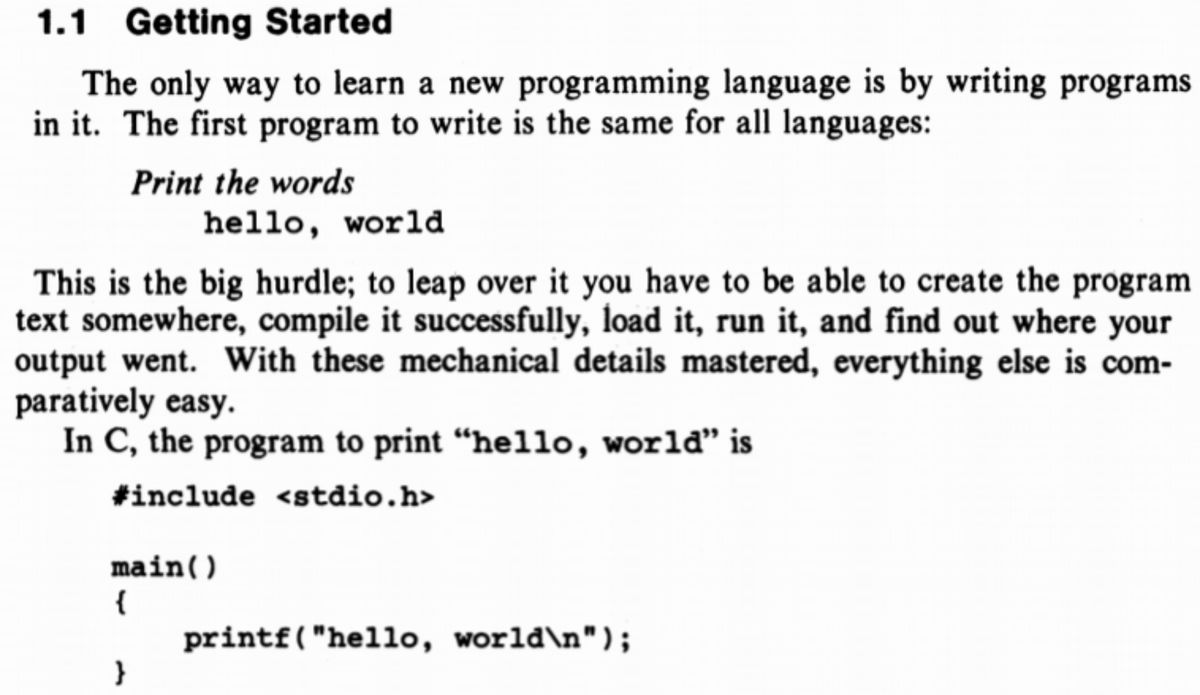
This month, “hello world” said “hello world!” The term was coined in a seminal programming book published in 1978: “C Programming Language,” written by Brian Kernighan and Dennis Ritchie: go.aws/37TmOZq
MIT CSAIL tweet media
English
6
77
345
18.2K
Yagnesh Revar
Yagnesh Revar@_max_entropy·
Figured out the best way to get a task !accomplished: set a recurring reminder for it. ! stands for NOT operation
English
0
0
0
16
Yagnesh Revar
Yagnesh Revar@_max_entropy·
Learned that this is proved using distributive property. Here's more intuitive version to prove it must not be negative: -1 x -1 = -1 Substitute -1 with (2-3): -1 x (2 - 3) = -1 -1 x (2 + (-3)) = -1 Use distributive property: (-1 x 2) + (-1 x -3) = -1 Now apply the assumption -1 x -1 = -1 to (-1 x -3) = (-1 x (-1 x 3)) = -1 x 3 = -3 So: -2 + (-3) = -1 -5 = -1 This is false. So, the premise -1 x -1 = -1 must be wrong. Every real number is either positive, negative, or zero (trichotomy property). -1 x -1 must not be zero because none of the argument is 0. Hence, -1 x -1 must be 1.
English
0
0
0
5
Yagnesh Revar
Yagnesh Revar@_max_entropy·
@thecavemommy But unfortunately this may seem circular when we look at it more carefully and are skeptical of other rules of math. For instance, divide by (-10) begs the question. How can we get around that?
English
1
0
0
14
extra mommy
extra mommy@thecavemommy·
I’ve literally had math geniuses try to explain to me how a negative times a negative equals a positive, and I still don’t get it It doesn’t. If you have nothing, and then more nothing, you don’t have something. You have nothing Math is a psyop!
English
2.6K
178
6.1K
2M