Yi Zhou

126 posts

Yi Zhou banner
Yi Zhou

Yi Zhou

@_y1zhou

Protein design @BiomapI. Views are my own.

Katılım Temmuz 2010
191 Takip Edilen38 Takipçiler
Yi Zhou
Yi Zhou@_y1zhou·
@dingyi 名字叫 The Browser Company, 那么不断地开发新浏览器也很合理对吧 😇
中文
0
0
3
272
Ding
Ding@dingyi·
看到有人透露 Dia 又有新动作了,不知道是啥,只要不是第三个新浏览器就行。。。Arc 那些好功能至今也没拿回来,太可气了!
Ding tweet media
中文
17
1
44
14.1K
Yi Zhou
Yi Zhou@_y1zhou·
@mitchellh Shoutout to github.com/neurosnap/zmx! Many (me included) used tmux/zellij just for session persistence on remote hosts and none of the multiplexing stuff, and zmx is perfect for that purpose.
English
0
0
1
186
Mitchell Hashimoto
Mitchell Hashimoto@mitchellh·
There's such a deep misunderstanding out there about tmux and I get so many absurd issue reports demonstrating that. Many don't realize that using them is like running a Windows VM on your Mac, and complaining to Apple that iCloud sync isn't working from Windows in the VM. They are super powerful and have their use and I am happy to support them in any way I can. I'm not anti-multiplexer, but I wish more people understood the architecture a bit more.
English
80
17
1.1K
177.6K
Yi Zhou
Yi Zhou@_y1zhou·
@kavi_deniz Is this referring to Figs 5&6 of the techinical report? From the Protenix-v1 and IsoDDE reports Protenix-v1, SeedFold, and AF3 seem to be on par when evaled on larger Ab-Ag datasets. Curious how things would look like when the scaling analysis is expanded to more data points!
English
0
0
0
56
Deniz Kavi
Deniz Kavi@kavi_deniz·
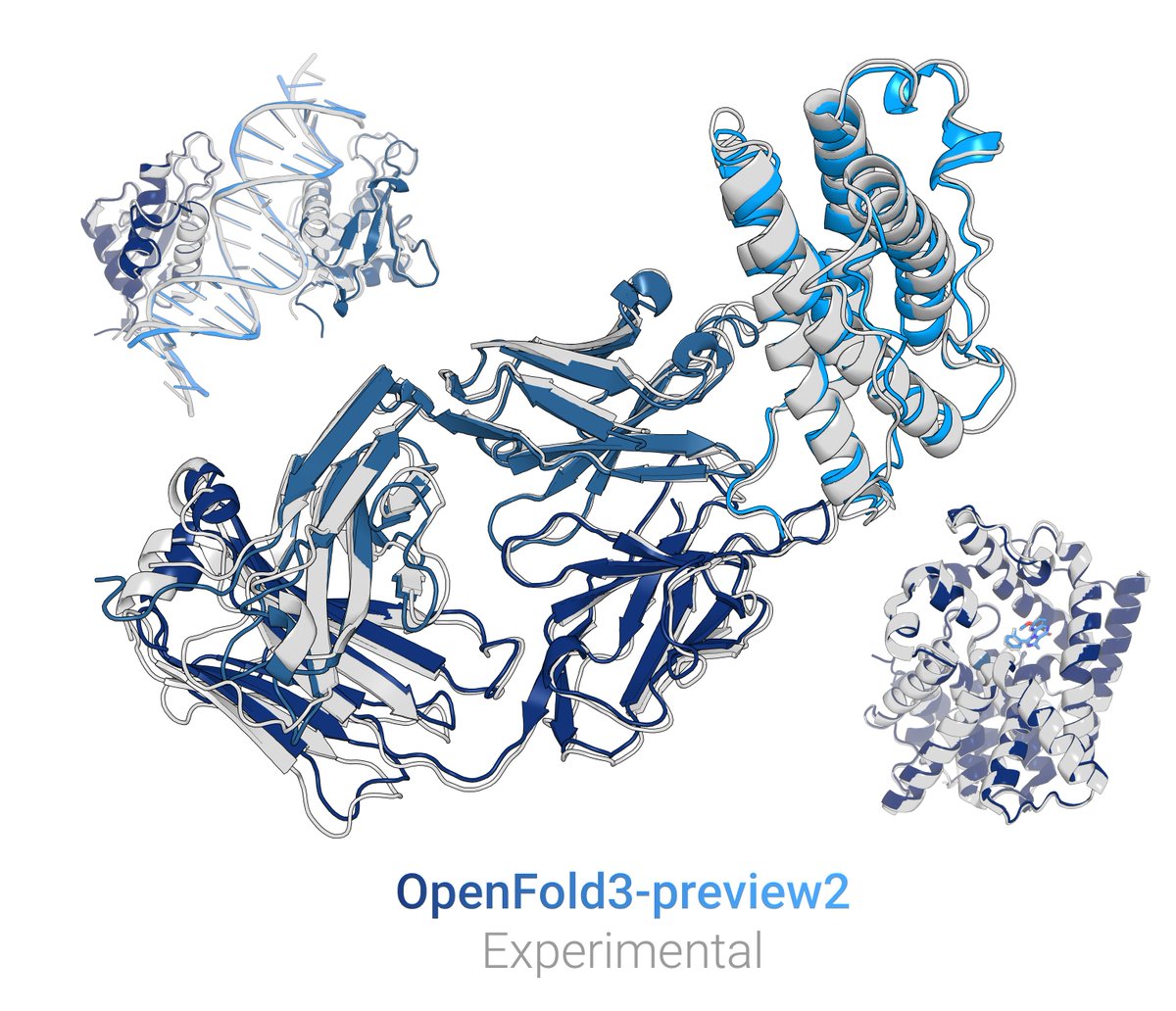
The biggest remaining weakness is antibody quality at larger inference scales: both OF3p2 and Protenix-v1 narrow the gap to AF3, but AF3 continues improving where the others saturate, suggesting a deeper difference in physical understanding.
English
2
0
2
322
Deniz Kavi
Deniz Kavi@kavi_deniz·
AlphaFold3 performance, are we there yet? Protenix-v1, IntelliFold, and more claim AF3-level accuracy on a diverse tasks. While they've shown some meaningful improvements, our findings (especially AbAg complexes) show they aren't fully there yet. Let's look at the benchmarks! OpenFold3 preview 2 is out today, available on @tamarindbio along with every other protocol mentioned here.
Deniz Kavi tweet media
English
2
14
73
4.2K
Yi Zhou retweetledi
Clay Kosonocky
Clay Kosonocky@kosonocky·
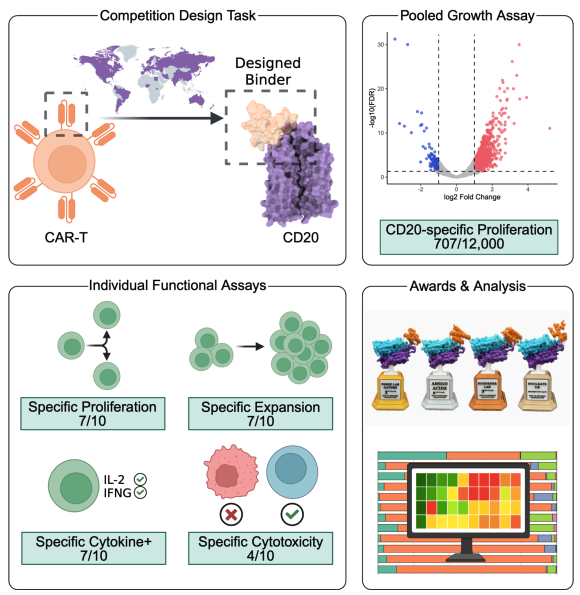
The results are finally in! 🏆💻🧬 I'm thrilled to announce that the manuscript for the Bits to Binders protein design competition is out on bioRxiv! Here's a summary of our findings, including some simple criteria that nearly *double* success rates when applied as a filter 🧵
Clay Kosonocky tweet media
English
1
39
152
13.6K
Yi Zhou
Yi Zhou@_y1zhou·
@DdelAlamo Could be one of the reasons for IsoDDE's much improved performance on Ab-Ag modeling? They should have access to lots of proprietary data
English
1
0
4
347
Diego del Alamo
Diego del Alamo@DdelAlamo·
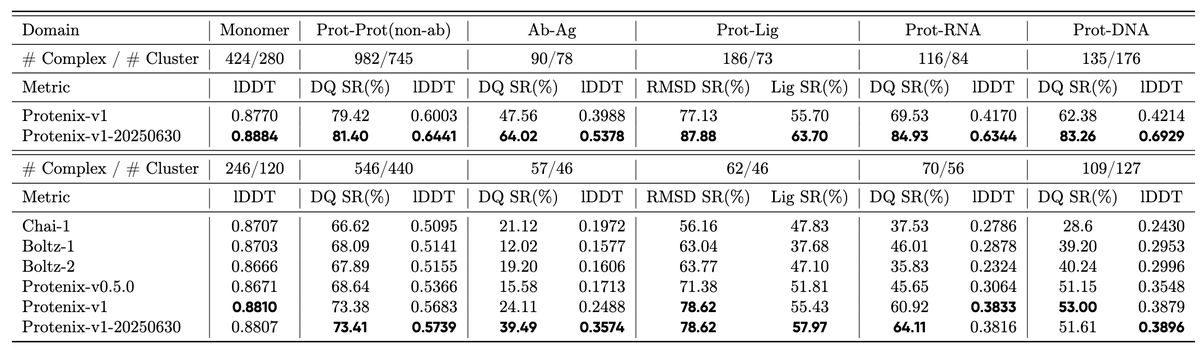
Protenix trained an identical model with way more training data (2025 cutoff instead of 2021), demonstrating that antibody-antigen modeling, but not protein-ligand modeling, is currently data-limited (DQ SR % means % DockQ≥0.23) with this architecture
Diego del Alamo tweet media
English
2
6
75
4.1K
Diego del Alamo
Diego del Alamo@DdelAlamo·
Random infuriating thing of the day. PDBfixer can't be ported over to pip because the name 'pdbfixer' is blocked by PyPI admins for reasons that nobody seems to be able to articulate, preventing packages using those fxns from being fully conda-free
English
6
3
34
3.4K
Yi Zhou
Yi Zhou@_y1zhou·
@erisaonX It’s 1:1. 1st round of newborns: 50%:50% boys and girls. Those who had boys stop in this round. 2nd round: still 50-50. 3rd and all later rounds are the same. There are fewer and fewer parents in later rounds but within each round it’s 1:1.
English
0
0
1
58
erisa
erisa@erisaonX·
This is the most probability question of all the probability questions I’ve ever come across
erisa tweet media
English
229
43
2.1K
484.4K
Yi Zhou
Yi Zhou@_y1zhou·
@owl_posting It’s also unclear how many designs were needed in silico for picking out these top candidates for experimental validation. Testing 30 molecules from 100 designs or from 100,000 designs would be very different in community adoption
English
0
0
0
94
Yi Zhou
Yi Zhou@_y1zhou·
@davidycli @owl_posting Completely agree but I also think these are fields where data are much more scarce. Curious to see how models would generalize
English
0
0
0
26
David Li
David Li@davidycli·
@owl_posting In vivo properties eg PK, PD, immunogenicity Then different ab based formats eg bispecific, TCE, ADCs - where actual drugs these days are made!
English
3
1
12
983
owl
owl@owl_posting·
turns out everything nabla’s model claims it can do, chai’s can too! so i guess the suspicion that developability being a naturally emergent property of a well-trained model is true the GPCR result also seems emergent (surprising!), given that chai-2 could do it from the start but just was never tested on it in the original release insane speed from chai, i wonder if this result was just sitting on ice or they literally contracted a CRO the second they saw Nabla’s release. the post at 11:48pm PST makes me feel like it was the latter, which is a fun story it does beg the question a little of whats next to hill climb on in this subfield if the traits i assumed are next to optimize for (solubility, etc) are simply going to naturally pop out of any good model, regardless of who are the ones developing it. in-vivo properties i guess?
Chai Discovery@chaidiscovery

Today, we’re releasing new data showing that Chai-2 can design antibodies against challenging targets with atomic precision. >86% of our designs possess industry-standard drug-quality properties without any optimization. Thread👇

English
7
15
162
47.8K
Yi Zhou
Yi Zhou@_y1zhou·
@slavov_n So PTMs could be… not *post* translational?
English
1
0
4
327
Prof. Nikolai Slavov
Prof. Nikolai Slavov@slavov_n·
Nascent proteins may be phosphorylated during translation, and the phosphosite buried in the protein’s inner core. Such buried phosphosites are found in ~ 1/3 of the phosphorylated human proteins. Buried phosphosites can influence protein abundance (👇), providing another example for proteoform specific regulation.
Prof. Nikolai Slavov tweet media
English
8
24
212
38.7K
Yi Zhou
Yi Zhou@_y1zhou·
@DdelAlamo I remember reading somewhere that the original AF3 was trained with the most epochs, and Boltz1 with the least?
English
1
0
2
687
Diego del Alamo
Diego del Alamo@DdelAlamo·
Does anyone have any guesses for why AF3 is just better than all its competitors across the board, even with the same exact architecture & training data? Is it nothing more than Google-sized training budget?
Mohammed AlQuraishi@MoAlQuraishi

OF3p is already quite good. For any modality, it is comparable (or better) to the best existing OSS model for that modality. On RNA, where we spent considerable effort, it is at AF3-parity. RNA is a challenging modality where all models (incl AF3) leave much room for improvement.

English
10
3
59
9.2K
Yi Zhou retweetledi
Biology+AI Daily
Biology+AI Daily@BiologyAIDaily·
AI-guided design of common light chains to enable manufacturable bispecific antibodies 1. A new AI-driven framework has been presented to computationally design common light chains (cLCs) for bispecific antibodies (BsAbs), significantly reducing the experimental screening burden from thousands of variants to only a few per target. This innovation could revolutionize the development of BsAbs by addressing the manufacturing bottleneck caused by light chain mispairing. 2. The platform successfully engineered therapeutic antibodies lacking experimental structures, expanding its applicability beyond crystallographic databases. Among the 10 therapeutic targets tested, designs for 7 targets were successfully generated, comprising 55 unique BsAb pairs, with 43.6% successfully validated as BsAb cLCs. 3. The study highlights the use of structure-guided pairing of non-cognate VH-VL interfaces, which is a key innovation. This method reduces experimental screening by three orders of magnitude compared to traditional approaches, making the process more efficient and accessible. 4. The platform supports both kappa (κ) and lambda (λ) chains and revealed an enrichment of IGKV1-39 linked to broad VH-VL compatibility. This finding could have significant implications for the design of future bispecific antibodies. 5. Three bispecific antibodies reached production-ready specifications, achieving >90% purity and 1.6-1.8 g/L titers. This demonstrates the platform's ability to generate high-quality, manufacturable BsAbs. 6. The computational pipeline integrates high-resolution dataset analysis, structure modeling, molecular dynamics simulations, and candidate selection. This comprehensive approach ensures that the most promising candidates are selected for experimental validation. 7. The study also includes detailed experimental validation, with antibodies expressed in ExpiCHO-S cells and binding measured by biolayer interferometry and surface plasmon resonance. This rigorous testing confirms the effectiveness of the computationally designed cLCs. 8. The platform's success in generating functional BsAbs across diverse therapeutic targets showcases its generalizability. This could democratize bispecific antibody development, making it more accessible to teams with limited resources. 📜Paper: biorxiv.org/content/10.110… #AIDrivenDesign #BispecificAntibodies #ProteinEngineering #ComputationalBiology #AntibodyDevelopment
Biology+AI Daily tweet media
English
0
9
30
1.9K
Nathan C. Frey
Nathan C. Frey@nc_frey·
After three exciting years @PrescientDesign @genentech, last Friday was my last day. It has been an amazing journey, with an incredible team, and I know there is much more to come from this stellar group of researchers. I am immensely grateful to my team, our collaborators, and to @stephenrra & @GligorijevicV for their mentorship and support over the years. Onto the next adventure!
Nathan C. Frey tweet media
English
21
5
251
18.9K
Irina Bezsonova
Irina Bezsonova@IrinaBezsonova·
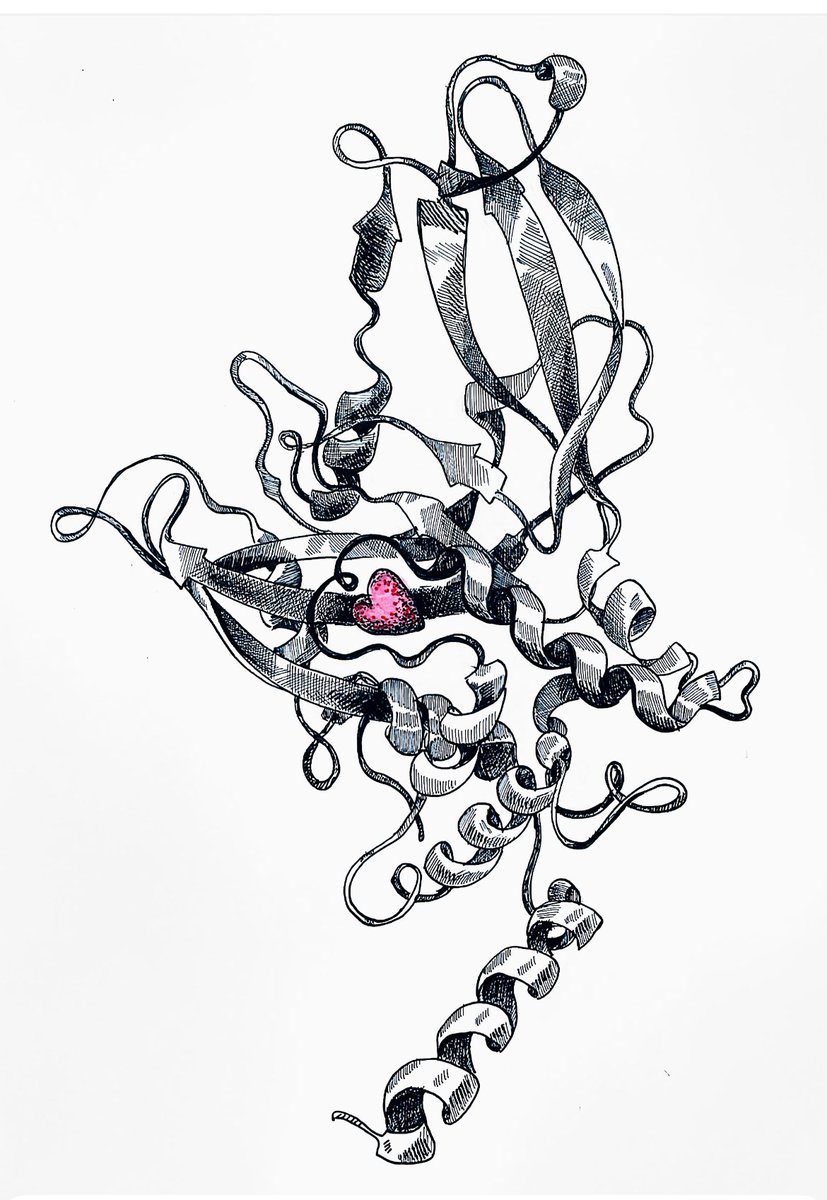
New drawing! Ubiquitin-specific protease 7 (pdb 4M5W) It’s been a while since I last drew anything. Forgot how fun it is.
Irina Bezsonova tweet media
English
8
15
316
13.9K
Yi Zhou
Yi Zhou@_y1zhou·
@CryoKhan Wish the new adjustable sidebar was included. It’s irritating when objects with long names but same prefixes get shown as the same in the old UI
English
0
0
0
127
sk
sk@compchemm·
Pymol3.1 open source just released
sk tweet media
English
3
30
117
6.9K
Yi Zhou retweetledi
Kevin K. Yang 楊凱筌
Kevin K. Yang 楊凱筌@KevinKaichuang·
We compared the calibration of various machine learning uncertainty estimation methods for protein engineering. No method excels across all scenarios, and uncertainty-based strategies for optimization often did not outperform methods without uncertainty.
Kevin K. Yang 楊凱筌 tweet mediaKevin K. Yang 楊凱筌 tweet mediaKevin K. Yang 楊凱筌 tweet mediaKevin K. Yang 楊凱筌 tweet media
English
4
24
129
10K
Yi Zhou
Yi Zhou@_y1zhou·
We benchmarked ProteinMPNN, ESM-IF, LM-Design, and AntiFold for the CDR design of Fab and VHH antibodies. None are a one-model-fits-all solution! Improvements to training sets and eval metrics will help deliver more effective designs. #AI #Antibody #ProteinDesign #AntibodyDesign
Per Greisen@GreisenPer

Accurate inverse folding models are crucial for antibody CDR design, especially with the rise of LLMs in protein engineering. This benchmark evaluates these models, aiming to improve antibody therapeutics. biorxiv.org/content/10.110…
English
0
0
2
70
Yi Zhou
Yi Zhou@_y1zhou·
@btnaughton @adaptyvbio This seems to agree with many previous binder design post-hoc analyses, where the confidence metrics improve your success rate of getting a binder but doesn’t correlate with any experimental data
English
0
0
1
56
Brian Naughton
Brian Naughton@btnaughton·
I (mostly Claude!) ran some basic regressions on the @adaptyvbio round 2 data. I am not yet seeing anything that does better than taking the average Kd? I include ipae, pll, iptm, pltddt, seq_len, similarity and the design model as covariates. (I did not include nonbinders yet)
Brian Naughton tweet media
English
3
2
19
2.7K
Yi Zhou retweetledi
Simon Barnett
Simon Barnett@SimonDBarnett·
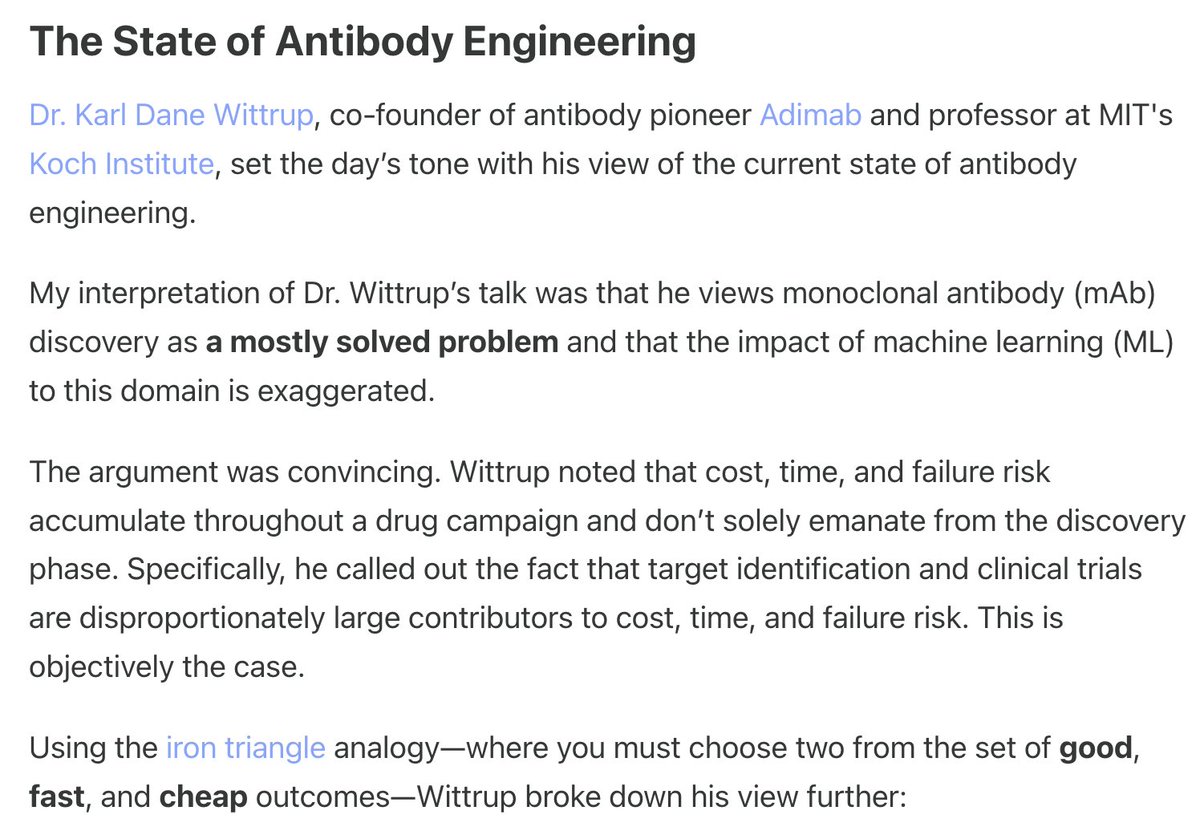
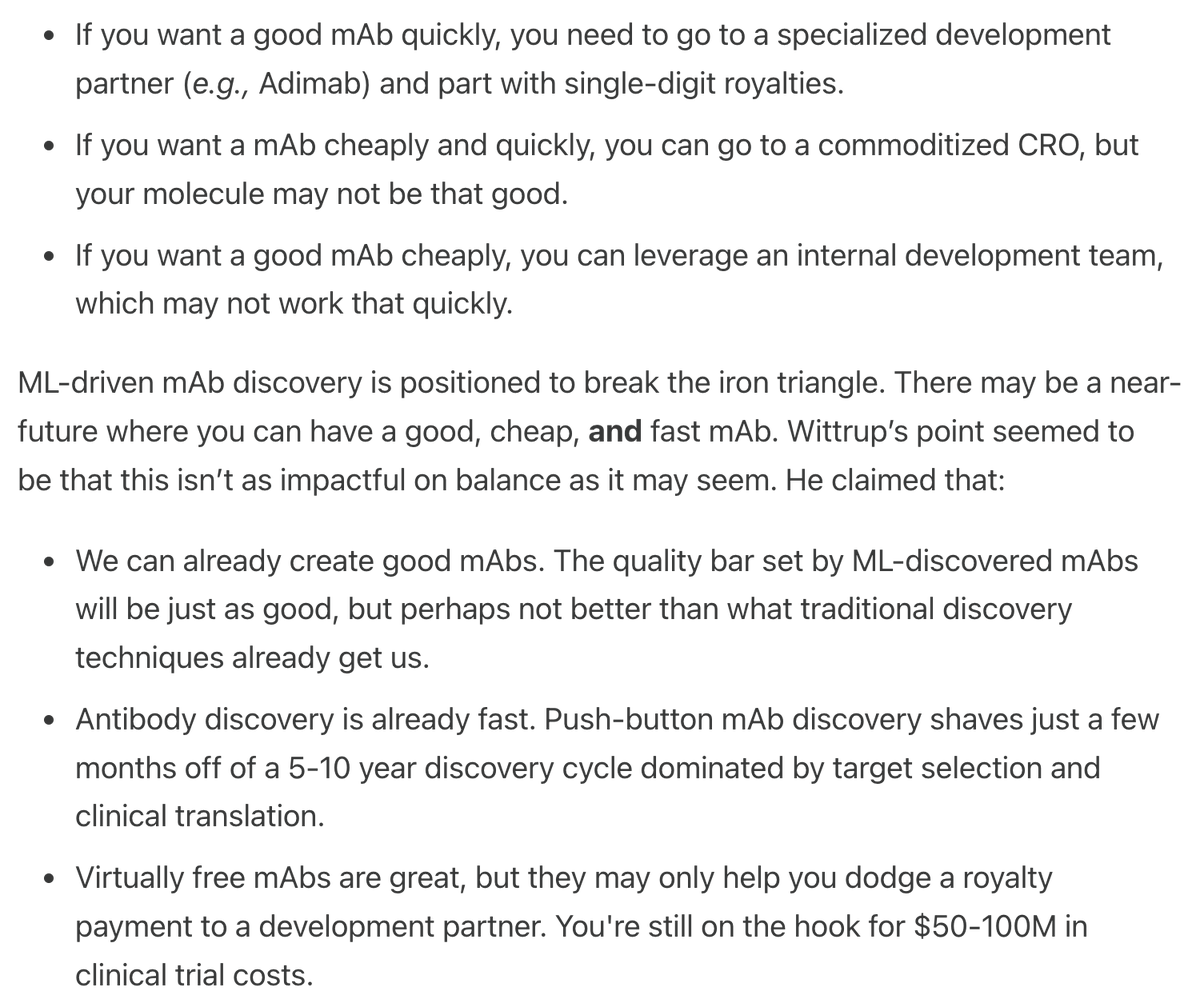
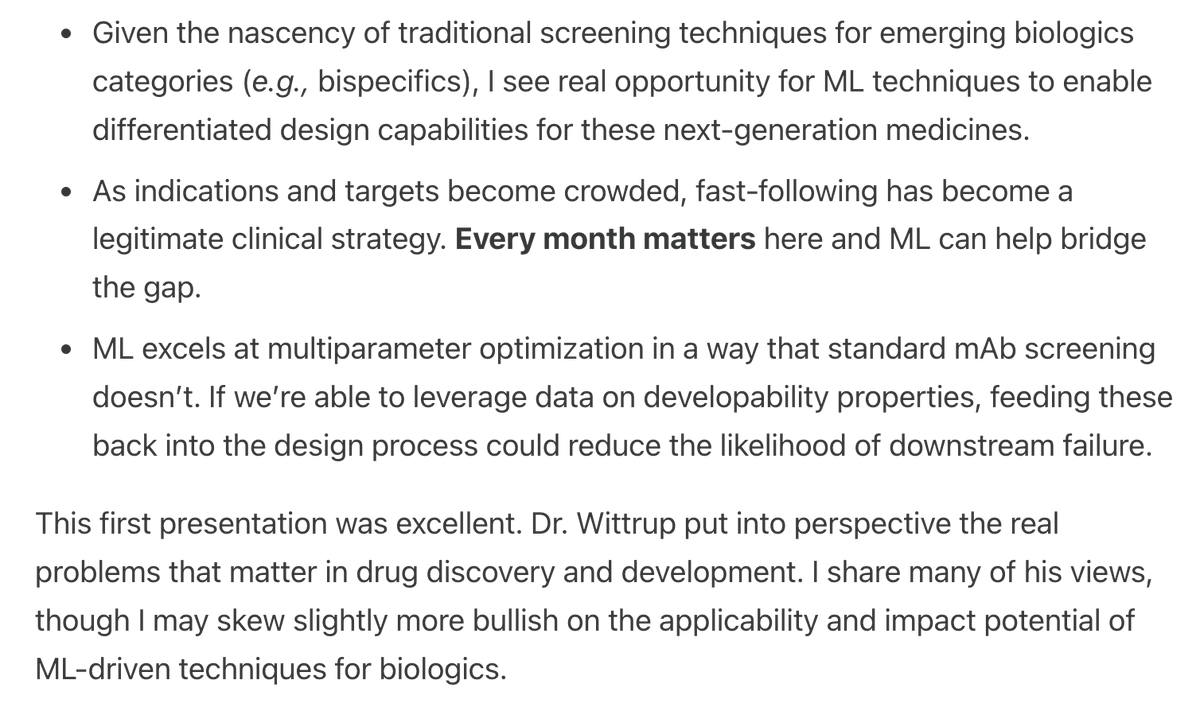
With the #NeurIPS2024 bio-related workshops right around the corner, we wanted to open-source some of our team's notes from the last AI x Bio conference we attended: MoML. Expect more from us as NeurIPS 2024 draws to a close. Full Article > tinyurl.com/tx7du7xm
Simon Barnett tweet mediaSimon Barnett tweet mediaSimon Barnett tweet mediaSimon Barnett tweet media
English
4
16
70
9.4K
Yi Zhou
Yi Zhou@_y1zhou·
@GabriCorso Thanks for the awesome work! Could you provide some insight on why the new checkpoint is much smaller than the previous one? Is it related to the new memory-efficient features?
English
1
0
0
47