David Li

1.4K posts

David Li banner
David Li

David Li

@davidycli

Life sciences x technology x markets per aspera ad astra

San Francisco, CA Katılım Temmuz 2014
1.2K Takip Edilen5.3K Takipçiler
Sabitlenmiş Tweet
David Li
David Li@davidycli·
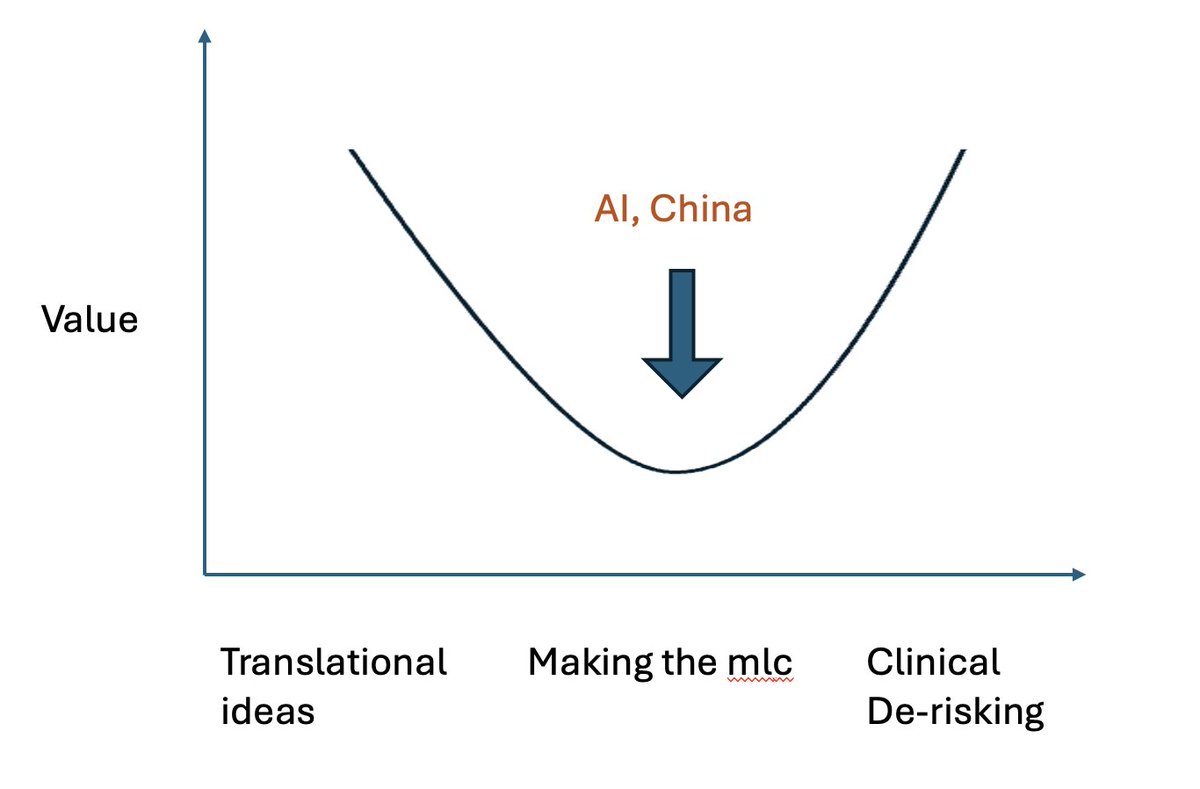
Recent advancements in one-shot AI protein / antibody development by Chai, Nabla, AI Proteins, Generate, and a few others are accelerating the *main* theme in biotech: Value of building the molecule is going down. The value of novel targets, novel translational ideas, AND also the value of clinical execution is going UP Here's where the value graph is moving towards: The twin forces of AI and China are quickly driving down price of mlc dev across many modalities: For AI - mainly Ab right now, emerging for genetic medicines, small mlc, ADCs, cell therapy; For China - Abs, cell and gene therapy, small mlc, and soon genetic medicines Having a "best in class" mlc is no longer enough - many tech platforms will soon offer you a mlc priced on metered compute (getting cheaper) and China CROs / biotechs will continue to eat the world with (over)capacity (continued involution). To make a valuable drug, you must differentiate on either: a) Novel translational ideas. Novel targets, novel mechanisms, but not just that - connecting targets with diseases; novel application of certain targets in new disease settings, new intuition on which patient pops have widest therapeutic index for a drug, etc OR b) Clinical execution. Determining the appropriate endpoints in a trial. Recruiting the right patients. Appropriate relationships with the right PIs / clinical sites. Ability to finance registrational studies in US markets ($10s to 100s of Ms) Either be a translational target discovery engine / tech platform that unlocks new modalities (which unlocks new translational hypotheses) OR get a team of grizzled clin dev / CMO vets and go raise $X00M+ to validate a clinical hypothesis Living in the middle (ie being "full stack") is dangerous work (at least for a startup)
David Li tweet media
David Li@davidycli

**A grand unified theory on what will happen in biotech in the next 10-20 years** the two major forces reshaping industrial biotech in the next decade are: 1. China 2. AI - and they're critically linked how? China's low R&D cost basis democratizes execution by providing infrastructure to more drug developers (similar to how AWS helped cloud apps explode in 2010s) AI makes scientific information much more freely available; agents & lab automation increase R&D productivity as well as throughput, further deflating development costs What happens when many more translational ideas can be tried much more cheaply? Value starts accruing in the best ideas to try ie the value shifts earlier in the value chain if the cost of everything from preclinical R&D to clinical trials are dropping significantly due to combo of AI and China, the disparity between clinical stage vs early pipeline assets shrinks dramatically from the current order of magnitude difference The premium on true creativity, novel scientific insight, fundamentally new biology will 100x In a few years the top-of-industry drug hunters / translational biologists will command a hefty premium (maybe not $100m a year like current top AI scientists but ... maybe??) Even more provocatively, foundational models in translational biology that surface / accelerate novel biological hypotheses will suddenly capture outsized value When will a translational foundational model be worth more than a top 10 pharma co? sounds crazy... but like everything else --> slowly, then all at once

English
10
22
170
37.9K
David Li
David Li@davidycli·
@parmita They’re buying a lot of data
English
0
0
5
546
Parmita Mishra
Parmita Mishra@parmita·
A $400M dollar acqui-hire is NOT going to make Anthropic win in life sciences. It is the same thing as every other company: they need DATA, not DRUG DESIGN.
English
13
7
129
49.4K
David Li
David Li@davidycli·
@ladanuzhna There is indeed lots of alpha remaining in CRO market
English
1
0
3
757
lada
lada@ladanuzhna·
It’s funny to me that Wuxi is considered a Chinese CRO. Wuxi is a westernized API over Chinese CROs charging insane premiums for keeping things translated to English. True Chinese CROs cost at least 50% of what Wuxi charges and have to be meticulously searched and qualified. But once you find them - it’s a gold mine.
English
8
3
87
15.1K
David Li
David Li@davidycli·
@endowment_eddie That’s the whole point: terminal value of biotech vs tech has shifted and GPs should recognize that
English
2
0
1
352
Endowment Eddie
Endowment Eddie@endowment_eddie·
These numbers are very off. 5-10x net from an ai fund is a <1% outcome. 2-3x net is still a very good outcome in the fullness of time. 3x net realized funds are exceedingly rare. Traditional biotech funds should be smaller than IT focused counterparts. The terminal value for the companies is totally different. Comparing Frazier vs sequoia is illogical.
English
4
0
27
1.9K
David Li
David Li@davidycli·
traditional biotech VCs are dramatically underweighting the structural threat AI poses to their business model recently spoke w a US institutional LP - even top tier biotech VC return profiles are not competitive with what AI funds are now producing when an LP can put capital into an AI fund returning 5-10x+ net and the biotech fund is grinding out 2-3x on a good vintage, who do you think is going to get the capital? case in point: the largest bio venture fund raised in last 2+ years has been Sofinnova at $1.2b and Frazier at $1.3b; today Sequioa raised a $7bn AI focused opportunities fund; Thrive raised a $10bn fund a few months ago largely focused on AI most biotech GPs I talk to are treating AI as "yet another wave" in technology and most are pessimistic about near term AI impact in drug discovery; yes - better binder design is not remotely close to developing clinically impactful drugs; however, I'd encourage these GPs to look more broadly - the competition is no longer SaaS startups getting to $100M in ARR in 8 years; AI native startups are getting there in 8 quarters "but don't LPs want diversification?" — where was this argument when PE/VC 5x'd their allocation against other asset classes over the last 25 years? same thing is happening now, except with AI. intra asset class diversification is a misnomer. the real diversification is VC vs other asset classes, not biotech VC vs AI VC a lot of biotech VCs raised funds in 2021 and 2022 when times were good. many of those GPs will need to go back out in 26, 27, 28. it's going to be a rude awakening when that AI wave they expected to crest has not, and if AI IPOs ie OpenAI, Anthropic, actually IPO - watch out - LPs will be asking why this capital shouldn't just go into the asset class that are printing
English
7
3
78
12.3K
David Li
David Li@davidycli·
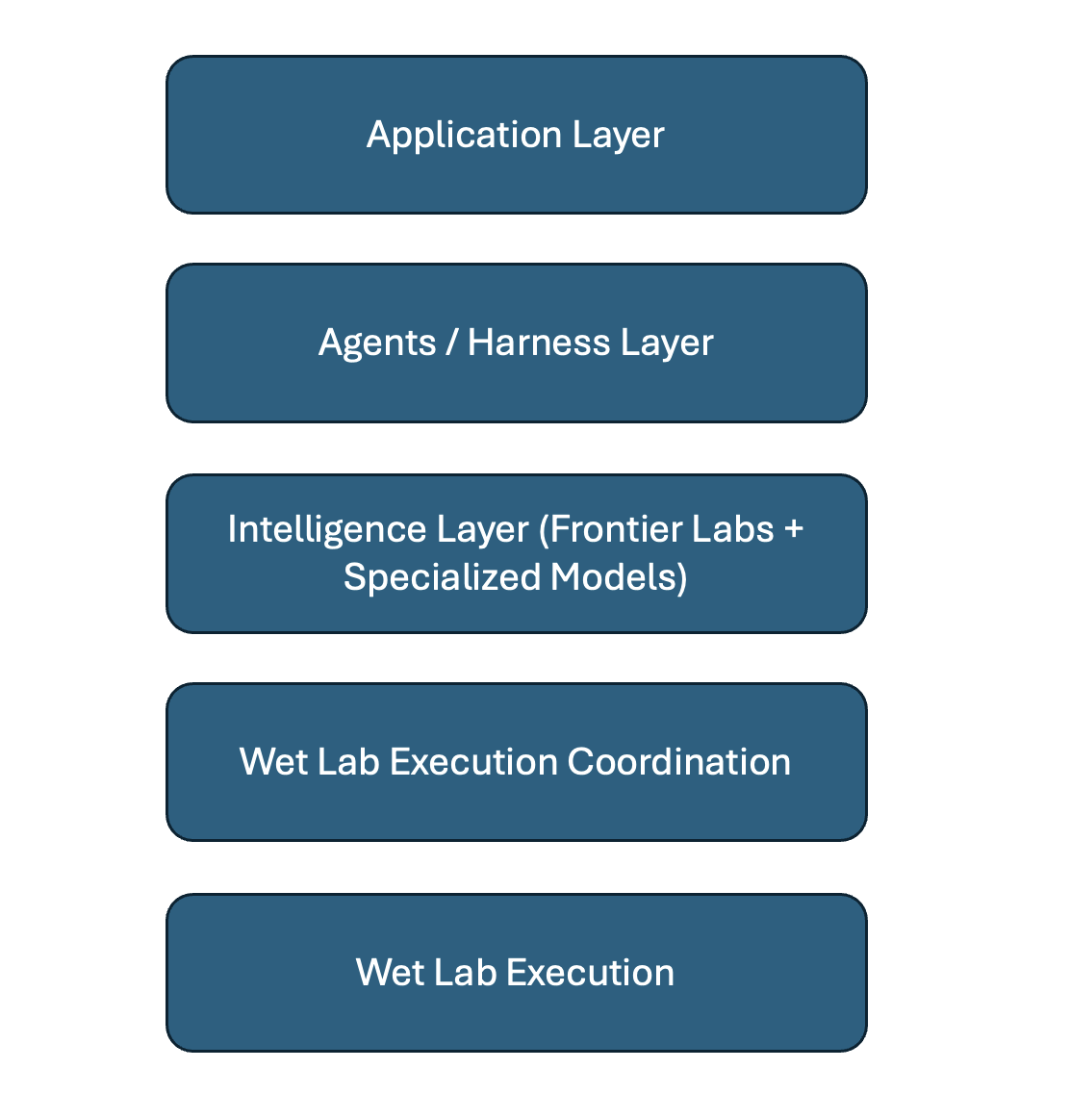
**the emerging AI native life science R&D stack** the key question from mid 2025 til recently was whether frontier labs were actually serious about building products, capabilities, and orgs in AI x drug discovery or they were using it for marketing purposes in pursuit of ever larger rounds of funding. fair q when in a few week stretch in 2025, sam altman, demis,and dario all said that one of the biggest benefits of AI for humanity would be huge acceleration of tx development ("dozens of drugs in a decade!") - cue exasperated groans from the trad bio section of the peanut gallery a few cards have flipped in last few weeks: OAI: released GPT-rosalind, a life science research model, first vertical specific GPT Anthropic: acquired Coefficient bio to build biotech infra and a rumored bio model also dropping soon as the frontier labs' strategy in the space has become clearer, so too has the *AI-native life science R&D stack* a few comments on each layer of this 5 layer cake, starting with the middle: Intelligence Layer (Frontier + Specialized Models) ~ Ant, OAI, GDP all in running; will proprietary data end up being *the* differentiator? and if so, who actually has access? Wet Lab Coordination ~ speaking of proprietary data, can't get it at scale without some interface layer to the actual wet lab execution apparatus. in life sciences, that workflow is super outdated, phone calls, Excel, fax , PDFs, all just archaic. nearly no one has an API. are the frontier labs interested in tackling the long tail of assays and CROs that would need to be wired into a real wet lab coordination layer? nothing to suggest they will right now — but they are hungry for capturing value up and down the chain AWS Bio is first green shoots that another player will operate in this space but reviews on the ground have not been great - this may be the grittiest but also most unappreciated oppty in the stack Wet Lab Execution ~ life sciences has a massive long tail of CROs, and given this is where the actual proprietary data gets generated, so this layer can be a genuinely differentiating factor the interesting topic to watch: are any CROs going to become AI-native and start moving *up* the stack — doing wet lab coordination themselves, or perhaps even becoming preferred data providers to frontier labs? Early movers like Gingko and Adaptyv are making some noise, but this has to be a topic that the forward-thinking folks running AI strategy at Thermo, Wuxi, and others are thinking about Agents / Harness Layer ~ sitting on top of intelligence layer, lots of new startups have jumped into this space trying to coordinate models across life sciences specific workflows big risk looming over all of them is whether frontier labs will simply subsume this into their own product roadmap. Anthropic x Coefficient Bio is an ominous signal (but maybe $ 400M acqui-hire in 12 mo is an outcome that everyone involved is ok with) Application Layer ~ Benchling is the big gorilla here but if "attention is all you need" is *truly* all you need, the UX / UI with scientist layer becomes critically important, and potentially the most interesting place for a shake-up frontier labs could still move in. and new form factors could emerge enabling new startups. physical AI could change the whole workflow additionally is a notebook entry in a digital ELN even the right atomic unit of work in an AI-native workflow? finally, stepping outside the stack, the looming question that no one has fully answered yet - these are all *infrastructure* plays. what will the truly AI-native therapeutics company actually look like? the actual value creation that comes out of this stack? how will those AI-native biotechs look different in shape, value creation profile, and capital intensity compared to the biotechs we know today? stay tuned.
David Li tweet media
English
10
18
168
45K
David Li
David Li@davidycli·
@drrichjlaw large pharma pipeline decisions driven by folks that are deploying CYA at scale as a career strategy no shade against individuals in the system (many of whom are brilliant) it's a structural incentives problem.
English
1
0
5
308
Rich Law
Rich Law@drrichjlaw·
One observation from the AACR pharma days, is how few pharma are working in the most difficult to treat (biggest unmet medical need) cancers like pancreatic, head & neck, & triple negative breast. E.g. this slide from Abbvie. #AACR
Rich Law tweet media
Coronado, CA 🇺🇸 English
5
3
35
8.2K
David Li
David Li@davidycli·
@drrichjlaw Every novel technology / platform US biotech (which will soon be the only US biotechs left) should be leveraging the “clinical brute force” path. Human biology data is king.
English
1
1
4
1.2K
Rich Law
Rich Law@drrichjlaw·
"Lots of targets in I-O have not panned out in the clinic because the models just don't represent the immune system & TME in humans. It's why the clinical brute force approach in China is attractive." - BMS #AACR
Rich Law tweet media
Coronado, CA 🇺🇸 English
3
12
52
48K
David Li
David Li@davidycli·
@TheBiotechBear This will happen when we have a co go from $1 > $5 trn in less than three years as Nvidia did Our market is orders magnitude smaller (right now)
English
0
0
0
305
.
.@TheBiotechBear·
our sector sucks partially because we'll never have the biotech equivalent of something like dwarkesh x jensen to occupy everyones minds rather we get shitco mania, consensus X/reddit retail pumps, and the same cyclical freakouts about macro + regulatory every so often
English
14
2
53
7.6K
David Li
David Li@davidycli·
@adamlewisgreen very cool work but problem is that there ARE now DLL3 ADCs that are working in the clinic - zai lab, ideaya, and dualitybio coming stemcentrx mlc problem was linker and payload (PBD is far too toxic a payload), not target
English
2
2
25
4K
Adam Green
Adam Green@adamlewisgreen·
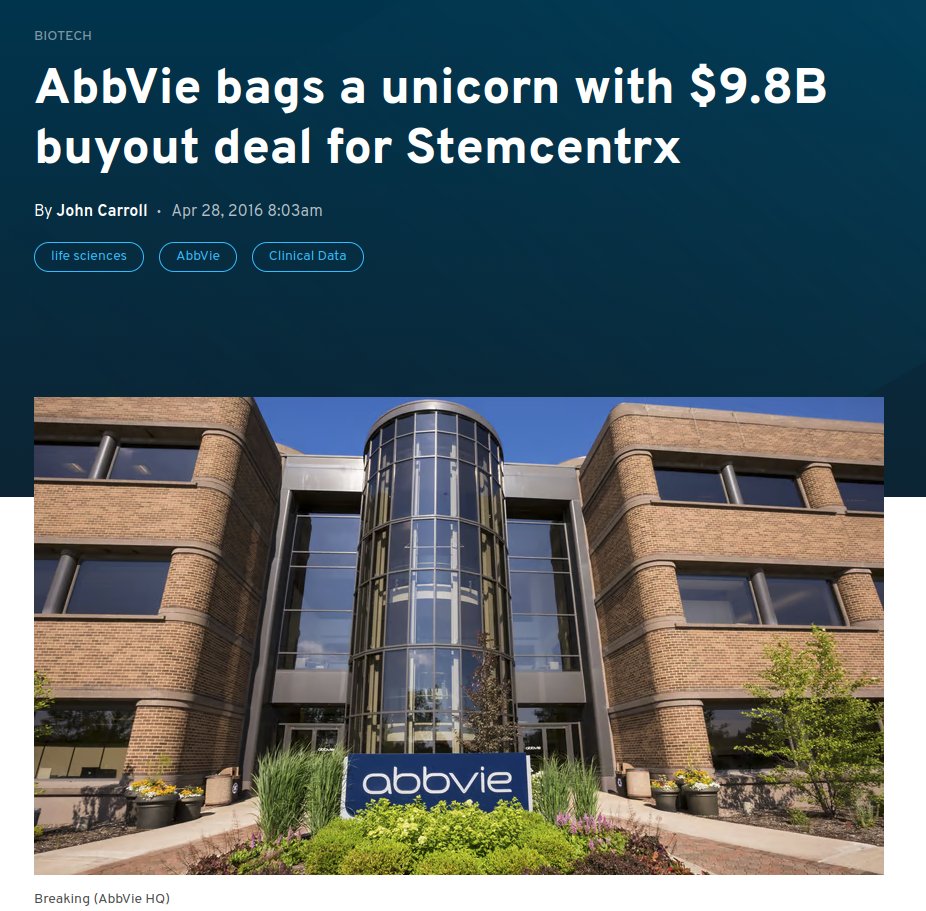
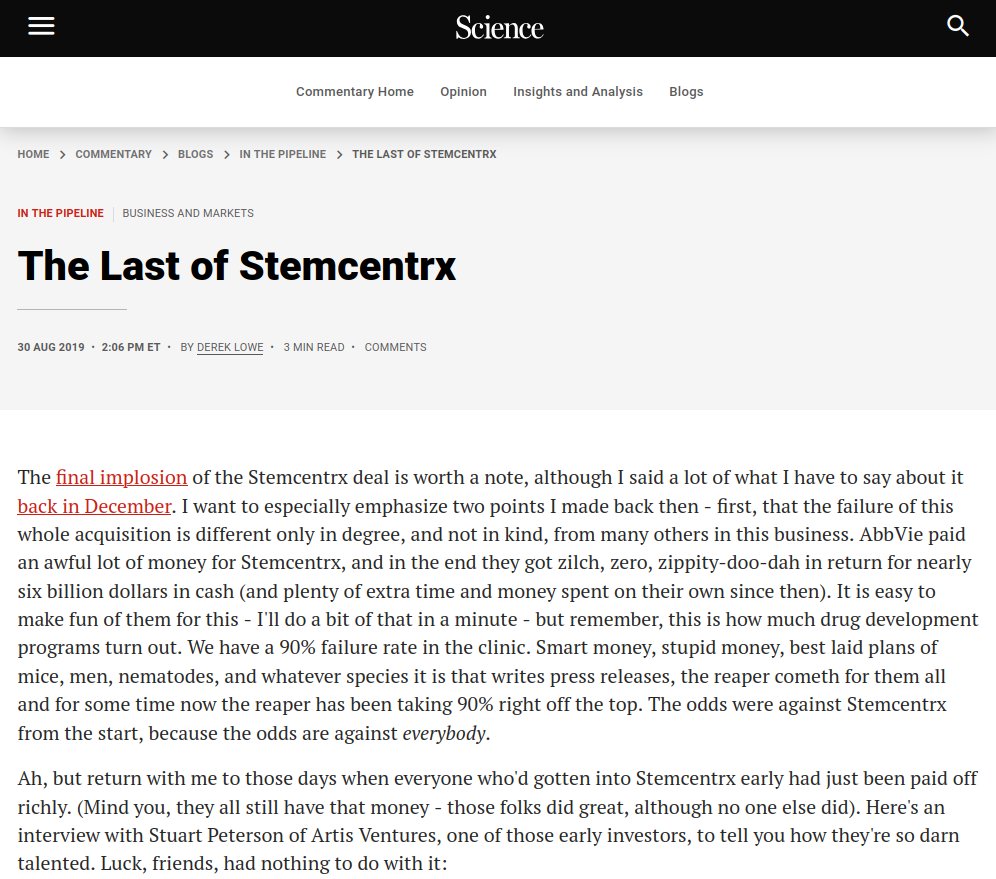
In 2016, AbbVie acquired Stemcentrx for $5.8B, betting on their DLL3-targeting ADC for small cell lung cancer, Rova-T. In 2018, the Phase III TAHOE trial was halted due to a higher death rate on Rova-T than on standard-of-care chemotherapy. Our cellular world model—trained exclusively on RNA, and which has never seen a single drug—would have flagged this target before the first patient was dosed. Here's how:
Adam Green tweet mediaAdam Green tweet media
English
8
7
59
17.4K
Brad Loncar
Brad Loncar@bradloncar·
I think that one day soon that prediction markets are going to replace biotech stocks for how investors play key readouts...especially wrt larger companies. For example, if Novartis has a big phase 3, isn't it more interesting and efficient to play the event itself. Thoughts?
English
37
2
100
30.2K
Elliot Hershberg
Elliot Hershberg@ElliotHershberg·
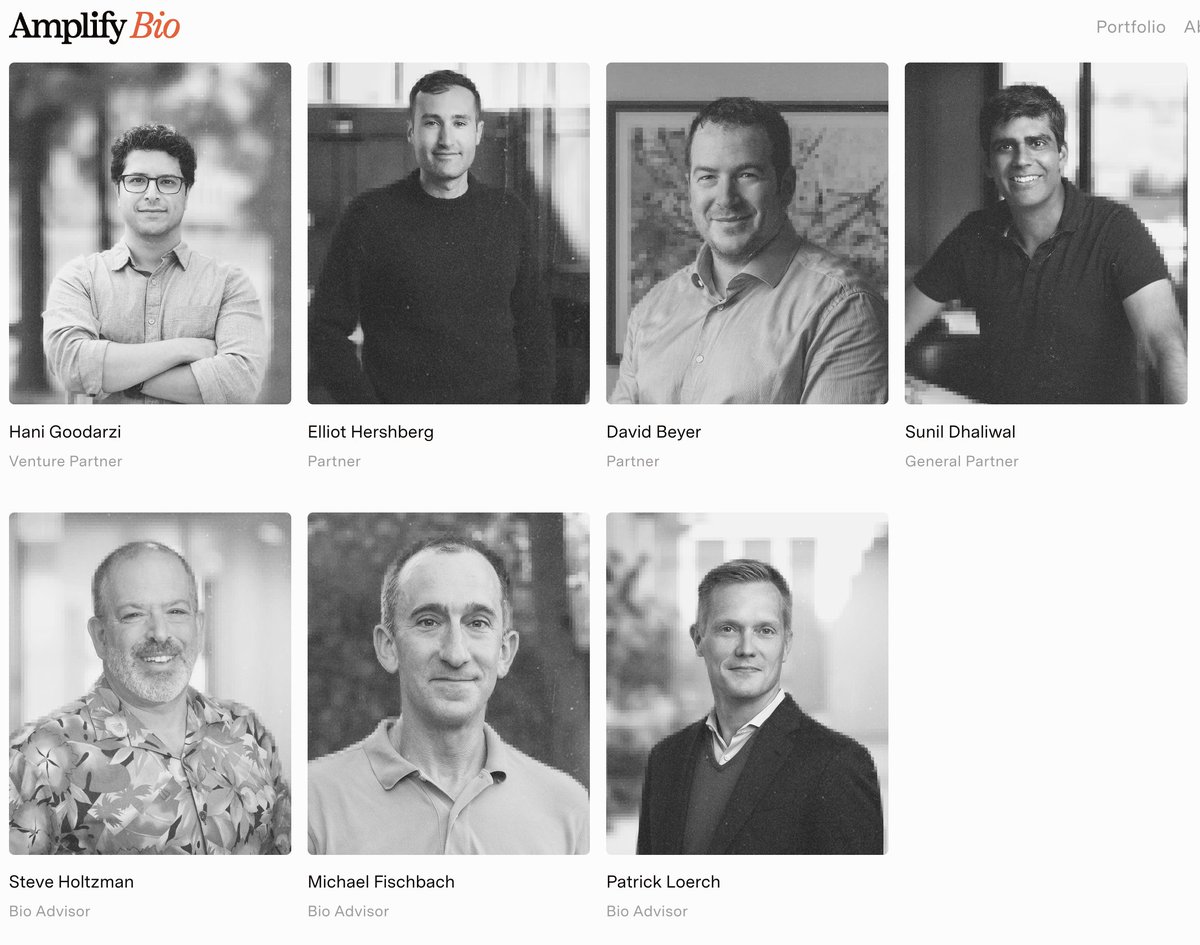
Amplify Bio is growing. We've been busy. Since launching last year, we've effectively doubled the number of active Bio companies we've partnered with. Some of these investments have been announced, but more will be shared this year. In parallel, we've been working to improve our ability to help bend the arc of these businesses trajectories when it matters the most. Today, we're sharing our first effort in this direction. Four world-class biotech leaders have joined forces with us. @genophoria is now a Venture Partner at Amplify. Hani is a first-rate computational biologist, and a great translator of scientific insights into platforms. @mfgrp is joining us as a Bio Advisor. Michael is a highly interdisciplinary scientist who's work has integrated chemistry, immunology, genetics, computer science, and bacteriology. He's also helped build massive biotech companies. Steve Holtzman is joining us as a Bio Advisor. Steve is one of biotech’s great platform strategists and dealmakers, and a longtime advisor to ambitious technical founders. Patrick Loerch is joining us as a Bio Advisor. Patrick has a deep technical background as a trained biostatistician. He now leads Clinical Data Science efforts at Gilead. We believe this will make a big difference for our founders. But still, this is the worst we will ever be. Our commitment is to continue building our team and platform to be the best possible partner for early-stage technical founders in Bio.
Elliot Hershberg tweet media
English
9
7
103
15.4K
David Li
David Li@davidycli·
Translation: Western pharma purchases of Chinese biotech assets will continue
Peter Harrell@petereharrell

@USTradeRep Greer interview worth a listen in full, esp. on China: 1. Strategic goal is a managed trade relationship where US and China agree on what we buy and sell each other and in which trade is predictable. (FWIW, I agree with Greer that a highly managed trading relationship is the best near/mid-term outcome for U.S.-China trade). 2. Under this approach, the U.S. will buy "low tech consumer goods," potentially some "commodities" that the U.S. doesn't have, etc. China will buy Boeings, medical devices, pharma, ag commodities. (I assume energy as well, though Greer did not mention it specifically). 3. Trade will be managed by a Board of Trade, the launch of which will be a Trump-Xi summit deliverable. 4. Greer cannot "pre-judge" whether the forthcoming Section 301 investigation will fully restore the 20% tariff rate on China that existed prior to the Feb. SCOTUS decision. (Legally, this is true, Greer can't pre-judge a 301 investigation outcome). 5. That said, both the U.S. and China are seeking "stability" and "continuity" and the U.S. wants to reduce the trade deficit and is committed to protecting its domestic economy. 6. Probably no more ministerial-level meetings prior to the Trump-Xi summit, with negotiations being handled by Deputies and staff. Greer said that he has not heard any discussion of pushing the summit back further beyond mid-May.

English
2
1
15
3K
David Li
David Li@davidycli·
@HillValleyForum @zachweinberg IIT data generally does not replace phase 1 safety data in US - can’t name a single time this has happened US should focus on de regulating, instead of trying to box out other countries. Only our own biotechs and patients will be hurt as a result
English
2
0
15
1.2K
The Hill & Valley Forum
The Hill & Valley Forum@HillValleyForum·
"Why does our FDA still incentivize all of this innovation to go to China?" @zachweinberg: "You can go to China, you can run a first-in-human study in a Chinese population at a Chinese hospital, you get your result, and then you can take that result back to America and skip the line." "I don't have to redo that Phase 1 and Phase 2 in a Western nation. I can use my Chinese data to open a Phase 3 study here and go for an approval." "Think about the incentive structure for a US biotech. You have to go to China. There is no alternative path because you've got competition on the other side who is racing ahead with infrastructure that you can't use." "We don't inspect, we don't audit, we don't send inspectors to these clinical trial sites. We have no idea what's actually going on." The Hill & Valley Forum 2026 @HillValleyForum
English
22
41
313
61.6K
David Li
David Li@davidycli·
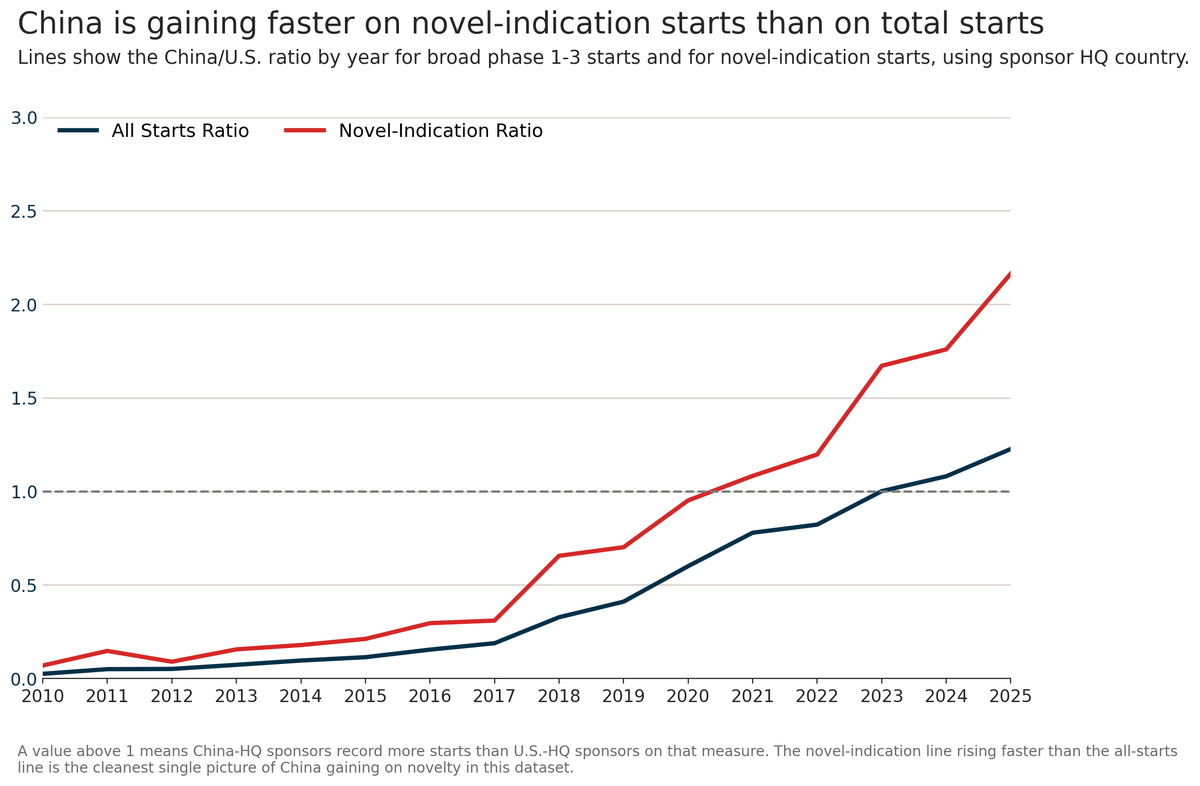
@cremieuxrecueil how is "novelty" defined here? first in class targets? modality? clinically untested biology?
English
1
0
12
1.2K
Crémieux
Crémieux@cremieuxrecueil·
I just gave a presentation on this topic a few minutes ago. Here's one of the charts I showed: China's rise in drug trial starts is going *faster* for totally novel drugs than for drugs in general. They are actually outcompeting America *more* on the most innovative drugs!
Crémieux tweet media
Max Bayer@maxonwifi

Wow Chris Klomp goes in on China biotech at @CPAC: "We face a national security threat right now...it's not one of missiles and tanks. It's of laboratories and life-saving medications. It's a war right now with China on American innovation and biotechnology."

English
18
45
419
36.6K
David Li
David Li@davidycli·
@ravishar313 unfortunately virtual cells are not (even close to) enough to get to clinically meaningful signal
English
1
0
7
427
Ravi Sharma
Ravi Sharma@ravishar313·
Unlike software, biology is not verifiable. The problem with this is agents in biology just remain hypothesis generation engines rather than being something more. There is no easy way for an agent to verify it's designed peptides for example. While, an agent writing code can follow a TDD with computer use to get to a very good point. Even when the parts are verifiable, the feedback loop is too long. Experiments to validate take too much time. We need to double down on lab automation and virtual cells. Things are looking up tho.
English
10
9
106
8.2K
David Li
David Li@davidycli·
@Banana_Oncology haven't seen these targets exactly but progress is being made on other hard to crack novel / allosteric / PPI pockets
English
0
0
3
580
David Li
David Li@davidycli·
as an addendum to this, becoming more obvious that true venture style biotech investing is on the clock ... in the soon-coming future, vast majority of biotech venture investing will be AI enabled / AI native biotech investing: the only other flavor will be more PE style / cross over investing where clinical stage deals are being underwritten to 5x returns. These deals will need more risk reduction profile and that's where China comes in. More biotechs will have validated their platform / biological thesis in China, Australia, Eastern Europe and "biotech venture" will actually be just taking relatively human biology de-risked assets through to clinical value inflection points that are legible to pharma M&A teams what is left in the preclinical bucket will be AI enabled platforms that get to DC faster for specific modalities / solving specific pharmacological problems by training AI on large data sets this theme is further reinforced by the fact that we have gone from ~3 to at least 12+ modalities in the last~15 years, all of which needs to be "engineered" / optimized in order to become clinically meaningful drugs - a perfect set up for AI applications
David Li@davidycli

given the early stage deal flow i'm seeing, being a tech bio VC that is not willing to go into tx investing is hard place to be on the tech / infra side you are crowded out by generalist funds by deeper pockets and better brand - why would a founder of "digital life sciences" play getting great traction not take that capital at the early stage? on the biotech tx side, there is real opportunity right now because traditional biotech VCs have pulled back (esp from early stage / preclinical investing), but most techbio VCs have become gun shy about taking "capital intensity risk" with therapeutic plays this is actually the exact worst time to do that as AI and AI investing eats everything else that doesn't require deep physical execution moats will be interesting to see who survives this culling

English
2
1
47
12.9K
David Li
David Li@davidycli·
given the early stage deal flow i'm seeing, being a tech bio VC that is not willing to go into tx investing is hard place to be on the tech / infra side you are crowded out by generalist funds by deeper pockets and better brand - why would a founder of "digital life sciences" play getting great traction not take that capital at the early stage? on the biotech tx side, there is real opportunity right now because traditional biotech VCs have pulled back (esp from early stage / preclinical investing), but most techbio VCs have become gun shy about taking "capital intensity risk" with therapeutic plays this is actually the exact worst time to do that as AI and AI investing eats everything else that doesn't require deep physical execution moats will be interesting to see who survives this culling
English
6
2
63
13.7K
David Li
David Li@davidycli·
earendil labs $787M financing is eye catching for sure but the AI x China biotech theme is only getting started have spoken with a number of chinese biotechs (many which the west has not heard of) that are beginning to develop proprietary models. Including RNA therapies, cell therapies, degraders, small mlc's in a world where time and $ to FIH signal is king, combining AI's ability to cut time to DC and Chinese early clinical execution is going to be hard to beat
English
4
3
40
5.2K