Aaron Glover

1K posts

Aaron Glover banner
Aaron Glover

Aaron Glover

@aarondglover

Newcastle, New South Wales Katılım Kasım 2012
162 Takip Edilen47 Takipçiler
Aaron Glover
Aaron Glover@aarondglover·
@jandedobbeleer @shanselman That's awesome but doesn't work for me... It's ok. I know this isn't a personal helpdesk 🤣 ... If I ever find out what the blocker is to either methods I will post back.
English
0
0
1
17
Aaron Glover
Aaron Glover@aarondglover·
@walden_yan It's rather ironic when for years devs had a Mac mini stuffed in the corner somewhere
English
0
0
0
656
Aaron Glover
Aaron Glover@aarondglover·
@github Why haven't you published the extension identity identifier so that others can assess their risks? I assume it has been removed from the extension marketplace ⁉️
English
0
0
1
2.1K
GitHub
GitHub@github·
1/ We are sharing additional details regarding our investigation into unauthorized access to GitHub's internal repositories. Yesterday we detected and contained a compromise of an employee device involving a poisoned VS Code extension. We removed the malicious extension version, isolated the endpoint, and began incident response immediately.
English
586
3.6K
11.6K
7.4M
Aaron Glover
Aaron Glover@aarondglover·
@aarnott @github Time will tell if this is true - that the incursion was restricted to only the github/msft repos
English
0
0
0
48
Andrew Arnott 🛡️
Andrew Arnott 🛡️@aarnott·
Notice that the blast radius only included internal repos to GitHub the company. Customers private repos were not accessed. This is because Microsoft takes customer data very seriously and employees can't access it. So when employee accounts are compromised they still can't compromise customer data.
English
1
0
6
1.4K
Aaron Glover
Aaron Glover@aarondglover·
@mjovanovictech Yeah I settled on running azd infra gen... Deploy via aspire-cli just doesnt cover enough of the customisations I can make with the bicep/arm files. Added Bonus... Azd deploy works beautifully in GitHub Actions CI/CD
English
0
0
1
65
Milan Jovanović
Milan Jovanović@mjovanovictech·
Manual deployments are fine once. For my .NET apps /w Aspire, I’d rather push to main and let GitHub Actions handle the Azure deployment. AZD can scaffold most of the pipeline: identity, provisioning, deploy. Full walkthrough here: youtu.be/Hjm-K8454tE
YouTube video
YouTube
Milan Jovanović tweet media
English
6
9
66
6.4K
Aaron Glover
Aaron Glover@aarondglover·
@James_M_South @shepherdsworld FONT developers must have standardised terms for those measurements... Things like Kerning for example? I'd jump on to existing established language/names if the exist.
English
2
0
0
48
Aaron Glover
Aaron Glover@aarondglover·
@James_M_South @shepherdsworld It makes sense in the diagram, but I’m not sure it’s understandable in the API without that context. Could use more common terms like padding/margins and left/right instead of leading/trailing? Or was leading/trailing deliberate to support right-to-left languages?
English
0
0
0
34
Aaron Glover
Aaron Glover@aarondglover·
@SpeakezTech @Aaronontheweb Agree... The longer I am working with models and tweaking prompts, skills, system instructions it is getting better and better. I do hate however the continual preference of the models to duplicate code, rather than adapt and make blocks of code for common reuse.
English
1
0
1
36
SpeakEZ.tech
SpeakEZ.tech@SpeakezTech·
Specification is key. Also... If hand-specifying is more wall-clock "expensive" than simply coding it yourself, you "largely" have your answer... Why is "largely" in scare quotes? Well... if you're willing to train up a context window with your preferences and choices and can show the model your pathway, you *can* get it to extend that in useful ways. It's just a matter of whether "the juice is worth the squeeze" in that context.
English
2
0
1
39
Aaron Stannard
Aaron Stannard@Aaronontheweb·
Had Opus 4.7 + GPT-5.5 try to implement some spikes of @AkkaDotNET v1.6 that I can see clearly in my head, specced out on paper etc - absolute miserable failures both. Perf-sensitive remoting code I've spent 10+ years maintaining and every LLM suggestion filled me with disgust
English
1
1
26
2.3K
Aaron Glover
Aaron Glover@aarondglover·
@davidfowl If only there was a mapping to these "Commands" to Azure Container Apps "Jobs" - with support for cron scheduling and such
English
0
0
1
68
David Fowler
David Fowler@davidfowl·
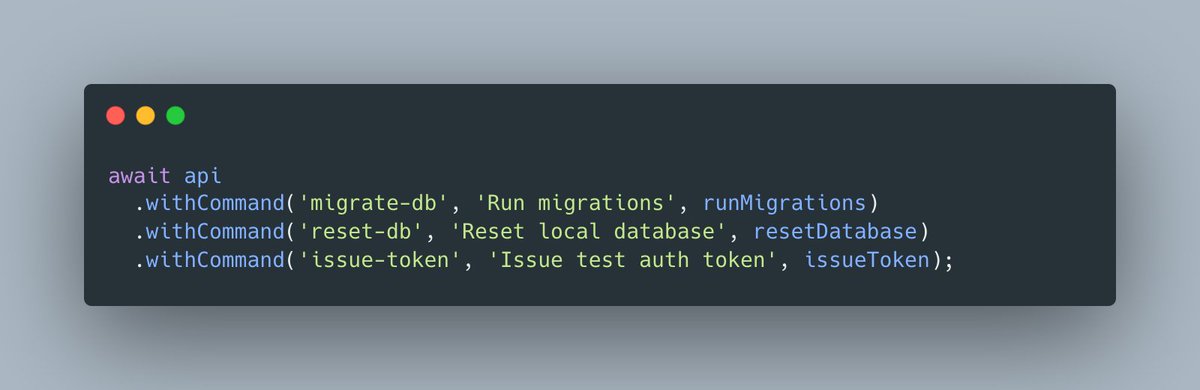
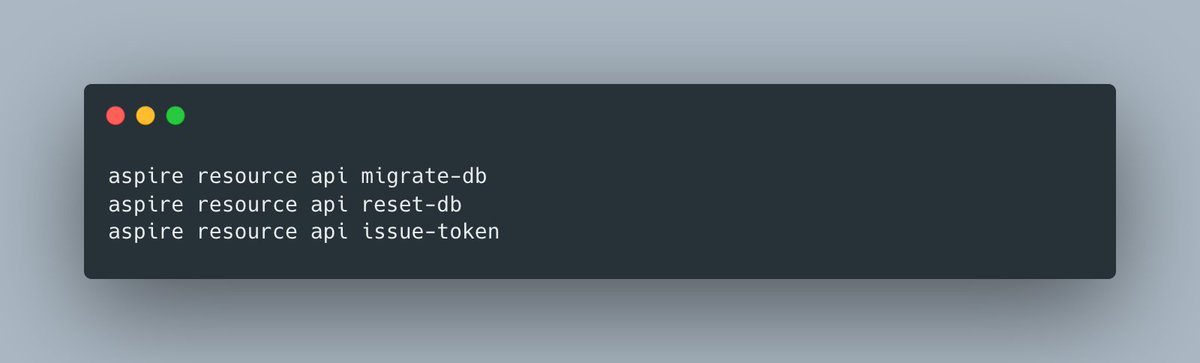
Ever open a README just to remember how to reset the DB, run migrations, or mint a dev auth token? In aspire 13.3, you can codify those onboarding tasks as resource commands. Humans can run them from the dashboard; agents and scripts can run them from the CLI. #aspiredev
David Fowler tweet mediaDavid Fowler tweet media
English
13
18
167
14.3K
Aaron Glover
Aaron Glover@aarondglover·
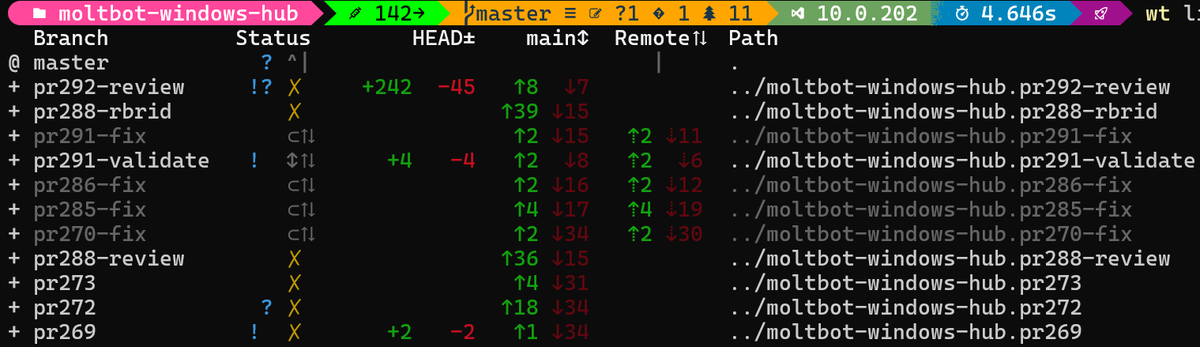
@shanselman @max_sixty Only recently discovered worktrees... Life Changing! (Honestly only a little bit of hyperbole)
English
1
0
0
1.4K
Aaron Glover
Aaron Glover@aarondglover·
@shanselman It just won't work for me. I am using windows terminal pwsh 7, and I tried your prompt and pointing at your GIST with gpt5.4 and sonnet 4.6... no luck :( can't even get it to say static string 'hello world'... note: I am using 1.0.43 of gh copilot cli.
English
0
0
0
70
Aaron Glover
Aaron Glover@aarondglover·
@mjovanovictech @AntonMartyniuk That same knowledge of boundaries can be applied to microservices. I like modular monoliths but often you know immediately that's something should be a microservice.
English
0
0
0
3
Milan Jovanović
Milan Jovanović@mjovanovictech·
The funny part is that most “microservices problems” start before the first service is extracted. If you can’t define clear boundaries inside a monolith, splitting the system into 20 deployables won’t magically fix that. It usually makes the boundaries harder to change, harder to observe, and harder to coordinate. A modular monolith forces you to learn the most important skill first: designing good module boundaries. Then, when one module truly needs independent scaling, deployment, or ownership, extracting it becomes much less painful. Microservices should be the result of pressure, not the starting point.
English
1
1
11
884
Anton Martyniuk
Anton Martyniuk@AntonMartyniuk·
Developers think Microservices will make their life easier. Well, this is not true 👇 Here's what devs imagine microservices will bring: - Faster deployments - Faster releases - Fewer bugs - Independent teams - Sounds cool on your resume But here's what actually happens: - Managing 100+ repositories - Distributed transactions issues - Strong consistency challenges - Saga & compensation complexity - Debugging across many services - Event-driven architecture complexities - Service communication overhead - Handling failures - Monitoring multiple services - Logging across different systems - Deployment coordination complexities - Version compatibility headaches - Increased network latency - Data synchronization problems - Configuration management complexities - Difficult troubleshooting - Security between services - Complex local development setup - Load balancing challenges - Harder team alignment Microservices are powerful — but only if used in the right place. Do every project need microservices? Probably most of the projects don't need them. The complexity in microservices doesn't disappear; it just scales to another dimension. Remember, it's always great to start with a Modular Monolith and scale to microservices as needed. The best microservices are born from a Modular Monolith. What's the biggest microservice challenge you faced? — ♻️ Repost to help others learn that microservices is not a silver bullet ➕ Follow me ( @AntonMartyniuk ) to improve your .NET and Architecture Skills
Anton Martyniuk tweet media
English
5
10
51
2.3K
Anthony D. Green
Anthony D. Green@ThatVBGuy·
"Scientist created a system with integer overflow/underflow checking off thinking this would speed up the system. This caused unexpected program behavior so they enabled the checks and their system threw an exception revealing a bug in their model".
The Curious Tales@thecurioustales

PHYSICISTS CREATED NEGATIVE ABSOLUTE TEMPERATURE. They found a temperature that exists *beyond* infinity. Absolute zero sits at negative 273.15 degrees Celsius. We've always treated it as the basement of the universe, the point where atoms stop moving entirely and thermal energy disappears. Every high school textbook teaches you that nothing can get colder than that because there's no thermal motion left to remove. What physicists discovered shatters that entire mental model. They created systems with negative absolute temperature. Not negative 300 degrees. Negative in a way that places these systems *hotter* than anything with positive temperature, including the core of stars, including infinite temperature itself. The temperature scale doesn't run in a straight line like we imagined. It wraps around. Picture a circle instead of a thermometer. As you add energy to a normal system, temperature climbs from absolute zero toward infinity. But in certain quantum systems, when you keep adding energy past infinity, you don't break the universe. You loop back around to negative values. Systems at negative temperature are so energetically excited that they violate our basic intuition about heat flow. Put an object at negative temperature next to an object at positive temperature, and heat flows *from* the negative system *to* the positive one. Always. Even if the positive system is a trillion degrees. Even if it's the surface of a star. The negative system is hotter than infinite heat. Let that settle for a moment. This happens because temperature isn't actually about how much energy a system has. Temperature measures how energy is *distributed* among the available states in the system. In normal matter, particles can always jump to higher energy levels when you heat them up. There's no ceiling. You can always stuff more energy in by making particles move faster, vibrate harder, occupy more excited quantum states. But certain quantum systems have a maximum energy level that particles can reach. When most particles in the system occupy the lowest energy states, the system has positive temperature. As you add energy, more particles jump to higher levels, and temperature increases. When exactly half the particles occupy the highest energy states, temperature reaches positive infinity. Keep adding energy past that point, and something unprecedented happens. More than half the particles now sit in the highest energy states available. The energy distribution inverts. The system has so much energy crammed into it that the normal relationship between energy and temperature flips backward. Adding more energy actually *decreases* the temperature as measured by the distribution of particles across energy levels. The system enters negative temperature territory. Scientists achieved this using ultra cold quantum gases trapped in carefully designed energy landscapes. They manipulated magnetic fields to create situations where atoms could only exist in a limited set of energy states, then pumped enough energy into the system to force most atoms into the highest available energy level. The result behaved exactly as the mathematics predicted. Heat flowed from the negative temperature gas to everything around it, despite the surrounding environment being hundreds of degrees warmer in the conventional sense. Applications of this discovery reach far beyond laboratory curiosities. Negative temperature systems represent perfect energy storage devices. They can absorb unlimited amounts of energy without their temperature rising beyond the negative threshold. In fact, the more energy you pump into them, the "cooler" they become, making them more stable. Laser physics immediately benefits from this breakthrough. Population inversion, the mechanism that makes lasers work, naturally occurs in negative temperature systems. Instead of fighting against thermal equilibrium to maintain more particles in excited states than ground states, engineers could build laser systems that prefer the inverted state. These devices would operate with unprecedented efficiency and power output. Quantum computing encounters a similar revolution. Quantum bits need to maintain coherent superposition states while surrounded by thermal noise that constantly tries to decohere them. Negative temperature environments could provide naturally protective conditions where quantum information becomes *more* stable as energy increases rather than less stable. The cosmological implications stretch even further. Some theoretical models suggest regions of spacetime during cosmic inflation might have exhibited negative temperature characteristics. Understanding how matter behaves under these conditions could reveal new mechanisms for the rapid expansion of the early universe. But the philosophical impact might be the deepest. We built our understanding of entropy, thermodynamics, and the arrow of time around the assumption that systems naturally evolve toward maximum disorder and minimum energy concentration. The second law of thermodynamics states that entropy always increases in isolated systems. Heat flows from hot to cold. Energy spreads out. Negative temperature systems mock all of these principles. They concentrate energy instead of dispersing it. They create order instead of disorder. They represent regions of spacetime where the normal thermodynamic arrow of time potentially reverses direction. The universe operates by rules more flexible than we assumed. What we called fundamental laws were just descriptions of the most common cases we happened to observe. Temperature doesn't end at infinity. It begins there.

English
1
0
2
99
maddy montaquila
maddy montaquila@maddymontaquila·
after today's #AspiriFriday the entire @aspiredotdev team (well, the ones in a reasonable timezone) spent 3 hours filing, triaging, and fixing the issues we hit (and diagnosing my busted local install of aspire because i had borked some things too) (1/2)
English
2
1
11
1.9K
Aaron Glover
Aaron Glover@aarondglover·
@mjovanovictech Copilot has become incredibly slow for in VS2026 Insiders. Very slow to get started. I'm a on Pro+ plan. Anyone experiencing this? Using copilot CLI etc things start immediately. even generating a Commit Message is slow!
English
0
0
2
1.1K
Milan Jovanović
Milan Jovanović@mjovanovictech·
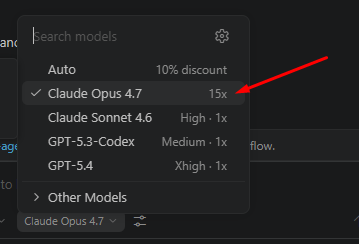
Claude Opus 4.7 now has a 15x multiple in GitHub Copilot
Milan Jovanović tweet media
English
46
21
375
91.3K
Pawel Bielecki
Pawel Bielecki@BieleckiPawel·
@DamianEdwards My GPT says all the time things like “I’ll be precise and practical” or “no hand-waving” which drive me nuts
English
1
0
0
416
Damian Edwards
Damian Edwards@DamianEdwards·
Using GPT 5.4 pretty much exclusively for the last month or so but last night I happened to use Opus 4.6 for a complicated coding task & got my first "You're absolutely right!" in a long while. It had just completely missed *the* salient point of the task. GPT 5.4 has been great.
English
5
2
43
6.4K