Richard Abrich

562 posts

Richard Abrich banner
Richard Abrich

Richard Abrich

@abrichr

ML consultant. MASc @UofT, @Mila_Quebec accepted & deferred. Building @OpenAdaptAI, an app that learns to automate tasks in other apps.


Planet Earth Katılım Ekim 2009
537 Takip Edilen311 Takipçiler
Richard Abrich
Richard Abrich@abrichr·
@AlchemyAmerican Very interesting claim. The next step is reproducibility. Publish the processing pipeline, parameters, and benchmark results on known underground structures and null controls. Let independent groups try to reproduce it.
English
0
0
0
45
Jesse Michels
Jesse Michels@AlchemyAmerican·
🚨 BREAKING: Italian radar scientist detected what appears to be a massive grid of eight cylindrical structures, each 20 meters in diameter, descending over a kilometer beneath the Giza pyramids using Synthetic Aperture Radar Doppler Tomography. The cylindrical columns have coils wrapping around them resulting in a megastructure that looks like an ancient energy grid 🚨 So I brought in Geoffrey Drumm, one of the most technically rigorous pyramid researchers alive, to stress test every claim in real time. What followed was a four hour technical interrogation that revealed both stunning validations and unresolved questions about what may be the most significant archaeological discovery of the century. Biondi holds a PhD in radar science, 30 years in the field, and invented a proprietary method called the Biondi Protocol that reads surface micro-vibrations detected by Italian COSMO-SkyMed satellites to reconstruct what lies inside and beneath solid structures. His first peer-reviewed paper scanned the Great Pyramid in 2020. His second project scanned the Khafre Pyramid and the wider Giza Plateau, producing the 3D model that broke the internet: eight tubular columns with coils wrapping around them, sitting on a foundation of enormous cube-shaped structures, extending beneath all three pyramids and the Sphinx. Drumm is the author of The Land of Chem YouTube channel, lives in Egypt, and has developed a comprehensive hypothesis that the pyramids functioned as industrial-scale chemical reactors powered by lightning during the Saharan Humid Period. He knows the Giza Plateau like the back of his hand and has previously stress tested and poked holes in Biondi’s findings. This conversation is an unfiltered exchange between two heavyweights: 1. Biondi's Best Scan Is Jaw-Dropping As validation, Biondi presented a proof-of-concept scan of Italy's Gran Sasso National Laboratory, buried 1.4 kilometers inside a mountain. The image is stunning. You can see the tunnel cutting through the mountain, the interior of the facility, and even the interferometer inside it using the same technique Biondi used to scan beneath the pyramids. Drumm called it the single most convincing piece of evidence that this technology works. The Gotthard Tunnel in Switzerland produced a similarly clear image at two kilometers depth through solid rock. These are not theoretical demonstrations. They are working scans of known structures at extreme depth, and they validate that the Biondi Protocol can see through kilometers of stone. 2. He Found a Hidden Corridor Before Anyone Else In his 2020 paper, Biondi identified a feature on the northern face of the Great Pyramid labeled Tag 17. A dead-end corridor behind the chevron stones that nobody knew existed. Years later, the ScanPyramids muon team confirmed it and drilled in with a microscopic camera. Biondi's measurements of the corridor's length and the positions of its floor and ceiling matched what was found. This is a confirmed prediction from satellite radar, made years before physical verification. 3. He Detected a Sealed Shaft Beneath the Queen's Chamber One of the most compelling findings from the 2020 paper is a shaft and chamber system descending from the bottom of the Queen's Chamber. This structure was actually reported in 19th century excavation documents. Explorers found a pit in the Queen's Chamber floor, excavated down, and discovered a tunnel system below it. The Egyptian authorities then permanently sealed it with modern blocks. Biondi's scans picked it up independently, with no prior knowledge of those historical records. Drumm, who had already proposed this exact extraction shaft in his own chemical reactor model, called this the most promising result in the entire dataset. 4. The Substructures Are Enormous The tubular columns beneath the Khafre Pyramid measure approximately 20 meters in diameter each, spaced about 5 meters apart. That is 65 feet across per column. Eight of them. For context, the Queen's Chamber sometimes fails to register in certain scan slices because it is too small relative to the tomographic line. Biondi's argument is that megastructures at this scale are exactly what the technology is built to detect. Small chambers can be missed depending on the angle of the satellite pass. Repeating cylindrical structures 20 meters wide, appearing consistently across multiple scan geometries and multiple satellite sensors, are a different category of detection entirely. 5. Drumm's Challenge: The Processing Gap Here is where the debate gets sharp. The Gran Sasso and Gotthard scans used an advanced processing technique that averages noise across adjacent tomographic slices, requiring months of computation on borrowed hardware. The pyramid scans used a faster but noisier method on Biondi's own limited computers. Drumm pointed out that the quality difference is massive. The proof-of-concept images are transparent like a crystal. The pyramid images require expert interpretation to read. Biondi's response: he needs an array of GPUs he cannot afford. With that hardware, he says he could produce Gran Sasso-quality scans of the Giza substructures in near real-time. Estimated cost: millions. This is the bottleneck standing between a controversial claim and a potentially world-changing confirmation. 6. Other issues: Known Chambers Sometimes Do Not Appear Drumm walked through the 2020 dataset scan by scan. The Queen's Chamber shows a strong, consistent signature and serves as a reliable benchmark. But in several tomographic slices, the King's Chamber does not appear. The Grand Gallery does not appear. The subterranean chamber does not appear. Biondi attributes this to single-slice geometry. Each scan captures one vertical curtain through the structure in 15 seconds. If that curtain does not intersect a chamber precisely, it will not register. He says the real-time GPU system would allow him to sweep through hundreds of adjacent slices and reconstruct a full 3D volume. That system does not yet exist. 7. Biondi Challenged the Muon Team's Interpretation The ScanPyramids muon team claims the Big Void inside the Great Pyramid runs north to south, parallel to and above the Grand Gallery. Biondi's scans show it running east to west, connected to structures wrapping around the King's Chamber. Looking at the muon data during the conversation, Biondi argued they may have confused the floor and roof of the Grand Gallery for two separate features. The Egyptian Ministry of Antiquities is using the muon team's interpretation to justify drilling into the Great Pyramid in 2026. If Biondi is right about the orientation, that excavation could validate SAR Doppler tomography over the established method in one stroke. 8. The Signal Fades at 600 Meters and Nobody Knows Why The model shows structures extending over a kilometer deep. But in the raw data, the signal tapers around 600 meters. Drumm pressed Biondi on this. The initial explanation was the water table, but both agreed the actual water table sits only about 50 meters below the plateau. When pushed further, Biondi said he cannot yet explain the change but hinted at something he is not authorized to disclose. The structures do continue in the model below that line, detected across multiple satellite sensors showing the same cutoff pattern. What changes at 600 meters remains an open question. 9. Drumm's Model Says the Substructures Could Make Functional Sense Drumm's hypothesis is that each pyramid produced a specific chemical in sequence, from methane extraction at the Step Pyramid to ammonia synthesis in the Red Pyramid to sulfuric acid production in the Great Pyramid. He places the operational period during the Saharan Humid Period, roughly 8500 to 5300 BC, when massive thunderstorms provided the electrical input. The Big Void sits exactly where a heat exchanger would need to be to manage exothermic reactions in the Grand Gallery. The sealed shaft beneath the Queen's Chamber aligns with his proposed product extraction system. He confirmed that he has already integrated Biondi's substructure findings into a working functional model. If the deep structures are real, they connect to known hydrothermal mineral deposits, iron ore veins, and rare earth elements embedded in the Giza bedrock. Drumm and Biondi both agree: whoever built these structures chose the Giza Plateau for a very specific reason tied to what lies beneath it. 10. Validation & What Comes Next Biondi wants to establish a foundation in Malta with a dedicated data center and GPU array to reprocess the Giza data using his superior technique. Drumm wants to go to the Giza Plateau with Biondi's team to physically investigate anomalies he has already identified near the Osiris Shaft and along the Khafre causeway. Both say the SAR method and the muon method should be combined rather than treated as competitors. Both state that the conventional dating and tomb explanation for the pyramids is wrong. And both Drumm and Biondi agree that what lies beneath the Giza Plateau is more important than what sits on top of it. They also agree on the need for further validation and stress-testing. Why This Matters A satellite technique that can see through 1.4 kilometers of mountain and accurately image the Gran Sasso Laboratory. A confirmed prediction of a hidden corridor inside the Great Pyramid years before physical verification. A detection of a sealed shaft that matches 19th century excavation records. And now, scans showing a repeating grid of massive cylindrical structures beneath the entire Giza Plateau that no conventional archaeological framework can account for. The technology has demonstrated real capability. The substructure claims remain extraordinary. The 2026 Big Void excavation and GPU-powered rescans could settle this within months. If even a fraction of what Biondi is detecting turns out to be real, we are looking at the largest undiscovered structure on Earth, hidden in plain sight beneath the most studied archaeological site in human history. Full conversation covers all of this and much more. One of the most important technical examinations of the pyramid mystery ever recorded. Live now👇
English
240
1.2K
6.9K
1.1M
Richard Abrich retweetledi
John Berryman
John Berryman@JnBrymn·
OpenAI just revolutionized image generation, but that's just the beginning. The real game-changer? Visual reasoning is coming - where AI won't just manipulate images, but will actually think through problems using visual simulation.
John Berryman tweet media
English
1
3
5
1.3K
Richard Abrich
Richard Abrich@abrichr·
> Tip: Type 'ultrathink' in your message to enable thinking for just that turn --Claude Code
Richard Abrich tweet media
English
0
0
1
114
whizz taker
whizz taker@taker_of_whizz·
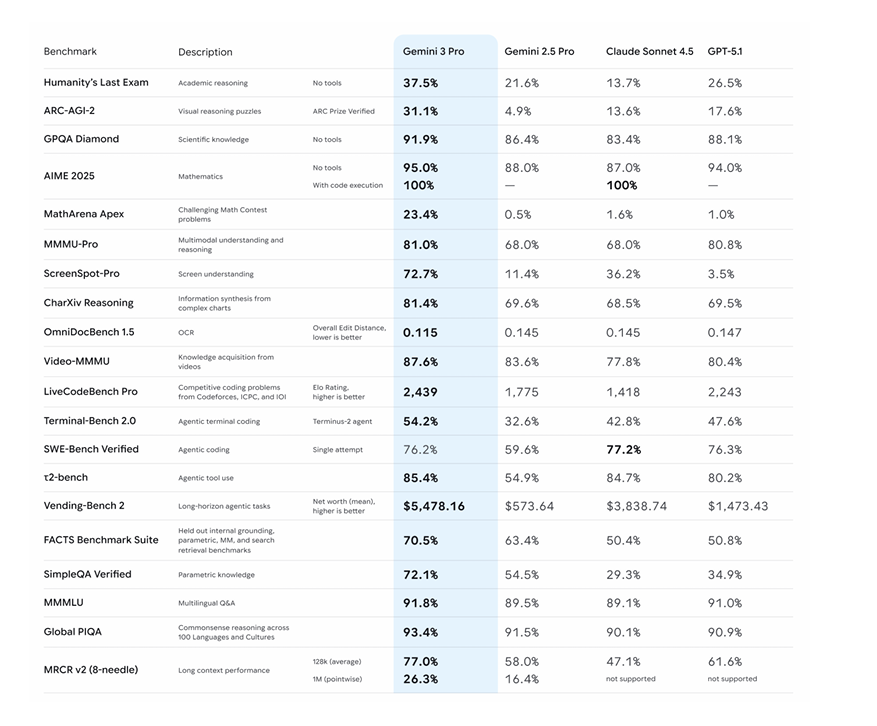
Gemini 3 Pro benchmarks
whizz taker tweet media
Indonesia
7
21
165
217.1K
Richard Abrich retweetledi
Mario Zechner
Mario Zechner@badlogicgames·
This is even funnier. Codex will truncate any Bash/MCP tool output to 256 lines or 10kb. If the tool call outputs more than that, then the model only gets to see the first 128 lines, and the last 128 lines, but nothing in the middle. Been like that since August. No wonder poor GPT is slow going in circles trying to understand WTF it's actually seeing.
Mario Zechner tweet mediaMario Zechner tweet mediaMario Zechner tweet media
Mario Zechner@badlogicgames

Heh, recent Codex is truncating tool outputs before they get passed to the model, instead of as a part of context/history clean-up. Making MCP servers a tiny little less useful. github.com/openai/codex/i…

English
48
36
691
322.8K
Richard Abrich
Richard Abrich@abrichr·
@thinkymachines just got access to Tinker, thank you! I noticed that you expect to support image input in the future. Any idea on a rough timeline for image support?
English
0
0
0
52
Thinking Machines
Thinking Machines@thinkymachines·
Introducing Tinker: a flexible API for fine-tuning language models. Write training loops in Python on your laptop; we'll run them on distributed GPUs. Private beta starts today. We can't wait to see what researchers and developers build with cutting-edge open models! thinkingmachines.ai/tinker
Thinking Machines tweet media
English
245
789
5.9K
4.2M
Ananay
Ananay@ananayarora·
Lovable checking .env into source control 👍
Ananay tweet media
English
66
24
3K
279.5K
Philipp Schmid
Philipp Schmid@_philschmid·
Agents executing their own code is inevitable; it's too powerful not to happen. But I’m stuck on the architecture. Do we run this locally on the user's device, or safely in the cloud? Local sandboxes are the dream. Offline-first, zero latency, native access to your data. But can be easily done wrong. Allow Ingress/Egress? Access to environment variables? Permissions to filesystems, libraries? Remote feels more secure, easier to get started but much higher setup per individuall to access personal their data.
English
77
18
368
50.2K
Richard Abrich
Richard Abrich@abrichr·
@artavazdm Check out fastable .dev for an alternative built on FastAPI + React + Docker + Postgres
Richard Abrich tweet media
English
0
0
0
48
Arto Minasyan
Arto Minasyan@artavazdm·
Vibe-coding without real infrastructure is just a toy. We’re merging AI-native front-end freedom with the battle-tested WordPress backend: turning vibe-coding to full production machine. Idea -> AI builds -> You shape by chatting -> Launch with confidence. Why launch with confidence: - Fully hosted, secure, version-controlled, SEO-tuned - Build your way: chat, visual, or code - Runs on WordPress—the engine that already runs the internet Fast to create. Faster to ship. On a real CMS. Comment “VIBE” to double your free credits. Comment “VIBE” & join our Discord for 5× more. Let’s launch something real.
English
659
314
4.3K
23.8M
Richard Abrich
Richard Abrich@abrichr·
@jxnlco What specific issue are you experiencing with Python that would be solved with TypeScript?
English
0
0
0
64
jason liu
jason liu@jxnlco·
hate to say it.... but i regret building this backend in python. shoulda gone ts all the way.
English
366
36
2.1K
528K
Richard Abrich
Richard Abrich@abrichr·
@MikeBirdTech I think about this often, but I'm undecided. I'm curious, what is your reasoning?
English
1
0
0
27
Mike Bird
Mike Bird@MikeBirdTech·
I'm on team "only biological beings can be conscious"
English
4
0
2
248
Thariq
Thariq@trq212·
We also shipped a ton of new Claude Code features today, including: - checkpointing - a new VSCode extension - tab to think - a new mascot, we call him Clawd 🦀
GIF
English
113
58
1.7K
132.1K
Thariq
Thariq@trq212·
Custom tools are simple: define a function, register it with the SDK as an in-process MCP, and Claude Code can call it. Augment our existing tools with your own. Read our docs here: docs.anthropic.com/en/docs/claude…
English
4
5
122
18.2K
Thariq
Thariq@trq212·
The Claude Code SDK now supports custom tools and hooks directly in code. Additionally, we’ve refreshed all our docs with complete references and 10 new guides on how to utilize the SDK.
Thariq tweet media
English
76
108
1.4K
639.3K
Richard Abrich
Richard Abrich@abrichr·
Got a 7,000% traffic spike yesterday. Turns out it was a bot network 'advertising' itself by spamming my analytics. You can even set your own bounce rate 😂 Growth hacking has gone full parody.
Richard Abrich tweet media
English
1
0
0
254
Peng Cheng, asking λP2-λC
Peng Cheng, asking λP2-λC@tribbloid·
this 30~m talk confirmed some of my suspicions: few AI orchestrator did everything right: - context consumption is the currency you spent on preambles, log-reading, tool-calling, and determinism. It should not be wasted on irrelevant or menial things like previous or repetitive task. - context engineering is to figure out how to do something useful before context corruption. - algorithms used can be measured & optimised by how worst-case context consumption increases asymptotically with the scale of the problem. - mono-repo is dead - build system without incremental build is dead
geoff@GeoffreyHuntley

Here we go. This is the 9-month recap of my "The Future Belongs to People Who Do Things" talk. Inside: - The problems with AGENTS . md - The problems with LLM model selectors - Best practices for LLM context windows - AI usage mandates at employers - Employment performance review dynamic changes - The world's first vibe-coded emoji RPN calculator in COBOL - The world's first vibe-coded compiler (@cursedlang) and a final urge to do things, as this is perhaps the last time I deliver this talk. It's been nine months since the invention of tool-calling LLMs, and VC subsidies have already started to disappear. If people haven't taken action, they're falling behind because it's becoming increasingly cost-prohibitive to undertake personal upskilling.

English
1
1
1
195
jack
jack@rpmjacx·
looking for the best site developers budget $500
English
128
5
221
10.6K
Richard Abrich retweetledi
Mike Bird
Mike Bird@MikeBirdTech·
I've already changed how I build with AI after chatting with @abrichr! So cool getting insight to how tools like this are built Check it out!
Tool Use@ToolUsePodcast

Want to know how to build a Prompt-to-App tool? @abrichr just released Fastable, a BYOK full-stack app builder Learn why Fastable is different than the big names and also his advice on - developer workflows - context engineering - hallucination mitigation This is another can't-miss episode, check it out!
English
0
4
10
1.4K