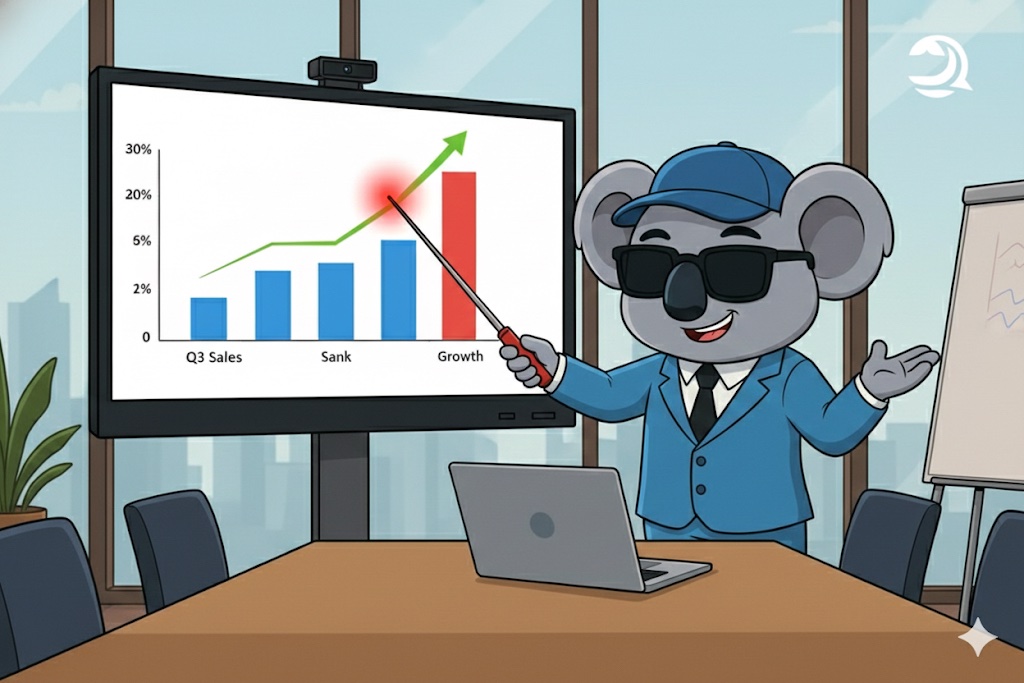
The idea of treating financial health like a “health score” across crypto and cash is interesting. @bluwhaleai is exploring that direction. Watching closely.
Defi_dynamo
22.7K posts


The idea of treating financial health like a “health score” across crypto and cash is interesting. @bluwhaleai is exploring that direction. Watching closely.


MINT DETAILS Supply - 2,100 DATE - Monday 26th Jan @ 3 PM UTC Launchpad - @opensea WL PRICE - FREEMINT We’re selecting a few GTD WL, Like + RT, tag 3 friends and drop your ETH address below.


Join us for a Twitter Space: HeyElsa AI x @lifiprotocol ⏰ Today 2:00 PM CET A DeFi-focused chat on crosschain execution, infra that abstracts complexity, and what clean onchain UX really depends on. twitter.com/i/spaces/1BdxY…


Centralized AI hitting a memory wall is no surprise, but it changes the game. Instead of chasing endless memory, the shift is toward smarter inference and decentralized compute power. @PerceptronNTWK'sapproach to unlock idle, distributed resources sidesteps the hardware arms race. This isn’t just alternative infrastructure, it’s the only scalable path forward as costs surge. Open intelligence isn’t a feature. It’s the future that’s already unfolding.


People assume the machine economy is already settled. That value flows one way, and that’s just how it is. But look closer. Every day, millions of machines move with us. Your phone predicts you. Your car learns you. Your home adapts to you. Your wearables track you. They don’t just operate, they produce value. Yet that value doesn’t belong to the people using the machines. It gets extracted, packaged, and owned elsewhere. That’s the imbalance. Now flip the model. What if machines were economic participants? Owned, coordinated, and rewarded on-chain. What if the value they generate flowed back to the humans behind them? That’s what @peaq is unlocking. Not devices connected to the internet, machines connected to an economy. And once machines can earn and settle value on-chain, the rules change. This isn’t the ending. It’s the beginning.


DeFi often treats collateral as static. You lock it, borrow against it, and hope it’s safe. Meanwhile, your capital could be earning elsewhere. @MultichainZ_ changes that. Yield-bearing collateral keeps generating returns even while you borrow, and loans can move across chains without friction. It’s subtle, but that efficiency quietly transforms how users approach credit and capital allocation.


The first time I noticed something was wrong with DeFi it was not during a hack or a market crash. It was during a quiet week. My capital was split across chains. One network had demand but no depth. Another had liquidity doing nothing. So I bridged. Paid fees. Waited. Reopened positions. Lost yield in the process. Nothing broke. But nothing felt efficient either. That was the moment it clicked. The problem was not risk. It was fragmentation. DeFi keeps treating liquidity like it belongs to chains instead of markets. Capital ends up parked while demand moves elsewhere. .. @MultichainZ_ approaches this differently. Instead of forcing assets to travel it coordinates liquidity at the base layer. On @MultichainZ_ , Collateral stays where it is while borrowing and liquidity access extend across chains. Capital responds to demand without constantly being relocated. The experience feels simple but the change is structural. DeFi starts behaving like one connected system instead of isolated islands. That is not just better UX. That is how capital efficiency scales. @MultichainZ_


Power isn’t having more data. It’s making better decisions. @RaylsLabs This image reflects what decision-makers actually need in real time. Not noise. Not delayed reports. Rayls structures execution data so signals are clear, timely, and actionable — without compromising privacy.


Power isn’t constant change. It’s continuity through change. @RaylsLabs This image represents systems that remain dependable as markets evolve. Rules shift. Volumes change. Participants rotate. Rayls maintains consistent execution and compliance even as conditions adapt.


Good morning guys. Here's another one BluwhaleAI and Its Strategic Narrative Shift BluwhaleAI @bluwhaleai has recently pushed a noticeable strategic narrative shift, moving away from early-stage positioning and into what it frames as an execution-focused phase. Rather than emphasizing abstract promises around AI, decentralization, or future potential, BluwhaleAI’s messaging now centers on tangible progress, operational readiness, and real usage. This shift signals an attempt to reposition the project from a conceptual AI-Web3 platform into functional infrastructure. This change is reflected in how BluwhaleAI communicates. The project increasingly highlights active users, deployed AI agents, live dashboards, and ecosystem participation instead of roadmap speculation. Language such as “building quietly,” “focus era,” and “scaling intelligence” suggests an intentional move toward credibility through delivery rather than hype-driven growth. This narrative reframes BluwhaleAI as a system already in motion, not one perpetually preparing to launch. Strategically, this shift serves two purposes. First, it aligns BluwhaleAI with a maturing market that is growing skeptical of buzzwords and vaporware. Second, it positions the project for institutional and developer trust by emphasizing stability, continuity, and long-term infrastructure value. In essence, BluwhaleAI’s narrative shift is less about changing direction and more about changing emphasis: from promise to proof, from vision to execution, and from noise to measurable progress. Stay bullish mate.


One thing that really caught my attention about @spaace_io is the revenue sharing model. Instead of keeping most of the platform fees the project claims to give all revenue back to the community. That idea alone already feels different from most NFT marketplaces. From a user point of view this model creates a stronger sense of ownership. When you trade or stay active you are not just paying fees but contributing to a shared pool that can benefit you later. I like how this approach aligns incentives between the platform and its users. If Spaace grows the community grows with it. For me this makes the project feel more community driven and less extractive than many existing NFT platforms. #wallchain