Adam Rogers

2.4K posts

Adam Rogers banner
Adam Rogers

Adam Rogers

@adamr

Former intern, CTO & CEO at Ultimate Software (now UKG)

South Florida Katılım Temmuz 2007
1.5K Takip Edilen2.9K Takipçiler
Adam Rogers retweetledi
Mr PitBull Stories
Mr PitBull Stories@MrPitbull07·
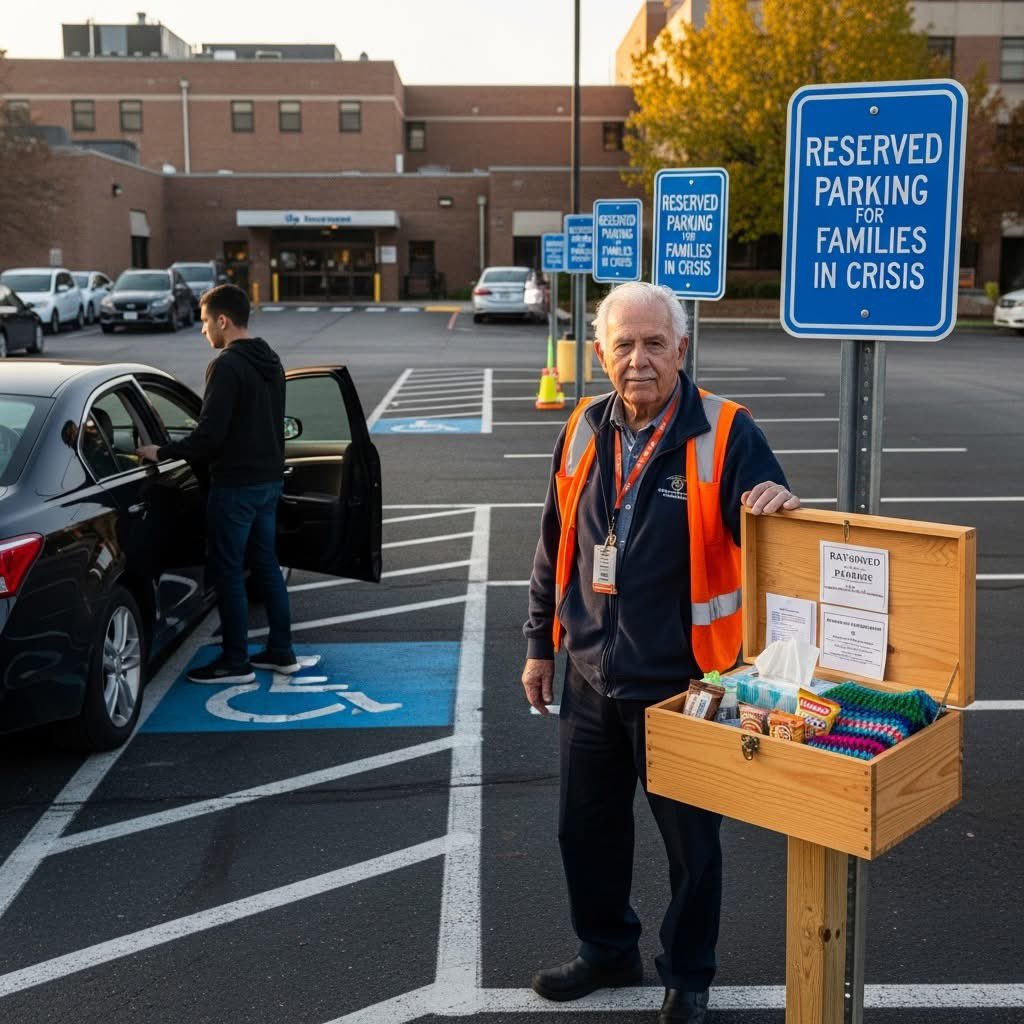
"My name's Raymond. I'm 73. I work the parking lot at St. Joseph's Hospital. Minimum wage, orange vest, a whistle I barely use. Most people don't even look at me. I'm just the old man waving cars into spaces. But I see everything. Like the black sedan that circled the lot every morning at 6 a.m. for three weeks. Young man driving, grandmother in the passenger seat. Chemotherapy, I figured. He'd drop her at the entrance, then spend 20 minutes hunting for parking, missing her appointments. One morning, I stopped him. "What time tomorrow?" "6:15," he said, confused. "Space A-7 will be empty. I'll save it." He blinked. "You... you can do that?" "I can now," I said. Next morning, I stood in A-7, holding my ground as cars circled angrily. When his sedan pulled up, I moved. He rolled down his window, speechless. "Why?" "Because she needs you in there with her," I said. "Not out here stressing." He cried. Right there in the parking lot. Word spread quietly. A father with a sick baby asked if I could help. A woman visiting her dying husband. I started arriving at 5 a.m., notebook in hand, tracking who needed what. Saved spots became sacred. People stopped honking. They waited. Because they knew someone else was fighting something bigger than traffic. But here's what changed everything, A businessman in a Mercedes screamed at me one morning. "I'm not sick! I need that spot for a meeting!" "Then walk," I said calmly. "That space is for someone whose hands are shaking too hard to grip a steering wheel." He sped off, furious. But a woman behind him got out of her car and hugged me. "My son has leukemia," she sobbed. "Thank you for seeing us." The hospital tried to stop me. "Liability issues," they said. But then families started writing letters. Dozens. "Raymond made the worst days bearable." "He gave us one less thing to break over." Last month, they made it official. "Reserved Parking for Families in Crisis." Ten spots, marked with blue signs. And they asked me to manage it. But the best part? A man I'd helped two years ago, his mother survived, came back. He's a carpenter. Built a small wooden box, mounted it by the reserved spaces. Inside? Prayer cards, tissues, breath mints, and a note, "Take what you need. You're not alone. -Raymond & Friends" People leave things now. Granola bars. Phone chargers. Yesterday, someone left a hand-knitted blanket. I'm 73. I direct traffic in a hospital parking lot. But I've learned this: Healing doesn't just happen in operating rooms. Sometimes it starts in a parking space. When someone says, "I see your crisis. Let me carry this one small piece." So pay attention. At the grocery checkout, the coffee line, wherever you are. Someone's drowning in the little things while fighting the big ones. Hold a door. Save a spot. Carry the weight no one else sees. It's not glamorous. But it's everything." Let this story reach more hearts.... Credit: Mary Nelson
Mr PitBull Stories tweet media
English
3.8K
29.7K
138K
6.6M
Adam Rogers
Adam Rogers@adamr·
Phenomenal app. Happy to pay for it. Use it everyday on macOS. Surprisingly despite iOS limitations the app is amazing on iPhone. Congrats
Tanay Kothari@tankots

we just raised another $25M after 10x'ing our ARR in 5 months. the crazy part is this almost never happened. 17 years ago, I watched Iron Man as a 10-year-old kid in Delhi. that night, I pulled my first all-nighter teaching myself to code. not because I wanted to build apps or make money. because I wanted to build Jarvis. my parents gave me 1 hour of screen time per day. so I coded in secret, sleeping every alternate night through middle school and high school. built 50+ apps. got a cease and desist from Google at age 12. all for this one obsession: making computers understand us like humans do. fast forward to today: - we've raised $81M total to build the voice operating system - growing revenue 40% month-over-month this year - 70% user retention after one year (unheard of in consumer) - teams at 270 of the Fortune 500 use Wispr Flow daily our Series A2 was led by @hanstung at @notablecap (who was an early investor in five companies that made it to $100B valuation like Slack, Tiktok, and Airbnb). we also brought on @StevenBartlett as an investor and partner. but here's what matters more than the money: we cracked voice input. not transcription - actual understanding. our users hit "send" in under 0.5 seconds without checking. they trust it blindly. that's never existed before. in a recent benchmark, Wispr came out as 3-4x more accurate than OpenAI, ElevenLabs, and Siri. and we're just getting started. voice input was step one. now we're building the assistant that actually does things for you. to my co-founder @SahajGarg6 - there's no one else I'd rather build Jarvis with than my college roommate and closest friend. to our team pulling all-nighters and shipping magic - you're the reason that 10-year-old kid's dream is becoming real. we're hiring cracked engineers and growth marketers who want to build the future of human-computer interaction. the keyboard had a good 150-year run. time to build what comes next. PS: like, retweet, and bookmark to get wispr flow for free for 3 months ❤️ — Written with @WisprFlow

English
0
0
0
118
Adam Rogers
Adam Rogers@adamr·
We all know this was an AI generated video but the underlying content clearly resonates. For those of you shrugging this off because the delivery is AI generated, just pretend it was an independent journalist's editorial comments on the situation. Thanks to @grok for this summary: Key Quotes "I didn't come here to stay South African. I came here to become American. There's a difference, and it's not a small one. When you come to a new country and you refuse to assimilate, when you refuse to adopt the values and culture that made that place worth moving to in the first place, you're not immigrating, you're colonizing." "You can't build prosperity by tearing down the people who create it. You can't make everyone richer by making rich people poorer. Wealth isn't a pie... Wealth is created. It grows." Zohran Mamdani's Victory and Agenda The video describes Zohran Mamdani's upset victory in the New York City election, where he defeated Andrew Cuomo. In his victory speech, Mamdani revealed a radical agenda, framing it as an assault on capitalism and wealth accumulation. He positioned his win as the start of a "new age in America" focused on government intervention. A key quote highlights his intent: "The way to terrify someone like Trump is to destroy the very conditions that let him rise in the first place." The narrator interprets this as a revolutionary call to make wealth creation impossible, replacing individual ambition with state control. Critique of Mamdani's Focus on Immigrant Identity Mamdani's speech emphasized New York as a city "of immigrants, built by immigrants, powered by immigrants, and now... led by an immigrant," listing various nationalities without mentioning native-born Americans. The narrator, an immigrant himself, criticizes this as promoting division rather than unity, fostering "a patchwork of separate tribal identities." He stresses the importance of assimilation: "I didn't come here to stay South African. I came here to become American. There's a difference, and it's not a small one. When you come to a new country and you refuse to assimilate, when you refuse to adopt the values and culture that made that place worth moving to in the first place, you're not immigrating, you're colonizing." This approach, he warns, leads to people living in the same city but "inhabit completely different worlds with no shared language or values to hold them together," labeling it as "replacement" rather than true inclusion. Trump's Response and Immigration Enforcement Hours after Mamdani's speech, Donald Trump responded on social media with "And so it begins," followed by a warning that he would arrest Mamdani if he obstructed federal immigration enforcement. The narrator supports this stance, viewing it as essential to maintaining national cohesion. He argues that allowing local leaders to defy federal laws could unravel the country, preventing descent into chaos where the nation exists "in name only." Economic Struggles of Young People and the Rise of Socialism The narrator explores why Mamdani's message resonates, pointing to economic frustrations among younger generations: Median first-time homebuyer age reaching 40 Student debt totaling $1.5-2 trillion with high default rates Spiking credit card delinquencies reminiscent of the 2008 crisis Wages haven't matched living costs, job security has vanished, and the traditional "social contract" feels broken. This desperation makes socialist appeals attractive: "When someone like Zoran comes along and says, 'The system is rigged against you, and I'm going to tear it down and build something better,' a lot of people listen. They're desperate. They're angry." However, he cautions that while the diagnosis is accurate, the socialist cure misattributes the problems to capitalism itself rather than its corrupted form. Defense of True Capitalism vs. Cronyism and Socialism Distinguishing "real capitalism" from the current "crony system" of corporate bailouts and lobbying, the narrator defends it as a merit-based framework where "anyone with a good idea and the willingness to work hard" can succeed. Socialism, by contrast, centralizes power and stifles innovation: "When you concentrate all the power in government... you don't eliminate corruption and cronyism. You just move it." He warns it replaces market competition with "competing for political favor," leaving ordinary people "even more powerless." A poignant critique: "You can't build prosperity by tearing down the people who create it. You can't make everyone richer by making rich people poorer. Wealth isn't a pie... Wealth is created. It grows." Influence of Big Money and Power Dynamics The narrator highlights external influences, noting Alex Soros's quick celebration of Mamdani's win as evidence of billionaire backing. He questions the motives: "When someone with access to billions of dollars in political funding is publicly celebrating a socialist victory... you have to ask, what's the endgame here? Because it's not about helping working people." He frames Mamdani's agenda as a power grab, "redirecting it away from markets and individuals and into the hands of government," which he calls "consolidation" rather than liberation. The goal, he suggests, is control. Historical Warnings and Risks of Centralized Power Drawing parallels to failed socialist regimes, the narrator cites Venezuela's collapse and darker historical examples like the Soviet Union's kulak purges, Mao's Cultural Revolution, and Cambodia's Khmer Rouge. He warns: "When you build a system where government has unlimited power to solve unlimited problems, you create the conditions where abuse becomes inevitable. Because power doesn't stay pure, it corrupts." Using a tech analogy, he compares centralized government to a single-processor computer that bottlenecks and crashes, versus decentralized markets that are "resilient" and adaptive. Connection to Trump's Supreme Court Battle on Tariffs Linking to broader national issues, the video discusses Trump's Supreme Court case on presidential tariff authority without congressional approval. A likely ruling against him could force refunds of billions in tariffs, impacting the budget. The narrator connects this to Mamdani as parallel tests of executive power: "Both believe the old rules don't apply anymore... The difference is in what they're trying to build." Trump aims to "strengthen American industry and American sovereignty," while Mamdani seeks to "tear down the structures that made America powerful." Consequences of Mamdani's Policies for New York Mamdani's proposed tax hikes on the wealthy and businesses are predicted to trigger an exodus: "They leave. It's not a threat... It's just math." This would erode the tax base, harming "trapped" working families reliant on local services, leading to crumbling infrastructure. Referencing 1970s New York City's near-bankruptcy, the narrator warns of a repeat cycle: "We've seen this before... It took decades to recover. And now we might be watching the beginning of that cycle again." Analysis of Election Demographics and Cultural Change Exit polls reveal native New Yorkers nearly split evenly, with recent immigrants tipping the scale for Mamdani, reflecting rapid demographic shifts that import differing political views favoring central authority. The narrator argues for active integration: "If you don't actively work to integrate newcomers into the existing culture... you'll lose that culture." Mamdani's message encourages non-assimilation: "You don't need to become American. You can stay exactly who you are... This is your city now, not theirs." He stresses that America's success stems from values like "limited government, property rights, rule of law," warning their discard risks losing prosperity. Broader Implications for America's Future The conflict symbolizes a deeper divide over America's identity: freedom and individual responsibility versus government control and security. Eroding trust leads to embracing "strongmen" or ideologues: "When that trust breaks down, people look for alternatives... They stop believing in the system and start believing in tribes." The narrator calls for preserving the "fragile" American experiment: "The idea that ordinary people can govern themselves... is precious." He urges watching New York as a test case: "If he succeeds... the movement will grow. But if he fails... maybe we can have a real conversation about how to fix what's broken without destroying what works." Call to Action and Closing Thoughts Concluding optimistically, the narrator advises skepticism of utopian promises and faith in freedom: "There are no shortcuts. You can't redistribute your way to prosperity." He emphasizes patient reforms: "Create conditions where people are free to build... That requires believing that people are fundamentally capable of making their own choices." Ending with a plea to engage: "This isn't about Zoran or Trump... It's about whether we believe in ourselves... That belief... is what's really at stake."
Bill Ackman@BillAckman

This is one of the best explanations of what is going in America right now, why @ZohranKMamdani won in NYC, and what the risks are for our country and the world. @elonmusk is the spokesperson. He is brilliant, incredibly articulate , and spot on. What makes this video even more remarkable is that I am pretty sure but not totally sure that it is AI. Not just Elon speaking the words, but the words that are actually spoken. For someone who has followed Elon for many years and spent a few hours with him, the tone, the choice of words, the thoughts behind them match with the Elon that we all know. But it is highly likely to be AI. The principal reason why I believe this to be so is that I don’t think Elon would have had the time to put this together. If you want a glimpse of the future where we do not know what is real and what is fake, this is worth watching for that reason alone. But even more importantly, what Elon says here is one of the most important things you will watch this year. Do yourself a favor and watch this video: youtube.com/watch?v=glRka9… And would the person who created this let us know who they are. They deserve a round of applause.

English
1
0
0
168
Adam Rogers
Adam Rogers@adamr·
@sergeynazarovx @sama Correct. It was $5k to get in line (can use credit card) and then you had to wire $45k to reserve. Don’t ask how I know 🤦‍♂️
English
0
0
1
3.9K
Sergey Nazarov
Sergey Nazarov@sergeynazarovx·
@sama why is the refund $50K while the reservation cost was $45K?
English
7
0
7
140.6K
Sam Altman
Sam Altman@sama·
A tale in three acts:
Sam Altman tweet mediaSam Altman tweet mediaSam Altman tweet media
English
2.5K
1.8K
44K
16.5M
Adam Rogers
Adam Rogers@adamr·
@comcastbusiness the $$ you save by outsourcing your customer service cannot be more than the $$ you lose from the atrocious service they provide. Today one rep lied about a tech coming out and a 2nd one hung up on me. I would go back to a dial-up modem to avoid using Comcast
English
1
0
1
61
Adam Rogers retweetledi
david friedberg
david friedberg@friedberg·
America's Biggest Mistake? A portion of every American's paycheck is deposited into the Social Security trust fund (OASI), which is then invested to create returns that aim to support long-term retirement payments. Since 1941, OASI has ONLY invested in US treasuries, averaging an annual return of just 4.8%. Meanwhile the S&P500 has been compounding returns at 10.5% per year. If instead of buying treasuries, OASI bought the S&P500 index starting in 1971 (the year the US went off the gold standard), it would have a $15.1T balance today and Americans would all share ownership of ~1/3 of America's best companies, likely supporting increased retirement benefits, lowering taxes, and reducing Federal debt levels while being the world's largest sovereign wealth fund. Instead, OASI has a $2.7T balance today and is projected to go bankrupt in 2032, as retirement benefits swell while annual returns on US treasuries held by OASI have shrunk to <3% per year recently. Many economic inequities in America can be traced back to this structural mistake. By not investing OASI in equities, only privileged Americans with private pensions, 401(k)s, IRAs, and other investment retirement accounts have benefited from the marvel of American capitalism, leaving behind the tens of millions of Americans who had no choice but to rely on Social Security and were left reliant on low-yielding US treasuries. It is not too late to change. Social Security can still pivot to an equity-driven investment model, driving future balance sheet growth, providing investment capital to American businesses, reducing the dependence on Federal taxes and money-printing, and giving all Americans ownership in America's best businesses. Rather than create a new sovereign wealth fund, while ignoring the imminent failure of Social Security, legislators can restructure Social Security. By adding ~$500B directly to OASI, investing the entire balance in the S&P 500, and assuming future annual returns of ~10.5%, OASI will grow while also meeting all future retirement obligations, rather than shrink away into insolvency. The longer we wait to fix Social Security, the more expensive it will become... shifting to an equity-driven investment model now could ensure its long-term viability, address economic inequities across the US, create the world's largest sovereign wealth fund, and give every American ownership and participation in the rewards of American capitalism.
English
402
679
5.6K
509.9K
Adam Rogers retweetledi
Matt Turck
Matt Turck@mattturck·
Is SaaS dead? What seems to be happening: * tough macro, cost cutting * AI sucking the air out of the room * SaaS vendors perceived as “last generation” despite best efforts to add AI quickly * enterprise budgets for AI are not net new, they’re taken from somewhere (SaaS budgets cut) * Bulk of budgets going to OpenAI/Azure etc because low hanging fruit to “do AI” (knowledge bot, coding) * for the more specialized enterprise apps, customers feel like they can/should “build” internally rather than “buy” What happens next: * customers realize that “build” is a headache, not always good * OpenAI / Azure etc can’t / doesn’t want to build hundreds of problem specific/ vertical specific apps * Takes time, but legacy and new SaaS companies truly become AI-first (not just marketing), abstract away complexity of deploying LLMs * macro environment eventually rebounds * AIaaS becomes the new SaaS - what is old is new (unedited Sat morning thoughts)
English
96
101
895
313K
Adam Rogers retweetledi
Tony Garcia | Detroit Free Press
Tony Garcia | Detroit Free Press@RealTonyGarcia·
Dusty May: “We want to win championships, but we want to be easy on the eyes and fun to watch. Watching Michigan basketball will be enjoyable.”
English
0
1
5
1.2K
Adam Rogers
Adam Rogers@adamr·
@elonmusk What happens with those who put deposits down in 2017? Has the price changed?
English
0
0
0
110
Elon Musk
Elon Musk@elonmusk·
Tonight, we radically increased the design goals for the new Tesla Roadster. There will never be another car like this, if you could even call it a car.
English
6.9K
9K
113.7K
38.5M
Adam Rogers retweetledi
Lex Fridman
Lex Fridman@lexfridman·
Elon Musk is not antisemitic. This is obvious to anyone who knows him well. I hope advertisers don't boycott X. This platform is too important.
English
2.6K
2.5K
35.1K
2.8M
Adam Rogers retweetledi
Eitan Chitayat
Eitan Chitayat@EitanChitayat·
What's your intention? This is everything.
English
5
25
57
11.4K
Adam Rogers retweetledi
Ritchie Torres
Ritchie Torres@RitchieTorres·
Not a word condemning Islamic Jihad for causing the hospital explosion in Gaza and killing hundreds of Palestinian civilians. Not a word from the UN. Not a word from Israel’s usual critics, who rushed to judgement with a blood libel. Not a word from Hamas (no surprises). The sudden silence is deafening. If you think the death of Palestinians is cause for outrage only when Israel is the accused, then you are not pro-Palestinian. You are simply anti-Israel. There is a difference.
English
1.3K
2.9K
11K
1M