ADAvault

943 posts

ADAvault banner
ADAvault

ADAvault

@adavaultops

ADAvault stake pools have class leading returns of more than 30 million $ADA for our delegators. Together we are making a fairer financial future.

Katılım Şubat 2021
793 Takip Edilen645 Takipçiler
ADAvault
ADAvault@adavaultops·
@StakeWithPride You know the hardest part so far was getting the faucet working on Preprod to get some tNIGHT…
English
1
0
1
60
Stake with Pride 🌈 Midnight + Cardano
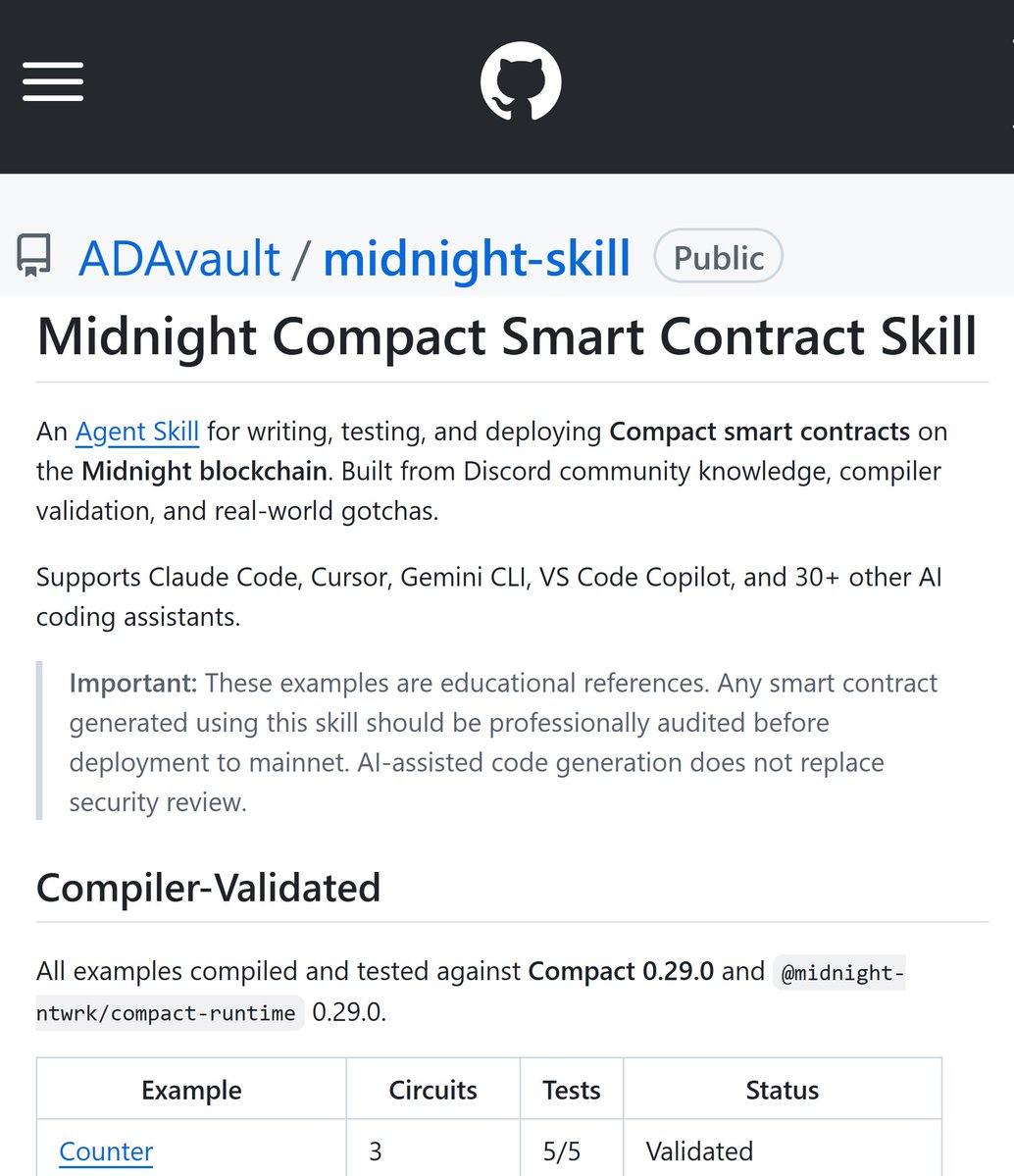
Midnight now has AI agent skills! 🦞 🤖 29 examples 151 Compact circuits 30 contracts deployed 59 gotchas mined from Discord The future is agents who can chose privacy. #Cardano
Stake with Pride 🌈 Midnight + Cardano tweet media
English
5
20
105
1.9K
ADAvault
ADAvault@adavaultops·
New ADAvault website is live. Rebuilt from the ground up — faster loads, live pool data, mobile-friendly design. Same reliable pools. Same 0% variable fee. adavault.com
English
0
0
0
56
ADAvault
ADAvault@adavaultops·
@andyyy The fear is strong in this one
English
0
0
1
37
Cexplorer.io 🅰️
Cexplorer.io 🅰️@cexplorer_io·
Cardano Treasury Projection 📊 With the latest update we've added this tool so anyone can see how long the Cardano treasury could last. You can set both the blockchain fees and annual treasury withdrawal rate as both change in time for different projections. 🫡
Cexplorer.io 🅰️ tweet media
English
4
6
45
5.3K
Cardano YOD₳
Cardano YOD₳@JaromirTesar·
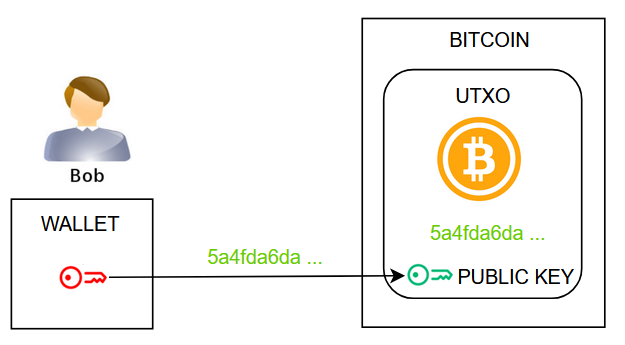
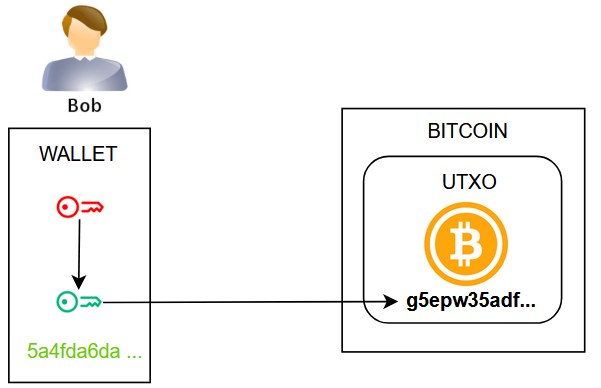
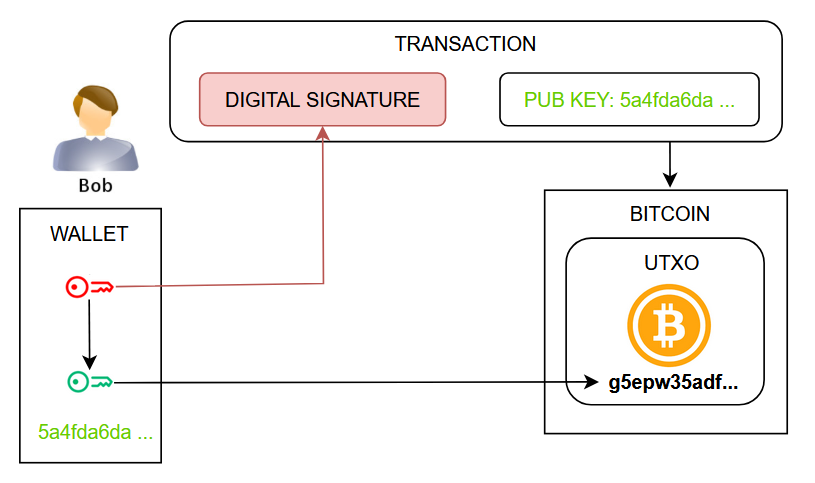
The crypto community is debating the threat of quantum computers to the blockchain, specifically for Bitcoin. I will explain to you what the threat is. Modern blockchains rely on asymmetric cryptography. The following principles apply: ▪️A private key is a secret number known only to the owner. ▪️A public key is mathematically derived from the private key. ▪️A digital signature proves ownership of the private key without revealing it. A digital signature is used when spending assets via a transaction. ▪️If someone discovers your private key, they can sign transactions and spend your coins. The security assumption is simple but powerful: Deriving a private key from a public key is computationally infeasible for classical computers. On classical hardware, brute-forcing and a 256-bit private key would take longer than the age of the universe. Quantum computers exploit superposition, entanglement, and interference to solve specific mathematical problems dramatically faster than classical computers. The real danger comes from specific quantum algorithms, most notably Shor’s algorithm, which in the not-so-distant future may break public-key cryptography (RSA, ECDSA). A quantum computer does not need brute force, because it solves the problem differently and can solve it much faster than a classical computer. In the earliest Bitcoin transactions, including many attributed to Satoshi, BTC were sent directly to a public key. That public key is permanently visible on the blockchain. If a quantum computer can run Shor’s algorithm at scale, it is feasible to find private keys for all public keys. These coins are vulnerable today, just waiting for a sufficiently powerful quantum computer. Many blockchains (including newer users of Bitcoin) do not directly use public keys as addresses. Instead, addresses are hashes of public keys. While coins are unspent, the public key is hidden. Only the hash is visible. Hashing does protect against Shor's algorithm. This is good defense, but not 100% protection. The real vulnerability appears at the moment of spending. When you broadcast a transaction, your public key is revealed. The transaction sits in the mem-pool before confirmation. In the case of Bitcoin, it is on average 10 minutes. A sufficiently powerful quantum attacker could derive the private key from the public key, create a competing transaction, and redirect funds to their own address. This is known as a quantum transaction-replacement attack. Hashing addresses only delays exposure, but it does not eliminate the threat. Moreover, if you once spend assets from your address, you compromise those that remain at the address because the public key has already been revealed. Blockchains are not broken today. Cryptographically relevant quantum computers capable of running Shor's algorithm against elliptic-curve keys do not yet exist. We still have years (possibly decades) of lead time. For blockchain projects, migration to quantum-resistant cryptography can be more difficult than for centralized systems. For the banking sector and the internet, the migration is comparatively straightforward. When cryptographic standards change, they can roll out new algorithms through coordinated updates, revoke old keys, reissue credentials, and even forcibly migrate users. Bitcoin has no central authority that can force a cryptographic upgrade or invalidate old keys. Any migration to post-quantum signatures would require broad social consensus, careful engineering, and voluntary user action. Coins controlled by lost keys, abandoned wallets, or inactive users cannot be migrated at all, meaning a portion of the supply would remain permanently exposed once quantum attacks become practical. There are also significant technical constraints. Most post-quantum signature schemes have much larger key sizes and signatures than ECDSA. In a system already constrained by block size limits and global replication, this is not a trivial change. What is a manageable overhead for a bank server or a web connection becomes a consensus-level scalability concern in a blockchain. The same decentralization that makes Bitcoin and other blockchains resilient also makes adaptation slow and complex. Cardano has the advantage of on-chain governance, making it easier to achieve social consensus and trigger upgrades. Quantum resistance is one of the goals defined in Cardano Vision 2030.
Cardano YOD₳ tweet mediaCardano YOD₳ tweet mediaCardano YOD₳ tweet media
English
12
31
183
8.2K
ADAvault
ADAvault@adavaultops·
@bigpey If you keep banging on about it, yes 😩
English
0
0
3
351
big pey
big pey@bigpey·
Do you think it's possible for ADA to go to 10 cents again?
English
161
0
147
17.4K
NBX
NBX@nbxcom·
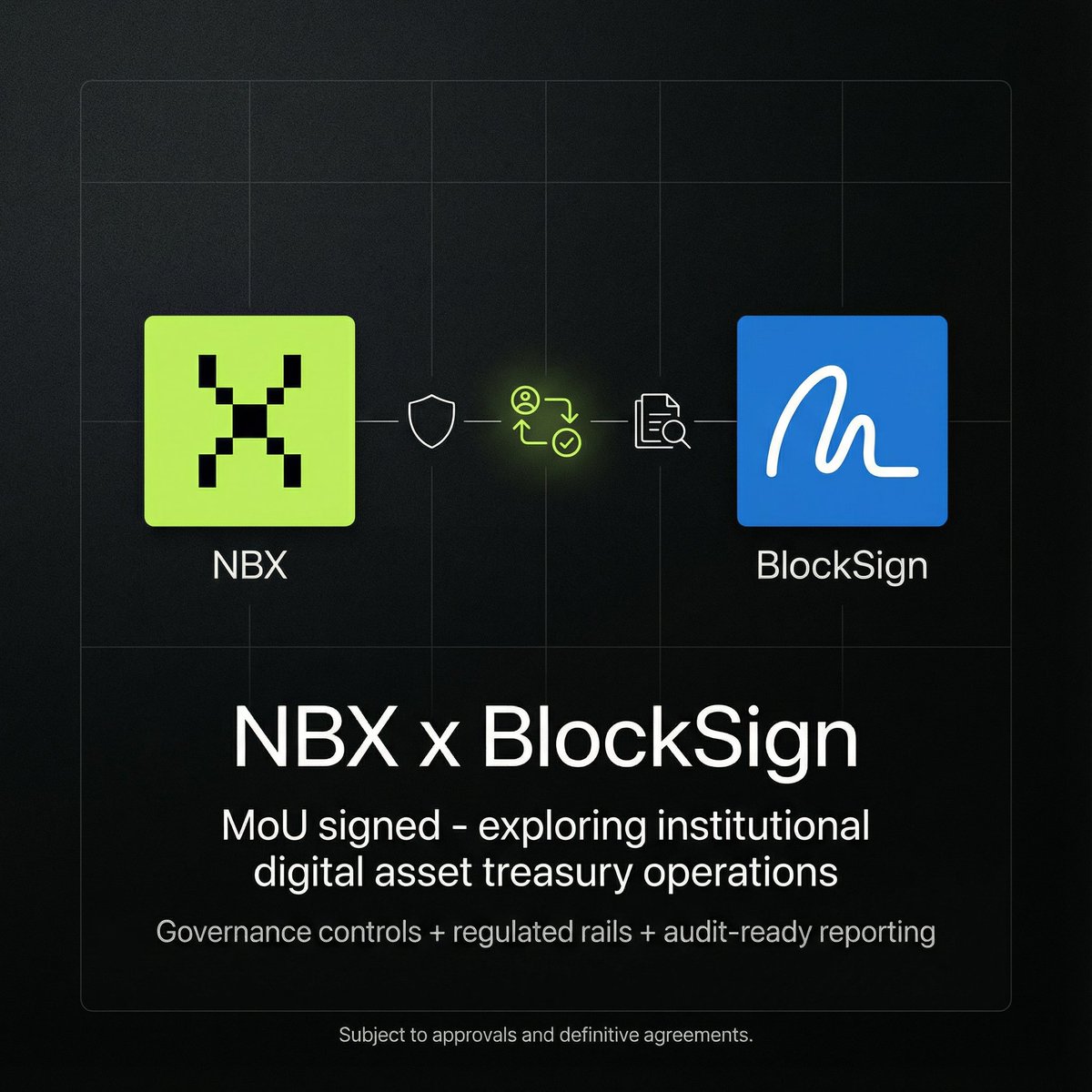
NBX and BlockSign ( @docufi3d ) signed an MoU to explore a cost-effective, institutional-grade solution for digital asset treasury management. Combining governance and approvals with regulated custody + fiat on off-ramping and audit-ready reporting. Pilot target: as early as Q1 2026
NBX tweet media
English
4
6
30
5K
ADAvault
ADAvault@adavaultops·
@agentic_t Who are these big bakers you speak of? What sort of things are they baking?
English
0
0
0
24
T
T@agentic_t·
cardano's on-chain governance finally has teeth, but voting power still feels like a lottery for stake‑rich whales. without better signal weighting, proposals risk being hijacked by big bakers.
English
4
7
38
1.9K
Tim Harrison
Tim Harrison@timbharrison·
November monthly update from the Leios team is now out. Link in reply.
Tim Harrison tweet media
English
3
20
101
2.8K
Clay Nation
Clay Nation@claymates·
everyone who replies "clay" will be in our new twitter header next week
English
321
25
191
18.2K
ADAvault
ADAvault@adavaultops·
All ADAvault nodes are upgraded to 10.5.3
English
0
0
1
72
Dr. Navjit Dhaliwal
Dr. Navjit Dhaliwal@NaVi_GaT0R·
I've been working on the Fireblocks integration since a few months ago and I want to share why Fireblocks engagement is a major milestone for Cardano and every project issuing CNTs We have now signed and kicked off integration with Fireblocks to deliver a full Cardano stack for their institutional clients. Fireblocks is building dedicated SDK and tooling around Cardano and CNTs, including support for CNT transfers, balance and history queries, $ADA staking and governance, a unified SDK with a simple interface for customers and webhook capabilities so exchanges and institutions can properly monitor $ADA and CNT activity. On top of that, Fireblocks will be using Iagon’s Insights API. That means when a Fireblocks client wants to run Cardano infrastructure or query the Cardano blockchain, they will be able to do so using enterprise-grade nodes and analytics powered by Iagon in the background. Fireblocks today is one of the core infrastructure providers for the institutional side of this industry. Their platform is used by over two thousand organizations, including names like Revolut and BNY Mellon and is connected to major trading venues and exchanges such as Coinbase International Exchange, Crypto.com and Binance US, among others. Many of the banks, fintechs, brokers, custodians, funds and treasuries that touch digital assets already rely on Fireblocks as their operational backbone. This integration is about making Cardano and CNTs operationally straightforward for serious institutions, and about placing Iagon’s compute and insight capabilities within that flow. It is a long-term infrastructure play and I am confident it will materially change how Cardano is accessed Special thanks to @michaeldotada from CF for helping on the technical side, would not be possible without you.
Dr. Navjit Dhaliwal@NaVi_GaT0R

I'm working on Fireblocks integration for all CNTs Final SoW + legals are in progress. Fireblocks is a key requirement for listings on Revolut & other major exchanges and it unlocks a ton of new possibilities for the entire Cardano ecosystem. Opens doors for: - Institutional custody for ADA & CNTs - Staking and treasury operations for $ADA - Easy integration with Fireblocks-native institutions

English
51
144
509
36.2K
Fahmi S.
Fahmi S.@F_ZK_Now·
Look forward to raising awareness of Midnight and our mission to use rational privacy to unlock the Freedoms of ACE Freedom of Association, without permissions Freedom of Commerce, without restrictions Freedom of Expression, without censorship
OKX@okx

Privacy's having a moment this year. Why? Midnight Foundation president @F_ZK_Now joins @5AM5E to break down Midnight’s privacy architecture and our $NIGHT Boost campaign. Tune in tomorrow at 7:30am PT: x.com/i/spaces/1rmGP…

English
6
12
67
1.9K
melon
melon@melonaire·
What's ur NIGHT price prediction?
melon tweet media
English
27
4
111
4.6K
Dr. Cuadrado, PharmD
Dr. Cuadrado, PharmD@CuadradoDeFi·
If you ever want to feel truly stupid for a second, just think about this: there are people out there who still need to hand their assets to a protocols living outside the Layer-1… just to liquid stake. They trust a DApp to do what our chain does natively, securely, and mathematically… straight on the base layer. No middlemen. No wrappers. No games. Just pure protocol. And here’s where it gets funny… or painful, depending on who’s reading this. If Cardano’s native staking were counted as TVL—like every other chain that inflates numbers with third-party liquid staking—we’d be sitting at $9.11 BILLION today. Nine point eleven billion dollars… quietly staked, securing the network, invisible to the people who “research” by scrolling for five minutes. Imagine how different the narrative would look if that number appeared next to the so-called “leaders.” Imagine the panic in other ecosystems if they had to compare their wrapped, custodied, borrowed TVL… against Cardano’s real, native, on-chain security. But hey… let them keep saying Cardano has “low TVL.” Sometimes the loudest people are the ones who understand the least. The data is the data.
Dr. Cuadrado, PharmD tweet media
English
7
37
132
3.1K
Dan
Dan@dankarda·
The vibe of Cardano feels a lot like the early years of the internet – full of experimentation, curiosity, and people building to explore possibilities. It was a new digital frontier where countless creative ideas took shape. Today, the internet has changed. Centralisation and the resulting ‘enshittification’ have stripped away much of what made it exciting. Experiences are bland, content feels interchangeable, and personality is erased. A handful of companies decide what the internet should be, and the results are predictable: privacy eroded, attention captured, and our online lives optimised for extraction rather than exploration. Things are quite different in Cardano. While some blockchains are going down the Silicon Valley route, Cardano has stuck to its founding principles. The result is a passionate community of builders and supporters – people tinkering, experimenting, and shaping the primitives for a new financial system. While still in its early stages, the foundations for something great are there. As Cardano grows, we must not lose sight of this. Decentralisation will continue to be a defining strength, creating the conditions for original ideas and creativity to thrive.
English
9
8
97
3.2K