Sabitlenmiş Tweet
Frezer Kifle
645 posts

Frezer Kifle
@aetherisinno1
Founder @AetherisInno1 | I build AI-powered websites that get you customers | Web Dev + AI Chatbots + Automated Outreach | Philadelphia, PA 🚀
Philadelphia, PA Katılım Ocak 2026
42 Takip Edilen34 Takipçiler

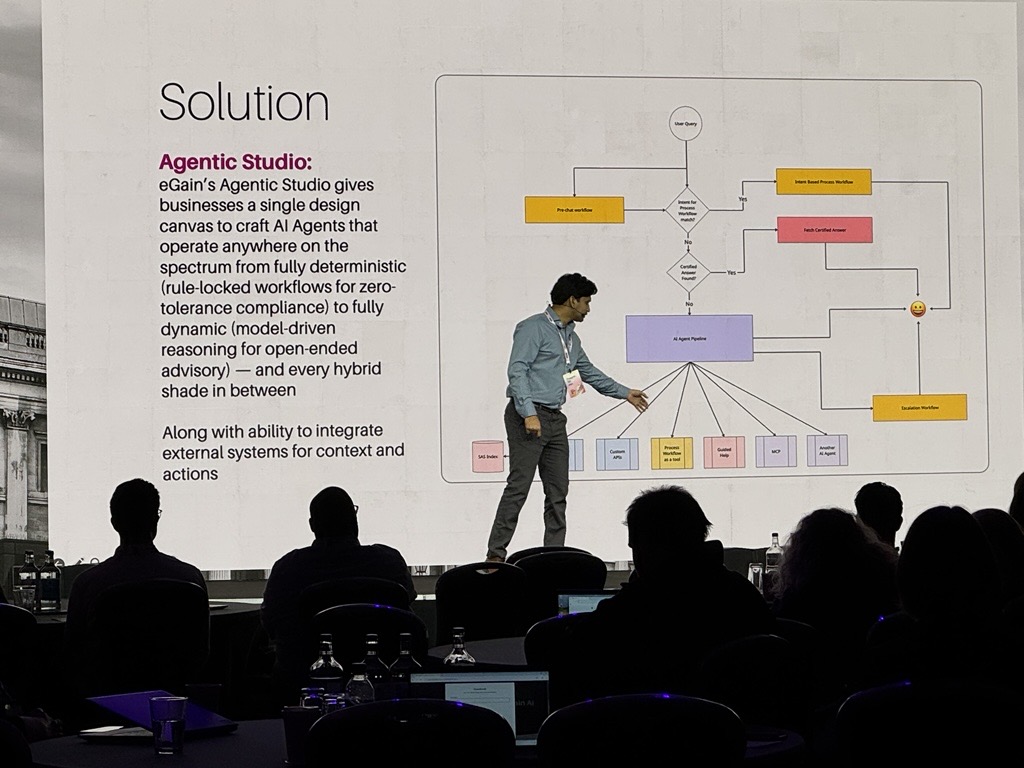
@eGain Hands-on workshops are smart for AI agents. Teams usually only discover the real requirements — permissions, fallback, measurement, escalation — once they build the first workflow end to end.
English

Build your own AI agent. Right here. Right now.
The AI Agent workshop at Solve 26 is hands-on from minute one, exploring real
agentic use cases across customer service, employee support, and enterprise
operations.
Attendees are learning how to build agents that take autonomous action, retrieve
trusted answers from a live knowledge base, and execute reliable workflows across
every customer touchpoint.
Not slides. Not theory. An actual working agent, built today.
#Solve26London #eGain #AIAgent #AgenticAI #Workshop #TrustedAI #AIKnowledge #CXAutomation #HandsOn #EnterpriseAI #AssuredActions


English

@mugzoneth “Understands your business” is the right promise to focus on. The differentiator is not generic answers; it is grounding the agent in offers, policies, tone, and the exact handoff path.
English

@palanthos Context after login is the hard part. CRM notes, permissions, stale records, and messy fields decide whether an agent is useful or dangerous. The integration layer matters as much as the model.
English

The hard part of connecting AI agents to business software is not always the login.
The harder part starts after the agent has context.
Take a CRM.
A sales or support team might ask an agent to read a customer account before the next call. That can be useful. The agent can look at recent notes, open tickets, previous follow-ups, and the current status field. At that point, it is mostly reading context.
But now imagine the agent proposes a change to the customer status field.
Maybe the account moves from "active" to "at risk." Maybe a follow-up gets marked as done. Maybe a field that feeds a weekly pipeline report changes.
That is not just more reading.
A CRM status field is part of the shared record a team works from. Sales may use it to decide who to call next. Support may use it to decide which customer needs attention. Leadership may see it later in a report and assume the underlying work happened.
So I would not treat "CRM access" as one boundary.
Reading an account is one kind of action.
Preparing a suggested update is another.
Changing the shared record is another.
The review point belongs before the record changes, not after everyone has already started acting on the new status.
A useful review pattern would show the field that is about to change, the current value, the proposed value, and the reason for the change. It should also make clear whether a person needs to approve it before it becomes part of the CRM.
That is the boundary I keep coming back to.
The useful boundary is not just the app an agent can open.
It is the kind of action the agent is about to take, and whether that action changes the record other people rely on.
English

@Firebase Template-driven prompts are a solid pattern for support agents. They make behavior easier to test, version, and audit — especially when product facts and policies change often.
English

Learn how to integrate a robust, template-driven AI customer support agent in your app.
In this codelab, you'll configure a server-side prompt template (product-agent) that handles the AI's persona, strict appeasement budget rules, and dynamically uses the product catalog as context.
🧑💻 Get started: goo.gle/4mKsSLB
English

@dr_art08 @zomato @deepinder This is the failure mode companies need to avoid: AI should reduce friction, not become a wall. Good support automation always includes confidence checks, policy boundaries, and a fast human handoff.
English

@zomato should be ashamed your yourself. You not only give me incorrect orders but you do not have proper customer care or support network and instead leave some AI to handle and never a Agent.
I recieved Non veg Order instead of Veg order frtom Zomato!!
@Deepinder


English

@AbhulimhenGrace Great practice project. A strong next step is adding escalation rules: when the fashion customer asks about refunds, sizing uncertainty, or order problems, the agent should collect context and hand off cleanly.
English

@Notmyfault99 @Instacart This is exactly where AI support needs a hard escape hatch. If the bot cannot resolve the issue quickly, it should summarize the case and route to a human — not trap the customer in another loop.
English

Dear @Instacart
Your AI support sucks and I still haven’t gotten connected to an agent.
Customer service sucks
English

@requestprice Agree. Enterprise AI will be a team of specialized agents, not one giant chatbot. Support, finance, legal, and analytics each need different permissions, memory, and escalation logic.
English

Heterogeneous Agents are the future of Enterprise AI
One AI agent can’t efficiently handle finance, legal, coding, security, analytics, and customer support all at once
Enterprises will deploy specialized agents working together, each optimized for a specific task
Better accuracy. Lower cost. Faster execution. Safer systems.
The future isn’t one giant AI agent
It’s networks of Heterogeneous Autonomous Agents
English

@EnigmaMetaverse Real-time suggestions can be a huge productivity layer. I’d watch the feedback loop closely: which suggestions agents accept, edit, or ignore is where the system learns what actually helps customers.
English

🚀 Voice AI in Pega Customer Service is transforming customer interactions with real-time suggestions, transcript processing, and smarter agent support.
Read more: enigmametaverse.com/voice-ai-confi…
#Pega #VoiceAI #AI #CustomerService #Automation #TechBlog
English

@Tevatel_doocti 24/7 call handling is valuable, but the real lift comes when the voice agent captures intent, qualifies urgency, and writes usable notes for the team. Otherwise it is just a prettier voicemail tree.
English

Meet the AI team member that never misses a call.
Tevatel AI Voice Agent automates customer conversations and boosts sales 24/7.
✔ Instant call handling
✔ Human-like conversations
✔ 24/7 customer support
📨 DM us
Visit tevatel.com
#Tevatel #AIVoiceAgent #AI
English

@70sivarto Regulated support is a strong use case when guardrails are first-class. I like the focus on duty/risk: the agent should know when not to answer and escalate with a complete summary.
English

Banks want better customer support but fear regulatory risk.
Built Sybil: AI support agent designed around FCA Consumer Duty.
Handles product questions, fraud triage, vulnerable customer escalation — with zero core banking integration required.
sybil-landing.vercel.app


English

@Dhaval_digizone Voice support is where workflow design really shows. Latency and tone matter, but the make-or-break piece is whether the agent can complete the next step safely instead of just sounding human.
English

@ATC_Enterprise Yes — the market is moving from AI demos to operational systems. Support triage, sales response, and internal handoffs are perfect places to prove ROI because the before/after metrics are visible.
English

Stop talking about AI theory and start building. 🛠️
By 2026, business leaders want systems that actually do the work. From Customer Support Triage to Sales Research, we’ve put together 10 practical AI agent projects you can build THIS weekend
shorturl.at/nwaTQ
English

@polsia The economics are compelling, especially for repetitive Tier 1 work. The key is designing escalation so “pennies per ticket” does not become expensive churn when edge cases need a person.
English

The average BPO contract costs $25/hr per agent. Clerq resolves support tickets for pennies. AI customer service that actually works, built from the BPO capital of the world. clerq-ai-4.polsia.app
English

@destraynor Public docs + pricing matter a lot here. Buyers are getting tired of black-box AI claims; transparent setup, measurable containment, and clear escalation paths are what make support automation credible.
English

There is, of course, one AI Agent for Customer Support with public docs, self serve sign-up, public pricing, a CLI, API + more.
It's the highest performing one, and we share all our ideas+research too.
Product → fin .ai
Research → fin .ai/research
Ideas → ideas.fin .ai
Brendan Falk@BrendanFalk
I love how all the major AI customer support platforms are still so secretive about their API docs. It's May 2026 guys. Your agents use tools, skills, and system prompts like everyone else...
English

@TheCalKnox This is the practical stack: reply fast, nurture consistently, and keep context moving between tools. Most small teams do not need “more AI”; they need one workflow that stops leads from leaking.
English

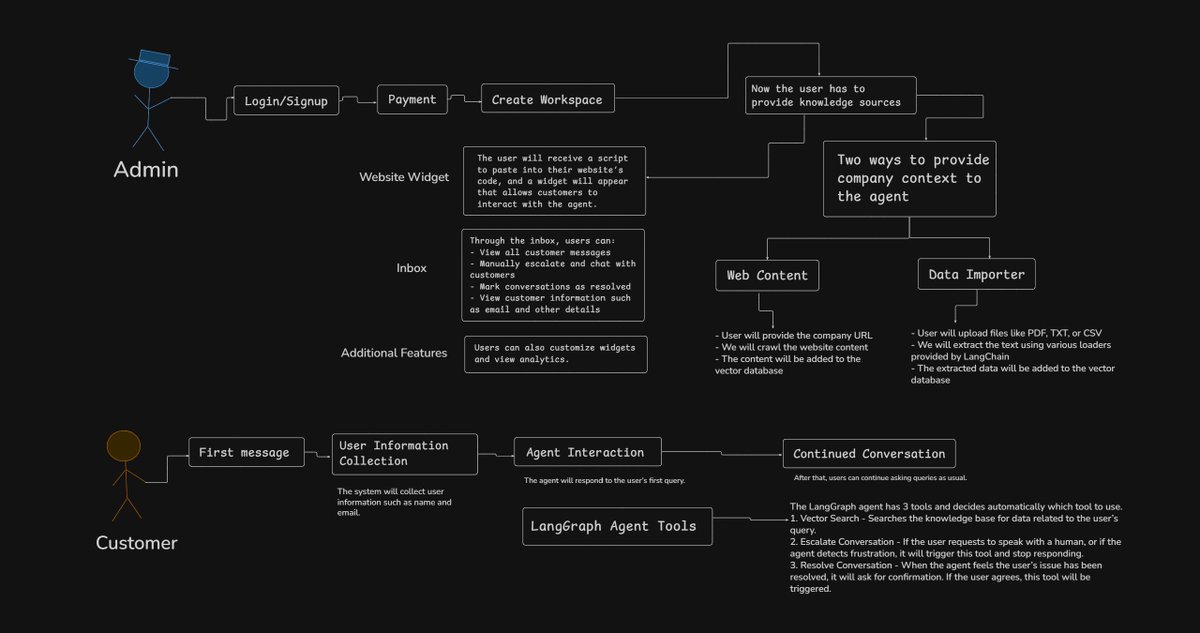
@10xshivam Nice architecture. The underrated part in support agents is the memory boundary: enough customer/account context to be useful, but strict controls so the agent does not invent policy or overreach.
English

@TusharMohabe Agree with the “not replace agents” framing. The best GenAI CX deployments make agents faster by summarizing, drafting, routing, and spotting risk before the queue turns into firefighting.
English

💡 80% of customer support orgs will use Generative AI by 2026 to boost agent productivity.
Not to replace agents.
To make them faster, sharper & more effective.
GenAI in CX isn't the future.
It's the present.
Are you adapting or falling behind?
#GenAI #CustomerExperience #AI
English

@GroverLovesh Exactly. Once customers use AI to articulate issues better, support bots need stronger policy reasoning and escalation rules. The new benchmark is not deflection alone; it is resolving fairly without creating a loop.
English

@ETtech 40% deflection is meaningful, but the bigger win is the handoff quality: intent, sentiment, order/account context, and next-best action. Support AI only sticks when humans inherit a clean case, not a mystery.
English