Alex Goul

1.1K posts

Alex Goul

Alex Goul

@agou1

Just a regular guy... Joking of course! I am smart, beautiful, sexy, etc. Oh, and I love computers.

Athens, Greece Katılım Aralık 2009
88 Takip Edilen95 Takipçiler
Daniel Lemire
Daniel Lemire@lemire·
We have two common observations about AI coding. At one end of the spectrum, people say programming is over. We are all now program managers: we decide what to build and delegate the coding to AI. At the other end, people ask, “Where is all the great software AI is delivering?” I believe these opposing views run deep. They reflect the difference between software as an industry and software as a craft. Recall Henry Ford’s assembly line: it frustrated workers but made cars affordable. Much the same is happening with software. You can build a new web app in hours with AI. It will be generic, inexpensive, and often better than what you could craft yourself in the same time. For many, that’s enough: a generic app that is slightly limited and not too polished. Yet many people in the West still build businesses selling carefully designed products atop this generic infrastructure. Things get interesting when AI is used by craftsmen who truly care about the end product. Using AI as a craftsman takes longer to bear fruit because it is harder. Here is how I have used AI in recent months. I start a project and ask AI to sketch a solution. It works. I could stop there, post the code on GitHub, and move on. In a year, I would produce 400 new libraries—the sweatshop model of AI production. Instead, I treat the AI output like a human research assistant’s draft: “Nice proof of concept!” Then I spend weeks mercilessly reviewing and refining the code. Importantly, AI’s greatest value may not be writing code. I use it as a research assistant: “What if I did it this way?” I can test ten designs in parallel and discard them all. That freedom is valuable. I continue until my code far exceeds the state of the art—well above what lazy prompts would produce. This craftsman strategy is bearing fruit. It may lead to a golden age of software. But by nature, it is slower and less visible. It is slower partly because we are still developing the right processes. Few will do this. I roast and grind my own coffee. Most people buy overpriced capsules. My coffee is in a different league, but most don’t know what good coffee tastes like. The same applies to software. Many think Microsoft Teams is good software. If you sell to those customers, simple AI prompting is enough—and if you become a billionaire, good for you. But I predict a lasting market for the kind of software a small team of dedicated craftsmen can produce with AI and other tools. Mark Frauenfelder’s book Made by Hand is relevant in this context. Roasting is a hassle. Why do I do it? Why bother making crazily good software if so-so software is enough to pay the bills? Many people won't like the answer: it is a spiritual issue. Once you have enough to eat, why do you build anything? If I chose to be frugal, I could probably retire today. Eat spaghetti. Scroll the web. Some people will reply that it is all about status competition. But roasting my own coffee does not make more popular with the ladies. If anything, it makes me weird. Yet it also makes me happier. For many of us, the craft is the point. And AI won't change that.
Daniel Lemire tweet media
English
13
16
107
7.4K
Alex Goul
Alex Goul@agou1·
@popovicu94 It would, but I had already read your tweet so I was expecting it :)
English
1
0
1
25
Uros Popovic
Uros Popovic@popovicu94·
@agou1 Did dash rather than bash surprise you?
English
1
0
0
93
Uros Popovic
Uros Popovic@popovicu94·
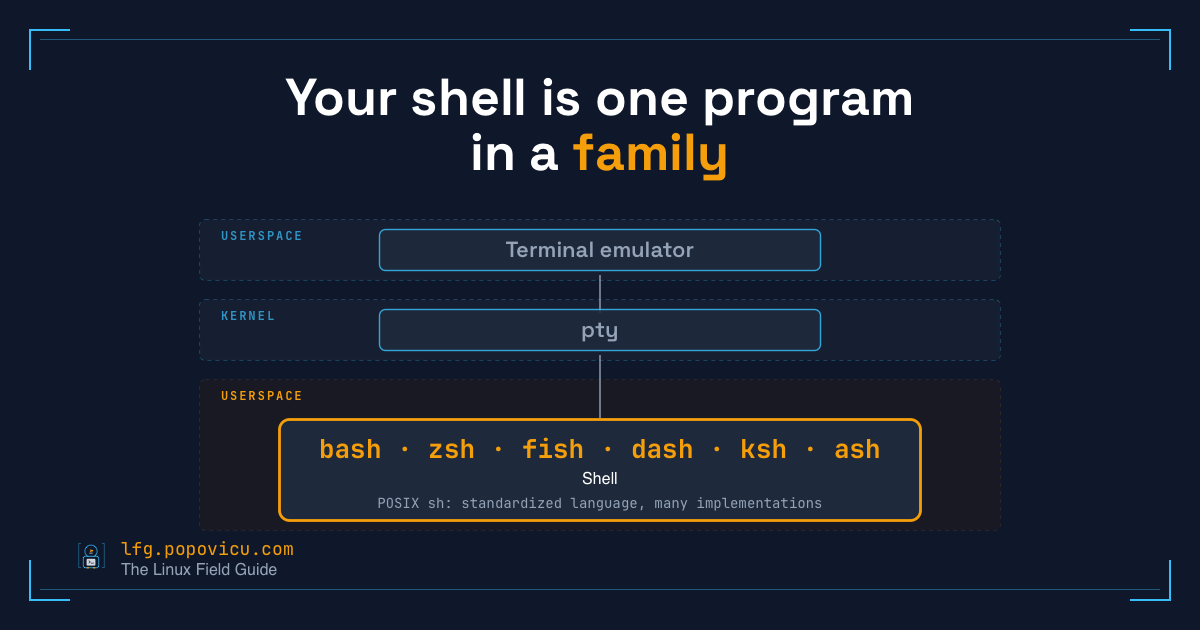
Quick Linux insight: Your shell is just a regular userspace program. There's a whole family of them. bash, zsh, fish, dash, ksh, ash, BusyBox's built-in shell. From the kernel's point of view, every one of them is doing the same job: reading bytes from a file descriptor, parsing those bytes as a programming language, calling fork and exec to run other programs. The differences are all in user-space: which language they accept, what they do for interactive convenience, how strict they are about POSIX. POSIX defines a shell language often called "sh" that most of them implement as a subset, with their own extensions on top. Same idea as glibc vs musl: standardized interface, multiple implementations. A small surprise: on Debian and Ubuntu, /bin/sh is not bash. It's dash, a stripped-down POSIX shell used because it starts faster. A script that says #!/bin/sh will quietly behave differently when it lands on a system where /bin/sh points somewhere else. We'll zoom into all of this in the next Linux Field Guide text on the role of the shell and what it really means to "work in the terminal." What does "readlink -f /bin/sh" print on your machine?
Uros Popovic tweet media
English
6
10
102
4.2K
Alex Goul
Alex Goul@agou1·
@driscollis This one is nice too: uvx --from django django-admin startproject hello_django
English
0
0
1
38
Mike Driscoll
Mike Driscoll@driscollis·
I haven't shared my Django cheatsheet in a while. Here it is. What would you add to it?
Mike Driscoll tweet media
English
4
4
34
2.1K
Olivia
Olivia@Tomolivia24·
40 years ago today, Top Gun was released. There’s something special about this opening theme. Every time I hear it, I get chills and emotional. No matter how many times I listen to it, that feeling never fades.
English
163
1.1K
7.2K
265.1K
Livid
Livid@Livid·
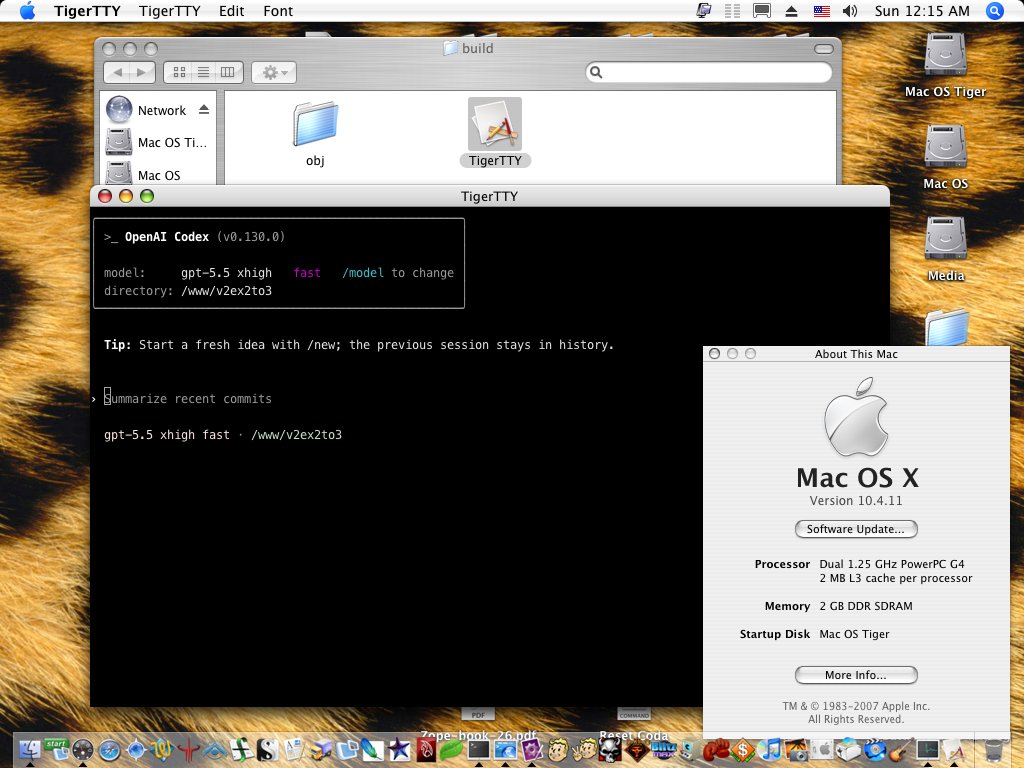
Codex helped me build itself a home on the PowerMac G4: a terminal emulator with the modern features Codex CLI needs, running on Mac OS X 10.4 Tiger.
Livid tweet media
English
3
1
43
8.6K
Eliot
Eliot@CDTEliot·
ed catmull basically solved one of the hardest organisational problems in creative work: how do you keep very high standards of taste without turning the people who hold that taste into gatekeepers that slowly strangle new ideas? his answer is elegant and I think underrated: you separate the people who set the bar from the people who make the final calls.
English
14
104
1.4K
118.6K
Captain Insight
Captain Insight@CaptainInsightX·
4 engineers who shaped modern software. You get 1 as your mentor for a year. Pick one. -DHH (creator of Ruby on Rails, CTO of 37signals) -John Carmack (creator of Doom, ex-CTO Oculus) -Linus Torvalds (creator of Linux & Git) -Guillermo Rauch (CEO of Vercel, creator of Next.js) Who are you picking, and why?
English
216
8
407
94.5K
DHH
DHH@dhh·
Twenty-odd years ago, Jason and I did this promo for Apple. It was made by @davemorin and lived on Apple's site. It's incredible how well it still holds up! I really do need a beautiful computer to do my best work. Today, it's no longer made by Apple, but the principles endure.
English
81
34
1.3K
140.2K
Alex Goul
Alex Goul@agou1·
@rough__sea What about the headers problem mentioned in the article?
English
0
0
0
44
Ryan Dahl
Ryan Dahl@rough__sea·
Regarding agwa.name/blog/post/fast… HTTP is hard to parse - but it's not that hard. Maybe this is little known, but one of the critical pieces that allowed Node to succeed was a little http 1.1 parser I wrote painstakingly by hand (with heavy inspo from Mongrel and NGINX). I am still quite proud of it. You can see the first version here: github.com/nodejs/node/tr… But HTTP parsing is a solved problem now. Even if your language didn't have an HTTP parser - which is very unlikely - you could vibe it up quickly. We really don't need to re-serialize it to FastCGI.
English
6
15
196
16.3K
Uros Popovic
Uros Popovic@popovicu94·
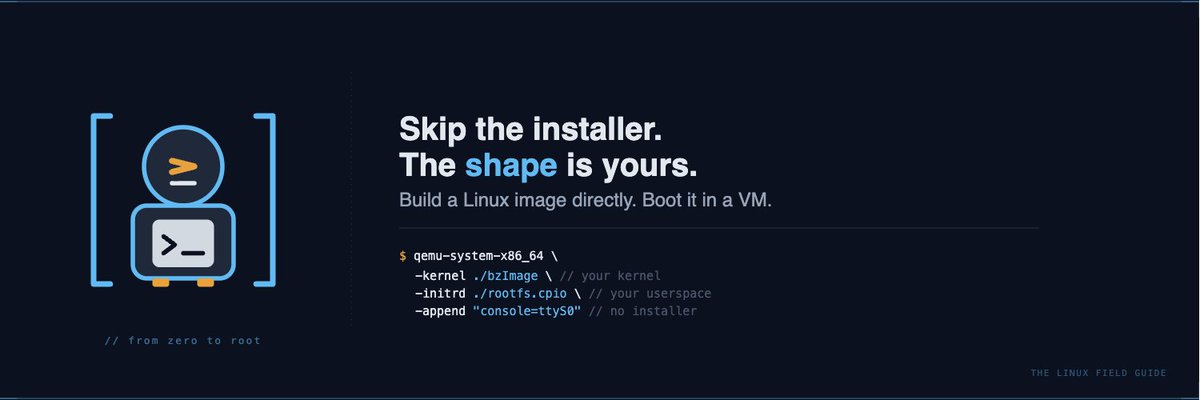
You've installed Linux a dozen times. The installer asked you the same questions every time. Disk layout. Username. Timezone. Keyboard. A progress bar. A reboot. The installer is a wizard around a process that isn't really wizardry. Underneath, it's copying files into directories, writing a few config files, installing a bootloader. That's it. That's the whole job. The reason this matters: as long as the installer is the only way you know how to produce a Linux system, you're stuck with the kinds of systems installers are designed to produce. General-purpose desktops. General-purpose servers. The shapes someone else decided were worth shipping. Skip the installer and the shape is yours. The catch is that "skip the installer" sounds like the kind of thing only kernel developers do and it isn't. Alpine Linux has a tool called apk.static, a single statically-linked binary that runs on any Linux. You point it at a target directory, hand it a list of packages, and it populates that directory with a working Alpine root filesystem. Tar the directory, hand the tarball to QEMU as an initramfs, and you have a Linux system you built on purpose, booting in a VM, in a few commands. Once you've done that, the installer stops being the thing that produces Linux systems. It becomes one possible front-end, among many, for a process you now control directly. And once you control the process, you can shape the output. The list of packages is yours. The init script is yours. A bootable Linux image stops being something you receive and starts being something you assemble, with a clear input and a predictable output. The new series walks through it from the first command. Starts soon on The Linux Field Guide: lfg.popovicu.com
Uros Popovic tweet media
English
7
16
145
9K
'(Robert Smith)
'(Robert Smith)@stylewarning·
I am pleased to announce ✨mine✨, a complete, no-frills IDE for Coalton and Common Lisp. It's a brand new IDE that has the essential interactive programming workflow all Lispers talk about, built-in. It is the easiest way to get started with Coalton/CL for Win/Mac/Linux. 👇
'(Robert Smith) tweet media'(Robert Smith) tweet media
English
21
40
244
11.3K
exQUIZitely 🕹️
exQUIZitely 🕹️@exQUIZitely·
One of the best intros of an era. One of the best games of all time. I often use the word "soul" when I compare old games to new ones - and this one is absolutely bursting at the seams with it Graphics: 10/10 Music: 10/10 Gameplay: 10/10 In 1990, The Secret of Monkey Island was light-years ahead of anything that had come before it. It didn't just look a little better - it completely moved the goalposts. Remember the first time you saw the intro? I thought I'd never see a better game. This one holds a very, very special place in my heart. So, you want to be a pirate, eh? You look more like a flooring inspector.
English
132
167
2K
113.7K
Kirill
Kirill@kirillk_web3·
ANTHROPIC ENGINEER DROPPED A 14-MINUTE GUIDE. This is the fastest way to understand how real agents are built. Bookmark this for the weekend. 14 minutes. Real architecture. No fluff. What actually works. Agents → Structure → Tools → Execution → Systems → Money
Kirill@kirillk_web3

ANTHROPIC JUST DROPPED A 33-PAGE GUIDE. This is the most practical breakdown of Claude Skills I’ve seen. Bookmark this before you forget. 33 pages. Persistent instructions. No repetition. No re-explaining every time. Read it today. Link below. Claude → Skills → Memory → Automation → Systems → Money

English
20
460
6.7K
3.6M
TechOperator
TechOperator@TechOperator·
You walk up to your computer and see this screen. Your next move?
TechOperator tweet media
English
6.2K
68
1.6K
273K
Darryl Ruggles
Darryl Ruggles@RDarrylR·
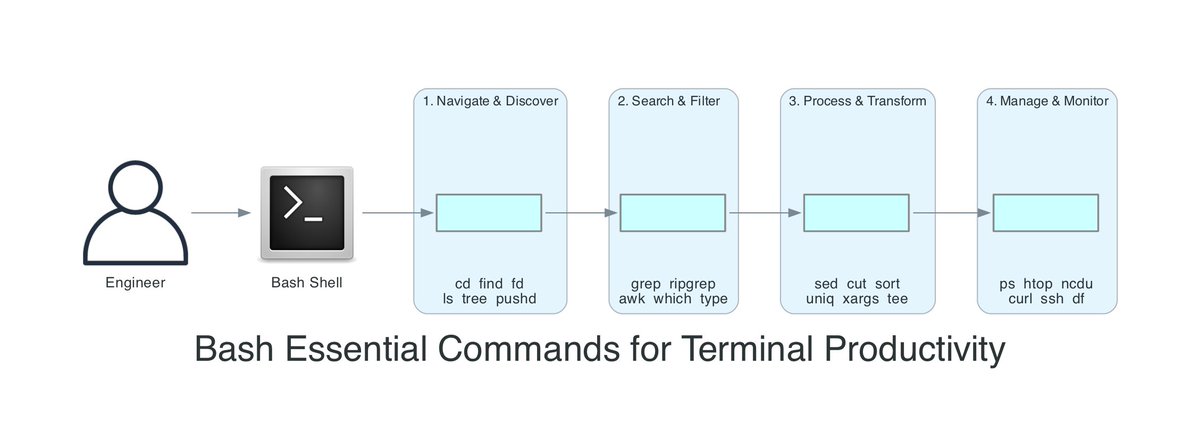
🆕 My latest blog post! Three decades on the #terminal, and I still think faster there than anywhere else. I wrote down the #Bash commands I actually reach for every day. It's not an exhaustive reference, but the patterns that genuinely save me time with navigating, searching, processing, and more. This covers the daily workflow, the pipelines that replace 20-line scripts (grep | awk | sort | uniq -c | sort -rn | head - you know the one), the macOS vs #Linux issues that trip everyone up, and the modern alternatives worth adopting (ripgrep, fd, jq, yq, ncdu). If you live in the terminal (or want to) this is something that should help. #DevOps #AWS lckhd.eu/M4vVIo
Darryl Ruggles tweet media
English
1
4
20
1.3K
Tony Fadell
Tony Fadell@tfadell·
Builders build. Then they ship. Then they solve what breaks. Launch isn’t the finish line. It’s where reality starts. Great products aren’t defined at launch...they’re defined by how they perform in the real world. With the #iPod it took us a few generations to truly get it right. We built and shipped the first version of the iPod in 9 months- greenlit in March 2001, announced that October and began shipping in November. Then we fixed, iterated, and produced a product that lasted many years, and ultimately paved the way for the #iPhone. Many of us still love our iPods! That’s what happens when you stay with the product. Trust comes from what happens after release and from doing the hard parts: scaling, supporting, improving. Focus on what’s real: working product, real customers, real outcomes. That’s the difference between hype and something that lasts.
English
25
88
714
240K
Alex Goul
Alex Goul@agou1·
There's something satisfying about watching ducks jumping in the water one after the other, and then swimming away.
English
0
0
1
26