fabricio cevallos
3.4K posts

fabricio cevallos retweetledi

📢 El libro "Problemas elementales de olimpiadas matemáticas" (Autores: J.M. Conde; J.M. Sepulcre. ISBN: 978-84-9717-260-8) del Servicio de
@PublicacionesUA está disponible a través de la web publicaciones.ua.es/libro/problema…

Español
fabricio cevallos retweetledi

fabricio cevallos retweetledi

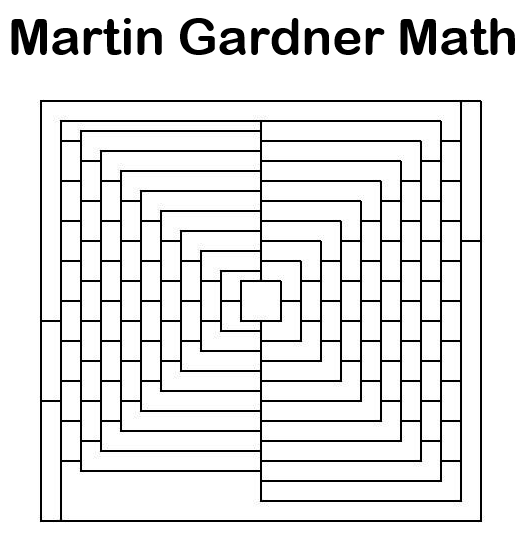
The famous math puzzle known as "Martin Gardner's April Fool's Map". It was published in 1975 to incorrectly claim that it requires 5 colors to color, defying the 4-Color Theorem. Despite its complexity, the map can actually be colored using only 4 colors. The map consists of 110 distinct regions. The CHALLENGE is to color the regions such that no two adjacent regions share the same color.
English
fabricio cevallos retweetledi

fabricio cevallos retweetledi

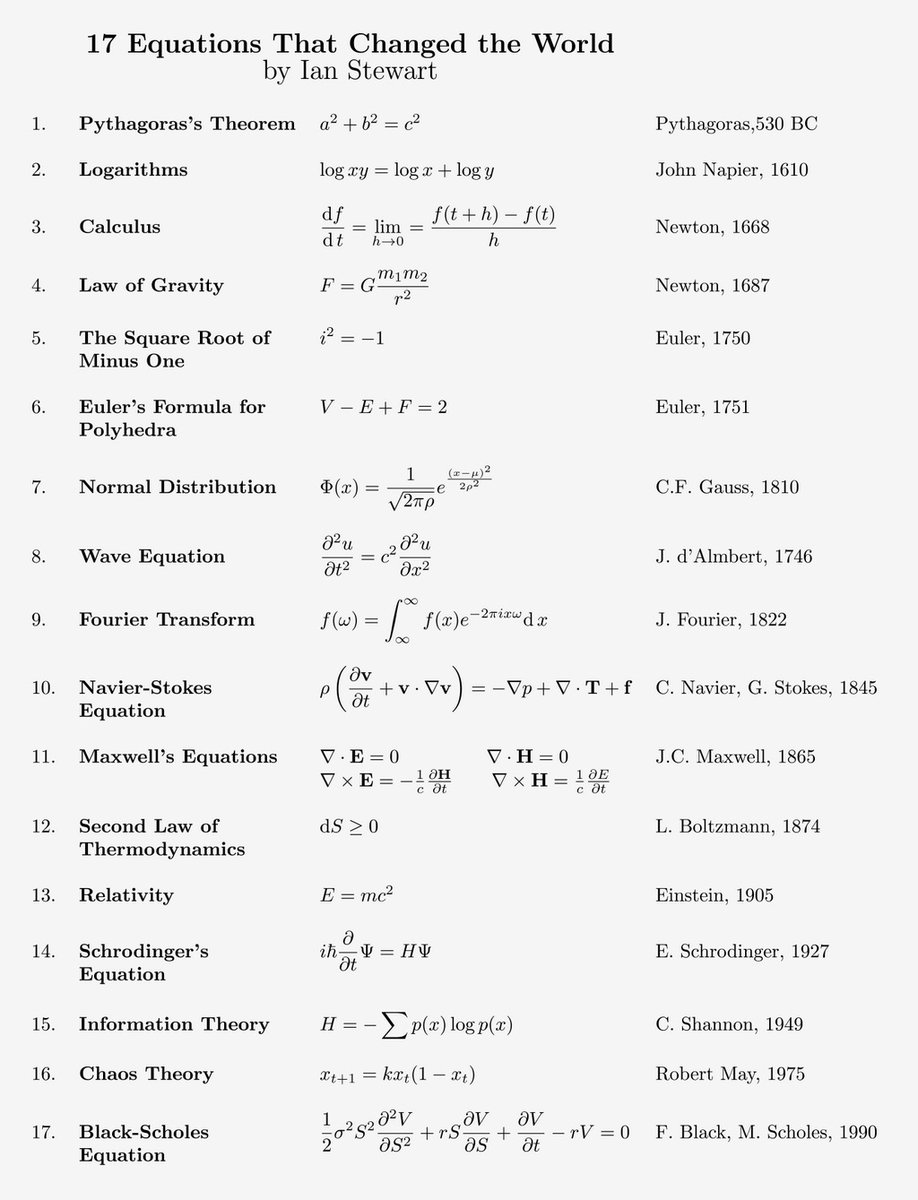
17 Equations that changed the world.
These equations span centuries of human thought, from ancient geometry to modern financial markets, and form the mathematical foundation for most of our modern technology.
English
fabricio cevallos retweetledi

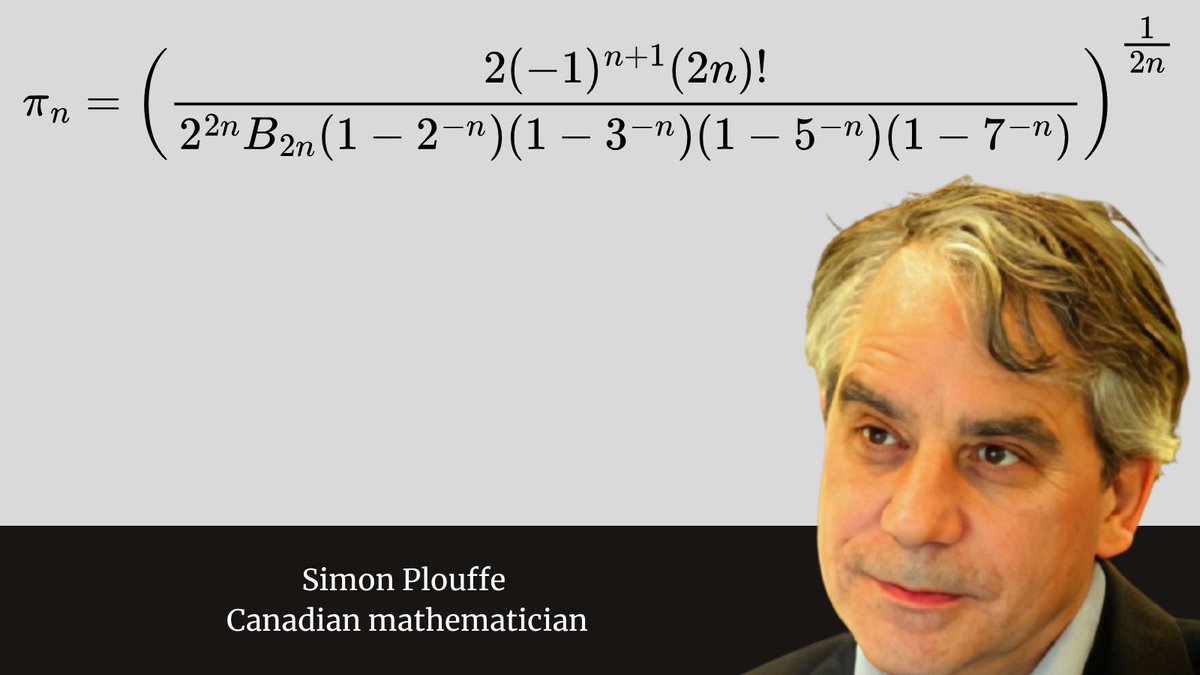
The first formula that allows the calculation of the n-th decimal digit of π—without needing to compute all the previous digits—was discovered by Simon Plouffe in 2022.
English
fabricio cevallos retweetledi

😉¿Sabrías resolverlo? Laura Castilla, investigadora predoctoral en el #ICMAT, te propone un reto: Si colocamos los números del 1 al 9 en una cuadrícula de 3x3 y leemos las filas y las columnas como números de tres cifras, ¿la suma se los seis puede ser 2026?
Español
fabricio cevallos retweetledi
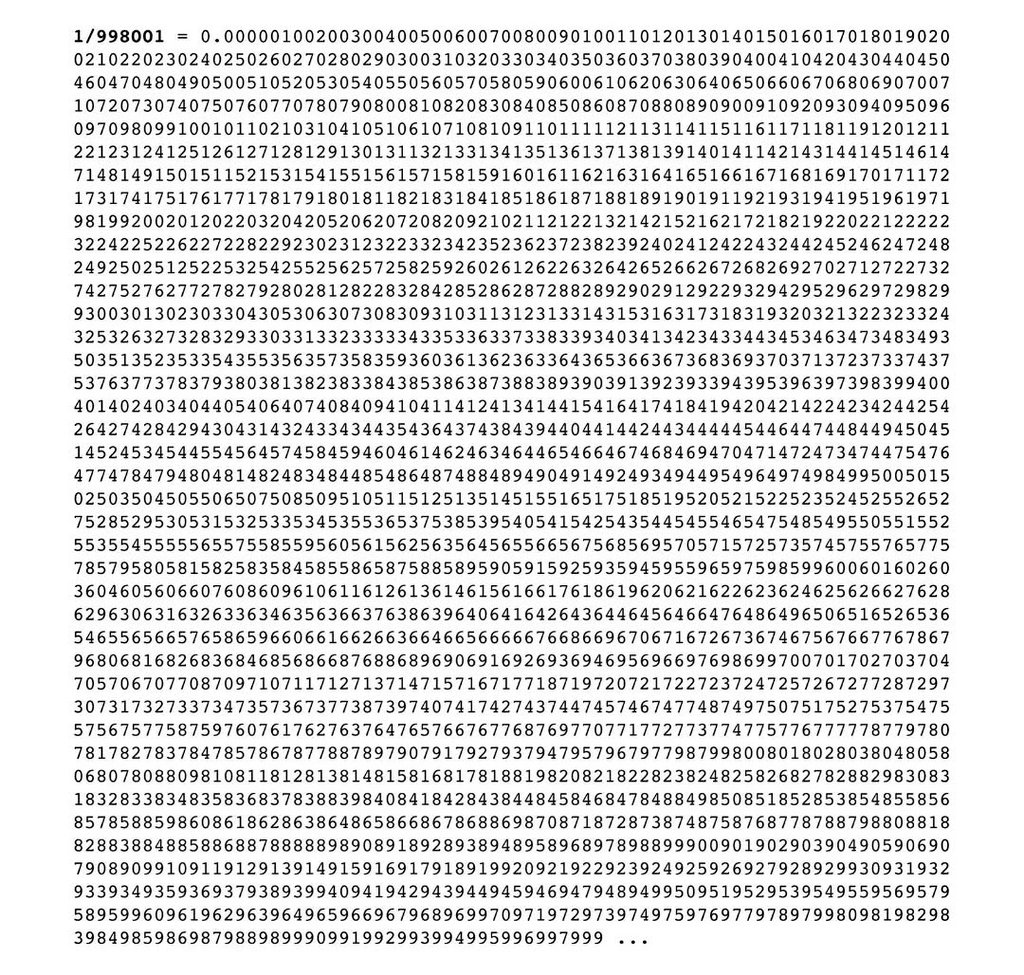
If you divide 1 by 998,001 you get all three-digit numbers from 000 to 999 in order, except for 998.
English
fabricio cevallos retweetledi

fabricio cevallos retweetledi


fabricio cevallos retweetledi

fabricio cevallos retweetledi


fabricio cevallos retweetledi
Most of the math students know the Fibonacci numbers, the sequence that goes 0, 1, 1, 2, 3, 5, 8,..., where each number is obtained by adding the previous two terms. So after 5 and 8, the next term is 13 because 5 + 8 = 13.
It’s very intuitive—you can find any Fibonacci number just by continuing the sequence until you reach the one you want.
But if someone ask you to find the one-millionth Fibonacci number, that’s not so easy to do by hand. What are you going to do—write out the first 999,999 terms and then add the last two to get the millionth? That would take an absurd amount of time.
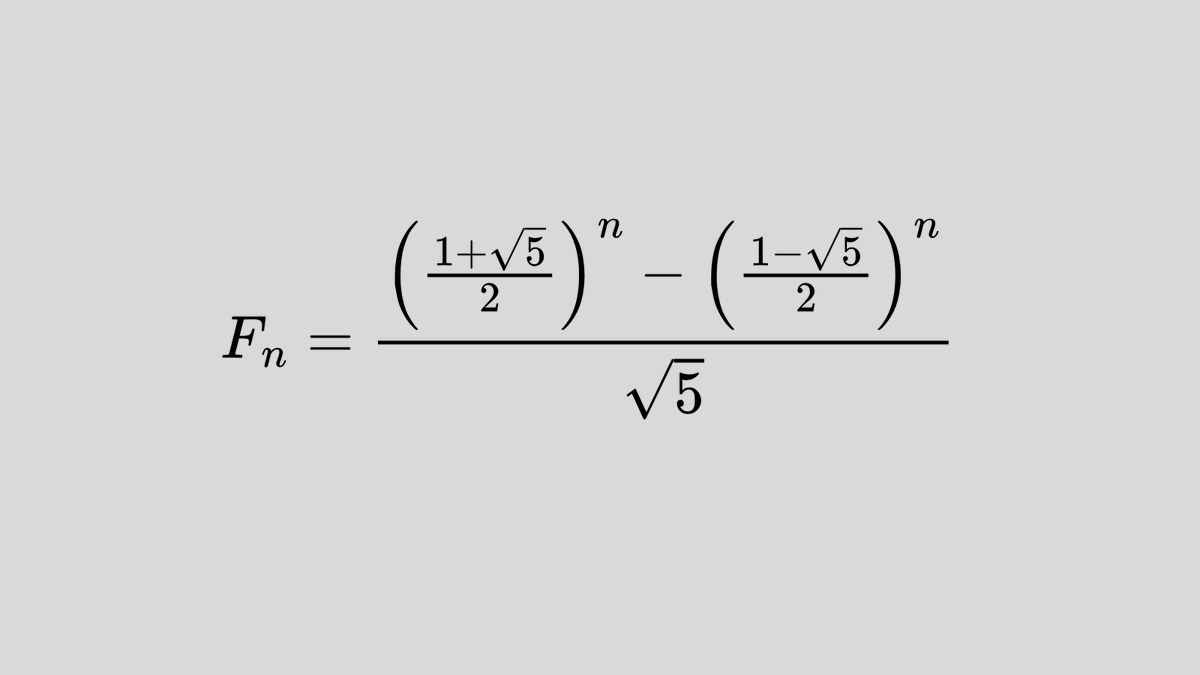
What if there were a formula where you simply plug in a number—say, 1,000,000—and directly obtain the exact Fibonacci number? It turns out there is such a formula. The nᵗʰ Fibonacci number is given by the formula provided in image.
If you recognize the term (1 + √5)/2, that’s the golden ratio.
This formula is pretty incredible because each term inside the brackets is irrational. Yet when you raise them to the nᵗʰ power and subtract, all the irrational parts cancel out, leaving a perfect integer every time.
English
fabricio cevallos retweetledi

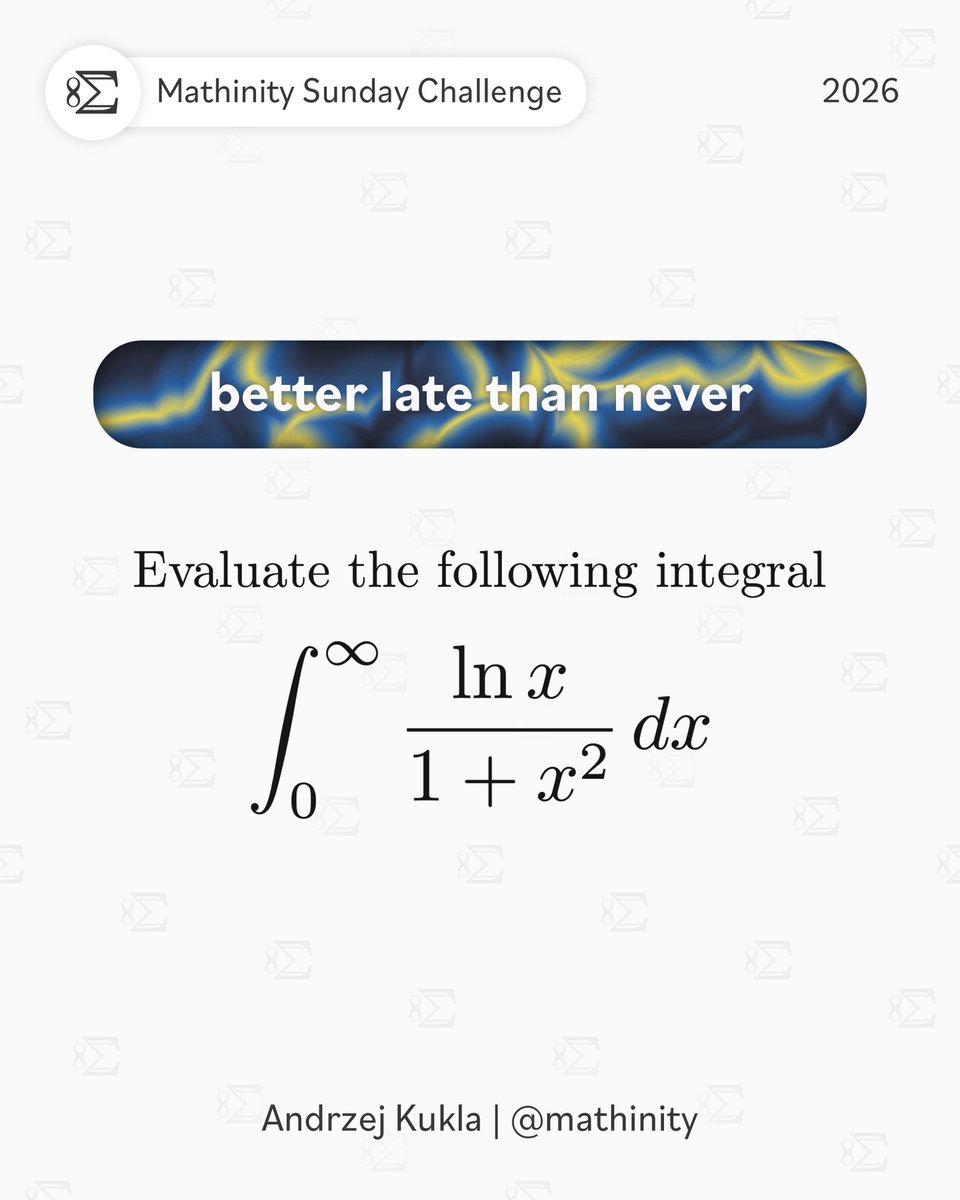
Late night snack (integral) delivered right to your door (notebook). Have fun! 🌒✨
English
fabricio cevallos retweetledi

fabricio cevallos retweetledi


fabricio cevallos retweetledi