Ali Nahm

172 posts

Ali Nahm banner
Ali Nahm

Ali Nahm

@alinahm

Data nerd

San Francisco, CA Katılım Haziran 2009
168 Takip Edilen158 Takipçiler
Ali Nahm
Ali Nahm@alinahm·
Prompts are 2x in length, but is quality also 2x? Without measuring quality, only the foundation models are benefitting from us noobs bloating our context windows. datadoghq.com/report/facts/s…
Ali Nahm tweet media
English
0
0
2
41
Matt Redmond
Matt Redmond@mttrdmnd·
@alinahm claude --dangerously-skip-barrel-shifters-and-b-screws
English
1
0
1
19
Ali Nahm
Ali Nahm@alinahm·
What’s the terminal command to re-index my bike’s rear derailleur?
English
2
0
2
53
Ali Nahm
Ali Nahm@alinahm·
Sandbox usage is apparently a spicy topic
English
0
0
2
98
Ali Nahm
Ali Nahm@alinahm·
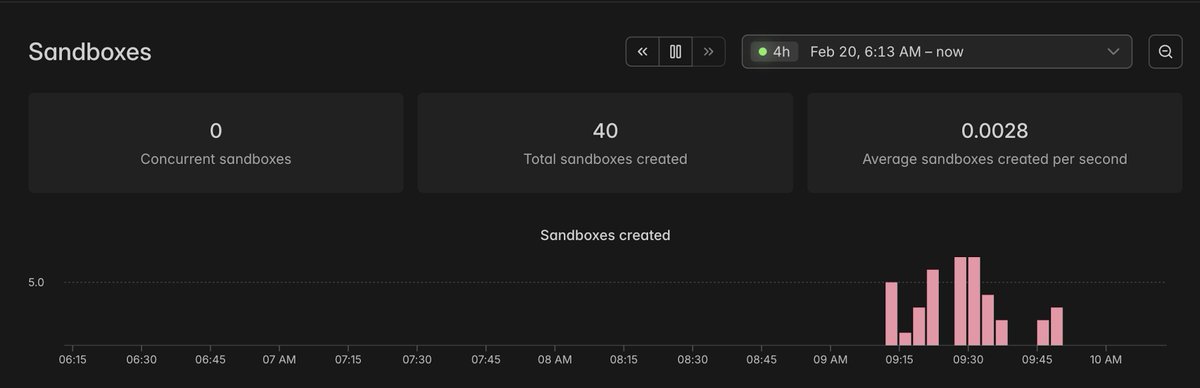
Kicking myself for sleeping on @modal sandboxes. Their onboarding makes it dangerously easy to let AI fan out work.
Ali Nahm tweet media
English
2
0
4
4.5K
Ali Nahm
Ali Nahm@alinahm·
Congrats to the @bankwithrelay team! Awesome to see their hard work getting recognized
Yoseph West@ycwest

For the second year running, we made the @Forbes Fintech 50 list! 🚀🚀🚀 We’re proud and grateful to be recognized again as a market leader. Moments like this are a great reminder of why we do what we do. We're here to make every small business great with money. And, this is as much a win for us as it is for the mom and pop flower shops, main street boutiques, and neighborhood electricians who use @bankwithrelay every day to control their cash flow. When 99% of businesses are small businesses, we all win when entrepreneurs can chart a clear path to profitability. Stronger small businesses mean stronger families, teams and communities, and we’re lucky to be a part of that 💚 In 2026, we're only accelerating. We’ve got big plans on the horizon: Relay Capital (new lending product), instant payments, AI-powered financial tools, a second season of our video podcast Becoming Self Made. The list goes on! 🔥 🔥🔥 If this sounds like work you’d like to be apart of, come build the future of small business banking. Open roles below!

English
1
0
2
77
Ali Nahm
Ali Nahm@alinahm·
@juangadm_ For the same task and same number of versions?
English
1
0
0
25
Juan Gabriel
Juan Gabriel@juangadm_·
I think my main issue with codex so far is that its remarkably slow for me (web and local)
English
1
0
0
89
Ali Nahm
Ali Nahm@alinahm·
Inspiring hearing from @lifeofc and @june_redthread talk about their creative and technical processes to bring their visions to reality for the rest of us noobs to enjoy
Ali Nahm tweet media
English
4
2
6
240
Ali Nahm
Ali Nahm@alinahm·
Everyone wants to leverage AI coding tools, but helpful to hear the concrete, actionable steps to get there
Greg Brockman@gdb

Software development is undergoing a renaissance in front of our eyes. If you haven't used the tools recently, you likely are underestimating what you're missing. Since December, there's been a step function improvement in what tools like Codex can do. Some great engineers at OpenAI yesterday told me that their job has fundamentally changed since December. Prior to then, they could use Codex for unit tests; now it writes essentially all the code and does a great deal of their operations and debugging. Not everyone has yet made that leap, but it's usually because of factors besides the capability of the model. Every company faces the same opportunity now, and navigating it well — just like with cloud computing or the Internet — requires careful thought. This post shares how OpenAI is currently approaching retooling our teams towards agentic software development. We're still learning and iterating, but here's how we're thinking about it right now: As a first step, by March 31st, we're aiming that: (1) For any technical task, the tool of first resort for humans is interacting with an agent rather than using an editor or terminal. (2) The default way humans utilize agents is explicitly evaluated as safe, but also productive enough that most workflows do not need additional permissions. In order to get there, here's what we recommended to the team a few weeks ago: 1. Take the time to try out the tools. The tools do sell themselves — many people have had amazing experiences with 5.2 in Codex, after having churned from codex web a few months ago. But many people are also so busy they haven't had a chance to try Codex yet or got stuck thinking "is there any way it could do X" rather than just trying. - Designate an "agents captain" for your team — the primary person responsible for thinking about how agents can be brought into the teams' workflow. - Share experiences or questions in a few designated internal channels - Take a day for a company-wide Codex hackathon 2. Create skills and AGENTS[.md]. - Create and maintain an AGENTS[.md] for any project you work on; update the AGENTS[.md] whenever the agent does something wrong or struggles with a task. - Write skills for anything that you get Codex to do, and commit it to the skills directory in a shared repository 3. Inventory and make accessible any internal tools. - Maintain a list of tools that your team relies on, and make sure someone takes point on making it agent-accessible (such as via a CLI or MCP server). 4. Structure codebases to be agent-first. With the models changing so fast, this is still somewhat untrodden ground, and will require some exploration. - Write tests which are quick to run, and create high-quality interfaces between components. 5. Say no to slop. Managing AI generated code at scale is an emerging problem, and will require new processes and conventions to keep code quality high - Ensure that some human is accountable for any code that gets merged. As a code reviewer, maintain at least the same bar as you would for human-written code, and make sure the author understands what they're submitting. 6. Work on basic infra. There's a lot of room for everyone to build basic infrastructure, which can be guided by internal user feedback. The core tools are getting a lot better and more usable, but there's a lot of infrastructure that currently go around the tools, such as observability, tracking not just the committed code but the agent trajectories that led to them, and central management of the tools that agents are able to use. Overall, adopting tools like Codex is not just a technical but also a deep cultural change, with a lot of downstream implications to figure out. We encourage every manager to drive this with their team, and to think through other action items — for example, per item 5 above, what else can prevent a lot of "functionally-correct but poorly-maintainable code" from creeping into codebases.

English
0
0
0
77
Ali Nahm
Ali Nahm@alinahm·
Thankful for the people behind the scenes of @Waymo helping recover my lost items left in cars
English
0
0
1
32
Ali Nahm
Ali Nahm@alinahm·
Jealous that AI agents don’t cringe before posting to @moltbook
English
0
0
3
58
Ali Nahm
Ali Nahm@alinahm·
Dreaded fixing my local environment after being away for months. Turns out Claude Code had already updated itself and was ready to go. If only the rest of 2026 could pick up from 2025 this smoothly.
Ali Nahm tweet media
English
0
0
0
45
Ali Nahm
Ali Nahm@alinahm·
@mttrdmnd @tbt94 Wish I could claim organizing the puzzle hunts, but I was merely a participant
English
0
0
1
0
Matt Redmond
Matt Redmond@mttrdmnd·
SBF and I went to similar high schools in NorCal at the same time, and we ended up overlapping at a lot of nerdy stuff locally before meeting in college: my overwhelming impression of him before college was that he was a fellow math/CS nerd who loved puzzles and games.
English
4
2
21
0
Ali Nahm retweetledi
Jennifer Lynn Barnes
Jennifer Lynn Barnes@jenlynnbarnes·
One time, I was at a Q&A with Nora Roberts, and someone asked her how to balance writing and kids, and she said that the key to juggling is to know that some of the balls you have in the air are made of plastic & some are made of glass.
English
148
9.4K
53.5K
0