Dinalith 🐉 🌕

7.8K posts

Dinalith 🐉 🌕 banner
Dinalith 🐉 🌕

Dinalith 🐉 🌕

@alinekaeri

Lunar Being Ruled by the Sun

Jupiter Katılım Mart 2018
5.8K Takip Edilen654 Takipçiler
Sabitlenmiş Tweet
Dinalith 🐉 🌕
Dinalith 🐉 🌕@alinekaeri·
@visakanv if you condensed all of human history into one year, we started working and partying and fighting and loving somewhere around 12am on January 1st
English
0
7
82
3.1K
Dinalith 🐉 🌕 retweetledi
Jonathan Blow
Jonathan Blow@Jonathan_Blow·
Something we've been working on...
English
154
377
5.3K
400.8K
Dinalith 🐉 🌕 retweetledi
Alec Helbling
Alec Helbling@alec_helbling·
The Helmholtz decomposition is one of the fundamental results of vector calculus. It says any well-behaved vector field can be split into two parts, one capturing sources and sinks through divergence, and one capturing rotation through curl.
English
18
128
1.2K
91.8K
Dinalith 🐉 🌕 retweetledi
sarah
sarah@heavenbrat·
idk girl sometimes you need to crash out and be a bitch so you dont get an auto immune disease
English
236
30.3K
155K
2M
Dinalith 🐉 🌕
Dinalith 🐉 🌕@alinekaeri·
@rachelclif @McConaughey I think it is like, many years of arrested development and lost opportunities that were not particularly my fault, and not having the capacity or support to process and alchemize it all?
English
1
1
2
15
Dinalith 🐉 🌕
Dinalith 🐉 🌕@alinekaeri·
@rachelclif @McConaughey Like, I imagine if you are a soldier and die in a war, maybe you come back in life as a stronger soul, but you still have to suffer in the trenches and die. I don't feel fully comforted by God while in the trenches
English
0
0
0
12
Dinalith 🐉 🌕
Dinalith 🐉 🌕@alinekaeri·
@rachelclif @McConaughey I've been told by a renowned psychic that "I wasn't stuck, I was pausing". I wanted to believe in her but the feeling of being stuck did not go away
English
2
0
0
18
Dinalith 🐉 🌕
Dinalith 🐉 🌕@alinekaeri·
@rachelclif Sometimes your burden is greater than your abilities. You run out of options. And you know what? You have to make peace with the battles you lose. @McConaughey suggests becoming less impressed with your life and more involved with it. Somewhat related I think.
English
1
0
1
21
Dinalith 🐉 🌕
Dinalith 🐉 🌕@alinekaeri·
@rachelclif Trying to figure that out! Being lost is part of life, I think, and you either find a way up or die trying
English
1
0
1
20
Dinalith 🐉 🌕 retweetledi
Engineer Girlfriend
Engineer Girlfriend@enggirlfriend·
this male archetype likes women who have these qualities: - books smart and streets smart (IQ & EQ) - supportive of their ambitions - takes care of themselves and others (looks, health, household needs) - tasteful negs and feminine sass right now women who generally fit this category tend to be somewhere between center to right wing also i rly don’t like new york post’s way of condescending reduction of this woman to “maga girlfriend”
New York Post@nypost

Sergey Brin's 'MAGA girlfriend' denies pushing Google co-founder right: 'If I could control him, I'd be married with a baby right now' trib.al/tuHJTwf

English
12
1
82
29.2K
Dinalith 🐉 🌕 retweetledi
Ava
Ava@noampomsky·
Some context: my friend raved about this book a couple of years ago but I just skimmed it since I've never identified as codependent and a lot of the stories in the book are about the spouses of alcoholics, which isn't personally relevant. But I read it again recently and realized that the book is actually about letting go of the need for control. Many of us try to help our friends and family, without realizing that the frame of "they need my care/support" is actually a form of establishing control. We believe that people need us, that they'll go down the wrong path without us and make the wrong choices in work/relationships/life, but what happens is that while you're trying to control the other person through supporting them you become controlled by their behavior. If you've ever had the experience of being extremely frustrated at a friend, partner or family member because they asked for your advice and you gave it, only for them to ignore it, this book is relevant to you. (From what I can tell, that's a pretty universal experience.) In it, Melody Beattie writes, "The surest way to make ourselves crazy is to get involved in other people’s business, and the quickest way to become sane and happy is to tend to our own affairs." Despite our best efforts, we have extremely limited ability to influence other people's choices. People are free to neglect their bodies, engage in destructive behavior, get in or stay in toxic relationships, abuse substances, etc. This might feel unbearable if you love them, but if you get overly attached to the idea that *they need you in order to stop,* you've trapped yourself in a situation where you have no real leverage. As in: no matter what you try, how hard you try, how pragmatic, useful, wise, supportive you are, *it's not ultimately your life.* Most of us are better served by, well, actually living our lives, instead of trying to solve someone else's. Through extreme effort we may able to be able to temporarily modify someone's behavior, but the change will not last because real change only comes when someone grapples with the consequences of their situation and makes the decision to live differently. You cannot force someone to have a revelation, not matter how badly you might want to. Though people might tell us they want or need our advice or support, this generally just gets us trapped in the drama triangle. There is a difference between *actually helping someone*, and *assuming the role of the rescuer because we believe it's what's required of us." Caretaking is often just a form of enabling. Another great quote from the book: "At the time we rescue or caretake, we may experience one or more of the following feelings: discomfort and awkwardness about the other person’s dilemma; urgency to do something; pity; guilt; saintliness; anxiety; extreme responsibility for that person or problem; fear; a sense of being forced or compelled to do something; mild or severe reluctance to do anything; more competency than the person we are “helping”; or occasional resentment at being put in this position. We also think the person we are taking care of is helpless and unable to do what we are doing for them. We feel needed temporarily. I am not referring to acts of love, kindness, compassion, and true helping—situations where our assistance is legitimately wanted and needed and we want to give that assistance. These acts are the good stuff of life. Rescuing and caretaking aren’t." The tl;dr of it all is that in order to actually change, people generally need to reckon with their sense of autonomy and responsibility. When we shield people from consequences, they never learn how to make better choices.
Ava@noampomsky

everyone should read codependent no more

English
9
55
716
77K
alex harper ♃
alex harper ♃@balefulrays·
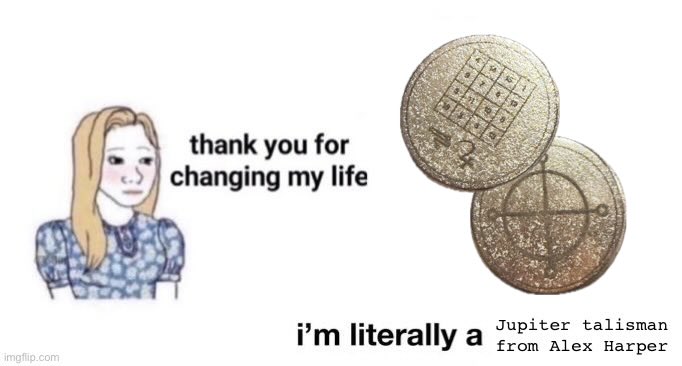
Post your Jupiter talisman stories 🥂
alex harper ♃ tweet media
English
14
4
101
3.1K
Dinalith 🐉 🌕
Dinalith 🐉 🌕@alinekaeri·
All is priced in but the prices make poor sense
English
0
0
0
10
Dinalith 🐉 🌕 retweetledi
atulit
atulit@atulit_gaur·
I am not even a physicist and I am shaking because do you ACTUALLY understand what einstein fucking did? most people for the life them can't fucking grasp the feat he achieved he imagined the entire universe in his head with nothing to go on and came up with a theory so CONCERTE no one has been able to disprove it
Martin Bauer@martinmbauer

If this doesn’t give you goosebumps you’re not a physicist

English
38
54
777
62.1K
Dinalith 🐉 🌕 retweetledi
Daniel Litt
Daniel Litt@littmath·
stochastic parrots: “it doesn’t think” “verification is the bottleneck” “solve math, solve everything else,” “they’re just stochastic parrots”
English
20
19
301
23.1K
Dinalith 🐉 🌕 retweetledi
ashe
ashe@ashebytes·
well if it is darkness we’re having.. let it be extravagant
English
2
3
13
933