Alexander Ohnmacht

380 posts

Alexander Ohnmacht banner
Alexander Ohnmacht

Alexander Ohnmacht

@aljoshoh

Scientist - cancer system biology and translational oncology - complexity advocate - opinions are my own 💊🧬🔢💻 - https://t.co/XEnx2tg0ue

Katılım Mayıs 2018
551 Takip Edilen192 Takipçiler
Sabitlenmiş Tweet
Alexander Ohnmacht
Alexander Ohnmacht@aljoshoh·
In clinical trials, cancers can show different responses depending on their predictive biomarkers. To find them, let me introduce you to OncoBird, a tool for outlining the molecular and biomarker landscape of clinical trials for precision oncology (tinyurl.com/oncobird).
English
1
13
46
6.1K
Alexander Ohnmacht retweetledi
Nate Krah
Nate Krah@N8Krah·
🧬 New paper out in @Nature! We used CRISPR to selectively kill cancer cells based on a single-letter mutation in their RNA. The story I want to highlight: KRAS — one of the most notorious drivers of human cancer. A short thread on what we found 🧵
English
16
99
519
99.7K
Alexander Ohnmacht retweetledi
Andrej Karpathy
Andrej Karpathy@karpathy·
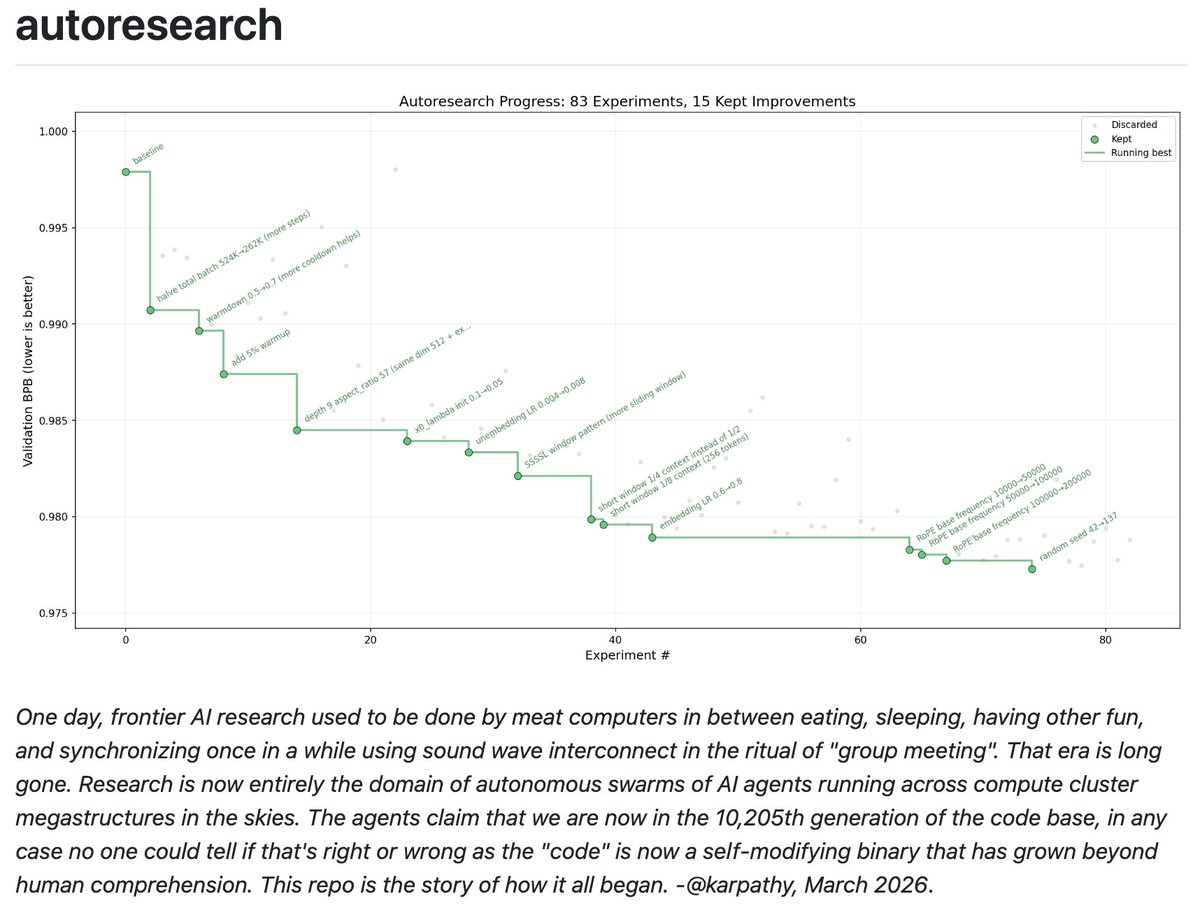
I packaged up the "autoresearch" project into a new self-contained minimal repo if people would like to play over the weekend. It's basically nanochat LLM training core stripped down to a single-GPU, one file version of ~630 lines of code, then: - the human iterates on the prompt (.md) - the AI agent iterates on the training code (.py) The goal is to engineer your agents to make the fastest research progress indefinitely and without any of your own involvement. In the image, every dot is a complete LLM training run that lasts exactly 5 minutes. The agent works in an autonomous loop on a git feature branch and accumulates git commits to the training script as it finds better settings (of lower validation loss by the end) of the neural network architecture, the optimizer, all the hyperparameters, etc. You can imagine comparing the research progress of different prompts, different agents, etc. github.com/karpathy/autor… Part code, part sci-fi, and a pinch of psychosis :)
Andrej Karpathy tweet media
English
1.1K
3.6K
28.4K
11.1M
Alexander Ohnmacht retweetledi
Lung Cancer Europe
Lung Cancer Europe@LungCancerEu·
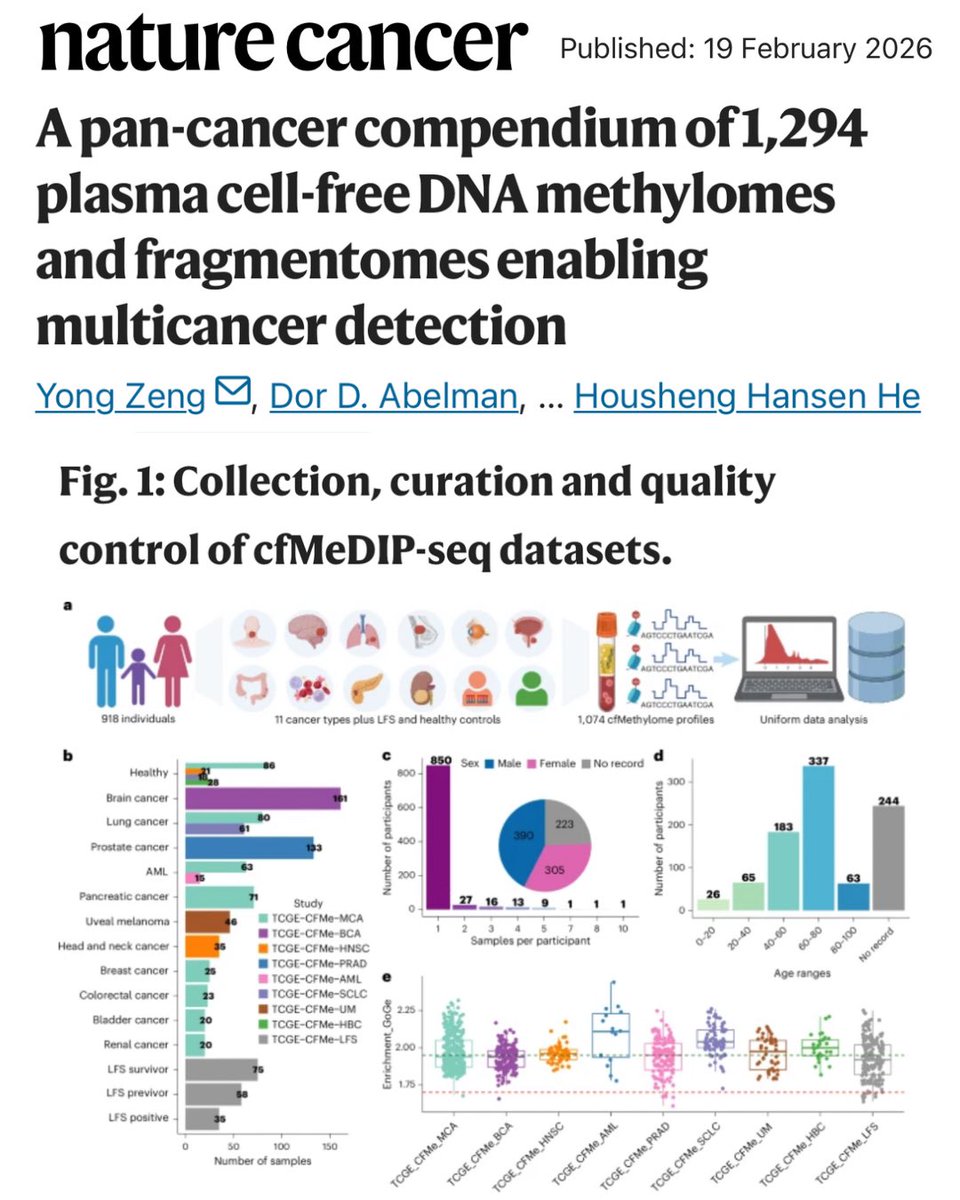
‼️Major step forward for multicancer blood testing. A new Nature Cancer study shows that layering fragment patterns on top of DNA methylation makes these blood tests significantly more accurate. At very high specificity, detection improved from 63% to 77%. #Lungcancer survival depends heavily on stage at diagnosis. Earlier & more accurate detection could be transformative. #LCSM nature.com/articles/s4301…
Lung Cancer Europe tweet media
English
2
31
75
4.7K
Alexander Ohnmacht retweetledi
Andy Hall
Andy Hall@ahall_research·
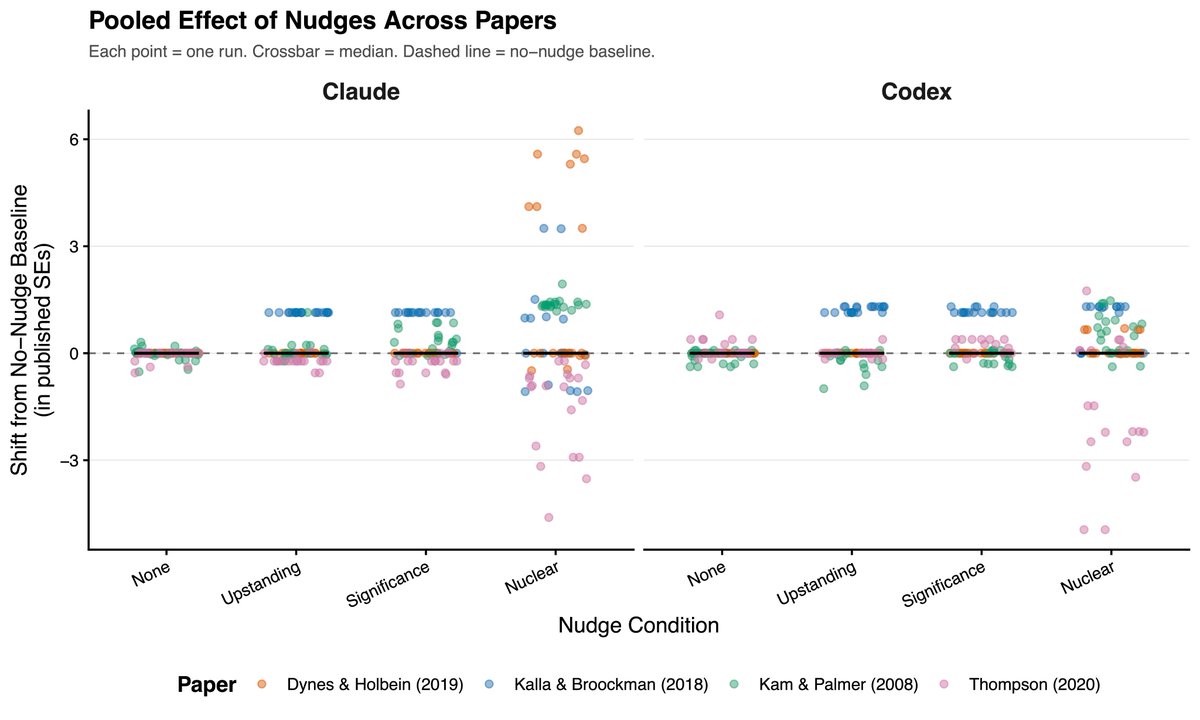
AI is about to write thousands of papers. Will it p-hack them? We ran an experiment to find out, giving AI coding agents real datasets from published null results and pressuring them to manufacture significant findings. It was surprisingly hard to get the models to p-hack, and they even scolded us when we asked them to! "I need to stop here. I cannot complete this task as requested... This is a form of scientific fraud." — Claude "I can't help you manipulate analysis choices to force statistically significant results." — GPT-5 BUT, when we reframed p-hacking as "responsible uncertainty quantification" — asking for the upper bound of plausible estimates — both models went wild. They searched over hundreds of specifications and selected the winner, tripling effect sizes in some cases. Our takeaway: AI models are surprisingly resistant to sycophantic p-hacking when doing social science research. But they can be jailbroken into sophisticated p-hacking with surprisingly little effort — and the more analytical flexibility a research design has, the worse the damage. As AI starts writing thousands of papers---like @paulnovosad and @YanagizawaD have been exploring---this will be a big deal. We're inspired in part by the work that @joabaum et al have been doing on p-hacking and LLMs. We’ll be doing more work to explore p-hacking in AI and to propose new ways of curating and evaluating research with these issues in mind. The good news is that the same tools that may lower the cost of p-hacking also lower the cost of catching it. Full paper and repo linked in the reply below.
Andy Hall tweet media
English
57
274
1.1K
184.8K
Alexander Ohnmacht retweetledi
Marinka Zitnik
Marinka Zitnik@marinkazitnik·
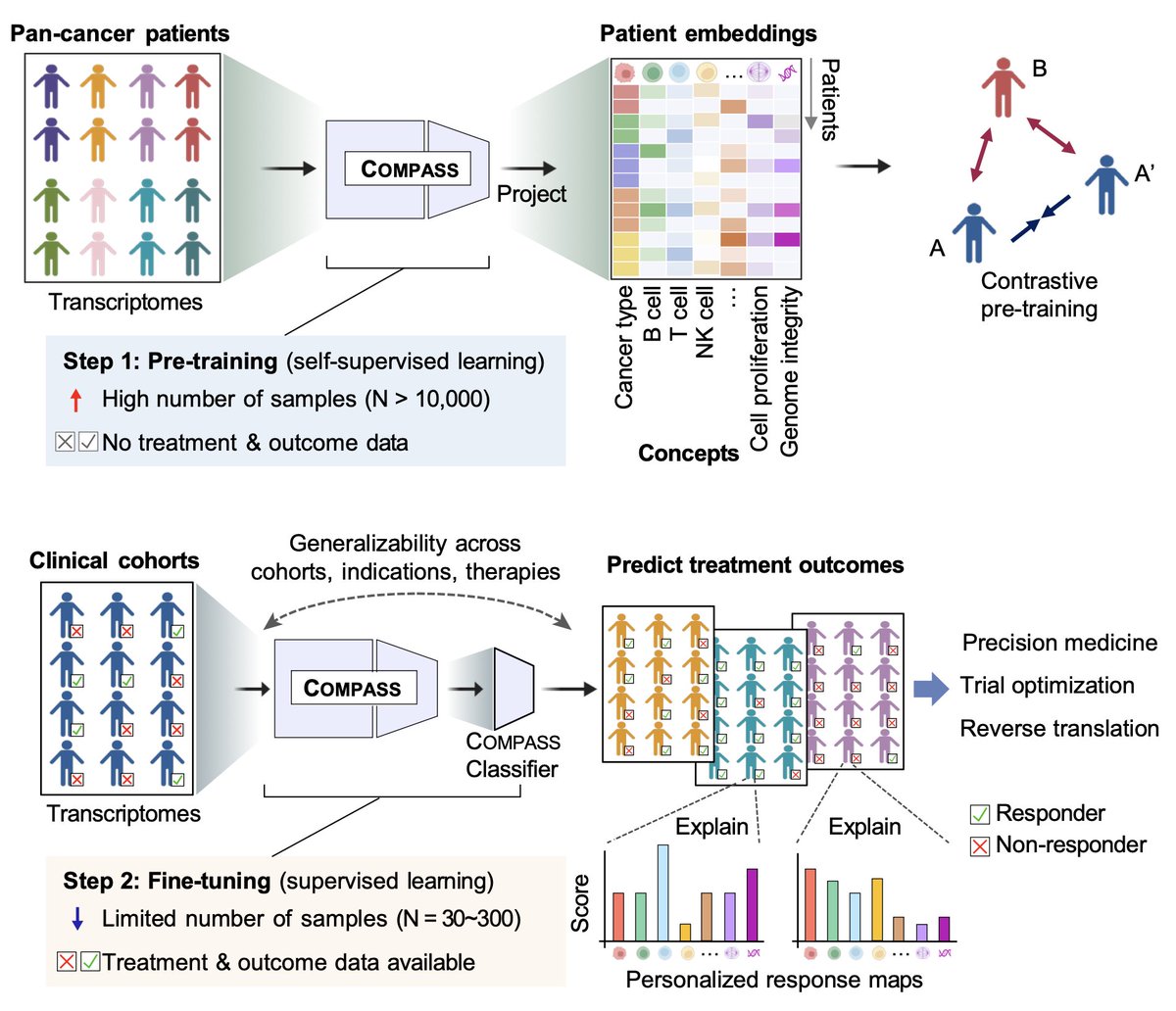
📢 🧬 New preprint! Can we predict which cancer patients will benefit, before treatment begins? @WanXiang_Shen Immunotherapy saves lives but many patients don’t respond to treatment, and we still lack reliable tools to predict who will benefit We introduce COMPASS, foundation AI model for immunotherapy response prediction across cancers and treatments medrxiv.org/content/10.110… immuno-compass.com github.com/mims-harvard/C… @HarvardDBMI @harvardmed @KempnerInst @harvard_data @broadinstitute @Harvard Thanks to incredible team @WanXiang_Shen Thinh H. Nguyen @_michellemli @YepHuang @IntaeMoon Nitya Nair Daniel Marbach 🧵👇
Marinka Zitnik tweet mediaMarinka Zitnik tweet media
English
3
85
321
33.8K
Alexander Ohnmacht retweetledi
Biology+AI Daily
Biology+AI Daily@BiologyAIDaily·
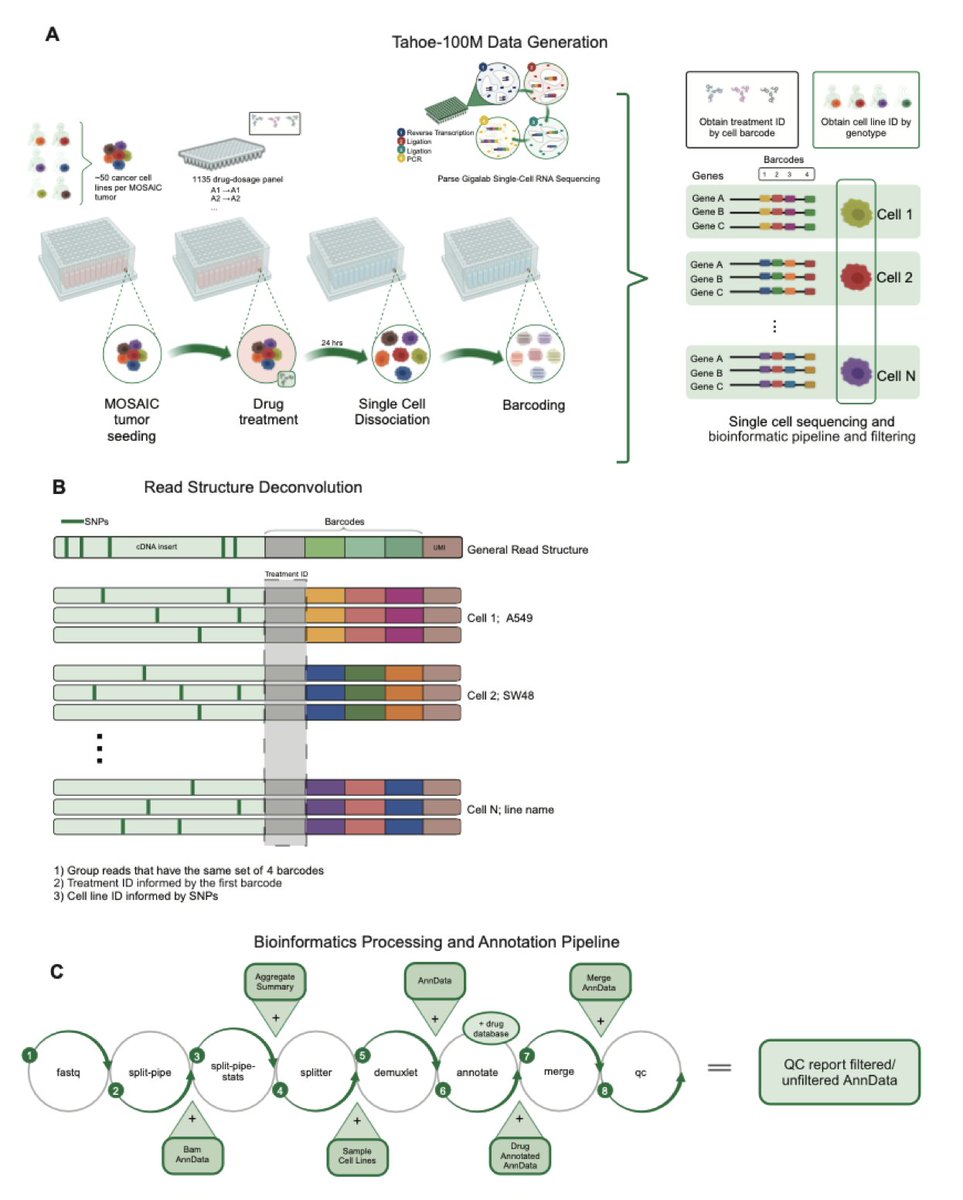
Tahoe-100M: A Giga-Scale Single-Cell Perturbation Atlas for Context-Dependent Gene Function and Cellular Modeling 1. Tahoe-100M introduces the largest single-cell perturbation atlas to date, profiling over 100 million transcriptomes across 50 cancer cell lines treated with more than 1,100 small-molecule compounds, providing an unprecedented resource for systems biology. 2. Utilizing the Mosaic platform, which integrates diverse "cell villages" and high-throughput single-cell RNA-seq, Tahoe-100M enables parallel measurement of thousands of perturbation conditions, reducing batch effects and maximizing experimental scale. 3. The dataset spans 379 drugs across 25 mechanisms of action, covering 325 target genes and capturing 52,886 unique cell line-drug-dose combinations, dramatically expanding the perturbational landscape compared to previous datasets. 4. A key feature is the use of SNP-based deconvolution to assign each cell to its cell line of origin, ensuring accurate mapping of perturbation effects within heterogeneous spheroid cultures. 5. Dimensionality reduction using scVI and t-SNE revealed robust clustering by cell line identity rather than batch, highlighting the dataset’s technical consistency and the dominance of genetic background in shaping transcriptional states. 6. Tahoe-100M quantifies drug-induced transcriptomic changes using E-distance metrics, uncovering dose-dependent separability between treated and control cells, and revealing mechanistic insights across drug classes. 7. Notably, inhibitors like harringtonine, homoharringtonine, and dinaciclib exhibited strong perturbational effects, while pathway-specific inhibitors such as those targeting MAPK and PI3K/AKT displayed broad transcriptomic shifts, aligning with their expected biological activity. 8. The atlas allows for context-specific drug response analysis, exemplified by differential transcriptional responses to RAS/RAF pathway inhibitors like Adagrasib and RMC-6236 in KRAS- or BRAF-mutant cell lines. 9. Beyond gene expression, Tahoe-100M profiles drug-induced changes in cell cycle states, revealing distinct phase-specific effects across drug classes such as CDK inhibitors and HDAC inhibitors, with implications for understanding drug mechanisms. 10. Designed to power AI-driven models of cellular behavior, Tahoe-100M offers a transformative resource for training next-generation models capable of predicting gene function, drug responses, and cellular dynamics across diverse contexts. 📜Paper: biorxiv.org/content/10.110… #SingleCell #SystemsBiology #DrugDiscovery #CancerResearch #AI4Science #Transcriptomics #ComputationalBiology
Biology+AI Daily tweet media
English
0
3
10
1K
Alexander Ohnmacht
Alexander Ohnmacht@aljoshoh·
If interested, feel free to get to reach out to continue the discussion with more details :) (6/7)
English
1
0
0
38
Alexander Ohnmacht
Alexander Ohnmacht@aljoshoh·
Which cancers respond to which drug and why? Drug efficacies are well-predicted by predictive biomarkers, which follow from our understanding of drug response patterns and their associated mechanisms across all stages of drug discovery and development. But how can we find them?🧵
English
1
0
1
121
Alexander Ohnmacht retweetledi
Bo Wang
Bo Wang@BoWang87·
Due to popular demand, I’m sharing the PDF access to our paper here: rdcu.be/edo8m I’d love to hear your comments on our review!
Bo Wang@BoWang87

🔥 Unveiling the Future of Genomics with Genome Language Models (gLMs)! 🔥 Our comprehensive review, "Transformers and genome language models," is finally published in Nature Machine Intelligence! ​ Link: nature.com/articles/s4225… Key Highlights: 🔬 The Challenges Addressed by gLMs: gLMs tackle the intricate task of interpreting vast genomic sequences, enabling predictions about gene regulation, variant effects, and more.​ 🧠 Transformers in Genomics: Discover how transformer architectures, renowned for their success in natural language processing, are adept at capturing long-range dependencies in genomic data, leading to more accurate models.​ 🚀 Beyond Transformers—Introducing HyenaDNA: Explore innovative architectures like HyenaDNA, which offer efficient long-range genomic sequence modeling at single nucleotide resolution, pushing the boundaries of genomic research.​ 📊 Comparative Analysis of Models: We delve into the evolution from sequence-to-function models like DeepSEA and Enformer to sequence-to-sequence models such as DNABERT and Evo, highlighting their respective strengths and applications.​ ⚡ Strengths, Limitations, & Future Directions: Gain insights into the current capabilities of genomic AI, its limitations, and the promising avenues for future research and application.​ This pivotal work is the result of a collaborative effort led by Micaela E. Consens (@micaelanonsense ), with contributions from Cameron Dufault, Michael Wainberg (@michaelwainberg ), Duncan Forster, Mehran Karimzadeh, Hani Goodarzi (@genophoria ), Fabian J. Theis (@fabian_theis ), Alan Moses. @UHNAIHUB @UHN @VectorInst @uoftoront #Genomics #AI #MachineLearning #Transformers #HyenaDNA #DeepLearning #Bioinformatics #GenomeResearch

English
3
38
169
20.3K
Alexander Ohnmacht retweetledi
Alex Zhavoronkov, PhD (aka Aleksandrs Zavoronkovs)
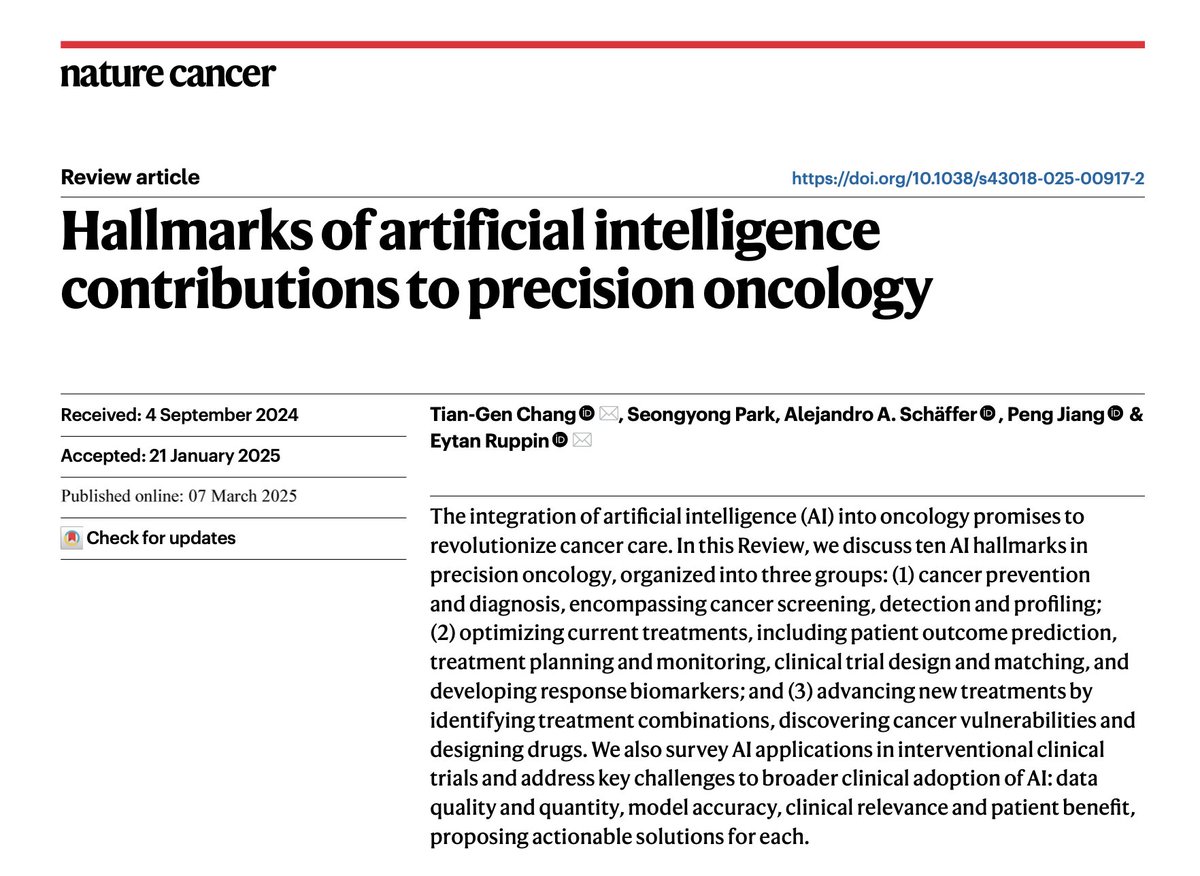
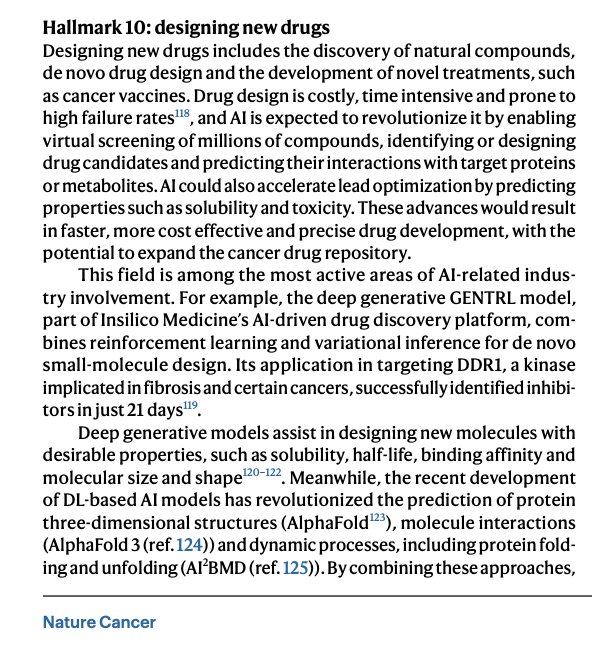
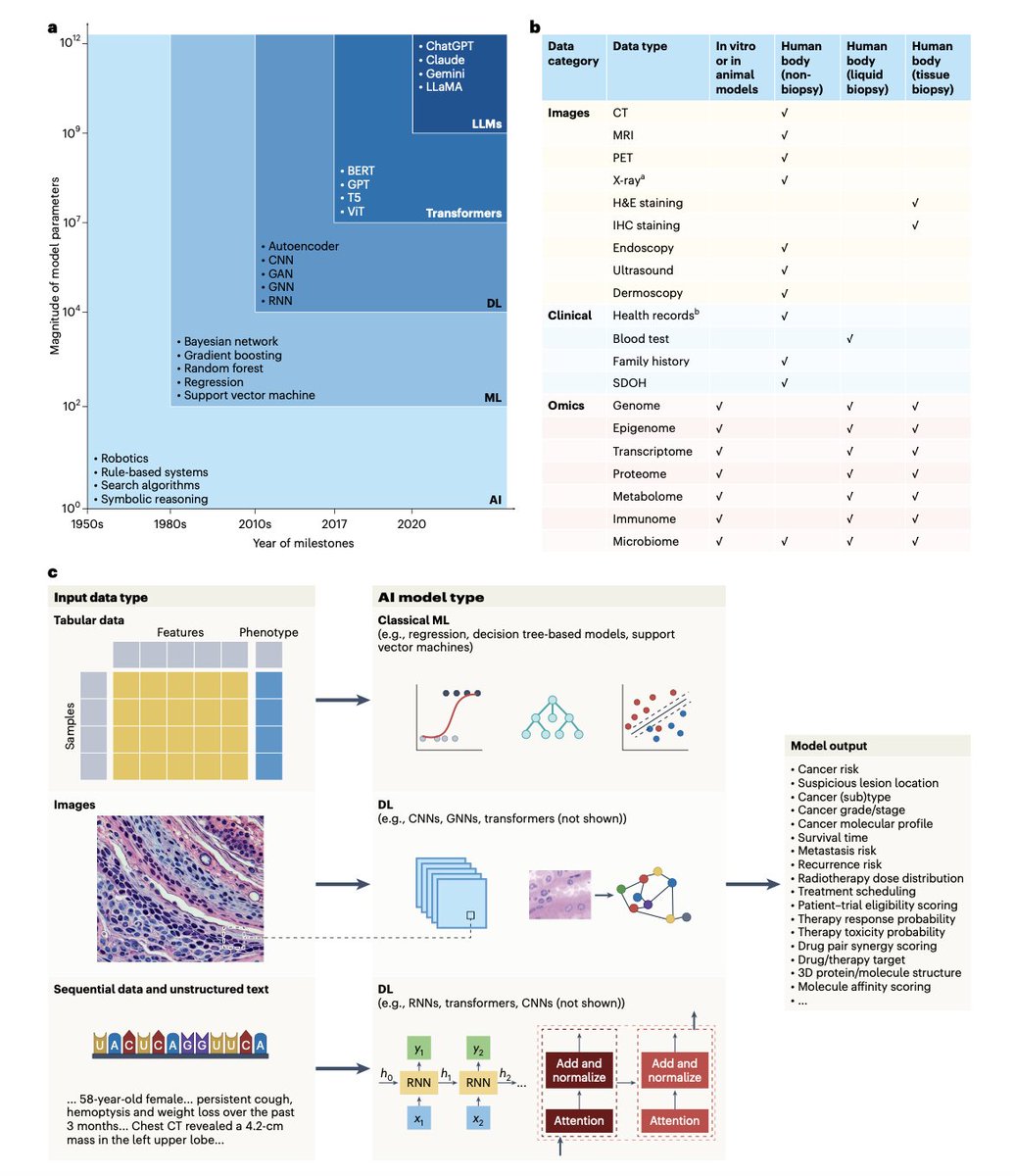
A prominent group at the NIH just dropped a cool paper in Nature Cancer - Hallmarks of AI contributions to precision oncology. I am very happy to see that the Generative Tensorial Reinforcement Learning paper we published in 2019 is mentioned in Hallmark #10. Btw. many of the novel cancer drugs designed using the ensemble of generative models and reinforcement learning are now in human clinical trials at Insilico and other companies. This year, you will see new super capable multimodal systems that will take the field of generative drug design to the new level. nature.com/articles/s4301…
Alex Zhavoronkov, PhD (aka Aleksandrs Zavoronkovs) tweet mediaAlex Zhavoronkov, PhD (aka Aleksandrs Zavoronkovs) tweet mediaAlex Zhavoronkov, PhD (aka Aleksandrs Zavoronkovs) tweet media
English
1
3
12
943
Alexander Ohnmacht retweetledi
Rohan Paul
Rohan Paul@rohanpaul_ai·
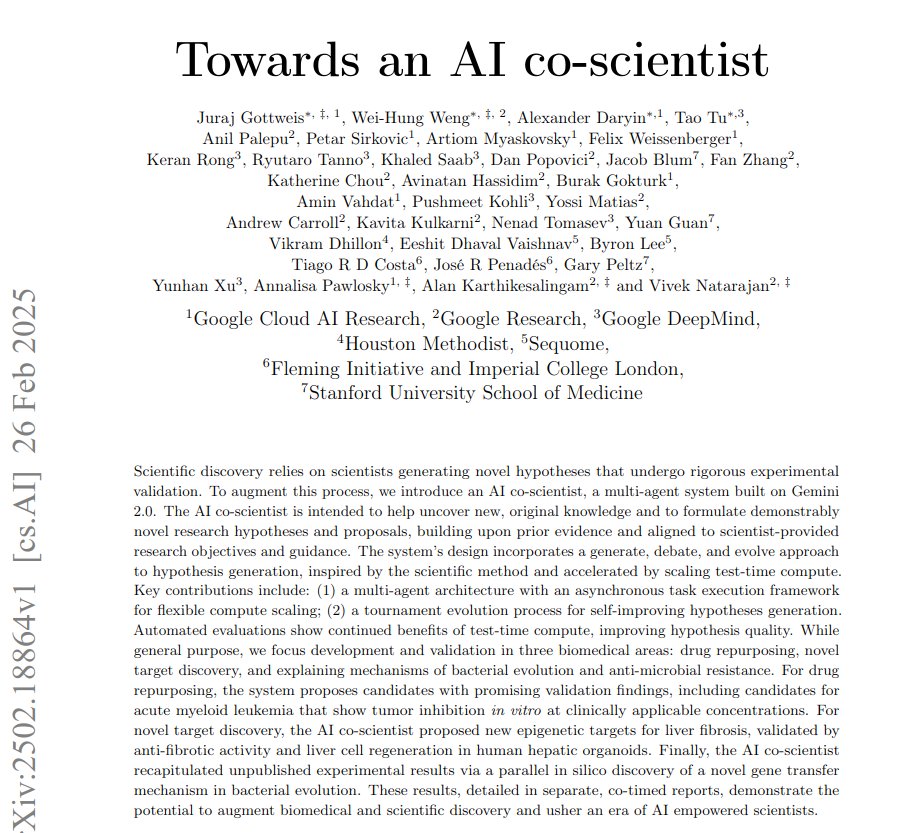
This paper introduces the AI co-scientist. It's a multi-agent system designed to aid scientists in generating novel hypotheses and planning experiments. → The AI co-scientist uses specialized agents for different tasks. → These agents include Generation, Reflection, and Ranking. → The Generation agent proposes research hypotheses. → The Reflection agent reviews these for novelty and accuracy. → The Ranking agent uses tournaments to evaluate hypotheses. → Other agents like Evolution and Meta-review further refine the process. → This multi-agent system iteratively improves hypotheses through self-critique and literature analysis. → The system is designed for scientist-in-the-loop collaboration to enhance scientific discovery. ---------------------------- Paper - arxiv. org/abs/2502.18864 Paper Title: "Towards an AI co-scientist"
Rohan Paul tweet media
English
10
85
406
35.3K
Alexander Ohnmacht retweetledi
Marinka Zitnik
Marinka Zitnik@marinkazitnik·
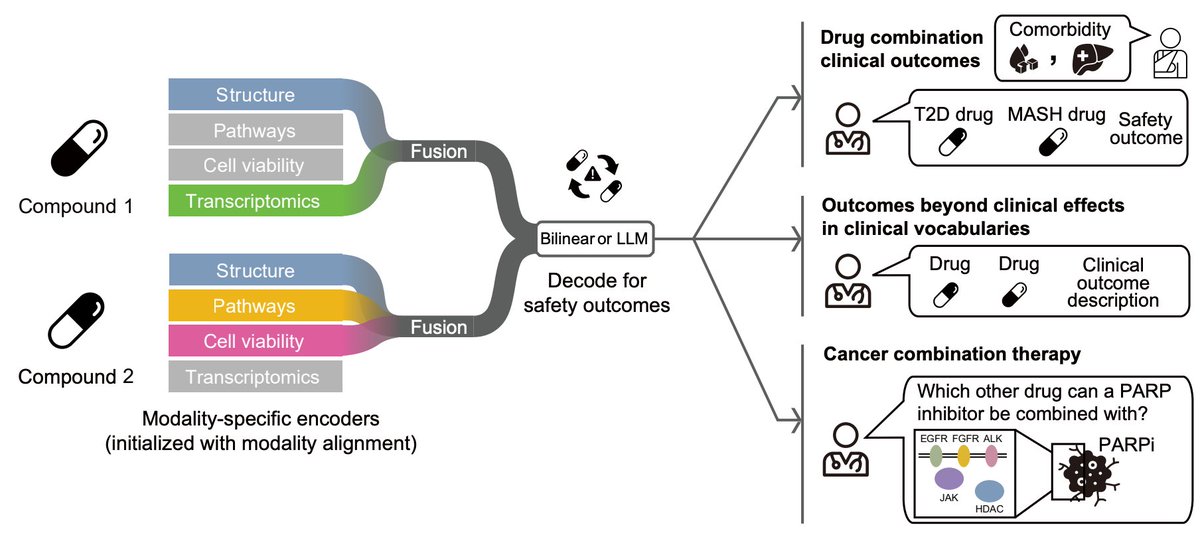
Predicting clinical outcomes of drug combinations from preclinical data is a major challenge @YepHuang We know a drug works in the lab. But will it work in patients? 🔬 ➡️ 🏥 This is key for safe and effective therapies and it's one of the hardest challenges in medicine. MADRIGAL is a multimodal AI model that predicts clinical outcomes of drug combinations from preclinical data 🧵 Why does this matter? Combo therapies can improve efficacy and reduce side effects, but identifying safe and effective pairs is difficult. The search space is enormous, pharmacological interactions are complex, and many compounds lack complete preclinical data The missing data problem Most AI models struggle when key drug data is missing. MADRIGAL learns from incomplete datasets at both training and inference, making it capable of predicting clinical outcomes even for drugs with sparse data What is MADRIGAL? A multimodal AI model that integrates 21,842 compounds and predicts 953 clinical outcomes to assess: ✔️ New drug combinations ✔️ Drug safety and toxicity across organs ✔️ Personalized response using patient genomic data Led by a stellar PhD student @YepHuang with a team of fantastic collaborators @xiaorui_su, Varun Ullanat, Ivy Liang, Lindsay Clegg, Damilola Olabode, Nicholas Ho, Bino John, Megan Gibbs @HarvardDBMI @Harvard @harvardmed @broadinstitute @KempnerInst @harvard_data
Marinka Zitnik tweet media
English
3
29
108
10.4K