
Sabitlenmiş Tweet
Ivan
4.4K posts

Ivan
@allquantor
Czechoslovakian interior decorator Founder @ZEITFinance & @autonomous_af
Katılım Ekim 2013
433 Takip Edilen1.8K Takipçiler
@0xclub008 @community_fist @mustafap0ly You're seeing it wrong; I do accept reality, without hoping that strangers from the internet might airdrop me a coin. Your whole existence is crying on the internet, hoping they will have mercy on you and give you magic internet money. You are a bum.
English

中文

Every time people get tired of waiting for any real information about $POLY airdrop and FUD starts building, @mustafap0ly posts some random teaser with another vague "hint"
First he was supposedly vibecoding the future token and airdrop page. Now he's apparently looking for the world's best tokenomics experts - as if developers are the ones who design tokenomics in the first place.
Honestly, it's getting exhausting.
Guys @Polymarket, enough with the cheap teasing. Just talk to the community like adults.
This endless stringing people along never ends well.
Mustafa Aljadery@mustafap0ly
who's the best in the world at building tokenomic models? DM me
English



@allquantor I am in favor of a free market, as long as all regulations concerning player safety and responsible gambling are fully complied with
English
SLOTS WITH A ONLY 60% RTP : The Organized Scam Behind Germany’s Gambling Machines
Lately, I’ve noticed that whenever I stop by my local bar, the waiter is always glued to the gambling machine and always in a bad mood. Today he told me that nobody had won anything for over a week, so he kept playing because, in his words, “it’s about time someone wins.” A textbook example of the gambler’s fallacy. In the end, he lost all his money.
I asked him what the RTP (Return to Player) of those machines was, and he had no idea what RTP even meant. I assumed it was around 80%, but after looking it up I discovered it’s only 60%
It’s remarkable that once governments take over with heavy regulation, they end up creating profit margins that are even more extreme than what you’d expect from organized crime. And it’s not just slot machines.
Sports betting regulation suffers from the same problem: a lack of real competition means bookies as Tipico can get away with margins of 13–15%, resulting in significantly worse odds for customers and almost no worthwhile promotions.
In the end, the biggest losers are the players, who receive a far worse product while effectively paying a premium for it. Meanwhile, the government and a handful of protected operators collect billions.
Under German law, each café or bar can have a maximum of two gambling machines. Across Germany, there are roughly 70,000 machines in cafés and bars, plus another 140,000 in automat clubs.
According to industry statistics, a single machine in a bar generates around €50,000 in annual revenue, which often exceeds the profit from the hospitality business itself. Two machines can bring in about €100,000 per year. Around 40% goes to the bar owner, 20–30% to the machine operator, while the rest is largely absorbed by taxes, VAT, and operating costs. This industry make 10B per year.
For players, however, there is virtually no mathematical chance of winning any money. . There are no meaningful jackpots; just small, occasional payouts from a machine that returns only 60% of the money wagered.
When I explained to the waiter what RTP actually is, and told him that some online casinos even offer games with 100% RTP, he was genuinely shocked. He said he would never play those machines again.
As more people become aware of how these machines really work and realize that the system is stacked against them; the black market and offshore online casinos will inevitably gain ground.
Black markets thrive whenever three conditions exist at the same time: demand is inelastic (people won't simply stop using the product), the gap in price or quality between the legal and illegal market is large, and the risk of getting caught is low. Online gambling fits all three conditions almost perfectly: demand is strong, the RTP difference is measurable, and for the average player, the practical risk of using offshore sites is close to zero.
The government urgently needs to reform both its gambling laws and tax system. It is almost certainly losing this battle against black market without even realizing it, and that trend will continue as long as bureaucrats with little or no real industry experience remain in charge of policymaking

English
OP is dead on. People see a $5M bet slip and picture a drunk billionaire rage-betting.
In reality, it’s a syndicate operating like a quant hedge fund for sports.
The China side of this is crazy. You can't just wire $5M out of the mainland to a sportsbook. Instead, a guy walks into a Guangzhou pawn shop and drops a duffel bag of physical gold bars. The exact second it hits the counter, a shadow broker in Manila credits a burner wallet with $5M in USDT.
Before the crackdowns, Macau "junket kings" ran the board. A guy named Alvin Chau processed $105 BILLION in shadow bets to help mainland VIPs bypass capital controls. He’s doing 18 years in prison now.
Even the legal ones are insane. Starlizard in London runs exactly like an investment bank. Hundreds of quants modeling stuff like player sleep cycles. The founder made so much money doing it he literally bought a Premier League team (Brighton).

Quant Chad@Autonomous_Chad
Please stop spamming my TL with slop like "ThiS trader lost $5M on a single bet 😱😡🥵 !!?!?" These are not a traders, these are Sports Syndicate. Sports Syndicates are like sports betting investment funds. Here is how they operate : > develop a reliable edge (insider info on injuries, better weather models, better fatigue analysis...) > pool money from large investors, often from countries where gambling is banned (🇨🇳) > invest the money in bets following their strategy > reinvest proceeds on winning bets > investors withdraw any time they want and keep the profits, while the Syndicate takes a comission. This is the secret behind all the big accounts with 1 or 2 prediction betting millions on a single team or match. Sports Syndicates split their bet across multiple accounts that they cycle constantly so it's harder for observers to gain insight into their portfolios and strategy. If you see these signs : - Huge bets on a single market - only sports - fresh account - empty profile Then you are almost always looking at a Sports Syndicate burner account. this fresh profile who bet $5M on Argentina is a perfect example
English
@0xclub008 @community_fist @mustafap0ly You have no demand on anything in life. If you don't like it - don't use the platform. Or, go do something about it, be a man. Crying on Twitter does not help.
English
@allquantor @community_fist @mustafap0ly 当空投挑逗在2024年11月7号开始的时候,任何活跃用户都权利要求平台兑现诺言。如果平台从来没挑逗过预期的空投,那么我赞成你的观点
中文
Ivan retweetledi


🚨The World Cup final referee, Slavko Vincic was arrested at a “sex party” in 2020, but was not charged
He was among 26 men and 9 women detained at a party with four packets of cocaine, 10 pistols, three protective vests, and more than $11,400 in cash


English
@community_fist @mustafap0ly Bro is sitting in Ukraine, hoping for an airdrop before he gets drafted. Tough life, brother. Spam a little bit more on X they will for sure listen to you and aidrop you millions.

English
@allquantor @mustafap0ly The last thing i need is the opinion of "chechoslovakian" dick rider
English

English


Unpopular opinion:
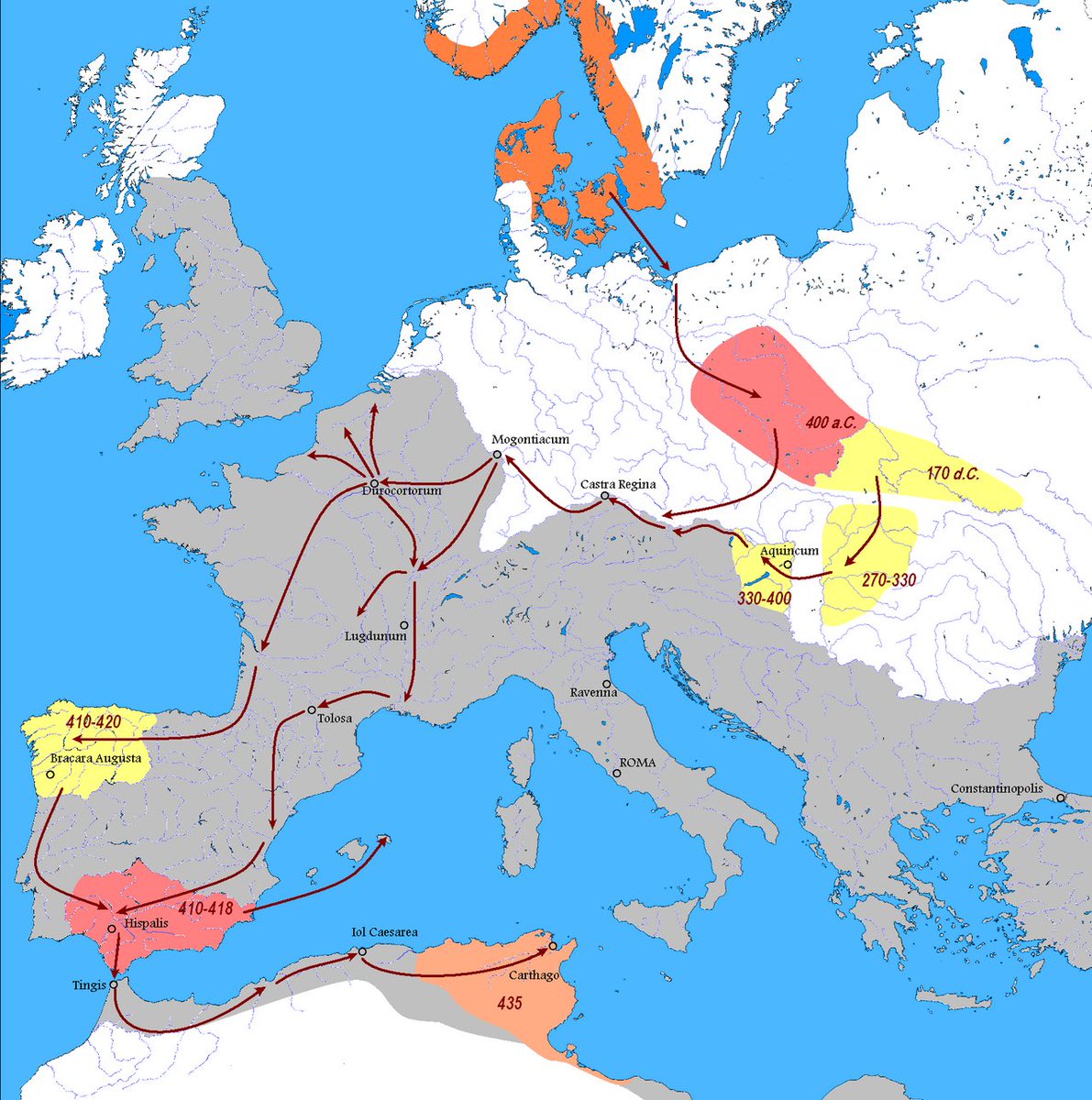
Maghreb is former European territory after a strong arabization and islamification.
Europe has no fixed geographic borders. Its borders are dynamic + change by culture and values.
Marokko, Tunesia and Israel have much more common ground with Europe than with Angola or Japan.
If the Katharian or Phoneciaen Empire lived today, it were a member of the EU.


English
@defiance_cr We can't play by the "rules" if the rest of the world does not play by the rules.
English

@allquantor i disagreed until i try the latest Kimi AI.
Its a bit disappointing that China is disrupting the entire AI chain while our execs are concocting narratives like this to frame open source as decelerationist, and dangerous. Y'know they are feeling the heat
x.com/deanwball/stat…
Dean W. Ball@deanwball
Some observations on Kimi: 1. It's a very good model! I don't think its performance can be explained away by distillation or anything like that. In agentic coding sessions, it seems pretty much on par with the best public models of Q1 2026. In my fairly limited use, it also seemed very token hungry. It's not obvious to me that this model is actually that cheap to run. 2. I am personally surprised the Chinese state continues to allow the open sourcing of models this good, given potential risks. To be clear, I *myself* might be fine with models presenting this level of marginal risk being open weight, but I am surprised that China is fine with it. I suspect the reason they are is 75% explained by strategic blindness/lack of AGI-pilledness (the CCP is very Yann Lecun-y in its views of AI). The other 25% or so is their lack of compute for customer inference (making China's open-weight strategy an unintended byproduct of US export controls) and the normal Chinese strategy of aggressive exports. For the companies, as opposed to the government, the decision to open source is partially ideological and partially because they are behind, and they know that very few people would pay for sub-frontier models from China. 3. Open-weight models are inherently decelerationist, and I'm continually surprised to see the so-called "accelerationists" so excited about open-weight models. I suspect the reason they are is that they know open-weight models are effectively ungovernable, and they simply like the overall cloak of ungovernability open-weight models create over the whole of AI. It's not a bad strategy; it reminds me of James Scott's recounting of the hill people in "the art of not being governed." Still, in the end, open-weight models deter further AI capex. 4. One probable outcome of an open-weight-model-dominant world is full AI communism, which is precisely what China proposes: rather than a market product, AI is a "public good" which will ultimately be provided by the state as a kind of "digital public infrastructure." This future strikes me as a dystopian hellscape, but I've never met an open-weight models advocate who doesn't ultimately concede this is where things end. You'd be surprised how many 'accelerationists' lobbied me, while I was in government, to support an eleven or twelve-figure federally funded data center so that startups could train models at a subsidy and then give them away for free. There was no other way for AI to progress, they said. Perhaps this is the logical end state of things. Nonetheless, I find myself surprised to see supposed accelerationists excited about such an outcome. I think many of them just don't know what they're doing. Many accelerationists do not view the creation and serving of frontier models as a legitimate business. 5. I would guess that the Trump Administration will at some point realize that their best strategy here would be to create large amounts of regulatory risk around the use of open-weight Chinese models. You don't need to "ban open source" (one of the dumber motifs of AI policy discussion). You just need to direct every agency to issue soft law that creates FUD. "A Federal Reserve Advisory Bulletin found that there may be backdoors in Chinese AI models." It needn't be that well justified. You just create enough regulatory risk that every regulated enterprise backs off. You probably don't want to create so much regulatory risk that you scare off the hyperscalers from serving Chinese models; this will just drive startups to sketchier providers. There's a happy middle ground here. I'd assume they will do some version of this. 6. It's probably true that open-weight models of this capability make the world a bit more dangerous, but not so much more that you'll really notice. At some point the models will be capable enough that you will notice. "A nonliving, invisible, dangerous, and infinitely self-replicating agent escaped from a Chinese lab," you say? Color me shocked.
English
OpenAI and Anthropic have absolutely 0 moat. Their inevitable slowdown is the ultimate liquidity injection crypto has been waiting for.
they aren't going to literal zero, but they're basically destined to become the next oracle, grinding with 100s of sales reps to license models to B2Bs at a fraction of today's valuations.
an IPO is a pipe dream. after the spacex extraction, there’s just not enough liquidity. the longer they wait, the harder it gets to keep the charade alive and raise more cash.
when the AI bubble pops, that liquidity rotates straight back into crypto. gambling is AI-resistant, it’s only growing, and tokenized agentic payments are going to run the future.
future is bright bros. stay strong.
Arena.ai@arena
Big news: Kimi-K3 by @Kimi_Moonshot is now #1 in the Frontend Code Arena with 1679 pts, surpassing Claude Fable 5. This is a 17-place jump from Kimi-k2.6 (#18 -> #1). In Frontend, Kimi-K3 ranked #1 in 6 of 7 domains: Brand & Marketing, Reference-Based Design, Data & Analytics, Consumer Product, Simulations, and Content Creation Tools, landing #2 only in Gaming behind Fable 5. The full model weights will be released by July 27. Congrats to the @Kimi_Moonshot team on this major milestone!
English



We’ve raised our Apple and Google Pay deposit limits from $500 to $1,000 a week.
Currently no fees. Instant deposit.
Once you hit your 15 lifetime transaction limit, you can upgrade by providing your SSN and DOB for $2,500 a week; no lifetime limit.
PistachioFi@PistachioFi
You can buy crypto in Pistachio without handing over an ID first. Up to $1,000 a week, no identity check, straight from the Add Funds screen.
English

When you forget you have a scheduled post for 4 years ..
DeGods@DeGodsNFT
NFT marketplaces are broken. So we built our own. It's called deBay. 🟥🟦🟨🟩 Every DeGod, every y00t, every chain. w/ a buying guide, trait alerts, & p2p trading. 🧵👇
English
@Autonomous_Chad I leave it here for you to read en.wikipedia.org/wiki/Tony_Bloom
English
Please stop spamming my TL with slop like "ThiS trader lost $5M on a single bet 😱😡🥵 !!?!?"
These are not a traders, these are Sports Syndicate.
Sports Syndicates are like sports betting investment funds.
Here is how they operate :
> develop a reliable edge (insider info on injuries, better weather models, better fatigue analysis...)
> pool money from large investors, often from countries where gambling is banned (🇨🇳)
> invest the money in bets following their strategy
> reinvest proceeds on winning bets
> investors withdraw any time they want and keep the profits, while the Syndicate takes a comission.
This is the secret behind all the big accounts with 1 or 2 prediction betting millions on a single team or match.
Sports Syndicates split their bet across multiple accounts that they cycle constantly so it's harder for observers to gain insight into their portfolios and strategy.
If you see these signs :
- Huge bets on a single market
- only sports
- fresh account
- empty profile
Then you are almost always looking at a Sports Syndicate burner account.
this fresh profile who bet $5M on Argentina is a perfect example

English