Allyn Gibson

448 posts

Allyn Gibson banner
Allyn Gibson

Allyn Gibson

@allyngibson

Writer of @DCD_Nexus PREVIEWS, fiction and essays. Rooter of baseball. Scholar of history and Sherlock Holmes. Drinker of stouts. 🏴󠁧󠁢󠁳󠁣󠁴󠁿

York, PA Katılım Ağustos 2009
14 Takip Edilen606 Takipçiler
Allyn Gibson
Allyn Gibson@allyngibson·
@JamesMelville I just read a collection of St Andrews ghost stories. So much interesting history there. I will never forgive John Knox for the destruction of the cathedral.
English
0
0
1
263
James Melville 🚜
James Melville 🚜@JamesMelville·
I know I’m biased because it’s my hometown, but in my opinion, St Andrews in Fife is the best town in Britain. It has everything. Ancient history. Beautiful Georgian architecture. The home of golf. West Sands beach (immortalised in the opening scene of Chariots of Fire). Staggeringly beautiful enormous skylines. Endless great pubs, restaurants, independent shops and a vibrancy that is sadly lacking in so many towns right now. It’s an unbelievably special place. ♥️🏴󠁧󠁢󠁳󠁣󠁴󠁿
English
154
153
1.7K
64.1K
Allyn Gibson retweetledi
Aakash Gupta
Aakash Gupta@aakashgupta·
2000s TV feels better than anything streaming makes because 22-episode seasons were subsidized by a business model that no longer exists. Network TV ran on syndication economics. A show had to hit 88 to 100 episodes before it could be "stripped": sold to cable stations that aired it 5 days a week for 20 weeks without a single repeat. Four seasons of 22 episodes each landed at 88 exactly. Seinfeld, Friends, The Office, Grey's Anatomy, Law & Order, CSI. Every one was engineered to cross that threshold because the real money lived on the other side of it. A show that made syndication cleared the initial network license fee multiple times over in back-end revenue. Friends ran 236 episodes and still generates an estimated $1 billion per year for Warner Bros, two decades after the finale. Jerry Seinfeld is nearly a billionaire because of 180 episodes of half-hour television shot between 1989 and 1998. The 22-episode format forced "filler" episodes. The bottle episode. The beach episode. The holiday episode. The one where nothing happens and the characters just sit in an apartment. These are the episodes that built parasocial attachment. Dinner Party from The Office. The Constant from Lost. Pine Barrens from The Sopranos. Nothing happens in any of them. They're why people still talk about the show 20 years later. Streaming killed this in two moves. Netflix, Max, and Apple pay per-episode production budgets with no syndication upside because they ARE the endpoint. And the binge model means viewers finish a season in three days whether it's 8 episodes or 22, so there's no incentive to keep a cast employed for nine months to make the long version. Cheaper to ship 8, market it as a "prestige limited series," and move the showrunner to the next project. The result: every streaming season has to advance plot every episode because there's no room for anything else. No breather. No character development. No filler that turns into the best episode of the series. The math won't allow it. The end state is already on the board. As of 2024, zero American series originally made for streaming has reached 100 episodes. In 50 years of television, the milestone that defined what a "show" even was got erased in one decade. The 100-episode threshold is gone. So is the kind of show it produced.
cнєєкυ⋆。🪐˚ ⋆@Okay_Bye___

Me when i find a perfect 2000s series with 6 seasons and 16+ episodes each

English
43
539
3.3K
247.9K
Allyn Gibson
Allyn Gibson@allyngibson·
Sometimes when I get a job rejection email, I really want to write back, "I can't say I'm not disappointed; I was hoping I wouldn't have to continue rationing my blood pressure medications." But they always come from automated, unmonitored email addresses.
English
0
0
0
13
Allyn Gibson retweetledi
Gandalv
Gandalv@Microinteracti1·
This chart is going viral right now. It shows U.S. retail prices before and after Trump’s tariffs. Both domestic and imported goods turned sharply upward the moment tariffs hit. The pre-tariff trend was heading in the opposite direction. The chart is real. The data is solid. The more interesting question isn’t whether tariffs raise prices. They do. Every economist agrees on that. The question is whether the pain is the point. You won’t find that part in the chart. Gandalv / @Microinteracti1
Heath Mayo@HeathMayo

Inflation was coming down in the United States—and then Trump’s tariffs happened.

English
39
1.1K
2.3K
91.7K
Allyn Gibson retweetledi
Art-Eater ➡️⬇️↘️🐲👊
This isn't rose colored glasses. The internet really was better in the past before a small handful of corporations gobbled everything up. It used to be unbelievably good. The Internet Archive is one of the last vestiges of an era where the internet served people. Don't let it die
Boze Herrington, Library Owl 😴🧙‍♀️@SketchesbyBoze

The promise of the early web was that all the world’s knowledge would be preserved and accessible. In the past several years we’ve seen attempts to destroy every major hub of the knowledge-based internet. The “information super-highway” is a dream that is nearly dead.

English
49
4.6K
20.1K
431.6K
Allyn Gibson retweetledi
Chess Feed
Chess Feed@chess_feed·
White to move! Mate in 1!
Chess Feed tweet media
English
393
110
6.8K
3.6M
Allyn Gibson retweetledi
Javier de la Cuadra
Javier de la Cuadra@JavierDlacuadra·
Ahora sí hablemos en serio de la foto. Este es un trino para interesados en fotografía, astrofotografía y el que quiera ¿Por qué esta foto es increíble? Algún conspiranóico, dándoselas de suspicaz, preguntó que por qué esta foto tomada por el comandante del Artemis II se veía más opaca que la foto tomada por la tripulación del Apolo 17 en 1972. Bueno. Acá viene lo emocionante. Esta fotografía hubiera sido imposible tomarla con una cámara análoga; y no cualquier cámara digital puede tomarla. El archivo original de esta foto está disponible para su descarga en la página de la NASA. En las propiedades del archivo se puede ver con qué cámara fue tomada y los ajustes de exposición que se usaron. Hasta el serial de la cámara. Esto, primero que todo, garantiza que la foto que estamos viendo no fue creada digitalmente, ni con IA, sino capturada por una cámara real por un humano. Sé que no es suficiente argumento para los conspiranóicos, pero ni modos. Esa que está ahí es la Tierra. Ahora sí lo interesante. ¿Por qué se ve como más opaca que la del 72? porque resulta que en la cara de la tierra que vemos en esa foto, está de noche; si hacen zoom pueden ver el brillo de la iluminación nocturna. Pero ¿cómo, si es de noche, puede verse como si fuera de día? Porque la foto se hizo con un altísimo ISO de 51200! El ISO es la sensibilidad del sensor a la luz. Con la mayoría de cámaras digitales, con ISOs de más de 6400, el ruido es tanto que la foto se ve prácticamente ilegible. Pero la cámara que tiene el comandante Reid Wiseman es una NIKON D5, que no es una cámara muy nueva; tiene 10 años de haber sido lanzada. Pero su sensor es reconocido por garantizar una calidad decente de imagen con ISOs altos. Y eso, para los que siempre preguntan cómo se hace una buena foto del cielo, es fundamental ¿Por qué? Pues para poder tomar fotos de los astros sin tener que bajar mucho la velocidad de exposición. Porque si bajas mucho la exposición apra que entre más luz, queda capturado el movimiento de los astros y de la rotación de la Tierra, cuando estás en la Tierra. Así que un iSO tan alto hizo posible que Wiserman pudiera disparar a una velocidad de 1/4 de segundo. Que es baja, pero no tanto. Es digamos, el límite para la astrofotografía. Por eso esta foto tiene ruido, porque de todas formas es un ISO altísimo. Pero lo que más me emociona a mí, es que la tomó con un lente 14 -24mm F2.8. Es decir, en terminos coloquiales, que esta foto no tiene zoom. Para que lo dimensionen: cuando uno quiere tomar una foto de la Luna desde la Tierra que salga así de "cerca" tiene que usar un lente de unos 400mm de distancia focal. Wiserman usó un ¡gran angular de 22mm! Es decir que él estaba viendo la Tierra asi de grande frente a sus ojos. Porque la foto no fue recortada en edición y eso lo sabemos porque en las propiedades del archivo siempre aparece cuando una foto fue editada. El archivo está limpio, tiene la resolución original de la cámara. La tierra era inmensa frente a su mirada. Hermoso. Pero para mí lo más mágico de esta foto, incluso más que las auroras boreales, es que se ve como la luz de sol, que está del otro lado de la tierra, ilumina nuestra atmosfera. Y eso es magia pura, porque esa atmosfera tiene una composición milimétricamente perfecta para permitir que la vida, tal y como la conocemos, sea posible. Esta foto, es un regalo precioso para la humanidad. Les dejo al link para que descarguen la foto en alta resolución y el pantallazo de las propuedades del archivo.
Javier de la Cuadra tweet media
Español
723
8K
31.3K
1.7M
Allyn Gibson
Allyn Gibson@allyngibson·
@roryisconfused Pierre actually sees two comets in War and Peace. He sees the Great Comet of 1811 (not a typo) in early 1812 and thinks bug things are coming. After Moscow falls, Pierre and the French officer see a different comet from Pierre's mansion. Kinda blink and you miss it, frankly.
English
0
0
15
1.6K
Rory McCarthy
Rory McCarthy@roryisconfused·
The whole conceit of “Natasha, Pierre & the Great Comet of 1812” makes me upset because I read War and Peace cover to cover during lockdown and I can’t recall a great comet at all. When I read these tremendously long books I think I must enter something like highway hypnosis
English
8
17
1.3K
50.6K
Allyn Gibson retweetledi
Katie Van Dyck
Katie Van Dyck@CapitolKVD·
The president sat in the public gallery, on a bench, surrounded by ordinary citizens. There was no announcement of his arrival. No Hail to the Chief. Instead, Trump came in quietly, shuffled around looking for a seat, and waited in silence with the rest of us for the final 10 minutes before arguments began. I was 50 feet away from him. It was stunning. Trump looked small on that wooden bench in the grandeur of the courtroom, sitting below the nine justices. It was a stark reminder of how our founders structured our government. Trump is not a king. He cannot ignore the Constitution. And the Supreme Court has the last word on what he can and cannot do.
Scott Thuman@ScottThuman

The court sketches of President Trump sitting in at the Supreme Court today as justices weighed his actions to limit 'birthright citizenship'. Trump is the first sitting President to attend proceedings. He stayed just about an hour and left during the defense's arguments. After court adjourned, Trump posted on Truth Social: “We are the only Country in the World STUPID enough to allow ‘Birthright’ Citizenship!” Actually, about three dozen countries, nearly all of them in the Americas, guarantee citizenship to children born on their territory, per Associated Press.
English
303
789
7.9K
1.2M
Allyn Gibson retweetledi
Mark Ruffalo
Mark Ruffalo@MarkRuffalo·
This is something I have been worrying a lot about. We have psychopaths waging this war. We have seen Netanyahu gleefully carry out a genocide in Gaza reducing it to a nuclear bomb site. Why would he not go further now in Iran? There has been absolutely no consequences for his war crimes in Gaza. Trump has only assisted them. This has got to stop. As the citizens of the world we have to stop this. They can not be allowed to carry out a nuclear strike on the millions of innocent people of Iran. These are our fellow human beings, regardless of their leaders. This is insanity.
Mohamad Safa@mhdksafa

I don't think people understand the gravity of the situation as the UN is preparing for possible nuclear weapon use in Iran. This is a picture of Tehran. For you uneducated, untraveled, never-served, warhawks licking your chops at the thought of bombing it. It's not some low population desert. There are families, children, family pets. Regular working class people with dreams. You're sick to want war. Tehran is a city of nearly 10,000,000 people. Imagine nuking Washington, Berlin, Paris, London, or beyond, bombed with nuclear weapons. I gave up my diplomatic career to leak this information. I suspended my duties so as not to be part of or a witness to this crime against humanity, in an attempt to prevent a nuclear winter before it is too late. Yesterday, nearly ten million people protested “No Kings” in the United States. The possibility of the use of nuclear weapons must be taken very seriously. It's dangerous. Act now. Spread this message worldwide. Take the streets. Protest for our humanity and future. Only the people can stop it. History will remember us.
English
2.6K
12.3K
48.2K
2M
Allyn Gibson retweetledi
Thorne 🌸
Thorne 🌸@ExistentialEnso·
If this were a Civ game, it would be like if you were on the verge of winning both a cultural victory and a science victory but then decide to be "fuck it, going for domination," and screw everything up
English
49
191
4.5K
144.2K
Allyn Gibson retweetledi
Sagar
Sagar@SagarGaonkar23·
Rubiks cube & Graph theory.
English
116
220
1K
101.1K
Allyn Gibson retweetledi
Big Brain Philosophy
Big Brain Philosophy@BigBrainPhiloso·
Marcus Aurelius was the most powerful man on earth. He could have had any woman he desired. Been drunk and partying for the rest of his life. No one would have stopped him. He chose none of it. Instead, he spent his nights writing privately about his daily struggle to live better. Those notes, never meant to be published became Meditations. The foundational text of a 2,000-year-old philosophy called Stoicism. Here's what it actually teaches. At its core, Stoicism begins with a single, uncomfortable truth: most things are not up to you. Your relationships, your finances, your reputation, your body. You can influence these, but never fully control them. Even if you do everything right, misfortune can still find you. The economy collapses. Partners leave. Bodies fail. But here's where Stoicism flips the script. While you can't control what happens to you, you can always control how you respond. Your opinions, your actions, the position you take toward the world. These belong entirely to you. And according to the Stoics, that's where all your energy should go. This doesn't mean becoming cold or emotionless, a common misconception about Stoicism. The Stoics saw emotion as a deeply human characteristic. What they understood, though, is that it's not the emotion itself that determines your mood. It's the position you take toward it. When you learn to observe your feelings rather than be consumed by them, they lose their power over you. Emotions become like waves: they rise, they pass, and you remain standing. That shift in perspective changes everything. Marcus Aurelius lived this philosophy every single day. He had every reason not to. Each morning, before facing the demands of running the world's most powerful empire, he practiced what the Stoics called praemeditatio malorum, negative visualisation. He would mentally prepare himself for the difficulty ahead: "Today I shall be meeting with interference, ingratitude, insolence, disloyalty, ill-will, and selfishness." This wasn't pessimism. It was readiness. A mind that has already confronted difficulty isn't rattled when it arrives. He also carried memento mori, the constant reminder that life is temporary. Not as a morbid obsession, but as a tool to stay focused on what truly matters and let everything trivial fall away. And that, ultimately, is what Stoicism is about. We live in an age of endless distraction: notifications, opinions, noise competing for our attention at every turn. It's easy to scatter your energy across things you can't change and exhaust yourself in the process. Stoicism offers a quiet, clear alternative: point your energy toward what's essential, and release everything else. Marcus Aurelius had unlimited power, unlimited pleasure, and unlimited distraction available to him. He chose none of it and spent his nights writing about how to be better. That alone might be the most Stoic lesson of all.
English
37
392
1.6K
163.7K
Allyn Gibson retweetledi
Prof. Carl Sagan
Prof. Carl Sagan@ProfCarlSagan·
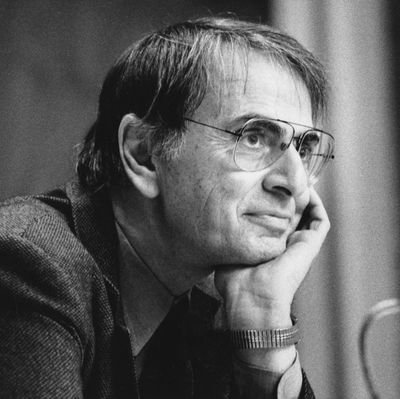
In 1990, as Voyager 1 was leaving the solar system, Sagan fought a long internal battle at NASA to turn the cameras around one last time to photograph Earth. Many engineers opposed it, fearing it might damage the cameras or waste time. But Sagan’s successful effort resulted in the "Pale Blue Dot" image. He used this tiny, 0.12-pixel speck of Earth to write his famous reflection on how "every human being who ever was" lived on that "mote of dust suspended in a sunbeam".
Prof. Carl Sagan tweet mediaProf. Carl Sagan tweet media
English
16
206
1.2K
49.2K
Allyn Gibson retweetledi
Gregory Blotnick
Gregory Blotnick@gregoryblotnick·
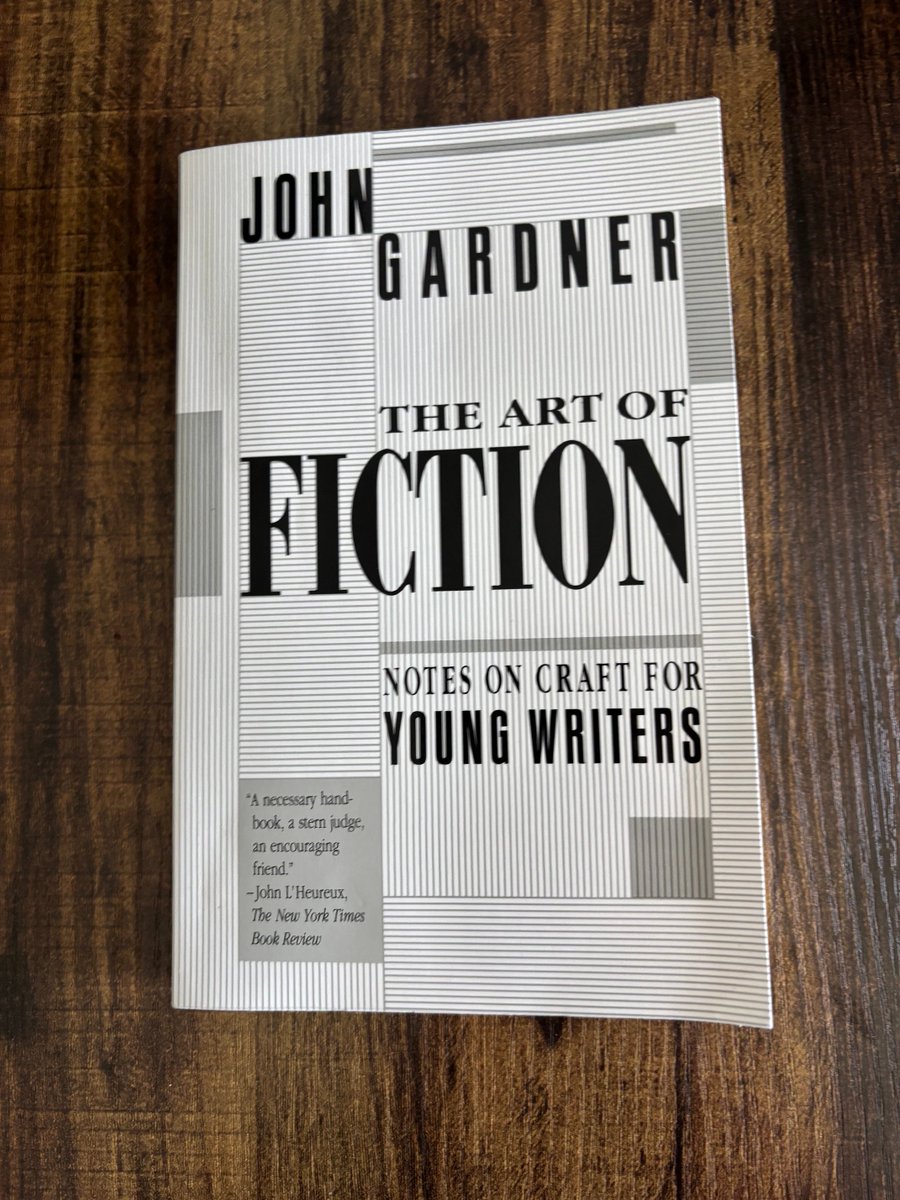
really good book on writing, I think one of the canonical texts even if ur just a reader - "writing makes you a better reader, and reading makes you a better writer" - this book fits that (1/4) "There are only two plots in literature: a hero goes on a journey, or a stranger comes to town." -- that quote gets attributed to Gardner and is why I bought the book turns out its apocryphal. but theres a lot in here thats just as valuable, and its easily something he could have said its very clear this man is a master and is fluent not just in the craft but the way he dissects everyone from Faulkner to Dostoevsky, in language that did not occur to u naturally this is not a "difficult" book re: length or language used. however, its very challenging in that a single sentence will make you stop and reflect on how applicable it is to you. you get out of it what you put into it (2/4) people see "creative writing" and think, I dont write, I dont need that. this is wrong much of creative writing/fiction is simply your ability to describe day-to-day life or human nature examples -describe the face of the woman you love -describe the way your friend walks -an old hemingway one: watch people getting out of taxis and describe how they differ etc...once u try this, and put words on paper, u will realize that ur writing is horrible, nondescript or cliche then u will look at ur bookshelf and say "I need to see how the old masters did this" then u realize u never really "read" these books. this is how writing makes u a better reader. (3/4) whether an ability to describe everyday life is important to u or not...idk if ur wired like me, as soon as a weakness of yours is brought to ur attention, u will not rest until its removed or progress is made if ur reading this u prob come from a business background where u are instructed, more or less, to "tell, dont show" this is the opposite of writing about life, where the cardinal rule is "Show, don't tell." so u have to both unlearn some of what u know, plus add an entirely different skillset. (4/4) I finished this 3-4 weeks ago and it has been bouncing around in my head since...thats how u know it was good I never really rec shit that I just finished, bc it takes time to see if the writing had staying power. the great ones plant themselves in your subconscious so I would say if you are someone who either appreciates great writing, or wants to improve for their own sake, this should prob be on ur shelf, and is one u will end up reading multiple times.
Gregory Blotnick tweet mediaGregory Blotnick tweet media
English
5
32
407
13.5K
Allyn Gibson retweetledi
Maria Dubovikova
Maria Dubovikova@politblogme·
One of the most heartbreaking examples of nonverbal communication to emerge from Iran. I cannot call this a mere propaganda piece. It is the unbearable truth, laid bare through the profound art of cinematography and animation.
English
413
10.7K
22.4K
527.4K