alottawa

14K posts

alottawa banner
alottawa

alottawa

@alottawa

Love reposting beautiful photos. #roses #flowers #gardening . Pics not mine.

Katılım Aralık 2008
7.5K Takip Edilen1.7K Takipçiler
alottawa retweetledi
ScienceFocus
ScienceFocus@ScienceFocusonX·
A tiny bee just did what chemotherapy couldn't. Scientists in Australia discovered that honeybee venom can wipe out 100% of aggressive breast cancer cells in under 60 minutes. And the healthy cells around them? Barely touched. The breakthrough came from Dr. Ciara Duffy and her team at the Harry Perkins Institute of Medical Research, working alongside the University of Western Australia. They tested venom drawn from 312 honeybees and bumblebees across Australia, Ireland, and England. The target: triple-negative breast cancer and HER2-enriched breast cancer. Two of the deadliest, most stubborn forms of the disease. The weapon: melittin. The same tiny peptide that makes a bee sting burn. At one specific dose, melittin tore through cancer cell membranes completely within an hour. Within just 20 minutes, it shut down the chemical signals cancer cells need to grow and multiply. Bumblebee venom, which lacks melittin, did nothing. Zero effect, even at high concentrations. Scientists then recreated melittin synthetically in the lab and got almost identical results, meaning no bees need to be harmed to develop the therapy. Published in the peer-reviewed journal npj Precision Oncology, the findings are still early-stage. Human trials haven't happened yet. But one thing is clear. Nature has been hiding answers in plain sight all along, sometimes inside the smallest creatures on Earth. Source: Harry Perkins Institute of Medical Research / npj Precision Oncology (Dr. Ciara Duffy et al.)
ScienceFocus tweet media
English
1.6K
18.8K
48.1K
2.3M
alottawa retweetledi
Gregory Kennedy
Gregory Kennedy@gregorykennedy·
This happens every cycle. But for some reason, the jealousy and envy seem amplified well beyond anything I can remember at the moment. As someone who has directly experienced these extreme ups and downs many times, there is only one answer. You need to have something else in your life to focus on other than work. I learned this only after I cracked two teeth from grinding at night, when I was in a startup that just barely missed the extreme outcome I desperately wanted. The details aren't important. What's important is that it forced me to look at ways to enrich other areas of my life. So, like the overachiever I am, I translated all that intensity and determination into cycling and racing, and in short order was winning races, riding with former pros, and having dinner with Tour de France champions for one reason and one reason only. I enjoyed it. I even helped raise a quarter of a million dollars for youth cycling to get bikes for high school kids. My career took a backseat. And who knows, maybe I would have made a lot more money if I had just doubled down again. But so what? I am not fat. Have excellent health and got to spend countless hours riding around the most beautiful roads in the world, all over Northern California. Worth it!
Deedy@deedydas

The vibes in SF feel pretty frenetic right now. The divide in outcomes is the worst I've ever seen. Over the last 5yrs, a group of ~10k people - employees at Anthropic, OpenAI, xAI, Nvidia, Meta TBD, founders - have hit retirement wealth of well above $20M (back of the envelope AI estimation). Everyone outside that group feels like they can work their well-paying (but <$500k) job for their whole life and never get there. Worse yet, layoffs are in full swing. Many software engineers feel like their life's skill is no longer useful. The day to day role of most jobs has changed overnight with AI. As a result, 1. The corporate ladder looks like the wrong building to climb. Everyone's trying to align with a new set of career "paths": should I be a founder? Is it too late to join Anthropic / OpenAI? should I get into AI? what company stock will 10x next? People are demanding higher salaries and switching jobs more and more. 2. There’s a deep malaise about work (and its future). Why even work at all for “peanuts”? Will my job even exist in a few years? Many feel helpless. You hear the “permanent underclass” conversation a lot, esp from young people. It's hard to focus on doing good work when you think "man, if I joined Anthropic 2yrs ago, I could retire" 3. The mid to late middle managers feel paralyzed. Many have families and don't feel like they have the energy or network to just "start a company". They don't particularly have any AI skills. They see the writing on the wall: middle management is being hollowed out in many companies. 4. The rich aren’t particularly happy either. No one is shedding tears for them (and rightfully so). But those who have "made it" experience a profound lack of purpose too. Some have gone from <$150k to >$50M in a few years with no ramp. It flips your life plans upside down. For some, comparison is the thief of joy. For some, they escape to NYC to "live life". For others still, they start companies "just cuz", often to win status points. They never imagined that by age 30, they'd be set. I once asked a post-economic founder friend why they didn't just sell the co and they said "and do what? right now, everyone wants to talk to me. if i sell, I will only have money." I understand that many reading this scoff at the champagne problems of the valley. Society is warped in this tech bubble. What is often well-off anywhere else in the world is bang average here. Unlike many other places, tenure, intelligence and hard work can be loosely correlated with outcomes in the Bay. Living through a societally transformative gold rush in that environment can be paralyzing. "Am I in the right place? Should I move? Is there time still left? Am I gonna make it?" It psychologically torments many who have moved here in search of "success". Ironically, a frequent side effect of this torment is to spin up the very products making everyone rich in hopes that you too can vibecode your path to economic enlightenment.

English
3
2
50
5.1K
alottawa retweetledi
Power to the People ☭🕊
Power to the People ☭🕊@ProudSocialist·
The kids are alright!! Former CEO of Google Eric Schmidt gets booed every time he mentions artificial intelligence during his commencement speech at the University of Arizona. This generation just may save humanity after all.
English
602
3.7K
20.2K
960.1K
alottawa retweetledi
Deedy
Deedy@deedydas·
The vibes in SF feel pretty frenetic right now. The divide in outcomes is the worst I've ever seen. Over the last 5yrs, a group of ~10k people - employees at Anthropic, OpenAI, xAI, Nvidia, Meta TBD, founders - have hit retirement wealth of well above $20M (back of the envelope AI estimation). Everyone outside that group feels like they can work their well-paying (but <$500k) job for their whole life and never get there. Worse yet, layoffs are in full swing. Many software engineers feel like their life's skill is no longer useful. The day to day role of most jobs has changed overnight with AI. As a result, 1. The corporate ladder looks like the wrong building to climb. Everyone's trying to align with a new set of career "paths": should I be a founder? Is it too late to join Anthropic / OpenAI? should I get into AI? what company stock will 10x next? People are demanding higher salaries and switching jobs more and more. 2. There’s a deep malaise about work (and its future). Why even work at all for “peanuts”? Will my job even exist in a few years? Many feel helpless. You hear the “permanent underclass” conversation a lot, esp from young people. It's hard to focus on doing good work when you think "man, if I joined Anthropic 2yrs ago, I could retire" 3. The mid to late middle managers feel paralyzed. Many have families and don't feel like they have the energy or network to just "start a company". They don't particularly have any AI skills. They see the writing on the wall: middle management is being hollowed out in many companies. 4. The rich aren’t particularly happy either. No one is shedding tears for them (and rightfully so). But those who have "made it" experience a profound lack of purpose too. Some have gone from <$150k to >$50M in a few years with no ramp. It flips your life plans upside down. For some, comparison is the thief of joy. For some, they escape to NYC to "live life". For others still, they start companies "just cuz", often to win status points. They never imagined that by age 30, they'd be set. I once asked a post-economic founder friend why they didn't just sell the co and they said "and do what? right now, everyone wants to talk to me. if i sell, I will only have money." I understand that many reading this scoff at the champagne problems of the valley. Society is warped in this tech bubble. What is often well-off anywhere else in the world is bang average here. Unlike many other places, tenure, intelligence and hard work can be loosely correlated with outcomes in the Bay. Living through a societally transformative gold rush in that environment can be paralyzing. "Am I in the right place? Should I move? Is there time still left? Am I gonna make it?" It psychologically torments many who have moved here in search of "success". Ironically, a frequent side effect of this torment is to spin up the very products making everyone rich in hopes that you too can vibecode your path to economic enlightenment.
English
1.1K
1.2K
16.2K
12.9M
alottawa retweetledi
WeRateDogs
WeRateDogs@dog_rates·
This is Jam. He said he was the highest jumping golden retriever in Ontario. May or may not have lied on his resume. Still 13/10
English
256
2K
26.1K
1.1M
alottawa retweetledi
Calvin
Calvin@RealCalvin1·
The question people need to ask is what is the real reason for the sudden massive need for data centers everywhere?
English
1.6K
5.2K
31.4K
642.2K
alottawa retweetledi
World of Statistics
World of Statistics@stats_feed·
Cold temperatures weaken nasal immunity, making us more vulnerable to viruses. A mere 5°C drop in nasal tissue temperature reduces immune response by nearly half.
English
38
61
722
63.1K
alottawa retweetledi
Matthew LaBosco
Matthew LaBosco@matthew_labosco·
TLDR — 10 habits keeping you in chronic stress: 1) Stop replaying conversations 2) No hypotheticals 3) Limit news 4) Cut tragic content 5) Surrender control 6) Schedule social 7) Daily practice 8) Make it enjoyable 9) Stop chasing dopamine 10) Audit environment
English
8
290
2.6K
213.1K
alottawa retweetledi
World Health Organization (WHO) Western Pacific
If you are in crowded places with poor ventilation, #WearAMask. Because it helps keep you and your community safe from #COVID19, flu and other respiratory illnesses. And remember these other measures to help protect yourself and others from COVID-19, flu, measles and other respiratory illnesses: -Practice hand hygiene and respiratory etiquette (cover your mouth and nose with a bent elbow or a tissue when you cough or sneeze) -Keep a distance when possible -Keep rooms well-ventilated -Stay home if you feel unwell -Get vaccinated and stay up to date with booster doses
English
179
710
1.9K
225K
alottawa retweetledi
.
.@milaton_·
A glimpse of Alex Eala and Vicky Mboko's night out in their recent TikTok video 🤩
English
30
253
4.3K
182.6K
alottawa retweetledi
Shining Science
Shining Science@ShiningScience·
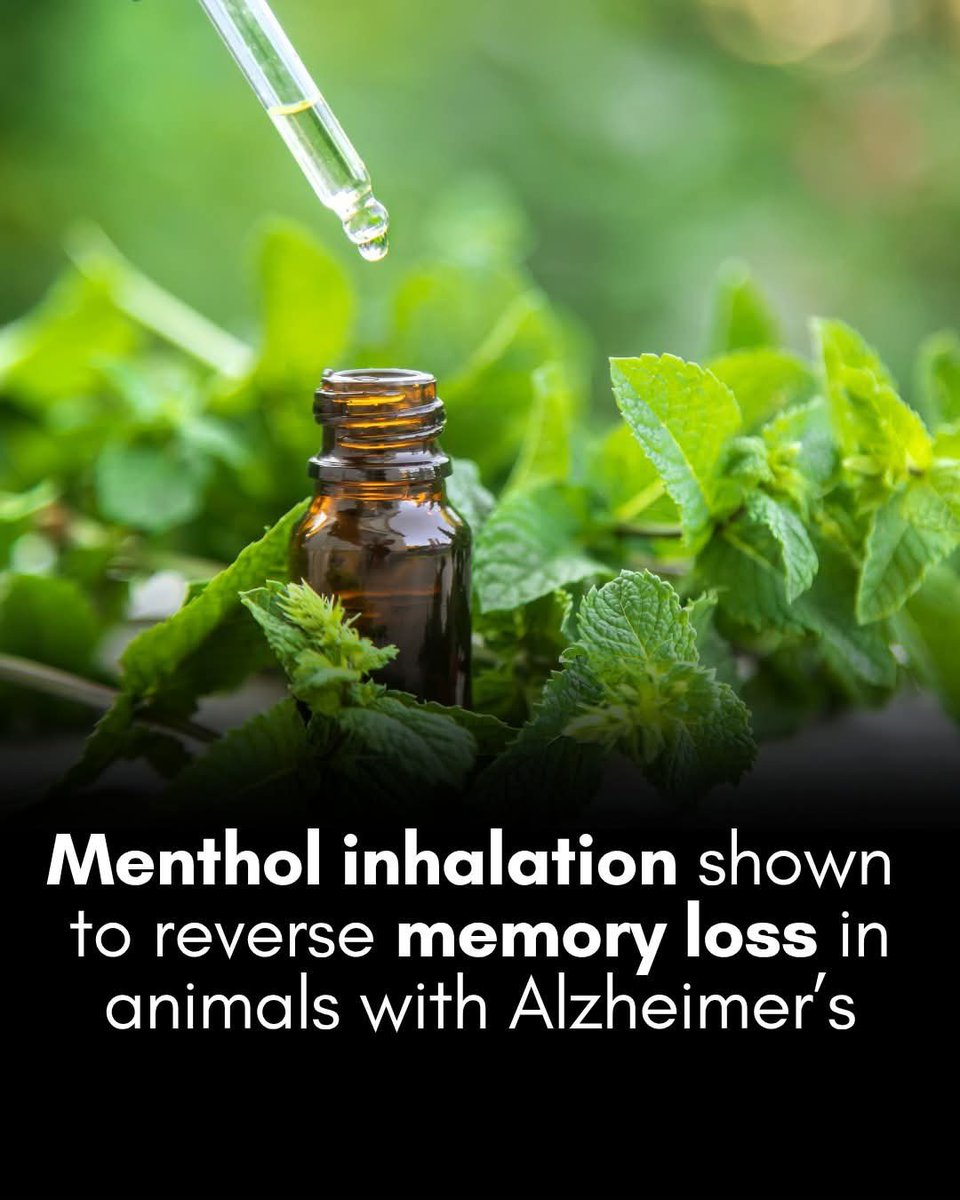
🚨 New science finds menthol scent may slow Alzheimer's Inhaling menthol stopped brain decline in mice—this could be the start of scent-based therapies. A surprising new study suggests that the scent of menthol may have powerful effects on the brain, including the potential to slow or even reverse symptoms of Alzheimer’s disease—at least in mice. Spanish researchers discovered that when mice with Alzheimer’s were exposed to menthol over a six-month period, their cognitive decline stopped and their memory improved. The key appears to lie in the immune system: menthol inhalation lowered levels of IL-1β, a protein linked to damaging inflammation in the brain. What’s even more intriguing is that the scent helped healthy young mice too, enhancing their mental performance. The researchers believe this discovery could pave the way for novel, scent-based therapies for neurological diseases. By tapping into the olfactory system, which directly connects to brain regions involved in memory and emotion, scientists are exploring how specific smells might stimulate immune responses to protect or even heal the brain. While these results are still in early stages, they signal a promising new direction in Alzheimer’s research.
Shining Science tweet media
English
22
191
692
33.3K
alottawa retweetledi
Fitness Freak
Fitness Freak@fitdaddy_·
This simple dumbbell routine fixes it all.
English
6
851
5.2K
381.5K
alottawa retweetledi
SFGATE
SFGATE@SFGate·
A backstage sneak peek moments before Bad Bunny's @SuperBowl halftime show.
English
9
361
2.6K
48K
alottawa retweetledi
Harry Spoelstra
Harry Spoelstra@HarrySpoelstra·
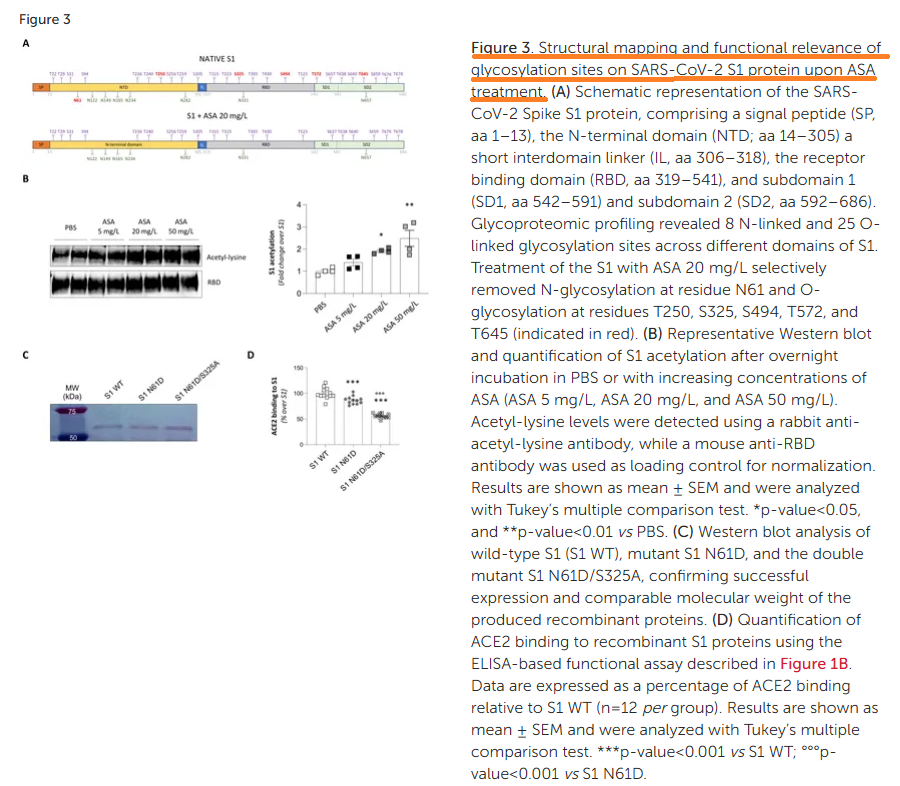
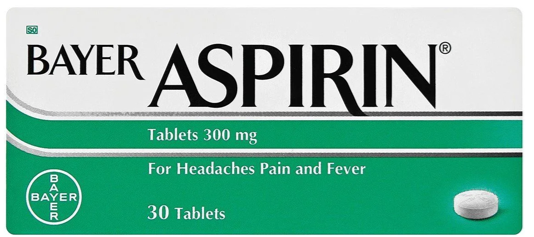
Acetylsalicylic acid disrupts SARS-CoV-2 spike protein glycosylation and selectively impairs binding to ACE2 ‼️YOUR ATTENTION: Very interesting Italian work, supporting earlier science findings: ASPIRIN! ➡️Acetylsalicylic acid (ASA/aspirin) has shown potential in reducing COVID-19 severity via anti-inflammatory effects, but its direct impact on SARS-CoV-2 spike S1 protein binding to ACE2 receptor was unknown. ➡️ASA directly interferes with S1-ACE2 binding, potentially mitigating viral entry and tissue injury. ➡️In Vitro: - ASA pre-incubation dose-dependently reduced recombinant S1 binding to ACE2 on Vero cells and in ELISA assays -Limited cytopathic effects of live SARS-CoV-2 (specific to ASA, not paracetamol). ➡️In Vivo: - In human ACE2 transgenic mice, ASA-treated S1 caused markedly less lung injury, fibrosis (reduced fibronectin/collagen), and inflammation (fewer macrophages/neutrophils) than untreated S1. ➡️Mechanism: - Glycoproteomics revealed ASA alters S1 glycosylation, notably reducing N-glycosylation at N61 and O-glycosylation at S325, with increased acetylation. ➡️Experimental confirmation: - Site-directed mutagenesis creating the N61D/S325A double mutant in the spike protein reduced ACE2 binding in vitro and lung pathogenicity in vivo, thereby replicating the protective effects of ASA. ➡️Conclusions: - ASA exhibits a novel antiviral action by disrupting spike glycosylation, supporting its repurposing as a low-cost intervention to prevent COVID-19 progression and related complications. ➡️No clinical doses are discussed, only a 20mg/L in an In-vivo mouse model. 🤔 ➡️‼️"These findings unveil a previously unrecognized antiviral activity of ASA, providing a molecular rationale for its repurposing as a low-cost, readily available intervention to prevent the progression from mild to severe COVID-19." So, Aspirin directly impairs SARS-CoV-2 spike protein binding to ACE2 by disrupting its glycosylation, thereby reducing viral entry, cytopathic effects, and lung injury in preclinical models. frontiersin.org/journals/immun…
Harry Spoelstra tweet mediaHarry Spoelstra tweet media
English
57
808
2.6K
169.6K