
Sabitlenmiş Tweet
Jurij Kuhar
71.5K posts


Jurij Kuhar
@alpha7B5
Walked the deserts, swam the shores, many ways in which I've grown.
Far Far Away & Slovenia Katılım Aralık 2020
102 Takip Edilen447 Takipçiler
Jurij Kuhar retweetledi


❗️❗️❗️
#BreastCancer and #Bees
ScienceFocus@ScienceFocusonX
A tiny bee just did what chemotherapy couldn't. Scientists in Australia discovered that honeybee venom can wipe out 100% of aggressive breast cancer cells in under 60 minutes. And the healthy cells around them? Barely touched. The breakthrough came from Dr. Ciara Duffy and her team at the Harry Perkins Institute of Medical Research, working alongside the University of Western Australia. They tested venom drawn from 312 honeybees and bumblebees across Australia, Ireland, and England. The target: triple-negative breast cancer and HER2-enriched breast cancer. Two of the deadliest, most stubborn forms of the disease. The weapon: melittin. The same tiny peptide that makes a bee sting burn. At one specific dose, melittin tore through cancer cell membranes completely within an hour. Within just 20 minutes, it shut down the chemical signals cancer cells need to grow and multiply. Bumblebee venom, which lacks melittin, did nothing. Zero effect, even at high concentrations. Scientists then recreated melittin synthetically in the lab and got almost identical results, meaning no bees need to be harmed to develop the therapy. Published in the peer-reviewed journal npj Precision Oncology, the findings are still early-stage. Human trials haven't happened yet. But one thing is clear. Nature has been hiding answers in plain sight all along, sometimes inside the smallest creatures on Earth. Source: Harry Perkins Institute of Medical Research / npj Precision Oncology (Dr. Ciara Duffy et al.)
Jurij Kuhar retweetledi

@JasonColavito Zahi Hawass: “completely empty”
Encyclopedia Brittanica: “empty”
Snopes: “empty”
HARVARD ARCHAEOLOGICAL PUBLICATION: Skeletal remains & 4,300yr relics
Who’s paying you to shill on that lousy blog of yours? 🤔
Jimmy Corsetti@BrightInsight6
@Megalithic12000 Thank you for sharing this!! So it’s crystal clear for all to see, the publication referring to skeletal remains & relics is 100% referring to the Sarcophagus in question, on the 3rd level down! 👀
English
Jurij Kuhar retweetledi


Jurij Kuhar retweetledi

How a malignant narcissist sees himself, versus what everyone else in the world sees.


English
The #DigitalRevolution: Humanity’s #GreatestEnemy (by Paul Craig Roberts, Institute For Political Economy, 17 May 2026)
❗️❗️❗️❗️❗️
"#ArtificialIntelligence" #ControlOfSociety #Privacy #Security #RoboticWorld #CurrentAffairs
paulcraigroberts.org/the-digital-re…
English
#Israel - the Global Leader in #HumanOrganTrafficking (by Mark Collett, The Unz Review, 5 May 2026)
❗️❗️❗️❗️❗️👀
#OrganTransplants #Israhell #GreatBritain
unz.com/article/israel…
English
Jurij Kuhar retweetledi

Britain has lost around half its hedgerows since the Second World War. The wildlife that depended on them has followed a similar trajectory. 🌿
The old field boundary — a strip of blackthorn, hawthorn, dog rose, and elder two to five metres wide between cultivated ground — was not wasted agricultural space. It was a functioning ecological system that maintained pollinators, pest predators, and farmland birds across centuries of working land.
Each hedgerow is a nesting corridor for grey partridge and skylark, a foraging habitat for brown hares and hedgehogs, a site for solitary bee colonies, and a windbreak for the crops alongside it.
The field cultivated to its very edge gives the maximum return this season. It removes the populations of beneficial insects, farmland birds, and small mammals on which stable long-term production depended.
The field with a hedgerow yields a few percent less per cultivated hectare — but remains productive across decades without compensatory chemical inputs. The documented declines in grey partridge, lapwing, and skylark across the British agricultural landscape since the 1970s are directly linked to field consolidation and hedgerow removal.
Practical equivalents for the garden or smallholding:
- A strip of wildflower meadow at least one metre wide at the plot boundary
- A clump of nettles in a shaded corner as a habitat base for red admiral, small tortoiseshell, and peacock butterflies
- A native mixed hedge of blackthorn and hawthorn in place of post-and-wire fencing
- A section of uncut grass between rows of fruit trees
#HedgerowHabitat #FarmlandWildlife #NativeHedge #GardenWildlife

English
Archaeo - Histories@archeohistories
A distinct dot is a popular forehead decoration worn mainly in South Asia - especially in India, Bangladesh, Nepal, Sri Lanka, and Mauritius. It is an old Hindu tradition and is known as a bindi, which means “a drop, small particle, and dot.” The word ‘Bindi’ is derived from the Sanskrit word 'bindu' and is associated with a person’s mystical third eye. Although they are rooted in the Hindu tradition, Bindis have transformed over time and have become popular accessories and fashion statements for some people. For example, several Western celebrities have been accused of cultural appropriation for wearing a bindi. Traditionally, it is a bright red dot applied to the center of the forehead close to the eyebrows. But bindis can also be other colors with a sign or piece of jewelry worn upon them. Many people associate the red bindi with ancient practice of offering blood sacrifices to appease the Gods. It is interesting to note that in the ancient Aryan society a bridegroom made a 'tilaka' (long vertical mark) on the bride's forehead as a sign of wedlock. The present practice could be an extension of that tradition. Significantly, when an Indian woman has the misfortune of becoming a widow, she stops wearing the bindi and other decorations associated with married women. The area between the eyebrows is believed to be the sixth chakra, known as the ajna, meaning “command,” and is believed to be the seat of concealed wisdom. Tantric cults believe that during meditation latent energy rises from the base of the spine toward the head and the ajna is the outlet for this potent energy. The red dot between the eyebrows is said to retain energy in the human body and control the various levels of concentration. It is also the central point of the base of creation itself and symbolizes auspiciousness and good fortune. Hindu tradition holds that all people have a third inner eye; the two physical eyes are used for seeing the external world, while the third focuses inward toward God. As such, the red dot signifies piety as well as serving as a constant reminder to keep God at the center of one’s thoughts. The eye-catching bindi is one of the most visually fascinating of all forms of body decoration. Hindus attach great importance to this ornamental mark between the eyebrows - a spot that has been considered a major nerve point in the human body since ancient times. Apart from a red dot being an auspicious sign of marriage, it also is thought to guarantee the social status and sanctity of the institution of marriage. As the Indian bride steps over the threshold of her husband’s home bedecked in glittering dress and ornaments, and wearing the red bindi that is believed to usher in prosperity, it grants her a place as the guardian of the family’s welfare and progeny. In modern times, however, the bindi’s symbolism is no longer strictly adhered to, and it is largely used as a beauty accessory or a part of women’s fashion. Traditionally, the red dot was made with a paste of turmeric powder and lemon or lime juice, dried in the sun. Now many Hindu women prefer to wear a jewel in its place. The modern dot knows no gender limits either: men as well as women can wear it. Some modern men wear it on auspicious occasions such as for ritual worship or a wedding, on festive occasions, or while embarking on or returning from a voyage or a campaign. In contrast, the tradition of men wearing the tilaka has faded in recent times – now a lot more women than men sport that decoration. #archaeohistories
QHT
Jurij Kuhar retweetledi

The wall denies the flowers any return. 🪷 Good morning, my friends. Happy Monday. 🌞

English
Jurij Kuhar retweetledi
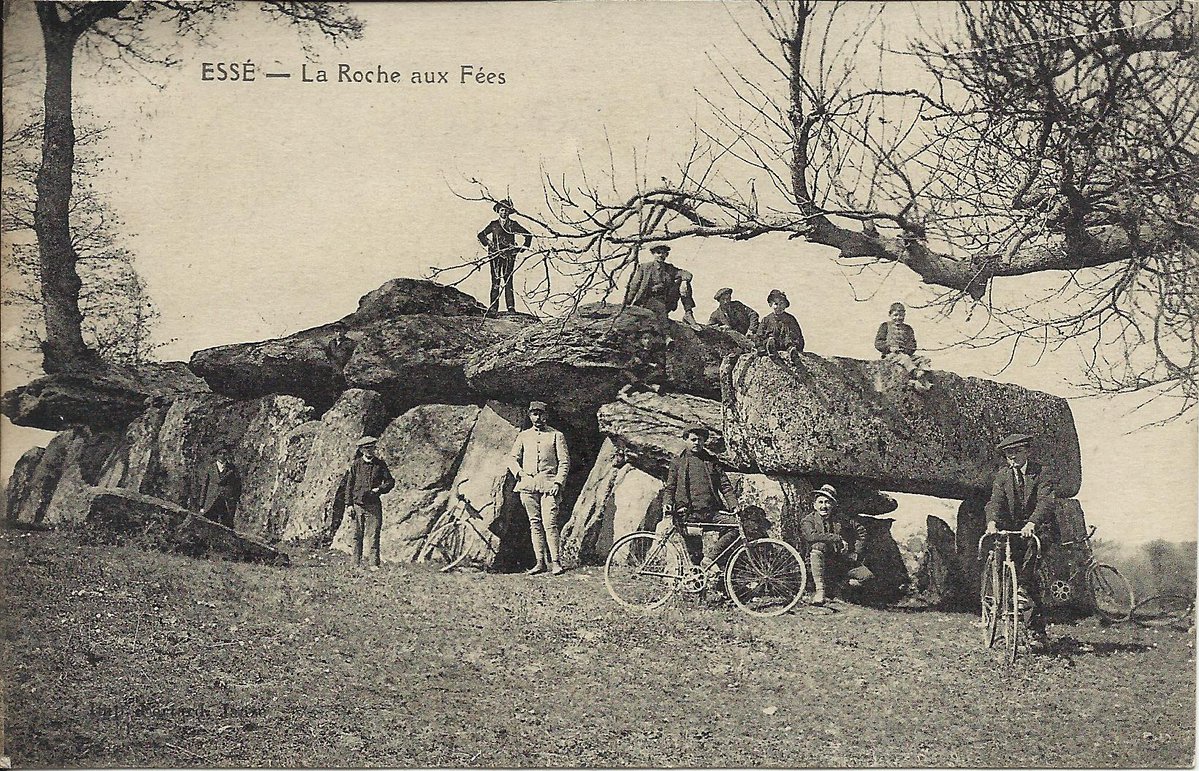
This is the magnificent dolmen of La Roche aux Fées in Essé (Ille-et-Vilaine) made from 41 blocks of schist from a source 4km away. There is a 3.5m long antechamber leading to the main chamber which is 14m long, 4m wide and 2m high.
English
Jurij Kuhar retweetledi

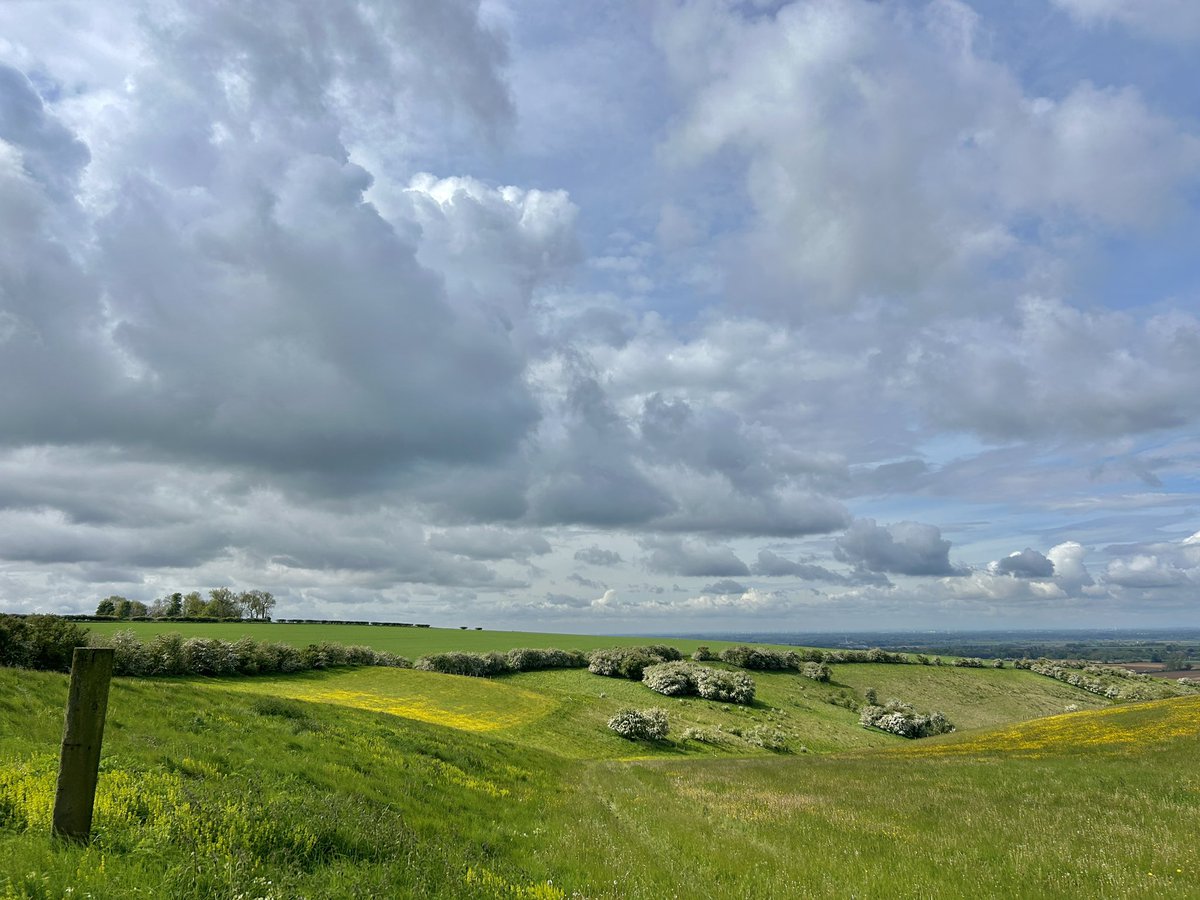
Cloudy Skies. 13°C with sunshine and showers. Buttercups.
English
@mamboitaliano__ Breitling Navitimer Cosmonaute Limited Black Steel Edition (2012)
English

People talk a lot about watches these days
What do you usually wear?
I’ll go first:
A Rolex Oyster Perpetual Lady-Datejust ✨⌚️

English
Jurij Kuhar retweetledi

Jurij Kuhar retweetledi

🇺🇸🇨🇳🚨CHINA CONFIRMS THAT PRESIDENT TRUMP LEFT BEIJING EMPTY-HANDED:
- NO agreement on Iran.
- NO concessions on Taiwan.
- NO H200 deal.
- NO decision on rare earth trucks.
- NO release of Jimmy Lai, and fewer Boeing aircraft orders than expected.
It was just a holiday trip…

English
❗️❗️❗️
#TicksWarfare
Paladin 🎖@PaladinRood
IMPORTANTE: Chegam relatos dos EUA de que carrapatos geneticamente modificados de Bill Gates estão sendo soltos no campo e picando pessoas. Uma pessoa picada por um desses super carrapatos nunca mais poderá comer carne na vida, de acordo com as primeiras informações recebidas.
QME