
Alphadope retweetledi
Alphadope
184 posts

Alphadope
@alphadope99
On-chain Detective Airdrop Hunter Meme King
LA Katılım Şubat 2021
656 Takip Edilen44.9K Takipçiler


Alphadope retweetledi

First 200 will be eligible for the $LRC20 airdrop.
- Follow @LRC20spark & @spark
- RT & tag 3 friends
- Leave comment with your spark address(sp1p...) Require holding valuable BTKN tokens or btc.
Good luck.🎁
LRC-20/Spark@LRC20spark
The transaction mining and minting portions will be determined by community voting. Anyone who votes and tips with @bitbit_bot will receive $1,000 $LRC20 airdrop reward. Maintain the original.Each account can only participate once. About $JOY. @nayverfayver
English

This @bitbit_bot use of @spark allows for ultra-low friction money movement down to 1¢ (in Bitcoin) cost-effectively, combined with @X user graph and virality. Very interested to see this take off. Comment below and I'll send sats to a few of you just for fun.
English

Alphadope retweetledi

How Spark Works
From a technical perspective, Spark is a decentralized off-chain Layer 2 (L2) for Bitcoin that takes a different approach compared to traditional sidechains or rollups. Instead of introducing a new blockchain with validators or relying on smart contracts, Spark uses a multi signature based shared signing protocol built on Bitcoin. Transactions occur off chain through cooperation between multiple parties who co-sign state updates, while anchoring security to Bitcoin Layer 1 (L1).
There is no new consensus mechanism to reach no dedicated miners or block producers are required and no native token is needed to pay gas or fees. Spark directly leverages the Bitcoin network as its settlement layer, while the Lightning Network ensures interoperability, making Spark a rapid execution layer operating off-chain.
When a user deposits Bitcoin into Spark, their BTC is locked in a special multi-sig output on L1 (typically a 2-of-2 multisig) shared with a Spark operator. This deposit is mirrored 1:1 on Spark, with no need for bridges or wrapped tokens. At that point, the user can transfer these "virtual BTC" off-chain on Spark to other users in real time typically within a second by digitally signing new UTXO ownership assignments with a Spark operator. Each payment on Spark is effectively a state update, requiring signatures from the current owner and at least one network operator to be valid.
This mechanism closely resembles state channels or statechains: funds are locked on chain but change hands off chain through signatures, until a final user decides to redeem them on the Bitcoin mainnet.
The architecture offers several key advantages. First, it enables instantaneous transactions (no need to wait for block confirmations) with virtually zero cost. Spark does not charge any fees for internal L2 transactions. Moving BTC or tokens between Spark users is completely free, with only minor routing fees when interacting with the Lightning Network. This is possible because blockspace is not consumed for each transaction: Bitcoin L1 is only used for entering or exiting Spark.
All intermediate transfers occur off chain and do not incur miner fees. Lightspark has confirmed that transactions on Spark are fee free, and that only deposit and withdrawal operations require standard Bitcoin network fees. Additionally, if users want to send BTC from Spark directly to a recipient on the Lightning Network, a small 0.25% fee applies plus any Lightning routing fees to compensate Spark operators for inter network conversion.
Second, Spark enables features previously impossible with Bitcoin L1 or Lightning, such as offline payment reception. On the traditional Lightning Network, the recipient must be online to receive funds, since their wallet or node must sign the channel update. Spark, however, allows the recipient to be offline, because UTXO ownership can be reassigned unilaterally and finalized off-chain. This means you can send Bitcoin to a Spark user while they are offline, and when they reconnect, the updated balance will be available backed by the operator’s co-signed transaction.
Third, Spark natively supports unilateral exit. Because Spark uses a 2-of-2 multisig model, users can always retrieve their BTC on-chain without third-party consent. If a Spark operator refuses to cooperate or attempts to censor transactions, the user can initiate a unilateral withdrawal using pre signed closing transactions or timelocks, reclaiming the funds back to their L1 wallet. This ensures users retain ultimate control over their funds (not custodially held by Lightspark or anyone else) and mitigates counterparty risk.
Currently, the Spark network has two operators, Lightspark and Flashnet, who co-sign transactions. This introduces a temporary centralization risk: if both operators were offline simultaneously, new Spark transactions would be paused. However, user funds would remain safe and could still be withdrawn unilaterally on-chain. Lightspark has stated the network is open to adding more operators over time to enhance decentralization and resilience. The goal is to reach a Lightning-like model with many operators that follow the protocol rules while offering a more user friendly experience.
Finally, it’s worth noting that Coinbase and Revolut already use Lightspark infrastructure to operate over the Lightning Network. Extending support to Spark is a natural evolution, offering broader functionality within a self custodial, instant, and interoperable Layer 2 environment.
The LRC20 Token Standard on Spark
One of the core components of the Spark ecosystem is the LRC20 token standard, introduced in mid-2024 as a native protocol for issuing tokens on Bitcoin Layer 2. LRC20 is designed to work directly with Bitcoin via Spark, allowing anyone to issue new digital tokens registered on the Bitcoin blockchain and managed off chain through Spark.
Technically, to launch an LRC20 token, the creator must perform an onchain Bitcoin transaction with metadata embedded in the OP_RETURN field. This metadata includes a unique token ID, name, total supply, and number of decimals. This transaction anchors the token to Bitcoin L1, serving as its official registration. Once confirmed, the Spark protocol recognizes the token and allows the creator to mint the initial supply on Spark.
The OP_RETURN acts as the genesis message, while minting and transfers occur entirely off chain. Bitcoin L1 serves as a public registry, and Spark as the operational layer where token transfers are executed instantly and without fees just like native BTC on Spark.
LRC20 was designed especially for stablecoins and regulated asset issuers. Unlike ERC-20, it does not support permissionless fair distributions like ICOs. Only the token creator’s address can mint additional units after creation. Other users can only receive the token if the creator chooses to distribute it (via airdrop, sale, etc.).
The standard includes freeze and burn mechanisms. The creator wallet can freeze tokens held by any address, preventing transfers or receipts until unfrozen. It can also burn tokens but only its own and the burn is irreversible.
While this introduces some degree of centralization, these administrative functions are essential for compliance in regulated environments. Many stablecoin issuers require the ability to freeze funds on request or manage token supply securely. In this regard, LRC20 provides a Bitcoin native equivalent of Tether or Circle style controls, without relying on Ethereum or other chains.
As of mid 2025, LRC20 is implemented only on the Spark network and depends on it to function. There is no way to use or transfer an LRC20 token directly on Bitcoin mainnet (aside from the OP_RETURN registration). However, thanks to Spark’s interoperability with Lightning, LRC20 tokens can be used in Lightning-style payments through atomic swaps.
For example, a Spark user can pay a Lightning invoice using a stablecoin like USDB. Behind the scenes, the Spark operator converts the USDB into BTC and sends it to the recipient over Lightning, while the sender pays in stablecoin. This allows Spark users to interact with the existing Bitcoin ecosystem while holding and spending alternative assets.
In summary, LRC20 brings native tokenization to Bitcoin. Where only satoshis could be transferred before, Spark now enables the movement of “sat-USD” (stablecoins), loyalty points, tokenized real-world assets, and more without leaving Bitcoin. This unlocks the foundation for a Bitcoin-native DeFi ecosystem: decentralized exchanges (DEXs), NFT marketplaces (with indivisible LRC20 tokens as NFTs), governance tokens, and perhaps eventually even lending and derivatives all built on Spark.
The Team Behind Spark
Spark is developed by Lightspark, a company founded in 2022 to unlock Bitcoin’s full potential as a global payment network. The co-founder and CEO is David Marcus, former president of PayPal and former vice president of Facebook, where he led Messenger and co-created the Libra (Diem) cryptocurrency project.
He is joined by industry veterans including Kevin Hurley (co-founder and CTO), Tomer Barel (Operating Partner, also ex-PayPal and Diem), and Christian Catalini (Chief Strategy Officer, co-author of Libra). The broader team brings experience from companies such as Xapo, Stripe, Square, and Coinbase.
This concentration of expertise from the so called “PayPal Mafia” and the Libra project demonstrates the team’s ability to bridge the crypto world with traditional finance. Lightspark has raised over $170 million in a Series A round led by a16z, Paradigm, Coatue, Thrive Capital, Ribbit Capital, and others some of the most prominent VCs in Silicon Valley.
This significant funding reflects investor belief that Bitcoin can evolve into much more than a store of value. With innovations like Spark, it can become the core protocol for global internet payments, enabling self-custodial, near-instant, multi-asset transactions directly anchored to Bitcoin’s unparalleled security.
For now, the only "degen" way to gain exposure to Spark and its LRC20 protocol is through the tokens FSPKS and SNOW, both of which are only available OTC.
If you're interested, I recommend reaching out to @shut_nice1.
dyor as always
English
The market is still in its early stages, and as more institutional money enters and regulatory clarity improves, projects with long-term visions will be better positioned for success.
CZ 🔶 BNB@cz_binance
Unpopular opinion: In crypto, too much money is spent chasing small, quick gains. Focus on ethical teams that build for the long term. Big money is built slowly with stamina.
English
1.Trump’s wife launched a token. Based on common sense, such news should be bearish. However, after the sharp drop that morning, I saw many opinions like “There is only one Trump,” “His whole family is embracing crypto,” and “Outsiders will only buy Trump tokens; they don’t even know his wife launched one.” It seems quite a few people held or bought the dip because of these perspectives.
2.When Trump was asked about the Trump token during his speech, he said: “I launched it, but I don’t know much about it.” My first reaction was that this was bearish. It’s like a dev saying they don’t know much about their own token, which means they are unlikely to mention it again in the future. However, a lot of people saw it as bullish, saying that Trump acknowledged the token as his own. In my view, that was already known information—this token had reached tens of billions precisely because of that association. The new information here was that he didn’t know much about it.
3. Now, regarding the Bitcoin strategic reserve news—days before Trump signed the executive order, both Twitter and Bloomberg had already hinted at it. BTC prices had already risen in anticipation during those days, meaning the expectation was priced in. Then the actual news came out stating that the strategic reserve wouldn’t involve additional BTC purchases. Intuitively, that’s not good news. Of course, one could argue that in the long run, this means BTC is officially accepted by the government, which is bullish in the long term. But the problem is—this wasn’t breaking news either. After Trump won the election, BTC surged from $70K to $100K, which was already a reflection of the market pricing in the new administration’s pro-crypto stance.
English

1.Trump’s wife launched a token. Based on common sense, such news should be bearish. However, after the sharp drop that morning, I saw many opinions like “There is only one Trump,” “His whole family is embracing crypto,” and “Outsiders will only buy Trump tokens; they don’t even know his wife launched one.” It seems quite a few people held or bought the dip because of these perspectives.
2.When Trump was asked about the Trump token during his speech, he said: “I launched it, but I don’t know much about it.” My first reaction was that this was bearish. It’s like a dev saying they don’t know much about their own token, which means they are unlikely to mention it again in the future. However, a lot of people saw it as bullish, saying that Trump acknowledged the token as his own. In my view, that was already known information—this token had reached tens of billions precisely because of that association. The new information here was that he didn’t know much about it.
3. Now, regarding the Bitcoin strategic reserve news—days before Trump signed the executive order, both Twitter and Bloomberg had already hinted at it. BTC prices had already risen in anticipation during those days, meaning the expectation was priced in. Then the actual news came out stating that the strategic reserve wouldn’t involve additional BTC purchases. Intuitively, that’s not good news. Of course, one could argue that in the long run, this means BTC is officially accepted by the government, which is bullish in the long term. But the problem is—this wasn’t breaking news either. After Trump won the election, BTC surged from $70K to $100K, which was already a reflection of the market pricing in the new administration’s pro-crypto stance.
English
That's a strong sentiment! Elon Musk, often portrayed as an independent and self-driven figure, is known for making decisions based on his vision and goals rather than asking for favors. His approach to business, technology, and innovation is about challenging the status quo and pushing boundaries. It reflects a mindset of self-reliance and determination.
Are you referring to his actions in a specific situation or just his general attitude toward success?
English



That’s a beautiful and profound thought! The idea that the world is a reflection of our inner selves suggests that our perceptions, thoughts, and emotions shape the reality we experience. It aligns with concepts in philosophy, psychology, and spirituality, where how we view ourselves and the world influences our interactions and experiences. It’s a reminder to focus on inner peace and self-awareness, as cultivating a healthy inner world might lead to a more positive, balanced outer world. What inspired this reflection for you?
Yi He@heyibinance
世界是个巨大的镜子,一切都是你内心的映射。 The world is a giant mirror; everything is a reflection of your inner self.
English
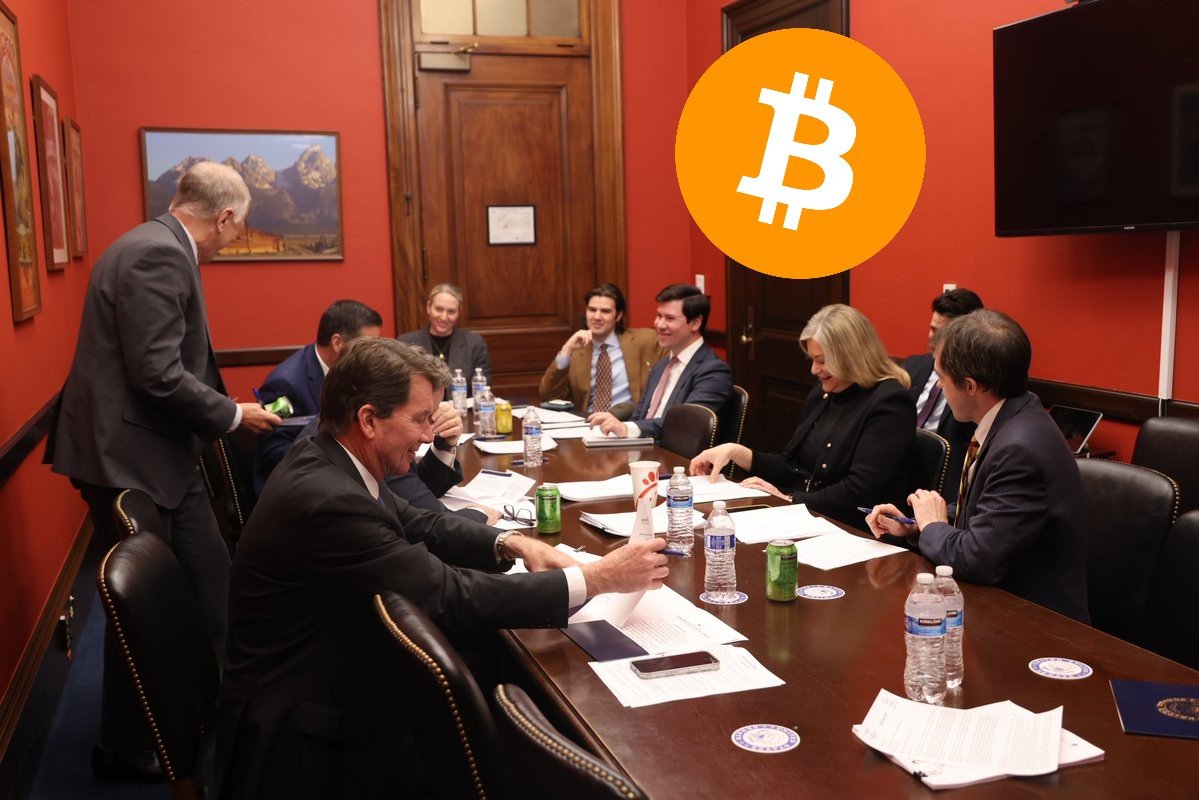
Short-term bullish if national reserves enter crypto, but long-term concerns remain. Key issue: centralized influence mustn't dominate.
Crypto's true power lies in its borderless neutrality - not a US tech nor corporate asset. Overbearing American influence would cap its potential. Worse yet, if it becomes an exploitative tool for wealth extraction by specific nations/groups, we risk activating crypto's dark side.
#Crypto #Decentralization #FinancialSovereignty
English
Donald Trump Truth Social Post 06:02 PM EST 02/18/25

English