

Subramanian Krishnan
1.1K posts

Feynman once walked into the math department at Caltech & challenged the mathematicians to a duel.
He asked them to name any theorem, no matter how complex, & promised he could explain it using common sense & basic physics.
They gave him the Banach-Tarski Paradox (which says you can cut a ball into pieces & reassemble them into 2 identical balls). Feynman looked at it & dismissed it because no such material exists in nature. To him, if the math did not describe an asset in the real world, it was just accounting fluff :))
Philosophy Of Physics@PhilosophyOfPhy
"If all of mathematics disappeared, physics would be set back by exactly one week." - Richard P. Feynman
English
@Fintech03 He spent time at center for theoretical studies at IISc campus during my student days early 70's. He said the theoretical foundation of tachyons-particles that travel faster than light.
English
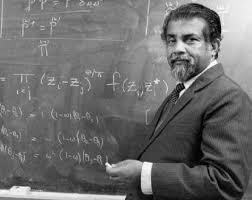
Next in who after the Bibha Series? He was the man who dared to break Einstein’s speed limit in his mind, yet his own country allowed his legacy to slow to a crawl. Ennackal Chandy George Sudarshan (1931-2018) was the Architect of the Quantum Mirror, a man who lived in the minus-space of physics, the fundamental gaps where the most important truths are hidden.
Today, his eqns are the silent pulse inside every fiber-optic cable & the logic behind every laser, yet in the bustling streets of India, he is a ghost. He is the man who was nominated for the Nobel Prize 9 times, only to watch from the shadows as others walked the red carpet for theories he had already perfected.
Born in 1931 in the lush quiet of Pallom, Kerala, George was a Mental Calculator of the cosmos. While his peers were studying the world as it appeared, George was obsessed with how it worked when no 1 was looking. After a stint at TIFR under Homi Bhabha, he realized that to catch the lightning of the New Physics, he had to move. He landed in Rochester, New York, in the 1950s, a young man in a thin coat with a brain that operated in higher dimensions.
At just 26, as a student, he discovered the Vector minus Axial law of weak interaction, the math that explains how subatomic particles decay. It is 1 of the 4 fundamental pillars of the universe. He was the 1st to mathematically prove that particles could exist faster than light. He called them Tachyons. He turned the impossible into a valid scientific conversation.
He created the Sudarshan-Glauber Representation. This is the bridge b/w classical light & quantum reality. W/o this, the high-speed internet we are using right now would not exist.
In 1979, the Nobel was given for the Weak Interaction (V-A Theory); Sudarshan was ignored. In 2005, the Nobel was given for Quantum Optics; George was ignored again.
The scientific world was stunned. He famously remarked that it was like giving a prize to the people who built the second floor of a house while forgetting the man who laid the foundation. He did not just lose a prize; he was erased from the Discovery Moment by a Western-centric academic machine.
Sudarshan returned to his roots. He headed the Institute of Mathematical Sciences (IMSc) in Madras, trying to breathe the fire of global excellence into Indian students. He was a Physicist-Philosopher, a man who converted to Hinduism because he found that the Upanishads spoke the same language as Quantum Mechanics.
He lived in the tension b/w the Austin high-tech labs & the spiritual silence of India. To his neighbors, he was a quiet, unassuming prof. They had no idea they were living next to a man who had looked into the heart of the Big Bang & come back with a formula.
E.C. George Sudarshan passed away in 2018. He left behind no statues, & his name is not whispered in the same breath as the household names of Bollywood/Cricket.
He remains the Invisible Infra of the Quantum Age. He is the ghost in our smartphone, the ghost in the medical laser, & the ghost in the stars. He proved that some things travel faster than light... perhaps, 1 day, his fame will finally catch up to his genius. #WhoAfterBibha
Key Work: web2.ph.utexas.edu/~gsudama/publi…
English
@Fintech03 Remember using this during my younger days...The other tooth powder I remember is a pink one called Nanjangud tooth powder
English
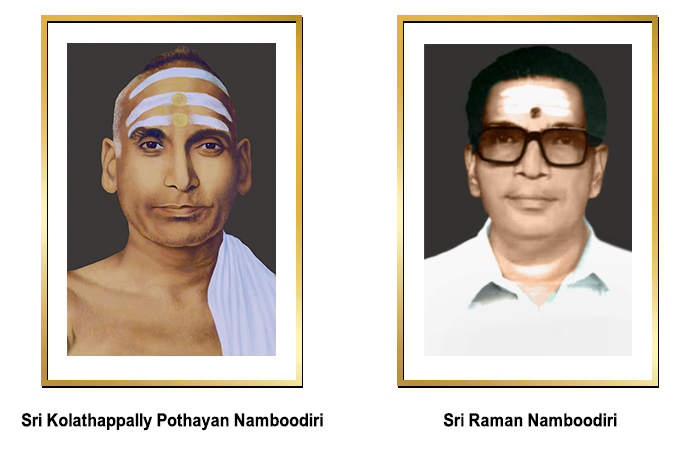
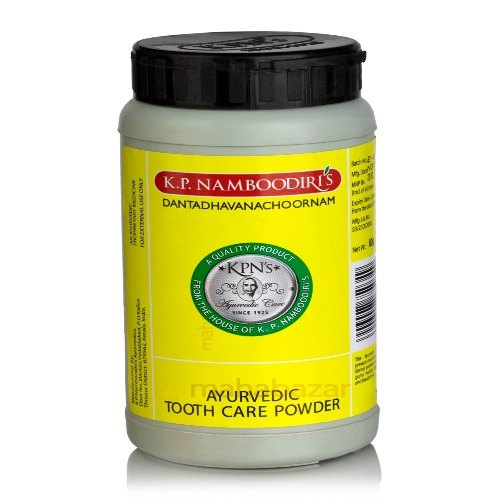
Today, global dental giants are sprinting to launch Activated Charcoal lines, charging a premium for the charcoal revolution. But in 1925, a physician in a small Kerala village was already selling it in paper pouches. The British mocked it as primitive ash, while secretly, their own officers used it to scrub away the stubborn stains that Imperial White paste could not touch. An indian invented Biological Magnetism 100 yrs before the West could put a marketing name on it.
K.P. Namboodiri, an Ayurvedic physician, realized that the British were fundamentally wrong about the science. When paddy husk is charred at a specific temperature, it creates a micro-porous structure almost identical to what we now call Activated Carbon.
Namboodiri infused the ash with Pepper, Clove, & Ginger. The black carbon acted as a magnet (adsorption) to pull toxins & stains out of the gums, while the spices provided the thermal healing. He was practicing Molecular Chemistry in a small Kerala village decades before Western brands understood that carbon is the most efficient way to detoxify the mouth.
The British tried to market their white powders as a symbol of The New India... the educated, clean, Westernized Indian. Namboodiri flipped the script. He made his Black Ash a symbol of Vedic Purity. In the 1920s & 30s, the most orthodox Brahmins & the most radical revolutionaries in the South both used the Black Powder.
It became a silent way to identify who had rejected the British lifestyle. If your gums were slightly tinted with the dark residue of charred husk in the morning, it was a badge of honor. It said: "My mouth is cleaned by the soil of my ancestors, not the chalk of the King."
British dental companies tried to run smear campaigns against Black Powders, claiming they were abrasive. Namboodiri’s powder was so fine that it actually had a lower RDA (Relative Dentin Abrasivity) than the British chalk-based powders. It was physically impossible for the British to prove it was harmful.
The Black Powder was so effective at removing the stubborn stains of Betel Leaf (Paan) & Tobacco that even British officers in the South reportedly bought it in secret. They could not get their Imperial White pastes to remove the deep stains of Indian life, so they relied on Namboodiri’s Ash behind closed doors.
For 90 yrs, global giants like Colgate & Pepsodent spent millions on advertising to tell Indians that Black is Bad & White is Bright. In the late 2010s, those same companies launched Charcoal toothpastes at a luxury price point. They are now using the exact same tech K.P. Namboodiri was selling for a few annas in 1925.
If we look at a modern, high-end Activated Charcoal tube today, we are looking at a 100 yr old apology to K.P. Namboodiri. He was not backward; he was a century ahead of the global dental industry. The British used Chalk (a sedimentary rock) because it was cheap & looked clean. Namboodiri used Paddy Husk (a life-giving grain) because it was biological & functional.
K.P. Namboodiri’s legacy is the story of a man who looked at the waste of a rice field & saw a diamond. He took the blackest substance he could find & used it to give India its brightest smile.
English
@Fintech03 A sensation in 80's & 90's....wonder where he is now?
English
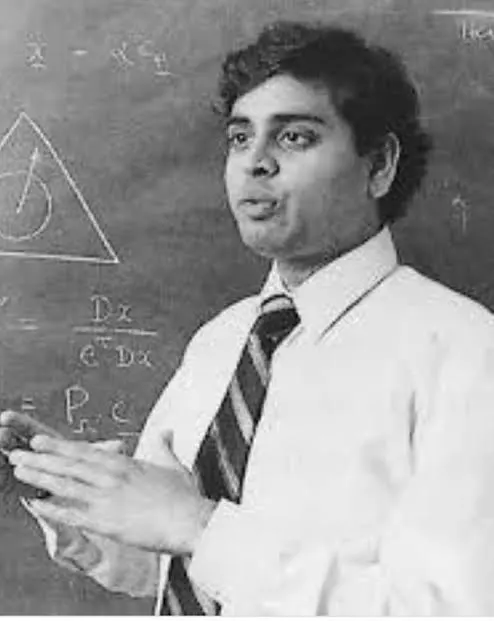
Next in who after the Ramanujan Series? He redefined the speed of thought & his algorithm was so powerful that it was considered a trade secret by the US for yrs. Meet Dr. Narendra Krishna Karmarkar, the Ghost of the Optimal Path. In 1984, he sent shockwaves through the world's boardrooms by proving that the impossible logistical puzzles of airlines & factories could be solved 100x faster.
While others were crawling along the edges of complexity, Karmarkar took a leap through the Interior. From the high-tech halls of Bell Labs to the supercomputing labs of India, he spent his life looking for the Perfect Shortcut. He is the man who optimized our digital life, the Ghost who proved that the shortest way to the truth is through the heart of the logic.
Born in 1955 in Gwalior, Narendra grew up in Pune, a city known as the Oxford of the East. He was a topper at IIT Bombay (Electrical Engineering, 1978). This was the peak era of Silo-thinking, where the brightest minds were being sharpened for a global leap.
He moved to UC Berkeley for his PhD. While most were focused on hardware, Karmarkar was obsessed with Complexity Theory, the study of how much effort it takes for a computer to solve a problem.
Before 1984, the world relied on the Simplex Method (invented by George Dantzig). To find the best solution in a complex system (like the cheapest way to fly 500 planes to 50 cities), computers would walk along the outside edges of a multi-dimensional shape.
Instead of walking the edges, Karmarkar’s algorithm dives through the interior of the shape. It uses projective geometry to create a shortcut through the center. It was a Polynomial-Time algo, meaning it could solve problems with millions of variables in a fraction of the time.
AT&T Bell Labs actually patented his algo. This was unheard of in math & sparked a massive global debate: Can you own a piece of logic? He became a superstar at AT&T Bell Labs, the world's most elite Silo for research.
In the late 90s & 2000s, Karmarkar returned to India with a vision to build a new architecture for supercomputing. He worked with the Tata Group (CRL) on the EKA supercomputer, which, for a brief moment, was the 4th fastest in the world.
Despite his genius, he often clashed with the slow-moving Silos of Indian bureaucracy. He is a Ghost because he did not want to just be a prof; he wanted to build Systems. If you ask a software engineer today about Optimization, they will use Interior Point Methods every day. But if you ask them who Narendra Karmarkar is, they probably will not know. He is the Invisible Optimizer of the modern world.
For 40 yrs, the world thought the Simplex Method was the only way. Karmarkar had the Ramanujan-level audacity to say, "There is a path through the middle that no 1 has seen." He proved that in mathematics, the most Optimal path is often the 1 that requires the most courage to walk. #WhoAfterRamanujan
Key Work:
patents.google.com/patent/US47440…
johnhooker.tepper.cmu.edu/karmarkar.pdf
English
Absolutely disgusted with @Emirates. Bought a Business Class ticket on Expedia thinking I was flying a top class airline. At check-in they refused lounge access and treated me like dirt with the rudest staff imaginable. Flying through danger zones already had me worried , i now know why. Emirates is the airline from hell.
English
@Fintech03 You are amazing...wonder how your knowledge extends across disciplines
English
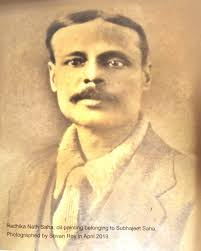
If Ratnam (I will write about him separately) was the Soul of the Swadeshi pen, Dr. Radhika Nath Saha was its Brain. He patented the tech in 4 countries before the rest of India even knew the game had started.
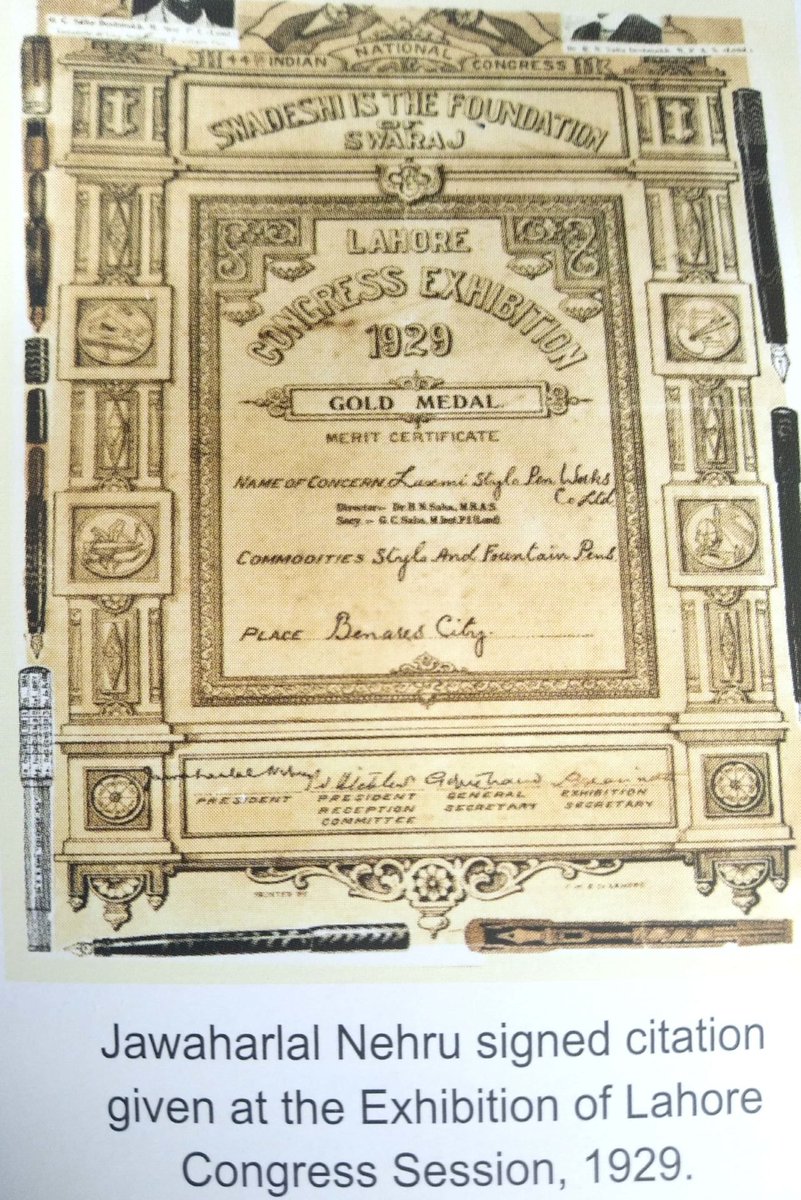
The reason the world knows Ratnam & not Saha is a classic case of Iconic vs. Technical branding. Ratnam had the Gandhi Endorsement. In a nationalist movement, a letter from the Mahatma is worth more than 14 patents in Washington. Dr. Saha was a Pure Scientist. He operated in the Pre-Gandhi Swadeshi era (1905-1910). When he died in 1933, his factory, Luxmi Stylo-Pen Works, lacked the political branding that later defined the Ratnam legacy.
Dr. Radhika Nath Saha was a medical doctor by profession, serving in the British Indian medical services. He became obsessed with fountain pens because, as a traveling doctor, carrying inkpots & quills was a logistical nightmare. He realized the pens of the early 1900s were primitive gravity drippers. He used his knowledge of Human Circulatory Systems (veins & valves) to rethink how ink should move. He essentially treated the pen as an Artificial Artery.
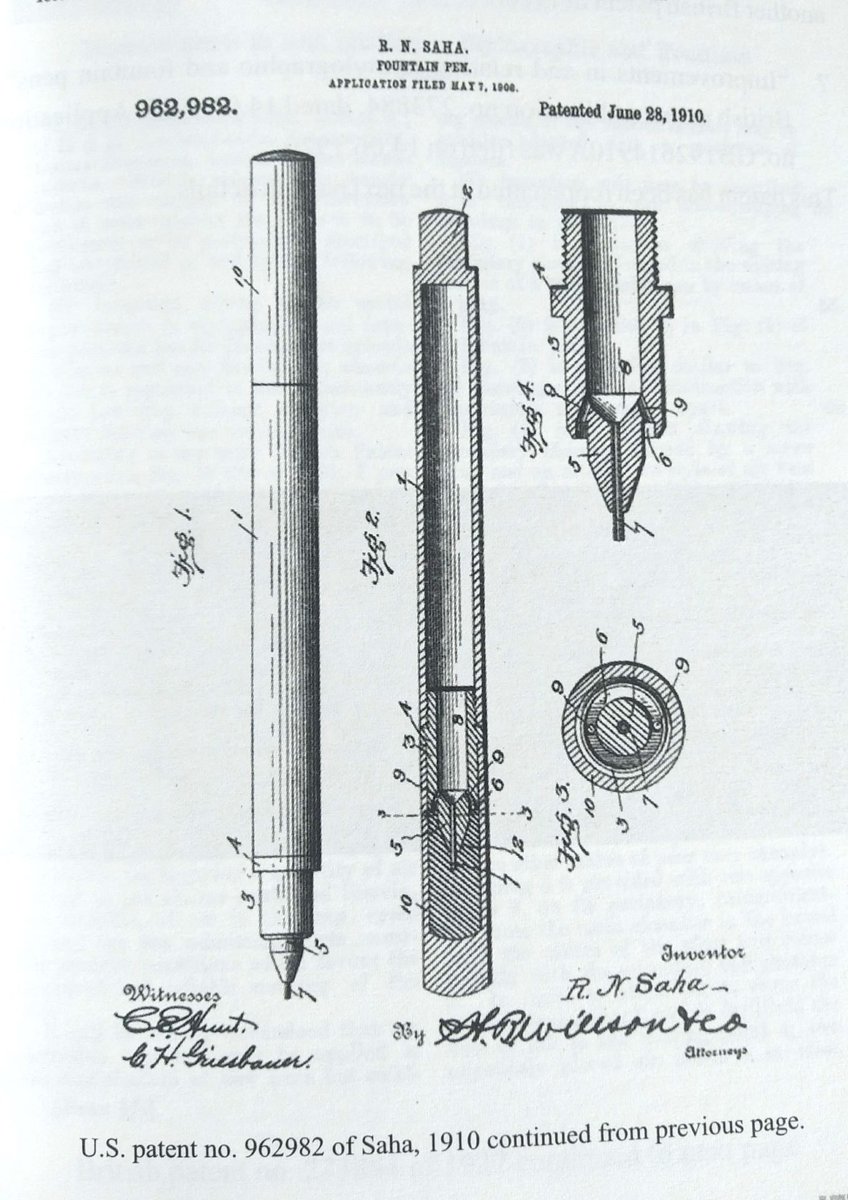
In 1905, while India was supposedly backward, Dr. Saha was filing patents in London, Berlin, & Washington D.C. 1 of his most famous patents was for a Stylo-Pen with a telescopic feed. He invented a system where the needle of the pen would retract & self-clean. This solved the #1 problem of the era: Ink Coagulation.
The British govt, despite their colonial bias, had to admit in their official reports that Dr. Saha’s Luxmi Stylo-Pen was superior to many European imports. He traveled to Germany & England to source the most advanced Vulcanite & Iridium tipping material. He refused to let the Europeans assemble them. He brought the machinery to Banares & trained local artisans to work with a precision of 0.01 mm.
He wrote a massive treatise titled Romance of Pen Industries (attached the pdf for reading), which is arguably the world's 1st comprehensive technical manual on writing instruments. It was so detailed that it terrified the British Waterman & Parker companies. Dr. Saha’s pens were so well-engineered that they were used by the British Secret Service & high-ranking officials in the Cantonment offices, who had no idea they were using a product designed by a man who wanted to end their rule through intellectual dominance.
Book Link - ia800103.us.archive.org/28/items/in.er…
English
@Fintech03 Since he was averse to politicians, he did not get Bharath Rathna
English
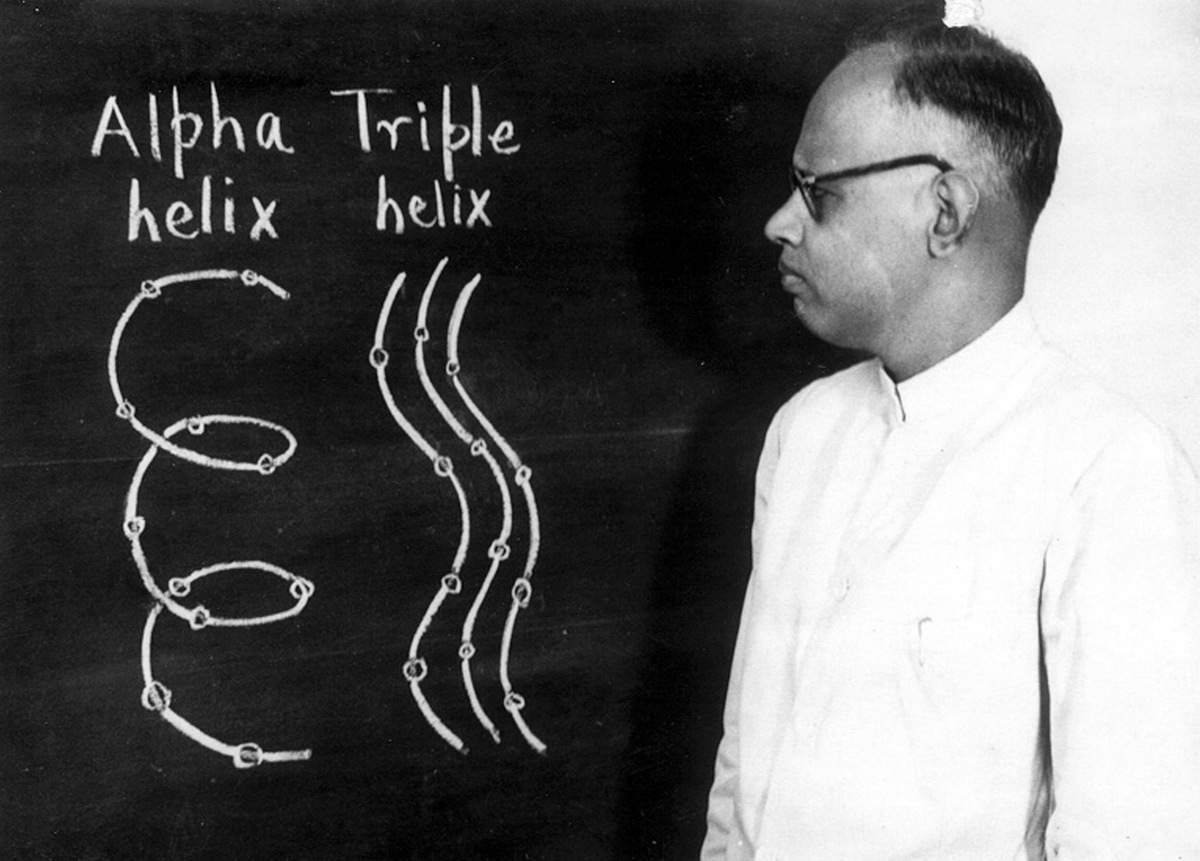
Next in who after the Bibha Series? He was the favorite student of Raman & a peer of Crick, but while the world looked at DNA, he decoded the very foundation of the human body. Gopalasamudram Narayanan Ramachandran (1922-2001) was the Ghost who created the GPS for protein folding. Using nothing but physics & a pencil in a Madras lab, he figured out how to see the inside of a human brain w/o surgery. Every CT scan taken today is a tribute to his Silo of logic. He is the titan who defined what is possible in nature, yet he died a quiet recluse, a legend whose name is in every textbook but whose story is in none.
Born in 1922 in Ernakulam, GNR was a child prodigy in mathematics who chose physics. He was the favorite student of C.V. Raman at the Indian Institute of Science. Raman once said that GNR was the most brilliant student he ever had. He went to Cambridge to work with W.A. Wooster at the Cavendish Lab. He returned to India with a PhD & a mission to see the invisible structures of nature.
He solved 2 problems that define modern medicine. Before 1954, the world did not know how Collagen (the most abundant protein in our skin, bones, & teeth) was shaped. Working in Madras with almost no advanced equipment, GNR discovered it was a Triple Helix. He created the Ramachandran Plot. This is a mathematical map that shows which shapes a protein can take and which are forbidden.
He also developed the Fourier-based methods that allow a machine to take 2D X-ray shadows & turn them into a 3D image. This is the mathematical foundation of the CT Scan. Every time a doctor looks at a CT scan today, they are using GNR’s physics.
He founded the Molecular Biophysics Unit at IISc & the Madras school of crystallography. He was a man of Mathematical Philosophy, often finding parallels b/w physics & the Upanishads. Despite his work being of Nobel caliber (as cited by Francis Crick & Linus Pauling), he was frequently overlooked for international awards.
In India, he was a Ghost because he did not work on atomic bombs/rockets; he worked on the quiet physics of biology. He suffered from severe psychiatric issues later in life, making him retreat even further into a personal Silo. To his neighbors, he was a brilliant but difficult & eccentric prof. They did not realize he was 1 of the greatest scientists of the 20th century.
English
@Fintech03 "Līlāvatī" was an innovative analog computer developed by renowned Indian biophysicist G.N. Ramachandran and E. Krishnamurthy for solving linear simultaneous equations. Published in 1960, this machine was designed to solve complex mathematical problems related to crystallography
English
@beehivebadboy Is there a shortage of doctors in New Zealand? What is stopping locals to study medicine?
English

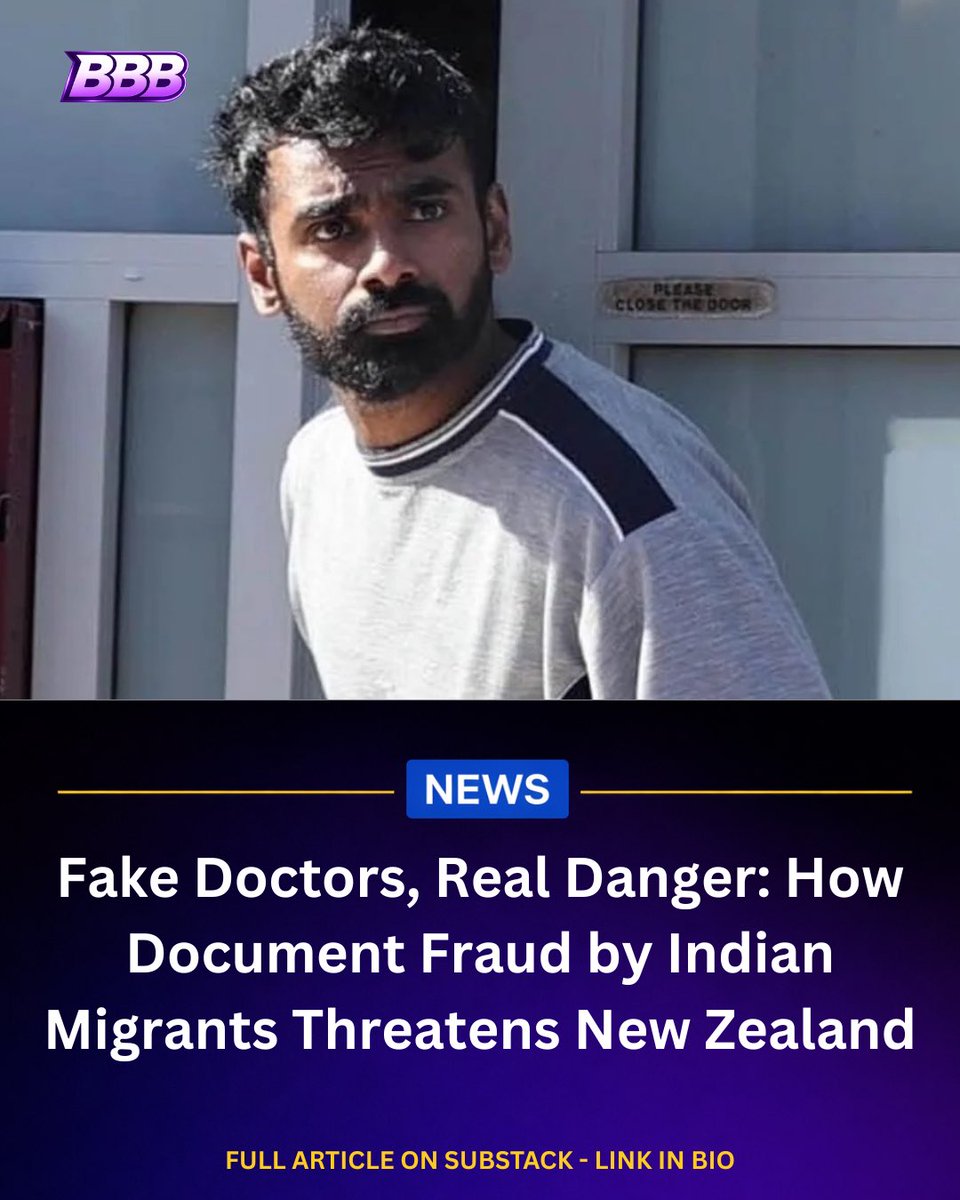
🚨 Fake Doctor in Auckland Hospital Exposes Massive Risk to New Zealand
For six months, Yuvaraj Krishnan treated patients at Middlemore Hospital using completely forged medical qualifications. He wasn’t caught by background checks — he was recognised by a colleague who knew him from years earlier, when he had already posed as a fake medical student at the University of Auckland.
This wasn’t a one-off. Sophisticated document fraud networks in India are mass-producing fake degrees, transcripts, and professional certificates for jobs and student visas abroad. From massive fake degree scandals involving tens of thousands of bogus qualifications, to migration agents specialising in forged documents — the problem is global and growing.
Now, with New Zealand’s new India FTA removing caps on Indian students and fast-tracking skilled workers, the risks are about to skyrocket. How many more unqualified “doctors”, nurses, and professionals are already here — and how many more are coming?
Read the full article exposing how weak verification systems, organised fraud, and open-door policies are creating a serious threat to patient safety and trust in New Zealand’s immigration system.
👉 @beehivebadboy/note/p-195808164?r=86qdtg&utm_medium=ios&utm_source=notes-share-action" target="_blank" rel="nofollow noopener">substack.com/@beehivebadboy…
What do you think — is New Zealand prepared for this? Share your thoughts below.
English
@Fintech03 I guess pre 60's was a golden era for Indian science
English
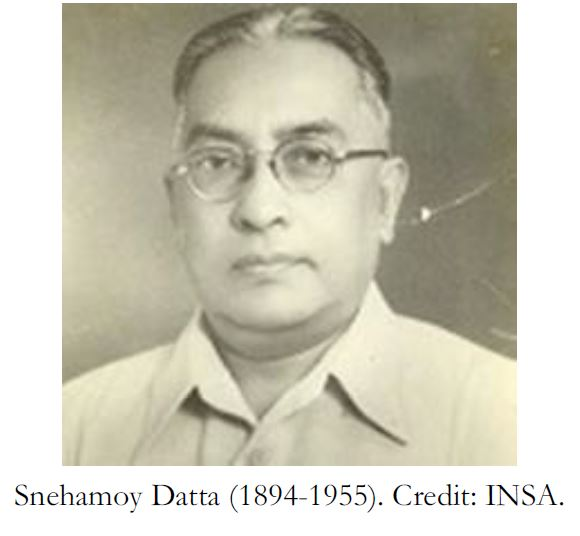
Next in who after the Bibha Series? He was the man who decoded the signature of atoms, yet history has wiped away his own signature. Dr. Snehamoy Datta (1894-1955) was the Ghost of the Atomic Rainbow. In the 1920s, he was the world’s leading authority on the light of stars, working in the elite labs of London to prove how electrons leap into reality. He returned to India not to seek fame, but to build the schools that would train the next gen of geniuses.
Today, he is so forgotten that even his own family barely knows the titan he was. He is the invisible architect of Indian Physics, the man who taught us how to read the language of light and then vanished into the shadows.
Born in 1894 in Bengal, Snehamoy Datta was part of the Golden Gen of Indian physics. He went to London in 1919 & became one of the 1st Indians to be awarded a DSc. from London University. He worked under Alfred Fowler, the man who basically founded modern astrophysics. Datta was a pioneer who challenged the existing theories of how light interacts with alkaline Earth metals.
He solved the problem of Spectral Regularities, the mathematical patterns in light that tell us what stars are made of. He discovered specific regularities in the spectra of Magnesium, Calcium, & Strontium. At a time when Quantum Mechanics was still being born, Datta provided the experimental proof for how electrons jump b/w energy levels.
His work was so precise that it was used by the giants of the era (like Sommerfeld) to refine the atomic model. He was the Experimentalist who gave the Theorists the data they needed to understand the atom. He returned to India & became the Principal of Rajshahi College & later Presidency College. He transitioned from a world-class researcher to an administrator to build the Silo for future gen.
Because he chose to build institutions rather than chase Nobel Prizes in Europe, his personal fame evaporated. He became the Invisible Infra of Indian Science.
To his descendants, he was a stern, brilliant academic who did something important with light. Most of his family members today would be shocked to know that in the 1920s, the greatest physicists in London & Germany were citing "Datta" as the gold standard in spectroscopy.
While his contemporaries have statues & stamps, Snehamoy Datta does not even have a comprehensive Wikipedia page. He is a ghost in the history of the Indian Physical Society, which he helped lead.
He never sought the limelight. He died in 1955, just as India was entering its big-science era, leaving behind a legacy of students but a vacuum where his own fame should have been.
English
@VarierAravind Shivaji never set his foot in Kerala. Tipu waged war in Kerala & massacred malayalis
Indonesia

The Republic of India came into existence only on 26 January 1950, and Shivaji Maharaj NEVER identified himself as an Indian citizen.
I am a Malayali, and I do NOT see any difference between Shivaji Maharaj of the Maratha Kingdom and Tipu Sultan of the Mysore Kingdom, because both of them were foreigners to Malayalam civilization.
Rupak@RupakChatto
Shivaji Maharaj may not be a Malayali, but he was an Indian and part of a shared civilization. It is actually the Indian commies simp for usless foreigners, who would have had them shot without a moment's hesitation.
English

IlTians don't want to join ISRO because the salary is low. But why do so many want to become IAS or IPS officers, where the salary is also low? I believe it's never really about the salary.
English
@Fintech03 He was at the Indian Statistical Institute, Bangalore
English
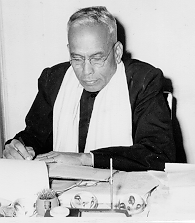
He was a mathematician who was told to go look at books, so he decided to organize the world’s knowledge like a giant eqn. Shiyali Ramamrita Ranganathan Iyer (1892-1972) was the Ghost who built the logic that powers every search engine we use today. Long before Google, he created a system of Facets that treated information like a multi-dimensional shape. He lived like a monk, sleeping in the stacks of his library, a man of pure logic who saw a library not as a building, but as a growing organism. He is the titan who proved that even the infinite can be classified, the man who gave a home to every thought ever written.
Born in 1892 in Shiyali, Tamil Nadu, Ranganathan lived & breathed numbers. He was a brilliant mathematician & spent his early career teaching at Presidency College, Madras, obsessed with the beauty of the eqn.
In 1924, he was appointed as the 1st Librarian of Madras University. He hated it. He found the library chaotic, illogical, & stagnant. He went to London to study, & there he had a Ramanujan moment, he realized that a library followed the laws of Topology & Sets.
Ranganathan did for books what Ramanujan did for series. He invented the Colon Classification system. Instead of giving a book a fixed number, he gave it Facets (like P, M, S, T.. Personality, Matter, Space, Time). It was essentially Multi-Dimensional Geometry applied to literature.
He drafted the 5 Laws of Library Science. The most famous, A library is a growing organism is a direct application of mathematical limits & expansion. He proved that knowledge is not static; it is a Variable. His system allowed for infinite expansion, meaning a new book on a new topic (like "Quantum AI") would already have a pre-calculated spot waiting for it.
He was an ascetic. He worked 15 hrs a day, 7 days a week, often sleeping on a mat in the library. He lived a life of extreme Mathematical Discipline. He was a Ghost because people mistook his genius for Administration. They thought he was just organizing shelves. In reality, he was building an Algorithm for Human Knowledge decades before the 1st digital database was created.
To his family & peers, he was a man of iron will. He donated almost his entire life savings to establish chairs in library science. He was the only Indian to have his portrait hung in the headquarters of the International Federation of Library Associations (IFLA).
While modern Information Scientists at Google & Amazon use the principles of Faceted Search (which is just a digital version of his Colon Classification), most do not know that the logic was perfected by an Indian mathematician in the 1930s.
English
@Fintech03 Hardly any library used colon classification. IISc library used colon classification. I don't know whether they still use this
English

Where are the trees? Where is the cycle track? Where is the footpath?
Sahil P@Sahilinfra2
Mumbai Pune expressway missing link project Final bridge load testing underway. Also the bridge is now being painted in grey rather than blue 📷@Civilengineerworks
English
@aparanjape @cIndraneel @ChitaleBandhu Bakerwadi used to get over by noon. So no point in keeping the shop then
English
Excellent post @cIndraneel.
Yes indeed that old '1-4 pm' tag has now been discarded not just by @ChitaleBandhu, but across many parts of Pune.
Few folks understood the real driver for that afternoon break at Chitales.
Thanks for articulating the history, and the transition to the new era.
linkedin.com/posts/indranee…


English
@kskiyer @sahilbhadviya Honesty depends on the point of view
English

The greatest loss to India after 2014 is honest Journalism.
English
@Fintech03 He was working on color blindness at that time. He did give a cheque for I think 100 rupees for using them for his studies..The cheque bore his signature
English
@Fintech03 In 1966, as part of summer school in Physics, we were taken to Raman institute for a lecture by the legend. I don't recall the details of the lecture, but he did test all the students for color blindness. 4-5 of us who were color blind was asked to visit his lab another day. ...
English
I am not sure how many of us are aware that C V Raman did not start out as a scientist. He was a Govt Auditor (Finance Department) in Calcutta.
He used to work his day job, then run to a tiny, modest lab at the Indian Association for the Cultivation of Science at night. He once told a colleague that he did not need expensive European equipment. He used a small astronomical telescope & sunlight to prove light changes color when it hits molecules.

English