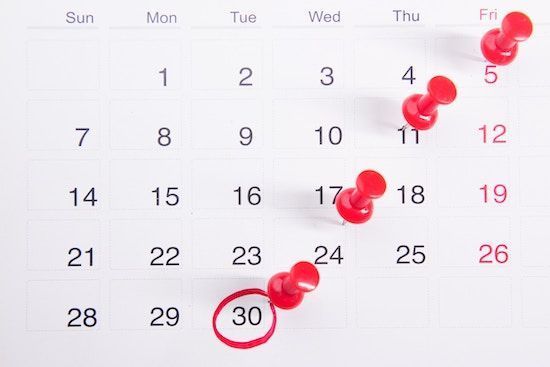
“Asking product teams to deliver specific features by specific dates is like asking a sales rep to close a specific deal on a specific date or a marketing team to get a set number of leads from a specific campaign.” - @ttorresbit.ly/44Xu0kK#prodmgmt#ux
What Product-centric companies are not:
- Product Management-led
- Product Managers are the boss
- Where product makes all the calls
- Something that only engineering and product do
- Doing 12+ week long discoveries
- Do only what our customers want
antmurphy.me/newsletter/wha…
Don't confuse the work behind the work with the actual work.
- OKRs
- Specs
- Meetings
- Strategy docs
- Product review decks
These are all intermediate steps that you might take to achieve your end goal.
But remember this:
Your job is not to craft the perfect OKR, internal doc, or product review deck.
Your job is to deliver value to customers and grow your business.
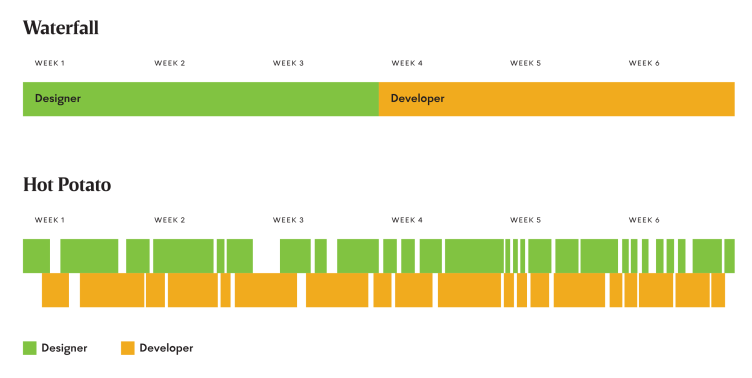
Designers only "hand-off" designs to engineers to build on waterfall teams.
On agile teams, it's a constant back and forth between the two, like passing a hot potato.
(PMs often help with the passing.)
Prototypes are the most powerful way to validate product ideas.
Here's a complete breakdown of 10 ways to validate your prototypes + save yourself from wasting weeks of time:
"Agile" is not a methodology. Read
agilemanifesto.org. The only practice that's listed is the retro (i.e., continuous improvement). You can invent a methodology that adheres to the values and principles, but if that's not continuously changing/improving, you're not Agile.
In 4 minutes, Kurt Vonnegut explained stories better than anyone I’ve ever heard.
“The shape of the curve is what matters. Not their origins.”
He plots stories on 2 axes:
X: Time
Y: Good fortune / ill fortune
He goes on to say,
“Somebody gets into trouble, then gets out of it again. People love that story. They never get tired of it.”
Point 1:
Stories have defined patterns.
In Joseph Campbell’s Hero of a Thousand Faces, he makes the case for the Hero’s Journey.
Since then, it’s become the most famous storytelling structure in the world.
Vonnegut argued stories could be divided into 8 shapes.
Each story, he said, fit one of the 8.
Point 2:
Vonnegut says,
“Be a sadist. No matter how sweet and innocent your leading characters, make awful things happen to them — so the reader may see what they're made of.”
To see who your characters really are, you have to make them suffer.
Only then does your audience have someone worth cheering for.
Point 3:
End on a high note.
Vonnegut says, “It’s not accidental that the line ends up higher than where it began. This is encouraging to readers.”
The way a story makes people feel when they finish is how they remember it.
It’s called recency bias.
Lift people up and they will love you.
***
“There are people. There are stories. The people think they shape the stories, but the reverse is often closer to the truth.”
I wrote this with @RobbieCrab. Follow him for lessons on storytelling + fundraising.
And I talk about creative storytelling. Follow @nathanbaugh27 for more like that.
When I started learning Product Management, different techniques seemed to be isolated islands.
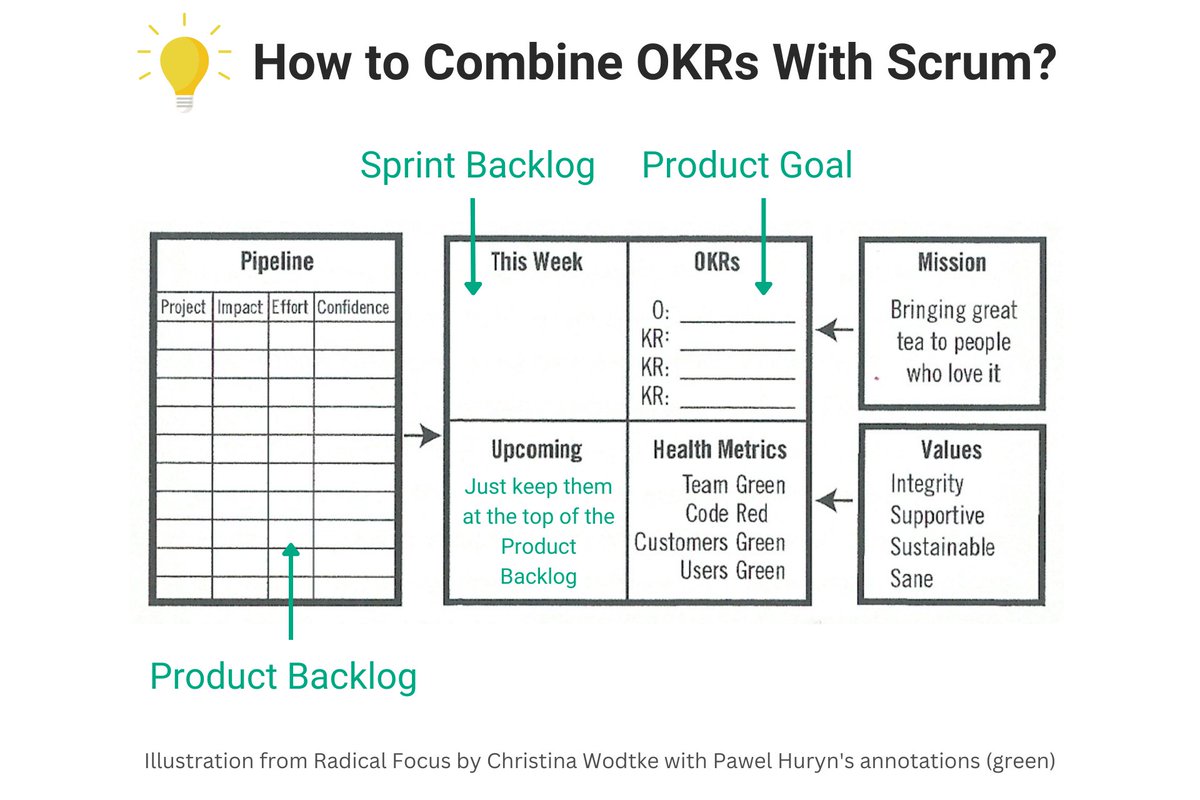
So today: How to combine OKRs with Scrum?
Before we dive in, let's note the similarities:
- "Radical Focus," which aligns with one of Scrum Values
- Emphasis on transparency, which is one of Scrum's empirical pillars
- Working in iterations, with periodic inspection and adaptation
- Having cross-functional teams able to “own” their objectives
I recommend you:
1. Make OKR your Product Goal
This is the only valid setup. “The Product Goal describes a future state of the product which can serve as a target for the Scrum Team to plan against.” - Scrum Guide 2022.
What I love about this setup is that defining Key Results (metrics) for the Objective will help you start making data-informed decisions.
2. Commit to the Sprint Goal
OKRs encourage you to commit to the top 3-4 Product Backlog items (originally: projects).
A commitment in Scrum should be a Sprint Goal, which enables focus and encourages working together rather than on separate initiatives.
3. Adjust the length of the Sprint
While 1-week cycles suggested by OKRs are often considered good practice (source: Jeff Sutherland), the Sprint length can be anything from a few days to 1 calendar month.
For more information, see "How to Choose the Right Sprint Length in Scrum" by @thetravelchica: scrum.org/resources/blog…
4. Keep the original Scrum events
As @cwodtke explains:
“The rituals that make OKRs work can be adapted to the company culture. As long you have a commitment ritual and a celebration ritual, you can do it in a way that fits the company’s organizational culture.” - Radical Focus
So I recommend you keep the original set of Scrum events:
- Sprint Planning (instead of Monday Commitment)
- Daily Scrum
- Sprint Review (instead of Friday Celebration)
- Sprint Retrospective
Hope that helps.
For more information about OKRs, I highly recommend Radical Focus. A non-affiliate link: amazon.com/Radical-Focus-…
-----
P.S. In my latest newsletter, we deep-dive into the world of OKRs. I also explained how to combine OKRs with Product Discovery and Product Roadmaps: lnkd.in/dQmrs_3G
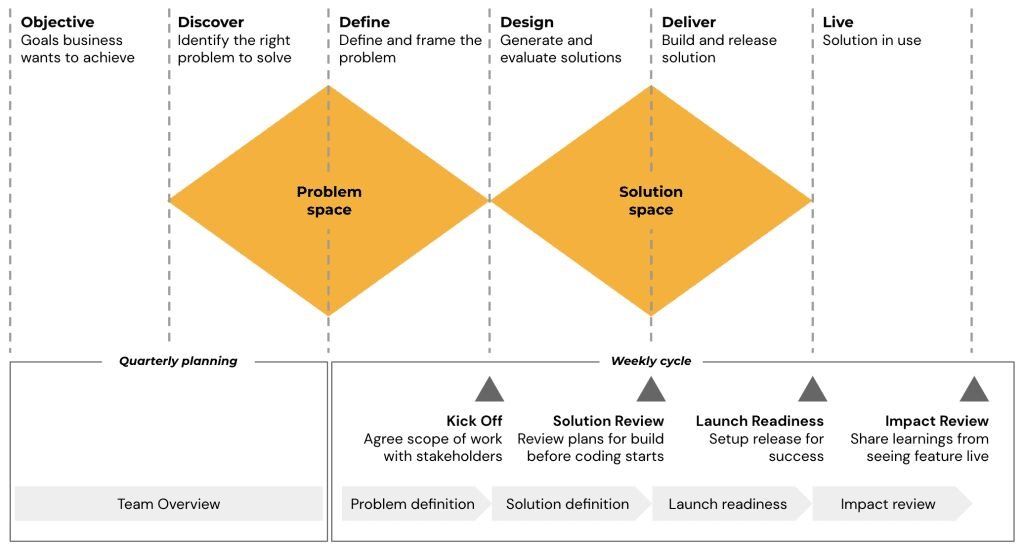
The PRD is not a static document.
It's a living, breathing reflection of the team's progress.
The goal of the Product Requirements Document (PRD) is clarity. So at each and every step, aim to increase the resolution of the image.
𝗦𝘁𝗮𝗴𝗲 𝟭 - 𝗣𝗹𝗮𝗻𝗻𝗶𝗻𝗴
For big rocks for your next planning cycle, I recommend you write the initial speclet that will become the PRD during the planning cycle itself.
The planning cycle is a time really expand the aperture of the problem space your product team considers.
For a whole quarter or half, you’ve been focused on a narrow set of features. So planning is the time to widen your problem space aperture once again.
𝗦𝘁𝗮𝗴𝗲 𝟮 - 𝗞𝗶𝗰𝗸𝗼𝗳𝗳
Once a problem has made its way through the planning phase and you feel confident in the problem to solve, it’s time to move on to the solution phase.
This where the PRD gets detailed. The PM should put their napkin drawing together, but then the design team should be willing to blow the whole thing up.
Many PRDs end their evolution here. But I say: there's actually three stages to go.
𝗦𝘁𝗮𝗴𝗲 𝟯 - 𝗦𝗼𝗹𝘂𝘁𝗶𝗼𝗻 𝗥𝗲𝘃𝗶𝗲𝘄
If the design team ends up just building a UI for the sketch the PM had, then the resulting PRD needs very little change.
But, ideally, the team should feel empowered to totally change the product solution. In those cases, then you need to update the PRD.
That's why I think it's so important to approach the PRD as living: it helps you 𝘢𝘤𝘵𝘶𝘢𝘭𝘭𝘺 explore the solution space, instead of just go with what leadership or the PM said in the second draft.
𝗦𝘁𝗮𝗴𝗲 𝟰 - 𝗟𝗮𝘂𝗻𝗰𝗵 𝗥𝗲𝗮𝗱𝗶𝗻𝗲𝘀𝘀
So after you’ve written the final steps of the PRD about risks and mitigation, the product should go through a final evolution.
Engineering should also get their hand on the PRD and comment the heck out of it.
Usually, this will bring up several areas that team has to re-imagine.
𝗦𝘁𝗮𝗴𝗲 𝟱 - 𝗜𝗺𝗽𝗮𝗰𝘁 𝗥𝗲𝘃𝗶𝗲𝘄
The final step is after you launch. Add a link at the top to your results review document.
If you actually built a big rock feature, then it will have moved the metrics and transformed the user experience. Many times in the future, someone in the company will be explaining the feature or looking into it.
For all those folks, it really helps to go back and understand why the feature was built. They’ll go to the PRD for that. So it’s great to also have a link to the results later.
𝗧𝗵𝗮𝘁'𝘀 𝘄𝗵𝘆 𝘁𝗵𝗲 𝗣𝗥𝗗 𝗰𝗮𝗻'𝘁 𝗯𝗲 𝗼𝗻𝗲-𝗮𝗻𝗱-𝗱𝗼𝗻𝗲.
It frustrates me to see how product managers have complicated the simple process of creating a roadmap
Believe it or not, a product roadmap is nothing more than a 𝘵𝘰-𝘥𝘰 𝘭𝘪𝘴𝘵, where the items are sequenced based on some logic.
For me, creating a roadmap is a simple 3-step process
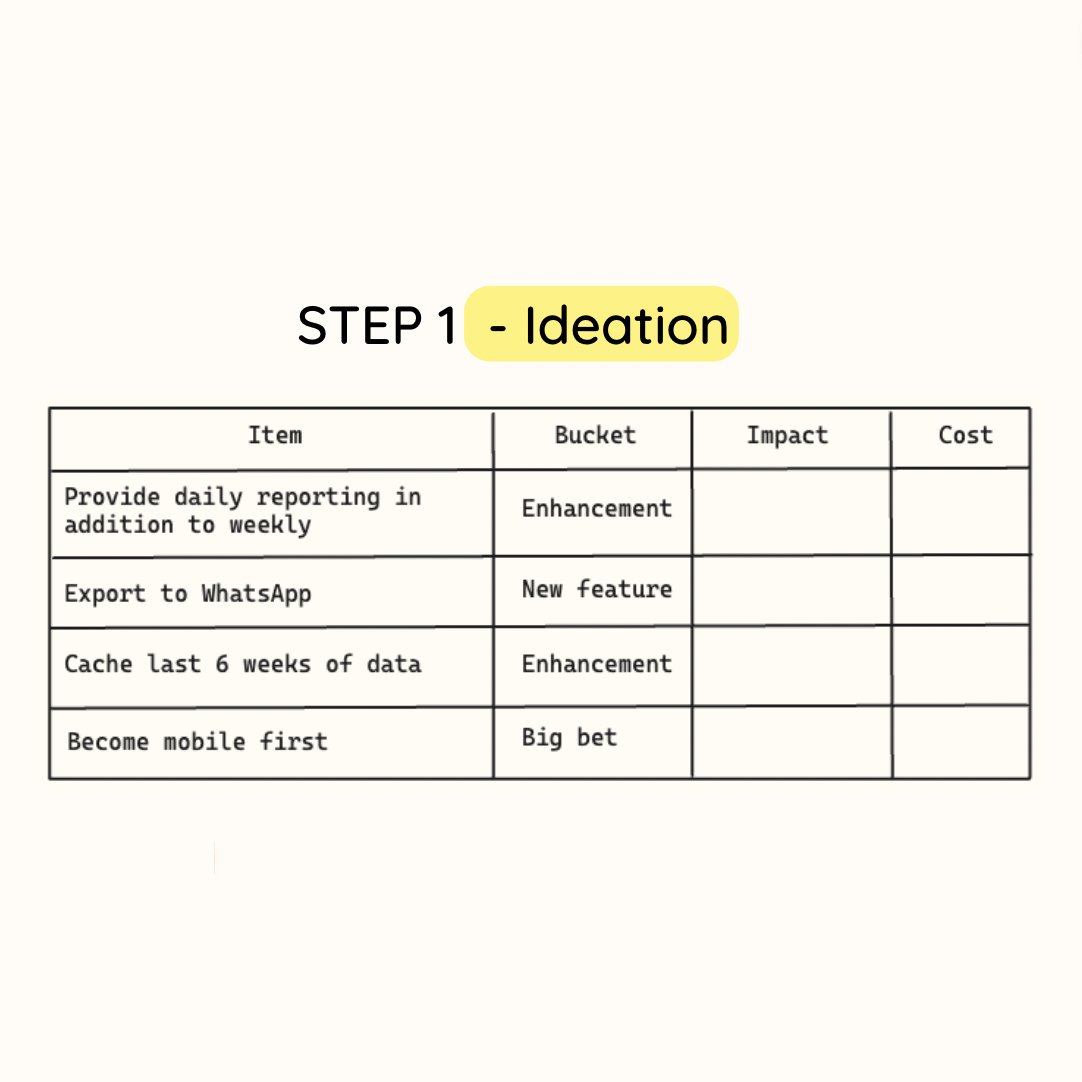
1️⃣ Ideation
2️⃣ Impact estimation (and normalization)
3️⃣ Sequencing
1️⃣ 𝗜𝗱𝗲𝗮𝘁𝗶𝗼𝗻
This step takes time. And it deserves it.
Therefore, product managers should do this 𝘵𝘩𝘳𝘰𝘶𝘨𝘩𝘰𝘶𝘵 𝘵𝘩𝘦 𝘺𝘦𝘢𝘳, instead of only until a few weeks before planning process
To increase quality/quantity of ideas
• talk to users
• read about competition
• know the market/industry
• evaluate past wins and failures
• analyse customer support tickets
• talk to experts in/outside of your org
(See image 1 below)
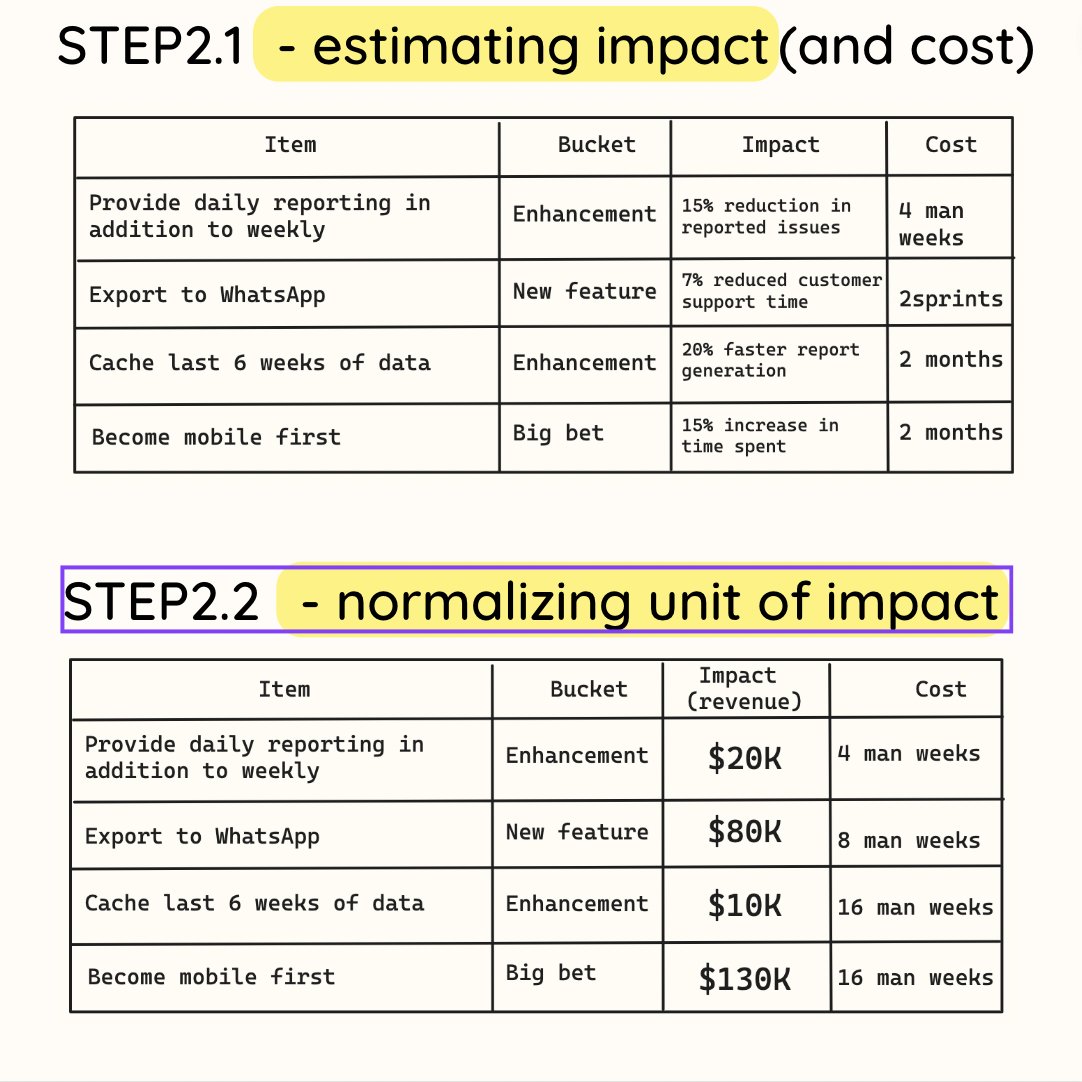
2️⃣ 𝗜𝗺𝗽𝗮𝗰𝘁 𝗲𝘀𝘁𝗶𝗺𝗮𝘁𝗶𝗼𝗻 (𝗮𝗻𝗱 𝗻𝗼𝗿𝗺𝗮𝗹𝗶𝘇𝗮𝘁𝗶𝗼𝗻)
Some product teams make this process overly-complicated. But, some keep it simple.
I am a fan of simple.
Remember: when you’re impact sizing, your goal is to create 𝘳𝘦𝘭𝘢𝘵𝘪𝘷𝘦 sizing and not 𝘢𝘣𝘴𝘰𝘭𝘶𝘵𝘦 sizing.
If feature A has an impact of X, and B has an impact of Y - the goal is not to accurately measure the values of X and Y, but to identify if X > Y or vice versa
But even this (simple) approach has a challenge. Imagine:
• A impacts 𝘙𝘦𝘷𝘦𝘯𝘶𝘦
• B impacts 𝘮𝘢𝘯-𝘩𝘰𝘶𝘳𝘴 𝘴𝘢𝘷𝘦𝘥.
In this case, you're comparing apple and oranges, therefore you can't create the X>Y equation
In such cases, you need to 𝗡𝗼𝗿𝗺𝗮𝗹𝗶𝘇𝗲: convert all 𝘶𝘯𝘪𝘵𝘴 𝘰𝘧 𝘪𝘮𝘱𝘢𝘤𝘵 into a common one.
(See image 2 below)
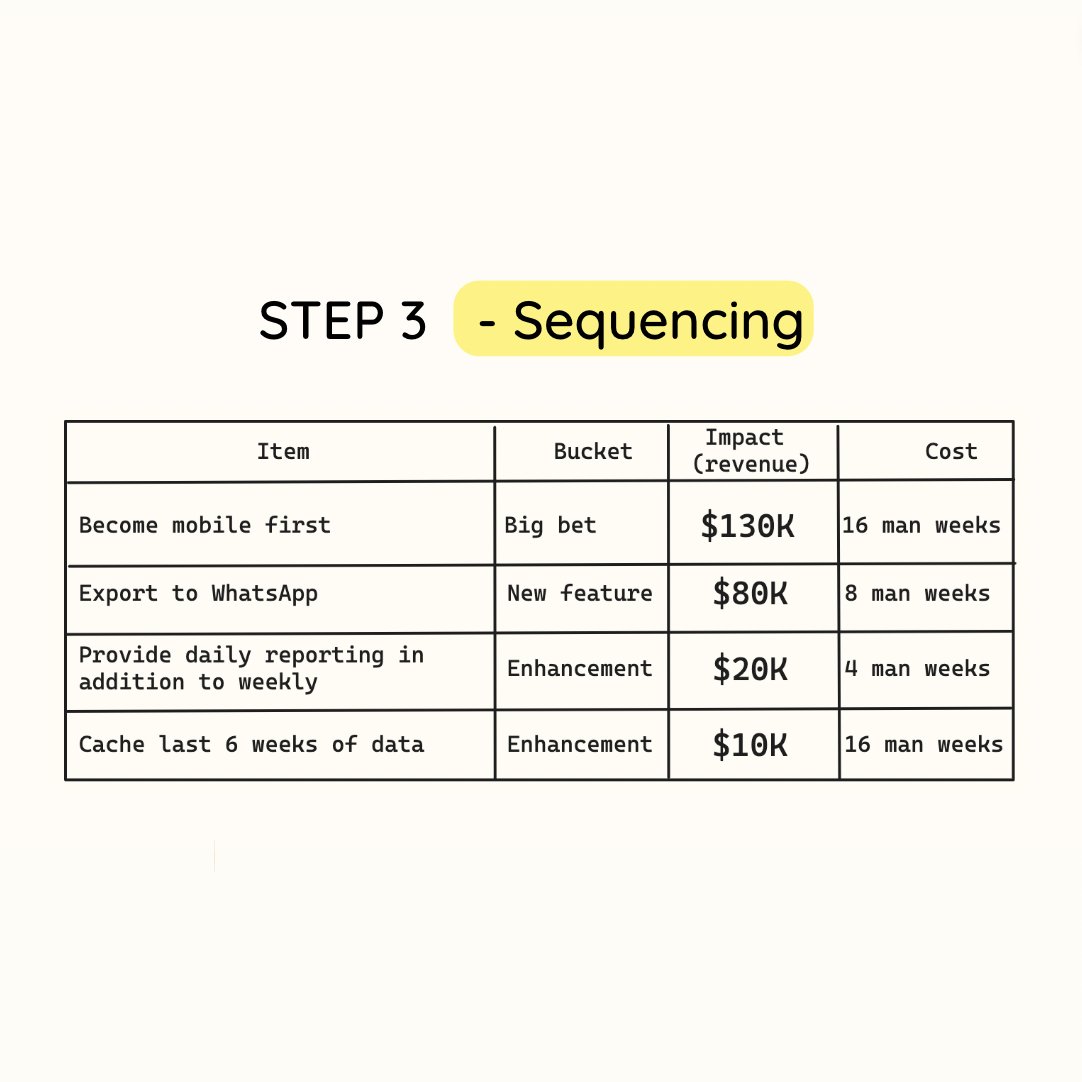
3️⃣ 𝗦𝗲𝗾𝘂𝗲𝗻𝗰𝗶𝗻𝗴
If you’ve completed step 1 and 2, this step is super simple. It is as simple as sorting by the impact column in your sheet.
And then you have your roadmap.
(See image 3 below)
--
Exceptions:
Some teams use another variable: Cost (aka effort to build)
That gives you more leverage. Introducing 𝘤𝘰𝘴𝘵 might unlock scenarios where:
• Impact: of feature A > B
• But, cost to build: A > B
In this case, you can focus on B before A, if the goal is to deliver 𝘷𝘢𝘭𝘶𝘦 𝘲𝘶𝘪𝘤𝘬𝘭𝘺.
OR
You could break A into smaller chunks in a way that allows you to deliver value in less time.
Both approaches are fine. I've used both. Which I choose depends on the focus of the team/company
For ex:
• Startups optimize for velocity
• More mature orgs: optimize for high quality
--
While the core roadmapping process is simple, it is imp. to understand there are many time-consuming activities happening in the background:
1. 𝗥𝗶𝗴𝗵𝘁 𝗺𝗶𝘅 𝗼𝗳 𝗶𝗱𝗲𝗮𝘀: I like to think of ideas in 3 buckets (big bets, new features, and bugs/small fixes/etc) and that takes time
2. 𝗔𝗹𝗶𝗴𝗻𝗺𝗲𝗻𝘁: for roadmaps to be successful, you need support from multiple teams. To have that, you need them to buy-in to your roadmap
3. 𝗜𝘁𝗲𝗿𝗮𝘁𝗶𝗼𝗻: roadmaps should not be set in stone. Your product (and roadmap) should respond to changes in user preferences, market conditions, competition. So, you should keep iterating when required
@carlvellotti I think it is worth making improvements in the discovery phase
1. Build an outcome-based roadmap, not a feature-based roadmap
2. Give estimates on outcomes not features
3. Communicate with stakeholders in the language of outcomes to increase transparency