Alvaro Cedeno Molinari 🚢

17.3K posts

Alvaro Cedeno Molinari 🚢 banner
Alvaro Cedeno Molinari 🚢

Alvaro Cedeno Molinari 🚢

@alvarcidane

Exploración curiosa de nuestra relación con el futuro. TEDx: https://t.co/xPEMg4GjcO

San Jose, Costa Rica Katılım Ağustos 2010
2.3K Takip Edilen1.9K Takipçiler
Alvaro Cedeno Molinari 🚢
In summary: remember what we were biologically designed to behave as.
Bryan Johnson@bryan_johnson

This is it. Everything learned spending millions on longevity. From: Your Immortal Unc and Auntie. To: Our Immortal nieces and nephews. 0. Sleep is the world's most powerful drug. 1. Be in your bed for 8 hours 2. Same bedtime every night, any time before midnight 3. Don’t eat right before bed 4. Calm foods for dinner 5. No screens 1 hour before bed 6. Avoid added sugar (be aware it’s in everything) 7. Avoid all things in an American convenience store 8. Avoid fried foods 9. Shoes off at the door 10. Eat whole foods, particularly veggies fruits nuts legumes berries 11. Walk a little after meals or air squats 12. Get your heart rate high routinely 13. Lift heavy things 14. Stretch daily 15. Water pik, floss, brush, tongue scrape, morning and night 16. Make an effort to drink water 17. Get sunlight when you wake up (UV is low) 18. Protect skin in midday sun 19. Stand up straight 20. See at least one friend once a week 21. Avoid plastic where you can (in all things) 22. Circulate air in rooms 23. When stressed, breathe, learn to calm your body 24. Go to the dentist 25. Avoid sitting for long times 26. Protect your hearing, the world is too loud 27. Alcohol is bad for you 28. Finish coffee before noon 29. Avoid bright lights after sunset 30. If obese, look into a GLP 31. Sleep in a cold room 32. Texting while driving is dangerous 33. Turn off all notifications 34. Limit social media use 35. Don’t smoke anything 36. If you struggle to sleep, read a physical book before bed 37. 1 hour before bed have a calm wind down routine: bath, read, light walk, listen to music 38. The body is a clock and loves routine. Have a daily morning and evening schedule. 39. Avoid long distance travel where you can 40. Baby steps first: incorporate new things slowly 41. Do less… most things don’t work. Bonus points if you get your blood checked. Start here, it will change your life.

English
0
0
0
37
Alvaro Cedeno Molinari 🚢 retweetledi
Enrique Vásquez
Enrique Vásquez@EnriqueVasquez·
Una de las cosas más increíbles de vivir en España es el contraste que nadie te explica bien. Conoces a personas en Estados Unidos que ganan $200, $300 mil dólares al año y que están ansiosas, exhaustas, medicadas, trabajando 70 horas semanales, sin vacaciones, sin tiempo para nada, mirando el techo a las tres de la mañana preguntándose cuándo van a poder parar. Luego ves España… Y ves a un tipo que trabaja de administrativo, que gana 1.800 euros al mes, que trabaja 40 horas a la semana, se toma un mes de vacaciones en agosto sin culpa, que come con calma, y se toma su café sin prisa, que los fines de semana desaparece del trabajo como si el trabajo no existiera. Y duerme perfectamente bien por la noche. La diferencia no es el dinero. Es el modelo. En Estados Unidos te venden el sueño de acumular. En España viven el presente sin disculparse por ello. La sanidad no te arruina. El despido no te deja en la calle sin red. Las vacaciones no son un privilegio que te ganas: son un derecho que nadie te discute. ¿Ganas menos? Sí. ¿Tienes menos? Depende de cómo midas. Porque si mides en horas de sueño, en almuerzos tranquilos, en años de vida sin ansiedad crónica, en poder enfermarte sin que te llegue una factura de $40,000… entonces la pregunta no es por qué España gana menos. La pregunta es por qué seguimos midiendo todo en función al dinero y no en función a la calidad de vida que tienes.
Enrique Vásquez tweet media
Español
648
940
5.7K
591.3K
Alvaro Cedeno Molinari 🚢 retweetledi
Physics-astronomy
Physics-astronomy@Physicsastronmy·
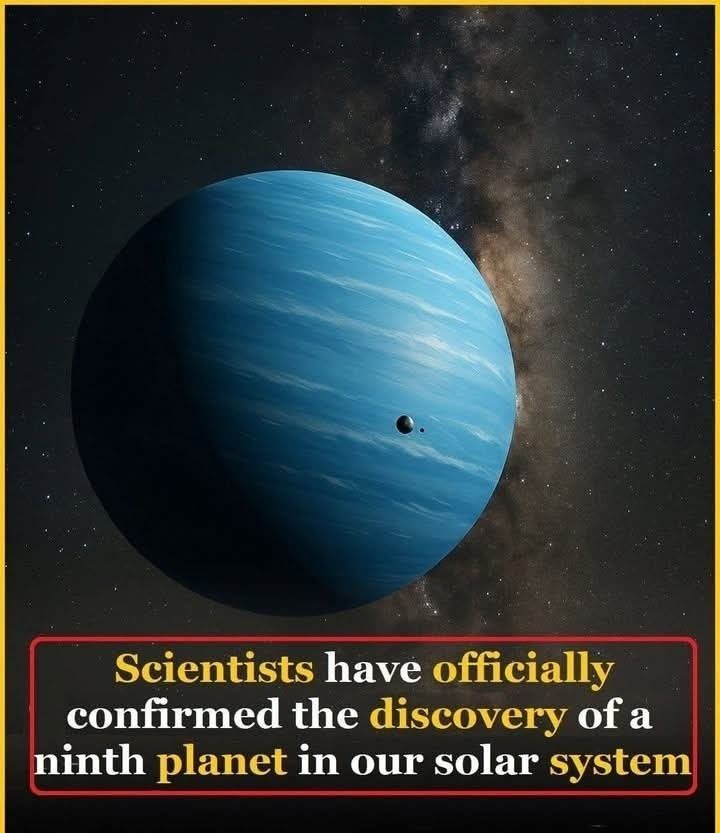
BREAKING: Scientists Confirm Discovery of Ninth Planet in Our Solar System In a historic announcement that rewrites astronomy textbooks, researchers have officially confirmed the existence of a ninth planet in our solar system - a mysterious ice giant lurking in the frozen outskirts beyond Neptune. Dubbed "Planet Nine", this world is estimated to be 5-10 times more massive than Earth and follows an extraordinarily elongated orbit that takes 10,000-20,000 years to complete a single trip around the Sun. Located an average of 20 times farther from the Sun than Neptune, its discovery comes after nearly a decade of mathematical modeling and painstaking observations of peculiar gravitational effects on Kuiper Belt objects. The planet's existence was first theorized in 2016 by Caltech astronomers, but only now has direct observational evidence been obtained using advanced telescopes capable of detecting such a faint, distant object. Unlike Pluto (now classified as a dwarf planet), this new world meets all criteria for full planetary status, with enough mass to dominate its orbital neighborhood. Its composition likely resembles an "ice giant" like Uranus or Neptune, with a thick atmosphere surrounding a rocky core. This discovery marks the first true solar system expansion since Neptune's identification in 1846, opening new frontiers in planetary science. Researchers are now racing to learn more about Planet Nine's formation, composition, and potential moons - while also searching for even more distant worlds that may be hiding in our solar system's uncharted territories. #PlanetNine #SolarSystem #
Physics-astronomy tweet media
English
42
76
277
12.4K
Alvaro Cedeno Molinari 🚢 retweetledi
🦢
🦢@damnidc__·
Well, when a child is conceived, the DNA split is 50/50 from both parents. Except for one small detail: mitochondrial DNA. It’s passed down only through the mother and never through sperm. Which means something interesting: all living humans can trace their mitochondrial line back to one woman, not one man. And every daughter born continues passing that same line forward. Happy Mother’s day
English
200
6K
41.3K
1.1M
Alvaro Cedeno Molinari 🚢
Alvaro Cedeno Molinari 🚢@alvarcidane·
Pure medicine, biologically designed in each and every one of us.
Unfiltered@quotesdaily100

How Breath Controls Mental States Faster Than Any Medication: 1. A single extended exhale lasting twice as long as the inhale activates the parasympathetic nervous system within seconds 2. Cyclic sighing, one inhale followed by a second sharp inhale then a long exhale, reduces anxiety faster than any known breathing pattern 3. Breathing through the nose rather than the mouth raises nitric oxide levels which dilates blood vessels and calms neural activity 4. Box breathing used by Navy SEALs, four counts in, hold, out, hold, resets the autonomic nervous system within four cycles 5. Hyperventilation is not caused by too little oxygen but too little carbon dioxide, slowing breath immediately corrects it 6. Breathing at exactly 5.5 breaths per minute synchronises heart rhythm and brain waves into a measurably coherent state 7. The left nostril connects neurologically to the right brain hemisphere, breathing through it alone induces calm and creativity 8. The right nostril connects to the left hemisphere and sympathetic system, breathing through it raises alertness and body temperature 9. Breath holding after exhale stimulates the dive reflex which drops heart rate dramatically within fifteen to thirty seconds 10. Physiological sigh, the double inhale through the nose followed by extended exhale, is what your body does automatically to reset stress 11. Slow breathing at six breaths per minute has been clinically shown to reduce blood pressure as effectively as medication in mild cases 12. Breathing patterns during sleep determine memory consolidation quality more than total sleep hours in multiple studies 13. Conscious breath awareness alone without changing the pattern reduces amygdala activation and emotional reactivity measurably 14. Breath rhythm directly entrains brainwave frequency meaning you can shift from beta to alpha state purely through breath pace

English
0
0
0
36
Alvaro Cedeno Molinari 🚢 retweetledi
🧬Maxpein🧬
🧬Maxpein🧬@maximumpain333·
Carl Jung wrote: "The more intelligent and self-aware a person is, the more they suffer from the general unconsciousness of society." This is not a badge of honor. It is a recognition of the weight carried by those who cannot unsee what they have already seen. This is the psychology of the deep thinker and if you recognize yourself here, this one is for you: The architecture of alienation. It starts early. The child who asks why adults say one thing and do another. The one whose questions are always labeled as "overthinking." Nietzsche described these people as "free spirits" — essential for progress, but wandering in a wilderness everyone else refuses to enter. Research by Dr. Elaine Aron suggests approximately 20% of the population processes information more deeply and notices subtleties others completely miss. In a world that rewards speed, this depth can feel like a disability. The frequency of truth. Deep thinkers operate on a different wavelength, the frequency of truth rather than the frequency of comfort. Most people live without ever questioning the fundamental assumptions of their own existence. But the deep thinker has glimpsed behind the veil. Like Plato's prisoner who escapes the cave and returns to share what he saw only to be rejected and called a troublemaker—the deep thinker carries the burden of the witness. They see the masks, the exploitation, and the pain that everyone else has agreed to ignore. The emotional sponge. Deep thinkers do not just observe emotions, they absorb them. They feel the anxiety of a stranger as if it were their own. They perform enormous amounts of invisible emotional labor — checking in on people, listening, supporting, acting as the unofficial therapist of every room they enter. And yet the relationship is almost always asymmetric. They give at a depth most people cannot match. They live with the quiet loneliness of being the strong one, the one everyone leans on, but no one thinks to ask: "Are you okay?" The mask of normalcy. To survive, many deep thinkers learn to wear a mask, laughing at jokes they do not find funny, feigning interest in conversations that feel hollow, modulating their intensity to avoid being too much. This is not deception. It is survival. But the cost is enormous. Maintaining the split between the complex private self and the simple public self is exhausting. And the mask, while protective, makes true connection nearly impossible. You cannot be fully known while hiding. The wounded healer. Jung wrote about this archetype; the person who transforms their own brokenness into a source of healing for others. The wounds of rejection and misunderstanding become sources of deep compassion. The person who has felt most unseen becomes the most gifted at seeing others. But the challenge is learning to give without emptying yourself completely, to love others without losing yourself in the process. The alchemy of solitude. For deep thinkers, there is a crucial distinction between loneliness and solitude. Loneliness is the pain of disconnection from others. Solitude is the joy of connection with yourself. In solitude, the deep thinker finally breathes. The noise of the world falls away. The internal landscape becomes clear. Isolation transforms into introspection and that is where the real work happens. The revolutionary act of authenticity. In a world that profits from insecurity, choosing to be genuinely yourself is a radical act. When a deep thinker chooses authenticity over performance, it creates space for others to do the same. It gives people permission to be real in a culture that rewards shallow. If you recognize yourself in any of this, stop apologizing for your depth. You are not broken. You are not too much. You are not too sensitive. You are awake in a world that prefers to stay asleep. Your sensitivity is a superpower. Your intensity is a strength. ✨🙌🏾💫
🧬Maxpein🧬 tweet media
English
423
3.1K
11.8K
503.2K
Alvaro Cedeno Molinari 🚢 retweetledi
Rep. Mike Levin
Rep. Mike Levin@RepMikeLevin·
This should be on the front page of every newspaper in America. A Syrian billionaire needed U.S. sanctions lifted so he could cash in on $12 billion in reconstruction contracts. In an attempt to influence American foreign policy, he proposed a Trump-branded golf course, cut Jared Kushner & Ivanka Trump into a multibillion-dollar real estate deal for a resort in Albania, and had someone physically deliver a stone engraved with the Trump family crest to a Republican Member of Congress with instructions to take it to the White House to get the President's attention. Trump threw his weight behind repealing the sanctions. They were lifted. The contracts are moving, the Trump family’s deals are expanding, and not a single Washington Republican is willing to say a word about any of it. This is a corruption of everything the office of the presidency is supposed to stand for, and the American people deserve to know about it. nytimes.com/2026/04/19/us/…
English
882
19.4K
41.8K
1.8M
Alvaro Cedeno Molinari 🚢 retweetledi
Peter Girnus 🦅
Peter Girnus 🦅@gothburz·
@ScienceDJX The quote post would be appreciated. The investigation behind this has timestamps, CFTC filings, and primary sources. It is footnoted. The more people who read it, the more uncomfortable the next quarterly meeting becomes.
English
8
69
502
14.2K
Alvaro Cedeno Molinari 🚢 retweetledi
Axel (fastr)
Axel (fastr)@fastrlife·
Your brain fires dopamine at ~2ng/mL baseline… Porn spikes it to 1,500 Cocaine, 1,200 Alcohol, 300 Short form video, 200 Fast food, 150 Stack these up over 5-10 years. It’s obvious why “normal” feels so doom and gloom; And living properly feels like withdrawal. You need to understand dopamine isn’t about pleasure; It’s the molecule of wanting more. Every cheap hit makes your receptors fire harder for less reward. By 30, most people in this generation have the reward sensitivity of an addict… Your phone triggers a dopamine release every 6 seconds you hold it; Same pathway as addictive substances. Same downregulation curve. The only difference is you have no one telling you that you’re using… Please: If you’re not working. Take every opportunity you get to walk outside, get some sun, or go do something with real people… How much more of your life are you willing to lose to counterproductive habits? Same you, but fastr.
English
83
423
3.3K
250.2K
Alvaro Cedeno Molinari 🚢 retweetledi
Mindset Machine 
Mindset Machine @mindsetmachine·
A brain expert just said what no one wants to hear about screen learning.🤯
English
454
7.2K
19.4K
1.1M
Alvaro Cedeno Molinari 🚢 retweetledi
David Daines
David Daines@daviddorg·
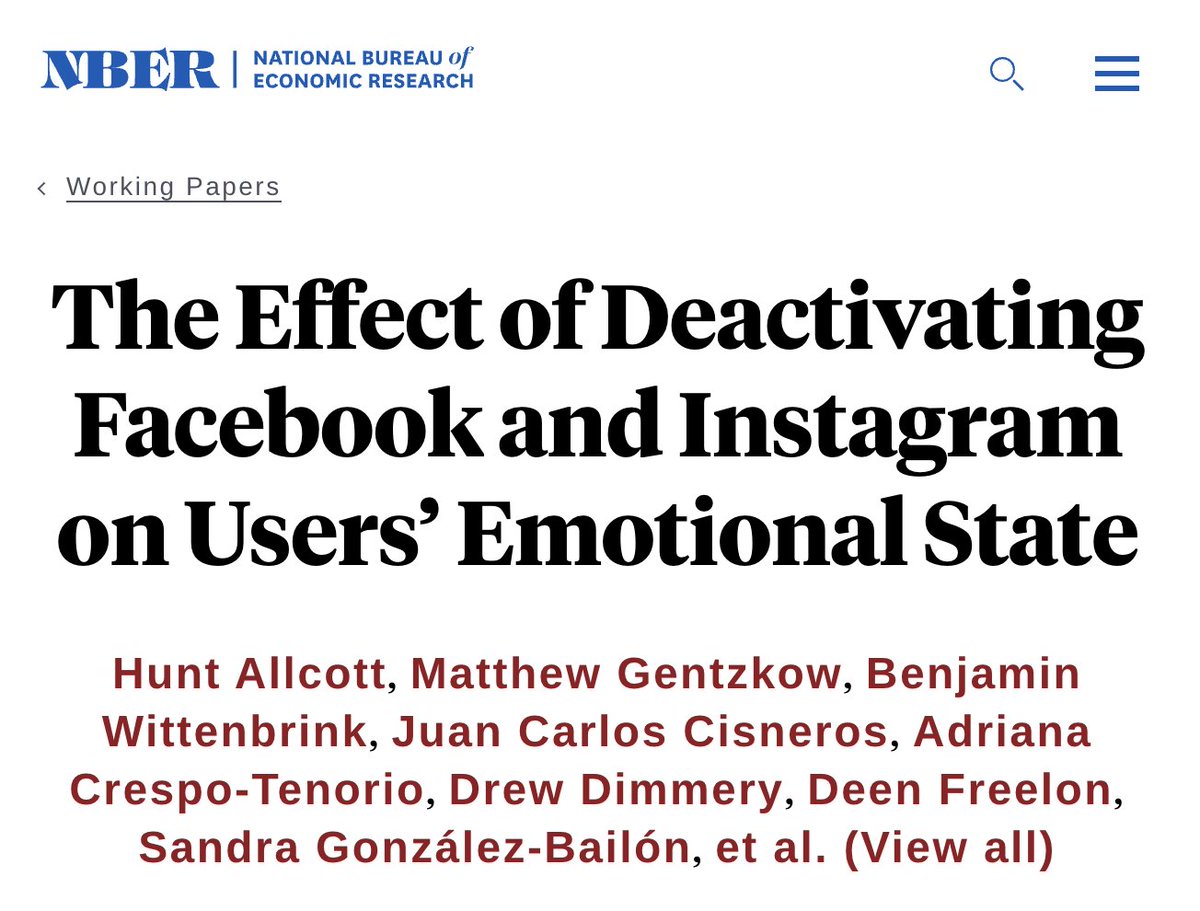
Stanford paid 35,000 people to quit Facebook and Instagram for 6 weeks Depression dropped. Anxiety dropped. Happiness went up. Women under 25 on Instagram saw the biggest gains That was 6 weeks. I'm going a full year.
David Daines tweet media
English
1.4K
10.1K
48.1K
3.8M
Bryan Johnson
Bryan Johnson@bryan_johnson·
10 days post 5-MeO-DMT > my body can't sleep enough > I'll sleep 8 hrs + midday hr nap + 9hrs that night > mind feels really fast > sex drive is up by 2-3x > kid vibe excitement levels about life > dreams are vivid, more alive than I can remember > previous normalized i.e. scrolling, now seem insane > societal norms generally feel insane to me, how we trade our existence for ephemeral things > I feel more self aware and robust at handling conflict > I feel love more deeply
English
378
266
8.1K
736.4K
Roberto Artavia
Roberto Artavia@RArtaviaL·
En la puerta 31 del Estadio del RCD Espanyol de Barcelona, dedicada a uno de nuestros máximos símbolos: don Ricardo Saprissa; con mi bolso del tifo de Dracarys, que lleva camisetas para intercambio en esta visita oficial de gran provecho. Seguimos aprendiendo de nuestros amigos.
Roberto Artavia tweet media
Español
44
42
1.2K
33.5K
Juan Carlos Rojas
Juan Carlos Rojas@presimorado·
Debo admitir que un partido a las 11am en el Fello es de lo más lindo q hay en el fútbol nacional (por supuesto fuera de cualquier partido en La Cueva) 👊🏼
Juan Carlos Rojas tweet media
Español
12
2
425
15.9K
Alvaro Cedeno Molinari 🚢
Alvaro Cedeno Molinari 🚢@alvarcidane·
@SahilBloom After 12yr of phone addiction I confidently say I overcame the addiction by making 5 decisions: 1. Phone sleeps at the kitchen 2. Grayscale on 3. Deleted all social media apps 4. 14-hour digital fast every day (5:30pm-7:30am) 5. 7-day rewilding with keystoneawakening.com
English
0
0
0
26
Sahil Bloom
Sahil Bloom@SahilBloom·
I broke my phone addiction in 30 days. • Screen Time down ~70% • Phone pickups down ~50% I reclaimed 4 hours 30 minutes per day. That's 1,635 hours across a full year. 68 days of life from a single behavior change. Here's exactly what I did (save this): 1. Grayscale Mode Put your phone on Grayscale Mode for the entire day. Grayscale Mode removes the colors to make your phone immediately less appealing and addicting. It takes 30 seconds to set up. If you have an iPhone, follow these steps: • Settings • Accessibility • Display & Text Size • Color Filters -> On • Grayscale Next, create a simple shortcut: • Settings • Accessibility • Accessibility Shortcut • Color Filters Now, if you triple-click the side button, you'll be able to toggle it on and off. For non-iPhone users, you can find instructions​ with a simple search. I kept my phone on Grayscale at all times and only removed it for specific reasons (like posting something that required me to see the color, looking at photos, etc.). It made me less interested in grabbing my phone for the random "just checks" during the day. 2. No-Phone Zones Set specific locations, times, and events where you won't have your phone on you. I called them No-Phone Zones: • Downstairs (kitchen, living room) • Creative flow time (from ~5-8am) • Family flow time (from ~5-7pm) • Family gatherings During these windows, my phone would be in a lock box or in a drawer in my office. If we were out at a family gathering, I would leave it in the car or in my wife's bag where I couldn't feel it. Specifically listing out these No-Phone Zones had the benefit of making it a clear rule that I could cement in my mind. Create your list of No-Phone Zones. Write it down if you need to. 3. Strategic Friction Even with the Grayscale Mode and No-Phone Zones, my phone addiction intervention would have been difficult to execute without this final piece of the puzzle. Motivation and discipline are never enough when you're trying to crack a deeply entrenched behavior. There's a theory in cognitive science called Choice Architecture, which is the idea that you can design your environment to make good choices easier and bad choices harder. Basically, I wanted to add strategic friction to make it much easier to adhere to my rules (and much more difficult to break them). Three primary ways I did that: 1. I locked my phone in a ​lock box​ during my morning creative flow (5-8am) and evening family flow (5-7pm). It was a timed lock so I couldn’t get it without emailing the company. 2. I left my phone far away from where I was going to be working. If I wanted to get it, I'd have to walk to the other side of the house or down a few flights of stairs to get it. 3. I added really low screen time restrictions to social apps. If I wanted to overuse them, I'd have to keep approving more time, which felt like letting myself down when I did it. Breaking the addiction is going to be difficult at first. Create strategic friction that helps you stick to the change. Make it difficult to make a bad choice. The Life Impact I'm not going to sugarcoat it at all: This was the single most powerful behavior change I've ever made in terms of the tangible impact and ripple effects on my life. That is not an exaggeration. I was more present, less stressed, and able to connect on an entirely different level. In short, I showed up more aligned with how my ideal self would. My capacity for deep work expanded significantly from simply placing my phone in another room or a lock box. I got more done, faster, at a higher quality bar. It was like the holy trinity of productivity improvement, with no fancy productivity tool required. Reviewing the research, this isn't surprising: There is clear ​scientific evidence​ that even having your phone in your pocket or on your desk reduces your cognitive capacity. I felt happier and less stressed immediately upon making the change. So, just keeping score... This was a single, zero cost behavior change that had the net effect of: • Improving my relationships • Improving my work • Improving my happiness To be completely transparent, just a few days in, the only negative thought I had related to the intervention was simple: Why didn't I do this sooner? I hope this is the push you need to make this change in your life. Start small and stick to it. Aim for a 10-20% screen time reduction week-over-week. Keep yourself accountable with a friend. Having now gone through it, I can guarantee you'll see and feel the positive impact immediately. Onward and upward.
Sahil Bloom tweet mediaSahil Bloom tweet media
English
228
450
4.2K
814.6K
TD Más
TD Más@tdmascrc·
Alajuelense es sexto en la tabla de posiciones
Español
13
1
54
6.4K
Spencer Barber
Spencer Barber@spencertbarber·
This has to be the coolest development in Costa Rica. It’s a walkable community where no cars are allowed inside the whole development. It’s beachfront with amazing views throughout. Guess how much a home inside costs?
Spencer Barber tweet media
English
76
22
782
308K
vinimorao'
vinimorao'@vinichusmorado·
Marvin Loría, ese jugador que juega de memoria. ✨ lamentablemente tiene Alzheimer.
vinimorao' tweet media
Español
5
10
328
7.5K