kariy ⛩️

2K posts

kariy ⛩️

kariy ⛩️

@ammarif_

doing stuff @ohayo_dojo @cartridge_gg

NYC Katılım Eylül 2017
649 Takip Edilen482 Takipçiler
kariy ⛩️ retweetledi
Andy Coenen
Andy Coenen@_coenen·
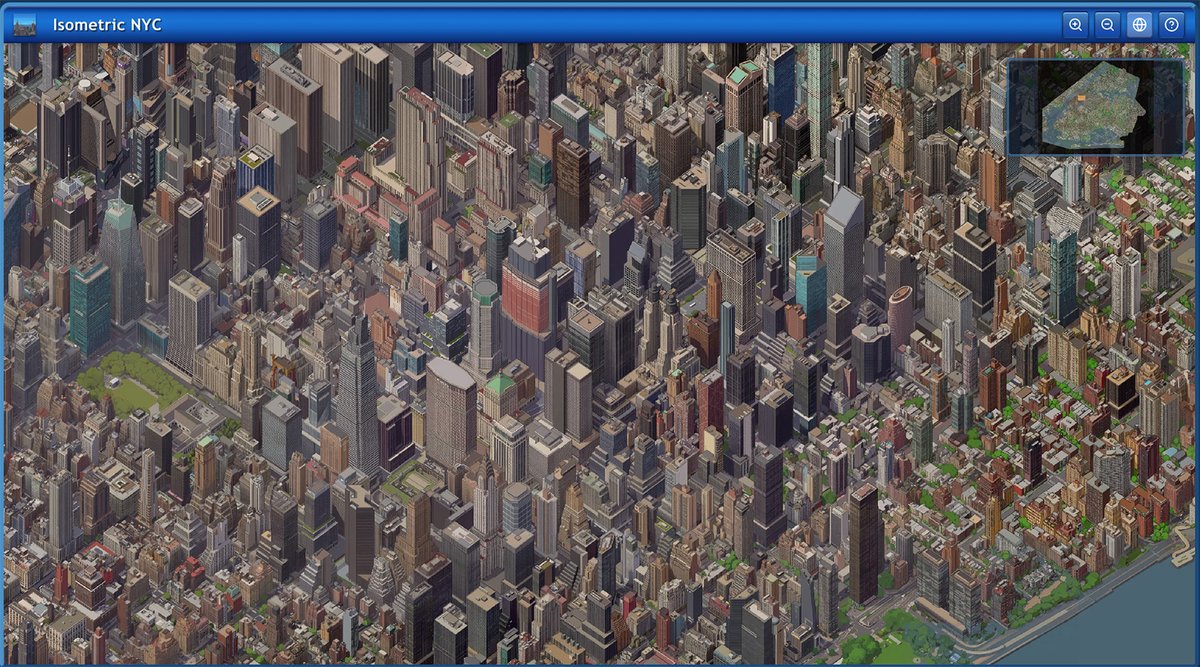
I wanted to share something I built over the last few weeks: isometric.nyc is a massive isometric pixel art map of NYC, built with nano banana and coding agents. I didn't write a single line of code.
Andy Coenen tweet media
English
355
654
7.9K
1.5M
kariy ⛩️ retweetledi
shadowfax
shadowfax@heyshadowfax·
dojo is a provable game engine. its also a community of the brightest and most driven builders shaping the future of gaming. this is @ohayo_dojo .
English
12
20
87
8.6K
kariy ⛩️
kariy ⛩️@ammarif_·
fully onchain game panel happening right now at starkconnect
kariy ⛩️ tweet media
English
0
0
2
81
kariy ⛩️ retweetledi
Dojo
Dojo@ohayo_dojo·
In Buenos Aires for Devconnect? 🇦🇷 Dojo is taking over the main stage at StarkConnect for a night of onchain gaming! Join us on Thursday Nov 20 for: - New game reveals 👾 - Live on-stage tournaments ⚔️ - Talks from leading founders 🗣️ - And 🍻! Space is limited.👇
Dojo tweet media
English
10
31
91
31.6K
kariy ⛩️ retweetledi
shadowfax
shadowfax@heyshadowfax·
dojo game jam 7 brings devs together for three days to ship fully onchain games. 🎃 oct 31 til nov 2 🎃 $15k prize pool 🎃 open to everyone. glhf.
English
12
24
78
6.1K
kariy ⛩️
kariy ⛩️@ammarif_·
yea we’re definitely in a bubble
kariy ⛩️ tweet media
English
0
0
1
137
kariy ⛩️ retweetledi
Cartridge
Cartridge@cartridge_gg·
The best crypto UX is no crypto UX. Onchain gaming is going to change the perception of crypto. @bankless just covered how @LootSurvivor 2, built with @ohayo_dojo and powered by Cartridge Controller, delivers a truly accessible and deep onchain RPG experience on @Starknet.
Cartridge tweet media
English
4
23
74
3.6K
kariy ⛩️ retweetledi
Quinn Slack
Quinn Slack@sqs·
We made Amp Free. It's powered by great tokens and tasteful ads. Agentic coding is now free for everyone.
English
193
145
1.6K
895.8K
kariy ⛩️ retweetledi
Jerason Banes / Architect of Convirgance
It’s a bit easier to just explain how we got here. In the old days, memory and CPU ran at the same speed. The laws of physics make it incredibly hard to ramp up the MHz of the CPU while keeping physically separated memory chips in sync. The distance is just too far for the electricity to travel in time available. The solution was to manufacture a small amount of memory on the chip that is in sync with the chip. Then access the rest of the memory as an external device. Sort of like a linear hard drive. That on-chip memory became the L1 cache and the external chips became DRAM main memory as we know it today. The second problem was the sheer size of RAM was making it hard to keep the CPU fed. The amount of RAM in the L1 cache was too small. And making it bigger wasn’t a very good option from a price and scaling perspective. So a faster bit of RAM that was physically closer to the CPU was invented. Slower than L1, but faster than main memory. This sped up operations that were too large to fit in the L1. Thus L2 was born and eventually moved onto the CPU die rather than being a separate chip on the motherboard. The final piece of the puzzle isn’t about individual CPU performance at all. As CPUs became multi-core, the cores would fight over which one was accessing main memory. A bit of a “dining philosopher’s” problem. Even worse, if data was moved between cores, the first core had to send it all the way back to main memory before the second core could read it. The solution was to create a large chunk of fast memory that was shared between the cores. This acted as a staging point to share memory, and also acted as a place to buffer copies from main memory. The staging point could request a bit more than needed from main memory under the theory that reads would stream from main memory. That way data was available before the core even needed it. This space became the L3 cache. The only singular cache in today’s CPUs. Each core has their own L1 and L2 caches, meaning there are as many copies of L1 and L2 as there are cores. And that’s how we got to today’s 3-level cache.
Vivek Galatage@vivekgalatage

The question: "Why do CPUs have multiple cache levels?" often gets many CS students and professionals thinking and researching. This article from Fabian Giesen narrates a "cache story" in a relatable way, only to delve into the details - a must-read! fgiesen.wordpress.com/2016/08/07/why…

English
45
396
3.9K
271.9K
kariy ⛩️
kariy ⛩️@ammarif_·
coding as a medium for self expression is honestly so cool. creative coding is such a beautiful subculture that i wanna be more involved in. this is the vibe shift event happening at zerospace.
kariy ⛩️ tweet mediakariy ⛩️ tweet mediakariy ⛩️ tweet mediakariy ⛩️ tweet media
English
0
0
0
151
kariy ⛩️
kariy ⛩️@ammarif_·
apparently you can just wake up one day and decide to be happy
English
0
0
2
61
eni 🍞
eni 🍞@eniwhere_·
Proofs outlive witnesses
English
1
2
21
2K