

Andy Miller
587 posts



There is nothing more powerful than well-informed optimism. It has to be well-informed though. The "everything will be fine" type of optimism may also be somewhat useful, but it's not as useful as the "Hmm, what if we tried x?" kind.
English
English

English

Photon Fun
This FOT is made from 90 million optical fibers fused and stretched. It magnifies whatever it is on top of by 3x without lenses. Each fiber is like an independent pixel, stretched 3x.
This is the same multi-channel approach Mojo uses for optical links in data centers.
English
@ScienceMagazine andy-miller.com/hum see the data visualized here
English

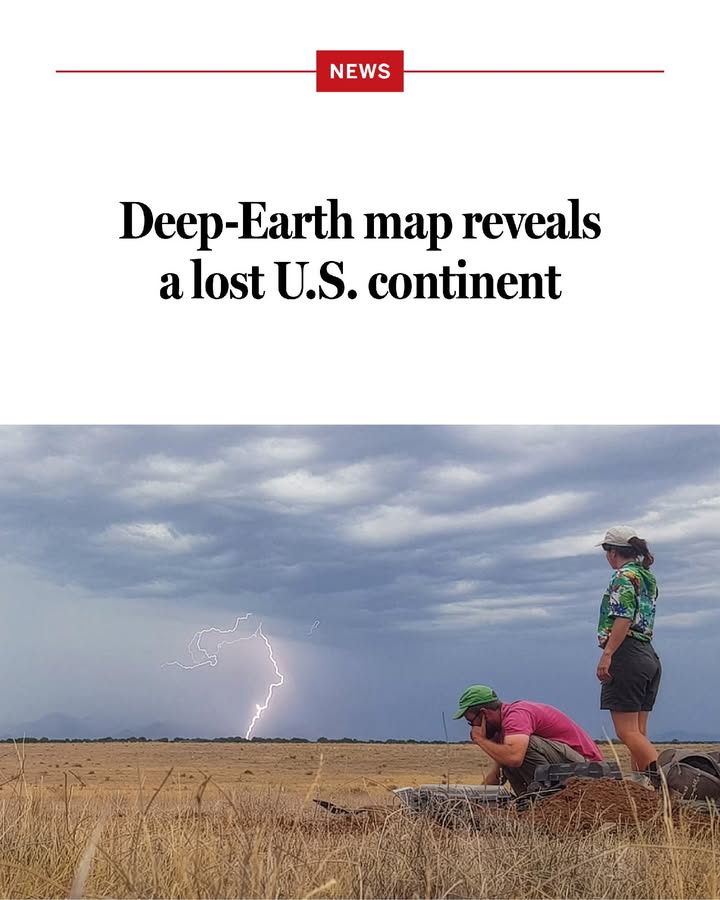
Along the eastern front of the Appalachian Mountains, buried just below the surface, lies a fragment of a lost continent.
Running from Maine to Georgia, the 200-kilometer-thick slab of crust was probably created by volcanic eruptions during the breakup of the Pangaea supercontinent some 200 million years ago and later buried by silt from eroding mountains.
Known as the Piedmont Resistor, this piece of Pangaea is one of the signature discoveries of the Magnetotelluric (MT) Array, 1800 temporary stations scattered across the contiguous United States that measured the conductivity of deep rocks.
Now, 20 years after it started, the MT Array has released its final map and model. It shows how the assembly of the continent left hidden structures such as the Piedmont Resistor—and mineral riches.
Learn more: scim.ag/3P4IfC8 @NewsfromScience
English

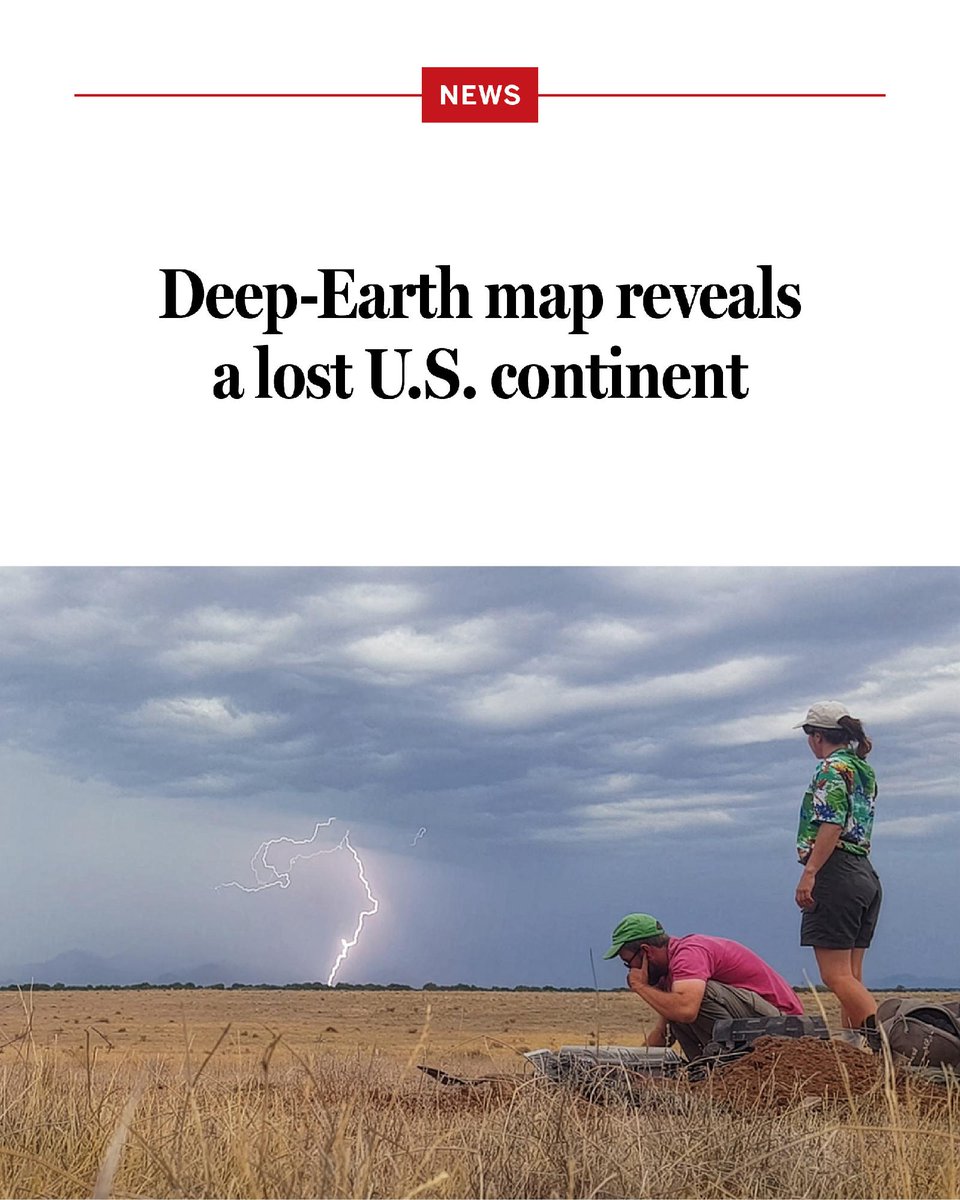
Along the eastern front of the Appalachian Mountains, buried just below the surface, lies a fragment of a lost continent.
Running from Maine to Georgia, the 200-kilometer-thick slab of crust was probably created by volcanic eruptions during the breakup of the Pangaea supercontinent some 200 million years ago and later buried by silt from eroding mountains.
Known as the Piedmont Resistor, this piece of Pangaea is one of the signature discoveries of the Magnetotelluric (MT) Array, 1800 temporary stations scattered across the contiguous United States that measured the conductivity of deep rocks.
Now, 20 years after it started, the MT Array has released its final map and model. It shows how the assembly of the continent left hidden structures such as the Piedmont Resistor—and mineral riches.
Learn more: scim.ag/3PgPC9M
English
Sacred sites sit on electrically conductive hot spots.
Based on breaking news: researchers discovered an ancient continent by mapping Earth's conductivity.
andy-miller.com/hum
@USGS @EarthScope_sci @CenterForAstro @sciencemagazine @physorg_com @WaltHickey @DanielleFong

English

We need a Manhattan Project for tick eradication.
ArkieMiasma@ArkieMiasma
It’s time to seriously talk ticks here in the Ozarks. My buddy in Benton County who used to diagnose a couple cases of Alpha-Gal a month—now multiple per day. Everybody’s dog has ehrlichiosis, and highest ER visits ever for rocky mtn tick fever in Arkansas last year.
English


Overheard in Silicon Valley: "Now, software is just the prompt for the next version of the software."
English

Every company building on top of AI should be making their own benchmarks.
This is the way if you want model progress to disproportionally benefit your company.
English

The best founders I know all text their investors.
None of them email them.
The relationship will blossom and deepen in a matter of messages.
English
@NWischoff Let's chat. California biomass energy has a latent 37MW available now with grid interconnects.
English

Co-founded an AI data center co last year. Had an early take that hyperscalers would begin to focus on tier II, III cities and smaller increments of power (sub 100MW), question was how quickly. Went from "call back when you have 300MW" to "we will take whatever you have" within 12 months. Giddy up.
English

there needs to be a provable or semi provable heirarchy of trust that agents go thru. claude google mcp was failing and then claude went to install some off brand mcp. i'm like BUDDY no ??
English
so if the strait of Hormuz stays closed and $150/bbl is coming, we get sustained high naphtha prices, tighter supply if crackers & polymer plants cut rates - ethylene, propylene, plastics, resins, glues, solvents, and coatings hit hardest... more ethanol blending and food oils pulled towards biofuels?
English
:D Reuters journalistic license. And interestingly, it’s not a favorable comparison. A helium atom is significantly smaller (narrower) than a hydrogen atom, with a radius of approximately 31pm compared to hydrogen's 53pm. Despite having more electrons, helium’s higher nuclear charge (two protons) pulls its electron cloud much closer to the nucleus, making it the smallest atom on the periodic table.
English

This is really exciting, I’m just initially confused at how you get a beam of helium atoms the size of a hydrogen atom? Maybe that was just a “for reference” that wasn’t meant to be taken literally.
Steve Jurvetson@FutureJurvetson
Introducing Ⓛ 𝗟𝗔𝗖𝗘 𝗟𝗜𝗧𝗛𝗢𝗚𝗥𝗔𝗣𝗛𝗬 A novel approach to chip-making that can extend Moore's Law 10x beyond what is possible with light — to atomic resolution. News today: "Manufacturers use light-based lithography systems made by the Dutch company ASML, which dominates the market. Lace has developed a new approach. Instead of light, Lace's engineers have made a form of lithography that uses a helium atom beam. With that, the Norwegian company will be able to create chip designs that are 10 times as small as what is currently possible" "The main advantage of the helium atom beam is the industry could create features such as transistors, the building blocks of modern chips, an order of magnitude smaller to an "almost unimaginable" degree, according to John Petersen, Scientific Director of Lithography at Imec, a research and innovation hub for the chip industry. The beam Lace will use to make chips is about the width of a single hydrogen atom, or 0.1 nanometer. ASML's lithography tools use a beam of light that is about 13.5 nanometers; a human hair is about 100,000 nanometers wide. Smaller transistors and other features would give chipmakers the ability to ramp up the performance of advanced AI processors well beyond the current capabilities. Lace's technology would enable chip manufacturers to print wafers at what is "ultimately atomic resolution" — reuters.com/world/asia-pac… Now hiring in Bergen and Barcelona: LaceLithography.com
English
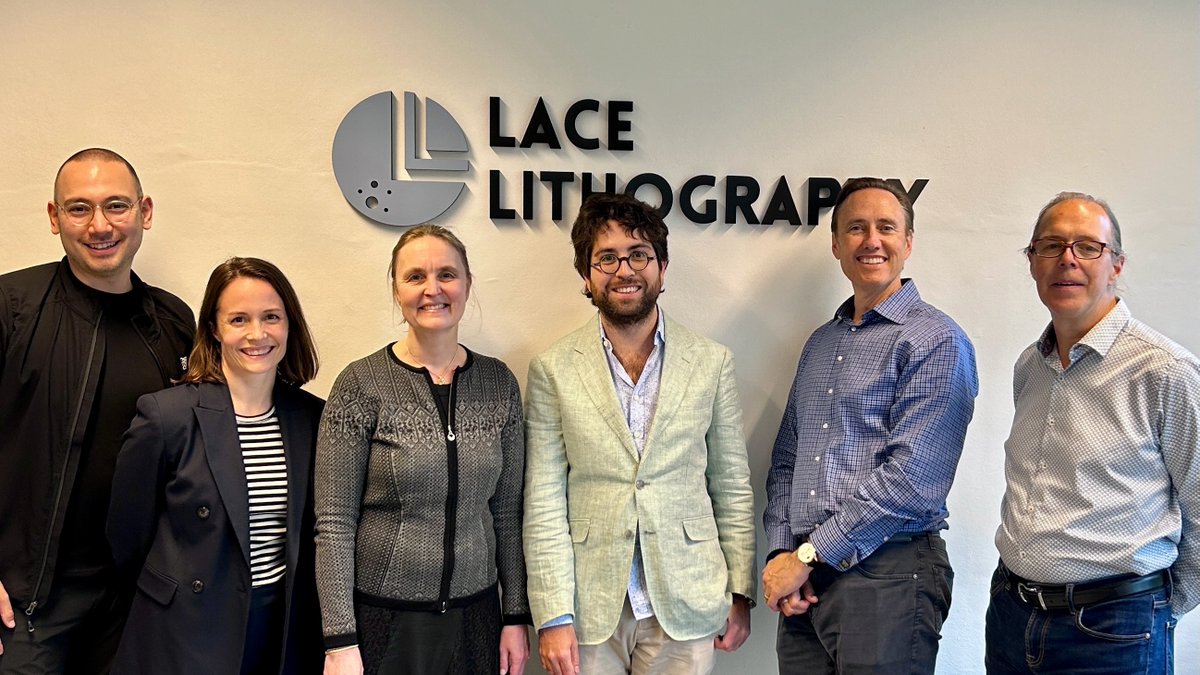
Introducing Ⓛ 𝗟𝗔𝗖𝗘 𝗟𝗜𝗧𝗛𝗢𝗚𝗥𝗔𝗣𝗛𝗬
A novel approach to chip-making that can extend Moore's Law 10x beyond what is possible with light — to atomic resolution.
News today: "Manufacturers use light-based lithography systems made by the Dutch company ASML, which dominates the market. Lace has developed a new approach. Instead of light, Lace's engineers have made a form of lithography that uses a helium atom beam. With that, the Norwegian company will be able to create chip designs that are 10 times as small as what is currently possible"
"The main advantage of the helium atom beam is the industry could create features such as transistors, the building blocks of modern chips, an order of magnitude smaller to an "almost unimaginable" degree, according to John Petersen, Scientific Director of Lithography at Imec, a research and innovation hub for the chip industry.
The beam Lace will use to make chips is about the width of a single hydrogen atom, or 0.1 nanometer. ASML's lithography tools use a beam of light that is about 13.5 nanometers; a human hair is about 100,000 nanometers wide.
Smaller transistors and other features would give chipmakers the ability to ramp up the performance of advanced AI processors well beyond the current capabilities. Lace's technology would enable chip manufacturers to print wafers at what is "ultimately atomic resolution" — reuters.com/world/asia-pac…
Now hiring in Bergen and Barcelona: LaceLithography.com


English

@MLStreetTalk @extropic Getting to tens of millions of degrees of freedom by EOY. Stay tuned.
English

Congrats @extropic on the Phys Rev Applied paper ~15 attojoules per sample, which is an order of magnitude better than what @GillVerd promised us on his last MLST appearance!
Not simulations anymore i.e. real TSMC silicon / measurements. Next they need to scale up from 3 degrees of freedom. Watching with interest.
Extropic@extropic
If you are attending @APSphysics March meeting, come learn more about thermodynamic computing! Our work on taming non-equilibrium thermal electron fluctuations in silicon is now accepted in Physical Review Applied. Read more here: journals.aps.org/prapplied/abst…
English
@FutureJurvetson @CERN @garrettlisi @DavidDeutschOxf @seanmcarroll @QuantumAephraim Will you write a post on children’s books you recommend to learn science?
English
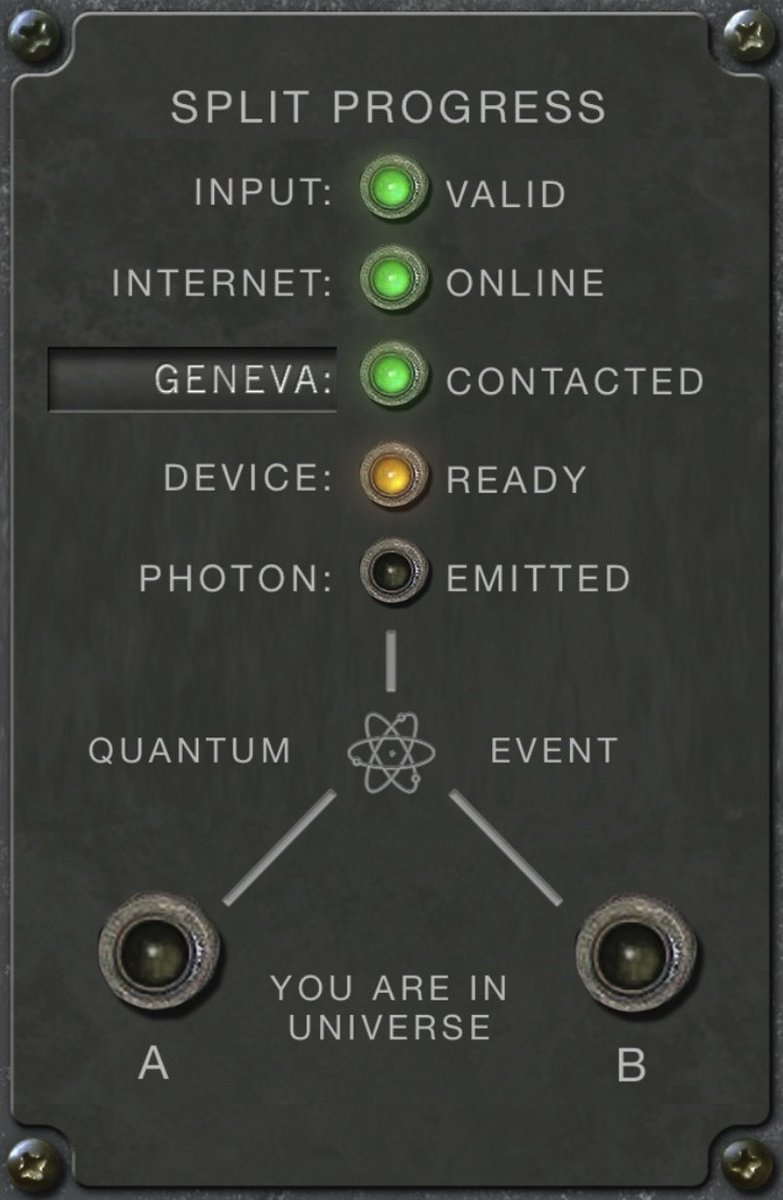
And.... there's an app for that. I can fire single photons at CERN, and split our universe for fun and profit

English
The most mind-bending variant of the 2-slit experiment: fire a single photon at the slits. Then fire another tomorrow. They deflect differently, but after many days, the cumulative distribution will be the typical interference pattern 🤯
Is a single photon interfering with itself? Interfering with other photons over time and space?
The simplest explanation, according to Oxford's David Deutsch, is interference across parallel universes, the same mechanism that gives quantum computers capabilities that are just not possible in one universe.
Richard Feynman called it the “one experiment which has been designed to contain all of the mystery of quantum mechanics.”
My longer post on this: x.com/FutureJurvetso…
Elon Musk@elonmusk
I had dinner once with a top physicist and a top computer scientist and asked what they thought the probability was that we were in a simulation. They answered simultaneously at 0% and 100% respectively. It was like a double-slit experiment, but with humans.
English
If your technical CEO isn't locked in at night agentic coding you're NGMI
Beff (e/acc)@beffjezos
All the smartest people you know are in a generational lock-in season right now
English