@lilrobbergirl What a blessing she was able to endure the morning sickness and protected her baby, you, from the consequences.
English
SarahMcCloughry 🇺🇦🇪🇺🇬🇪FBPE #StandwithUkraine
5.4K posts
@anrah
Coaching in leadership and soft skills. Supporting women in STEM. Looking to a return to 🇪🇺. @[email protected]

It was already being handed out to pregnant women across the world—marketed as harmless, even gentle. Doctors trusted it. Companies insisted it was safe. And no one seemed to be asking harder questions. Except one woman. Frances Oldham Kelsey had just arrived at the U.S. Food and Drug Administration when a pharmaceutical company pushed for approval of a new drug: thalidomide. It was being used widely in Europe to treat morning sickness, praised as a miracle solution. Approval should have been routine. But Kelsey hesitated. Something didn’t sit right. The data felt incomplete. The studies were thin. Reports of strange side effects—nerve damage, unusual symptoms—kept surfacing, but were brushed aside. The pressure to approve it quickly was intense. The company pushed back. Colleagues questioned the delay. The world was already moving forward without her. She refused to follow. Again and again, Kelsey denied approval, demanding stronger evidence, more rigorous testing, clearer answers. She held her ground for months, quietly but unshakably. And then the truth broke through. Across Europe, thousands of babies were being born with devastating deformities—missing limbs, malformed organs, lives forever altered before they even began. Thalidomide was the cause. Because Frances Oldham Kelsey said no, the drug never reached the U.S. market in the same way. While other countries faced a catastrophe, countless American families were spared. She didn’t lead protests. She didn’t make headlines in the moment. She simply refused to sign her name to something she didn’t believe was safe. And that decision—one signature withheld—changed the course of medical history. © Reddit #archaeohistories
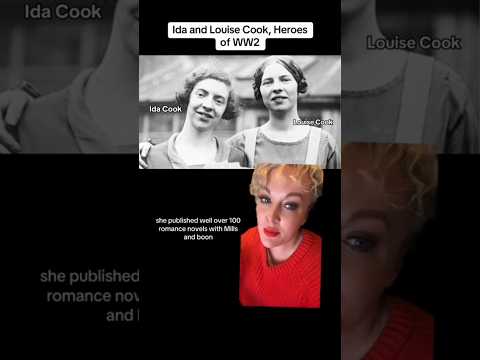
The night Florence Sabin’s mother died, the doctors gave it a neat name: “childbed fever.” Florence was seven—old enough to grasp the shape of what had happened. Her mother had gone into a room to bring life into the world and had instead been taken by an infection no one could seem to stop. Florence carried that with her. Years later, when people pictured her as a concert pianist—her hands really were that gifted—she’d quietly dismiss it. The piano was beautiful, sure. But it couldn’t answer the question that haunted her: why did the body turn against itself? So in 1896, she walked into Johns Hopkins School of Medicine—one of fourteen women surrounded by men who were certain she didn’t belong. She didn’t waste energy pleading her case. She just worked. As a student, she fixated on the brainstem of a newborn—an intricate knot of tissue so complex that flat sketches couldn’t do it justice. So she made it tangible. Using beeswax, she built a three-dimensional model, layer by painstaking layer. When she finally presented it, even the men who’d doubted her went quiet. That beeswax brain became a teaching tool for decades—and it sent a message Florence never had to say out loud: she wasn’t there to ask permission. By 1917, she was the first woman to hold a full professorship at Johns Hopkins. By 1924, she became the first woman elected president of the American Association of Anatomists. By 1925, she was elected to the National Academy of Sciences—the first woman ever, and for the next twenty years, the only one. She didn’t chase titles. She collected them the way you collect proof: through work that made denial impossible. Her research rewrote what scientists thought they knew about the lymphatic system. While others treated it like a medical afterthought, she showed that it grew outward from veins, overturning a long-accepted theory. In doing so, she helped lay groundwork for what we’d later call stem cell research—before that phrase even existed. When she left Johns Hopkins for the Rockefeller Institute, she was already famous in her field. But she wasn’t satisfied. Tuberculosis was still killing people by the thousands, and she wanted to know what happened inside the body when it fought back. For years she hunched over microscopes, tracing the behavior of monocytes—immune cells that act like foot soldiers on the front lines of infection. Her work didn’t produce a miracle cure overnight, but it gave later researchers something just as valuable: a map. And then, at an age when most people start winding down, she went back home to Colorado. She was seventy-two when the governor put her on a health committee. Later he admitted he’d assumed he was appointing a harmless elderly woman—someone respectable who wouldn’t rock the boat. He had no idea what he’d done. Sabin started digging and found Colorado’s public health laws hadn’t been updated since 1876—the year the state was founded. Raw milk was still sold. Sewage still flowed into rivers. Tuberculosis—her life’s enemy—was spreading because the system hadn’t bothered to modernize. She didn’t file a polite report and call it a day. She hit the road. She traveled to all sixty-three counties, speaking in town halls and grange halls, looking ranchers and mayors straight in the eye and telling them, “We need health to match our mountains.” She gathered data, built alliances, and pressured the state legislature with a focus so relentless it wore people out. In 1947, the Sabin Health Laws passed, transforming Colorado’s entire public health system. Tuberculosis rates fell. Disease surveillance became standard. Milk was pasteurized. She still wasn’t finished. © Historical Photos #archaeohistories



In 1900, Clara Immerwahr accomplished something no German woman had ever done before. At the University of Breslau, she earned a doctorate in chemistry with highest honors, becoming the first woman in Germany to reach that milestone. In a scientific world dominated almost entirely by men, her achievement was extraordinary. Colleagues described her as brilliant, disciplined, and fiercely committed to the idea that science should improve human life. Yet the career she had worked so hard to build slowly slipped out of her reach. After marrying fellow chemist Fritz Haber, Immerwahr found herself pushed into the traditional role expected of wives at the time. Haber’s career skyrocketed—his research would later earn him a Nobel Prize in Chemistry—while Clara’s own scientific ambitions were largely set aside. She translated her husband’s papers, hosted his academic colleagues, and struggled to remain connected to a field that rarely allowed women equal footing. Then came the moral crisis that would define her legacy. During World War I, Haber became the leading architect of Germany’s chemical weapons program. In April 1915, he oversaw the first large-scale chlorine gas attack at the Second Battle of Ypres, unleashing a weapon that would horrify the world. Clara was devastated. A scientist herself, she believed chemistry should serve humanity, not destroy it. She openly condemned the use of poison gas, calling it a betrayal of science and a perversion of knowledge. To her, the new weapons represented the moment when intellect had been turned against life itself. Shortly after Haber returned home celebrating the attack as a military triumph, Clara took his service revolver and ended her life in their garden in 1915. She was only forty-four. © Women In World History #archaeohistories
Britain called her a housewife. 📰 She’d mapped the molecule that saved the war. Dorothy Hodgkin’s hands were destroying themselves. Rheumatoid arthritis twisting every joint, locking every finger. The instruments she needed were the size of pins. She kept working. 🔬 1945. Soldiers dying of infected wounds. Penicillin could save them — but no one knew its molecular shape. Without that, you can’t mass-produce the drug. Hodgkin mapped it. Seventeen atoms. Four years. With hands that could barely hold the equipment. Penicillin went into mass production. Millions survived. 🌍 Then she went bigger. Vitamin B12. A hundred and eighty-one atoms. The most complex molecule ever mapped at the time. Eight years. They said it couldn’t be done. She did it anyway. 1964. Nobel Prize in Chemistry. 🏆 The only British woman ever to win a science Nobel. The Daily Mail headline? “Oxford housewife wins Nobel.” She’d solved the molecule that saved the war. Cracked the one they said was impossible. And they called her a housewife. But she wasn’t finished. Insulin. Seven hundred and eighty-eight atoms. She started in 1935. Finished in 1969. Thirty-four years. By the end, her hands were almost useless. ❤️ She taught at Oxford for half a century. One of her students was a young chemist named Margaret Roberts. Who became Margaret Thatcher. Thatcher hung Dorothy’s portrait in Downing Street. Every antibiotic you’ve ever taken. Every insulin injection. Every life saved by understanding the shape of a molecule. That traces back to a woman whose hands were failing her, and who never stopped. Stories like hers get buried. We put them in front of millions. Help us keep these stories alive → proudofus.co.uk/support Be part of us. Be proud of us. 🙏🇬🇧
To those asking, “How can we help Afghan women?” — the answer is simple, but powerful: First, share their voices. In a time when even speaking puts women at risk, being heard means staying alive and hope. Second, support WDI online education program. Despite fear and restrictions, Afghan girls are secretly continuing their studies. Your help can help them to join classes and learn more. t.co/f81pIfmdQd t.co/ZfsjhrBJS5 Third, provide food aid to widows and women living alone , who have no man in the house and are too afraid to go outside. These small acts can save lives. Be part of the change. Please let us know if you have any question
In middle of 20th Century, radiation was widely treated as a miracle of modern science. X-rays were the dazzling new tool of medicine. They were used casually and often—during pregnancy to check a baby’s position, in dermatology clinics to treat acne, even in shoe stores where children giggled while watching their bones wiggle inside glowing machines. Radiation meant progress. Questioning it meant challenging the future. Alice Stewart did exactly that. Born in 1906 to two doctors who treated poor families in the Sheffield slums, she grew up believing medicine should prevent suffering, not simply respond to it. That belief guided her entire career. When she entered Cambridge to study medicine, she was one of just four women among roughly 300 male students. When the women walked into lectures, the men stomped their feet in protest and slammed their desks as the women sat down. Stewart endured it quietly and continued outperforming many of them academically. During the Second World War she worked tirelessly in hospitals treating the injured and managing emergency medical units. After the war she joined Oxford’s Nuffield Department of Clinical Medicine and began investigating occupational diseases—chemical exposure among munitions workers, toxic solvents harming factory employees, tuberculosis spreading through industrial workplaces. Again and again she discovered something unsettling: risks that authorities had ignored or minimized were quietly harming people. Then came the puzzle that would define her career. By the early 1950s, childhood leukemia cases were rising. Doctors suspected environmental causes but had no clear evidence. Stewart approached the problem differently. Instead of looking only at medical records, she spoke directly with mothers. She asked them about everything—what they ate, where they lived, what illnesses they had experienced during pregnancy. A pattern began to emerge. Many of the mothers whose children later developed leukemia had received abdominal X-rays while pregnant. At the time, this was routine practice. Doctors believed the radiation dose was harmless. The idea that a diagnostic scan could trigger cancer in a child seemed unthinkable. Stewart’s data suggested otherwise. In 1956 she published results showing that children exposed to X-rays in the womb had a significantly higher risk of developing leukemia. It was one of the first clear demonstrations that low-dose radiation could cause cancer. The reaction was explosive. Radiologists dismissed her findings. Some scientists attacked her methods. Government officials were deeply uncomfortable. The Cold War was underway, and Britain and the United States were investing heavily in nuclear weapons and nuclear energy. Public confidence in radiation was politically important. Stewart’s work threatened that narrative. But she did not back down. Over the next decades she continued researching radiation exposure, eventually examining health records of nuclear workers and populations exposed to atomic fallout. Her work repeatedly suggested that even small doses of radiation could have far greater long-term consequences than authorities admitted. Many powerful institutions tried to discredit her conclusions. Yet history slowly vindicated her. Medical guidelines eventually changed. Routine X-rays during pregnancy were largely abandoned. Radiation safety standards became far stricter. What Alice Stewart had done—simply by listening carefully to mothers and following the evidence—saved countless lives. She continued working well into her later years, still questioning official assurances, still warning that invisible risks should never be dismissed simply because they are inconvenient. When she finally retired at ninety, she had spent a lifetime doing something that science desperately needs but rarely rewards: telling the truth when powerful people would prefer silence. © History Pictures #archaeohistories

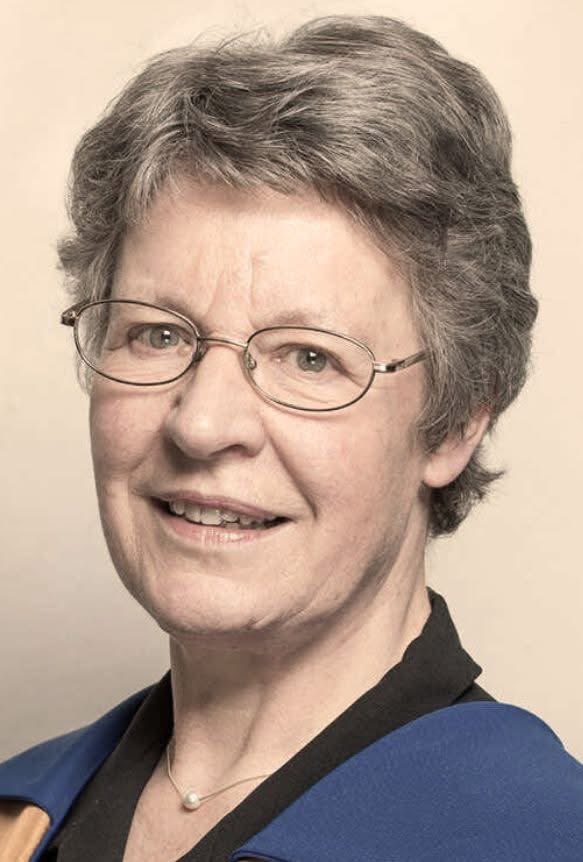
In the 1870s, inside a small Minnesota hospital, a quiet Catholic nun stood next to one of the most famous surgeons in America and caught something everyone else missed. Her name was Mother Mary Joseph Pariseau. She wasn’t the one holding the scalpel. She was the nurse assisting Dr. William Mayo — one of the founders of what would later become the Mayo Clinic. But while the room focused on the procedure, she was watching for patterns. Over and over, she noticed the same strange detail in patients with advanced abdominal cancers: a firm, hard lump in the belly button — a small nodule that seemed unrelated. Most physicians brushed it off. She didn’t. Mother Mary Joseph began calmly pointing out the link: people with abdominal or ovarian cancers often showed up with this distinctive navel mass. That clue helped doctors realize the cancer had already spread inside the body. At a time when women in medicine were rarely credited for insight, her sharp clinical observation changed how physicians recognized metastatic disease. Eventually, surgeons started calling the finding by her name. And they still do. Today it’s known as “Sister Mary Joseph’s nodule.” It shows up in medical textbooks around the world — a reminder that one of medicine’s most useful diagnostic signs didn’t come from a celebrated physician, but from a nurse who paid attention when others didn’t. Her observation improved diagnosis, helped guide treatment, and proved a truth history often skips over: Noticing what others ignore can be lifesaving — and some of medicine’s biggest breakthroughs have come from women no one expected to make them. © Women In World History #archaeohistories
🇺🇦In russian captivity, Ukrainian POW’s are told no one is waiting for them & that they are long forgotten. So Ukrainians stand by the roads during every return, with flags & banners, showing our defenders gratitude & that they were NEVER forgotten! We wait for the return of them all.🫂
She was a grandmother from Montana who asked the U.S. government one question and it took them fifteen years and $3.4 billion to answer it. Elouise Cobell grew up on the Blackfeet Reservation in Montana without running water or electricity. She was the middle child of nine. Three of her siblings did not survive childhood. Her great-great-grandfather was Mountain Chief, the last war chief of the Blackfeet Nation, who had refused to compromise with the United States government in the nineteenth century. That stubbornness ran in the blood. Cobell went to college, studied business and accounting, and came back to the reservation. She became treasurer of the Blackfeet Nation — and almost immediately, the numbers stopped making sense. She could see oil wells pumping on Blackfeet land. She could see cattle grazing on allotted parcels that should have been generating real income. But the checks that arrived from the federal government were impossibly small. One tribal member showed her a report proving an oil company had received six thousand dollars from his land. His check was for eighty-nine dollars. When Cobell asked federal officials to explain the discrepancy, they told her she didn't know how to read a financial statement. She had a degree in business. She had studied accounting. She had founded the first nationally chartered bank on an Indian reservation — the Blackfeet National Bank, created in 1987 because no other bank would open a branch there. In 1997, the MacArthur Foundation awarded her a "genius grant" for her financial work on behalf of Native communities. She knew exactly how to read a financial statement. The problem was that the government didn't have one to show her. What Cobell uncovered was not simple mismanagement. It was the near-total absence of accounting for a trust system that had been running since the Dawes Act of 1887. For over a century, the United States government had been collecting royalties and lease payments on behalf of individual Native American landowners — money from oil, gas, timber, mining, and grazing — and depositing it into Individual Indian Money accounts that it was legally required to manage. But the records were a catastrophe. Accounts were mixed together. Documents were missing, destroyed, or stored in conditions so poor they had been damaged by water, mold, and rodents. Nobody could say where the money had gone. Attorneys would later argue that upwards of one hundred seventy billion dollars was unaccounted for. Cobell lobbied for reform throughout the 1980s and 1990s. Nothing changed. So on June 10, 1996, she did what almost no one thought was possible. She filed a class-action lawsuit against the United States government. Cobell v. Babbitt — named for then-Secretary of the Interior Bruce Babbitt — represented approximately half a million individual Native Americans across more than one hundred fifty tribes. It was filed in federal court in Washington, D.C. Cobell did not sue for personal enrichment. She sued because the government had broken a legal and moral promise to the people whose land it was supposed to protect. The fight lasted thirteen years. The government tried to dismiss the case. It argued the records were too old, too damaged, too complex to reconstruct. It deployed teams of lawyers and delayed proceedings at every opportunity. But federal judges kept ruling in Cobell's favor. Cabinet officials were held in contempt of court. One judge was so openly furious with the government's conduct that he was eventually reassigned from the case. Presidents came and went. Interior Secretaries changed. The case was renamed as defendants rotated — Cobell v. Norton, Cobell v. Kempthorne, Cobell v. Salazar. Through all of it, Cobell remained.

Quattro anni di resistenza. Slava Ukraini