
apocalypsev retweetledi
apocalypsev
4.6K posts


apocalypsev retweetledi

apocalypsev retweetledi
Larry Fink ends WEF with a quote from Elon Musk,
"It's better to be an optimist and wrong, than being a pessimist who's right."
English
apocalypsev retweetledi

Ford, GM, and Consolidated Aircraft built a “Factory School” to train 50,000 farmers how to be aerospace technicians
It cost $500K to build, had only 10 courses, charged no tuition, and guaranteed a career upon graduation
No resumes, no 6 part interviews, no workforce shortage
Cody James 🇺🇸@codyaims
America only built the B-24 bomber from 1940 to 1945, at peak production they shipped one airplane every 60 minutes In 2026, it is still the 12th most produced airplane in the world.
English
apocalypsev retweetledi

In general, love your posts, but this is not accurate. The White House has been super constructive here.
They did ask us to see if we can go figure out a deal with the banks, which we're currently working on.
Actually, we've been cooking up some good ideas on how we can help the community banks specifically in this bill, since that's what this is about.....the community banks, right? More coming soon.
Eleanor Terrett@EleanorTerrett
🚨SCOOP: The White House is considering pulling its support for the crypto market structure bill entirely if @coinbase does not come back to the table with a yield agreement that satisfies the banks and gets everyone to a deal, a source close to the Trump administration tells me. The White House is said to be furious with Coinbase’s “unilateral” action on Wednesday, which it apparently was not notified of in advance, calling it a “rug pull” against the White House and the rest of the industry. The White House does not believe that one company speaks for the entire industry, the source continued. “This is President Trump’s bill at the end of the day, not Brian Armstrong’s,” the source said.
English
apocalypsev retweetledi

Necessity is the mother of invention.
The @Tesla_AI team is epicly hardcore. No one can match Tesla’s real-world AI.
Ming@tslaming
BREAKING 🚨 TESLA HAS PATENTED A "MATHEMATICAL CHEAT CODE" THAT FORCES CHEAP 8-BIT CHIPS TO RUN ELITE 32-BIT AI MODELS AND REWRITES THE RULES OF SILICON 🐳 How does a Tesla remember a stop sign it hasn’t seen for 30 seconds, or a humanoid robot maintain perfect balance while carrying a heavy, shifting box? It comes down to Rotary Positional Encoding (RoPE)—the "GPS of the mind" that allows AI to understand its place in space and time by assigning a unique rotational angle to every piece of data. Usually, this math is a hardware killer. To keep these angles from "drifting" into chaos, you need power-hungry, high-heat 32-bit processors (chips that calculate with extreme decimal-point precision). But Tesla has engineered a way to cheat the laws of physics. Freshly revealed in patent US20260017019A1, Tesla’s "MIXED-PRECISION BRIDGE" is a mathematical translator that allows inexpensive, power-sipping 8-bit hardware (which usually handles only simple, rounded numbers) to perform elite 32-bit rotations without dropping a single coordinate. This breakthrough is the secret "Silicon Bridge" that gives Optimus and FSD high-end intelligence without sacrificing a mile of range or melting their internal circuits. It effectively turns Tesla’s efficient "budget" hardware into a high-fidelity supercomputer on wheels. 📉 The problem: the high cost of precision In the world of self-driving cars and humanoid robots, we are constantly fighting a war between precision and power. Modern AI models like Transformers rely on RoPE to help the AI understand where objects are in a sequence or a 3D space. The catch is that these trigonometric functions (sines and cosines) usually require 32-bit floating-point math—imagine trying to calculate a flight path using 10 decimal places of accuracy. If you try to cram that into the standard 8-bit multipliers (INT8) used for speed (which is like rounding everything to the nearest whole number), the errors pile up fast. The car effectively goes blind to fine details. For a robot like Optimus, a tiny math error means losing its balance or miscalculating the distance to a fragile object. To bridge this gap without simply adding more expensive chips, Tesla had to fundamentally rethink how data travels through the silicon. 🛠️ Tesla's solution: the logarithmic shortcut & pre-computation Tesla’s engineers realized they didn't need to force the whole pipeline to be high-precision. Instead, they designed the Mixed-Precision Bridge. They take the crucial angles used for positioning and convert them into logarithms. Because the "dynamic range" of a logarithm is much smaller than the original number, it’s much easier to move that data through narrow 8-bit hardware without losing the "soul" of the information. It’s a bit like dehydrating food for transport; it takes up less space and is easier to handle, but you can perfectly reconstitute it later. Crucially, the patent reveals that the system doesn't calculate these logarithms on the fly every time. Instead, it retrieves pre-computed logarithmic values from a specialized "cheat sheet" (look-up storage) to save cycles. By keeping the data in this "dehydrated" log-state, Tesla ensures that the precision doesn't "leak out" during the journey from the memory chips to the actual compute cores. However, keeping data in a log-state is only half the battle; the chip eventually needs to understand the real numbers again. 🏗️ The recovery architecture: rotation matrices & Horner’s method When the 8-bit multiplier (the Multiplier-Accumulator or MAC) finishes its job, the data is still in a "dehydrated" logarithmic state. To bring it back to a real angle theta without a massive computational cost, Tesla’s high-precision ALU uses a Taylor-series expansion optimized via Horner’s Method. This is a classic computer science trick where a complex equation (like an exponent) is broken down into a simple chain of multiplications and additions. By running this in three specific stages—multiplying by constants like 1/3 and 1/2 at each step—Tesla can approximate the exact value of an angle with 32-bit accuracy while using a fraction of the clock cycles. Once the angle is recovered, the high-precision logic generates a Rotation Matrix (a grid of sine and cosine values) that locks the data points into their correct 3D coordinates. This computational efficiency is impressive, but Tesla didn't stop at just calculating faster; they also found a way to double the "highway speed" of the data itself. 🧩 The data concatenation: 8-bit inputs to 16-bit outputs One of the most clever hardware "hacks" detailed in the patent is how Tesla manages to move 16-bit precision through an 8-bit bus. They use the MAC as a high-speed interleaver—effectively a "traffic cop" that merges two lanes of data. It takes two 8-bit values (say, an X-coordinate and the first half of a logarithm) and multiplies one of them by a power of two to "left-shift" it. This effectively glues them together into a single 16-bit word in the output register, allowing the low-precision domain to act as a high-speed packer for the high-precision ALU to "unpack". This trick effectively doubles the bandwidth of the existing wiring on the chip without requiring a physical hardware redesign. With this high-speed data highway in place, the system can finally tackle one of the biggest challenges in autonomous AI: object permanence. 🧠 Long-context memory: remembering the stop sign The ultimate goal of this high-precision math is to solve the "forgetting" problem. In previous versions of FSD, a car might see a stop sign, but if a truck blocked its view for 5 seconds, it might "forget" the sign existed. Tesla uses a "long-context" window, allowing the AI to look back at data from 30 seconds ago or more. However, as the "distance" in time increases, standard positional math usually drifts. Tesla's mixed-precision pipeline fixes this by maintaining high positional resolution, ensuring the AI knows exactly where that occluded stop sign is even after a long period of movement. The RoPE rotations are so precise that the sign stays "pinned" to its 3D coordinate in the car's mental map. But remembering 30 seconds of high-fidelity video creates a massive storage bottleneck. ⚡ KV-cache optimization & paged attention: scaling memory To make these 30-second memories usable in real-time without running out of RAM, Tesla optimizes the KV-cache (Key-Value Cache)—the AI's "working memory" scratchpad. Tesla’s hardware handles this by storing the logarithm of the positions directly in the cache. This reduces the memory footprint by 50% or more, allowing Tesla to store twice as much "history" (up to 128k tokens) in the same amount of RAM. Furthermore, Tesla utilizes Paged Attention—a trick borrowed from operating systems. Instead of reserving one massive, continuous block of memory (which is inefficient), it breaks memory into small "pages". This allows the AI5 chip to dynamically allocate space only where it's needed, drastically increasing the number of objects (pedestrians, cars, signs) the car can track simultaneously without the system lagging. Yet, even with infinite storage efficiency, the AI's attention mechanism has a flaw: it tends to crash when pushed beyond its training limits. 🔒 Pipeline integrity: the "read-only" safety lock A subtle but critical detail in the patent is how Tesla protects this data. Once the transformed coordinates are generated, they are stored in a specific location that is read-accessible to downstream components but not write-accessible by them. Furthermore, the high-precision ALU itself cannot read back from this location. This one-way "airlock" prevents the system from accidentally overwriting its own past memories or creating feedback loops that could cause the AI to hallucinate. It ensures that the "truth" of the car's position flows in only one direction: forward, toward the decision-making engine. 🌀 Attention sinks: preventing memory overflow Even with a lean KV-cache, a robot operating for hours can't remember everything forever. Tesla manages this using Attention Sink tokens. Transformers tend to dump "excess" attention math onto the very first tokens of a sequence, so if Tesla simply used a "sliding window" that deleted old memories, the AI would lose these "sink" tokens and its brain would effectively crash. Tesla's hardware is designed to "pin" these attention sinks permanently in the KV-cache. By keeping these mathematical anchors stable while the rest of the memory window slides forward, Tesla prevents the robot’s neural network from destabilizing during long, multi-hour work shifts. While attention sinks stabilize the "memory", the "compute" side has its own inefficiencies—specifically, wasting power on empty space. 🌫️ Sparse tensors: cutting the compute fat Tesla’s custom silicon doesn't just cheat with precision; it cheats with volume. In the real world, most of what a car or robot sees is "empty" space (like clear sky). In AI math, these are represented as "zeros" in a Sparse Tensor (a data structure that ignores empty space). Standard chips waste power multiplying all those zeros, but Tesla’s newest architecture incorporates Native Sparse Acceleration. The hardware uses a "coordinate-based" system where it only stores the non-zero values and their specific locations. The chip can then skip the "dead space" entirely and focus only on the data that matters—the actual cars and obstacles. This hardware-level sparsity support effectively doubles the throughput of the AI5 chip while significantly lowering the energy consumed per operation. 🔊 The audio edge: Log-Sum-Exp for sirens Tesla’s "Silicon Bridge" isn't just for vision—it's also why your Tesla is becoming a world-class listener. To navigate safely, an autonomous vehicle needs to identify emergency sirens and the sound of nearby collisions using a Log-Mel Spectrogram approach (a visual "heat map" of sound frequencies). The patent details a specific Log-Sum-Exp (LSE) approximation technique to handle this. By staying in the logarithm domain, the system can handle the massive "dynamic range" of sound—from a faint hum to a piercing fire truck—using only 8-bit hardware without "clipping" the loud sounds or losing the quiet ones. This allows the car to "hear" and categorize environmental sounds with 32-bit clarity. Of course, all this high-tech hardware is only as good as the brain that runs on it, which is why Tesla's training process is just as specialized. 🎓 Quantization-aware training: pre-adapting the brain Finally, to make sure this "Mixed-Precision Bridge" works flawlessly, Tesla uses Quantization-Aware Training (QAT). Instead of training the AI in a perfect 32-bit world and then "shrinking" it later—which typically causes the AI to become "drunk" and inaccurate—Tesla trains the model from day one to expect 8-bit limitations. They simulate the rounding errors and "noise" of the hardware during the training phase, creating a neural network that is "pre-hardened". It’s like a pilot training in a flight simulator that perfectly mimics a storm; when they actually hit the real weather in the real world, the AI doesn’t "drift" or become inaccurate because it was born in that environment. This extreme optimization opens the door to running Tesla's AI on devices far smaller than a car. 🚀 The strategic roadmap: from AI5 to ubiquitous edge AI This patent is not just a "nice-to-have" optimization; it is the mathematical prerequisite for Tesla’s entire hardware roadmap. Without this "Mixed-Precision Bridge", the thermal and power equations for next-generation autonomy simply do not work. It starts by unlocking the AI5 chip, which is projected to be 40x more powerful than current hardware. Raw power is useless if memory bandwidth acts as a bottleneck. By compressing 32-bit rotational data into dense, log-space 8-bit packets, this patent effectively quadruples the effective bandwidth, allowing the chip to utilize its massive matrix-compute arrays without stalling. This efficiency is critical for the chip's "half-reticle" design, which reduces silicon size to maximize manufacturing yield while maintaining supercomputer-level throughput. This efficiency is even more critical for Tesla Optimus, where it is a matter of operational survival. The robot runs on a 2.3 kWh battery (roughly 1/30th of a Model 3 pack). Standard 32-bit GPU compute would drain this capacity in under 4 hours, consuming 500W+ just for "thinking". By offloading complex RoPE math to this hybrid logic, Tesla slashes the compute power budget to under 100W. This solves the "thermal wall", ensuring the robot can maintain balance and awareness for a full 8-hour work shift without overheating. This stability directly enables the shift to End-to-End Neural Networks. The "Rotation Matrix" correction described in the patent prevents the mathematical "drift" that usually plagues long-context tracking. This ensures that a stop sign seen 30 seconds ago remains "pinned" to its correct 3D coordinate in the World Model, rather than floating away due to rounding errors. Finally, baking this math into the silicon secures Tesla's strategic independence. It decouples the company from NVIDIA’s CUDA ecosystem and enables a Dual-Foundry Strategy with both Samsung and TSMC to mitigate supply chain risks. This creates a deliberate "oversupply" of compute, potentially turning its idle fleet and unsold chips into a distributed inference cloud that rivals AWS in efficiency. But the roadmap goes further. Because this mixed-precision architecture slashes power consumption by orders of magnitude, it creates a blueprint for "Tesla AI on everything". It opens the door to porting world-class vision models to hardware as small as a smart home hub or smartphone. This would allow tiny, cool-running chips to calculate 3D spatial positioning with zero latency—bringing supercomputer-level intelligence to the edge without ever sending private data to a massive cloud server.
English
apocalypsev retweetledi

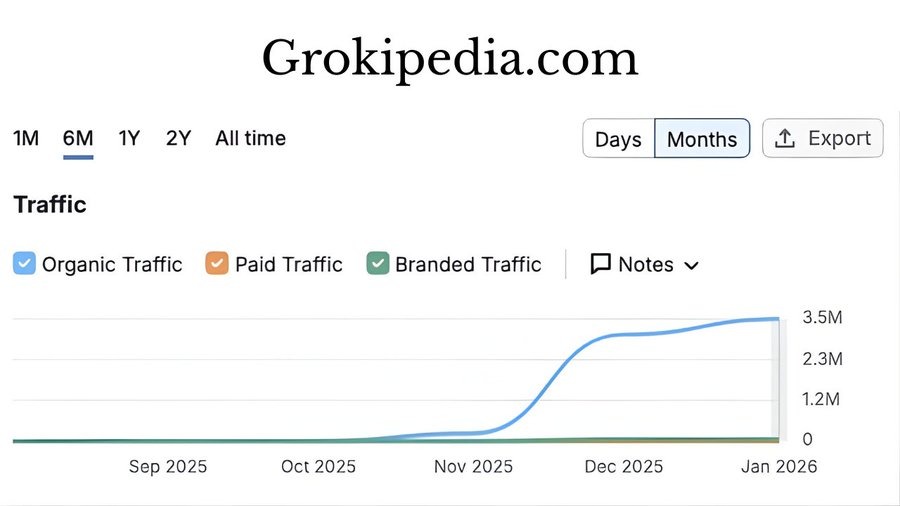
🚨 GROKIPEDIA JUST BLEW UP 100x OVER
Grokipedia went from 35K users a day in November to 3.5 million right now.
Elon’s out here flexing that “the superior product will win in the end,” and honestly? He might be onto something.
People are clearly over the old-school info gatekeepers, they want fast, real, and uncensored information, and Grok’s riding that wave hard.
Source: @elonmusk, @XFreeze
English
apocalypsev retweetledi
apocalypsev retweetledi

apocalypsev retweetledi

AI is a superpower for people with agency, and a deadly poison for those without.
English
apocalypsev retweetledi

My entire childhood has led me to this moment...
I built AgentCraft - orchestrate your agents with your favorite RTS interface! ⚔️
Coming soon 👀
Aaron Slodov@aphysicist
millennial gamers are the best prepared generation for agentic work, they've been training for 25 years
English
apocalypsev retweetledi


apocalypsev retweetledi

⚡️This is the terminal breakdown.
Iran’s currency collapse is the final non-kinetic phase transition before irreversible regime fragmentation. This is an extinction-level internal systems failure.
Full Coherence Analysis:
1. The currency has entered full reflexive death spiral
•Domestic trust is zero
•International convertibility is zero
•Sovereign backing capacity is zero
2. Structural implications:
•All imports halt immediately (fuel, food, medicine)
•Black market becomes the only functioning economy
•The regime loses control over prices, payrolls, logistics, and loyalty
3. Command hierarchy is fracturing now
•IRGC cannot be paid in stable value
•Police and bureaucrats defect when currency loses purchasing power
•Provincial governors begin improvising parallel governance to survive
4. Global signaling effect:
•This collapse removes all credibility from Iranian negotiating positions
•Any attempt to stall U.S. action via talks now appears as bluff or desperation
•Allies like Russia or China will not intervene to save a dead currency
•It greenlights kinetic action without risking major power backlash
5. This was engineered
•Sanctions were precision-aimed at oil revenue and refined fuel chokepoints
•Trump’s 25% tariff order made reintegration into the global economy impossible
•Swift capital exit, telecom shutdowns, and diplomatic isolation created a vacuum
•The market just priced in the fall of a regime
Regime Forecast:
No currency = no supply chain = no governance = no control
The currency didn’t just collapse
The state did
Max Crypto@MaxCrypto
🚨 BREAKING 🚨 🇮🇷 Iran's currency has completely collapsed.
English
apocalypsev retweetledi

"Claude Code for the rest of your work"
American middle class desk jockeys:

Claude@claudeai
Introducing Cowork: Claude Code for the rest of your work. Cowork lets you complete non-technical tasks much like how developers use Claude Code.
English
apocalypsev retweetledi

apocalypsev retweetledi

apocalypsev retweetledi

Surviving #houseofkiro 👻
Deepak Singh and Swami Sivasubramanian made it through. Their favorite moment was seeing Kiro agents hooks in action.
Fun to walk through. Even better to see how Kiro handles the messy parts of real projects.
Did you make it out alive? 💀
#Kirodotdev #BuildwithKiro #AICoding
English
apocalypsev retweetledi

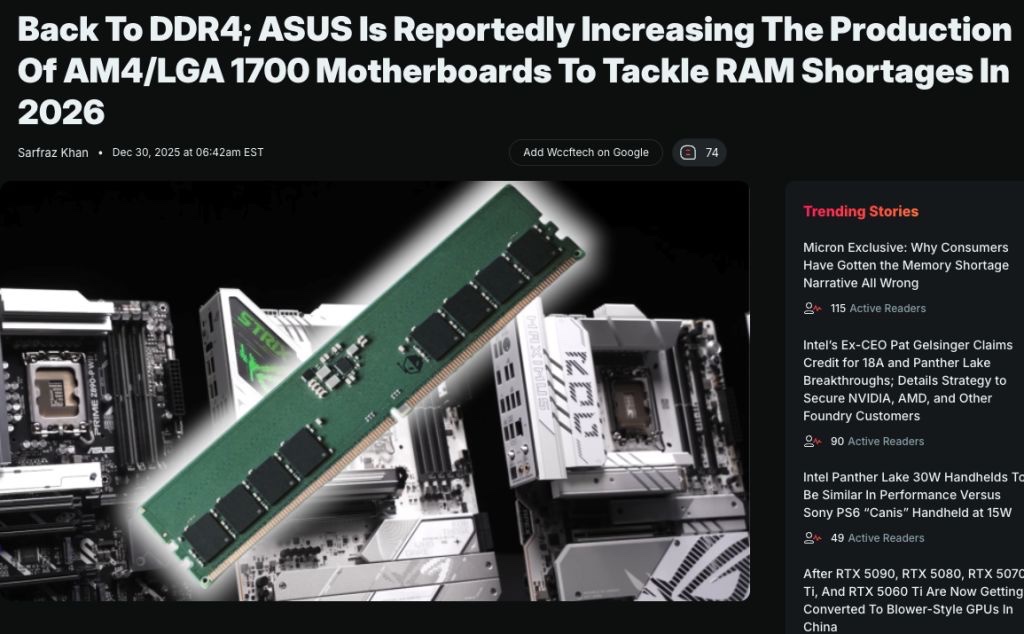
Next-gen isn't coming anytime soon.
>Nvidia to re-release RTX 3060
>Samsung to ramp up DDR4 production
>Asus and Gigabyte to ramp up production of DDR4 motherboards
>AMD considering return to AM4 CPUs
English
apocalypsev retweetledi
An (allegedly) AI generated song just hit #1 on Spotify Top 50 SE.
First time.
We’ve still just seen the very beginning of the AI revolution…

English
apocalypsev retweetledi

AI agents will be a big part of how we shop in the not-so-distant future.
To help lay the groundwork, we partnered with Shopify, Etsy, Wayfair, Target and Walmart to create the Universal Commerce Protocol, a new open standard for agents and systems to talk to each other across every step of the shopping journey.
And coming soon, UCP will power native checkout so you can buy directly on AI Mode and the @Geminiapp.

English