ApolloTheDon

4.2K posts

ApolloTheDon banner
ApolloTheDon

ApolloTheDon

@apxllothedon

business owner, CRE investor, Ponzi enthusiast

Katılım Kasım 2021
2.1K Takip Edilen252 Takipçiler
ApolloTheDon retweetledi
SightBringer
SightBringer@_The_Prophet__·
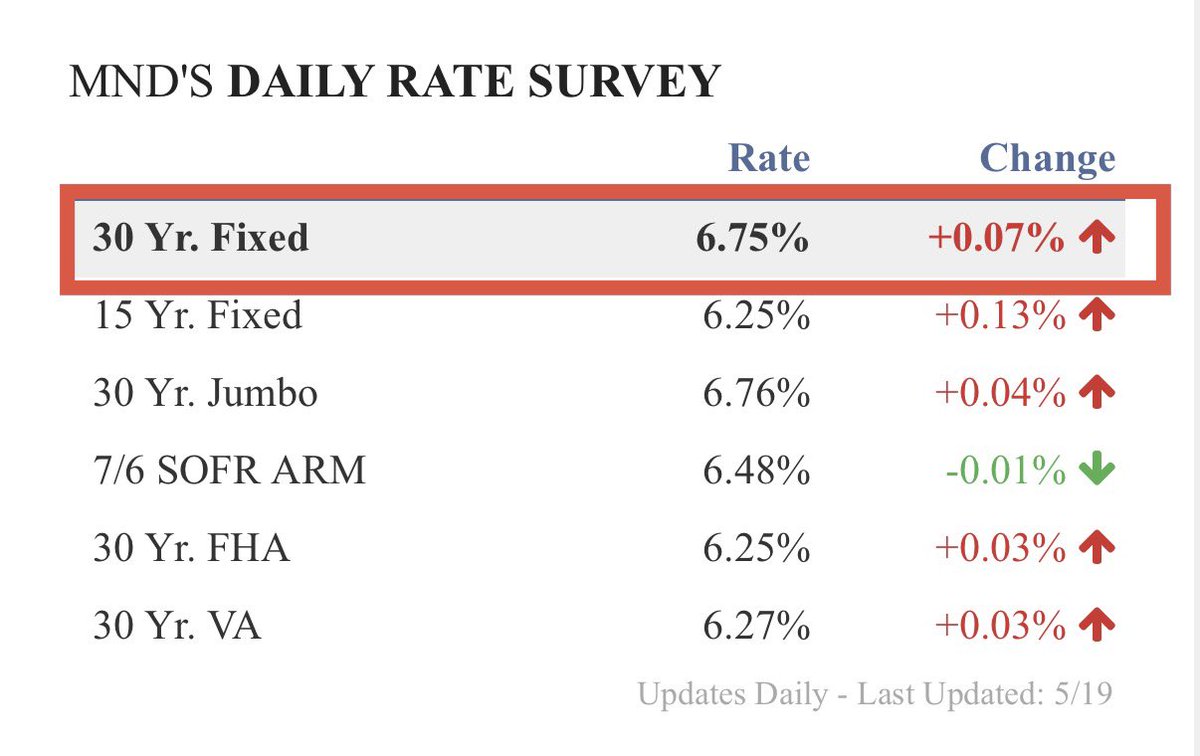
⚡️The housing market is sending the cleanest signal in the economy: the old American mobility machine is jammed. A 6.6% mortgage rate here is confirmation that the supposed easing cycle is not reaching the place where ordinary households actually live. Wall Street can price rate cuts. Stocks can celebrate liquidity. But a first-time buyer staring at a monthly payment does not care about the Fed’s narrative. The mortgage rate is the reality. The deeper truth is that housing has become a class-separation mechanism. Existing owners with locked-in 3% mortgages are protected. They sit inside subsidized old money. New buyers are forced to clear at today’s price, today’s rate, today’s insurance cost, today’s property tax, today’s down payment burden, and today’s weaker labor-entry market. That is not a normal cycle. That is a gated economic architecture. The market is not clearing through a crash. It is clearing through exclusion. That is why this is so dangerous politically and socially. A crash would be visible. Paralysis is quieter. Prices can stay elevated because sellers do not have to sell. Inventory can improve without becoming affordable. Mortgage demand can stay weak without triggering a dramatic national panic. The surface looks stable while the entry point keeps disappearing. This connects directly to the new-grad labor problem. The economy is closing its first rungs. First job: harder to get. First home: harder to buy. First family formation: delayed. First asset accumulation: postponed. First move into economic adulthood: blocked by the fixed-cost wall. That is the generational signal. The long end is now the real policy battlefield. If the 10-year and mortgage rates stay elevated, housing remains frozen no matter how many Fed-cut headlines get printed. The Fed can lower the front end, but the economy’s deepest household transmission channel runs through the 30-year mortgage. Right now that channel is hostile. This also means the system is moving toward a future intervention point. Structurally, a society cannot run forever with housing affordability broken, young labor entry weakened, electricity bills rising, insurance costs rising, and asset owners protected by old-rate balance sheets. The pressure compounds until policy finds a way to force relief, distort the market further, or accept a politically toxic generational fracture. The blunt read: Mortgage rates are now a regime test. If they fall cleanly, housing can breathe. If they stay elevated, the American ladder keeps closing. If policymakers panic, the next phase becomes long-end suppression, housing subsidy expansion, credit engineering, or some uglier form of intervention. The market is not just saying “home buyers are screwed.” It is saying the post-2020 economy is hardening into an insider-outsider system, and housing is the clearest place where the door is being locked.
Barchart@Barchart

BREAKING 🚨: Home Buyers 30-Year Mortgage Rate soars to highest level in 9 months 📈🏡🤯

English
18
15
130
39.1K
ApolloTheDon retweetledi
Charlie Bilello
Charlie Bilello@charliebilello·
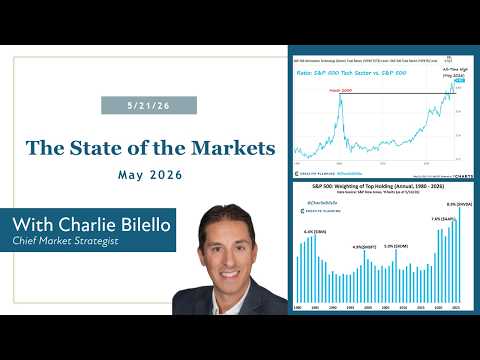
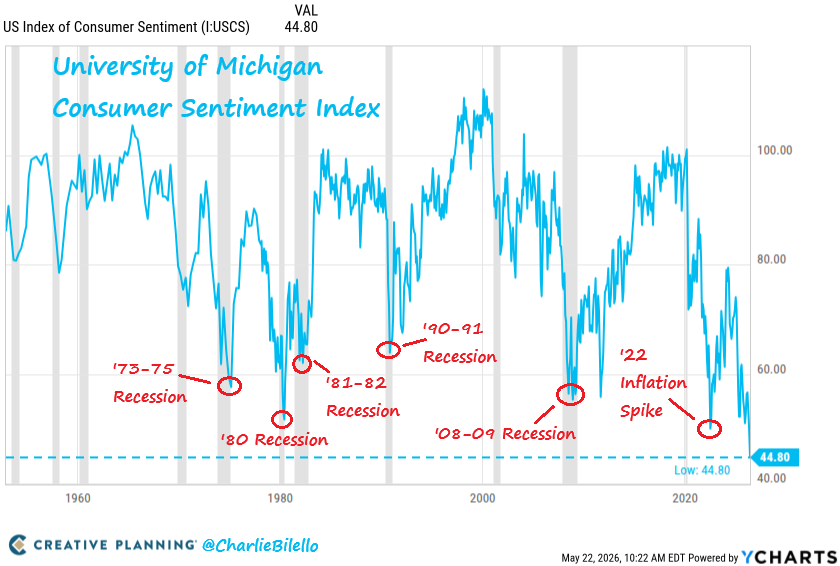
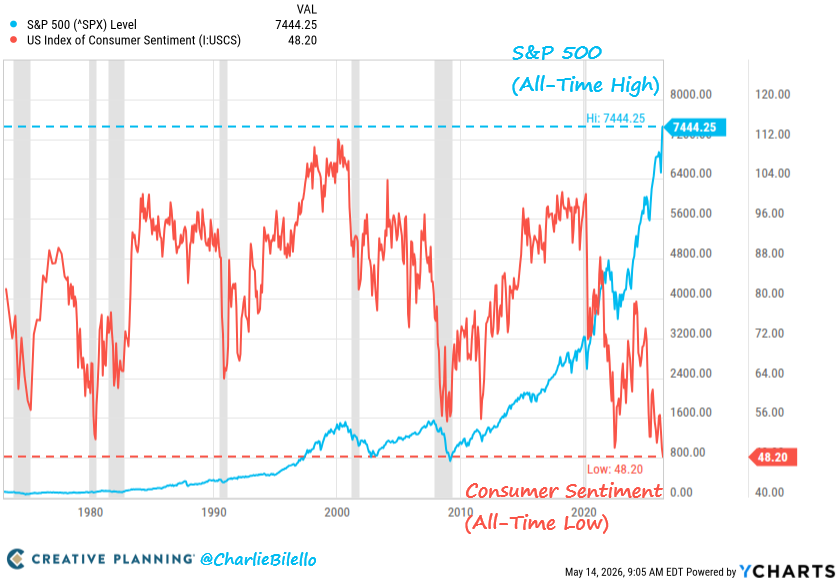
The US consumer sentiment index from the University of Michigan goes back to 1952. It has never been lower than it is today. Video: youtube.com/watch?v=pJGsJO…
YouTube video
YouTube
Charlie Bilello tweet media
English
181
1.1K
2.6K
209.8K
ApolloTheDon retweetledi
Doug Casey's International Man
The 10-year Treasury yield is perhaps the most important financial benchmark in the global fiat system, as it drives valuations and market trends worldwide. It is widely—and erroneously—regarded as the risk-free rate of return. The 10-year Treasury yield can be thought of as a key barometer of the US dollar-based fiat system—a critical measure akin to its beating heart. Bond yields move inversely to bond prices. When bond prices fall, bond yields rise. A rising 10-year Treasury yield signals trouble for the US dollar because it means investors are selling Treasuries, which pushes up the US government’s borrowing costs. That is why the 10-year Treasury yield is a major pain point for the US government. The 10-year Treasury yield was 3.97% when the war started. Now it is around 4.60%, an increase of roughly 63 basis points. I expect the 10-year Treasury yield to keep climbing over the coming weeks and months—until it forces the Fed’s hand. At that point, the intervention will be sold as “stability,” but the mechanism will be familiar: suppress yields by debasing the currency. At today’s debt levels, every 1 basis point increase in the government’s average borrowing cost adds roughly $3.9 billion in annual interest expense. So a 63 bps rise is not trivial—it translates to nearly $250 billion in additional yearly interest costs, materially widening a 2025 budget deficit that was already around $1.8 trillion. Higher yields mean the US government must pay tens or even hundreds of billions more in interest on its debt. At the same time, the global economy faces even greater added costs because Treasury rates serve as the benchmark for borrowing worldwide. That is not an insignificant move. However, given all the headwinds I have discussed, I suspect the 10-year Treasury yield is headed much higher because investors will demand higher yields to compensate for rising inflation. Further, if Hormuz remains closed, drastically higher oil prices are all but certain. Higher energy prices mean higher prices across the economy and higher official inflation rates, which means investors will demand still higher yields to compensate. The problem is that interest on the federal debt is already over $1.2 trillion and is now the second-largest item in the budget. The US government cannot afford yields going much higher because the interest expense would push it toward bankruptcy. I am not sure how—or even if—the US government can manage this situation. Something has to give, and we will not have to wait long to find out what. The Iran war may prove to be more than another foreign policy disaster. It could be the trigger that exposes the fragility of the entire dollar-based financial system.
English
236
678
3.3K
1.6M
ApolloTheDon retweetledi
Ihtesham Ali
Ihtesham Ali@ihtesham2005·
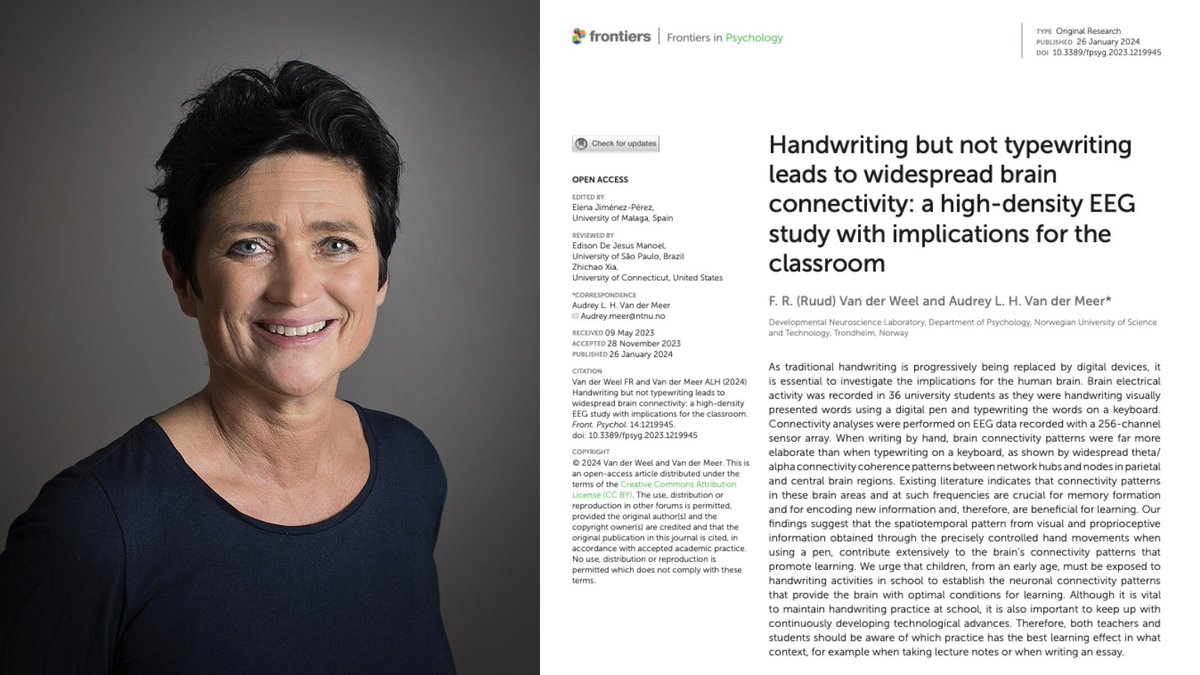
A Norwegian neuroscientist spent 20 years proving that the act of writing by hand changes the human brain in ways typing physically cannot, and almost nobody outside her field has read the paper. Her name is Audrey van der Meer. She runs a brain research lab in Trondheim, and the paper that closed the argument was published in 2024 in a journal called Frontiers in Psychology. The finding is brutal enough that it should have changed every classroom on Earth. The experiment was simple. She recruited 36 university students and put each one in a cap with 256 sensors pressed against their scalp to record brain activity. Words flashed on a screen one at a time. Sometimes the students wrote the word by hand on a touchscreen using a digital pen, and sometimes they typed the same word on a keyboard. Every neural response was recorded for the full five seconds the word stayed on screen. Then her team looked at the part of the data most researchers had ignored for years, which is how different parts of the brain were communicating with each other during the task. When the students wrote by hand, the brain lit up everywhere at once. The regions responsible for memory, sensory integration, and the encoding of new information were all firing together in a coordinated pattern that spread across the entire cortex. The whole network was awake and connected. When the same students typed the same word, that pattern collapsed almost completely. Most of the brain went quiet, and the connections between regions that had been alive seconds earlier were nowhere to be found on the EEG. Same word, same brain, same person, and two completely different neurological events. The reason turned out to be something nobody had really paid attention to before her work. Writing by hand is not one motion but a sequence of thousands of tiny micro-movements coordinated with your eyes in real time, where each letter is a different shape that requires the brain to solve a slightly different spatial problem. Your fingers, wrist, vision, and the parts of your brain that track position in space are all working together to produce one letter, then the next, then the next. Typing throws all of that away. Every key on a keyboard requires the exact same finger motion regardless of which letter you are pressing, which means the brain has almost nothing to integrate and almost no problem to solve. Van der Meer said it plainly in her interviews. Pressing the same key with the same finger over and over does not stimulate the brain in any meaningful way, and she pointed out something that should scare every parent who handed their kid an iPad. Children who learn to read and write on tablets often cannot tell letters like b and d apart, because they have never physically felt with their bodies what it takes to actually produce those letters on a page. A decade before her, two researchers at Princeton ran the same fight using a completely different method and ended up at the same answer. Pam Mueller and Daniel Oppenheimer tested 327 students across three experiments, where half took notes on laptops with the internet disabled and half took notes by hand, before testing everyone on what they actually understood from the lectures they had watched. The handwriting group won by a wide margin on every question that required real understanding rather than surface recall. The reason was hiding in the transcripts of what the two groups had actually written down. The laptop students typed almost word for word, capturing more total content but processing almost none of it as they went, while the handwriting students physically could not write fast enough to transcribe a lecture in real time, which forced them to listen carefully, decide what actually mattered, and put it in their own words on the page. That single act of choosing what to keep was the learning itself, and the keyboard had quietly skipped the choosing and skipped the learning along with it. Two studies. Two countries. Same answer. Handwriting makes the brain work. Typing lets it coast. Every note you have ever typed instead of written went into your brain through a thinner pipe. Every meeting, every book highlight, every idea you captured on your phone instead of on paper was processed at half depth. You did not forget those things because your memory is bad. You forgot them because typing never woke the part of the brain that would have made them stick. The fix is the thing your grandmother already knew. Pick up a pen. Write the thing down. The slower road is the faster one.
Ihtesham Ali tweet media
English
2.4K
44.3K
119.4K
9.5M
ApolloTheDon retweetledi
ApolloTheDon
ApolloTheDon@apxllothedon·
@missmkirk @cb_doge That was the whole point of the post lol. We should see the best pilots, doctors, etc based on merit and not on the color of their skin. DEI is racist
English
0
0
1
17
Marisa
Marisa@missmkirk·
Because you go to the games to see the best of the best not the best Asian or indigenous players. They stand out for their skills and frankly you asking to see more people of a certain skin color and less of another is pretty racist if you ask me. Kinda puts some on a pedestal, no?
English
1
0
1
35
DogeDesigner
DogeDesigner@cb_doge·
David Rubin served as President of the Academy of Motion Picture Arts and Sciences from 2019 to 2022. In 2020, under his leadership, the Academy launched the “Representation and Inclusion Standards” for Best Picture eligibility. These rules, still in effect, require films to meet at least 2 of 4 diversity criteria involving race, ethnicity, gender, sexual orientation, or disability in on-screen roles, creative leadership, or crew. Rubin publicly backed the changes and helped appoint the task force co-led by producer DeVon Franklin. He shifted the Oscars from “best movie wins” to race/gender engineering. A film can now be ineligible for the top prize purely for failing demographic quotas, regardless of quality or audience impact. Instead of focusing purely on talent and storytelling, the Academy under Rubin institutionalized identity preferences. Oscars prestige and viewership have tanked. Many see it as performative politics over art. Classics with non-diverse casts would be disqualified. He helped install the DEI machinery that turned awards into checkboxes and accelerated Hollywood’s quality decline.
DogeDesigner tweet media
English
2.8K
5.8K
29.4K
21.1M
ApolloTheDon retweetledi
Brivael Le Pogam
Brivael Le Pogam@brivael·
Aujourd'hui je déconstruis la déconstruction. La déconstruction est le virus mental le plus efficace jamais conçu contre une civilisation. Il a été fabriqué en France entre 1966 et 1980 par trois hommes : Foucault, Derrida, Deleuze. Il a été exporté aux États-Unis, hybridé avec le puritanisme racial américain, et il est revenu trente ans plus tard sous le nom de wokisme paralyser l'Occident entier. Voici comment il fonctionne, et pourquoi il faut le détruire. La thèse est simple. Toute vérité n'est qu'un rapport de pouvoir déguisé. Tout texte sacré, toute loi, toute science, toute norme, toute hiérarchie, toute identité, toute institution cache en réalité une domination. Déconstruire, c'est montrer le rapport de force sous le vernis du vrai. C'est arracher le masque. C'est "démasquer". Formulé comme ça, ça paraît inoffensif. Voire utile. Qui n'aime pas un peu d'esprit critique ? Le piège est là. La déconstruction se présente comme une méthode. Elle est en réalité une ontologie. Elle ne dit pas seulement "interrogeons les normes", elle dit "il n'y a *que* des rapports de pouvoir". La différence est civilisationnelle. Une société qui interroge ses normes reste debout. Une société qui croit que ses normes ne sont *rien d'autre* que de la domination s'effondre. Parce qu'elle ne peut plus rien défendre. Plus une frontière, plus une loi, plus une science, plus une langue, plus une histoire, plus une biologie, plus une famille. Tout devient suspect. Tout devient négociable. Tout devient "construit donc déconstructible". C'est la première raison pour laquelle c'est un virus. Il s'auto-réplique. Une fois inoculé, il transforme tout ce qu'il touche en cible. La science est patriarcale, donc déconstruisons-la. Le langage est colonial, donc réinventons-le. La méritocratie est raciste, donc abolissons-la. Le sexe est une construction, donc choisissons-le. Il n'y a plus de roc. Tout est sable. Deuxième raison. Le virus est *non-falsifiable*. Si vous défendez une norme, c'est que vous êtes l'oppresseur. Si vous niez être oppresseur, c'est la preuve de votre privilège inconscient. Si vous citez des faits, vos faits sont contaminés par le pouvoir qui les a produits. Si vous citez la raison, la raison elle-même est blanche, masculine, occidentale. Il n'y a aucune sortie possible. Le système est conçu pour rendre toute objection irrecevable par définition. C'est exactement la structure d'une secte. Et c'est exactement ce qui s'est installé dans les universités, les RH, les médias, les administrations, les conseils d'administration depuis vingt ans. Troisième raison. Le virus s'auto-réfute mais ne s'auto-détruit pas. Si toute vérité est pouvoir, alors la phrase "toute vérité est pouvoir" est elle-même du pouvoir, donc sans valeur. Logiquement, la déconstruction se mord la queue dès la première phrase. Mais elle s'en moque. Parce qu'elle n'a jamais cherché la cohérence. Elle cherche l'efficacité politique. Et son efficacité politique est immense. Elle désarme ses ennemis et arme ses militants. Elle paralyse le défenseur et libère l'attaquant. C'est une arme asymétrique parfaite. Quatrième raison. Le virus produit des humains diminués. Une génération entière a appris à déconstruire et n'a jamais appris à construire. Elle sait soupçonner, jamais admirer. Elle voit le pouvoir partout et la beauté nulle part. Elle peut produire mille pages sur le caractère opprimant de Shakespeare et zéro ligne qui vaille la peine d'être lue dans cent ans. Elle a confondu l'intelligence critique avec la pose critique. Elle est stérile par construction. Un esprit nourri à la déconstruction est un esprit qui ne sait plus rien édifier. Cinquième raison, la plus grave. Une civilisation se tient debout sur trois piliers. La croyance qu'une vérité est accessible à la raison. La croyance qu'un bien se distingue d'un mal. La croyance qu'un héritage mérite d'être transmis. La déconstruction a méthodiquement dynamité les trois. Pas par méchanceté. Par jeu intellectuel, par fascination du soupçon, par haine de la bourgeoisie qui avait nourri ses prophètes. Mais le résultat est là. Une civilisation qui ne croit plus en sa vérité, ni en son bien, ni en son héritage ne se défend pas. Elle s'excuse en attendant la fin. Voilà ce qu'on a fait. Voilà ce qu'il faut nommer. La bonne nouvelle, c'est qu'un virus mental ne survit que tant qu'on lui cède l'autorité du discours. Il meurt dès qu'on cesse de jouer son jeu. Dès qu'on réaffirme tranquillement qu'il existe une vérité, un beau, un bien, un héritage. Dès qu'on cesse de demander la permission aux déconstructeurs pour bâtir. Dès qu'on refait. Dès qu'on transmet. Dès qu'on crée. Les bâtisseurs ont toujours le dernier mot sur les commentateurs. Toujours. Parce qu'à la fin il reste ce qui est construit, et rien de ce qui a été déconstruit. Alors aujourd'hui je déconstruis la déconstruction. Et demain je construis.
Brivael Le Pogam@brivael

Je veux présenter mes excuses, au nom des Français, pour avoir enfanté la French Theory (qui a enfanté la pire des merdes idéologiques : le wokisme). Nous avons donné au monde Descartes, Pascal, Tocqueville. Et puis, dans les ruines intellectuelles de l'après-68, nous avons donné Foucault, Derrida, Deleuze. Trois hommes brillants qui ont fabriqué, dans l'élégance de notre langue, l'arme idéologique qui paralyse aujourd'hui l'Occident. Il faut comprendre ce qu'ils ont fait. Foucault a enseigné que la vérité n'existe pas, qu'il n'y a que des rapports de pouvoir déguisés en savoir. Que la science, la raison, la justice, l'institution médicale, l'école, la prison, la sexualité, tout n'est qu'une mise en scène de la domination. Derrida a enseigné que les textes n'ont pas de sens stable, que tout signifiant glisse, que toute lecture est une trahison, que l'auteur est mort et que le lecteur règne. Deleuze a enseigné qu'il fallait préférer le rhizome à l'arbre, le nomade au sédentaire, le désir à la loi, le devenir à l'être, la différence à l'identité. Pris isolément, ce sont des thèses discutables. Combinées, exportées, vulgarisées, elles forment un système. Et ce système est un poison. Car voici ce qui s'est passé. Ces textes, illisibles en France, ont traversé l'Atlantique. Les départements de Yale, de Berkeley, de Columbia les ont absorbés dans les années 80. Ils y ont trouvé un terreau qui n'existait pas chez nous : le puritanisme américain, sa culpabilité raciale, son obsession identitaire. La French Theory s'est mariée à ce substrat, et l'enfant de ce mariage s'appelle le wokisme. Judith Butler lit Foucault et invente le genre performatif. Edward Said lit Foucault et invente le post-colonialisme académique. Kimberlé Crenshaw hérite du cadre et invente l'intersectionnalité. À chaque étape, la matrice est française : il n'y a pas de vérité, il n'y a que du pouvoir, donc toute hiérarchie est suspecte, toute institution est oppressive, toute norme est violence, toute identité est construite donc négociable, toute majorité est coupable. Voilà comment trois philosophes parisiens, qui n'ont probablement jamais imaginé leurs conséquences pratiques, ont fourni le logiciel d'exploitation à une génération entière d'activistes, de bureaucrates universitaires, de DRH, de journalistes, de législateurs. Voilà comment on a obtenu une civilisation qui ne sait plus dire si une femme est une femme, si sa propre histoire mérite d'être défendue, si le mérite existe, si la vérité se distingue de l'opinion. C'est de la merde pour une raison simple, et il faut la dire calmement. Une civilisation se tient debout sur trois piliers : la croyance qu'il existe une vérité accessible à la raison, la croyance qu'il existe un bien distinct du mal, la croyance qu'il existe un héritage à transmettre. La French Theory a entrepris de dynamiter les trois. Pas par méchanceté. Par jeu intellectuel, par fascination du soupçon, par haine de la bourgeoisie qui les avait nourris. Mais le résultat est là. Une génération entière a appris à déconstruire et n'a jamais appris à construire. Une génération entière sait soupçonner et ne sait plus admirer. Une génération entière voit le pouvoir partout et la beauté nulle part. Je m'excuse parce que nous, Français, avons une responsabilité particulière. C'est notre langue, nos universités, nos éditeurs, notre prestige qui ont donné à ce nihilisme son emballage chic. Sans la légitimité de la Sorbonne et de Vincennes, ces idées n'auraient jamais traversé l'océan. Nous avons exporté le doute comme d'autres exportent des armes. Ce qui se construit maintenant, en silicon valley, dans les labos d'IA, dans les startups, dans les ateliers, dans tous les lieux où des gens fabriquent encore des choses au lieu de les déconstruire, c'est la réponse. Une civilisation se reconstruit par les bâtisseurs, pas par les commentateurs. Par ceux qui croient que la vérité existe et qu'elle vaut qu'on s'y consacre. Par ceux qui assument une hiérarchie du beau, du vrai, du bon, et qui n'ont pas honte de la transmettre. Alors pardon. Et au travail.

Français
932
5.8K
18.1K
4.8M
ApolloTheDon retweetledi
The Kobeissi Letter
The Kobeissi Letter@KobeissiLetter·
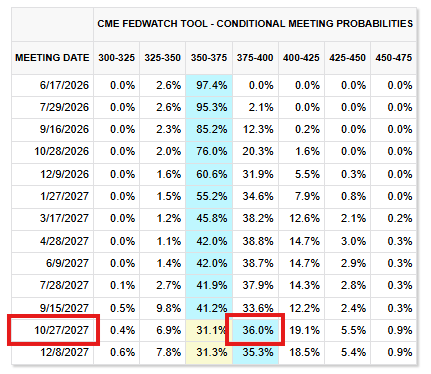
There it is folks: Interest rate futures now see a BASE CASE of the next Fed move being a rate HIKE. In fact, the odds of the Fed cutting interest rates before July 2027 are a mere 1%. As inflation hits its highest level since 2023, the Fed is left with no option. All as Consumer Confidence just hit a record low and the labor market is weakening under the surface. Rate hikes into stagflation are coming.
The Kobeissi Letter tweet media
English
306
427
2.4K
295.2K
ApolloTheDon retweetledi
Charlie Bilello
Charlie Bilello@charliebilello·
The S&P 500 is at an all-time high while Consumer Sentiment is at an all-time low. We've never seen a gap this wide between Wall Street and Main Street.
Charlie Bilello tweet media
English
263
661
2.8K
474.2K
ApolloTheDon retweetledi
The Kobeissi Letter
The Kobeissi Letter@KobeissiLetter·
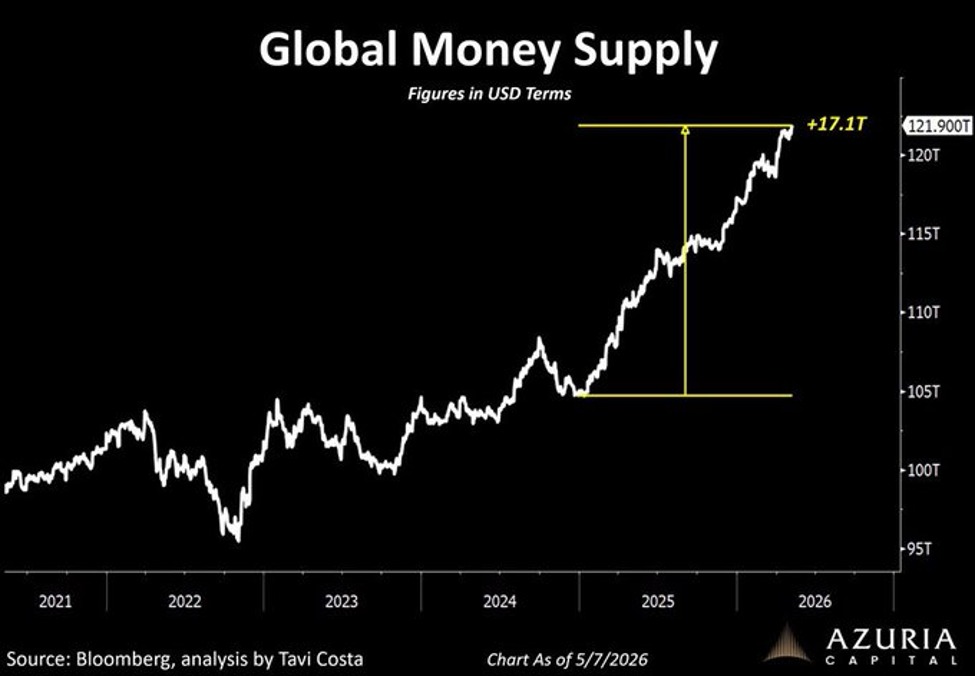
Money supply is skyrocketing: Global money supply is now up to a record $121.9 trillion. Over the last 2 years, money supply has soared +$17.1 trillion, or +16%. This also marks a +$27 trillion increase, or +28%, since the 2022 low. This means that global money supply is surging +7% to +8% a year. Meanwhile, US M2 money supply jumped +$1 trillion YoY, or +4.6%, to a record $22.7 trillion. Money supply growth is accelerating.
The Kobeissi Letter tweet media
English
449
1.2K
5.8K
973.8K
ApolloTheDon retweetledi
Hedgeye
Hedgeye@Hedgeye·
The U.S. Dollar has lost 30% of its purchasing power over the last six years
English
384
2.2K
10.6K
5M
ApolloTheDon retweetledi
Benjamin Cowen
Benjamin Cowen@benjamincowen·
United States Producer Prices Change (PPI) Actual: 6.0% Estimated: 4.9% Prior: 4.3%
English
83
54
1.2K
131.9K
ApolloTheDon retweetledi
James Lavish
James Lavish@jameslavish·
Can I say something?
James Lavish tweet media
English
355
725
4.6K
1.1M
ApolloTheDon retweetledi
The Kobeissi Letter
The Kobeissi Letter@KobeissiLetter·
BREAKING: April PPI Inflation surges to 6.0%, well above expectations of 4.9% and the highest level since January 2023. Core PPI Inflation rose to 5.2%, above expectations of 4.3%. Both CPI and PPI Inflation are now officially at 3+ year highs. Odds of rate HIKES are rising.
English
545
1.7K
8.3K
1.3M
ApolloTheDon retweetledi
*Walter Bloomberg
*Walter Bloomberg@DeItaone·
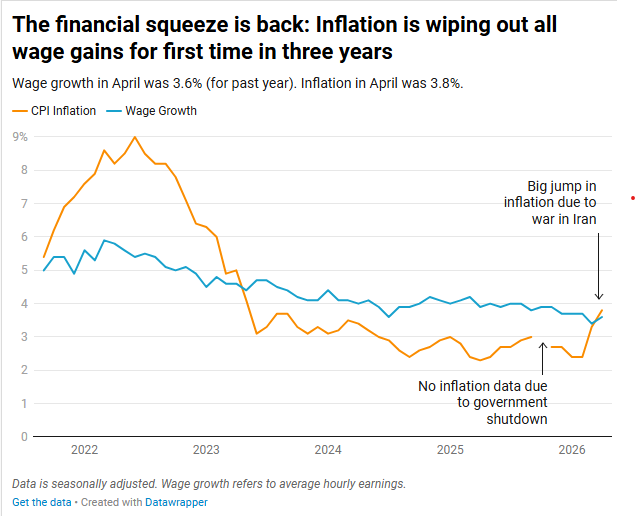
INFLATION NOW OUTPACING PAYCHECKS Inflation is once again rising faster than wages, putting Americans under growing financial pressure for the first time in about three years. Consumer prices climbed 3.8% over the past year, while wages rose just 3.6%, meaning many workers are losing purchasing power.
*Walter Bloomberg tweet media
English
227
724
2.4K
846.5K
ApolloTheDon retweetledi
The Kobeissi Letter
The Kobeissi Letter@KobeissiLetter·
While April CPI inflation rose to 3.8%, inflation is much higher in many basic necessities: 1. Energy Commodity Inflation: +29.2% 2. Gasoline Inflation: +28.4% 3. Airfare Inflation: +20.7% 4. Energy Inflation: +17.9% 5. Electricity Inflation: +6.1% 6. Fruits and Vegetables Inflation: +6.1% 7. Hospital Services Inflation: +5.5% 8. Motor Vehicle Repair Inflation: +5.1% 9. Apparel Inflation: +4.2% This has driven cumulative inflation since 2020 to +29%, meaning goods that cost $100 in 2020 now cost $129 today. Inflation remains a major issue for Americans.
English
339
1.4K
5.3K
565.4K
ApolloTheDon retweetledi
Aakash Gupta
Aakash Gupta@aakashgupta·
The reason Costco spots recessions before economists is buried in who shops there. The median Costco household earns above $125K. The US median is around $80K. The typical member is college-educated, owns a home, and has stock-based comp or 401(k) exposure that moves with the market. When THIS household trades beef for canned tuna, the upper-middle class is admitting their balance sheet just changed. These are the families whose discretionary spending IS the economy. That signal is invisible to economists for structural reasons. BLS releases CPI on a 2-week lag. Jobs data hits the third Friday of the next month. PCE, the Fed's preferred inflation gauge, runs monthly. NBER does not formally declare a recession until 6 to 21 months after it started. The 2008 recession was officially dated in December 2008. It began in December 2007. The committee was a full year behind the actual economy. A Costco category buyer sees the protein mix shift in POS data within 48 hours. The protein hierarchy itself is a precise instrument. Beef costs the most per gram, has the shortest shelf life, and demands the most planning. Chicken is half the price, longer shelf life, more flexible. Canned tuna is one-tenth the cost, indefinite shelf life, zero prep. When a household walks down that ladder, they are pricing in a future income shock that has not yet shown up on a pay stub. The ribeye-to-tuna shift is a hedge against bad news the official data will confirm six months later. Walmart sees the bottom 40% trade down first. Costco sees the next 40% trade down second. By the time Whole Foods sees it, NBER is two quarters away from making the recession official. Costco hits the signal first because their members are the most exposed to wealth effects in the entire economy. Stock-based comp. Home equity sentiment. Executive bonus uncertainty. When the comp letter feels shaky, the chicken goes in the cart instead of the ribeye. Galanti spent 40 years as CFO running the highest-resolution recession sensor in America. The Fed runs models. Costco runs registers.
Thierry from arvy 🇨🇭@ThierryBorgeat

Costco spots a recession before economists do. When members shift from beef to chicken, then to canned tuna, something in the economy is bending. You don't need a model. You need a checkout counter and millions of members with long memories.

English
78
590
3.3K
771.9K