Arjun

10.9K posts

Arjun banner
Arjun

Arjun

@arjunphlox

Designer, Founder – @huegrid. I help funded startups make their best moves through Product Design, Branding, Marketing via Insights, Design, Engineering & Art.

IND/SGN/BKK Katılım Aralık 2008
63 Takip Edilen1.2K Takipçiler
Arjun
Arjun@arjunphlox·
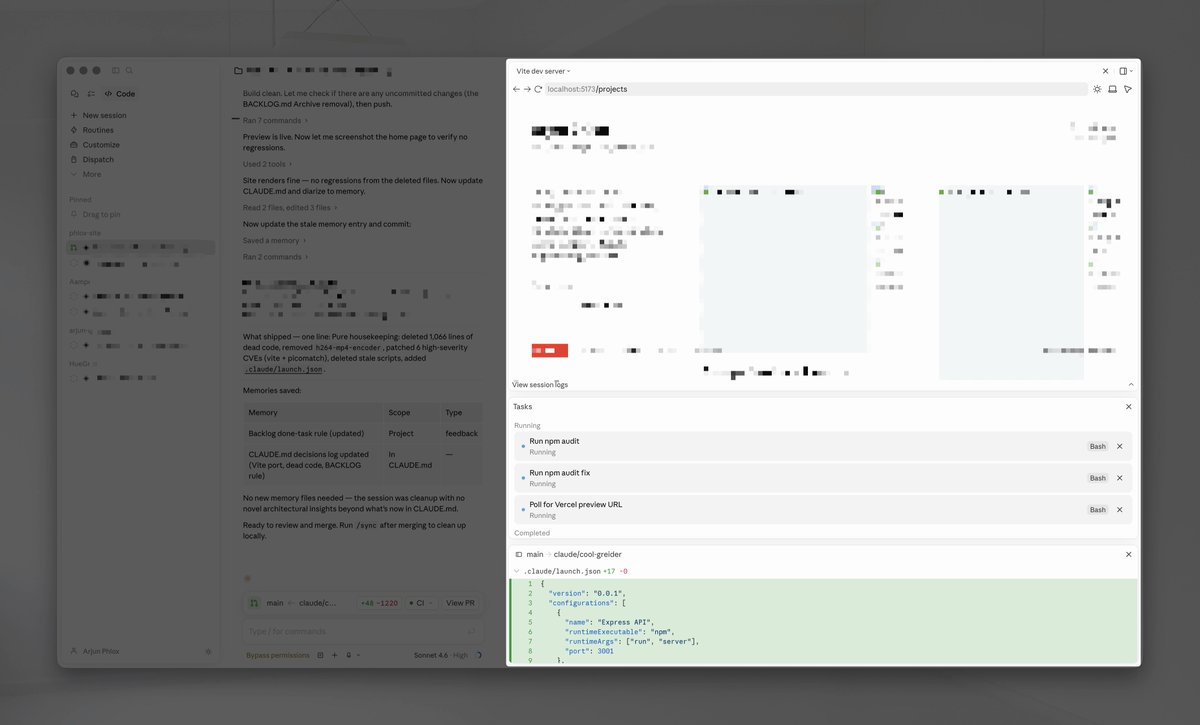
Ever since my Mac days I've been drawn to guided systems, primitives, open formats, offline workflows, simplicity, and critical abstractions, and have stayed with iA Writer for markdown, the Mac file system with Finder tags, Hazel for organising routines, and Sketch's open file format. For years this was a preference I could only show-and-tell to a few friends as the rest of the world drifted deeper into SaaS. The AI era has finally flipped that, and people at large are rediscovering how much flexibility and power these systems have always quietly held. Today, I enjoy the Claude Code, iA Writer, and Sketch combination which gets me intelligence, control, and freedom in one go — portable knowledge, context, and code in MD, CSV, WEBP, JSON, HTML, CSS, JS, all of it versionable, flexible, and local. It's a great moment for ideas to live in formats that travel with you 🙂
Arjun tweet mediaArjun tweet media
English
0
0
4
145
Arjun
Arjun@arjunphlox·
👏🏼👌🏼
Keerthi@kiiradesign

Here’s my submission for the @paper x @contra challenge, it's a tool I built called Visual Poetry. I write poems and randomly associate them with things like flowers or butterflies. I built this little tool that lets me turn the words in the poems into pixels to literally draw out any object (inspired by typewriter and ASCII art). I used Pretext to render the text and Paper to tweak the whole UI, and used @cursor_ai to help me build it I was super close to the deadline and finally managed to finish it up just in time, phew!

ART
1
0
2
160
Arjun
Arjun@arjunphlox·
👌🏼
Anandu Gopal@anandu_gopal_

Here's my submission for the @paper challenge Building brand identity with Blender x paper x claude. Started by asking Claude to generate a hypothetical brand brief, it came back with Verdra, a sustainable lifestyle brand built around radical transparency and quiet beauty. Then I went into Blender myself and built the model from my own interpretation of the brand. Soft, organic, abstract shapes. Green, alive. The mood set by hand before Claude touched anything. Then I handed it over. Claude connected Blender and Paper through MCP, rendered each angle, built the posters in real time, typography and color system included. Adjust the model, new poster appears. Change the material, new mood. 20 posters. 5 material close-ups. A full brand system. One session. @paper @claudeai @Blender #PaperChallenge #ClaudeAI #Blender #BrandDesign #MCP

ART
0
0
0
120
Arjun
Arjun@arjunphlox·
Thanks to @samhenrigold for speaking the truth. It’s been my experience as well. Commercial projects aside, for all my personal systems, ever since I learnt computers, I deeply loved operating at the ground truth, the open formats, the power and the flexibility of them. SAAS and the nature and bar of lock-in has changed, and for good, after a long long time. It’s as if lock-in is now opposite of value. It needs to be hard earned when the system first respects the ground truth and then goes above and beyond. There’s no option. It’s time to address some fundamentals. The quicker the pivot for those lagging here, the faster the win for all. With AI tools like Claude Code today, there’s a way to work with Figma, with Sketch, with Paper and others at varying degrees of effort. The easiest being Paper and there’s no wonder why. And then there’s Claude Design. Rest of the tools have to wake up, the alarm bell has been ON for some time.
sam henri gold@samhenrigold

x.com/i/article/2045…

English
0
0
1
174
Zeno Rocha
Zeno Rocha@zenorocha·
We have a big open source launch for you today. Announcing React Email 6.0. For a long time, people asked me for a way to include an email editor into their app. So we decided to open source our own editor. - Embed in your app - Style with your brand - Build custom extensions
English
67
95
1.8K
132.9K
Arjun
Arjun@arjunphlox·
The new Table of Contents in Claude Code is a genuinely important usability feature, and has been my pet peeve of AI tools for a while, because AI chat interfaces have been around for three years and this somehow wasn't a standard anywhere. 👀 Scrolling and jumping back to an earlier topic/chapter of the conversation was always a chore, and the fact that the whole category missed this for so long is wild. In this AI-speed era, shipping these usability touches early can genuinely set an app apart in a competitive market. 🙂
Arjun tweet media
English
0
0
2
91
Arjun
Arjun@arjunphlox·
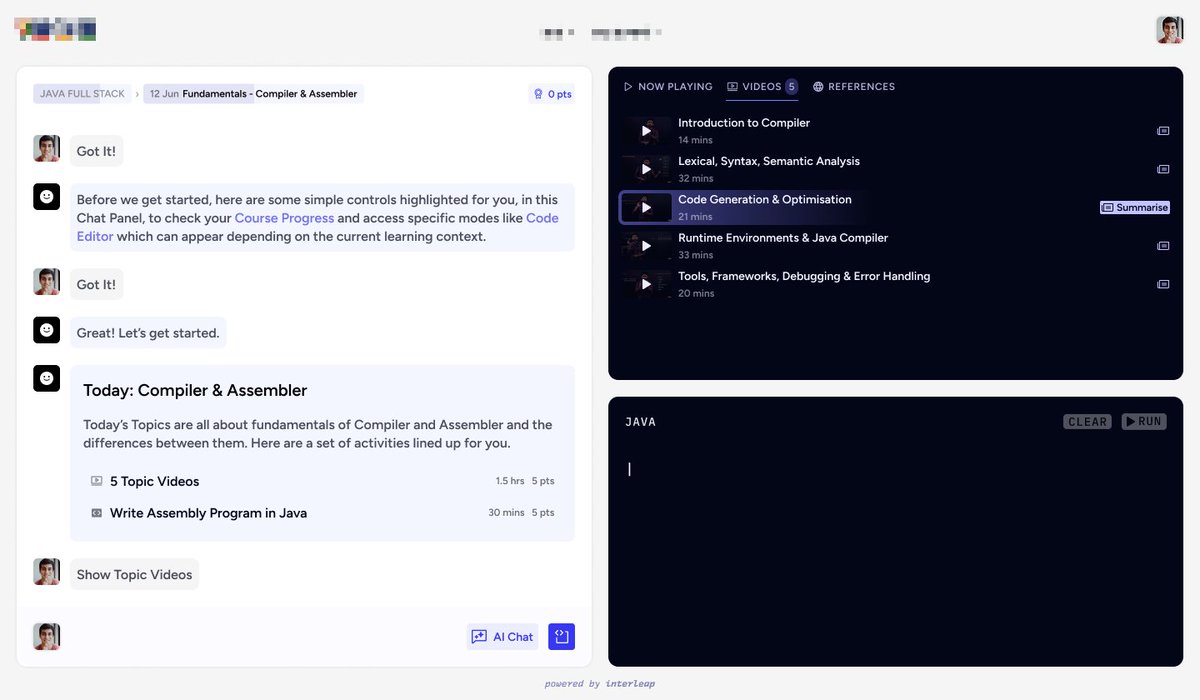
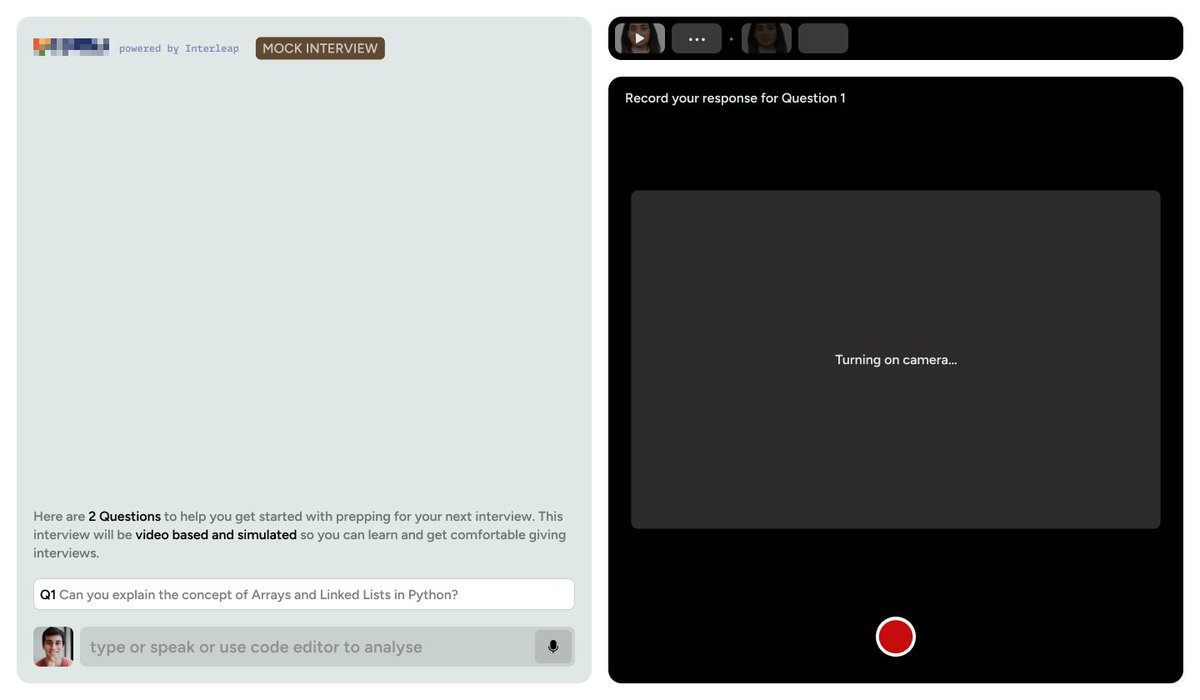
Really thrilling to see today's @AnthropicAI Claude Code update introducing drag-and-drop layouts, alongside Cursor and others, all converging on a fluid panel interface design. This is terrain I and @Iruhdam24 explored deeply in early 2024 (Feb–June) with @99sachins and the team at Interleap (now Prexi AI), a Bangalore Ed-Tech building AI-Assisted Learning Products. It included AI Interviews, Code Reviews & Analysis, Personalized Learning Tasks, Curriculum Integration, Video-Assisted Practice, and a whole lot more. We called them "Dynamic Panels" — video while you learn, code editor when you hit a task, mock interview when it's time to practice. Users could split and configure panels themselves, while the AI system reshaped the layout based on session context. Beyond the delicate balance of letting AI control the UI versus the User configuring it, the deeper craft was tethering the user's mental model to the AI system model, tightly enough that every relevant path was addressable without the system wandering into irrelevant territory and breaking focus. We onboarded every user with an interactive interface guide so they'd feel fluent in the panels before the session began. The "UI is dead" take isn't unfounded. Chat-first interfaces genuinely cut a lot of traditional chrome and keep the learning curve low, but they aren't the end-all. Chat, Voice, Dynamic UI, Fluid UI, and Critical UI together are the way forward, because humans process information visually faster when the interface is crafted well, and that's an enormous canvas still wide open for the AI era. 🚀
Arjun tweet mediaArjun tweet mediaArjun tweet mediaArjun tweet media
English
1
1
7
971
Arjun retweetledi
Coffee with One 🇺🇸
Coffee with One 🇺🇸@coffeewithone·
Let me tell you why Mintlify needs 50 people to "host .md files" and why 50 is actually too low. I was the first intern at @mintlify. I sat three feet from Han and Hahnbee every single day. I watched this thing get built. People see docs.stripe. com and think "oh, markdown renderer." That's like looking at Google and saying "oh, a text box." Let me walk you through what's actually under the water. You want search? Not Cmd+K that returns garbage. Search that understands what a user means when they type "how do I authenticate." That's a whole retrieval pipeline. Embeddings. Ranking. Re-ranking. Edge caching so it feels instant in Tokyo and São Paulo. That alone is a team. You want self-updating docs? That means Mintlify is watching your codebase, detecting when your API changes, and flagging docs that are now lying to your users. Surprise! That's not a cron job anymore. That's diffing, parsing, mapping endpoints to prose, and doing it without false positives that destroy trust. That's another team. WYSIWYG editing? Sounds simple until you realize you're building a real-time collaborative editor that outputs clean MDX, not the garbage HTML that every rich text editor loves to produce. You're fighting ProseMirror. You're fighting the browser. You're fighting every edge case where someone pastes from Google Docs and injects 50 nested span tags. Hahnbee taught me everything I know about engineering in those wall, and half of what she taught me was how to wrestle with exactly this kind of problem. The type safety was less about being academic and more about survival. One wrong type and the editor breaks for 10,000 companies. Custom components? That means shipping a component library wuth interactive API playgrounds, code blocks with syntax highlighting for 60+ languages, tabbed containers, callouts, cards. BTW that has to render identically in the editor, in the build, in SSR, in the preview. Four rendering contexts. One source of truth. If you've ever tried to make a React component behave the same in SSR and client-side, you know that's a PhD thesis disguised as a feature. Authentication. Gated docs. Role-based access. SSO? That means Mintlify is now in the auth business, which means they're in the security business, which means SOC 2, pen testing, token rotation, session management. For docs. AI analytics. Not pageview counters. Understanding which docs are confusing users, which searches return nothing, where people rage-quit. That's event pipelines, ML models, and dashboards that have to make sense to a DevRel person who doesn't know what a funnel is. SEO/GEO. Mintlify doesn't just host your docs. They make your docs rank. Structured data. Sitemap generation. OpenGraph images generated on the fly. Meta tag optimization. Performance scores that stay green when you have 4,000 pages. That's infrastructure. MCP servers. CLI tooling. Content checks that lint your docs like ESLint lints your code. CMS for non-technical writers to ship without a deploy. And I'm not even going to get into the other hundred things. Versioning. Multi-language support. Custom domain provisioning with automatic SSL. Git sync that doesn't corrupt on merge conflicts. Preview deployments for every PR. Broken link detection across your entire site graph. Rate limiting on the API playground. WebSocket handling for real-time collaboration. OG image generation that actually respects your brand fonts. Middleware for custom routing logic. MDX compilation that doesn't choke on edge cases. Custom CSS injection without breaking the component tree. Cache invalidation, which, if you know, you know, across a globally distributed CDN. Each one of those is a rabbit hole. Each one has a person at Mintlify who has lost sleep over it. I watched founders of Mintlify obsess over this. @handotdev would be the last person to leave at night and the first person in the office the next morning. He'd find a 200ms latency spike in the build pipeline and lose sleep over it. I watched him rewrite the entire settings page once. He did it not because it was broken, but because a user had to think for two seconds about where a toggle lived. He tore the whole thing apart and rebuilt it so that every section, every label, every grouping made immediate spatial sense. You open it, you know exactly where everything is. No customer filed a ticket for that. The culture of Mintlify is refusing to ship anything that makes a user feel lost, even for a moment, even on a page most people visit once. @hahnbeelee was the same. Not only she taught me everything about Engineering I know today, she also taught me why things were built the way they were. Why this abstraction was chosen over that one. Why we don't take shortcuts even when the deadline is tomorrow. Every PR review was a lesson in caring about things that users would never consciously notice but would absolutely feel. We moved fast. Extremely fast. But we cared. A lot. About things most people would never see. The spacing between elements in the sidebar. The animation curve on the search modal. The way code blocks handle overflow on mobile. The fallback behavior when a component fails to render. They were less about building features and more about the difference between docs that feel like a product and docs that feel like an afterthought. "But why can't you just vibe code it?" You know who decided to use Mintlify instead of vibecoding? @cursor_ai uses Mintlify. @AnthropicAI uses Mintlify. @Lovable used Mintlify @twilio use Mintlify, @perplexity_ai uses Mintlify @Cloudflare use Mintlify These are the most technical, most demanding companies on earth. They could build their own docs. They have the engineers. They chose not to. Ask yourself why. It's because docs infrastructure is a bottomless pit of complexity that has nothing to do with your core product. Every hour your engineers spend fixing a broken sidebar link or debugging why your OpenGraph images aren't generating is an hour they're not shipping features. Mintlify makes that whole problem disappear. Vibe coding gets you a demo. It doesn't get you a system that serves 50 million page views without flinching. It doesn't get you an editor that 10,000 companies trust to not eat their content. It doesn't get you search that actually works. It doesn't get you infra that passes a SOC 2 audit. It doesn't get you the kind of reliability where Anthropic is comfortable pointing their entire developer ecosystem at your platform. Mintlify is the infrastructure that looks invisible when it's working, which is exactly why people underestimate it. "50 people to host .md files." No. 50 people to build the platform that the best companies in the world trust with the first thing their developers see. And honestly? 50 is actually too low.
Milo Smith@mil000

Why do you need 50 employees for a Documentation startup that’s mostly just .md files

English
35
14
389
94K
Arjun
Arjun@arjunphlox·
💯
Ryo Lu@ryolu_

when software had a soul there was a moment around 2005 when using a Mac felt like touching something alive. the dock bounced. the genie effect swooped. exposé scattered your windows like cards on a table. none of it was strictly necessary. all of it felt like someone cared – not about metrics, but about the feeling of using a machine. software back then had texture. it had a philosophy. you could feel the person behind it. someone made a decision to make that icon beautiful, to animate that transition just so, to write that error message with a little warmth. apps had personalities. some were weird. some were over-designed in ways that would make a modern PM flinch. but they were alive. the web was the same. personal sites were genuinely personal. blogs felt like letters. forums had regulars. you knew who made what. the internet had neighborhoods, and each one felt different. nothing was optimized for scale. things were made by people who loved what they were making. somewhere along the way, we traded all of that for growth. A/B tests flattened the edges. design systems standardized the personality out. everything got faster, smoother, more consistent – and somehow less interesting. the quirks were removed because they didn't test well. the warmth got cut because it wasn't measurable. we optimized our way into a world of things that work perfectly and feel like nothing. now every app looks the same. every interface follows the same patterns. every product speaks in the same calm, frictionless voice, siloed in their own little islands. the humanity got rounded off. and then came AI agents. and the speed got inhuman. now you can generate an entire product in an afternoon. ship a feature before lunch. spin up ten variations before anyone's had their coffee. the gap from idea to code is basically zero. which sounds incredible. and it is. but there's a catch. when making things are too easy, the slop comes for free too. mediocre things don't look obviously bad – they look fine. they work. they ship. they pass review. and now there are infinite of them. the internet is filling up with software that functions but means nothing. interfaces that are correct but feel dead. products made by agents, reviewed by no one, shipped into the void. this is the thing that keeps me up at night. not that AI will replace people who care. but that it will drown them out. here's what I still believe: the best things are made by people who couldn't help themselves. someone who lost sleep over an icon. who rewrote the same line of copy twelve times. who added an animation nobody asked for because it made the thing feel right. that obsession – that's not inefficiency. that's the whole point. AI doesn't make that irrelevant. it actually makes it rarer and more valuable. taste is not a markdown skill. caring is not a parameter. the weird, specific, "soul" thing you put into something – that can't be programmed into existence. the path forward isn't to make more slop faster. it's to finally give people with real vision the tools to make the thing they always imagined but couldn't build alone. the designer who had the idea but couldn't code. the kid who saw something nobody else saw. the person who cared too much about something most people wouldn't notice. if we get this right, we don't get a faster factory. we get a renaissance. more strange, personal, opinionated software made by teams of people who care and mean it. that's still possible. but only if the people who care get the space and tools to actually express themselves – and don't just hand the wheel to the agent and walk away.

ART
0
0
2
109
Arjun
Arjun@arjunphlox·
👌🏼
Madhuri ✳︎@Iruhdam24

I built a skill so Claude could write in my voice without me fixing every output. A skill isn't a prompt. It's a document that teaches the model who you are, how you work, and what good looks like. Mine took three tools and several passes: Perplexity to research how skills work. I wanted practice, not theory. Claude to draft the structure. The irony of using Claude to teach Claude wasn't lost on me, but it caught patterns I couldn't see. My own past posts as raw data. I needed proof that what I wrote down matched what I actually publish, not what I wish I published. The sections that looked easy were the hardest. Content pillars nearly broke me. I kept writing what I thought I should cover instead of what I actually cover. Three deleted versions later, I accepted that my real interests don't always sound impressive on paper. Voice and tone only clicked when I stopped writing do's and started writing don'ts. No hype words. No posts without concrete examples. No pretending things are figured out when they're still messy. The workflow section forced me to describe my process step by step. Turns out I'd never articulated how I move from idea to post. Writing it down revealed gaps I didn't know existed. By the end, Claude wasn't the thing that got sharper. I was. The skill document became a mirror. It showed me patterns I repeat, patterns I avoid, and patterns I think I follow but don't. Teaching an AI to write like you means getting honest about how you actually write, not how you think you write. Now when Claude drafts something, it sounds like me on a good day. Close enough that editing feels like refining, not rewriting. If you're building one, start with your don'ts. They're more revealing than your do's.

ART
0
0
1
244
Nabeel
Nabeel@itsnotnabeel·
What if you had an agent inside @framer that you could talk to to make changes to your designs and CMS without any servers or MCPs? A true copilot that takes the boring work out of your hands. Coming soon to aifra.me
English
13
1
67
4.3K
Jarod Xu
Jarod Xu@Jarodxu7·
Excited to launch happycapy, an agent-native computer on your browser. Claude Code → Clawdbot → Happycapy > Private sandbox for everyone to run Claude Code anytime anywhere - no Mac Mini needed > GUI built for everyday user, visualizing skills and its output
English
659
133
1.5K
772.1K
Framer University
Framer University@learnframer·
introducing: parallax image scroll component for @framer. use this to add smooth depth and motion to your images as users scroll through the page. comment “PARALLAX” and i’ll send you this component for fully free!
English
53
5
145
5.4K
Shivani
Shivani@shivanimatla·
volume on 🔊 built a tiny focus music maker where you can doodle your own ambient soundtrack and time your work sessions. made using @cursor_ai & @claudeai give it a try - focus-music-maker.vercel.app also share your doodles and music w me
English
79
54
1.1K
95.6K
Arjun
Arjun@arjunphlox·
@charmiekapoor 💯 Also when we see someone drive. 🙂
English
0
1
0
511
Charmie Kapoor
Charmie Kapoor@charmiekapoor·
You learn a lot about someone when you play a sport with them. How they react after a mistake. If they spiral after that or get back. How they face a stronger opponent. If they play fair when no one is watching. How they handle a win or a loss, and who they choose to credit. It is such a unique and vulnerable way of revealing character.
English
18
83
717
28.4K