

StarLord🔺️
593 posts


Stone pelting at Park Circus occurred coz peacefuls want to break laws.
Namaz on road
Open slaughter
No sound limit
Kolkata Police are at it and taking strict action.
English

Muslim Community is now protesting against the BJP in Bengal over the recent Govt orders
English

#WATCH | Kolkata, West Bengal | On West Bengal CM Suvendu Adhikari's call for stricter laws on mic and loudspeaker, Imam of Nakhoda Masjid Maulana Mohammad Shafiq Qasmi says, “This rule was not made by the BJP government but by the Pollution Control Board… As per the law, there were no orders stating removal of the mic, neither from the Pollution Control Board nor the Supreme Court, but a restriction to allow the use of the mic in between 75-80 dB in the industrial areas, 70-75 dB for commercial areas and 65-70 dB for residential areas. And for the silence zone, the order for the sound restriction is 40-45 dB. However, the police are asking to remove the mic, which is wrong. They should act as per the law, and we will also do the same…” (16.05)
English

Kolkata, West Bengal: Imam of Nakhoda Masjid Maulana Mohammad Shafiq Qasmi says, "The notification regarding cow slaughter has been issued by the government. This is a law from 1950, which was enacted at that time. It is not a new law made by any new government; it is being implemented now under the same law. Under this law, cow slaughter is very difficult. Therefore, we would appeal to all Muslims to stop cow slaughter and also to stop consuming beef permanently..."
(16/05)
English
@ANI Aha re...Maal ta ekhon BJP te dukhte chai. Maal ta ekhn BJP te giye taka kamate chai....eke keu glycerine dao
HT
#WATCH | Former West Bengal Sports Minister Manoj Tiwary says, "In this video, I want to explain how my work has been hindered over the past five years. I want to share this. Arup Biswas (TMC leader and former minister) prevented me from working. I come from the sports world and wanted to do a lot for sports. In the sports department, I had nothing to do except eat tea and biscuits. I wasn't invited to any events. I was even on the field during the Durand Cup, but I wasn't invited because Arup Biswas couldn't tolerate my image. I wasn't present at Messi's event because of the repeated insults. I felt something serious was about to happen. You must have seen that all the sports lovers in the state were embarrassed by Arup Biswas. Messi left the event within 5-10 minutes, just because of Arup Biswas. You can imagine what I've faced in the Sports Department over the past five years... I want to say that whatever God does, he does for good. This narrow-minded government was removed. They worked for themselves, not for the public. There was a lot to be done for Shivpur, which I tried to explain repeatedly, even raising my voice in cabinet meetings. One day, when I raised this issue with the Chief Minister, she said to my face, "Don't I have anything else to do?" She didn't even give me 20 seconds to explain what I wanted to say. This government was based on false promises. I realised that very day that this government wouldn't last long."
(Video source: Manoj Tiwary's Facebook page)
English

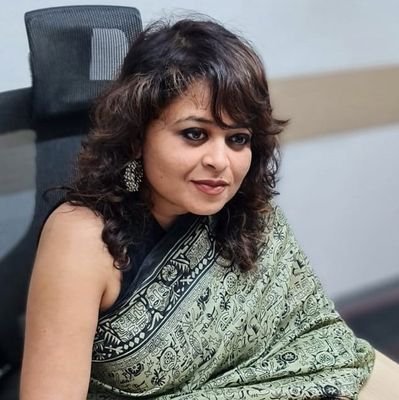
আমাদের বাংলার বাঘরোল গর্গদা কে নাকি অবাঙ্গালি জওয়ানরা উদ্ধার করেছে??? এটা কি সত্যি!!! দাদা ওদের allow করলেন??
বাংলা
@Aunindyo2023 What is unfair ? Moron . Geography has always played a role . Bengal lost because of unfair GoI policies. Take our money and resource and subsidize RSS and rest of India
English

People seem to have read this as a lament about how the Freight Equalisation Act was unfair to Bengal.
I am saying the exact opposite - the Industrialisation of Bengal was based on an unfair advantage of proximity to minerals, and jute.
It was also because British capital first established itself in Calcutta, and India’s traditional mercantile caste-communities moved from Rajasthan and settled in Bengal.
Freight Equalisation and the selective distribution of licences ended that advantage by the early ‘60s.
I am simply busting the myth that the rise of the Left killed Bengal’s industry.
Aunindyo Chakravarty@Aunindyo2023
The Truth about Bengal's De-industrialisation In 1947, Bengal was the most industrialised province in India, with one-fourth of all registered factories, and 24-27 percent of industrial output. But these figures hide some important truths: a) Bengal's key industries largely produced raw materials and inputs: jute, coal, iron & steel, and tea. b) They were overwhelmingly owned by non-Bengalis, and c) The condition of the working class was abysmal. The largest of the capitalist groups were British expatriates who operated through managing agencies - Andrew Yule, Bird & Co., Williamson Magor, McLeod & Co., Begg Dunlop, etc. As late as 1955, more than two-thirds of India's diversified business groups were British owned conglomerates with headquarters in Calcutta. The second big group was Marwari trading capital - Birlas, Goenkas, Bangurs, Khaitans, Kanorias, Jalans, Bajorias, etc. British control was finally dismantled after the Hazari Reports of 1964 and 1966, and the Monopolies Inquiry Commission of 1965. This accelerated the transfer of corporate control from the British to the Marwaris - something that had already started in the early 1950s. The buyouts were financed by private banks, share market manipulations, and even funds diverted from worker PFs. The focus was on arbitrage earnings, rather than expanding production. What broke Bengal's back, however, was the Freight Equalisation Act of 1956. Before 1956, it made sense to set up factories close to the source of coal, and iron ore. And that gave Bengal its unique advantage, since it was the hub of the mineral wealth of the eastern states. But the Freight Equalisation Act brought in by the Nehru government removed that advantage, by subsidising the flow of raw materials to other states. This meant that factories could be set up elsewhere and didn't need to be concentrated in Bengal. Within a few years, Maharashtra was receiving many more industrial licences than Bengal, and by 1964, well before the Left came to power, Bombay's factories were employing 13.5 lakh workers, compared to Bengal's 8.8 lakh. What about workers? Bengal's jute, steel and mining companies were notorious for exploiting workers. This became a cause of struggle under the national movement as long as their employers were British. But even after the transfer of ownership, the conditions of Bengal's working class continued to be terrible. Even in the early-70s, their wages were about a third less than what workers earned in Maharashtra, and surveys showed they suffered from chronic work-related ailments. That was the ground on which Bengal's militant labour movement arose and then intensified from the mid-1960s. The Left and socialist parties rode on the anger and frustration of industrial workers, miners, and of course, share-croppers. The 1967 United Front govt, brought SUCI's labour leader, Subodh Banerjee, to the labour minister's chair. He would come to be known as 'gherao minister.' Gheraos increased dramatically, and industrial stoppages rose from 179 in 1965 to 894 in 1969. The Left's political obligation was towards workers - not their employers. This accelerated the flight of capital that had already started two decades earlier. Equally important was the collapse of the global demand for jute, which was once the mainstay of Bengal's industry. Along with that the nationalisation of coal by Indira Gandhi also removed another important magnet for private capital in the region. The end of the licence-quota raj after the mid-1980s, caused a massive migration of capital from pro-worker states to pro-employer states. The Left Front's initial strategy was to implement land reforms, and generate capital formation in agriculture. While there is no doubt that Operation Barga was the most successful example of land reforms in India, the LF completely failed in its programme to create rural industries. This was despite the CPIM's trade union, CITU, becoming largely an industrial peace broker, shedding its old militant stance. By 1991, the number of stoppages had dropped to 192 (from 894 in 1969) out of which only 32 were because of workers' strikes. Most of the industrial stoppages were because of employers locking their factories and leaving. By 2003, mandays lost in West Bengal due to lockouts by owners was 16x that of what was lost due to workers' strikes. Of course, this was because other states were much more capitalist-friendly than West Bengal, and were much more open to implement anti-worker 'labour-reforms.' The biggest example of that was the suppression of the long textile workers' strike in Mumbai. The Left Front, under Buddhadeb Bhattacharjee tried its best to compete with other states to present a business-friendly image. It succeeded as well, in attracting capital into real estate, establishing SEZs across the state, and even getting the Tatas to invest in Singur. The rest, of course, is history. The question remains - why did the Bengalis not develop their own capitalist class? That is an entirely different story.
English

My piece in @thewire_in
TMC has politically countered BJP's Politics of Hindu Parichay by invoking sub-national Bengali identity while the latter has used it further to expose the ideological obliviousness of TMC. At the heart of this phenomenon is post partition Bengal’s deep seated anathema towards diverse social assertions – stemmed out of Poundra , Rajbanshi and Namashudra communities’ anti caste icons – that is successfully articulated in Tamil Nadu by Iyothee Thass’s Tamil Buddhism and the Dravidian Periyaran ideology while in Kerala, it is reflected in Ayyankali’s Temple Entry movement and Narayana Guru’s SNDP movement.
My piece in @thewire_in
thewire.in/politics/benga…
English
@sumonseng @BJP4Bengal @ECISVEEP @chatukhor @sanjayuvacha @Tamal0401 @tanmoyofc @ttindia @zoo_bear @ScribeShah @kirti_sd @DebayanDuttaa They are not naive. U may be
English

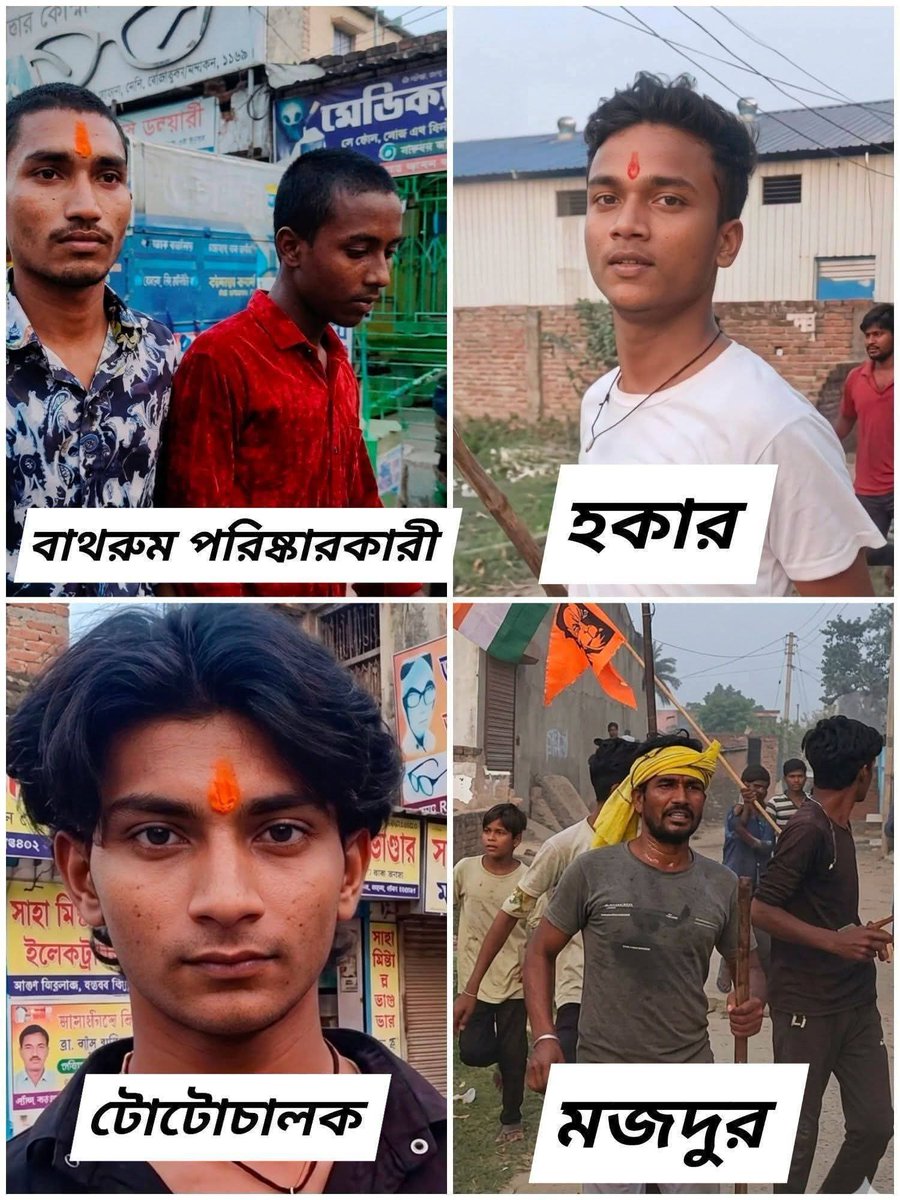
All these people are hindi speaking people. They don't even have any idea how they are being used by @BJP4Bengal as foot soldiers of #Hindutwa in #RamNavami
Will they also vote in #BengalElections? Have their Form 6 been approved by @ECISVEEP?
English
StarLord🔺️ retweetledi

Little Gunchebi singing Tagore’s Grohobashi to her late legendary grandfather Ratan Thiyam is my favourite Dol Purnima song.
Wishing you all a colourful Dol Purnima!
English

“(Dada Boudi’s) biryani, once an experiment priced at Rs 11, is now devoured by 2,000 diners a day at its seven-storey restaurant in Barrackpore, now one of Bengal’s busiest biryani destinations.”
ThePrintIndia@ThePrintIndia
Kolkata biryani wars get 2 new challengers in Dada Boudi, Hanglaatherium Tina Das @dastina2191 reports #ThePrintGroundReport theprint.in/ground-reports…
English
@sardesairajdeep Good joke. Do any other country has such a marvellous EC ?
English

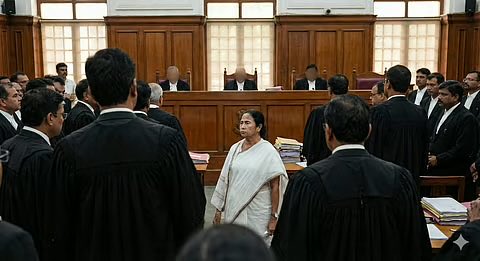
China may have a much stronger economy but do they have a system where a sitting CM can stride into the SC and argue her case against a State Body without fear? A slice of history in the Indian Supreme Court today when Mamata Banerjee raised SIR issue in court. Need to see much more DEMOCRACY in action where EVERY side has a right to be heard in courts, in parliament, and yes, in tv studios too! #SupremeCourt
English
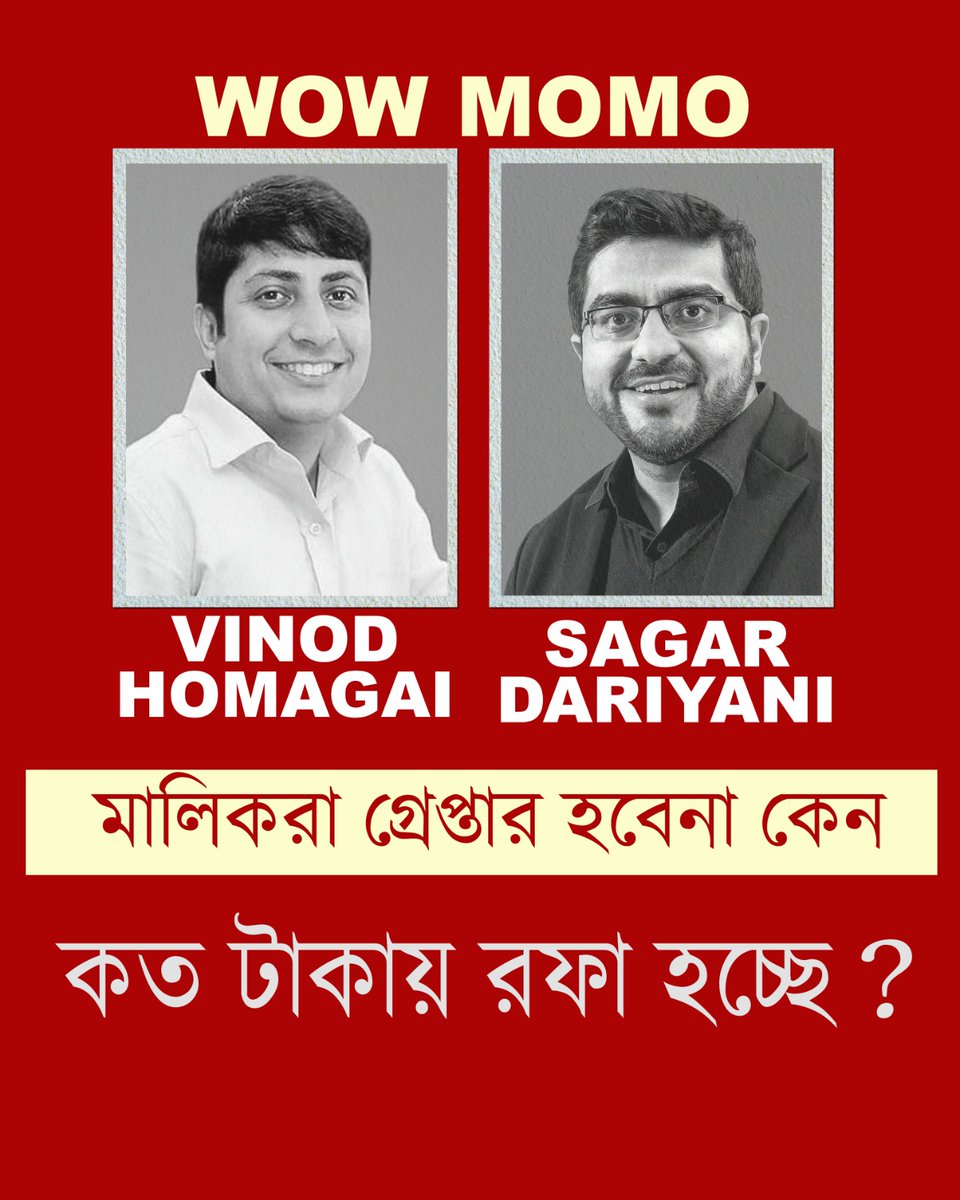
@CPIM_WESTBENGAL Kono party bangali r na ...jemon lux cozi te cpm korechilo ...ekhon wow momo te tmc khabe. Bangalir keu noy
Indonesia


AVAX. THE 30 MILLION $ QUESTION. x.com/i/spaces/1BRJj…
English