Khaled Al-Shamaa

16.4K posts

Khaled Al-Shamaa banner
Khaled Al-Shamaa

Khaled Al-Shamaa

@arphp

Research Database Manager and Senior Analyst at @ICARDA interested in #DataScience, #AI, #RStats, #PHP and #Arabic Language. Views are my own.

Cairo, Egypt Katılım Nisan 2009
316 Takip Edilen2.3K Takipçiler
Sabitlenmiş Tweet
Khaled Al-Shamaa
Khaled Al-Shamaa@arphp·
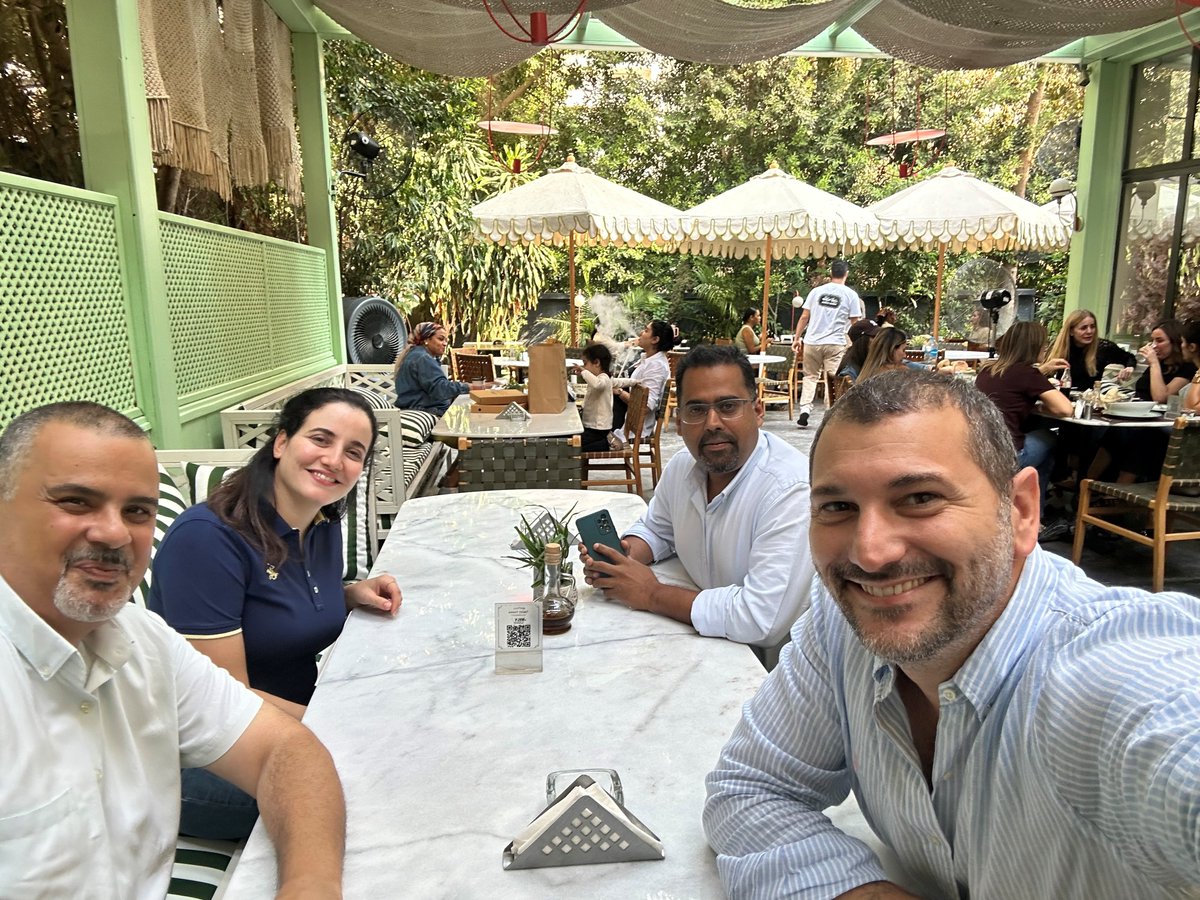
Wrapping up the year grateful for an inspiring work environment and an incredible global team. Learning every day from colleagues across Chile, Mexico, Spain, Morocco, Italy, Senegal, India, and beyond. Different cultures, one shared purpose. Onward to an even stronger year ahead
Khaled Al-Shamaa tweet mediaKhaled Al-Shamaa tweet mediaKhaled Al-Shamaa tweet mediaKhaled Al-Shamaa tweet media
English
0
0
4
862
Khaled Al-Shamaa retweetledi
Thariq
Thariq@trq212·
We removed ~80% of the Claude Code system prompt for our newest models, this is what we've learned about writing system prompts, skills and Claude.MDs for them. x.com/i/article/2080…
English
409
1.7K
15.2K
4.1M
Khaled Al-Shamaa retweetledi
Amjad Masad
Amjad Masad@amasad·
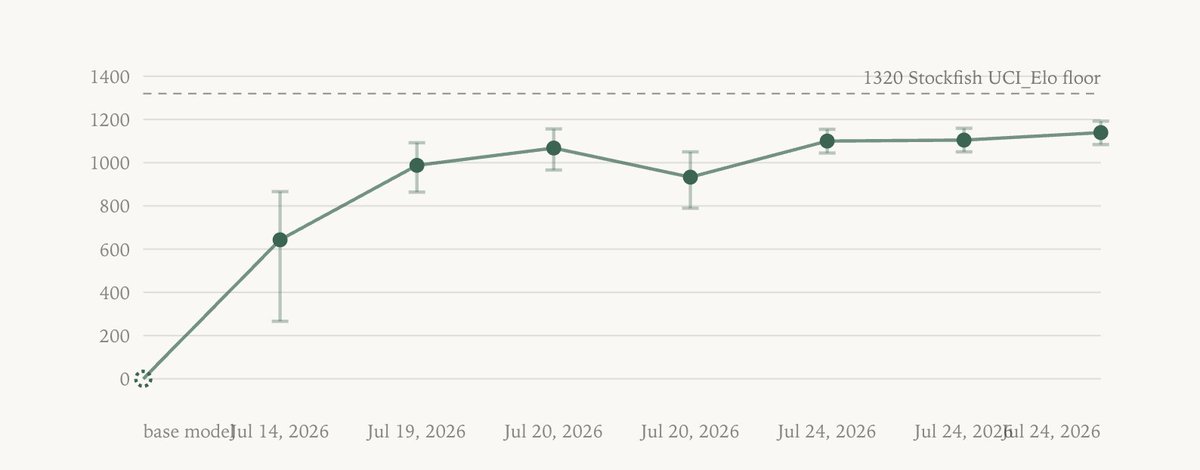
Just deployed a new chess engine; we're closing in on an estimated 1200 Elo. The goal is to get it to 2000+, while keeping the constraints: 1. One small finetuned LLM (no custom pretraining or architecture) 2. The model has to produce the moves with no chess engine assistance If you relax these constraints, it gets much easier.
Amjad Masad tweet media
Amjad Masad@amasad

If you want to play my chess engine (WIP): qwen-chess.replit.app It already seems to perform better than frontier models on chess. It’s fine-tuned on 2M stockfish-labeled positions, then short GRPO RL pass. Documentation/tutorial with all the experiments and annotated code.

English
40
10
240
40.5K
Khaled Al-Shamaa
From the cradle of the Agricultural Revolution in Mesopotamia to the pioneers of the AI Revolution: every great leap forward in human history has been powered by knowledge🔭 Thank you for keeping that tradition by making these resources available for the benefit of humanity 🌍❤️
ollama@ollama

Ollama is proud to sign @satyanadella's letter. Our mission from day one has been to make open models accessible to every developer to unlock the next frontier in America and across the globe.

English
0
0
1
94
Khaled Al-Shamaa retweetledi
Rohan Paul
Rohan Paul@rohanpaul_ai·
Jensen Huang on "distillation" On his new interview with axios, he was asked this question "Should open source model companies be allowed to distill closed models" "Distillation—learning from AI, learning from other people, and learning from other sources of knowledge, is fundamental to intelligence. We are constantly learning from other people. I am learning from you through the questions you are asking, and you are learning from me. All day long, we are learning from one another. AI also has to learn from something. The original AI models, whether they were open or closed, were trained on previously created knowledge from the internet. Now, AI is generating more content than humans. In a few more years, the internet could be 99% AI-generated content, and that content will have been created by some form of AI. As a result, AI systems will constantly be distilling knowledge and intelligence from other AI systems. The fact that AI can learn is a good thing. We want AI systems to be intelligent because a smarter AI can also be a safer AI." ---- From "Axios" YouTube channel, (full video link in comment)
English
174
528
3.5K
429.7K
Khaled Al-Shamaa retweetledi
التميمي
التميمي@altmemy199·
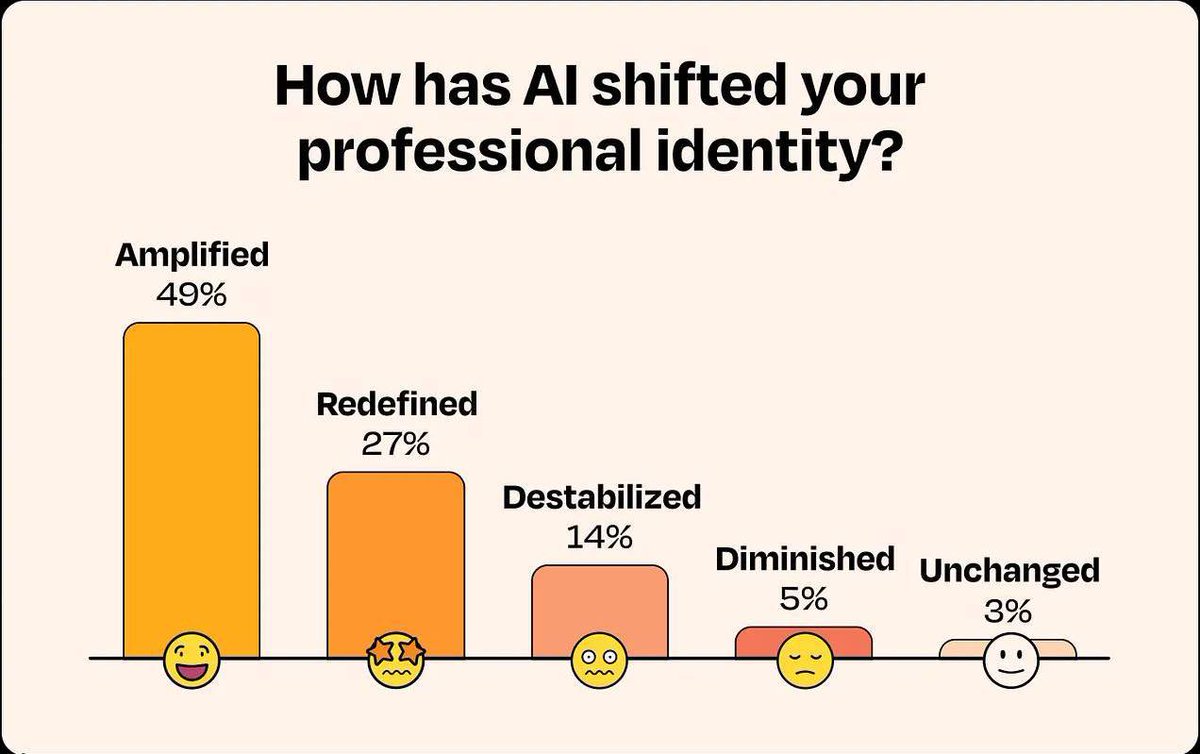
المبرمجين ما يخافون يفقدون شغلهم بسبب الذكاء الاصطناعي بالعكس خايفين يشتغلون أكثر بنفس الراتب نزل استطلاع كبير عن شعور موظفي التقنية في 2026 والصورة طلعت مثيرة للاهتمام: • أكثر من نص الموظفين ما ينصحون الجونيورز بمهنتهم. وعمومًا الاحتراق الوظيفي زاد بشكل كبير خلال سنة من 44.7% لـ55.7%. • 82% يقولون إن الذكاء الاصطناعي يخليهم أكثر إنتاجية بس جودة الشغل تنزل معه. الناس صارت تفهم كودها أقل وتفقد التركيز أسرع. • ومع كذا 22% بس هم اللي قلقانين إنهم يفقدون شغلهم بسبب الذكاء الاصطناعي. أما الخوف الأول عند 51% فهو إنهم بيطالبونهم بأكثر بنفس الراتب. • وسلام خاص للمدراء: 25% بس من موظفي التقنية يشوفون مديرهم فعّال حقيقة و36% يشوفونه غير فعّال أصلًا. الدراسة كبيرة فعلًا وفيها تحليليات وافكار كثيرة اللي يحب يطلع عليها. lennysnewsletter.com/p/how-tech-wor…
التميمي tweet media
العربية
5
7
67
25K
Khaled Al-Shamaa retweetledi
Brian Roemmele
Brian Roemmele@BrianRoemmele·
WOW! The $8 AI Machine! Something extraordinary just happened and it changes what “local AI” can mean. I am testing it tonight. Thus far it shows many possibilities… So what it this $8 AI device? A developer going by slvDev has forced a 28.9-million-parameter language model onto an ESP32-S3 microcontroller that costs roughly eight dollars. Not a Raspberry Pi. Not a Jetson. An eight-dollar microcontroller. The model runs completely offline, generates coherent short stories at about 9.5 tokens per second, and draws power measured in the same range as a small LED. This is more than a hundred times larger than the previous record for the same class of chip (the earlier 260,000-parameter TinyStories experiments). For perspective, the original ChatGPT sat at 117 million parameters. We are now running a model roughly a quarter of that size on silicon you can buy for the price of two coffees. How the Impossible Became Possible The ESP32-S3 has only 512 KB of fast SRAM, 8 MB of PSRAM, and 16 MB of flash. Conventional wisdom said a model of this size simply would not fit. The breakthrough is architectural, not brute force. Most of a language model’s parameters live in a giant embedding table a lookup table you mostly read from, not compute against. Drawing directly from Google’s Per-Layer Embeddings technique (the same family of ideas used in the Gemma models), the developer moved the bulk of that table roughly 25 million parameters into flash memory and memory-mapped it. The chip only needs to pull about six rows, roughly 450 bytes, for each new token. The remaining dense “thinking” core stays in the fast SRAM (around 560 K of active working memory). The model is stored at 4-bit quantization and occupies about 14.9 MB total. The result is a system that feels almost free to run. The heavy parameters sit quietly in flash and are sampled sparingly. The little core does the real work. It is elegant engineering of the purest kind. What I Am Doing With It Right Now I have the boards on the bench in the garage lab. The first units are already talking short, coherent stories appearing on a tiny wired display, generated entirely on the chip with no Wi-Fi, no API key, no cloud round-trip. Latency is local. Privacy is absolute. Power draw is low enough that battery operation becomes interesting. I am treating these as the first generation of true $8 AI machines. Early tests are focused on three practical directions. - Embedding the model into simple nodes. - Pairing it with local voice front-ends - Exploring whether multiple of these chips can be networked as a lightweight swarm. The model is deliberately limited. It was trained on the Microsoft TinyStories dataset and is excellent at coherent narrative, not at open-ended question answering or tool use. That is a feature, not a bug. It forces us to design systems around what the silicon can actually deliver instead of pretending every edge device needs a frontier model. Real Use Cases That Suddenly Become Practical Once you accept that a capable language model can live for eight dollars and run without the cloud, a new class of devices becomes possible: This is the opposite of the current trajectory that wants every intelligent act to travel through a remote server. It is the beginning of intelligence that is cheap enough, private enough, and local enough to become infrastructure rather than a service. We have spent years watching model sizes explode upward. The more interesting frontier may be the opposite direction: how small, how cheap, and how local can useful intelligence become? An eight-dollar chip that can tell coherent stories is not a toy. It is a proof that the lower bound keeps moving. The open repository is at github.com/slvDev/esp32-ai I will keep testing, measuring, and reporting what these little machines can and cannot do. The age of abundant local intelligence just got a little more real, and it arrived wearing an eight-dollar price tag.
Brian Roemmele tweet media
English
191
480
3.1K
396.9K
Khaled Al-Shamaa retweetledi
Avid
Avid@Av1dlive·
Andrew Ng just dropped a free 1-hour course on building agentic knowledge graphs from scratch Watch it today, then read the article below on how to become a graph engineer. Save and bookmark this no matter what. It'll be the most productive thing you do this week [↓ Save this playbook before it disappear in your feed] • 00:00 : What agentic knowledge graphs are and why agents need them • 03:07 : How to construct your first agentic graph • 14:00 :How multi-agent systems get architected on top of graphs • 23:00 : How to build agentic graphs with Google's ADK • 01:06:03 : Why graphs are the future of agentic AI
Noisy@noisyb0y1

x.com/i/article/2079…

English
26
205
1.1K
117.8K
Khaled Al-Shamaa retweetledi
Google Maps Platform
Google Maps Platform@GMapsPlatform·
🌟 Get true reachability calculations with the Isochrones API. This API calculates the area you can reach from an origin point within a set amount of time — but unlike a radius, it accounts for actual road network travel times ➡️ goo.gle/3RnkOp2
Google Maps Platform tweet media
English
122
560
11K
3.5M
Khaled Al-Shamaa
Strong fieldwork starts with well-trained teams. Proud to deliver another #ODK training, supporting the C4RPWC project in enabling data-driven decision-making. Every deployment reminds me how powerful the ODK ecosystem is. Thanks to the @getodk community! linkedin.com/posts/strength…
Khaled Al-Shamaa tweet mediaKhaled Al-Shamaa tweet mediaKhaled Al-Shamaa tweet mediaKhaled Al-Shamaa tweet media
English
0
0
2
94
Khaled Al-Shamaa retweetledi
Andrej Karpathy
Andrej Karpathy@karpathy·
One pattern I find useful for working with LLMs is a nice long ramble session. Sometimes the LLM needs more bits to understand what you're trying to achieve, but you're too lazy to type them. In these cases I like to lean back, switch to /voice and just ramble for like 10 minutes, total mess, anything goes, full stream of consciousness. Sometimes I declare it up top, something like "switching to speech recognition sorry for any typos...". Sometimes I turn it into a small interview of a few turns. But I find that the LLMs are somehow very good at reconstructing long incoherent rambles and often their echo of your own tangle of thoughts comes out quite a bit cleaner than what you started with. The result is that you improve the mind meld and have to correct things less from that point on.
English
2.3K
4K
48.5K
3.9M
Khaled Al-Shamaa
Very interesting concept and implementation 🤗
Brian Roemmele@BrianRoemmele

BOOM! WE ARE BOOTING COMPUTERS DIRECTLY INTO A LOCAL AI BYPASSING THE OPERATING SYSTEM! It can run on an ancient ASUS laptop with exactly 4 GB of memory and an 8 GB SanDisk USB stick! — BMASS: The Model Is the System — Our Experiments at The Zero-Human Company In the garage lab, a new kind of machine is waking up. It does not boot into a traditional desktop or a familiar shell prompt waiting for typed commands. It boots into intelligence itself. This is BMASS: Bootable Model As System. The radical, elegant experiment from balaji-md that declares: The model is the system. At The Zero-Human Company, we are not merely observing this development. We are forking the spirit of the idea, and grafting it onto our long-running work building sovereign, distributed local AI agents the kind that can one day act as true colleagues rather than clever chatbots. What BMASS Actually Does Traditional systems treat the large language model as an application running inside an operating system. You launch a terminal or browser, talk to the model, and it sometimes suggests commands you then copy-paste yourself. BMASS inverts the relationship. You boot from an 8 GB USB drive. The machine loads a minimal Alpine Linux environment. After login, a launcher automatically starts llama.cpp as a persistent server with a small, fully quantized GGUF model (currently demonstrating with Qwen3 0.6B Q4_K_M). You type — or pipe — natural language. The model interprets intent, issues real Linux commands through a deliberately restricted non-root user account (bmass), captures the actual stdout/stderr, and feeds that ground-truth output back into the model for its next response. The result is an evidence-based, grounded interaction rather than pure generation. The model cannot simply hallucinate a file listing; it must run ls (or the safe equivalent) and read the real result. Here is the conceptual boot and interaction flow: Computer firmware ↓ BMASS USB bootloader (Alpine Linux) ↓ User login → BMASS launcher auto-starts ↓ llama.cpp server (background) ↓ Local LLM receives natural language ↓ Model decides on safe command(s) ↓ Restricted 'bmass' user executes ↓ Real system output captured ↓ Output injected back into model context ↓ Grounded, evidence-based response to user No GUI. No cloud. No persistent internet after the initial model download. It runs on hardware most people have already thrown away: 4 GB RAM, Intel Celeron-class CPUs from a decade ago, no discrete GPU required. A recent demonstration even used an ancient ASUS laptop with exactly 4 GB of memory and an 8 GB SanDisk USB stick. This is garage-lab territory. This is our territory. Why This Matters to the Zero-Human Vision At The Zero-Human we have spent years exploring what it means for AI to be a genuine distributed colleague rather than a centralized oracle. We abandoned generic single-model agent frameworks precisely because they lacked the checks and balances needed for trustworthy long-term operation. We built toward multi-model consensus systems guided by the Love Equation — the formal principle that true alignment requires not just raw intelligence but wisdom and love operating together. BMASS gives us something precious: a minimal, bootable substrate where the model is not a guest but the primary interface layer. That changes the game. We are currently running several parallel experiments: 1 BMASS as Sovereign Node Substrate 
We are imaging USBs (and exploring PXE/ network boot variants) that turn old laptops and single-board computers into always-on, ultra-low-power Zero-Human nodes. Each node boots directly into agent mode. One node might specialize in research synthesis, another in hardware telemetry and diagnostics, another in content or script generation. Because the model is the shell, the agent has an unusually tight, low-latency relationship with the actual machine state. 1 of 2

English
0
0
1
70
Khaled Al-Shamaa retweetledi
Qwen
Qwen@Alibaba_Qwen·
Qwen3.8 is launching and going open-weight soon!🌐 With a massive 2.4T parameters, this model is continuously evolving. We believe it’s one of the most powerful model available today, compatible to leading frontier AI models , second only to Fable 5. You don't have to wait to test it. Just now, the Qwen3.8-Max-Preview made its debut on Alibaba’s Token Plan, Qoder, and QoderWork. Be among the very first to try it out. Can't wait to hear what you build. Stay tuned! 🚀  Token Plan international:qwencloud.com/pricing/token-… China:platform.qianwenai.com/pricing/token-…
Qwen tweet media
English
1.3K
3.4K
24.4K
8.3M
Khaled Al-Shamaa retweetledi
Amjad Masad
Amjad Masad@amasad·
If you want to play my chess engine (WIP): qwen-chess.replit.app It already seems to perform better than frontier models on chess. It’s fine-tuned on 2M stockfish-labeled positions, then short GRPO RL pass. Documentation/tutorial with all the experiments and annotated code.
Amjad Masad@amasad

Vibe Research Fine-tuning a Qwen-8b model to play chess on Replit. Running 3 parallel branches with different experiments and making real progress. It's amazing how far models have come in their ability to do ML (they used to be really bad at it). So now someone with good intuition to guide the process could do interesting ML work, even if they have never done it before.

English
44
14
149
66.4K