@diostappenFCB@tonicuque Yes i see your point, but in F1 the ICE energy is not for free, if you suck more from ICE then it would provide less power to drive the wheels
@asadinator@tonicuque Lo que están es menos tiempo regenerando, en un tesla no tienes un generador que produzca energia siempre, en la F1 con el motor térmico sí mientras tenga gasolina
Simulaciones de F1 Miami 2026 🇺🇸.
Como mejorar sin cambiar el hardware, ya que aumentar el flujo de gasolina seria hacer un motor completo nuevo.
Mi propuesta:
🟢200 kW potencia positiva máxima (eran 350 kW)
🟢350 kW potencia carga máxima. Se mantiene.
🟢6 MJ de energía recarga máxima (eran 9 MJ)
🟢Slew rate 50 kW/s (eran 100 kW/s)
🟢Ratio MGUK/ICE: 36/64 (era 50/50)
Resultado:
☑️Vmax 328 km/h justo antes de frenar.
☑️No hay superclipping
☑️Solo 1.4 segundos mas lento
☑️Sigue siendo +8 seg mas rápido que un F2
Resultados en la tabla.
Simulación de adelantamiento en MIAMI en breve.
@jontorres2 We have yet to see capability of Adrian’s car. The McLaren though were 2nd quickest in Suzuka and they would overtake Mercedes soon I would bet
@asadinator Good point on energy clipping. But that's exactly why Newey’s packaging is a game changer.
If you lack electric juice, you need a chassis that compensates with pure aero efficiency and platform stability.
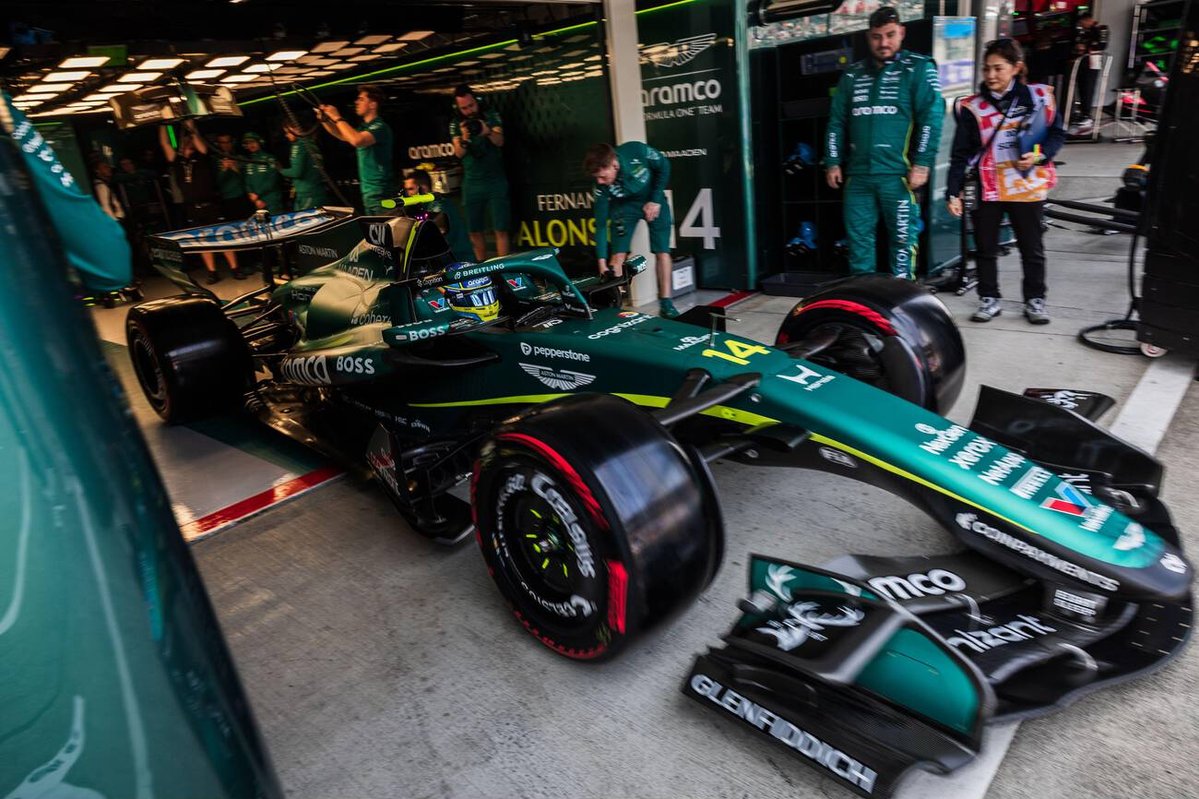
The AMR26 aims for a broader operating window. Integration > Agility
Muchos piensan que 2026 es solo una normativa de motores. Error. Con la aerodinámica activa, la integración motor-chasis es el todo.
De nada sirve un misil si no hay armonía técnica y eficiencia máxima. Mercedes y Ferrari ya lo saben; el resto, o se adapta o se queda atrás.
@asadinator True, shorter wheelbase helps rotation and early throttle. But for 2026 active aero, it’s a risky trade-off. A 'nervous' car at high-speed shifts is the danger.
Newey’s AMR26 focuses on total integration to balance agility and energy recovery. Stability is king
According to some estimates circulating in the paddock, the Honda Power Unit would suffer from a deficit of about 100 kW (136 hp) in the energy recovery phases.
Orihara admitted that unlocking power from the internal combustion engine (ICE) will not be easy: "We need to focus on improving energy management, because ICE is already operating close to its limit."
The Japanese engineer clarified that the main focus will now be energy management and refining data on the test bench, taking advantage of the next four weeks leading up to the trip to Miami. #AstonMartinF1#F1
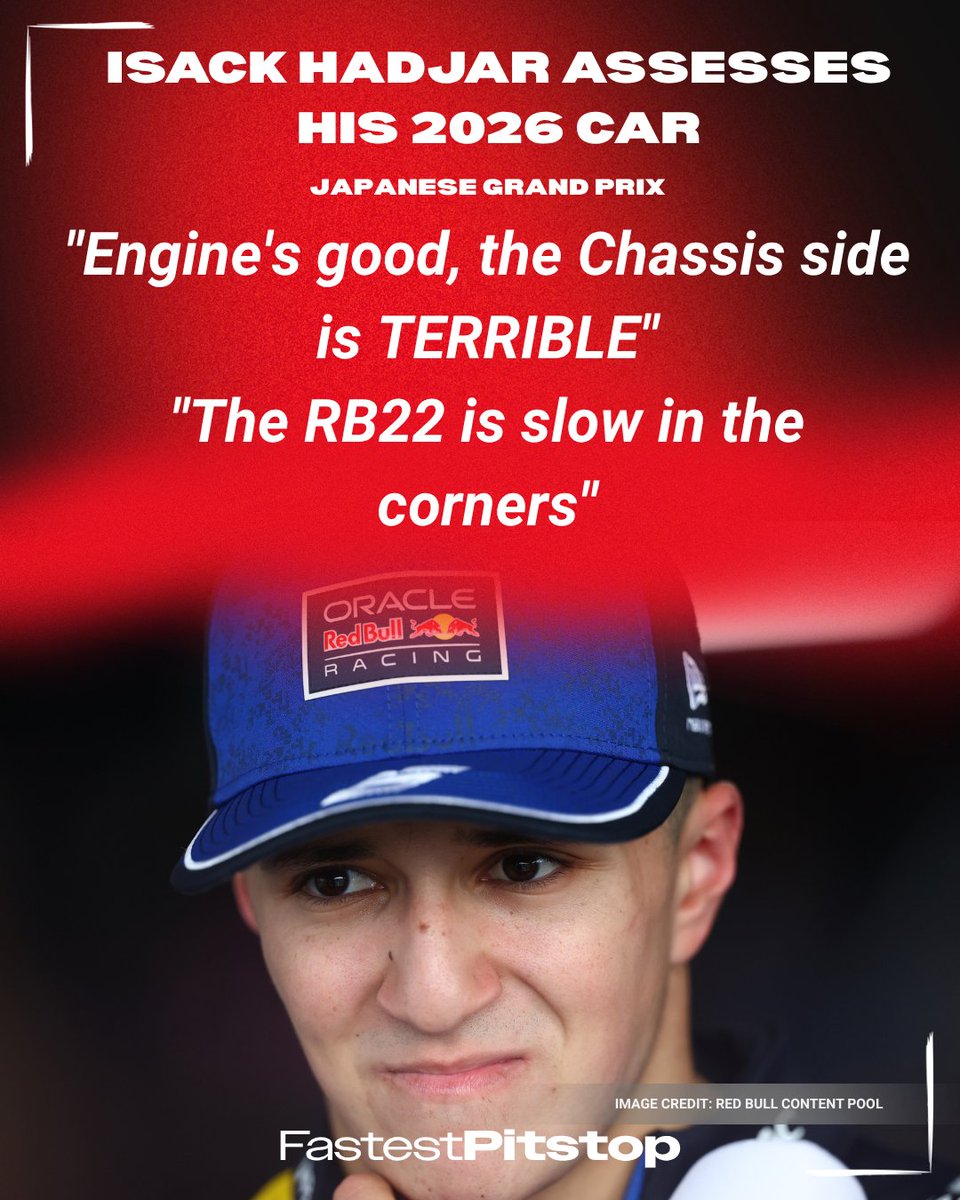
Isack Hadjar talks about his impressions of the RB22 after 3 rounds of Formula 1 Racing:
"Engine's good, the Chassis side is Terrible"
"Slow in the corners"
#F1#JapaneseGP
📰 @PlanetF1
📸 Red Bull Content Pool
@tonicuque That is obvious advantage that Mercedes enjoys at the moment (least super clipping). Why should they agree to give it away when Ferrari doesn’t agree nothing significant for the race starts which are also dangerous.
Others will have this artificial ADUO so let them solve it
@andres3300@tonicuque Engines were already optimised to deliver given HP while being light weight, so increasing HP by software would only lead to reliability issues
@tonicuque Dada la situación¿no sería bueno además lo que propone aumentar potencia motor (caudal combustible) lo que permitan los diseños sin muy grandes modificaciones a costa de fiabilidad y permitir más sustituciones de motor durante la temporada?
@tonicuque There is an issue with this. The engines have been designed keeping in mind a particular fuel flow. So changing the fuel flow will result in reliability issues. More so for some teams than others. So a change like this would only be possible by 2027 at the earliest.
@JaviKroxy@RubCanales@mportilloES No it won’t impact those on less ICE HP, as they would have been starved of recharge and MGUK power before aswell. Only advantage it would remove is with those with superior energy deployment and recharge capability
⚠️ La potencia de los motores en Miami va a bajar.
➡️ Probablemente se REDUZCAN unos 150 kW de potencia del MOTOR ELÉCTRICO con los cambios que planean hacer.
➡️ Supondría tener, aproximadamente, motores de 550 CV de combustión y 270 CV eléctricos.
(@mportilloES) #F1 🔋
@diostappenFCB@tonicuque They are the same, otherwise cars would also have stronger regen in city, but they don’t. Tesla would definitely want to regen as much energy as possible for efficiency.
@asadinator@tonicuque Pero estamos hablando de invertir la polaridad y recargar con el mguk utilizando el termico a modo de generador. No de regenerar en ciudad o en la bajada de un puerto de montaña con los frenos.
@diostappenFCB@tonicuque Im not an expert, but having owned an EV the regen power is always significantly lower than deployment, mist be due to some physical limitation
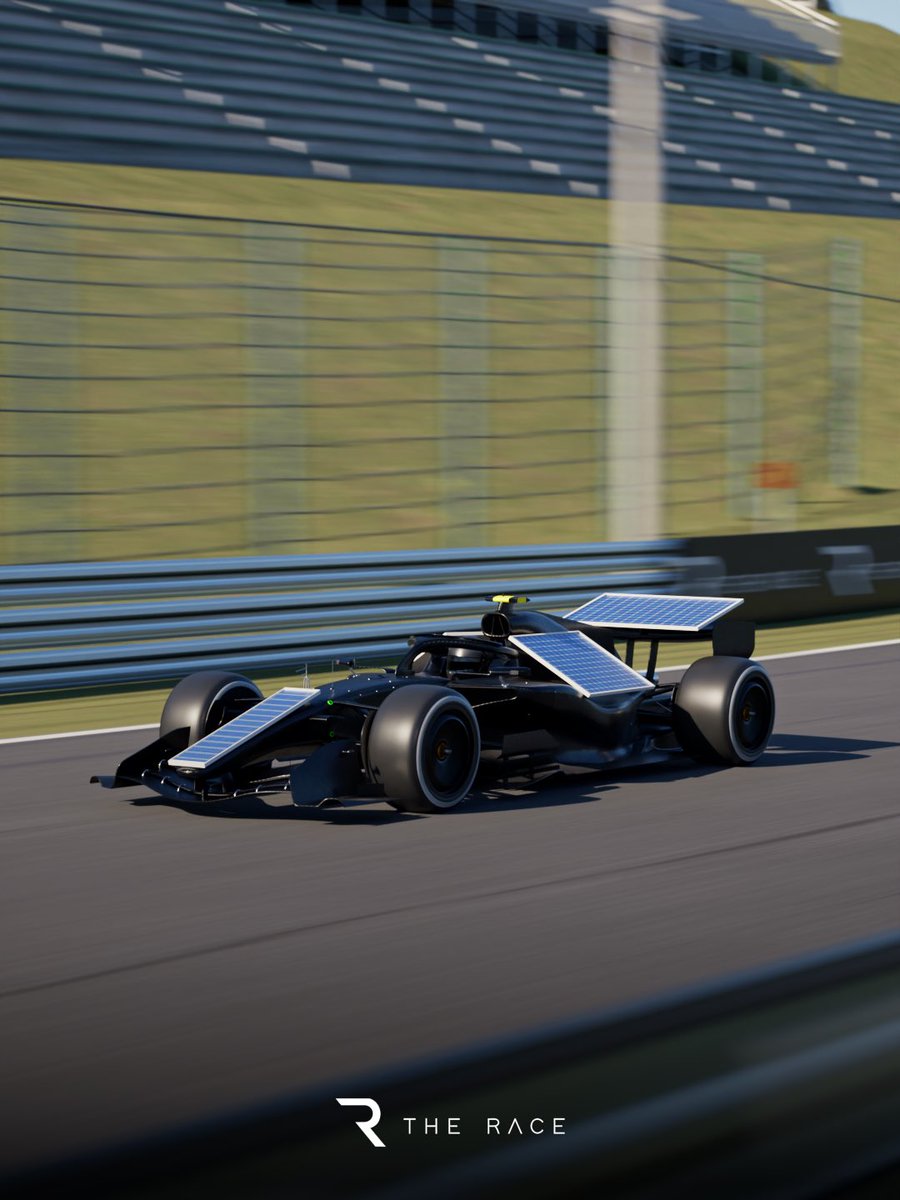
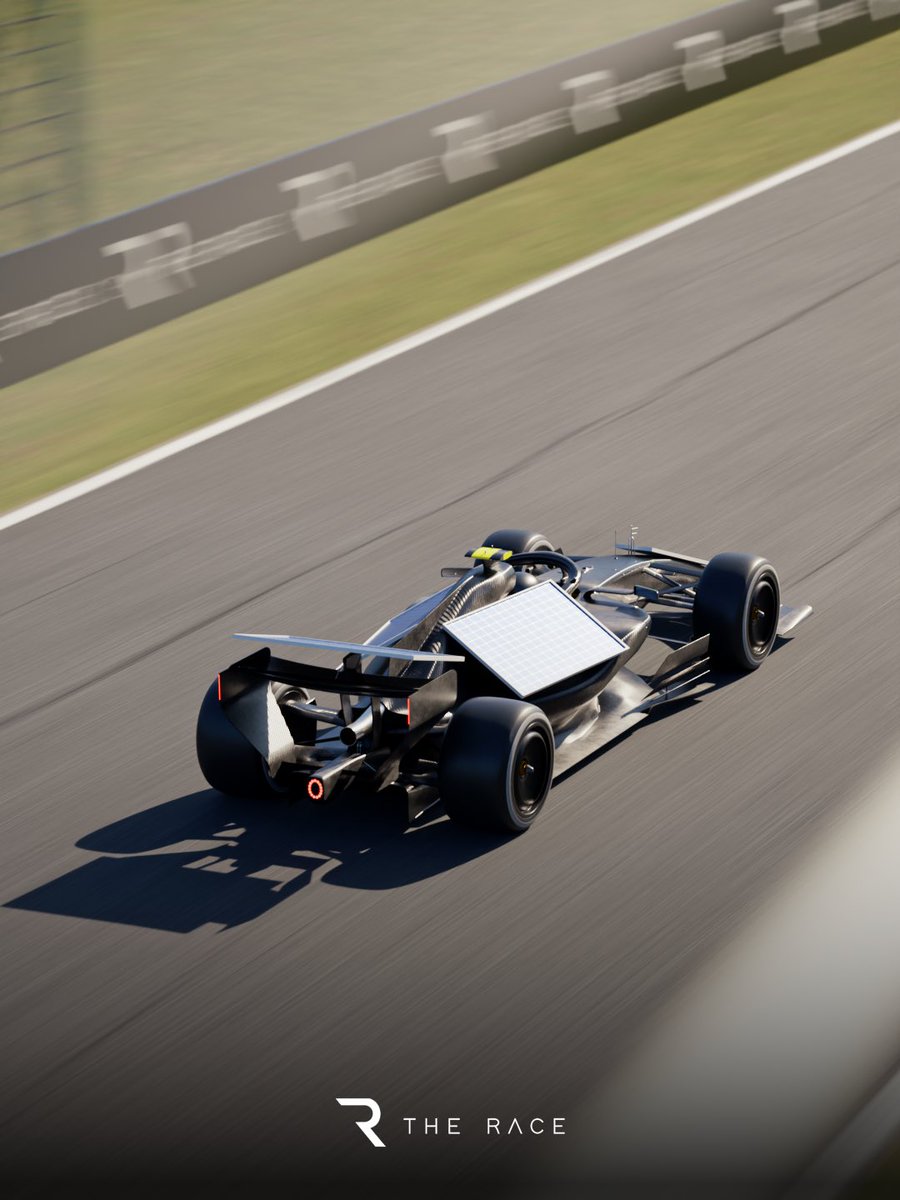
❗️To stop the 2026 F1 cars from running out of energy, the FIA has mandated that all teams must fit solar panels to their cars when the season resumes in May.
We’ve got an exclusive sneak peek..
Jenson Button: Do you think it's sort of set in stone then the advantage you have over McLaren or any other team that uses your power unit? Because you have that experience of sort of building the car around the power unit?
@HenryWi86212968@f1insightshub That’s a question I’ve been pondering, what if instead of fast acceleration and super clipping they just go flat speed. Reason is there’s electric losses when high discharge or charging
If you compare fastest FP2 laptimes between 25 and 26, the biggest losses for the new cars are in the high speed corners in S1 (1.7s). It seems like the stronger acceleration after spoon balances out the super clipping after the 130R, so there's barely anything lost there.
#F1
@m_lubieniecki Like you said though they can’t recharge enough without a front regen braking. AI said an extra 4MJ would be about 5kg, no brainer really
@asadinator Weight is one important factor but I would say it's not critical. I think they wanted this recharge- immidiate deployment pattern and yo-yo racing to promote overtakes.
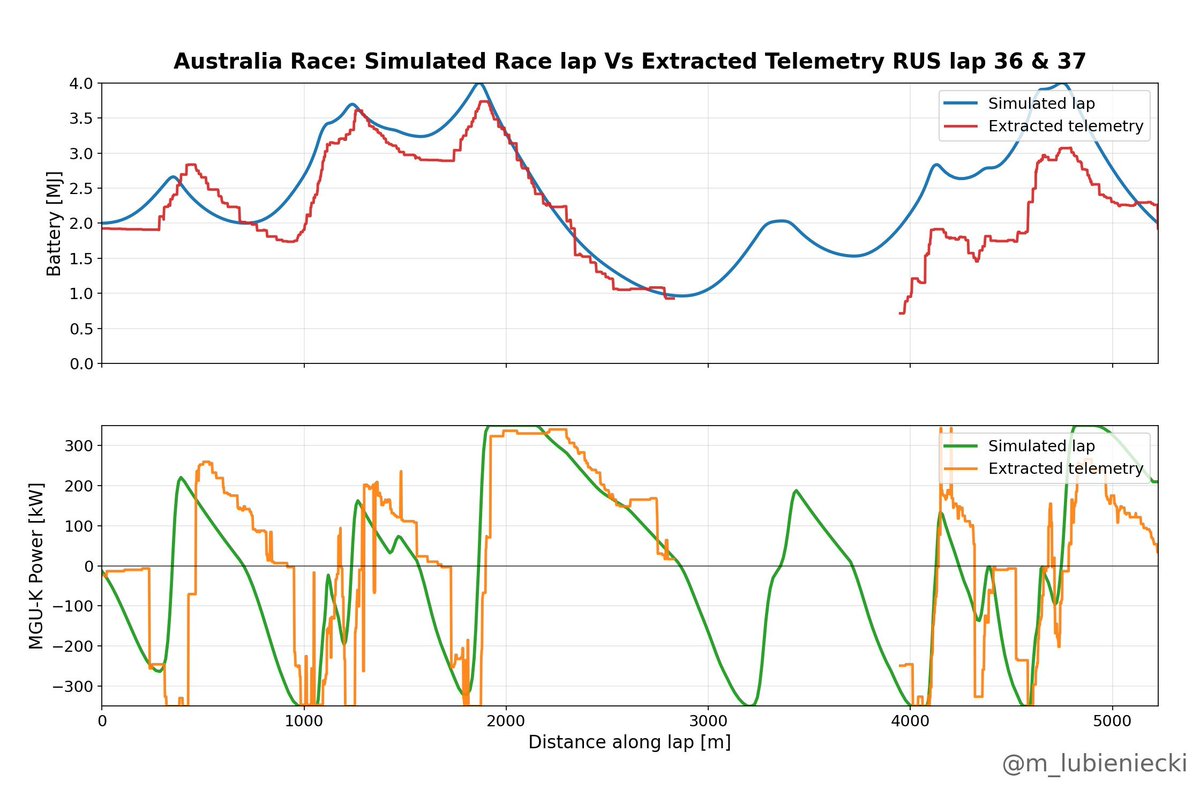
Is a 250 kW MGU-K limit a good idea?
In a qual sim at Albert Park, the car exceeds 250 kW for ~6.3 s on the back straight - where most of the peak deployment happens.
Extra energy above 250 kW?
→just 0.49 MJ (~2 s at 250 kW)
Suggests adjusting peak power alone is not enough.