
Sabitlenmiş Tweet
Ash Arora
10.7K posts


Ash Arora
@asharoraa
VC. @Forbes U30 but not arrested. Backed @polymarket @mistralai @nothing @reflectorbital @basetenco (acqd @parsedlabs) @raspberry_pi + others
San Francisco, CA Katılım Eylül 2009
9.1K Takip Edilen51.9K Takipçiler
@srinisekaran @atShruti Haha am visiting London this week, watched first show this morning! Perk of working SF timezone
English

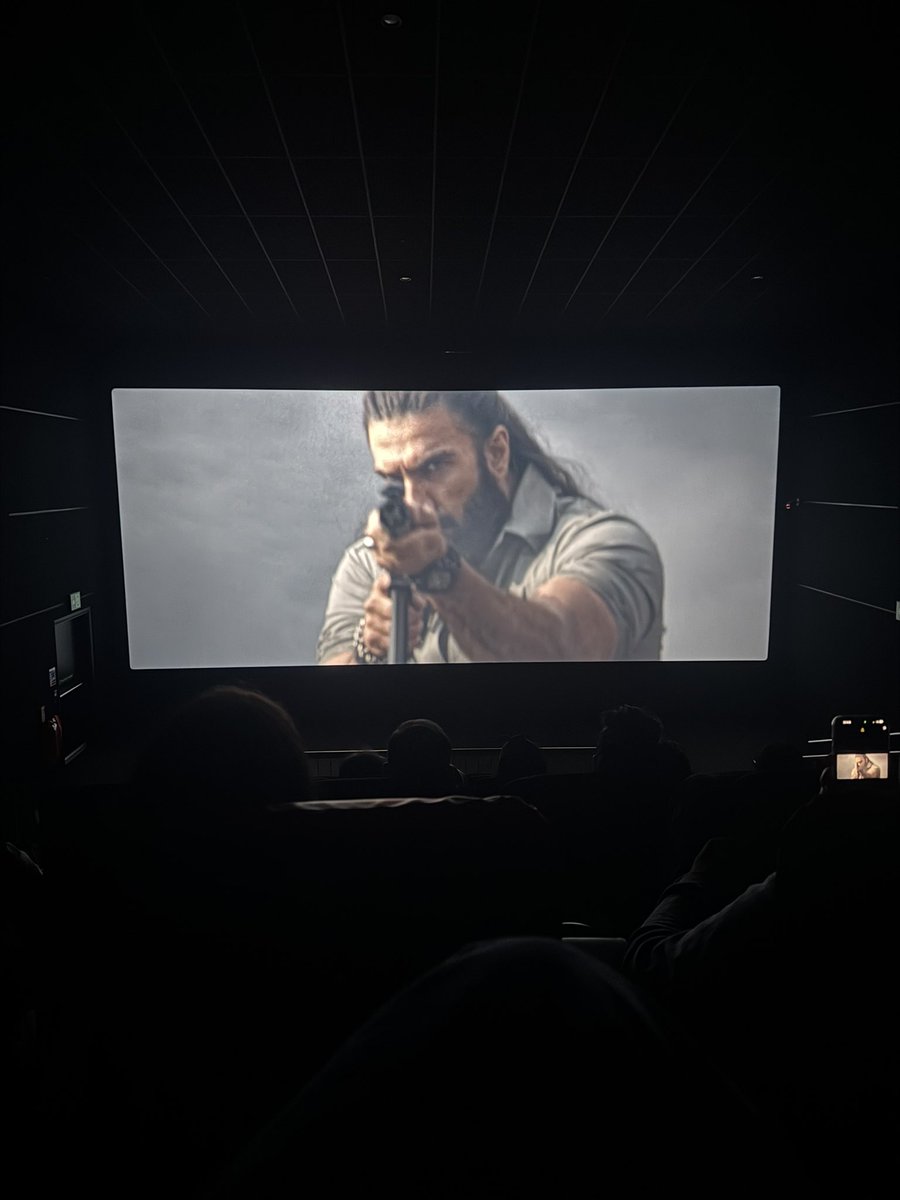
In SF? Who is going for Dhurandhar 2 today? I want to watch!!
English
Both are correct imo
NVIDIA is the closest public proxy to AI, not Microsoft and Amazon
P/E TTM of this ~$5T co is still 30x+ which is similar to private pricing, even forward is 20x+
There is ~$2T that reallocates annually in publics, even without as big a push as AI
My best guess is when OpenAI and Anthropic IPO that flow breaks and NVDA multiple likely compresses.
English

One of these two groups is mispriced
Private AI labs: OpenAI valued around $840B, Anthropic north of $600B on secondaries. Both at 30x+ ARR.
Public giants: Microsoft at ~$3T on 23x forward earnings. Amazon at ~$2.3T on 28x.
Microsoft likely owns ~25% of OpenAI. Amazon likely owns ~15% of Anthropic and ~5% of OpenAI
If private investors are pricing these labs for a $5T+ venture-style outcome then…
Microsoft’s implied stake in a $5T OpenAI is $1.25T embedded inside a $3T company. Amazon’s combined stakes embed roughly $1T inside a $2.3T company.
Publics too cheap on Al exposure? Or privates/secondaries in bubble territory? Which breaks first?
English
Ash Arora retweetledi

@jaredrosnerd 🎯 The coldest winter I have ever spent was a summer in London
English

The hottest summer I ever spent was a winter in San Francisco

English
Ash Arora retweetledi

Rich kids get capital. Middle class kids get “figure it out.” Poor kids get trauma and told it builds character. The starting line is not equal.
English
@habibihashir The name is literally “Shenanigans” what did you expect
English


Ash Arora retweetledi

@WestsideLAGuy I hope you heal one day. Howie’s an amazing guy, that level of charisma, humor and care is unseen.
English

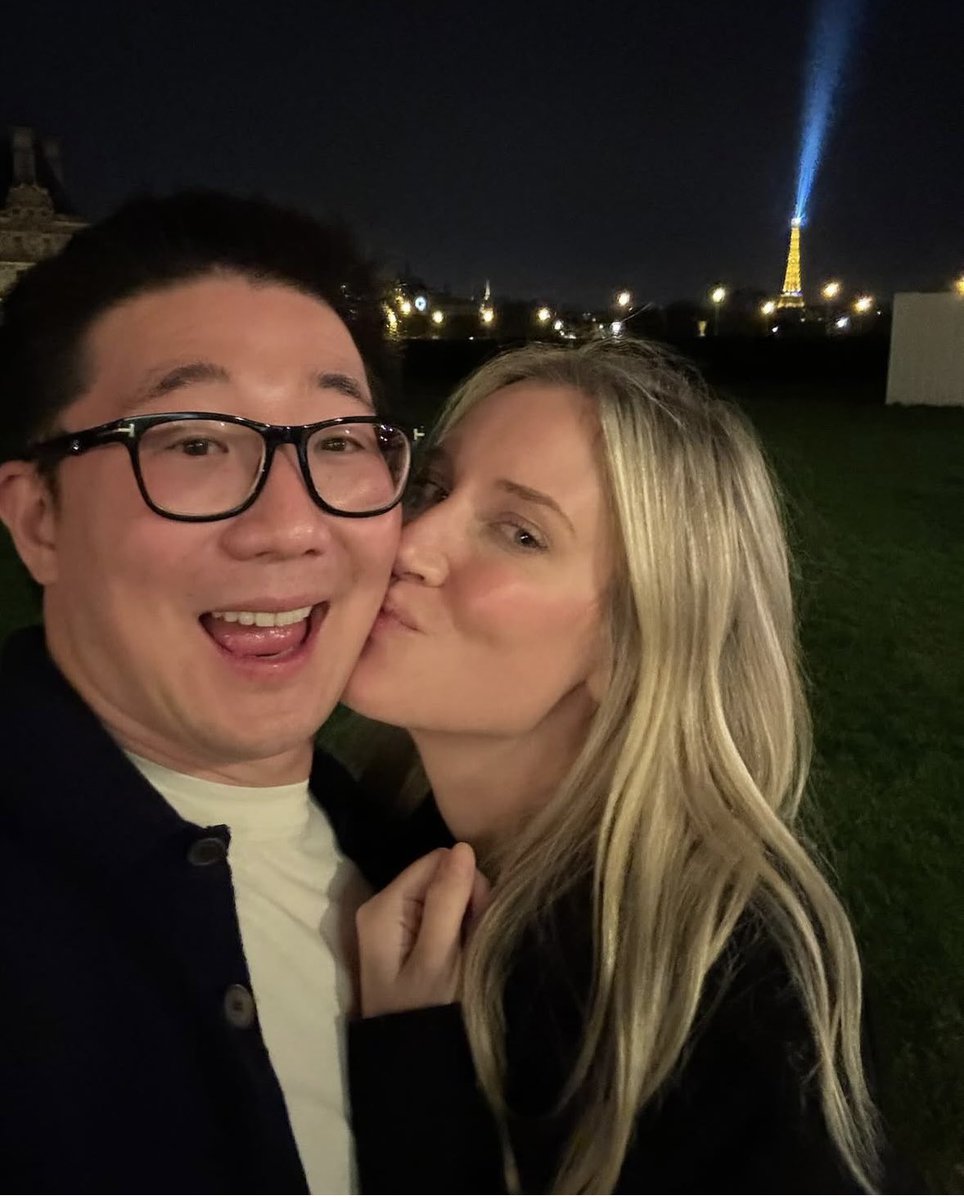
This is successful founder of Airtable Howie Liu & wife (she’s 3 years older).
They have a great life together, new baby, and I’m sure he’s a loyal provider husband & dad. But she’s not genuinely sexually & romantically attracted to him.
To deny this reality is cope.
English
@mansourtarek_ @aleximm @Alfred_Lin @matthuang @luanalopeslara @_charlienoyes @abhishekm1636 Looool @abhishekm1636 at the back didn’t even stop at the end! Boy crossed a 100 easy haha 🏆
English

This is how Kalshi Q1 board meeting ended.
cc @Alfred_Lin @matthuang @aleximm @luanalopeslara @_charlienoyes @abhishekm1636
English

Unfortunately training by itself is not a defensible moat without being coupled with inference. The unit economics simply don't work out ie training costs, if you train a good enough model that people want to use, should be a rounding error compared to inference costs. In addition to that, you become this awkward middle man between the customer and the GPUs/inference provider the model runs on. Training will eventually become commoditised in a sense, and the training teams left standing will be the ones embedded in inference who are either very good at creating the abstractions to enable anyone to train, or extremely hands-on and dedicated to enterprise
illiquid@lefttailguy
So is DoorDash churning from @appliedcompute? I suspected that something like this would happen. You essentially work with companies like Applied Compute and Metis to see how strategic the specific intelligence they can help you build is, and if it's strategic enough, you of course want to in house the development that stuff. Citadel doesn't buy trading outcomes from other companies.
English

@asharoraa the best way for men to support women is by stopping this nonsense and sending the women in their lives to The Den jointheden.co - actually run by women
English
SF is a place where men start women-only communities
Aris@aris_segueg
building the biggest women-only community in San Francisco 1) You get approved 2) You get in 3) You get to know women you should've known years ago if this sounds like you, comment👇
English
@Detasseled Lol that happened in big tech in south bay years ago
Idk a single woman in sf hired for dei
English

@asharoraa Also the place where women are hired for DEI reasons.
x.com/asharoraa/stat…
Ash Arora@asharoraa
SF is a place where men start women-only communities
English


@asharoraa "men" bro is not one of us he a they them at best, at worst he's a lesbian french dude
English

@asharoraa If the "odds are good......" line about SF ever needs a launch video
English
Ash Arora retweetledi

Patrick Collison tells people in their 20s to not move to San Francisco.
William largely agrees with him. He thinks SF has a consensus problem and has removed the risk from becoming a founder:
"I'm a product of Silicon Valley. I started Plaid back in 2012. I've been there since I was 21, and it's very easy to stay in Silicon Valley.
But you can start to get isolated and get very consensus focused. San Francisco is probably the most consensus place I've ever been to. That is both a huge crutch for us, but it's also probably the most valuable asset.
As a founder, if you're building in something that SF believes is very consensus, but the world does not believe yet, that's actually a great operating environment. That's why Silicon Valley and SF are so dynamic and we're so in front of the curve. But we also have completely lost touch with how the rest of the world operates. Even how the everyday American operates.
So I think it's very important to go to places that don't have that same bias. If you think about emerging markets specifically – the founders who build there, they're the everyday people, they live in this constrained society.
They're constrained in a way that San Francisco and New York isn't. And that breeds a different type of creativity, it breeds a different type of innovation that you really can't get anywhere else. If you go to talk to people in London or Vienna or San Francisco, people are living in a world of abundance. And that causes a very specific creation cycle.
SF and Silicon Valley are probably more akin to Wall Street in the 1990s than they are like a research lab in Cambridge in like the 1950s. Maybe that was Silicon Valley in the 90s, but it's not anymore.
You talk to a 23-year-old and assuming you're like moderately competent and went to the right high school and college, you're going to get a $3 million seed round. And worst case scenario, you can go work at like a great company as an engineer and you'll have "founder" on your resume. There is no risk in that proposition.
If you go back to pre-2008, you're on the edge of the knife, and I think that creates just so much intensity in creativity and fear that is such a critical part of the founder journey.
Starting companies is just too f**king safe, and it's caused a lot of companies to be super safe companies -- like we're going to pivot to AI and wrap OpenAI/Anthropic. That's not bold, that's not ambitious.
And it's because we are attracting founders that actually want to be employees. They don't think and say "if I don't pull this off, I'm going to become bankrupt. My life is over." I think that's pretty healthy. That's when you bring out the rawness of humanity. And I don't see that very much anymore."

Patrick OShaughnessy@patrick_oshag
.@williamhockey is one of the least visible founders in tech relative to what he has created. He co-founded Plaid and is now building Column, a software company that owns a bank, and powers Ramp, Wise, Bilt, Mercury, and others. He funded it himself by borrowing against nearly everything he had in Plaid shares, and has never raised any outside capital. His story matters because so much of the value in our industry gets created through exactly this kind of extreme personal risk. He is maniacal about being the best in the world at his thing, and has spent his entire career betting on himself and doing whatever it takes to win. He also spends a lot of time outside the US (in places like Kinshasa) which has given him a rare perch on the power of the US dollar. We discuss: - Why emerging markets are often the most financially innovative - What owning 100% of his company allows him to do that VC-backed founders cannot - Getting margin called and nearly going bankrupt - Why the best founders are specialists - What it takes to be the best in the world at your thing - How Silicon Valley's consensus culture produces consensus founders - How the US dollar functions as an instrument of national security Enjoy! Timestamps: 0:00 Intro 9:19 Emerging Markets 14:03 Silicon Valley's Elite Consensus Problem 16:03 Rejecting the VC Hamster Wheel 21:45 Equity and Liquidity 26:03 Funding a Bank 29:45 The Necessity of Extreme Founder Risk 37:18 Finding Leverage 45:20 Longevity and Profitability in Banking 48:46 Matching Your Capital Structure to Your Business 51:44 The Unseen Power of the US Dollar 1:02:30 How AI Will Transform Legacy Banks 1:09:23 The Kindest Thing
English