AsK

5.4K posts

AsK

AsK

@ashwask

Rainmatter! Cybersecurity! Health-tech! Coffee

Katılım Nisan 2012
544 Takip Edilen147 Takipçiler
AsK retweetledi
Nithin Kamath
Nithin Kamath@Nithin0dha·
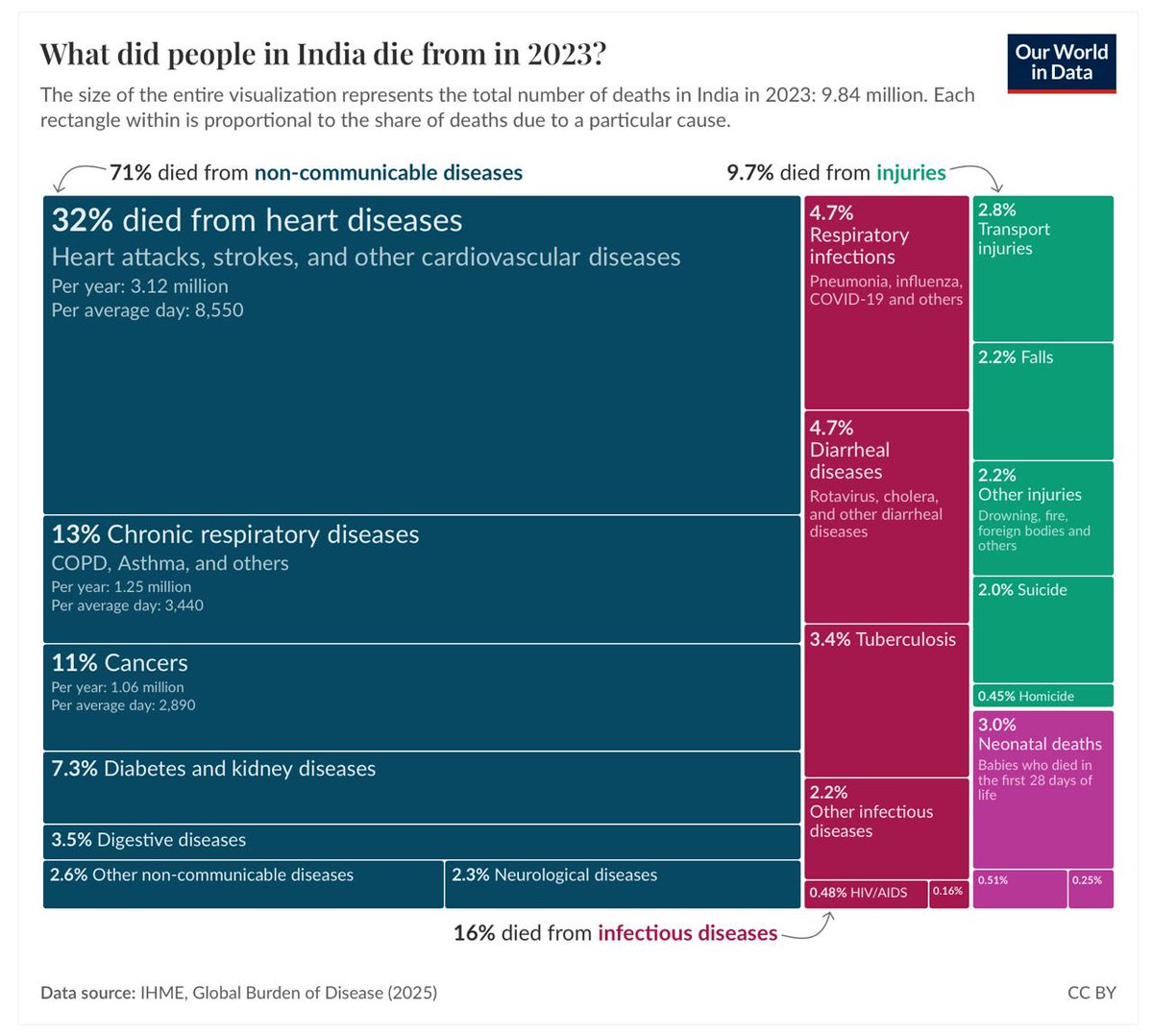
Not sure how accurate this data is, but even directionally, two things stand out. A lot of what kills us is systemic, like poor air quality (see link in comments), broken food systems, and infrastructure. But a meaningful chunk is also within our control, like how we eat, move, sleep, and take care of ourselves. Image: @OurWorldInData
Nithin Kamath tweet media
English
67
96
954
84.5K
AsK retweetledi
Dinesh Pai
Dinesh Pai@dineshpaii·
♥️
Nithin Kamath@Nithin0dha

Rainmatter started in 2016, with a few of us doubling up on our day jobs and trying to help startups that were trying to expand India’s capital markets ecosystem. Nine years later, it has grown into something far bigger than we ever imagined. So far, we’ve invested over ₹1,500 crore across 160+ startups spanning fintech, climate, health, media, and deep tech. We’ve also earmarked 10% of everything Zerodha earns to invest in startups, and another 10% for the social sector through the @RainmatterOrg. The thesis has evolved from just expanding the capital markets, but the thread running through it is simple. As a country, we need to own more of what we consume. Sovereignty, in the truest sense. We’re not a typical VC. We don’t take board seats, and we’re not in this for quick exits. We’re not interested in forcing founders into short-term decisions just so we can make money in five or six years. The simple reality is that building a good business is hard. Building one that is genuinely useful, scalable, and profitable is even harder when investors are pushing you to speedrun success and sustainability. That kind of pressure usually leads to shortcuts. And shortcuts, more often than not, come at the consumer’s expense. So our approach has been simple: be patient, back founders for the long term, and help them build the business the right way. That, more than anything else, is the heart of @Rainmatterin.

ART
4
1
40
3.5K
AsK retweetledi
Dinesh Pai
Dinesh Pai@dineshpaii·
One thing we are very conscious of within @Rainmatterin is the size of our team. We are a small team, including legal and compliance. It is intentional. While I was hoping to make it sound like rocket science, it is not. It is obvious that small teams work well together. We have every team member clued in on everything we do. We discuss, debate and decide on things together. No team member is left out of conversations. There are multiple decision makers. And not everything goes back to one or two people to decide. Sure, we soundboard all ideas and decisions, but at the end of the day, the accountability and responsibility for those decisions lie with everyone on the team who makes them. I feel the future of venture teams in India is small, cohesive teams that are aligned and able to be coherent in all interactions. As more and more capital becomes available, every venture or investor team must be thinking about why a great founder will take them along for the journey. And I think this streamlined experience with investors is the lowest-hanging fruit.
Dinesh Pai tweet media
English
3
3
46
2.4K
AsK retweetledi
Dinesh Pai
Dinesh Pai@dineshpaii·
India added ~35 GW of solar in 2025. Cumulative capacity crossed 130 GW. But we curtailed 2.3 TWh of it. Meaning 2.3 TWh that could have been generated, but wasn't. Basically power roughly enough to rin 19 lakh Indian households for a full year. In Rajasthan, Gujarat, and Tamil Nadu, curtailment rates ran between 10–30%. We built the panels. We just can't use them. So it's clear that the problem isn't generation at all. On the other hand, electricity generated far from where it's consumed loses a chunk of itself just travelling through the grid. The economics of large centralised solar farms starts to look different when you account for what gets lost on the way. The answer isn't just more capacity. It's smarter, closer infrastructure. Local storage, demand-side management, and distribution that actually matches where energy is produced to where it's needed. The new consumer electricity rules (SERC draft) are a quiet step in the right direction by the Govt. Time-of-day tariffs, net metering, storage mandates, demand response definitions. Read about it in the @zerodhamarkets piece today. Attached in the comments. Also, if you're solving for this, @Rainmatterin is backing companies building critical infra for India. 🇮🇳
Dinesh Pai tweet media
English
3
10
61
6.4K
Reads with Ravi
Reads with Ravi@readswithravi·
Is there anyone else who still favors reading physical books over e-books in 2026?
English
1.8K
686
11.2K
493.9K
AsK retweetledi
Balu Gorade
Balu Gorade@BaluGorade·
Meet Kailash Nadh, the technology mind behind Zerodha. > Born in 1987 in Uttar Pradesh, into a middle class family. > Started coding at the age of 12 on his family PC. > Completed BSc in Computer Science in 2008. > PhD in Artificial Intelligence & Computational Linguistics in 2011 from Middlesex University, London. > Joined Zerodha in 2013 during its early growth phase > Serves as Chief Technology Officer (CTO) and drives product and platform innovation. > Runs an ultra-lean team of 35 engineers powering 15–20%+ of India's daily stock market volume. > Estimated net worth ₹100Cr+ largely from Zerodha ESOPs. > Estimated yearly income around ₹50Cr approx. From coding as a kid to building India's largest brokerage tech stack. Truly Inspiring. ♥️
Balu Gorade tweet media
English
24
62
933
74K
AsK retweetledi
Nikhil Kamath
Nikhil Kamath@nikhilkamathcio·
@chamath has made and lost billions. He backed Tesla, Bitcoin, and the Golden State Warriors when everyone told him he was insane. Now he's building what he calls a software factory.. the machine that makes the machine. We talked about why pain is a prerequisite for scale, why socialism might be closer than any capitalist wants to admit, and why none of the metrics society uses to measure success actually mean anything. This was not a polished conversation. Dropping at 7pm.. Watch the trailer here: yt.openinapp.co/4r7i3
English
30
24
607
55.7K
AsK retweetledi
Kunal Shah
Kunal Shah@kunalb11·
A small % of people are open to feedback and very small % of people act on feedback they receive. Making the small group of people who are good at both, quite unstoppable.
English
97
149
1.9K
45.7K
AsK retweetledi
Nikhil Kamath
Nikhil Kamath@nikhilkamathcio·
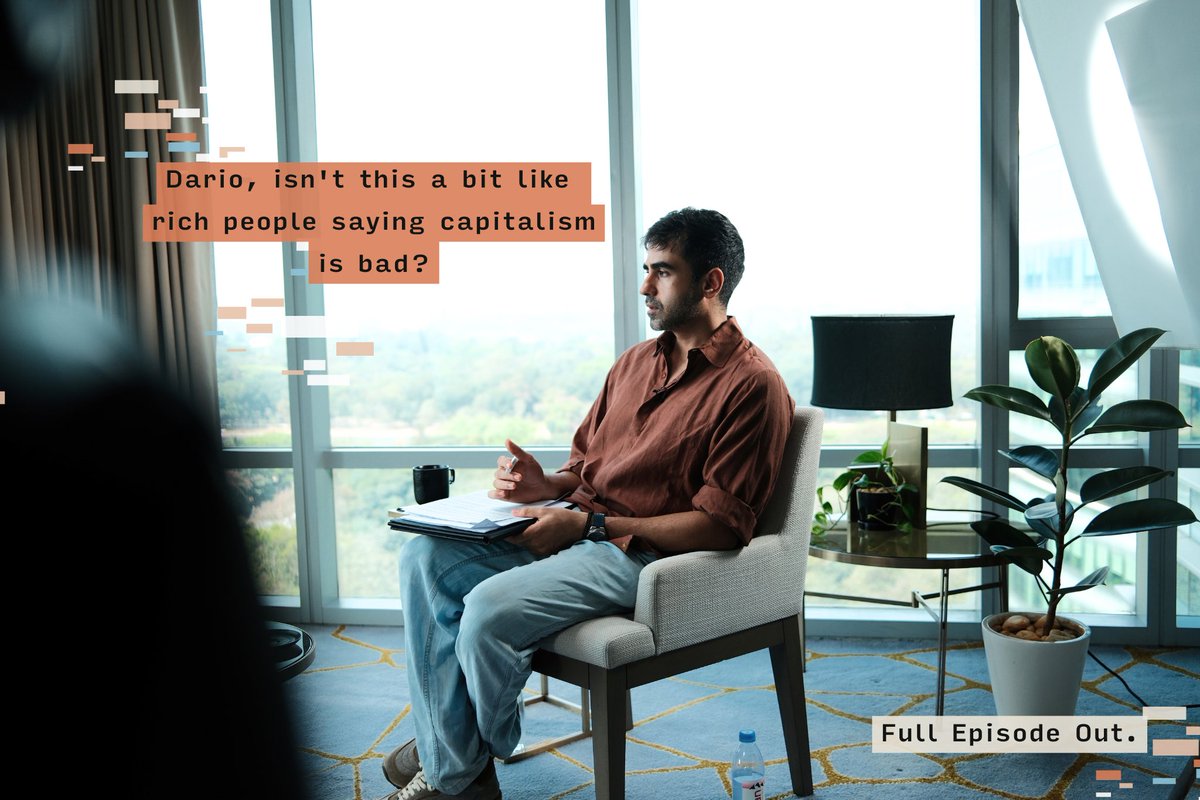
If AI is going to change the world, at this minute, (for however long) Dario is on the absolute top of this new world. One thing this has left me asking is, for all the AI companies which aren't really profitable yet and have cukoo valuations; if they do make most jobs redundant, including high paying ones from consultants to programmers, to doctors and engineers, where does the revenue growth come from & who is the new consumer in the capitalistic world we live in? Capital can no longer be a Moat if increased productivity, inevitably leads to deflation..
Nikhil Kamath tweet mediaNikhil Kamath tweet mediaNikhil Kamath tweet mediaNikhil Kamath tweet media
English
274
264
3.5K
269.2K
AsK retweetledi
NDTV
NDTV@ndtv·
#BREAKING | Karnataka government mulls mobile phone ban for students under the age of 16 amid concerns over rising social media addiction among children NDTV's @reethu_journo brings you the details
English
119
230
1.8K
209.9K
AsK retweetledi
Nithin Kamath
Nithin Kamath@Nithin0dha·
Dang! I have my first AI agent running. I built a small workflow for myself to identify spam emails using Google Studio. The best part about the tool is that you can define the rules. For example, this is one of the rules (image): Spam emails are my biggest personal problem. I was wasting at least 30 minutes a day marking emails as spam, even with different filters. And I’m addicted to seeing my inbox empty. So, to everyone who has been sending me unwanted emails: please spam my inbox now. 🙂
Nithin Kamath tweet media
English
191
110
2.8K
249.4K
AsK retweetledi
Mayank Vora
Mayank Vora@aiwithmayank·
OpenAI and Anthropic engineers leaked a prompting technique that separates beginners from experts. It's called "Socratic prompting" and it's insanely simple. Instead of telling the AI what to do, you ask it questions. My output quality: 6.2/10 → 9.1/10 Here's how it works:
English
134
528
6.6K
1.7M
AsK retweetledi
Aditya Raj Kaul
Aditya Raj Kaul@AdityaRajKaul·
#BREAKING: India’s IT Minister Ashwini Vaishnaw at Davos strongly counters IMF Chief for calling India a second-tier AI power: “I don't know what the IMF criteria is but Stanford places India at 3rd in the world for AI preparedness. I don't think your classification is correct.”
English
889
5.3K
28.1K
1.5M
AsK retweetledi
Sahil Bloom
Sahil Bloom@SahilBloom·
Everyone needs to hear this…
Sahil Bloom tweet media
English
91
156
1.4K
42K
AsK retweetledi
Sahil Bloom
Sahil Bloom@SahilBloom·
I’m increasingly convinced that the key to life is being unapologetically yourself. When you edit your personality, you attract relationships that need constant maintenance. Stop filtering yourself to be liked. Right ones will stick. Wrong ones will walk. That’s a blessing.
English
329
935
7.8K
266.5K
AsK retweetledi
Nithin Kamath
Nithin Kamath@Nithin0dha·
There's a lot of pessimism about India's growth prospects right now, amplified by the sheer amount of geopolitical drama we're living through. But if we aren't hopeful that India will do better, then everything becomes moot. This isn't to say we don't have real problems. We do. But every successful country has had to deal with its own share of thorny challenges along its development path. What matters is how we respond. Today is National Startup Day 🇮🇳, and I can't think of a better time to build something in India, and for the world, despite all the challenges. While it's okay to be pessimistic or cynical at times, India has come a long way considering the constraints it has faced. Could it have gone even further? Sure. But it's better to think about things as they are, rather than as they should be, and then work toward what they could be. I'm saying this because we are truly living in unprecedented times. The world order is being redrawn geopolitically, economically, and technologically. It's hard to even describe all the monumental shifts happening around us. But massive shifts create massive opportunities for entrepreneurs who can see them coming. And there's never been a better time specifically to build in India. If I were tweeting this in 2015-16, the startup scene barely existed outside of a few big e-commerce companies. There were no local pools of capital. No recognition. People genuinely thought startups were what you did if you had no other skills in life. Today, everything has changed. We're living in a world where every country is focused on its own self-sufficiency, and the era of unchecked globalisation is over. For India, this means we have all the enabling factors in place: improving ease of doing business, deeper pools of local capital (especially long-term investors), a massive domestic market, and active government support for startups. Most importantly, AI has dramatically reduced the barriers to experimentation. You can now build and test ideas that would have required entire teams and massive budgets just a few years ago. Given all of these converging factors, if you've always had a dream to build something, there's never been a better time to take your shot.
English
189
327
3.4K
254.1K
AsK retweetledi
Nithin Kamath
Nithin Kamath@Nithin0dha·
Indian stock exchanges are closed today for Mumbai's municipal elections. The fact that our exchanges, which have international linkages, are shut down for a local municipal election shows poor planning and a serious lack of appreciation for second-order effects. As Munger said: "Show me the incentive, and I will show you the outcome." The holiday exists because no one who matters has any incentive to oppose the market holiday. It also tells you how far we have to go before global investors take us seriously.
English
1.4K
3.2K
25.8K
1.5M