Sand man person

191 posts

Sand man person banner
Sand man person

Sand man person

@asssssddfffff

Katılım Mart 2023
36 Takip Edilen2 Takipçiler
Sand man person
Sand man person@asssssddfffff·
@jailedamanda The word doesn’t refer to the same thing - the new word is an allegory of the old.
English
0
0
0
357
amanda
amanda@jailedamanda·
Finishing Ken Burns’s American Revolution. There’s correspondence from John Adams from 1777 where he references crushing the loyalist forces “into atoms” and I’m going to be honest I didn’t know they knew about those in the 18th century
English
54
104
6.5K
214.8K
Air Safety #OTD by Francisco Cunha
Throwback to 2022, when student pilot Vicent Fraser had an emergency and landed his Aero Commander 100 on a highway like a boss, avoiding the powerlines just after touchdown in Swain County (North Carolina, USA)
English
156
565
19.6K
1.7M
Sand man person
Sand man person@asssssddfffff·
@BoringBiz_ Yes all of those are collectively “the private capital super bubble” that is a hallmark of our ZIRP
English
0
0
1
158
Boring_Business
Boring_Business@BoringBiz_·
Whenever I hear someone say that private credit is a bubble, I ask them what that means for private equity At least 90% of the time, they don’t have a good answer and fail to even realize that debt sits above equity in the cap table waterfall If you think private credit values are going to be impaired, that means all the equity underneath (which mostly is PE sponsors) has to be a zero first So believing that private credit is a bubble would imply that everything in private markets is a bubble And if that is true, then I would argue that VC valuations are a much bigger source of the bubble than PE, purely based on the multiples that are being paid on the big AI company rounds
Nick Nemeth (Mispriced Assets)@NickNemo17

x.com/i/article/2025…

English
62
60
1K
210.9K
Westside L.A. Guy
Westside L.A. Guy@WestsideLAGuy·
This week I interviewed my first Asian American legacy applicant ever: both parents were class of 1998, both are surgeons. The kid’s resume is cracked. The incoming wave of Asian American legacy applicants will shake up elite college admissions.
English
30
28
1.4K
96.8K
Sand man person
Sand man person@asssssddfffff·
@brentmuio That’s because we were still in the early innings of inflating the multi decade PE hot potato, which allowed for deals to payoff, once that reverses…
English
0
0
1
232
Brent Muio
Brent Muio@brentmuio·
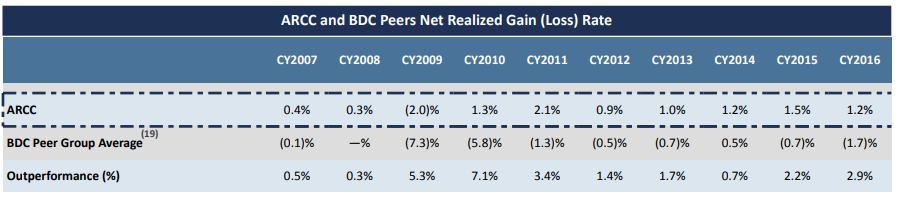
"Private credit is a roach motel that will blow up in the next credit cycle". Meanwhile $ARCC had one year of net credit loss (-2%) through the worst credit event in a 100 years. This is definitely a narrative violation, I apologize
Brent Muio tweet media
English
5
0
42
5.6K
Sand man person
Sand man person@asssssddfffff·
@MauiBoyMacro Remember nearly all that ndfi debt is mostly not building anything - mostly all going to consumer debt and buyouts which is really just consumer debt for the seller.
English
0
0
0
16
Sand man person
Sand man person@asssssddfffff·
@endowment_eddie That is a lie the private credit industry says. Nothing to do with capital requirements, private credit were willing to do sketchier deals that what banks would be willing to do. Whether that be due to smaller companies, more add backs, no amortization, higher leverage, etc
English
0
0
0
16
Sand man person
Sand man person@asssssddfffff·
@kkmaway Capital standards in banks are like the opposite of increasing the speed limit: just because they raised them and lowered leverage, doesn’t mean that if there is similar material loan losses to NDFIs the regulators won’t sieze them anyway.
English
0
0
0
83
Krishna Memani
Krishna Memani@kkmaway·
If you think OBDC is foretelling a Lehman type scenario for the credit markets, you should go look at the leverage of the banks before GFC. It will tell you everything you need to know. Contagion in the credit markets are driven by the delta in the economy and leverage level of banks more than anything else. This is not a commentary on the PC business, more a pointer to not draw too many conclusions especially factoring in conditions of private sector balancesheets
English
6
4
34
4.7K
Sand man person
Sand man person@asssssddfffff·
@AnacottS86 @DowdEdward It is by analogy: most of the companies bought by private equity borrow from private credit amounts they really can’t afford to pay back. It’s all predicated on them being able to eventually sell the company to someone else (oftentimes other private equity companies). Music stops
English
0
0
0
8
Mike IMossad
Mike IMossad@AnacottS86·
@DowdEdward So ridiculous. One thing to question the risk in this asset class but to call it a Ponzi scheme is just stupid .
Mike IMossad tweet media
English
1
0
0
192
Edward Dowd
Edward Dowd@DowdEdward·
George is correct. The last 2 years of loan growth from commercial banks has been to NDFIs which include private equity and private credit. It is the ponzi finance part of the credit boom cycle which requires higher asset prices rather than cash flows to service the debt. The only question is the speed of this unwind. The jenga credit tower is falling.
George Noble@gnoble79

Remember this scene in The Big Short? Jamie Shipley and Charlie Geller have bet everything against the housing market. They've been bleeding for months, wondering if they're wrong. Then they flip on CNN and see it: New Century Financial - the second-largest subprime lender in America - has filed for bankruptcy. "It's starting." That was April 2, 2007. New Century wasn't the crisis. It was 1% of the problem. But it was the first domino. 4 months later, BNP Paribas froze 3 funds citing "complete evaporation of liquidity." 18 months after that, Lehman was dead. I'd encourage you to watch that scene today. Because we JUST got our New Century moment in private credit: Blue Owl Capital - $307 billion in assets under management - just permanently halted investor redemptions at its retail private credit fund, OBDC II. Investors will NEVER AGAIN redeem shares from this fund. On January 25th, I wrote that private credit was showing cracks at the exact moment Wall Street wanted to open it up to your 401(k). 3 weeks later, here we are. The timeline follows a pattern anyone who's been around markets long enough recognizes: Through the first 9 months of 2025, OBDC II investors withdrew $150 million - up 20% year over year. Meanwhile, Blue Owl execs publicly assured investors there was "no meaningful pressure" on their asset base. But there was. And they're now facing a federal class-action lawsuit for saying otherwise. In November, they attempted a merger that would have forced OBDC II investors into a publicly traded fund trading at a 20% discount to NAV. Effectively confiscating a fifth of their capital. Blue Owl's own CFO conceded investors "could take a potential haircut." The stock dropped 11% in 8 days. They killed the deal. Now they've abandoned the pretense entirely. PERMANENT halt. Fire-selling $1.4 billion in loans across three funds. Investors get roughly 30% of NAV back through quarterly distributions - on Blue Owl's schedule, not theirs. One delightful detail: Blue Owl's co-CEOs have pledged $1.9 billion of their OWN company shares as collateral for personal loans - proceeds used, in part, to acquire the Tampa Bay Lightning. The stock is down 33% this year. That collateral has literally shed $260 million since January. Founders leveraging company stock for hockey teams while retail investors queue up for their own money. Wall Street's version of noblesse oblige. But here's what matters: This isn't about Blue Owl. Blue Owl is a symptom. The disease is a $3.4 TRILLION private credit industry built on opacity, conflicts of interest, and the polite fiction that illiquid assets can offer liquid redemptions. Morningstar DBRS reports the trailing default rate has risen to 4%, up from 2.8% a year ago. Downgrades outpacing upgrades. Outlook negative. UBS warns defaults could reach 13% if AI disrupts the software companies making up 17% of BDC loan portfolios. Payment-in-kind loans (where borrowers can't pay cash interest and simply pile it onto the debt) have surged past 11% of BDC income. When your borrowers are paying you with IOUs, the word "income" deserves quotation marks. And the government's response? Open YOUR 401(k) to private credit. Trump's executive order directed regulators to do exactly that. They want to "democratize" an asset class whose flagship retail product just permanently locked investors out. The KKRs. The Blackstones. The Apollos. Everyone loaded up on private credit is exposed. When the tide goes out, you find out who's swimming naked. In April 2007, New Century went bankrupt. Most of the financial world shrugged. 17 months later, Lehman made the point impossible to ignore. And Blue Owl permanently halted redemptions TODAY. AVOID PRIVATE CREDIT AVOID PRIVATE EQUITY Because it's starting...

English
32
124
594
55.5K
Sammy 'Ace' Rothstein
Sammy 'Ace' Rothstein@shortbus_ace·
it is a sin on this platform to say anything bad about a certain Alt manager so I wont name them by name, but the death nail in finance is an asset/liability mismatch as we all know I'd surely not feel great about owning something with defined liabilities (you know, something like annuity products or reinsurance agreements) and illiquid assets (like idk 85% of your assets in credit...) if you really thought it was going to all implode there are almost certainly other insurance names that would go kaboom first (like someone based in MA) but I am just saying
English
3
0
31
6.3K
Sand man person
Sand man person@asssssddfffff·
@yieldsearcher Naw large companies are just the same as small ones. You have tbe logical fallacy that large companies would have borrowed to build something productive. It’s all dividends and overpriced acquisitions the past few decades. End of zirp these companies are on borrowed time.
English
0
0
0
12
Mr. VIX
Mr. VIX@yieldsearcher·
As a credit guy, I obviously have a few cents to add here. Credit, by nature, is a brutally asymmetric product. Your upside is capped at P+I, while your downside can be a total writeoff, just like equities. Equity investors can afford a low hit rate as long as their winners compound enough to cover the sins of the rest. In credit, you can get 9 out of 10 calls right, but if the one you miss goes to zero, it can erase all the gains from the others and some more. Your underwriting and margin of safety need to be much tighter (which is probably why you always see me tend to err on the side of caution). This brings me to what I value most in trading: exit liquidity. Every investor is guaranteed to make mistakes, and the ability to cap losses is paramount, and often career-saving. And in public credit, that exit liquidity can be a lifesaver. Maybe not at the levels you want, but selling something at 50–60c is still better than riding it down to 10–20c. And public credit typically deals with multibillion-dollar capital structures from generally solid companies generating $200m–$1b of EBITDA. They may struggle in downturns, but they have the scale to justify their existence, which gives you something crucial in credit investing: floor value. The jury is still out on that “quality and scale” piece in private credit, which mostly involves borrowers with < $100m of EBITDA and capital structures under $500m. If your initial underwriting is wrong, your only exits are liquidation or becoming the new equity. That missing safety feature is exactly what will be tested in private credit during a downturn. And as I wrote above, in credit, idiosyncratic drawdowns are esp detrimental to one’s overall performance.
Kalani o Māui@MauiBoyMacro

BlackRock Private Credit CLO Fails Key Tests as Bad Loans Mount 👇🏼 Oops!

English
33
121
1.1K
324.6K
Sand man person
Sand man person@asssssddfffff·
@dirtcheapbanks These are point in time statistics - you need to dig deeper to understand the philosophy of management as to what actions they will take in the future to grow eps and also understand their through the cycle underwriting and credit performance.
English
0
0
0
123
Dirt Cheap Banks
Dirt Cheap Banks@dirtcheapbanks·
Most people analyze big banks. Smart investors analyze small banks. Here’s what to look for in community banks that Wall Street ignores: 1. Net Interest Margin (NIM): This is their lifeblood. Above 3.5%? Healthy. Below 2.5%? They’re getting squeezed. Rising rates help, but only if they’re not overleveraged on fixed-rate loans. Check how their NIM has trended over 5 years, not just the latest quarter. 2. Loan-to-Deposit Ratio: Under 80% = conservative and liquid. Over 100% = they’re stretching. Small banks that over-lend get crushed in downturns. Pair this with deposit growth trends. A bank growing deposits organically in a competitive market? That’s a moat hiding in plain sight. 3. Nonperforming Assets (NPA) Ratio: Below 1% = clean book. Above 2% = red flag. This tells you if their loan officers actually know their customers or just chased volume. Dig into the type of loans too. Heavy commercial real estate concentration in a slowing market is a slow-moving problem. 4. Efficiency Ratio: Below 55% = well-run. Above 70% = too much overhead. Local banks with lean operations quietly compound for decades. Compare it to peers in the same asset size bucket. A $500M asset bank has a different cost structure than a $5B one. 5. Tangible Book Value (TBV) Growth: This is the scoreboard. If TBV per share isn’t growing year over year, management is destroying value. The best small banks compound TBV at 8 to 12% annually without anyone noticing. 6. Insider Ownership: The CEO still lives in town and owns 8% of the stock? That’s alignment you’ll never find at JPMorgan. Check proxy statements. If insiders are buying in the open market, not just holding grants, pay attention. 7. Deposit Franchise Quality: Not all deposits are equal. Core deposits (checking, savings from local customers) are sticky and cheap. Brokered deposits are expensive and flighty. A bank funding itself with brokered deposits is one rate hike away from a funding crisis. 8. Reserve Coverage Ratio: Allowance for loan losses divided by nonperforming loans. Below 1x means they may be under-reserved. This is where banks hide problems before they blow up. Always check this before a recession hits, not after. 9. Return on Assets (ROA) and Return on Equity (ROE): ROA above 1% and ROE above 10% are the benchmarks. Consistently hitting both over a full cycle tells you management knows what they’re doing regardless of the rate environment. 10. M&A Optionality: Small banks trade at 1.0x to 1.5x tangible book in normal times. Acquirers routinely pay 1.7x to 2.2x. If you find a well-run, clean-booked community bank in a growing market, you are getting paid to wait. The acquisition premium is your margin of safety. Where to find the data: FDIC Call Reports are free and updated quarterly. SNL Financial and S&P Global Market Intelligence have screeners built for this. Start with banks between $500M and $5B in assets. Too small and liquidity is a problem. Too big and the edge disappears. The real edge: Small banks are under-followed, under-analyzed, and occasionally massively undervalued. One acquisition offer and your sleepy 1.1x book value bank is suddenly a 1.8x book value payday. Do your homework where no one else is looking.
English
7
9
97
5.9K
Cristóbal Valenzuela
Cristóbal Valenzuela@c_valenzuelab·
I don't understand how anyone can be impressed by this. Okay, wow, a machine flickered some photographs together fast enough to trick your eye into seeing movement. Okay, splendid. The fundamental problem with these moving pictures — and why I will never be interested in a cinematograph show, no matter how clever the illusions become — is that I simply have no interest in the stories a machine tells. I don't want to watch a projector's story any more than I want to sit and listen to a phonograph tell me about its hopes and dreams. If the story has no soul behind it, no living actor before you breathing the words, no stage, no real theater — then it lacks the one and only thing that can make it worthwhile or interesting.
Matt Walsh@MattWalshBlog

I don't understand how anyone can be impressed by this. Okay, wow, an algorithm spit out some images that look kind of real. Okay cool. The fundamental problem with AI content -- and why I will never be interested in an AI movie, no matter how realistic it looks -- is that I just have no interest in the stories that an algorithm tells. I don't want to watch an AI story any more than I want to sit around and listen to ChatGPT tell me about its hopes and dreams. If the story has no soul then it lacks the one and only thing that can make it worthwhile or interesting.

English
321
162
2.4K
331.5K
Sand man person
Sand man person@asssssddfffff·
@LeylaKuni I don’t think it’s fair to say “banks pulled back”. Private credit started doing stuff banks didn’t want to do, whether it be lending to smaller companies, interest only and negative amortization lending, higher leverage.
English
0
0
0
25
Leyla
Leyla@LeylaKuni·
Regulators are starting to raise alarms about the opacity of private markets. The irony is that banks pulled back after the GFC due to regulatory changes, and private credit mushroomed to take their place. But disclosure rules for private funds are very loose (far looser than for banks, for example) A huge amount of capital, from endowments to the average Joe’s self-directed IRA, flooded this space, got deployed, and now no one knows what distress (if any) lies inside those funds. “The discipline is supposed to be coming from the investors in the private companies, demanding the information that they need to assess risk,” - Bloomberg quotes Andrew Feller, a senior special counsel at Kohn, Kohn & Colapinto LLP. From my perch, I can confidently tell y’all: where it comes to retail capital, there no freaking discipline.. (Article linked below)
Leyla tweet media
English
7
7
56
6.9K
Sand man person
Sand man person@asssssddfffff·
@Muck4Value_RWN Salesforce is a perfect example of useless software that is no better than the original perpetual license CRM that came out in the nineties. Saas is just rent seeking, many banks more in software rents than branch rents.
English
0
0
1
42
RW
RW@Muck4Value_RWN·
Community bankers have a habit of both trashing big banks’ strategies and desperately (and poorly) trying to copy their strategies about 5 years too late. 9/10 c suite community bankers will tell you branches are dead. Which is what big banks tried telling everyone in the 2010s. Now that deposits aren’t so easy, watch the branch expansion of PNC, JP, et al. At the same time community bankers are stuck in 2020 trying to implement worthless technologies that don’t fit any community banking mission. Community bankers shouldn’t be stuck behind computers learning new software, or filling out sales force nonsense. Your lenders should spend more time outside the bank than inside. Stop trying to copy big banks who are so far removed from the needs of the communities they serve.
English
2
1
13
1.1K
Sand man person
Sand man person@asssssddfffff·
@LeylaKuni Also these direct lenders often let banks make revolving credit lines secured by the actual real collateral while they are just secured by intangible assets.
English
0
0
1
139
Leyla
Leyla@LeylaKuni·
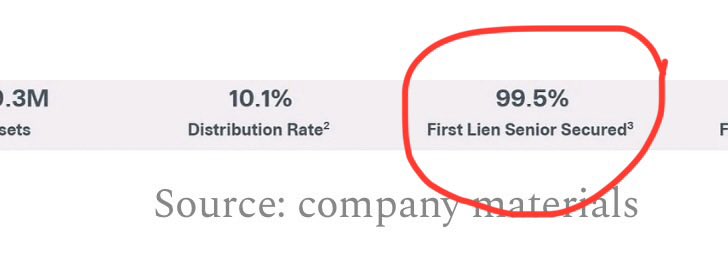
I need to show you something. The screenshot below is from a fund’s fact card. The 99.5% first lien secured sounds like a great safe portfolio, does it not? Well, while technically correct, reading the actual financial statements will tell you 30% of the fund’s portfolio is in CLOs. Yes, those structures ultimately hold first-lien loans. But owning the equity tranche of a CLO is not economically equivalent to owning those loans directly. This evergreen fund is being marketed to retail (no accredited qualifications needed). A truly “democratized” offering The case study on how I approach financial statements is live: accreditedinsight.com/p/private-cred…
Leyla tweet media
English
17
12
133
32.2K
Sand man person
Sand man person@asssssddfffff·
@LindyTasteful They used to do training seminars during the day and take the attendees to the Matrix Fillmore afterwards for them to practice what they learned.
English
0
0
0
77
TastefulLindy
TastefulLindy@LindyTasteful·
In the 2000s there was a whole TV series about Jestermaxxing to pick up girls. It was called "Peacocking" and frustrated guys turned to a guy called Mystery wearing fur hats and goggles to learn the secrets of the craft.
TastefulLindy tweet media
English
183
108
2.7K
269.3K
FortWorthPlayboy
FortWorthPlayboy@FWPlayboy·
Average Frustrated Chumps have NO idea how depraved even average girls are…
English
10
12
685
32.1K
Sand man person
Sand man person@asssssddfffff·
@JulianKlymochko What does that mean? The Bdcs are levered, if the software loans were written off by 2/3rds they would breach the Bdc leverage covenants and get their revolvers pulled. The blackrock 19 percent nav fall was just from 3 loans!
English
0
0
1
113
Julian Klymochko
Julian Klymochko@JulianKlymochko·
How's this for a stat: "At today’s median 77% of net asset value (which is the book value of the portfolio’s loans), investors are pricing BDCs as if two-thirds of their software loans defaulted with no recovery."
English
4
2
36
6.9K
Sand man person
Sand man person@asssssddfffff·
@AcaciaCap Yes they are both nuked - it’s the private capital super bubble (vc included)
English
0
0
1
155