
0xtudor
378 posts


0xtudor
@astratudor
PM at @PulsarMoneyApp. Making fintech fun
Mars Katılım Mayıs 2015
204 Takip Edilen523 Takipçiler
@tstereth @ready_co @gnosispay @ether_fi @KASTxyz @Plasma @useTria @PulsarMoneyApp when holding EUR USD or GBP
English

@TejasKumar_ Myeah I’m still waiting for the iPhone mirroring in eu 😂
English

the entire apple event did not and does not affect me at all:
- i live in the eu (no intelligence)
- i have no kids
- design things dont bother me
???
my life after #wwdc is exactly the same as before.
1h 16m of nothing new at all.
English

every time this animation happens on my screen i get an epileptic seizure
Apple Design@TheAppleDesign
Liquid Glass is not just another 2D UI.. It’s a 3D UI which processes all the effects in real time Accept it or not but Liquid Glass is the PEAK OF SOFTWARE DESIGN
English
0xtudor retweetledi

does the behavior survive when rewards end?
here's the only question that matters when you put gamification mechanics into a money app: does the behavior survive when the reward is removed?
run that test on most reward-led fintech and almost everything fails. the points, the cashback chase, the referral bonus, the spin-to-win. the behavior dies the same day, because people weren't saving or spending smarter. they were collecting a payout
web3 is a live experiment in what happens when you reward everything. quests, points, leaderboards, token drops. and it's the same movie every time: if the underlying behavior has no substance, the conversion never becomes valuable long-term
there were numerous eras of this in the industry:
- DeFi summer, crazy yields and liquidity rewards
- chain airdrops and liquidity hijacks
- SocialFi and yapping
- points and quest farming
it's fascinating how this market evolved, because there were also great examples of rewards done right. every time it worked long-term, there was sustainable growth behind it and a real business underneath
one of the best examples from DeFi summer is @aave. the yields and rewards were connected to a sound business model, a real revenue model, and smart economics. they did not just create temporary activity. they taught behavior and helped create an industry
Pulsar started with a B2B vertical and one of the service lines was loyalty infrastructure for banks, festivals, neobanks and web3 projects. the team ran infrastructure behind many companies and different economic models. that is where you learn the real lesson: whenever you put rewards or loyalty infrastructure behind a product, it has to sit behind a business model and a revenue stream. otherwise, it is very hard for it to be successful long-term
so the version we want to build further has to sit on real product value. the problem is that trying anything new takes effort, and people resist change even when it's good for them
that's all the gamified layer is for: getting someone over that first bump, long enough to feel the value for themselves. the game gets them in the door; the value keeps them there. in doing so, you end up with people who are better with money than the day they signed up
that's what drives real product growth
i'm really curious to learn more about this, and I’d be glad to put down a full article on the lessons from what we built, what we saw, some of the crazy stories behind it, and what we are working on now as a new generation of loyalty infrastructure
but my ask is simpler: what do you think is the most important part of rewards and loyalty in fintech?
what are you most excited to see?
and what would you actually want inside your money app at the intersection of rewards, behavior, and fintech?

English
0xtudor retweetledi
new generation of fintech
the Revolut & Wise generation was incredible. they disrupted a conservative market ruled by dinosaurs by making money movement feel natural. better onboarding, better FX, cleaner cards, faster notifications, a nicer app on top of a very old stack
but the next wave is different because the stack itself has completely changed:
→ stablecoins make settlement global and 24/7
→ self-custody lets the account belong to the user instead of the institution
→ bank rails and cards can sit at the edges of a stablecoin-native balance
→ DeFi protocols can sit underneath the account for swaps, yield, trading and credit
→ agents can start acting on clear rules and limits instead of leaving the user to manually move money between 5 products
the old fintech product was: take the bank, make it mobile
the new fintech product is: rebuild the financial account around money that moves, earns, settles and can be routed
the line I keep coming back to is:
→ everyone earns on your money. except you
banks earn on idle balances. card networks earn on every swipe. FX providers earn on every border. platforms earn on your deposits, transactions and data. the user is usually the last person to benefit from their own financial activity
that's why the next generation of fintech that wins will be the one that inverts that
your money should work for you first. it should earn while it waits, move globally when needed, stay under your control, and connect to the best financial infrastructure without forcing you to become a DeFi power user
Pulsar is our view on the consumer side of this
→ a stablecoin-native money app where your balance can spend, send, earn and eventually route itself more intelligently, while still feeling like a normal everyday app
and it all comes down to executing on that vision with surgical precision, because make no mistake, average consumers will accept nothing less

English



0xtudor retweetledi
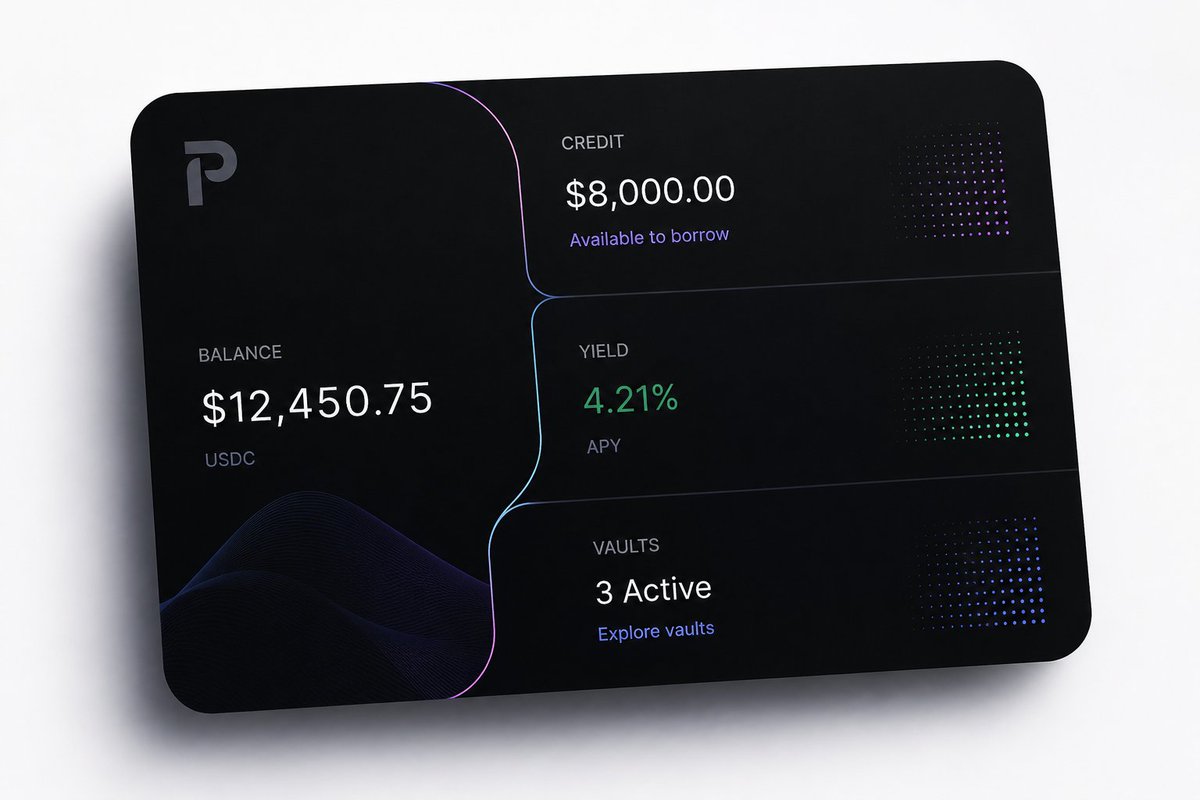
one thing after watching stablecoin cards lately
in the US, credit is the default. people "put it on the card" and the card almost always means credit. rewards, points, credit score, the whole social contract of how you spend lives there.
in most of europe and a lot of asia, the opposite. the card is debit. you spend what you have. credit is a separate product you opt into.
and i think this is what's actually shaping stablecoin cards right now
because the first wave of stablecoin cards is basically the european version. debit-style, spend crypto through a card. you swipe, your balance drops, you sold an asset to buy a coffee. useful, but it's the smaller version of the product
the next wave is the american version. credit attached to the account. you don't sell when you spend, you borrow against what you hold.
onchain, that architecture can actually be cleaner than the legacy version
collateral is liquid, transparent, programmable and composable. credit lines can sit behind the user experience, while settlement still happens in the format merchants already understand
this is why infra like @sprinter_ux is interesting
one credit line, collateral across chains, USDC drawn to a receiver address. for a card program, that receiver can simply be the settlement layer. user taps, USDC settles, the credit line sits behind the experience, and the user never has to think about chains
@Morpho matters for the same reason
not as the card layer, but as part of the credit and yield layer underneath the account. if stablecoin apps become real financial accounts, they need lending markets, curated vaults and idle-balance yield underneath them
so the cards are the interface people already understand, while the account behind the card is the actual product.
the goal is to make that feel normal to use, just like traditional credit accounts.
of course, still real work to do on risk, LTVs, liquidations, refunds, tax, compliance, chargebacks, but the direction is pretty clear;
and that's a big part of what we’re building at @PulsarMoneyApp
looking deeply in this space so let me know if you have any other ideas and views on these infra protocols we should take a close look at
English
0xtudor retweetledi

0xtudor retweetledi

0xtudor retweetledi
14,416 people have already joined the Pulsar Money waitlist!
For a smarter way to move, spend, earn, and manage money across fiat, crypto, and everything in between.
Get early access ↓
English
0xtudor retweetledi
World’s first protocol for tokenized maritime assets, using Pulsar’s whitelabel infrastructure.
Discover @EthraShip, an UAE-based company built for access to maritime RWAs, backed by real operators with a live fleet.
Real-world markets moving onchain. 🚢
Ethra Ship Protocol@EthraShip
🚢 Ethra Portal is live: your entry point to one of the world’s most essential real-world markets. Secure early access to Ethra RWAs, rewards, and future perks. Shipping moves the world. Now you can move with it: app.ethraship.io
English
0xtudor retweetledi
Which Pulsar Money app icon should we ship?
→ Pure (clean & simple)
→ Aura (soft, AI-native)
→ Flux (fluid & dynamic)
Reply below ↓

English
0xtudor retweetledi
The Pulsar Money waitlist app is now live!
Join early, invite your friends, move up the leaderboard, and unlock perks before launch.
Available now on iOS & Android.
English
0xtudor retweetledi
What if your money app could just… handle it?
You say what you want → It finds what you need → It builds the cart
No searching across websites, comparing prices or manual checkouts.
Try it out on our website. 👇
English
0xtudor retweetledi
AI is changing how money moves.
The future is shaped by contextual payments, where trusted agents can search, decide, and act on your behalf.
Money will no longer just be managed differently.
It will move differently too.
We call that Intelligent Money Movement, and we’re building for it at Pulsar by designing new pathways for our fintech app:
→ An AI assistant built inside from the ground up
→ Agent cards for AI-native payments across the web
→ Smarter offers and actions based on your behavior, preferences, and timing
One fintech app for humans and their agents.
Fiat, crypto, and stablecoins behind it.
ᕈulsar Money@PulsarMoneyApp
one card. fiat, crypto, and stablecoins behind it.
English