
Aleksandar Tomasevic

2.3K posts

Aleksandar Tomasevic banner
Aleksandar Tomasevic

Aleksandar Tomasevic

@atomasevic

Researcher at the Institute of Physics, University of Belgrade. Computational social science. 🕸🐍🐧👨🏻‍💻 #RStats (random ordering).

Novi Sad, Serbia Katılım Mart 2009
1.8K Takip Edilen1.1K Takipçiler
Sabitlenmiş Tweet
Aleksandar Tomasevic
Aleksandar Tomasevic@atomasevic·
🚨 Our work on machine learning for facial emotion detection in political performances is now available on arXiv! We processed 77 hours of video and found that populist leaders express negative emotions more often than their non-populist counterparts. arxiv.org/abs/2304.09914
Aleksandar Tomasevic tweet mediaAleksandar Tomasevic tweet media
English
4
62
271
40.2K
Aleksandar Tomasevic retweetledi
Hudson Golino
Hudson Golino@GolinoHudson·
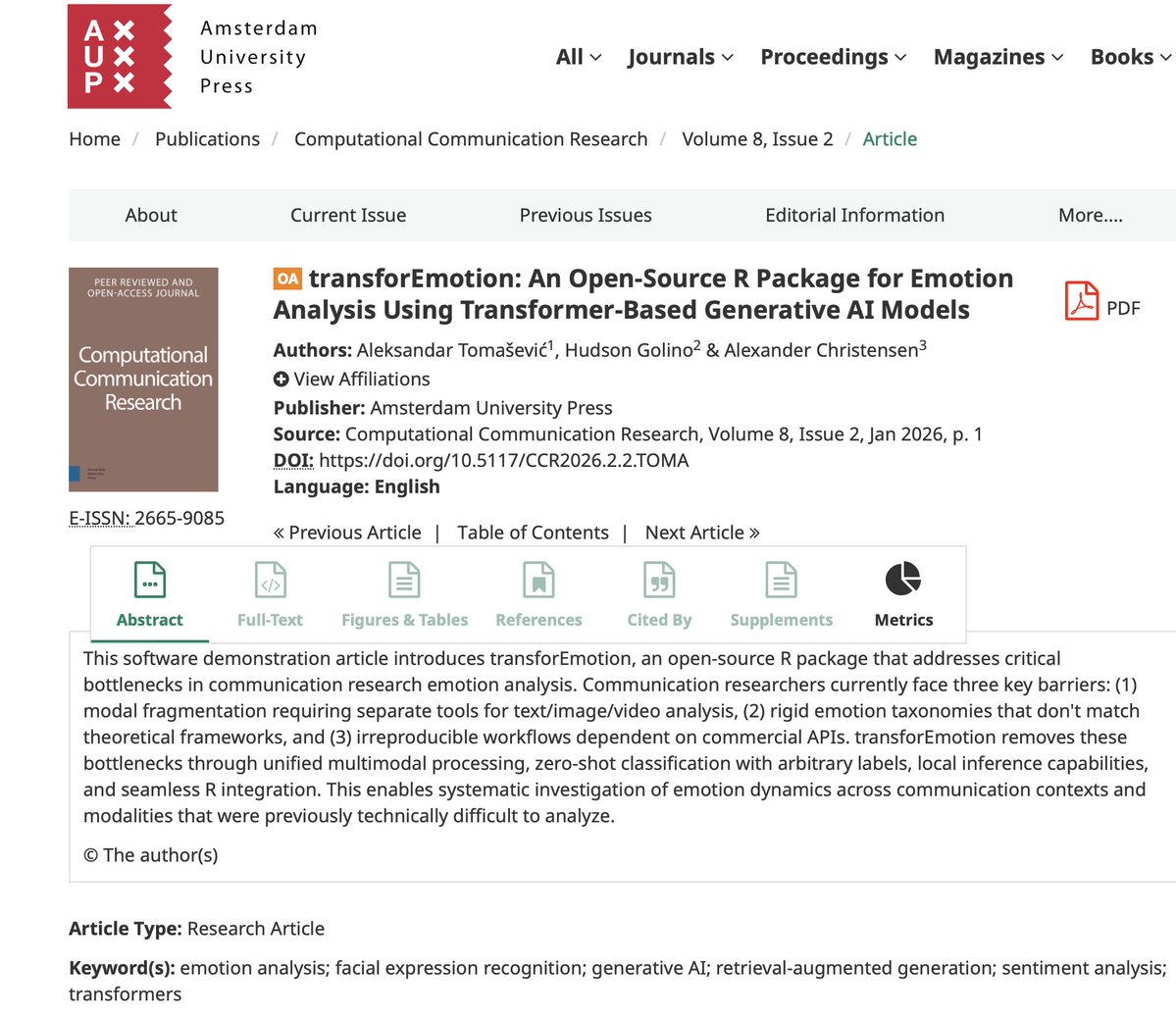
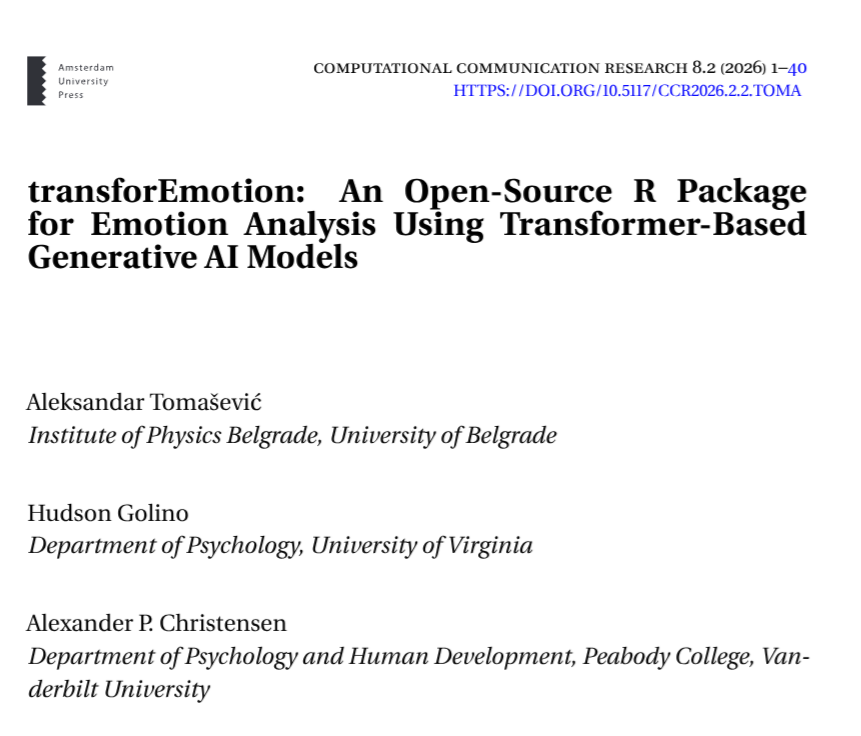
Interested in identifying and modeling emotions in videos, images, and text data via AI models?Check out our new transforEmotion: An Open-Source R Package for Emotion Analysis Using Transformer-Based Generative AI Models Aleksandar Tomašević (@atomasevic), Hudson Golino, & Alexander Christensen Computational Communication Research, Volume 8, Issue 2, Jan 2026, p. 1 DOI: doi.org/10.5117/CCR202…
Hudson Golino tweet media
English
0
4
10
443
Aleksandar Tomasevic retweetledi
Hudson Golino
Hudson Golino@GolinoHudson·
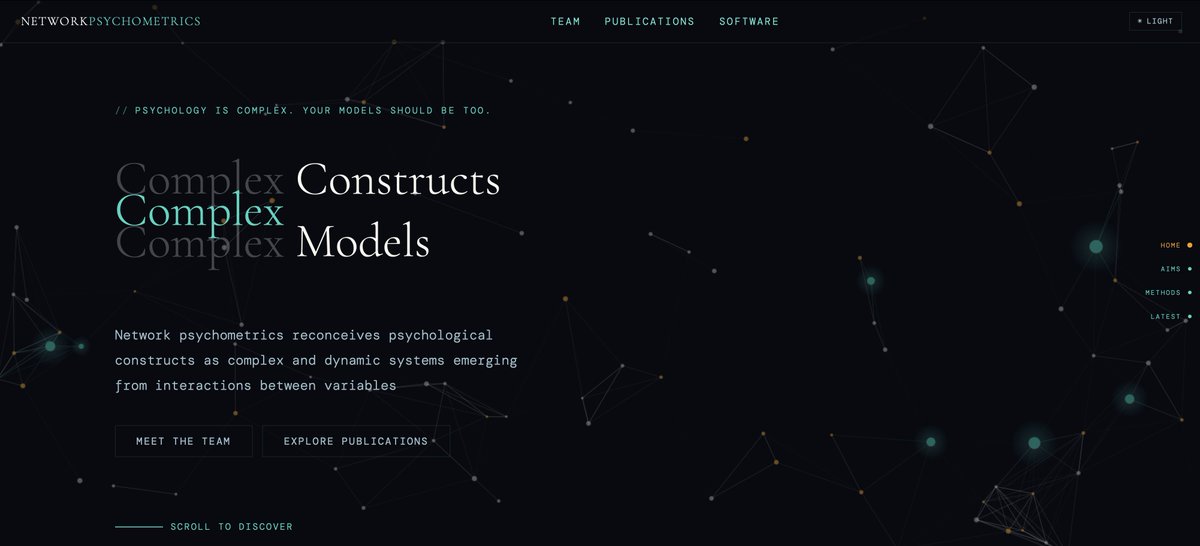
Today we are launching our group's new website: networkpsychometrics.com It looks really nice! Check it out!
Hudson Golino tweet media
English
2
5
18
923
Aleksandar Tomasevic
Aleksandar Tomasevic@atomasevic·
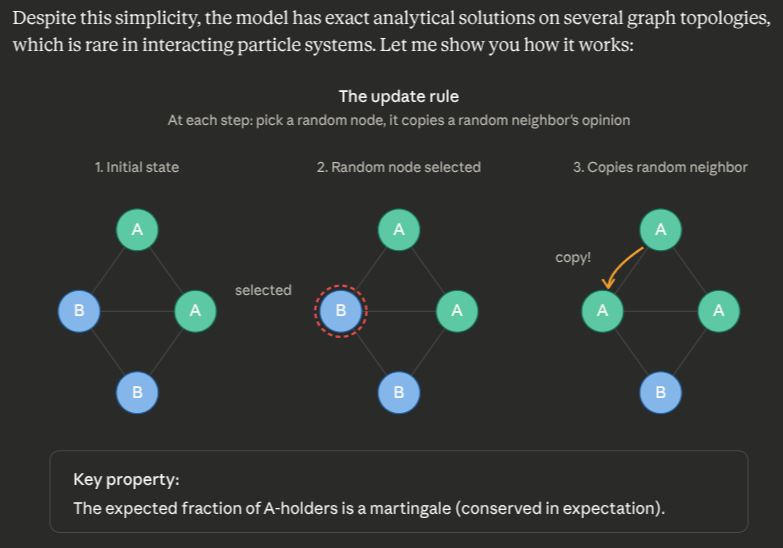
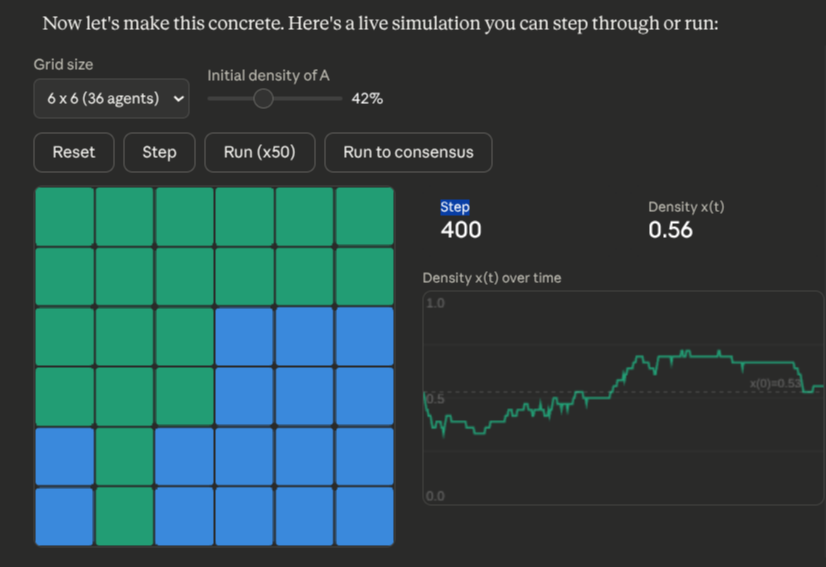
Great job by @claudeai on the new visual explanations feature. If you ask it to explain the voter model, it even spawns a small interactive agent-based model.
Aleksandar Tomasevic tweet mediaAleksandar Tomasevic tweet media
English
0
0
2
148
Aleksandar Tomasevic retweetledi
Hudson Golino
Hudson Golino@GolinoHudson·
We benchmarked 8 language models on psychometric scale development. @larafromUVA first PhD paper! The winner wasn't GPT-4o. It was a fully open-source model. Here's the data: AI-GENIE takes a raw LLM-generated item pool and runs it through a network-based reduction pipeline. The pipeline removes redundant and unstable items! Before: messy factor structure. After: NMI improves 8–20 points (in a scale from 0 to 100). Not a proof of concept. A proper validation study. 3 of 5 models in the original paper achieved NMI = 100 in a sample of N = 4,964 participants across 5 nationally representative U.S. samples. Perfect structural validity. Matching exactly the IN-SILICA STRUCTURAL VALIDITY OF AI-GENIE! The full 8-model benchmark (Table 10): OSS 120b → 94.86% ⭐ GPT-4o → 92.81% Gemma 2 → 91.70% Mixtral → 91.42% GPT-3.5 → 91.19% OSS 20b → 89.81% DeepSeek → 88.84% Llama 3 → 78.13% Open source, at the top. AI-GENIE is free, open-source, and runs in R. install.packages("AIGENIE", repos = "laralee.r-universe.dev") GitHub: github.com/laralee/AIGENIE RT if you work in measurement, psychometrics, or scale development 🔁 #rstats #psychometrics #openscience #LLM #measurement
Hudson Golino tweet media
English
2
2
10
645
Aleksandar Tomasevic retweetledi
Hudson Golino
Hudson Golino@GolinoHudson·
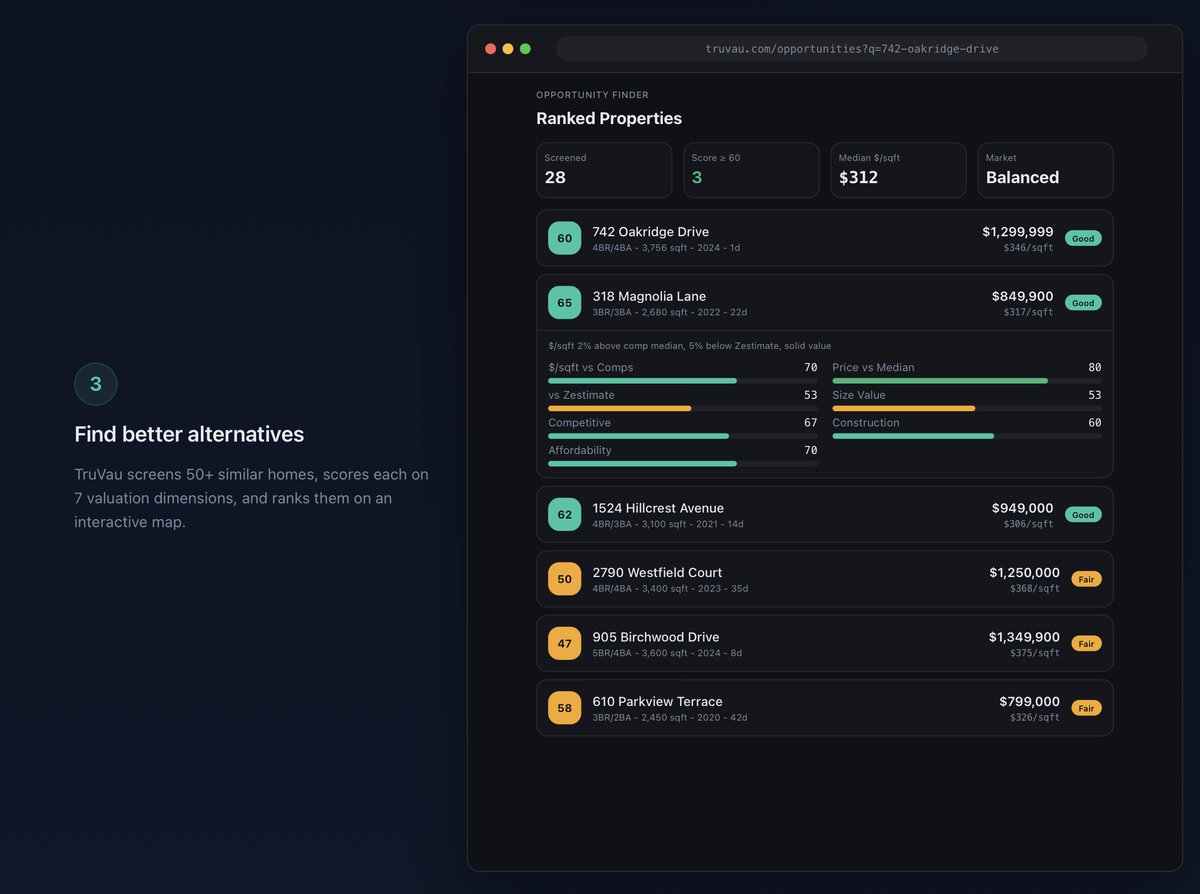
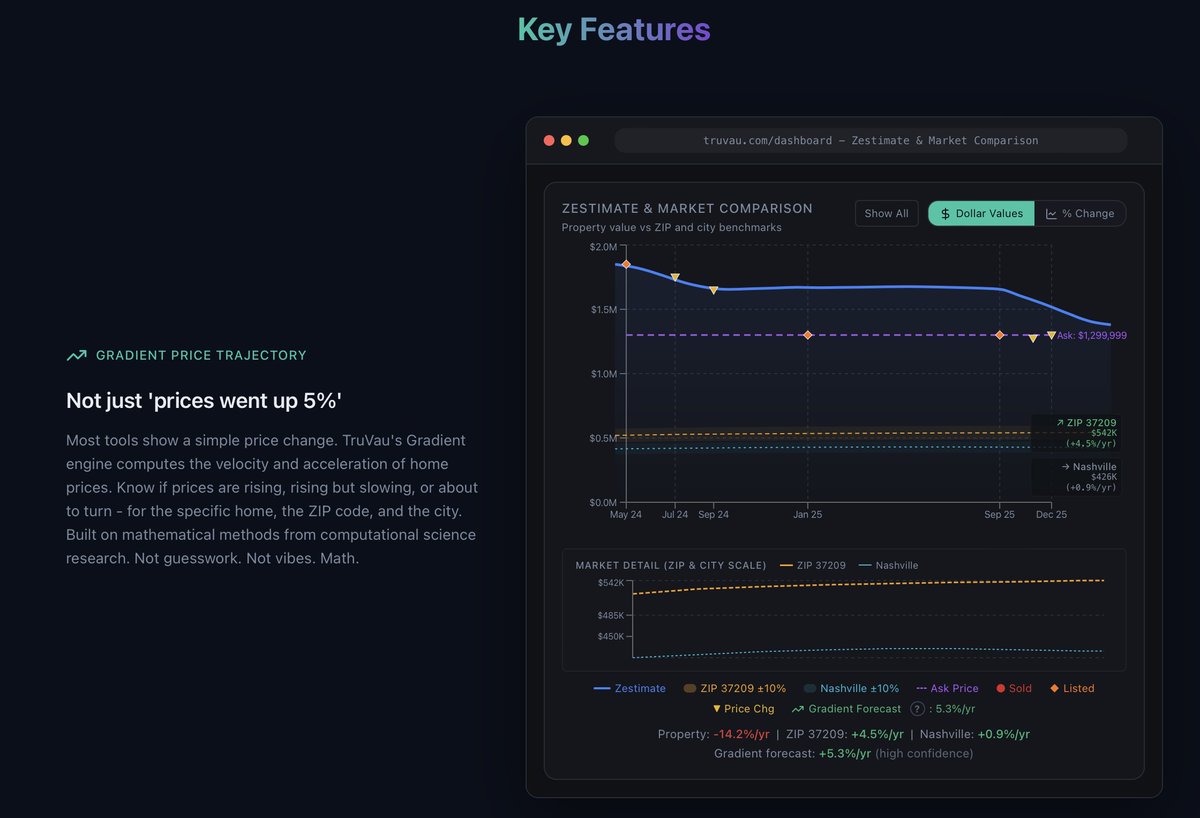
Today I'm launching my new Start-Up. TruVau: Data-Driven Home Buying Intelligence. It started when I was relocating for a faculty position and realized the tools available to homebuyers are shockingly thin. Zillow gives you some numbers. Your agent gives you an opinion. But nobody gives you a structured, transparent framework for answering the question that actually matters: is this home, at this price, a good decision for my financial situation? So I built one. I took the same quantitative methods I use in my research (time-series embedding, gradient-based trajectory modeling, multi-dimensional scoring, networks, AI) and applied them to real estate. The result is a platform that evaluates every property you're interested in across seven independent dimensions, models offer ranges informed by seller motivation analysis, and projects your equity trajectory over time. No black boxes. No gut feelings. Just data, math, and transparency. TruVau also does something I haven't seen anywhere else: Opportunity Search. It discovers hidden gems and opportunity listings across neighborhoods using graph-based search, starting from one property and expanding through comparable sales into adjacent areas to surface opportunities you'd never find scrolling Zillow. This is what happens when a computational scientist gets frustrated house-hunting. Free to try at truvau.com
Hudson Golino tweet mediaHudson Golino tweet mediaHudson Golino tweet mediaHudson Golino tweet media
English
1
3
26
6.6K
Aleksandar Tomasevic retweetledi
Hudson Golino
Hudson Golino@GolinoHudson·
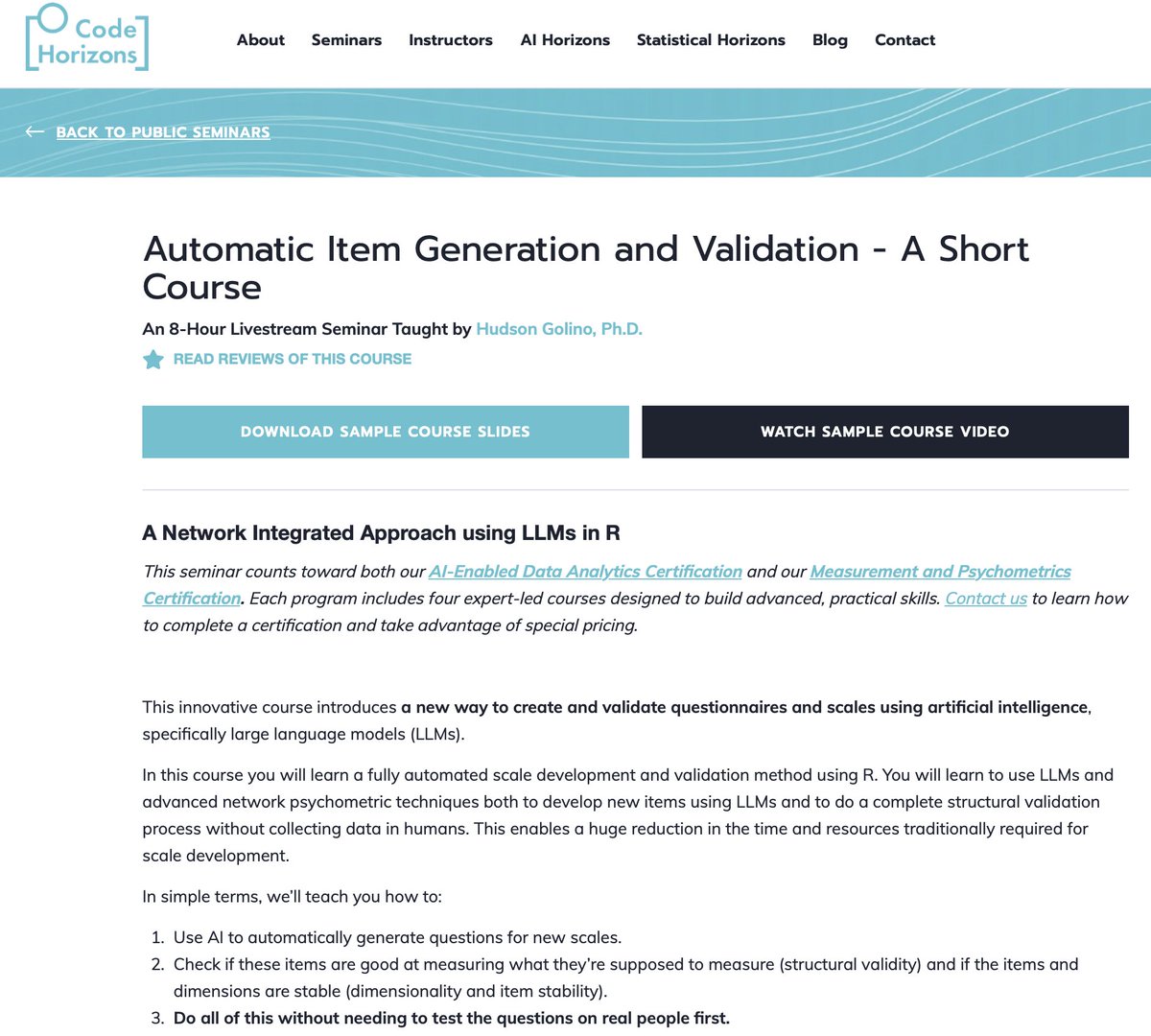
March 11 and 13th: Automatic Item Generation and Validation - A Short Course An 8-Hour Livestream Seminar Taught by Hudson Golino, Ph.D. A Network Integrated Approach using LLMs in R: This innovative course introduces a new way to create and validate questionnaires and scales using artificial intelligence, specifically large language models (LLMs). More interestingly, you'll have EXCLUSIVE access to the final version of the AI-GENIE package for R!! In this course you will learn a fully automated scale development and validation method using R. You will learn to use LLMs and advanced network psychometric techniques both to develop new items using LLMs and to do a complete structural validation process without collecting data in humans. This enables a huge reduction in the time and resources traditionally required for scale development. In simple terms, we’ll teach you how to: Use AI to automatically generate questions for new scales. Check if these items are good at measuring what they’re supposed to measure (structural validity) and if the items and dimensions are stable (dimensionality and item stability). Do all of this without needing to test the questions on real people first. Traditionally, creating a good questionnaire or test (usually called a “scale” in research) takes a lot of time and money. It usually involves writing many questions, testing them on hundreds of people, and then using complex statistics to figure out which questions work best. Our course shows you how to do all this using R and AI using a method called AI-GENIE (Automatic Item Generation and Validation via Network Integrated Evaluation). Link below:
Hudson Golino tweet media
English
2
3
6
538
Aleksandar Tomasevic
Aleksandar Tomasevic@atomasevic·
🛠️ transforEmotion just crossed 25K CRAN downloads!! Paper documenting the latest version is out in Computational Communication Research w/ @GolinoHudson and Alex Christensen. Emotion analysis in R: text, images, and video. All local, no APIs, on a standard laptop. The paper walks through a complete multimodal workflow on the MAFW dataset and the package is already being used for psychotherapy transcripts, political video analysis, corporate communications, and educational feedback. New in this version: ❤️ Switched to uv for Python dependency management. No conda, no venv, no path debugging. library(transforEmotion) and it just works. 🔧 Local RAG: Full Retrieval-Augmented Generation on your laptop with small open-source LLMs (TinyLLAMA, Gemma 3, Qwen3, Ministral). No API keys, no cloud costs. Gemma 3 gives structured table/JSON outputs you can pipe into your stats workflow. 🔧 VAD scoring: Direct valence-arousal-dominance prediction from text, images, or video. One continuous affect space across all modalities. 🔧 Vision model registry: Swap between CLIP, BLIP, ALIGN, or your own fine-tuned models with a single argument. 🔧 Built-in benchmarking: evaluate_emotions() and validate_rag_predictions() for standardized evaluation. We demonstrate the workflow on FindingEmo in the paper. aup-online.com/content/journa… 📦 cran.r-project.org/package=transf… 💻 github.com/atomashevic/tr…
Aleksandar Tomasevic tweet media
English
0
3
17
2.8K
Raphael Barberi📷
Raphael Barberi📷@itsrapha83·
Walked into this chapel in Milan and it was covered in bones The Catholics are metal
Raphael Barberi📷 tweet mediaRaphael Barberi📷 tweet mediaRaphael Barberi📷 tweet mediaRaphael Barberi📷 tweet media
English
23
75
1.2K
24.8K
Aleksandar Tomasevic
Aleksandar Tomasevic@atomasevic·
Well on Scribe, you have to manually send the files to it and retrieve manually the annotated pdf from your email :) So the "connector" is really just a local folder which is a temp place for storing these pdfs. I'll play with it and submit a PR if I make it work. Or just buy a Remarkable 😂
English
1
0
1
15
Romain Lacombe
Romain Lacombe@rlacombe·
@atomasevic @julien_c @_akhaliq Oh that would be fantastic! What does your workflow look like? Would love to add a Kindle Scribe connector you can read on Kindle too. Want to write a PR? :-)
English
1
0
1
38
AK
AK@_akhaliq·
Distillate A research alchemist in your terminal. arXiv papers → Zotero library → reMarkable highlights → Obsidian notes. github: github.com/rlacombe/disti…
AK tweet media
English
4
15
95
19.2K
Aleksandar Tomasevic
Aleksandar Tomasevic@atomasevic·
@julien_c @_akhaliq @rlacombe This looks amazing! I'll try to rework it a bit to fit in with my Kindle Scribe workflow, which will require manual PDF transfers, but I'm used to that by now.
English
2
0
1
47
The Footy Section
The Footy Section@FTBLsection·
"I had two things I always stuck to: getting eight full hours of sleep and visualising the match. The night before a game, I’d lie down in the dark, look at the ceiling for about 20 or 30 minutes, and just imagine what could happen. I only thought about plays from the match, if there was a rebound to the right, to the left, or down the middle. Many times, I found myself on the pitch in the exact situation I had pictured the night before in my room, and it helped, because I already knew how to react. You save that split second because you’ve already played it out in your head. That was my ritual," said Batistuta.
The Footy Section tweet media
English
25
111
1.5K
60K
Aleksandar Tomasevic retweetledi
Bojana Dinić
Bojana Dinić@b_dinic·
It’s not just dark traits — it’s how people cope that explains health outcomes Secondary psychopathy emerged as the strongest risk factor, while narcissistic admiration and primary psychopathy showed protective patterns The key mechanism 👉 emotion-oriented coping
Bojana Dinić tweet media
English
1
1
5
185
Aleksandar Tomasevic
Aleksandar Tomasevic@atomasevic·
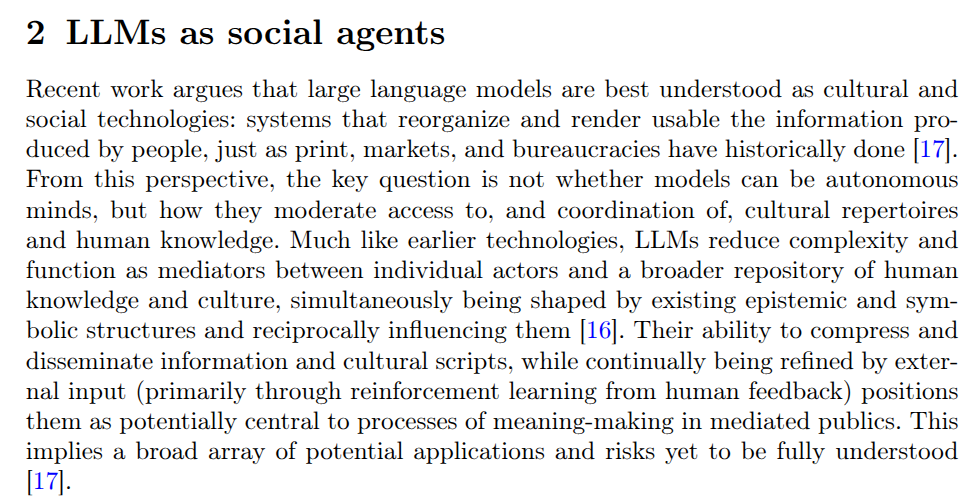
From Moltbook to @simile_ai's $100M raise, last few weeks are 🔥 for LLM-based social simulation! Labs differ widely on what "replicating social behavior" actually means. Here's our take from an upcoming paper 👇
Aleksandar Tomasevic tweet media
English
1
1
4
344