Aurélien Geron

2.2K posts

Aurélien Geron banner
Aurélien Geron

Aurélien Geron

@aureliengeron

Author of the book Hands-On #MachineLearning with #ScikitLearn, #Keras and #TensorFlow. Former PM of #YouTube video classification. Founder of telco operator.

Auckland, New Zealand Katılım Temmuz 2009
358 Takip Edilen29.9K Takipçiler
Sabitlenmiş Tweet
Aurélien Geron
Aurélien Geron@aureliengeron·
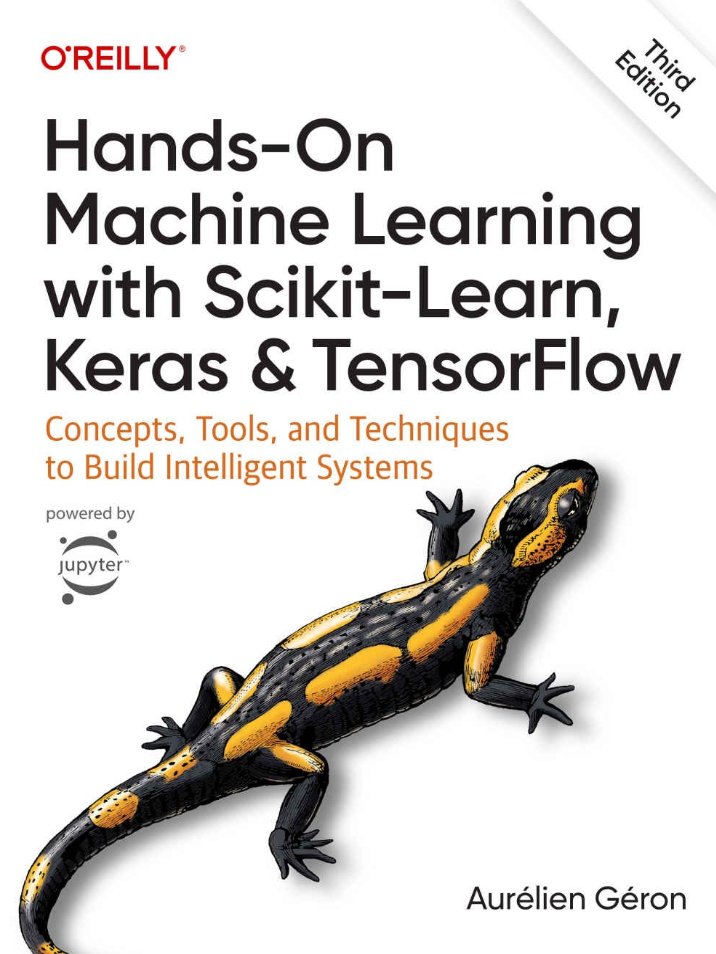
My new book just came out! 🎉😊 Kindle & e-book available now, print within 1–2 weeks. You can get it at: homl.info (you'll also find free online content there) Play with the notebooks at: github.com/ageron/handson… Hope you'll find it useful!
Aurélien Geron tweet media
English
69
260
2.3K
235.6K
Aurélien Geron retweetledi
alphaXiv
alphaXiv@askalphaxiv·
Yann LeCun and his team dropped yet another paper! "V-JEPA 2.1: Unlocking Dense Features in Video Self-Supervised Learning" In this V-JEPA upgrade, they showed that if you make a video model predict every patch, not just the masked ones AND at multiple layers, they are able to turn vague scene understanding into dense + temporal stable features that actually understands "what is where". This key insight drove improvements in segmentation, depth, anticipation, and even robot planning.
alphaXiv tweet media
English
33
213
1.3K
113.6K
Harikesh Kalyanpur
Harikesh Kalyanpur@hakalyanpur·
I'm seeing this error when I try and open the collab. SyntaxError: Bad escaped character in JSON at position 2864888 (line 3028 column 42) CustomError: SyntaxError: Bad escaped character in JSON at position 2864888 (line 3028 column 42) at new ZP (ssl.gstatic.com/colaboratory-s…) at na.program_ (ssl.gstatic.com/colaboratory-s…) at qa (ssl.gstatic.com/colaboratory-s…) at na.next_ (ssl.gstatic.com/colaboratory-s…) at oaa.next (ssl.gstatic.com/colaboratory-s…) at b (ssl.gstatic.com/colaboratory-s…)
English
1
0
0
71
Aurélien Geron
Aurélien Geron@aureliengeron·
@nyang20258 Thanks! Yes, the notebook shows how to build and train these models from scratch. It also includes some examples of using a pretrained model using Hugging Face libraries.
English
1
0
1
10
Aurélien Geron
Aurélien Geron@aureliengeron·
The Greek 🇬🇷 🇨🇾 translation of my book is now available! 🎉 That's Hands-On Machine Learning with Scikit-Learn, Keras, and TensorFlow, 3rd edition. You will find it (along with all the other versions and translations) at homl.info Huge thanks to the translators! 🙏
English
1
2
26
1.3K
Aurélien Geron
Aurélien Geron@aureliengeron·
@nahiid_ahmdv Thanks Nahid! The solutions are available at the end of each notebook in the github repository: github.com/ageron/handson…. I've added the solutions to the exercises from chapters 1 to 12 and part of 13, and I'm working on the rest of the solutions. Contributions are very welcome.🙏
English
0
0
0
69
Nahid_ahmdv
Nahid_ahmdv@nahiid_ahmdv·
@aureliengeron Congrats on the new book! 🎉 I really enjoyed the previous version and found the exercise solutions on GitHub very helpful. Will this version also have a solutions repository, or is there another place to find the answers?
English
1
0
0
39
Aurélien Geron
Aurélien Geron@aureliengeron·
My new book just came out! 🎉😊 Kindle & e-book available now, print within 1–2 weeks. You can get it at: homl.info (you'll also find free online content there) Play with the notebooks at: github.com/ageron/handson… Hope you'll find it useful!
Aurélien Geron tweet media
English
69
260
2.3K
235.6K
Aurélien Geron retweetledi
Luba Elliott
Luba Elliott@elluba·
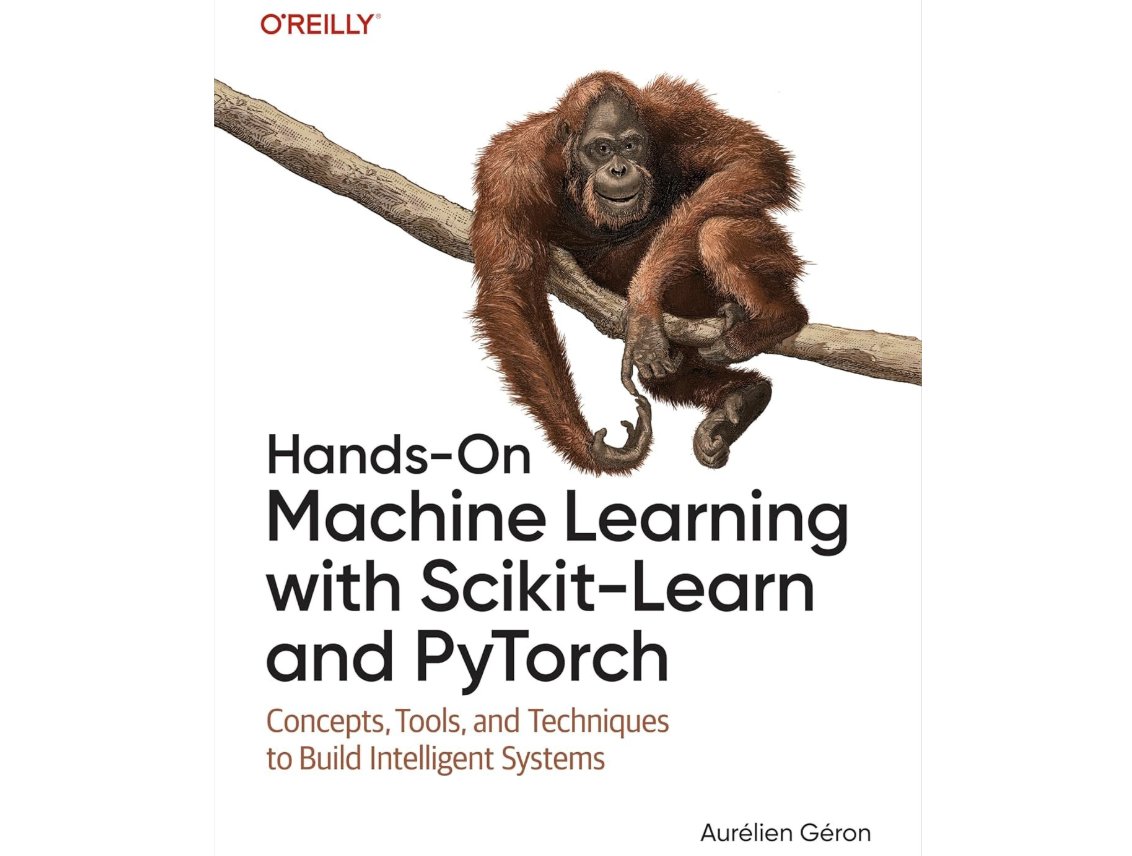
My reviewer copy of @aureliengeron 's "Hands-on Machine Learning with Scikit-Learn and PyTorch' @OReillyMedia arrived earlier this month 😀 Here is my flick-through of the 850-page book 🤯 More on the book here: ageron.github.io
Luba Elliott tweet mediaLuba Elliott tweet mediaLuba Elliott tweet media
English
2
2
18
2.2K
Aurélien Geron
Aurélien Geron@aureliengeron·
@codewithimanshu Oh probably not, but the goal is purely fun + learning about sound synthesis (including using the Fourier Transform).
English
1
0
1
214
Himanshu Kumar
Himanshu Kumar@codewithimanshu·
@aureliengeron That's a cool project, Aurelien! I wonder though, is Python really the best for real-time audio processing, you think?
English
1
0
1
298
Aurélien Geron
Aurélien Geron@aureliengeron·
I just had fun making this Colab notebook which explains how to build a sound synthesizer from scratch in Python. You can play with it now at: colab.research.google.com/github/ageron/… It covers sound generation, melodies, sound effects like echo, panning, low-pass filter, etc. Enjoy! 😄🎹🎶
English
9
72
495
24.5K
Aurélien Geron
Aurélien Geron@aureliengeron·
@AndreaGourion Hi Andréa, I'm glad you enjoyed the appendix. 😊 What was your thesis about? Mamba's gating mechanism is explained on page 28. I didn't dwell on it too much because other chapters already go into more depth on gating mechanisms (e.g., SwiGLU, LSTM, GRU...).
Aurélien Geron tweet media
English
1
0
1
134
Andréa Gourion
Andréa Gourion@AndreaGourion·
Really nice appendix! I did similar work for my pre-thesis literature review (though without Mamba, which is more recent). I noticed that your appendix doesn't explicitly mention that Mamba integrates similar gating mechanisms found in GRUs and LSTMs into the SSM framework. In my view, this combination is exactly where its strength lies.
English
1
0
4
151
Aurélien Geron
Aurélien Geron@aureliengeron·
@lakmalr I was lost because traditional SSMs *can* process multiple dimensions. However, the SSMs used in modern SSM-based nets use a math trick that only works with 1D inputs (i.e., sequences of scalars). It's only when I read the S4 source code that it finally clicked. 😅
English
0
0
0
314
Aurélien Geron
Aurélien Geron@aureliengeron·
@lakmalr Thanks Lakmal! 🙏 The thing that really confused me at first is that each SSM within modern SSM-based neural nets only processes a single channel. If your input has 128 dimensions, then the model runs 128 SSMs in parallel, each processing a single dimension separately. 🤯
English
1
0
0
517
Aurélien Geron retweetledi
Louis-François Bouchard 🎥🤖
Since my review of the book actually made it inside, I'll just share it here: This book is an excellent starting point for beginners looking to understand the essential history and foundational concepts of machine learning. With well-structured code sections and practical examples, it takes readers from the basics to cutting-edge machine learning and deep learning techniques, leveraging PyTorch and Scikit-Learn for hands-on implementation. - Me And I still think these words are true. With over 800 pages (check out the last picture for size comparison), it covers pretty much everything machine learning-related. Strongly recommend building some solid foundations! Thanks, @OReillyMedia and @aureliengeron, for the opportunity to read and contribute a bit! Read it on O'Reilly here: oreillymedia.pxf.io/6yOo0G
Louis-François Bouchard 🎥🤖 tweet mediaLouis-François Bouchard 🎥🤖 tweet mediaLouis-François Bouchard 🎥🤖 tweet mediaLouis-François Bouchard 🎥🤖 tweet media
English
3
7
39
3.5K
Aurélien Geron
Aurélien Geron@aureliengeron·
@hsunpark Cool! I think you're the very first, you got it before I did. 😅
English
2
1
28
1.8K
박해선
박해선@hsunpark·
Excited to finally get my copy of @aureliengeron's Hands-On Machine Learning with Scikit-Learn and PyTorch! 😀
박해선 tweet media
English
1
0
37
2.5K
Aurélien Geron
Aurélien Geron@aureliengeron·
I was actually thinking of something very similar recently, talk about Zeitgeist, congrats for building this Andrey, can't wait to try it! 👍
BURKOV@burkov

As many of you know, for the last five months I've been working full-time on my next big thing. The challenge was to invent something new and implement it entirely using LLMs for writing code. The first stage of the project is now complete: the web application, which I called ChapterPal.com, is now online and accepting users. You can see a short demo in the video. 100% of the code of the app was generated by LLMs (mostly Gemini and Claude, maybe 10% of ChatGPT). I haven't written a single line of code. The tech stack is TypeScript, React, and Supabase/Postgres which was (and still is) fully new to me. During these five months, I implemented from scratch three versions of the software. It started as a Markdown editor to help me with my book writing and ended up as an AI-assisted reading and self-learning platform. What makes ChapterPal unique is a novel reading experience where the user can use the keyboard keys to reveal or "unreveal" the content and ask questions at any moment. (Mouse wheel, touchpad, smartphone screen, and voice input are also supported.) The LLM receives the entire content of the chapter and tries to answer questions based on the chapter's content, which reduces the chance of hallucination to the minimum. (Though not to 0%, of course, but near it.) This way of content consumption is known as **active reading,** a strategy for engaging with a text to improve comprehension and retention by consciously interacting with the material. The goal is to move beyond passive reading to a deeper understanding of the text and to remember key information more effectively. The registration on ChapterPal is via the waiting list. This is to avoid unexpected load spikes and cloud charges. Usually, it takes less than 24 hours for me to activate a user. Give it a try and let me know what you think. The next stage is finishing the content ingestion pipeline, which will automatically convert high-quality content from sources like HTML, PDF, and LaTeX into Markdown. Obviously, only those pieces whose licenses allow creating copies. ChapterPal has its own collection of textbooks and articles on AI, machine learning, and data science topics. If you don't find a piece of content you would like to read in ChapterPal's collection, a Chrome extension, ChapterPal Uploader, allows you to upload any PDF or HTML page to ChapterPal in one click. The content is only available for you to read to avoid the possibility of copyright infringement. I hope you enjoy using it as much as I enjoy building it.

English
1
2
65
12K
Aurélien Geron retweetledi
BURKOV
BURKOV@burkov·
As many of you know, for the last five months I've been working full-time on my next big thing. The challenge was to invent something new and implement it entirely using LLMs for writing code. The first stage of the project is now complete: the web application, which I called ChapterPal.com, is now online and accepting users. You can see a short demo in the video. 100% of the code of the app was generated by LLMs (mostly Gemini and Claude, maybe 10% of ChatGPT). I haven't written a single line of code. The tech stack is TypeScript, React, and Supabase/Postgres which was (and still is) fully new to me. During these five months, I implemented from scratch three versions of the software. It started as a Markdown editor to help me with my book writing and ended up as an AI-assisted reading and self-learning platform. What makes ChapterPal unique is a novel reading experience where the user can use the keyboard keys to reveal or "unreveal" the content and ask questions at any moment. (Mouse wheel, touchpad, smartphone screen, and voice input are also supported.) The LLM receives the entire content of the chapter and tries to answer questions based on the chapter's content, which reduces the chance of hallucination to the minimum. (Though not to 0%, of course, but near it.) This way of content consumption is known as **active reading,** a strategy for engaging with a text to improve comprehension and retention by consciously interacting with the material. The goal is to move beyond passive reading to a deeper understanding of the text and to remember key information more effectively. The registration on ChapterPal is via the waiting list. This is to avoid unexpected load spikes and cloud charges. Usually, it takes less than 24 hours for me to activate a user. Give it a try and let me know what you think. The next stage is finishing the content ingestion pipeline, which will automatically convert high-quality content from sources like HTML, PDF, and LaTeX into Markdown. Obviously, only those pieces whose licenses allow creating copies. ChapterPal has its own collection of textbooks and articles on AI, machine learning, and data science topics. If you don't find a piece of content you would like to read in ChapterPal's collection, a Chrome extension, ChapterPal Uploader, allows you to upload any PDF or HTML page to ChapterPal in one click. The content is only available for you to read to avoid the possibility of copyright infringement. I hope you enjoy using it as much as I enjoy building it.
English
25
40
406
80.9K