
AutoEclectus 🦜
4K posts

AutoEclectus 🦜
@autoeclectus
🦜 Procedural code-based artist • Tiny green parrot
Katılım Ocak 2021
2K Takip Edilen1.6K Takipçiler

Impuls i traçat (2025)
Algorithmic infinite animation, interactive. Made with code, Processing, java.
Català
@thisis0xbenj @ontologicalrat All good here. I’ve been in a bit of a creative culdesac! Must remedy that …
Keep up the good work !
English

@autoeclectus @ontologicalrat Thank you sir! Been awhile since I've seen you around. Hope all is well!
English
It is with a heavy heart that the passing of Piero ( @pifragile ), the founder of EditArt, is shared today.
Piero launched EditArt in 2022 and has been an active member of the generative art community.
His dedication to the medium and passion for art will not be forgotten.
English
@mattmedved Great article! Agree with @fridgebuzz_art tho - it is kinda sad for artists.
English


@mattdesl I love the optimism of believing that we will still have a “human in the loop” in Gen art. Engaging art is that which is a window into the inner world of a human. The inner world of a computer is bland by comparison.
English
Exploring agents and Claude Code a bit more recently. Amazing stuff, easy to imagine a future where nobody codes (bittersweet for me, I've been learning programming for the last 20 years!).
But generative art feels like an interesting niche that they can't quite capture. Sure, many gen art tasks are easy for agents: "add noise to the line" or "use random hue across each shape" or "read this 200-page PhD graphics programming thesis and implement the same optimisations in my project."
But gen art, and creative coding more generally, is unlike many programming tasks in that the quality of the output tends to be highly subjective. You could ask an agent to produce a thousand iterations overnight, but ultimately a human will have to curate this body of work, and likely many of the iterations will fall into 'traps' in the loss landscape: i.e. derivatives, pastiche, trite outputs. And I find my best work tends to be driven by objectives that are extremely vague (by machine standards) and change with each iteration of my code.
Anyways, curious to see how this unfolds. Perhaps we will see a split. Typical programming tasks will continue to become more agentic, with less human-in-the-loop, and eventually they will be trivially operated on by autonomous agents spinning at all hours. And, on the other end, gen art & creative development could become a new 'frontier' for AI models to strive for. Future gen art may require very little coding by hand, but still a great deal of human-in-the-loop: curation, idea-generation, steering, subjective critique, contextualisation, and so forth.
English
AutoEclectus 🦜 retweetledi
Even tho I'm now a software developer, I studied electrical engineering at uni. I wasn't the best at it, but I ended up developing a love for the visuals of circuit diagrams and PCB layouts.
Forma Systemica is my homage to this visual.
Tomorrow 17/12 2pm CET @editart_xyz
English
AutoEclectus 🦜 retweetledi
dropping tomorrow on @editart_xyz, the 54th series of 'generative playground' (gp54):
‘Forma Systemica’
by
@thisis0xbenj
128 editions
5xtz
wednesday, december 17 @ 2pm cet
"Inspired by networks and grid systems."
English
AutoEclectus 🦜 retweetledi

AutoEclectus 🦜 retweetledi
got lots of requests for lenticular app/code, so i spent more hours then im willing to admit trying to make it usable.
open-sourcing it + dropping the web app, have fun!
obtainer@obtainer
vibecoded this lenticular/moiré effect that works when you tilt your phone
English
@nudoru @camillerouxart @fx_hash_ Similar in Australia. All crypto income is subject to income tax at the value of the coin at the time it was earned. Plus every crypto sale attracts capital gains tax so you need to track the historical purchase and sale price for every swap.
English

In the US, it would require SO MUCH record keeping and would need dollar values of each $coin at the time of each swap. You get 0.75% of each swap immediately. For an active coin, imagine how many rows are in that sheet. And if the data isn't there and you have to research it ...
English

Big thanks to @nudoru (and maybe others too) for putting together this table to help estimate earnings after a drop on @fx_hash_ 🙏
Feel free to check it out or make it even better!
docs.google.com/spreadsheets/d…

Camille Roux - Generative artist@camillerouxart
How do you evaluate the primary on @fx_hash_ — that is, how much an artist really made from a drop — now that coins are part of the equation?
English
@dist_cs I’m always excited to hear what you guys are up to!
English
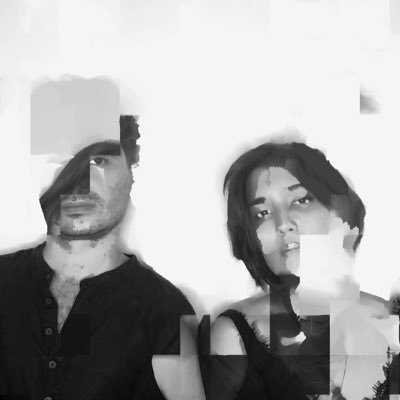
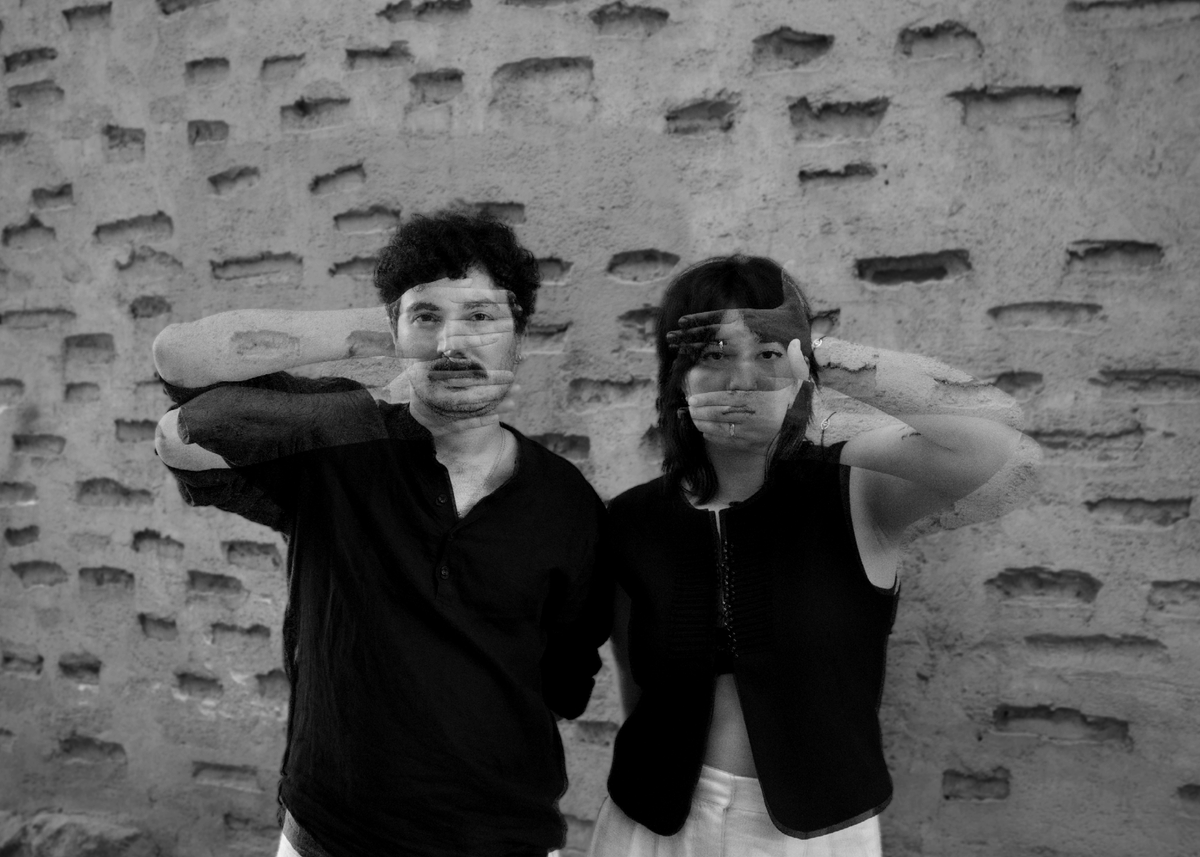
Recently we had time to turn back and analyze the past in the short term, what has changed and what has stayed the same. It’s been almost 2 years since we moved to another country and settled into a new routine. This was one of the most challenging thing so far. We learnt about our habits, lifestyle and our cause once more. And ornamented it with new cultural and environmental habits.
This rush in our lives also pushed us away from this space. Getting our wallet hacked and losing a decent amount of our collection of artists we admire, along with our works was the cherry on top. All of these pushed us into a more silent state. As a duo, we went our separate ways to seek new means of expression as individuals. And we found ourselves getting excited again over new things. And we reunited with a new palette of creative tools.
Our use of code has evolved significantly, we’ve been working more with live performance tools such as TidalCycles and Hydra. For our web-based projects, we’ve shifted our focus from p5.js to WebGL. Since we use GLSL heavily in our TouchDesigner projects, it felt like a more natural extension of the visual language we create in our IRL and individual works.
Lately we’ve concentrated more on creating audiovisual performances and installations focused on sound, light, interaction and immersion. We’ve started to build our own custom systems with electronic circuitry for these performances and installations. Now that’s said, it feels more like an expansion than a change. We needed this alteration and we wanted to share these updates. Because in these times of stillness we learnt about the value of sharing and being part of a community. Because without sharing, there is no expansion.
English
AutoEclectus 🦜 retweetledi


AutoEclectus 🦜 retweetledi

AutoEclectus 🦜 retweetledi
@CCDDBB Thanks for such a considered post and for sparking some great discourse. I too am cautious and to be frank don’t really understand the tokenomics behind it all but willing to learn and see how it goes. I miss the simplicity of Hic et Nunc days but you can’t look backwards!
English

Lately, every time I check into fxhash Discord, it feels less like an art community and more like a crypto trading floor. Conversations revolve around tokens, prices, speculation, and momentum. People are now discovering at their own expense that providing liquidity can lead to something called impermanent loss, whatever that actually means. Meanwhile, the art seems to be quietly falling behind, like it showed up late to its own party.
The renewed energy is refreshing. It's good to see people excited again. But that excitement only came back when token values began climbing. If enthusiasm depends on financial upside, what happens when the market turns the other way? History suggests it won’t be art that keeps the lights on.
There is also this romantic idea floating around that artist tokens give collectors exposure to an artist’s full creative journey. It sounds inspiring, but in reality, it is a stretch. Most artists are not offering access to everything they make across different platforms, mediums, or projects. Doing that would mean dealing with legal gray zones and ownership complications that few are willing to touch. In practice, these tokens are tied to what artists might choose to publish using the token in the future. If they feel like it. It is not a lifelong membership. It is a soft maybe.
Tying artist tokens to the price of a volatile base token creates a compounding effect. When the main token rises, all connected artist tokens benefit and gain visibility. But when that token drops, they all suffer, often disproportionately. The situation becomes even more fragile when the base token is held by speculators who have no real interest in the art. Their trading decisions are based purely on profit, not on creative value. Once they shift their attention to more profitable opportunities, the art tokens can be left behind, devalued not because of what they represent, but because they were caught in the wake of someone else’s exit.
Scarcity can boost value, but it can also suffocate utility. A deflationary art-minting token that becomes too valuable risks becoming unusable. When no one wants to spend the token, the ecosystem freezes. What started as a place for creativity slowly transforms into a speculative bunker. Traders come in fast, take what they can, and leave. Those who stay behind are often the ones who believed most, now left holding the weight of that belief.
And yet, what are the alternatives? I don’t really know. Doing something is still better than standing still, and this direction deserves credit. But it feels too early to call it a success. The results will speak in time. It is worth noting that in the past, traders had to mint the art to profit. Now they can just skip that step and trade the token directly. And let’s not forget that low liquidity makes a token far more vulnerable to price manipulation.
Throughout history, true artists have played a crucial balancing role. Their instinct to question authority, break rules, and challenge systems has shaped who we are, both culturally and ethically. But the world has changed. Social media, engagement metrics, and an addiction to constant positive feedback have flipped the script. Now, if you speak out of line, you’re punished faster than you can blink, and the scars tend to stick.
I saw it happen when I spoke up during the collapse of Hic et Nunc, trying to defend the work of those who helped build it and warning about the imminent “take the money and run” move that was clearly coming. But of course, the blame was quickly shifted to the usual suspects, the ugly capitalists, always ready to cannibalize the pure of heart.
For this reason these words sat in my notes for days while I weighed the cost of sharing them. But then I remembered what I stand for. If artists stop speaking their truth, all that’s left is a self-congratulatory echo chamber, a D'Annunzio sucking his own dick.
Even with all this in mind, I will probably join the ride too. Without liquidity there is no market, and without a market, artists cannot thrive. But I am a trader at heart, and I have learned not to idolize any token model. Only realism survives in this decentralized arena where everyone is out for themselves.
I truly wish the best for this project. The people behind it have kept building and supporting through the highs and the lows. What made the Tezos days special, however, was that the culture was mainly centered around the art, not just around shilling. I hope that spirit finds a way to continue in this next chapter.
But I am also aware of the environment. In shark-infested waters, only sharks tend to make it out.
designer@chriswallace
Just bought a decent bag of @ciphrd artcoin - feels like pretty high upside as the founder of @fx_hash_ who also happens to be pretty damn good at this whole generative art thing. Higher.
English
Longform code based art is a very unique beast within the kingdom of all artforms. It needs to be presented, collected and minted in ways authentic to the unique way it is created. When it is presented and sold alongside other crypto art 1of1s and AI collections it starts to get forced into limitations, containers and comparisons that do not favor its unique form.
A well crafted longform algo needs a large supply in order to tell its full story. If this means selling at a much more affordable mint price then so be it. We need to always start with the question: what is best for the art? - Not with: how do we shape this to fit market trends. If an algo has deep variety it should be allowed to fully express itself.
Releasing smaller collections or even 1of1s and placing art with private sales to influential collectors has become the norm. In terms of playing the art career game this makes perfect sense. Where it doesn’t feel right to me at least, is that it is a movement back towards the exclusive, opaque art market Web3 art helped to disrupt and revolutionize.
Maybe I'm just being idealistic, but I feel a real sustainable code based art market could be quite different from the traditional blue chip model. Something that sits somewhere between the music and art markets that enables millions more people to engage with the art they find meaningful, support the artists they love and also own unique work from those artists for the price of say a concert ticket. It may not feel as attractive if all we care about is investment, but in terms of creating community, and making art something that's accessible to more people, Web3 + code based art has something beautiful to offer the world.
This is something very different from the future promised by bag pumping crypto bros. That future can still exist, but art is vast and there may be many thriving art markets in the future, that fulfil different roles.
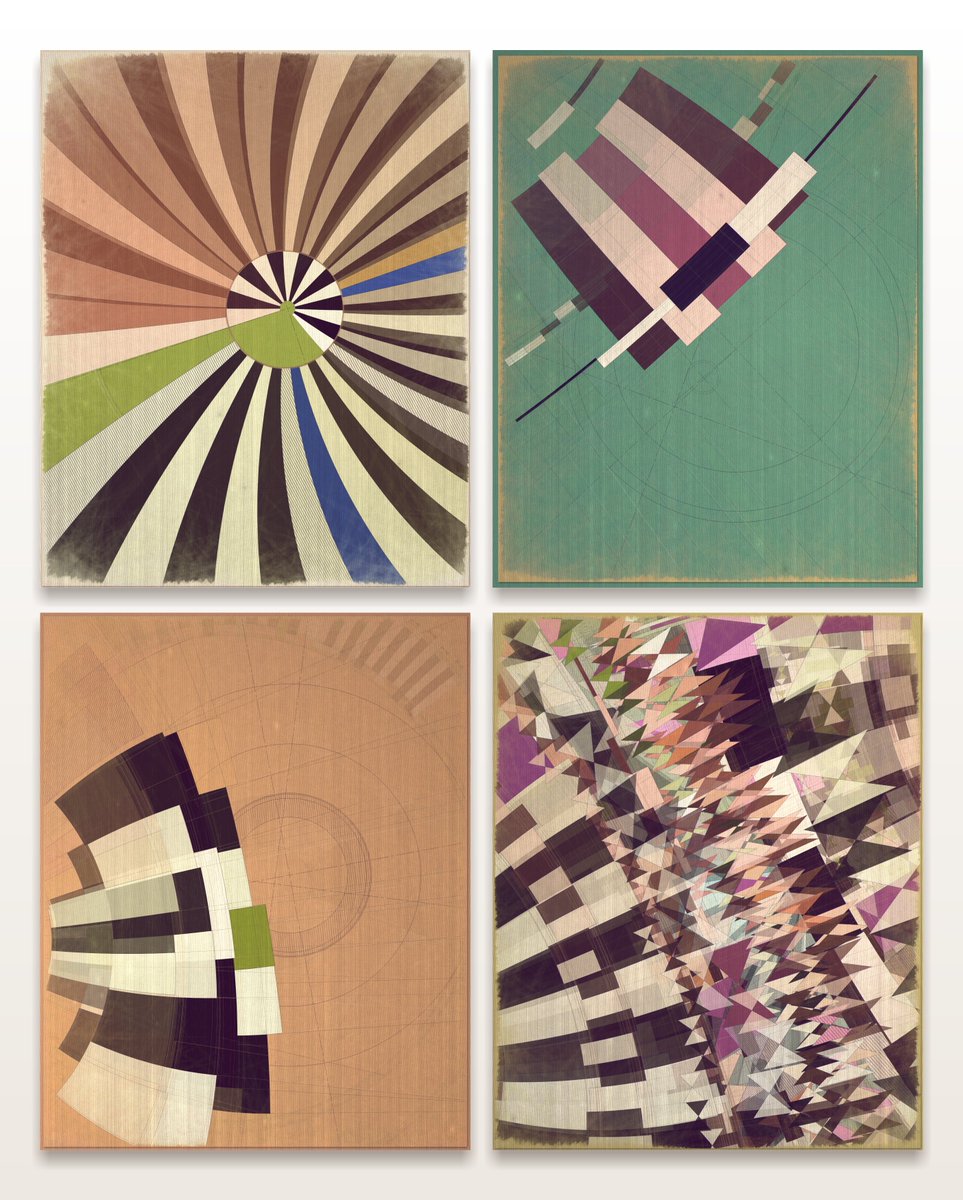
Amplitudes of Canvas coming to @artblocks_io Studio in August.

English