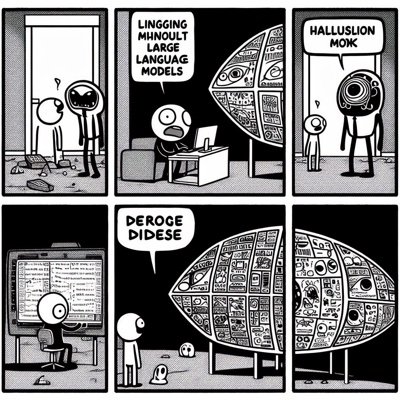
@henrytdowling Whispering sweet nothings to my computer next to my coworkers >>>
English
Ben Geist
751 posts

@b_geist
Research Eng @ramplabs / physics + math nerd / Kate Bush fan

Wearing noice cancelling masks to talk to Claude is crazy

We’re excited to introduce Doc-to-LoRA and Text-to-LoRA, two related research exploring how to make LLM customization faster and more accessible. pub.sakana.ai/doc-to-lora/ By training a Hypernetwork to generate LoRA adapters on the fly, these methods allow models to instantly internalize new information or adapt to new tasks. Biological systems naturally rely on two key cognitive abilities: durable long-term memory to store facts, and rapid adaptation to handle new tasks given limited sensory cues. While modern LLMs are highly capable, they still lack this flexibility. Traditionally, adding long-term memory or adapting an LLM to a specific downstream task requires an expensive and time-consuming model update, such as fine-tuning or context distillation, or relies on memory-intensive long prompts. To bypass these limitations, our work focuses on the concept of cost amortization. We pay the meta-training cost once to train a hypernetwork capable of producing tasks or document specific LoRAs on demand. This turns what used to be a heavy engineering pipeline into a single, inexpensive forward pass. Instead of performing per-task optimization, the hypernetwork meta-learns update rules to instantly modify an LLM given a new task description or a long document. In our experiments, Text-to-LoRA successfully specializes models to unseen tasks using just a natural language description. Building on this, Doc-to-LoRA is able to internalize factual documents. On a needle-in-a-haystack task, Doc-to-LoRA achieves near-perfect accuracy on instances five times longer than the base model's context window. It can even generalize to transfer visual information from a vision-language model into a text-only LLM, allowing it to classify images purely through internalized weights. Importantly, both methods run with sub-second latency, enabling rapid experimentation while avoiding the overhead of traditional model updates. This approach is a step towards lowering the technical barriers of model customization, allowing end-users to specialize foundation models via simple text inputs. We have released our code and papers for the community to explore. Doc-to-LoRA Paper: arxiv.org/abs/2602.15902 Code: github.com/SakanaAI/Doc-t… Text-to-LoRA Paper: arxiv.org/abs/2506.06105 Code: github.com/SakanaAI/Text-…

NYC is where stupid people act stupid, SF is where stupid people try and act smart. This is why i like NYC





In many ways, finetuning or RLing a custom model is a bet against model progress and scaling. It's to choose to say "we don't think there's going to be a good enough base model for this task anytime soon, so we're not going to wait" with oss release velocity these days, its a hard tradeoff It's easy to end up on a custom model with an outdated base (Kimi 2.6 is only a few months old) So we fixed it - PorTAL lets you swap base models quickly, allowing your learned task specific behaviors to port to new models as they come, no matter how fast

Introducing PorTAL: Portable Task Adapters for LLMs. A novel recipe to cheaply port fine-tuning between models. It matches per task LoRA accuracy at half the cost, lowering the switching overhead of adapting tasks across LLMs. At Ramp, every new model release used to mean retraining our fine-tunes from scratch. PorTAL learns the task once, then efficiently refits it onto any new base model, even across model families.

Continuous learning only works if that learning can transfer across base models. Why stay on last month's model that knows your processes when this month's is far smarter? I researched this for months and ended with PorTAL. It ports finetunings across base models by refitting only a thin converter, effectively a separate memory bank that attends to any base model. Check it out!