
Abdirazak Osman
825 posts

Abdirazak Osman
@baabayaaoo
Proud Kenyan-Somali, political scientist, and practising journalist. irregardless of my convictions, I remain capable of objective, pragmatic analysis.
Nairobi, Kenya Katılım Nisan 2018
4.1K Takip Edilen224 Takipçiler
Eti they can do whatever they want, thinking that as long as they pray Lailatul Qadar at the Kaaba, they'll be forgiven. Isn’t that trying to bribe God? You’re better off praying sincerely at your neighbor’s humble mosque. God doesn’t care for luxurious, showy pilgrimages!
Mohamed Wehliye, MBS@WehliyeMohamed
I saw some Governors in Makkah. I will repeat again, if you stole public money na unajenga magorofa Nbi, you need to seek forgiveness from the pple uliwaibia na ulidhulumu. Allah forgives the sins you commit against him. The ones against the people, only the people can forgive.
English
@WHesborn @davidjesse_ They have a constitutional right to criticize, but that doesn’t justify creating out of it a misleading narrative that portrays North Eastern as more corrupt, that it doesn’t deserve equalization funds, or that somali businesses are built on stolen money.
English

@baabayaaoo @davidjesse_ But the citizens in those NE counties are crying Daily due to lack of basic amenities and you are here whining about mt kenya grow up stop behaving and thinking like a toddler
English
Whenever we question the exclusionist politics of Mt. Kenya that left a majority of Kenya marginalized, we are met with the argument: What have you done with more than 10 years of devolution?
Never mind that devolution itself was a response to decades of exclusionist politics.
The push for devolution was not a passive demand, it was a struggle that began in the 90s under the banner of Majimboism driven by leaders and activists who saw how centralization benefited a few while neglecting the rest of the country.
This fight culminated in the promulgation of the 2010 Constitution, which established devolution as a tool for equitable resource distribution. It was not an easy struggle and some of its champions paid the ultimate price, such as Prof. Chrispin Odhiambo Mbai, who was assassinated in 2003 for his role in advocating for devolved governance.
Yet today, when we raise concerns about continued disparities in development, we are asked to justify why devolution has not "fixed" the historical imbalances. But how can devolution be expected to undo nearly five decades of marginalization when county governments receive only 15% of the national budget, while 85% remains with the national government, distributed through state departments that still operate in a skewed manner?
Take, for example, the expansion of higher education institutions. Yesterday, I was surprised to meet a student who told me they were studying at Mama Ngina University in Gatundu. This is just one of the many public universities or tertiary institutions spread across almost every village in Mt. Kenya.
While higher education is vital, the manner in which these institutions were established exposes a deeper issue, many of them were hurriedly given charters without proper feasibility studies.
Beyond academics, universities contribute significantly to local economies by creating demand for housing, food, and other services. This pattern of university distribution is a clear example of how state departments have been instrumental in directing resources disproportionately to Mt. Kenya, entrenching these historical inequalities.
So, how exactly was devolution, within just 10 years, expected to balance the scales when marginalization had been entrenched over 49 years (15 years under Jomo Kenyatta, 24 years under Moi, and 10 years under Kibaki)?
It is disingenuous to suggest that counties could achieve in a decade what the national government, with all its power and resources, took nearly half a century to build for select regions.
The conversation should not be about what counties have done with their 15% allocation, it should be about why 85% of the budget remains in a system that still prioritizes some regions over others. Until that imbalance is addressed, true equity will remain an illusion.
English
@MwangiMaina_ Are we inviting a military coup? How innocent are we?
English

@davidjesse_ One thing we must concede: they are masters at twisting realities to control narratives.
English
@davidjesse_ I like it when they attribute Somali businesses to stolen devolution money. Not a single Somali governor or county official has ever been indicted for corruption, unlike Ferdinand Waititu’s infamous Kiambu County financial reports, not to mention their state capture, nationally.
English

The Bah Geri clan, likely part of the Dhulbahante, played a key role in the Darawiish movement (1899-1920), providing military support against colonial powers. As early supporters, possibly linked to the Ali Geri sub-clan, they contributed manpower, especially in northern Somalia like Buuhoodle. Their involvement was significant, though some southern sub-clans near the Shabelle River may have had less participation.
English
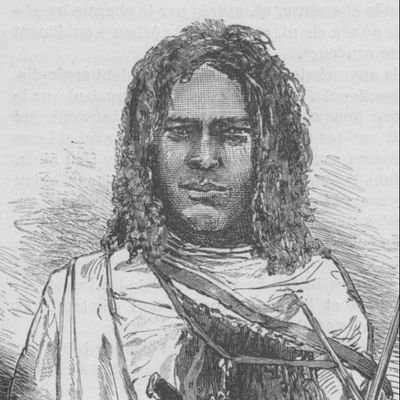
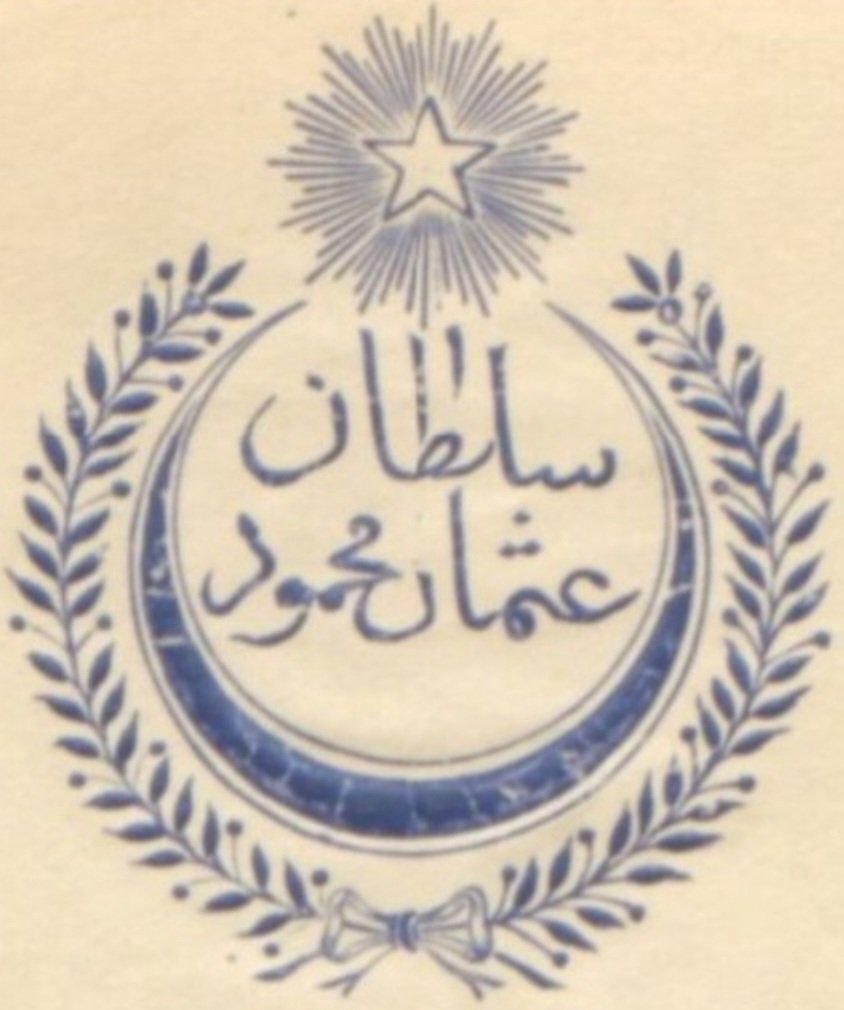

Majerteen clan supplied arms and had structured military roles in the Darawiish movement, backed by their Sultanate, while Ogaden offered early, grass-roots support with administrative and raid involvement. Both supported the anti-colonial fight, but Majerteen's was organized via leadership, and Ogaden's was more organic, shaped by geography and clan dynamics.
English
Research suggests the Majerteen clan played a notable role in the Darawiish movement (1899-1920), with an administrative division (Taargooye) and military involvement, like the Reer Samatar Khalaf's losses. The Sultan of Hobyo’s refusal to aid British forces in 1903 hints at support. Though significant, their contributions are often overshadowed by the Dhulbahante’s in historical accounts, possibly due to regional focus, despite evidence of their impact. grok.x.com

English

@_dhahir Why do Somalis always end up as mere spectators during major changes? They fought the 1977 war for self-determination-the biggest in Africa in decades-yet remained passive in 1991. They have fought the longest over the past 30 years(onlf), yet here they are once again, as always!
English
@mohammedhersi Lamu waters extend right to the border, and they (Tanzanians) may have even crossed it.
English
TZ will never allow Kenyans in their waters let alone so deep . I mean Lamu surely close to Somali border. TZ coastline is 1424KM while ours is only 536KM.
Kenyan fishermen ‘evict’ Tanzanians from Lamu waters theeastafrican.co.ke/tea/business-t…
English
@EIshmael_ This should be a lesson to the president. He spent his entire tenure favoring his clan instead of working for the greater good, yet the result is his own clan humiliating him in his time of need while the larger country suffers from his incompetence. Let him reflect on that!
English

There’s absolutely no accountability. Masjid Ali Gaduud was taken from Al-Shabaab in 2022, yet here we are in 2025, with the Somali government locked in another bloody battle over it. How is no one calling out HSM’s blatant failures? How did Al-Shabaab manage to retake the city? And why did the government completely fail to keep control? This is nothing but incompetence and negligence at the highest level.


English
@_dhahir Congratulations! Let’s see how that tarmac road brings meaningful economic change to your small town in Wajir South, the largest constituency in Kenya.
English
@aliiroba 'Indirect assistance' is open to multiple interpretations.
English
If this is true, it explains why Alshabab has remained resilient for so long. Global governments need to start talking to each honestly. If this is true winning against terror is an uphill task.
English
@slowmk3000 @YousuphaM No, criticizing further prompts others to exploit the situation, attacking the Equalization Fund & devolution by claiming that Somali leaders in the counties misuse the funds and don’t deserve them at all—portraying them as if they are all more corrupt than Ferdinand Waititu.
English

@YousuphaM If you criticised more there would be less collective blaming,what makes it worse is the protecting a corrupt individual as a collective. Don't let the rest of Kenya stop you from getting good governance in your area because people will talk shit if your area is good or bad
English
@BuenoForMiami It's rooted in the idea that America is an unofficial Judeo-Christian empire, where Jews and American evangelicals see themselves as inseparably connected. As the larger group, Christians are expected to fully protect the smaller wing, Jews—fairly and understandably.
English
Someone please explain why American politicians all are Israel first.
I don’t understand it.
I don’t get how Israel is somehow the sacred cow that people can profess to love and support above all else. What am I missing?
English
These two perspectives can, in theory, be easily reconciled—and then in practice—but it requires a shift in approach, creative thinking, and out-of-the-box solutions.
English
And that’s how many naturally good-hearted Arabs also see them.
Israelis, on the other hand, understandably view Arabs as greedy and hateful neighbors who already have 24+ countries yet remain determined to erase the only Israeli state from existence.
English
Israel has a valid argument for seeking a reasonably sized state in the Levant. However, it has neither been frank nor articulate. They embraced liberal double standards in their standard arguments only to abruptly resort to brute force, shocking the world.
English