
Sabitlenmiş Tweet
b|a|r|c|o|d|e 🇺🇦
10.9K posts


b|a|r|c|o|d|e 🇺🇦 retweetledi

⚡️Russia, Vietnam concealing arms deals via joint energy profits to evade US sanctions, AP reports.
The two nations used profits from joint oil and gas enterprises to fund defense contracts, bypassing the global banking system, documents show.
kyivindependent.com/russia-vietnam…
English
b|a|r|c|o|d|e 🇺🇦 retweetledi

Map showing reported Russian drone incursions into Poland. Does not look random (14 drones): It looks like a deliberate attempt by fascist Russia to test NATO air defenses over a part of Polish territory used as a transit point for Western aid to democratic Ukraine.

English
b|a|r|c|o|d|e 🇺🇦 retweetledi

@Kasparov63 NATO is now JUSTIFIED in air patrolling a 100 mile no-fly buffer zone INSIDE Ukraine (with Ukraine’s permission, of course) in the interest of Polish, Hungarian, Slovak and Romanian security.
Thanks Vlad! You just earned yourself a partial NATO no-fly zone in Ukraine!
English
@JuliaDavisNews A McDonald's franchise on the white House lawn?
English


b|a|r|c|o|d|e 🇺🇦 retweetledi

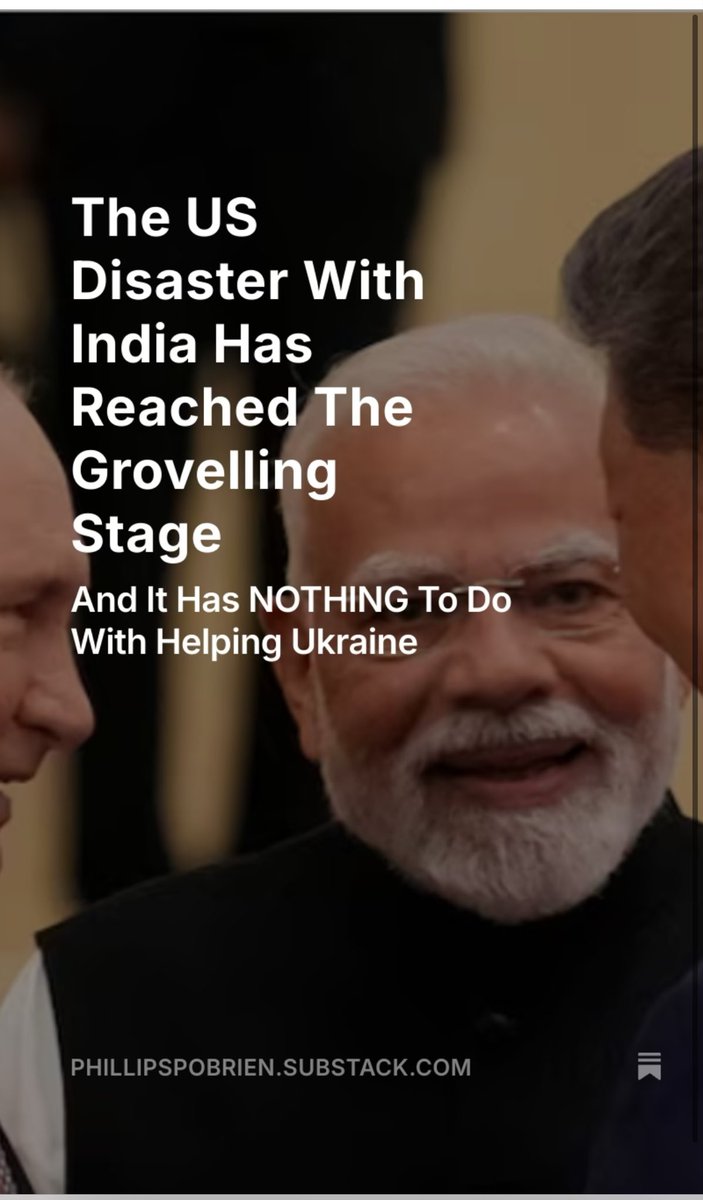
The US disaster with India is so profoundly stupid and venal that I have written this short and free piece about it, if you want to read more.
English
@fred_guttenberg @TulsiGabbard @jrpsaki The main reason for this "visceral negative reaction" is that the solution to this particular (or every other worldly problem) is never prayers. Prayers may help ease the pain temporarily, but WILL NOT solve the underlying problem, neither short nor long term.
English

As the father of Jaime, who was murdered in the Parkland shooting, let me make this simple for you @TulsiGabbard. I agree with everything @jrpsaki was saying, FULL STOP!!! Why? Thoughts and prayers do not change my reality Jaime's empty bedroom, missed life milestones and birthdays, or the fact that I visit my forever 14 daughter at the cemetery. I appreciate the thoughts and prayers and love from well meaning people, but that is not you. I despise people like you who use the idea of "thoughts and prayers" to hide from the reality that you have always done nothing when it comes to gun violence and will always do nothing. When people like you say "thoughts and prayers" all that I hear is you saying that is all you have and let's move on. The idea that you would suggest that people like me, a victim of a mass shooting, hate God because we despise you and your fake reactions just confirms that you are a sick person who will use God and religion to serve your own evil purposes. You are despicable to the core Tulsi.

English
@Kasparov63 @Pontifex If the prayers are the same used after every mass shooting in the US, we all know the outcome.
The world needs more action, not prayers.
English

@Pontifex Who is committing this death and destruction, Your Holiness? A nameless or unidentifiable force? No, Russia, and we cannot aid the good in this world without challenging the evil. Your predecessor Pope John Paul II did not shy from naming the evils of Communism.
English

The war in Ukraine continues to sow death and destruction. I renew my closeness to the Ukrainian people and to all the injured families. I ask everyone not to give in to indifference, but to draw close to them through prayer and concrete gestures of charity.
English
b|a|r|c|o|d|e 🇺🇦 retweetledi

It's very hard for anyone to convince Trump's America what Russia really is and really wants. Even for Russia itself.
Julia Davis@JuliaDavisNews
Meanwhile in Russia: Zakhar Prilepin explained that regardless of any ceasefire, Russia will eventually resume its efforts to take all of Ukraine. He scoffed at Trump's peacekeeping proposals and emphasized that Russia will never be friends with America. youtube.com/watch?v=TKrSK0…
English
b|a|r|c|o|d|e 🇺🇦 retweetledi
The regularly regurgitated strategy to split China and Russia, which was always wishful nonsense, is having less of a jolly morning.
Yaroslav Trofimov@yarotrof
Looks like Putin, Xi and Modi had a jolly good morning in Tianjin 🇨🇳
English
b|a|r|c|o|d|e 🇺🇦 retweetledi

Looks like Putin, Xi and Modi had a jolly good morning in Tianjin 🇨🇳
English
b|a|r|c|o|d|e 🇺🇦 retweetledi

It’s our Ukrainian trait -- we can spend years chuckling at Andriy Parubiy’s extremely unclear speech in parliament, and only when the man is gone do we realize that he was, in fact, perhaps one of the best speakers the Verkhovna Rada ever had, under whose leadership historic documents like the bill in support of the Ukrainian language were passed.
English
b|a|r|c|o|d|e 🇺🇦 retweetledi
Hi All, Just sent out this piece on a Ukrainian strategic air campaign against Russia. The Ukrainians seem to understand that targeting Russia strategically through oil and rail attacks is one of the best ways to weaken the Russian war machine. If only they had been given ranged capabilities earlier...

English
b|a|r|c|o|d|e 🇺🇦 retweetledi
“The U.S. is helping China to increase its global influence. China may suffer economically because of the tariffs, but politically, China is gaining more sympathy and more support from other countries, and not just in the Global South,” said Xinbo Wu, dean of the Institute of International Studies at Fudan University in Shanghai. “We now certainly face less diplomatic pressure than we did under the Biden administration.” wsj.com/world/while-tr…
Yaroslav Trofimov@yarotrof
As Trump rattles friends and foes alike, China basks in the limelight. Putin, Modi and an assortment of leaders from Kim Jong Un to Slovakia’s Fico are flocking to China in coming days. My report from Beijing 🇨🇳 wsj.com/world/while-tr…
English
b|a|r|c|o|d|e 🇺🇦 retweetledi

The assassination of Andriy Parubiy, the former speaker of Ukraine’s parliament and a fierce opponent of Russia, is the most significant killing in a string of high-profile murders since the war with Russia began. ft.com/content/d08aa5…
English
b|a|r|c|o|d|e 🇺🇦 retweetledi

@JuliaDavisNews God help us all if JD Vance becomes POTUS.
English
b|a|r|c|o|d|e 🇺🇦 retweetledi
Make no mistake, this is exactly what it seems to be: preparation to create a one-party dictatorship.
Fox News@FoxNews
Stephen Miller on @seanhannity: “The Democrat Party is not a political party. It is a domestic extremist organization."
English
b|a|r|c|o|d|e 🇺🇦 retweetledi

Crazy. When will conservatives start criticizing these obvious communist policies by Trump?
Aaron Rupar@atrupar
Howard Lutnick on CNBC indicates that the Trump administration will try to partially nationalize defense companies like Lockheed Martin
English
@Kasparov63 @JuliaDavisNews It took me a second to realize he’s NOT talking about Russia when he said "lost a million people". That IS roughly the number of people Russia lost, and Ukraines casualty estimates are significantly lower. But it’s just his brain rot conflating things he’s heard.
English
So just surrender? Ukraine "went into a war" when Russia invaded in 2014 and tried to take over the entire country in 2022. Look at the casualty numbers, the strikes on RU energy. Russia is the one getting its ass kicked, which is why Putin is pushing Trump to help him.
Acyn@Acyn
Trump: People go into war and then they get their asses kicked and they lose their country, Nobody goes into a war thinking they're going to lose. I'm sure Ukraine thought they were going to win. You don’t go into a war that’s 15 times your size
English