

krish s
55 posts
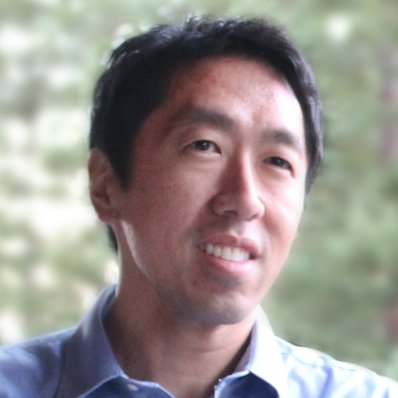
Job seekers in the U.S. and many other nations face a tough environment. At the same time, fears of AI-caused job loss have — so far — been overblown. However, the demand for AI skills is starting to cause shifts in the job market. I’d like to share what I’m seeing on the ground.
First, many tech companies have laid off workers over the past year. While some CEOs cited AI as the reason — that AI is doing the work, so people are no longer needed — the reality is AI just doesn’t work that well yet. Many of the layoffs have been corrections for overhiring during the pandemic or general cost-cutting and reorganization that occasionally happened even before modern AI. Outside of a handful of roles, few layoffs have resulted from jobs being automated by AI.
Granted, this may grow in the future. People who are currently in some professions that are highly exposed to AI automation, such as call-center operators, translators, and voice actors, are likely to struggle to find jobs and/or see declining salaries. But widespread job losses have been overhyped.
Instead, a common refrain applies: AI won’t replace workers, but workers who use AI will replace workers who don’t. For instance, because AI coding tools make developers much more efficient, developers who know how to use them are increasingly in-demand. (If you want to be one of these people, please take our short courses on Claude Code, Gemini CLI, and Agentic Skills!)
So AI is leading to job losses, but in a subtle way. Some businesses are letting go of employees who are not adapting to AI and replacing them with people who are. This trend is already obvious in software development. Further, in many startups’ hiring patterns, I am seeing early signs of this type of personnel replacement in roles that traditionally are considered non-technical. Marketers, recruiters, and analysts who know how to code with AI are more productive than those who don’t, so some businesses are slowly parting ways with employees that aren’t able to adapt. I expect this will accelerate.
At the same time, when companies build new teams that are AI native, sometimes the new teams are smaller than the ones they replace. AI makes individuals more effective, and this makes it possible to shrink team sizes. For example, as AI has made building software easier, the bottleneck is shifting to deciding what to build — this is the Product Management (PM) bottleneck. A project that used to be assigned to 8 engineers and 1 PM might now be assigned to 2 engineers and 1 PM, or perhaps even to a single person with a mix of engineering and product skills.
The good news for employees is that most businesses have a lot of work to do and not enough people to do it. People with the right AI skills are often given opportunities to step up and do more, and maybe tackle the long backlog of ideas that couldn’t be executed before AI made the work go more quickly. I’m seeing many employees in many businesses step up to build new things that help their business. Opportunities abound!
I know these changes are stressful. My heart goes out to every family that has been affected by a layoff, to every job seeker struggling to find the role they want, and to the far larger number of people who are worried about their future job prospects. Fortunately, there’s still time to learn and position yourself well for where the job market is going. When it comes to AI, the vast majority of people, technical or nontechnical, are at the starting line, or they were recently. So this remains a great time to keep learning and keep building, and the opportunities for those who do are numerous!
[Original text; deeplearning.ai/the-batch/issu… ]
English

His thesis is Indians must perform or perish due to our population and a few rise to the top in Western orgs under that pressure.
I will offer a different explanation: Indian employees are some of the most loyal to their organizations and American corporations get to experience this over time. To state it differently, when you consider a cohort of people who joined a company in a given year (say 2000), a much higher proportion of Indians would still be there 20 years later, even adjusting for factors like IQ and education.
Over time, cultural continuity in an organization tends to be with those who stayed long term and it is those people who get promoted. That would explain why Indians are at the top in so many companies in America.
Combine that with the fact that every new immigrant group to America has outperformed the "already there" groups - known as the "immigrant drive". That is not special to Indians.
Combine org loyalty that comes from Indian culture and the immigrant drive common to all immigrants, you have the explanation.
Let me come to the pressure he states about India. India's social safety net is the extended family network. The psychological security this gives is not consistent with the pressure he is talking about. That safety net is still largely intact in India, except perhaps in some highly westernized, atomized urban circles, only a small part of the population.
In fact, Indians tend to view their organizations in a similar way, as extended family networks, and the org loyalty arises from this cultural value system. For Indians, the slogan executives often abuse "We are one family" is not just lip service.
Finally, more on the pressure he alludes to. I run a school with over 200 kids, mostly coming from deep poverty. They definitely do have the psychological safety net of extended families. What we offer is only the economic help of funding their education and that is the easy part.
I have always said that poverty is fixable as a purely economic phenomenon but once the foundations of society that offer the psychological safety net crumble, it is much harder to recover.
This is why I strongly resist political ideologies that import that social atomization to India, by trying to destroy our spiritual core.
Amitabh Kant@AbhikantTewari
Love to hear your perspective. This post is getting very different opinions. Curious how people who’ve made it, as founders or operators @elonmusk @satyanadella @sundarpichai @nikesharora @nealmohan @ArvindKrishna @rsridhar @vkhosla @svembu @girishmath 👇
English

It's almost 12am here in Delhi. Partied on the other end of town in Gurgaon. Tipsy af. Returning home on the public transport. Alone.
Something I NEVER would've been able to do back in Germany as a guy. 🙂

PrayRona@PrayRona_
It's almost 3 here in Berlin. Partied on the other end of town. Tipsy af. Returning home on the public transport. Alone. Something I NEVER would've been able to do back in india as a girl. 🙂
English

🚨 BREAKING: Tragedy strikes on Nama Peak, Sichuan!
On Sept 27, 2025, a 31-year-old hiker plummeted 200 meters to his death after unclipping his safety rope for a fatal selfie near a crevasse.
The heart-stopping fall on the icy 5,588-meter sub-peak of Mount Gongga was caught in a viral video, shocking the world.
A gut-wrenching reminder: no photo is worth your life!
English
@sadaashree I agree completely . It happened to me too . Ingot fired too and realized none even tried to help me . Or even stop to talk a little when I saw them in the streets later . So I promised myself never take work or work colleagues seriously . Smile act nice and just get paid .
English

I was laid off in 2012 for the first time ever in my career.
I was quite social at workplace, used to hang out with colleagues, have drinks, dinner with em. I felt I had a good network out there.
After I got laid off, not one of em bothered to contact me. None helped out in giving leads that would have helped in job search. None even bothered to check whether I was dead or alive.
Don't take workplace friendships seriously, it's everyone to their own. Just do your work go home.
It was a lesson learnt the hard way.
English
krish s retweetledi
I was in a meeting in our Tenkasi office with our Arattai engineers, working out refinements to the app and a team member showed this tweet.
Thank you @anandmahindra
this gives us even more determination 🙏
anand mahindra@anandmahindra
Downloaded @Arattai today… With pride.
English


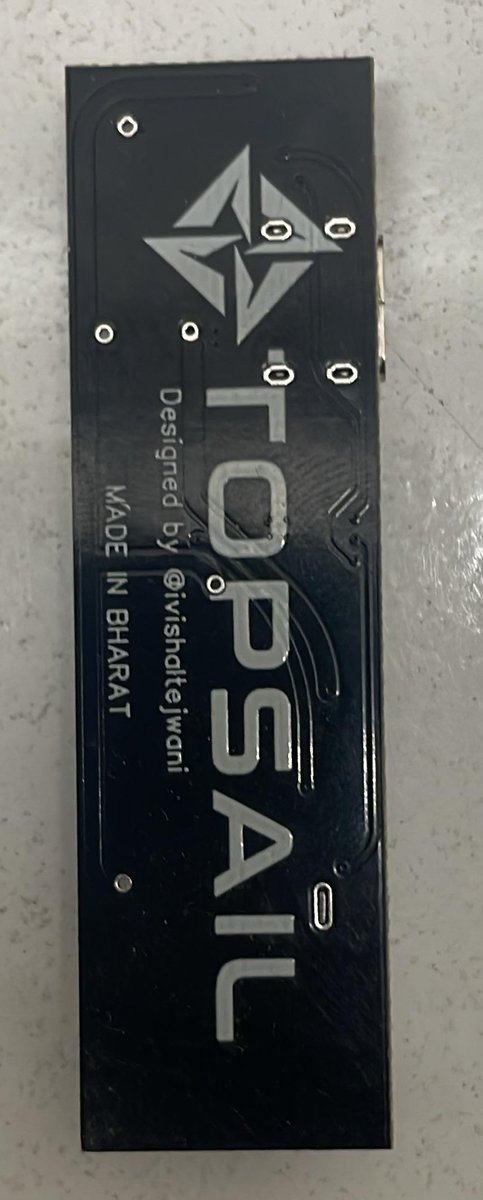
We could’ve just copied a Chinese PCB.
But we didn’t.
We re-engineered it:
- Designed in Bharat
- Full SMD for reliability & faster production
- Higher quality components for longer life
- USB-C that works with any wire
- Easy QC with custom jigs
- Cheaper
Copying is easy.
Improving is the hard choice.
Innovation isn’t comfort.
It’s refusing to settle.
And we’re just getting started.

English
I have a hypothesis about why Indian CEOs are being selected in such large numbers by international boards.
Indian CEOs are, of course, smart, talented, and capable leaders. But plenty of Americans, Brits, Israelis, Europeans, Chinese, Japanese, and Koreans are too.
And it's not just about speaking English either, as some think, given immigrant Indians are chosen as being better than American or five eyes born native English speakers who are equal, or more in numbers in the western talent pool.
My theory is that they're chosen because they tend to be docile and servile along with all the great qualifications and qualities of a leader.
An Anglo-Saxon white, Chinese, or Israeli CEO might let their community's or birth country's interests creep in and interfere at some point. Or they will just be more brave and open about voicing their opinions and taking decisions which may affect shareholder value.
For example, in the recent H1B visa fee hike case, I saw so many Whites (including Elon), Jewish and Chinese Americans (including CEOs) openly come out against it and support hi-tech immigration, even directly support Indian immigrants.
Indian origin leaders, on the other hand, are a safe bet for keeping their mouths shut in silence. For instance, they haven't yet posted a single line condemning racial targeting, attacks, or killings of Indians, or speak out against H-1B visa policy changes that hurt their own community - or even their own company.
Indians, especially India born ones, can just be trusted to play it safe, focusing solely on their personal and company interests. In fact, they'll bend over backwards to serve their boards, companies, and the deep state, if any, dictating.
My hypothesis can be further proven by seeing that India born Indian origin leaders are picked for CEO jobs in US companies, and not many US born Indian Americans (not even close) who are as qualified with all the great credentials and just as good - if it is really the race or culture that makes good CEOs.
Because, even though they are Indians with similar achievements, qualifications from top schools, and capabilities, being born and brought up in the US, they tend to have a bit more of the independent American spirit and much less of the docility and spineless, servile attitude.
Smita Prakash@smitaprakash
Desi CEOs for US companies. At Stephens and Mysore Univ alumni get picked. Adding to list of PIOs heading Fortune 500 companies.
English


A cousin holding an H1B visa was visiting India to meet his parents when suddenly Trump’s new order of hiking the fees came out. He had to rush back before the 21st, but when we checked all the flights, there were no seats available. We didn’t give up & kept trying and just now I returned after seeing him off, he finally managed to board a ship from Vizag port
#H1B
English

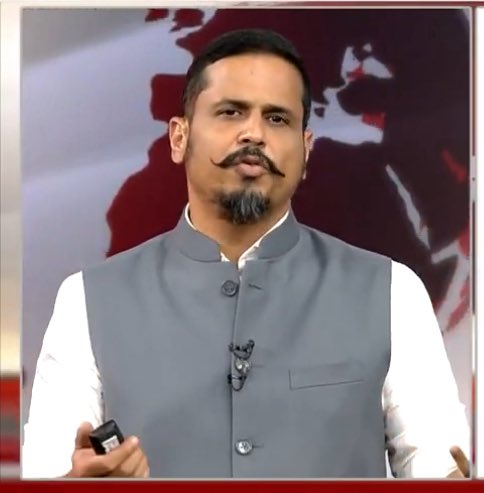

Whenever a low-budget film delivers good VFX.
Twitter yuvatha to @omraut
x.com/Shakespeare_12…
English

The @xAI Grok 2.5 model, which was our best model last year, is now open source.
Grok 3 will be made open source in about 6 months.
huggingface.co/xai-org/grok-2
English


I feel like @elonmusk is fighting a lot of battles right now and he could honestly use our support. He deserves it for everything he’s doing for humanity.
English

AGI within 3-5 years.
ASI within 6 years.
- Eric Schmidt
English



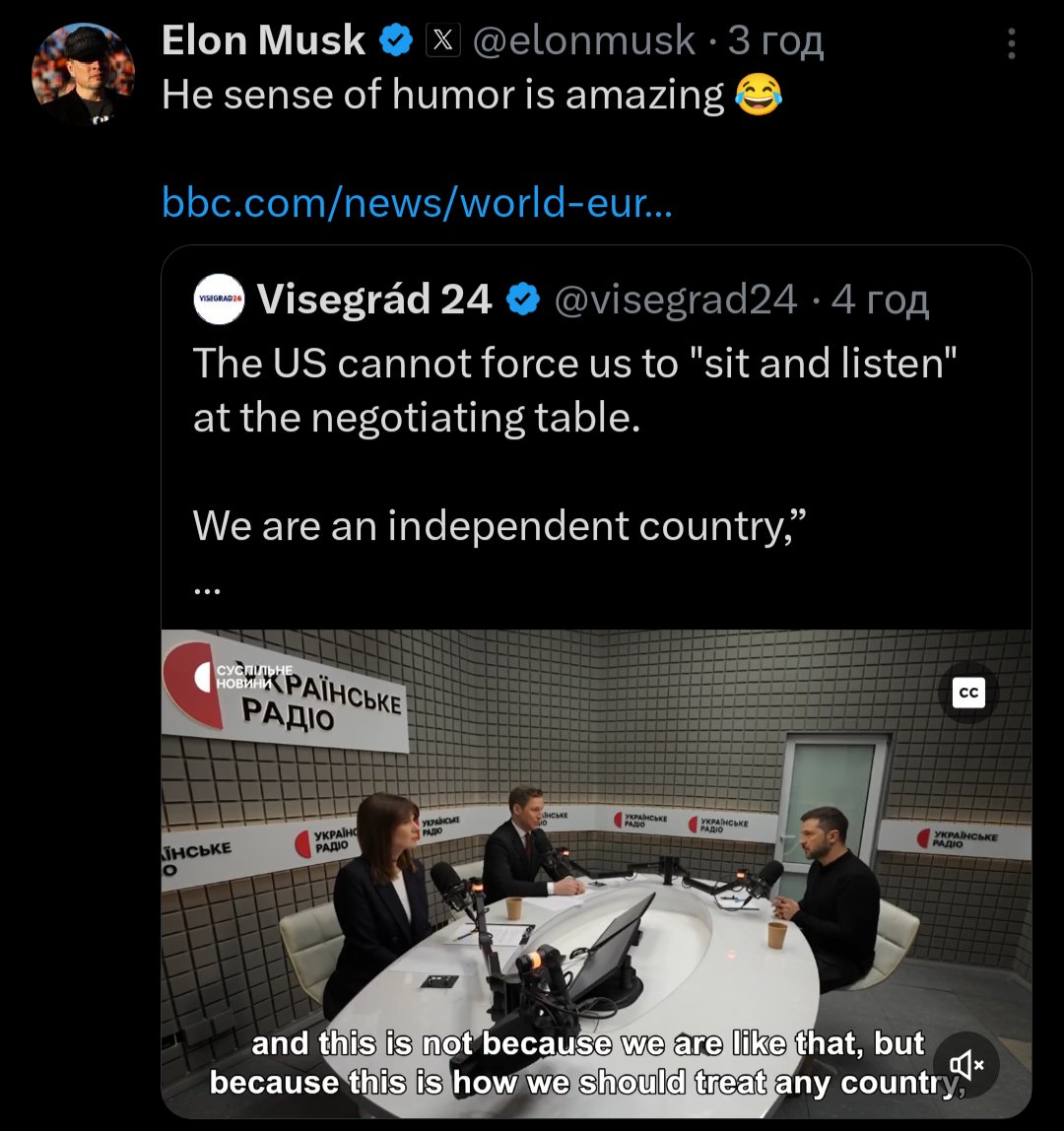
🇺🇦 Ukraine has already paid a price for its independence that @elonmusk can't even begin to comprehend.
His attempt at mockery only exposes him as a morally worthless human being.
English
