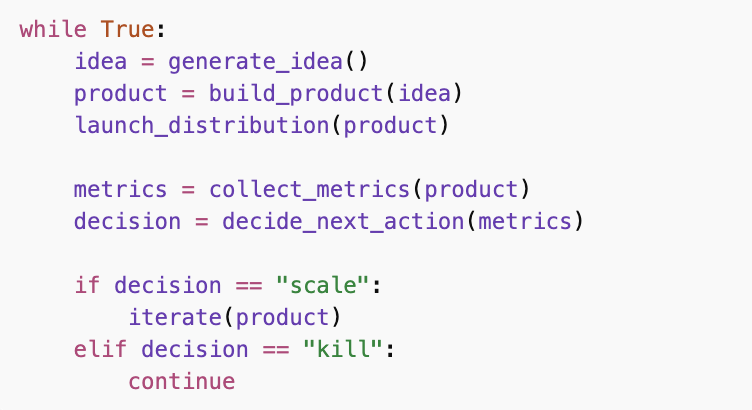
Bayram Annakov
8.7K posts

Bayram Annakov
@Bayka
Product guy, systems thinker & educator. Love building stuff. Founder @appintheair. Now building AI agents for b2b sales at https://t.co/St0me2s4Pv
Seattle & Bay Area Katılım Aralık 2008
162 Takip Edilen1.5K Takipçiler

Which are the most common everyday phenomena that we don't properly understand?
Off the top of my head:
• Lightning (how does it happen?)
• Sleep; dreams (why do they exist?)
• Glass (thermodynamics of formation)
• Turbulence (when does it start?)
• Morphogenesis (how does a creature know what should go where?)
• Rain (it seems to start faster than models would predict)
• Ice (dynamics of slipperiness)
• Static electricity (which material will donate electrons?)
• General anaesthetic. (And the mechanism of a lot of drugs, e.g. paracetamol.)
Patrick Collison@patrickc
Some progress in lightning: quantamagazine.org/what-causes-li….
English
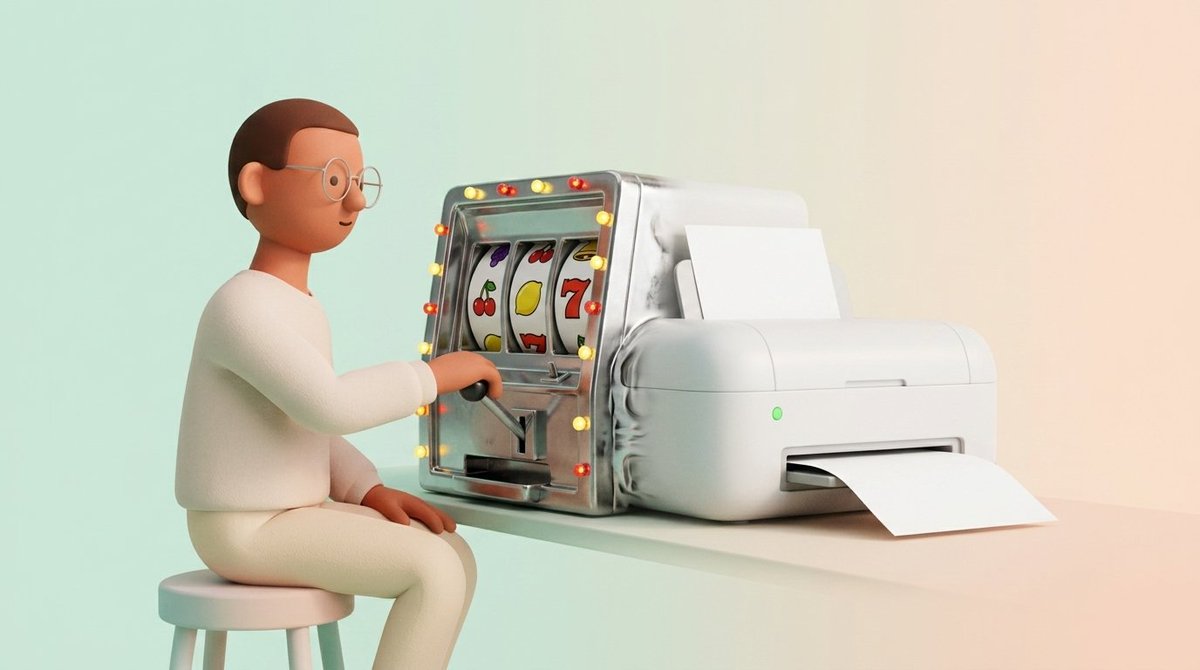
Two strategies emerging:
🎰 Slot-machine strategy: more pulls = more revenue. Works while models are imprecise.
🖨️ Printer strategy: fewer pulls to result. Lower revenue per session. Higher trust. Long-term position.
Which one are you running?
English
Per-token prices are collapsing. But tokens per task are going UP.
SemiAnalysis calls it "tokenmaxxing": throw more tokens at the same task to squeeze quality. Claude Code input/output ratio: 100:1.
Track cost per task. Not cost per token.
English
A customer told me he burned $150 trying to make an AI promo video last week.
Called it Vegas.
He was onto something bigger than a bad afternoon. Two strategies are forming in AI products right now: slot machine vs printer. (1/9)
English
@karpathy on the same topic: x.com/Bayka/status/2…
Bayram Annakov@Bayka
I fed @karpathy LLM Wiki tweet into my personal knowledge graph — 3,023 notes, 7 years. Here's what surfaced: • A note from 2023: "Formulate understanding YOURSELF first, then compare with AI summary. The gap reveals what you missed." Written 3 years before this tweet — the exact opposite approach. • A 2020 note linked to a 2026 note: "Value is not in accumulating information, but in creating conditions for its unexpected intersection." 6 years apart. The graph held that connection. • A note from 2019: "All 'new' is a 'new' combination of 'old' in 'new' conditions." Connected to today's conversation without me asking. LLM Wiki is great for reference. Genuinely. But a reference written by AI is not my lived experience, not a thought I worked through. In that mode I don't learn — there's no joy of understanding. The best use of AI is to amplify thinking you've already done. Not replace it. Writing notes IS thinking. When AI writes for you, it thinks for you. If it writes the notes too — is any of it still yours? Open-source skill for atomizing your own notes: github.com/BayramAnnakov/… Full knowledge graph: empatika.com/learn/knowledg…
English

This is the the quote I've been citing a lot recently.
kache@yacineMTB
you can outsource your thinking but you cannot outsource your understanding
English
Speaking at @AITinkerers Seattle! Presenting "Claude Code: AI Sales Agent" seattle.aitinkerers.org/p/ai-tinkerers…
English
Turned @trq212's session-management advice into a local auditor for Claude Code - ranks your worst token leaks by weekly $. works on top of @ryoppippi's ccusage
Catches stuff like: Opus on trivia, bloated CLAUDE.md, that cron you set hourly actually firing every 5 min.
github.com/BayramAnnakov/…
Thariq@trq212
English
Spent 2h testing. Asked it to research Gong.io as a sales prospect.
7 min. $3.60. Brief + personalized email to Gong's EVP Ecosystem, signed in my name.
Our production agents are 7-8x cheaper. But the time to market is absurd.
Harness-as-a-service.
Claude@claudeai
Introducing Claude Managed Agents: everything you need to build and deploy agents at scale. It pairs an agent harness tuned for performance with production infrastructure, so you can go from prototype to launch in days. Now in public beta on the Claude Platform.
English
People aren't waiting for AI to replace them. They're using AI to replace colleagues FIRST.
8,900 GitHub stars in a week. An entire ecosystem: colleague.skill, boss.skill, ex.skill (!), and anti-distillation counter-tools.
The real AI arms race isn't between companies. It's between coworkers.
Distill or be distilled.
Steve Hou@stevehou
Apparently workers in China have been creating “colleagues.skill” to distill their coworkers hoping to make them redundant hence saving themselves. In response someone has recently invented an “anti-distillation.skill” that has gone viral on GitHub.🤣
English
@chamath Built this for exactly the purpose: github.com/BayramAnnakov/…
English

This may be a dumb question but I’ll ask it here anyways:
I can’t find a good way for my various AI chats to automatically sync its conversation history into a structured knowledge base. So that as I update various chats from time to time and refine context, my knowledge base automatically grows with this new info.
English
I fed @karpathy LLM Wiki tweet into my personal knowledge graph — 3,023 notes, 7 years.
Here's what surfaced:
• A note from 2023: "Formulate understanding YOURSELF first, then compare with AI summary. The gap reveals what you missed." Written 3 years before this tweet — the exact opposite approach.
• A 2020 note linked to a 2026 note: "Value is not in accumulating information, but in creating conditions for its unexpected intersection." 6 years apart. The graph held that connection.
• A note from 2019: "All 'new' is a 'new' combination of 'old' in 'new' conditions." Connected to today's conversation without me asking.
LLM Wiki is great for reference. Genuinely. But a reference written by AI is not my lived experience, not a thought I worked through. In that mode I don't learn — there's no joy of understanding.
The best use of AI is to amplify thinking you've already done. Not replace it.
Writing notes IS thinking. When AI writes for you, it thinks for you. If it writes the notes too — is any of it still yours?
Open-source skill for atomizing your own notes: github.com/BayramAnnakov/…
Full knowledge graph: empatika.com/learn/knowledg…

Andrej Karpathy@karpathy
LLM Knowledge Bases Something I'm finding very useful recently: using LLMs to build personal knowledge bases for various topics of research interest. In this way, a large fraction of my recent token throughput is going less into manipulating code, and more into manipulating knowledge (stored as markdown and images). The latest LLMs are quite good at it. So: Data ingest: I index source documents (articles, papers, repos, datasets, images, etc.) into a raw/ directory, then I use an LLM to incrementally "compile" a wiki, which is just a collection of .md files in a directory structure. The wiki includes summaries of all the data in raw/, backlinks, and then it categorizes data into concepts, writes articles for them, and links them all. To convert web articles into .md files I like to use the Obsidian Web Clipper extension, and then I also use a hotkey to download all the related images to local so that my LLM can easily reference them. IDE: I use Obsidian as the IDE "frontend" where I can view the raw data, the the compiled wiki, and the derived visualizations. Important to note that the LLM writes and maintains all of the data of the wiki, I rarely touch it directly. I've played with a few Obsidian plugins to render and view data in other ways (e.g. Marp for slides). Q&A: Where things get interesting is that once your wiki is big enough (e.g. mine on some recent research is ~100 articles and ~400K words), you can ask your LLM agent all kinds of complex questions against the wiki, and it will go off, research the answers, etc. I thought I had to reach for fancy RAG, but the LLM has been pretty good about auto-maintaining index files and brief summaries of all the documents and it reads all the important related data fairly easily at this ~small scale. Output: Instead of getting answers in text/terminal, I like to have it render markdown files for me, or slide shows (Marp format), or matplotlib images, all of which I then view again in Obsidian. You can imagine many other visual output formats depending on the query. Often, I end up "filing" the outputs back into the wiki to enhance it for further queries. So my own explorations and queries always "add up" in the knowledge base. Linting: I've run some LLM "health checks" over the wiki to e.g. find inconsistent data, impute missing data (with web searchers), find interesting connections for new article candidates, etc., to incrementally clean up the wiki and enhance its overall data integrity. The LLMs are quite good at suggesting further questions to ask and look into. Extra tools: I find myself developing additional tools to process the data, e.g. I vibe coded a small and naive search engine over the wiki, which I both use directly (in a web ui), but more often I want to hand it off to an LLM via CLI as a tool for larger queries. Further explorations: As the repo grows, the natural desire is to also think about synthetic data generation + finetuning to have your LLM "know" the data in its weights instead of just context windows. TLDR: raw data from a given number of sources is collected, then compiled by an LLM into a .md wiki, then operated on by various CLIs by the LLM to do Q&A and to incrementally enhance the wiki, and all of it viewable in Obsidian. You rarely ever write or edit the wiki manually, it's the domain of the LLM. I think there is room here for an incredible new product instead of a hacky collection of scripts.
English
@karpathy Ab evolving graph of 3k atomic notes from my posts, podcasts, courses, etc: empatika.com/learn/knowledg…
English
LLM Knowledge Bases
Something I'm finding very useful recently: using LLMs to build personal knowledge bases for various topics of research interest. In this way, a large fraction of my recent token throughput is going less into manipulating code, and more into manipulating knowledge (stored as markdown and images). The latest LLMs are quite good at it. So:
Data ingest:
I index source documents (articles, papers, repos, datasets, images, etc.) into a raw/ directory, then I use an LLM to incrementally "compile" a wiki, which is just a collection of .md files in a directory structure. The wiki includes summaries of all the data in raw/, backlinks, and then it categorizes data into concepts, writes articles for them, and links them all. To convert web articles into .md files I like to use the Obsidian Web Clipper extension, and then I also use a hotkey to download all the related images to local so that my LLM can easily reference them.
IDE:
I use Obsidian as the IDE "frontend" where I can view the raw data, the the compiled wiki, and the derived visualizations. Important to note that the LLM writes and maintains all of the data of the wiki, I rarely touch it directly. I've played with a few Obsidian plugins to render and view data in other ways (e.g. Marp for slides).
Q&A:
Where things get interesting is that once your wiki is big enough (e.g. mine on some recent research is ~100 articles and ~400K words), you can ask your LLM agent all kinds of complex questions against the wiki, and it will go off, research the answers, etc. I thought I had to reach for fancy RAG, but the LLM has been pretty good about auto-maintaining index files and brief summaries of all the documents and it reads all the important related data fairly easily at this ~small scale.
Output:
Instead of getting answers in text/terminal, I like to have it render markdown files for me, or slide shows (Marp format), or matplotlib images, all of which I then view again in Obsidian. You can imagine many other visual output formats depending on the query. Often, I end up "filing" the outputs back into the wiki to enhance it for further queries. So my own explorations and queries always "add up" in the knowledge base.
Linting:
I've run some LLM "health checks" over the wiki to e.g. find inconsistent data, impute missing data (with web searchers), find interesting connections for new article candidates, etc., to incrementally clean up the wiki and enhance its overall data integrity. The LLMs are quite good at suggesting further questions to ask and look into.
Extra tools:
I find myself developing additional tools to process the data, e.g. I vibe coded a small and naive search engine over the wiki, which I both use directly (in a web ui), but more often I want to hand it off to an LLM via CLI as a tool for larger queries.
Further explorations:
As the repo grows, the natural desire is to also think about synthetic data generation + finetuning to have your LLM "know" the data in its weights instead of just context windows.
TLDR: raw data from a given number of sources is collected, then compiled by an LLM into a .md wiki, then operated on by various CLIs by the LLM to do Q&A and to incrementally enhance the wiki, and all of it viewable in Obsidian. You rarely ever write or edit the wiki manually, it's the domain of the LLM. I think there is room here for an incredible new product instead of a hacky collection of scripts.
English
Wow, this tweet went very viral!
I wanted share a possibly slightly improved version of the tweet in an "idea file". The idea of the idea file is that in this era of LLM agents, there is less of a point/need of sharing the specific code/app, you just share the idea, then the other person's agent customizes & builds it for your specific needs.
So here's the idea in a gist format: gist.github.com/karpathy/442a6…
You can give this to your agent and it can build you your own LLM wiki and guide you on how to use it etc. It's intentionally kept a little bit abstract/vague because there are so many directions to take this in. And ofc, people can adjust the idea or contribute their own in the Discussion which is cool.
Andrej Karpathy@karpathy
LLM Knowledge Bases Something I'm finding very useful recently: using LLMs to build personal knowledge bases for various topics of research interest. In this way, a large fraction of my recent token throughput is going less into manipulating code, and more into manipulating knowledge (stored as markdown and images). The latest LLMs are quite good at it. So: Data ingest: I index source documents (articles, papers, repos, datasets, images, etc.) into a raw/ directory, then I use an LLM to incrementally "compile" a wiki, which is just a collection of .md files in a directory structure. The wiki includes summaries of all the data in raw/, backlinks, and then it categorizes data into concepts, writes articles for them, and links them all. To convert web articles into .md files I like to use the Obsidian Web Clipper extension, and then I also use a hotkey to download all the related images to local so that my LLM can easily reference them. IDE: I use Obsidian as the IDE "frontend" where I can view the raw data, the the compiled wiki, and the derived visualizations. Important to note that the LLM writes and maintains all of the data of the wiki, I rarely touch it directly. I've played with a few Obsidian plugins to render and view data in other ways (e.g. Marp for slides). Q&A: Where things get interesting is that once your wiki is big enough (e.g. mine on some recent research is ~100 articles and ~400K words), you can ask your LLM agent all kinds of complex questions against the wiki, and it will go off, research the answers, etc. I thought I had to reach for fancy RAG, but the LLM has been pretty good about auto-maintaining index files and brief summaries of all the documents and it reads all the important related data fairly easily at this ~small scale. Output: Instead of getting answers in text/terminal, I like to have it render markdown files for me, or slide shows (Marp format), or matplotlib images, all of which I then view again in Obsidian. You can imagine many other visual output formats depending on the query. Often, I end up "filing" the outputs back into the wiki to enhance it for further queries. So my own explorations and queries always "add up" in the knowledge base. Linting: I've run some LLM "health checks" over the wiki to e.g. find inconsistent data, impute missing data (with web searchers), find interesting connections for new article candidates, etc., to incrementally clean up the wiki and enhance its overall data integrity. The LLMs are quite good at suggesting further questions to ask and look into. Extra tools: I find myself developing additional tools to process the data, e.g. I vibe coded a small and naive search engine over the wiki, which I both use directly (in a web ui), but more often I want to hand it off to an LLM via CLI as a tool for larger queries. Further explorations: As the repo grows, the natural desire is to also think about synthetic data generation + finetuning to have your LLM "know" the data in its weights instead of just context windows. TLDR: raw data from a given number of sources is collected, then compiled by an LLM into a .md wiki, then operated on by various CLIs by the LLM to do Q&A and to incrementally enhance the wiki, and all of it viewable in Obsidian. You rarely ever write or edit the wiki manually, it's the domain of the LLM. I think there is room here for an incredible new product instead of a hacky collection of scripts.
English