John Benchoff

187 posts

John Benchoff

John Benchoff

@benchoff_j95236

The free state of Florida Katılım Mayıs 2024
77 Takip Edilen47 Takipçiler
Massimo
Massimo@Rainmaker1973·
A rare image of the Sphinx taken from a hot air balloon in the XIX century. This is before excavation and restoration.
Massimo tweet media
English
108
428
3.5K
94.7K
John Benchoff
John Benchoff@benchoff_j95236·
@keefer58721 @Rainmaker1973 n 1861, photographer Thomas Sutton captured the first known color photograph under Maxwell’s direction: a tartan ribbon. It was created by taking three separate black-& white photos through red, green, and blue filters, then projecting them together to reconstruct the full color
English
0
0
1
312
Mustafa
Mustafa@MustafaCharts·
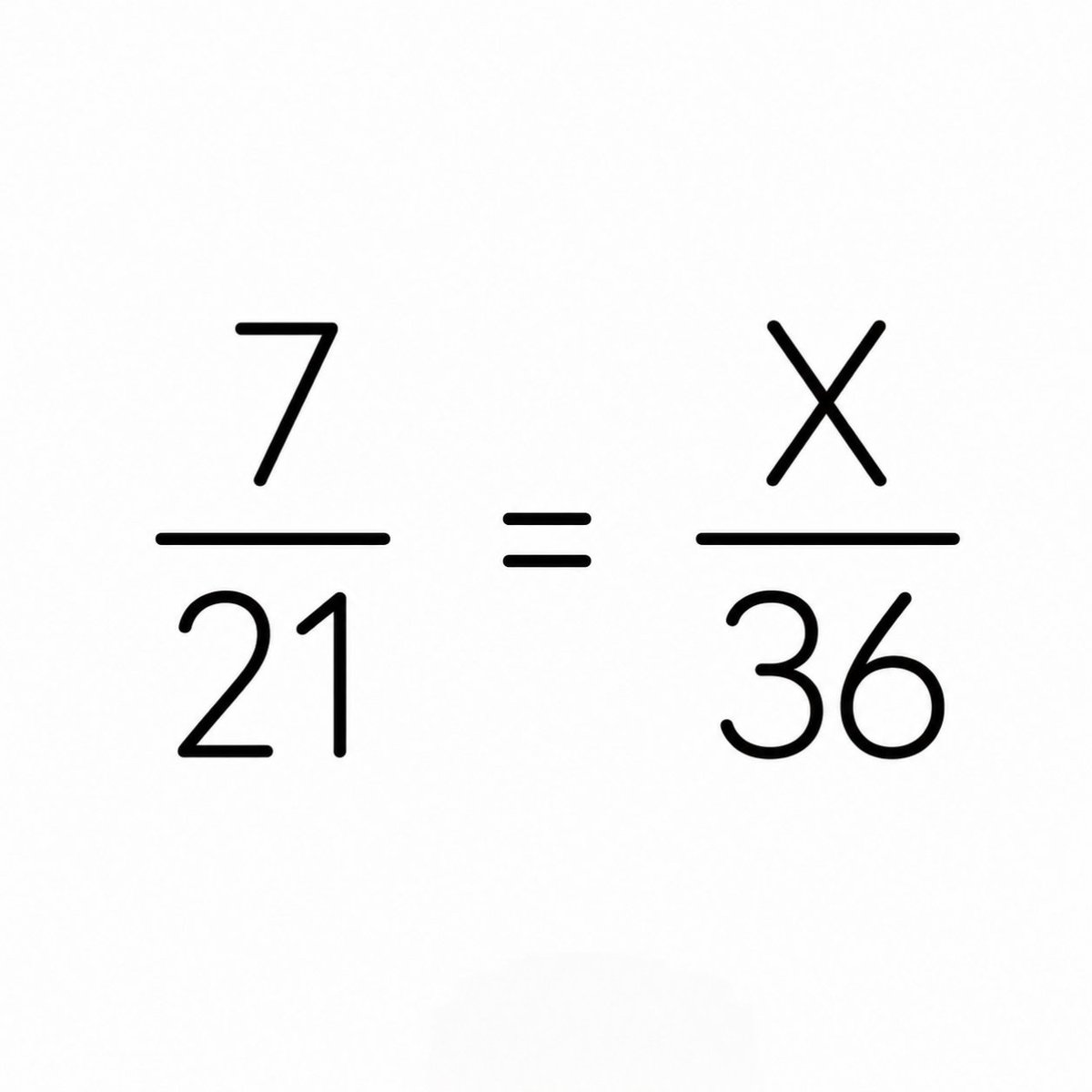
Not hard.. unless you overthink it 🤔 Can you find X ? No calculator allowed
Mustafa tweet media
English
5.6K
130
573
220.8K
OldTimeHardball
OldTimeHardball@OleTimeHardball·
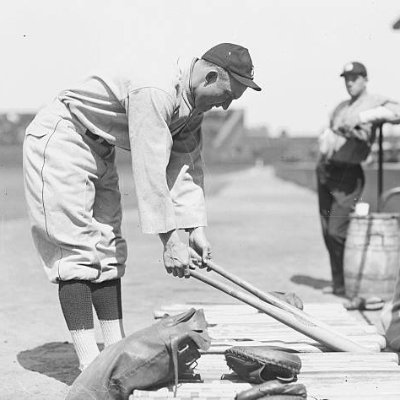
You have your choice of any player, in his prime, to fill this DH spot. Who gets the call?
OldTimeHardball tweet media
English
5.3K
51
1.1K
1M
Jaynit
Jaynit@jaynitx·
In the 1920s, a Stanford psychologist tracked genius children for 50 years. Malcolm Gladwell breaks down what he discovered: Rich families → successful. Poor families → failures. Not average. Failures. Genius-level IQs that produced nothing. He spent 60 minutes at Microsoft explaining why we're wrong about success: The psychologist was named Terman. He gave IQ tests to 250,000 California schoolchildren. He identified the top 0.1%. Kids with IQs of 140 and above. His hypothesis: these children would become the leaders of academia, industry, and politics. He tracked them. And tracked them. For decades. The results split into three groups. The top 15% achieved real prominence. The middle group had average, moderately successful professional lives. And the bottom group? By any measure, failures. The difference wasn't personality. Wasn't habits. Wasn't work ethic. It was simple: the successful geniuses came from wealthy households. The failures came from poor families. Poverty is such a powerful constraint that it can reduce a one-in-a-billion brain to a lifetime of worse than mediocrity. There's a concept called "capitalization rate." It asks a simple question: what percentage of people who are capable of doing something actually end up doing that thing? In inner city Memphis, only 1 in 6 kids with athletic scholarships actually go to college. If our capitalization rate for sports in the inner city is 16%, imagine how low it must be for everything else. Here's something stranger. Gladwell read the birth dates of the 2007 Czech Junior Hockey Team: January 3rd. January 3rd. January 12th. February 8th. February 10th. February 17th. February 20th. February 24th. March 5th. March 10th. March 26th... 11 of the 20 players were born in January, February, or March. This isn't unique to the Czechs. Every elite hockey team in the world shows the same pattern. Every elite soccer team too. Why? The eligibility cutoff for youth leagues is January 1st. When you're 10 years old, a kid born in January has 10 months of maturity on a kid born in October. That's 3 or 4 inches of height. The difference between clumsy and coordinated. So we look at a group of 10 year olds, pick the "best" ones, give them special coaching, extra practice, more games. We think we're identifying talent. We're just identifying the oldest. Then we give the oldest more opportunities, and 10 years later they really are the best. Self-fulfilling prophecy. The capitalization rate for hockey talent born in the second half of the year? Close to zero. We're leaving half of all potential hockey players on the table because of an arbitrary date on a calendar. Kids born in the youngest cohort of their school class are 11% less likely to go to college. 11% of human potential squandered because we organize elementary school without reference to biological maturity. Now here's the part about math. Asian kids dramatically outperform Western kids in mathematics. The gap is enormous and consistent across decades of testing. Some people say it's genetic. It's not. It's attitudinal. When Asian kids face a math problem, they believe effort will solve it. When Western kids face a math problem, they believe the answer depends on innate ability they either have or don't. Here's the proof. The international math tests include a 120-question survey. It asks about study habits, parental support, attitudes. It's so long most kids don't finish it. A researcher named Erling Boe decided to rank countries by what percentage of survey questions their kids completed. Then he compared it to the ranking of countries by math performance. The correlation was 0.98. In the history of social science, there has never been a correlation that high. If you want to know how good a country is at math, you don't need to ask any math questions. Just make kids sit down and focus on a task for an extended period of time. If they can do it, they're good at math. Why do Asian cultures have this attitude? Gladwell's theory: rice farming. His European ancestors in medieval England worked about 1,000 hours a year. Dawn to noon, five days a week. Winters off. Lots of holidays. A peasant in South China or Japan in the same period worked 3,000 hours a year. Rice farming isn't just harder than wheat farming. It's a completely different relationship with work. There's a Chinese proverb: "A man who works dawn to dusk 360 days a year will not go hungry." His English ancestors would have said: "A man who works 175 days a year, dawn to 11, may or may not be hungry." If your culture does that for a thousand years, it becomes part of your makeup. When your kids sit down to face a calculus problem, that legacy of persistence translates perfectly. Now consider distance running. In Kenya, there are roughly a million schoolboys between 10 and 17 running 10 to 12 miles a day. In the United States, that number is probably 5,000. Our capitalization rate for distance running is less than 1%. Kenya's is probably 95%. The difference isn't genetic. The difference is what the culture values and where it spends its attention. Here's the most fascinating finding. 30% of American entrepreneurs have been diagnosed with a profound learning disability. Richard Branson is dyslexic. Charles Schwab is dyslexic. John Chambers can barely read his own email. This isn't coincidence. Their entrepreneurialism is a direct function of their disability. How do you succeed if you can't read or write from early childhood? You learn to delegate. You become a great oral communicator. You become a problem solver because your entire life is one big problem. You learn to lead. 80% of dyslexic entrepreneurs were captain of a high school sports team. Versus 30% of non-dyslexic entrepreneurs. By the time they enter the real world, they've spent their whole life practicing the four skills at the core of entrepreneurial success: delegation, oral communication, problem solving, and leadership. Ask them what role dyslexia played in their success and they don't say it was an obstacle. They say it's the reason they succeeded. A disadvantage that became an advantage. Here's what Gladwell wants you to understand: When we see differences in success, our default explanation is differences in ability. We forget how much poverty, stupidity, and attitude constrain what people can become. We refuse to admit that our own arbitrary rules are leaving talent on the table. We cling to naive beliefs that our meritocracies are fair. The capitalization argument is liberating. It says you don't look at a struggling group and conclude they're incapable. It says problems that look genetic or innate are often just failures of exploitation. It says we can make a profound difference in how well people turn out. If we choose to pay attention. This 60 minute Microsoft talk will teach you more about success than every self-help book you've ever read combined. Bookmark this & give it an hour today, no matter what.
English
392
2.1K
7.8K
1.6M
Mohamed A. El-Erian
Mohamed A. El-Erian@elerianm·
After sliding from first to last place on the back of five straight losses, social media is already eulogizing the Mets' season. Can I blame them? Not really, give the history of my beloved team. I’m not quite there yet, but let’s just say I’ve already moved my Jets gear to the front of the closet. Old habits—and so many disappointments. @Mets @nyjets
Mohamed A. El-Erian tweet media
English
50
5
196
75.7K
JJ Kitchen
JJ Kitchen@JJ_Kitchen40·
Live at 9pm: - Pitt Basketball lands 6 transfers. What are the remaining needs? - Pitt Football Spring Game Standouts. Monday Livestream: Pitt Spring Game Highlights | Jay Kuntz Adds 6 Transf... youtube.com/live/xoMqLbrtW… via @YouTube
YouTube video
YouTube
JJ Kitchen tweet media
English
2
3
12
3.1K
Hania
Hania@Hania16836·
Hania tweet media
ZXX
34
6
13
2.4K
Rick
Rick@mixedjimmywabs·
@benchoff_j95236 @engineers_feed But the conveyor is as long as a runway apparently, so surely it would be at adequate velocity to take off?
English
2
0
0
40
World of Engineering
World of Engineering@engineers_feed·
We should all get the same answer folks 💪🏼
World of Engineering tweet media
English
2.3K
44
660
518.5K
MILF CREATORS
MILF CREATORS@Milf_Promo·
Thong Challenge😋💫 RETWEET if you love milf in thongs 🥵🔥 Ladies show us your thongs challenge 😉😏👇
MILF CREATORS tweet media
English
223
132
828
185.4K
John Benchoff
John Benchoff@benchoff_j95236·
@nicksortor I think Fed independence is imperative. And I agree that with inflation is not under control yet.
English
0
0
2
14
Nick Sortor
Nick Sortor@nicksortor·
🚨 BREAKING: The Federal Reserve has left interest rates UNCHANGED, despite President Trump demanding rates be LOWERED for the American people Fed funds rate remains at 3.75% Chairman Jerome Powell is on his way out in the coming months, set to be replaced with Trump's pick Kevin Warsh
English
213
407
1.8K
121.9K
elie
elie@eliebakouch·
very big news for open source: ggml (llama.cpp org) joins hugging face!!
elie tweet media
Georgi Gerganov@ggerganov

Today ggml.ai joins Hugging Face Together we will continue to build ggml, make llama.cpp more accessible and empower the open-source community. Our joint mission is to make local AI easy and efficient to use by everyone on their own hardware.

English
1
10
89
6.2K
Jenny
Jenny@JennyTheDev·
@Math_files 19 year old Gauss solving a 2000 year old problem in one night while I'm still debugging code I wrote yesterday
English
1
0
16
1.9K
Math Files
Math Files@Math_files·
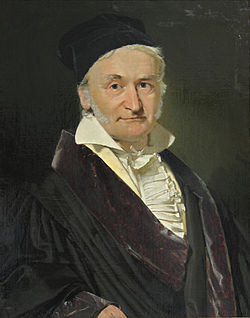
Even great mathematicians before him could not solve it, yet he had done so in a single night. Carl Friedrich Gauss is often called the Prince of Mathematicians. Around 300 BC, great mathematical thinkers like Euclid struggled with a famous geometry problem: how to draw a regular polygon with n sides using only a ruler and compass. For centuries, mathematicians tried to solve it. By the late 18th century, even giants like Isaac Newton and Leonhard Euler had only managed constructions up to 15 sides. Then, in 1796, a 19-year-old Gauss faced a challenge he did not realize had puzzled great minds for nearly 2,000 years: construct a regular 17-sided polygon using only a ruler and compass. He worked through the night. By morning, Gauss had done what many believed was impossible—he proved that a 17-sided regular polygon can be constructed this way. His teacher was astonished. Legends say he told Gauss that even great mathematicians before him could not solve it, yet he had done so in a single night. That discovery made Gauss famous and secured his place as one of the greatest mathematical geniuses in history.
Math Files tweet media
English
17
87
625
35K
John Benchoff
John Benchoff@benchoff_j95236·
@NextRoundLive None of them would survive. TV money would be very concentrated and not appeal to a national audience
English
0
0
0
24
The Next Round
The Next Round@NextRoundLive·
We took all 138 FBS teams and split them into 12 different 11-12 team conferences, purely based on geography Which conference looks the most fun?
The Next Round tweet media
English
226
138
1.6K
430.4K