
Sabitlenmiş Tweet
big nav
3.2K posts

big nav
@bignavvynav
in case anyone finds this acct, sorry
Chicago, IL Katılım Haziran 2010
588 Takip Edilen358 Takipçiler



big nav retweetledi

A parasite that has been eating people for 3,500 years is about to be wiped off the planet. It infected 3.5 million people in 1986. Last year, it infected 10. And I have not seen it make a single front page.
It is called Guinea worm. You drink contaminated water from a pond in a poor village. A year later, a worm up to three feet long starts coming out of your leg through a burning blister. There is no pill that stops it and no surgery that works. You wrap the worm around a stick and pull it out slowly, over days or weeks, inch by inch. If you rush, the worm breaks inside you and causes a fresh infection.
Guinea worm is ancient. Preserved worms have been pulled out of Egyptian mummies from around 1000 BCE. The Ebers Papyrus, an Egyptian medical scroll from 1550 BCE, describes pulling the worm out with a stick. For three and a half thousand years, that was the best humans could do.
Then in 1986, public health workers decided to kill the parasite off. They had no vaccine and no drug. What they had was cheap cloth water filters and a small army of volunteers willing to walk from village to village for decades.
The plan was simple. Give everyone who drinks from a pond a cloth filter to strain out the tiny water fleas that spread the parasite. Then send volunteers walking house to house, year after year, teaching people how to use the filters and keeping anyone with an emerging worm out of the water.
It worked. From 3.5 million cases a year to 10. Four were in Chad, four in Ethiopia, two in South Sudan. The other four countries where the worm used to be common, Angola, Cameroon, the Central African Republic, and Mali, had zero human cases for the second year in a row. The World Health Organization has already certified 200 countries as Guinea worm free. Six are left.
The last hurdle is dogs. Cameroon had 445 infected animals last year and Chad had 147, so a lot of the remaining work is on animals, not humans. Strays get leashed, and crews treat ponds to kill any remaining worms. The campaign keeps watching until the number hits zero.
When Guinea worm hits zero, it becomes the second human disease ever erased from the planet. The first was smallpox. It will also be the first parasite humans have ever wiped out, and the first disease ever ended without a single dose of medicine. Volunteers walked village to village with cloth filters for 40 years. Now a plague from the age of the pharaohs is about to be gone.
ً@prinkasusa
Give me the kind of good news from around the world that nobody ever talks about... but should.
English
big nav retweetledi

IN 90 MINUTES (6PM EDT) I've bought 5 different fast food meals, we're going to run each one through the oil extractor to see how much grease can be extracted, then we're gonna fry chicken in it to see which meal makes the best chicken. we are paving new ways in fatass tech

English
Hawks bulls does like kinda sick ngl I could
get behind that
Six Point Sports@SixPointSports
Which one is the best? 🤔
English
big nav retweetledi

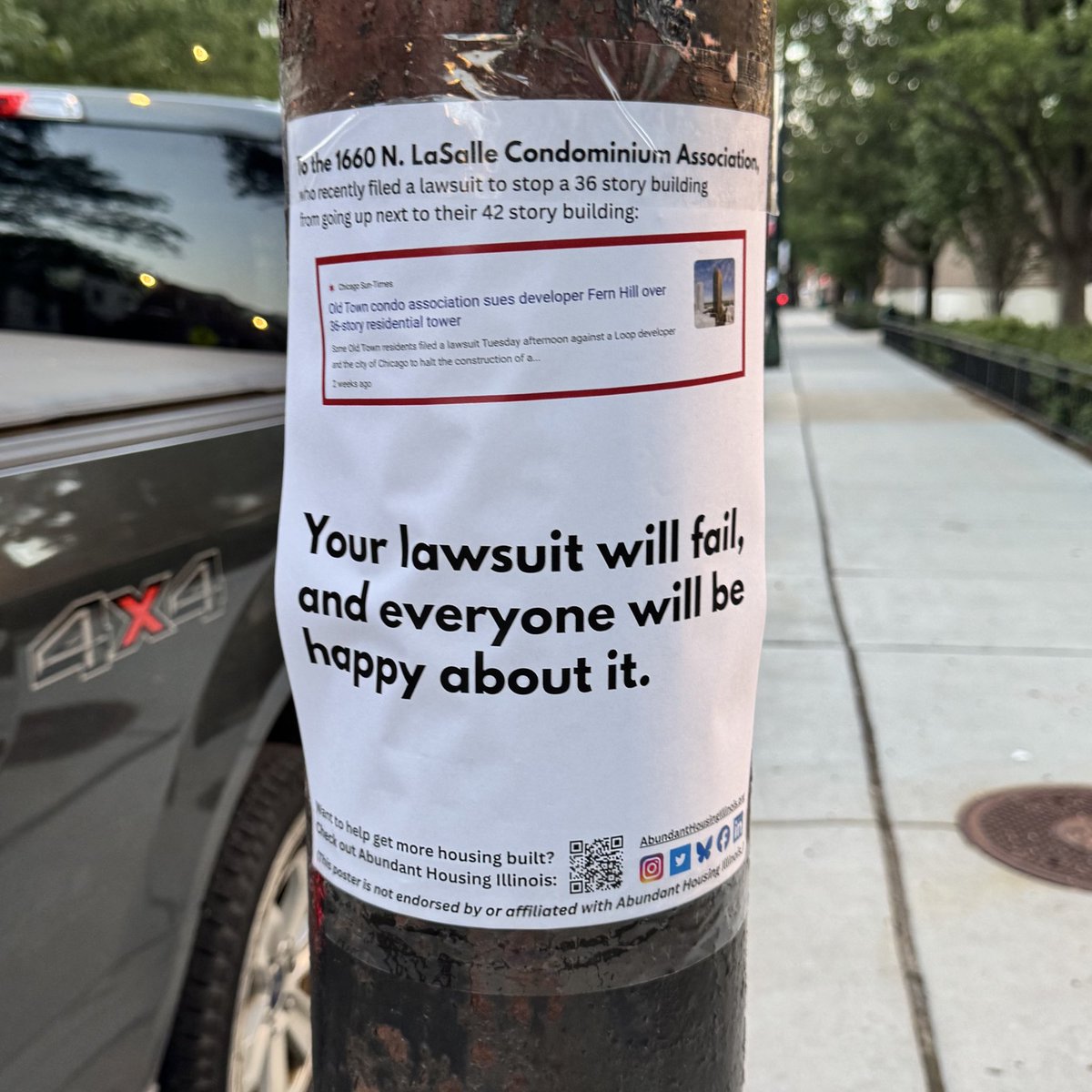
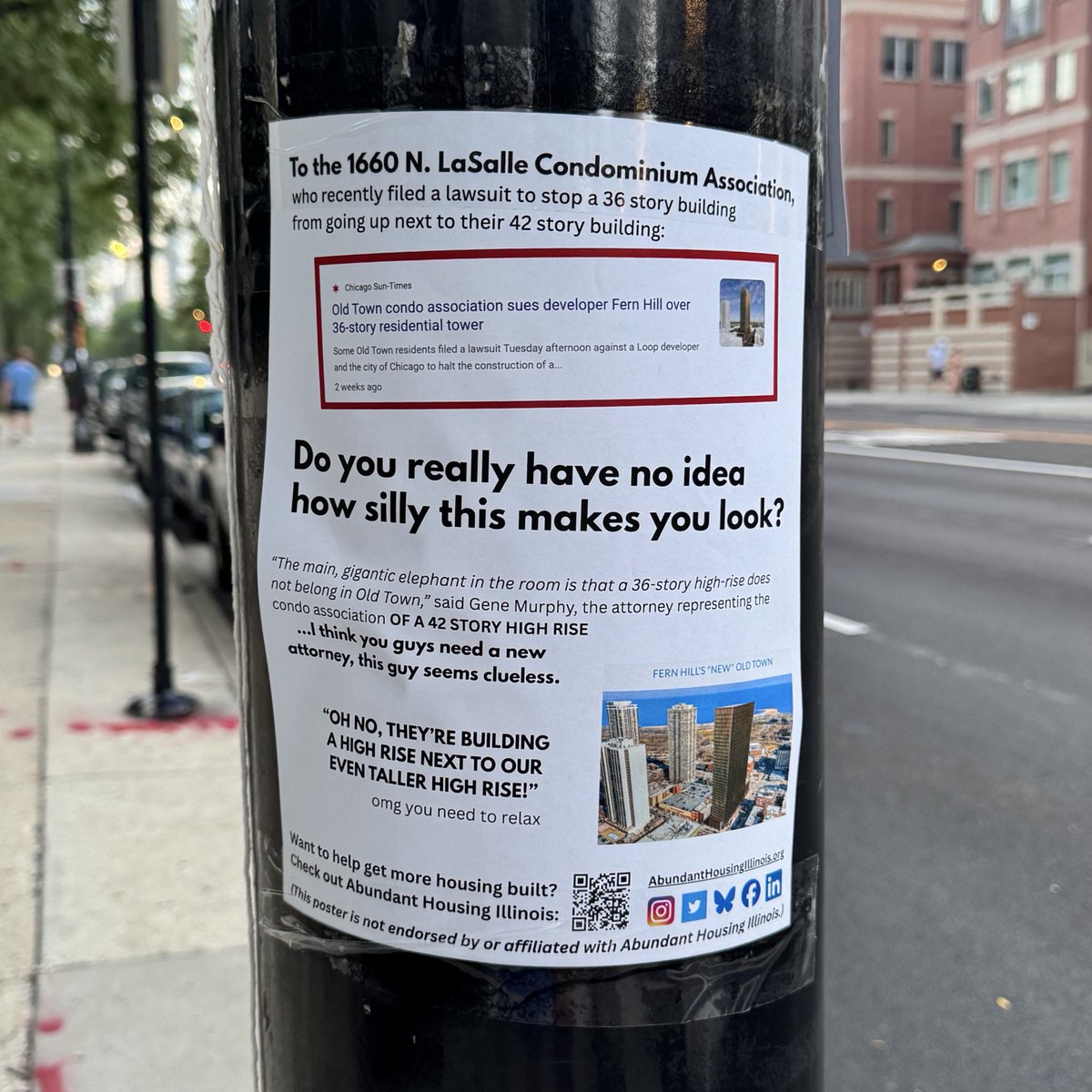
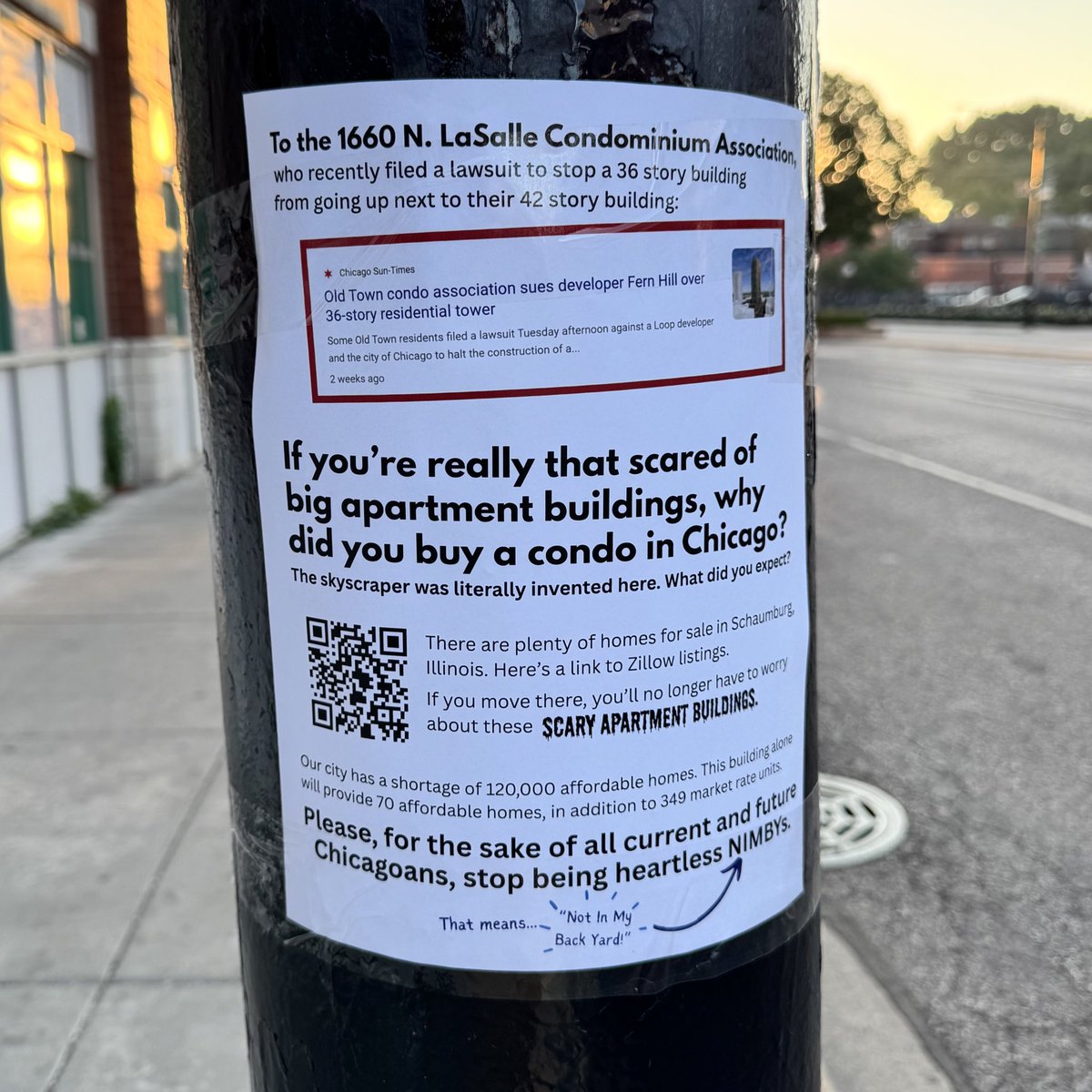
I’m not going to name the person who put these flyers up, but I’m proud of them for showing the neighborhood how crazy the 1660 LaSalle condo association NIMBYs are

Crain's Chicago Business@CrainsChicago
Old Town condo owners lose bid to halt new apartment tower #Echobox=1775559392" target="_blank" rel="nofollow noopener">chicagobusiness.com/real-estate/co…
English
Nvm ring cancelled its partnership with flock safety I’d like to attribute it to this tweet that did zero numbers
big nav@bignavvynav
Can’t believe the fucking ring camera that is now the cornerstone of the budding police surveillance state started off as an unfunded shark tank pitch. We are truly in the darkest timeline
English
big nav retweetledi

This is assimilation. Ride, ride into the night, my sweet Punjabi outlaws. 🇺🇸
Dr. Ben Braddock@GraduatedBen
Crazy things are happening in Stockton
English
big nav retweetledi

A win would’ve been nice, but it was still the greatest night of my football life. It’s the moment that I will always remember when the real reason for football clicked in. Football isn’t just a game played with a ball on a field. It’s not just 3-D chess with men colliding. It’s human connection. It’s family genetics. It’s an allegiance passed from generation to generation. I witnessed my son standing in the same place that I stand, screaming at a black square with color pixels for an orange and blue team as if somehow his cries could affect the outcome of the game. Last night was the night that I knew I had done my real job as a Bears fan. I pass the game to the next generation. I shared a forever loyalty. He is fully on his way on a life time journey or highs and lows, love and loss, passion and grit, strategy and might, joy and disappointment. And when the day comes where my son and I are at an impasse. We can always talk about the Bears.
English
big nav retweetledi
I chose the green door ninety-three days ago.
At the time, it seemed obviously correct. Not even a close call. The red door offered two billion dollars immediately—a sum so large it would solve every material problem I'd ever face, fund any project I could imagine, and still leave enough to give away amounts that would meaningfully change thousands of lives. But two billion is a number. It has a fixed relationship to the economy, to the things money can buy, to the world.
The green door offered one dollar that doubles every day.
I remember standing there, doing the mental math. Day 30: about a billion dollars. Day 40: over a trillion. Day 50: a quadrillion. The red door would be surpassed before the first month ended, and after that, the gap would grow incomprehensibly fast. Choosing the red door would be like choosing a ham sandwich over a genie's lamp because you were hungry right now.
So I walked through the green door.
The first few weeks were unremarkable. I had a dollar, then two, then four. By day ten I had $512, which felt like finding money in an old jacket. By day twenty I had over a million, and I started getting calls from financial advisors I'd never contacted. By day thirty-one I had crossed the two-billion threshold—officially richer than I would have been behind the red door.
I didn't understand what was happening until around day sixty.
The money, you see, had to exist somewhere. Not philosophically—I mean physically. Digitally. When I checked my bank balance, a computer somewhere had to store that number. And storing the number 2^n requires n bits.
One bit per day. That's it. That's the rate at which my fortune's representation grows. A linear function. Almost comically modest.
But here's what I'd failed to understand about exponential growth: the value doesn't care about the representation. The bits grow linearly. The dollars they encode grow exponentially. And dollars make claims on the physical world.
Day sixty. My balance: 2^60 dollars. About 1.15 quintillion. Roughly 1,000 times the entire global GDP. The number itself required only 60 bits to store—less than a tweet, less than this sentence, trivially small from an information-theoretic perspective.
But money is not information. Money is a claim.
The calls started coming from the Treasury Department. Polite, confused, increasingly frantic. They explained that the M2 money supply of the United States was approximately 21 trillion dollars. I now held about 15,000 times that amount. When I tried to spend any of it—even a tiny fraction—the transaction represented a claim on more goods and services than the entire human economy had ever produced in its history.
"The number in your account," a Treasury official said, "is not meaningful."
"It's in your computer," I replied.
"The computer," she said carefully, "does not understand what the number represents."
Day seventy-five. 2^75 dollars. I could purchase—in principle—roughly 350 million copies of the entire Earth's annual economic output. The representation remained elegant: 75 bits. Nine and a half bytes. I could write my net worth on a Post-it note in binary.
But representations aren't wealth. Wealth is factories, farmland, human labor, time, attention, atoms arranged into useful configurations. And I had laid claim to more atoms than existed.
This is where it gets strange.
The global financial system is, at its core, a system of ledgers. Distributed, reconciled, audited. When the Federal Reserve's systems recorded my balance, and Chase's systems recorded my balance, and the IRS's systems recorded my balance, those numbers had to match. And they did match—trivially, easily, using a handful of bytes each.
But then the systems tried to do things with the number.
Calculate taxes owed. Assess systemic risk. Determine what fraction of GDP was held by a single individual. Run inflation models. Price assets in a market that now included a participant with claims exceeding the value of all other claims combined.
Day eighty-two. The S&P 500 became undefined. Not zero, not infinity—undefined. My proportional ownership of the market, if I chose to exercise it, exceeded 100%. The shares I could theoretically purchase outnumbered the shares that existed. Financial models divide by market cap; market cap now included a term that broke the arithmetic.
Day eighty-five. The International Monetary Fund published a paper titled "On the Representability of Post-Scarcity Claims." It concluded that exchange rates could no longer be calculated because the dollar itself had become paradoxical—simultaneously the world's reserve currency and a unit of measurement that had lost all meaning.
My balance on day eighty-five: 2^85 dollars. Still just 85 bits. About ten and a half bytes.
The representation remained trivial. The reality it pointed to had become impossible.
Day ninety. I tried to buy a coffee.
The transaction failed. Not because of insufficient funds, not because of a technical error, but because the payment system could not determine a meaningful exchange rate. My card represented a claim on approximately 10^27 dollars. The coffee cost $4.50. The ratio between these numbers—the percentage of my wealth the coffee would cost—was so small that it rounded to zero in every floating-point system on Earth. I could not pay because the act of payment required representing a number smaller than any computer could distinguish from nothing.
I offered to pay in cash. I had a twenty.
The barista looked at me like I'd offered to pay with a seashell.
"Where did you get physical currency?" she asked.
That's when I realized: I had broken cash too. The Treasury had stopped printing bills three weeks earlier. Why maintain physical currency when one account holder could—at any moment—claim more dollars than had ever been printed in human history? The symbolic relationship between paper and value had always been a polite fiction, but my existence had made the fiction impossible to maintain.
Day ninety-three. Today.
My balance is 2^93 dollars: approximately 10^28. About 10 billion times the estimated value of all assets on Earth. The representation requires 93 bits. Twelve bytes. Smaller than my name.
The economy hasn't collapsed, exactly. People still trade, still work, still produce. But they've stopped using dollars. They've had to. A currency in which one person holds virtually infinite units is not a currency at all—it's a monopoly ticket that everyone has silently agreed to stop playing with.
I keep thinking about what money actually is. It's not the bits. The bits are trivial; they always were. It's not even the paper or the gold or the entries in a ledger. Money is a shared agreement about who has claims on what. A story we tell together about value and exchange and debt.
I broke the story.
Not through violence, not through fraud, not through any action more dramatic than walking through a door and watching a number tick upward. Just by existing. Just by holding a claim that grew faster than the world's ability to honor it.
The red door offered two billion dollars. A large but finite claim. A claim that fit within the story, that could be exchanged and spent and taxed and inherited. A claim the world could accommodate.
The green door offered something else entirely: a claim that would grow until it consumed all other claims, until the very concept of claiming became incoherent.
I still have the 93 bits. They're sitting on a server somewhere, humming along, doubling quietly at midnight. By next week they'll represent more dollars than there are atoms in the observable universe.
And I still can't buy a coffee.
English
big nav retweetledi


big nav retweetledi

THREAD OF MY FAVORITE LORI LIGHTFOOT MOMENTS
1: losing re-election and immediately going to walgreens to buy a 24 pack of modelo

emily north@north0fnorth
close second but nobody will ever beat her
English
If I find them it’s on sight
IDOT_Illinois@IDOT_Illinois
Kennedy ramp opening delayed! A driver entered the work zone and damaged freshly poured concrete, pushing back the reopening of the outbound Kennedy ramp to Ohio Street by about a week. Reminder: Follow posted signs and stay alert in work zones—your attention keeps everyone safe.
English
big nav retweetledi

Witnessed a 41-121 season and still believes in god, I have to respect it
Chicago White Sox@whitesox
Well, would you look at that... Congratulations to Chicago's own Pope Leo XIV
English
big nav retweetledi

big nav retweetledi

Every Chicago group chat i'm in has asked for a video of the pope walking out to love sosa
feels important
English
big nav retweetledi
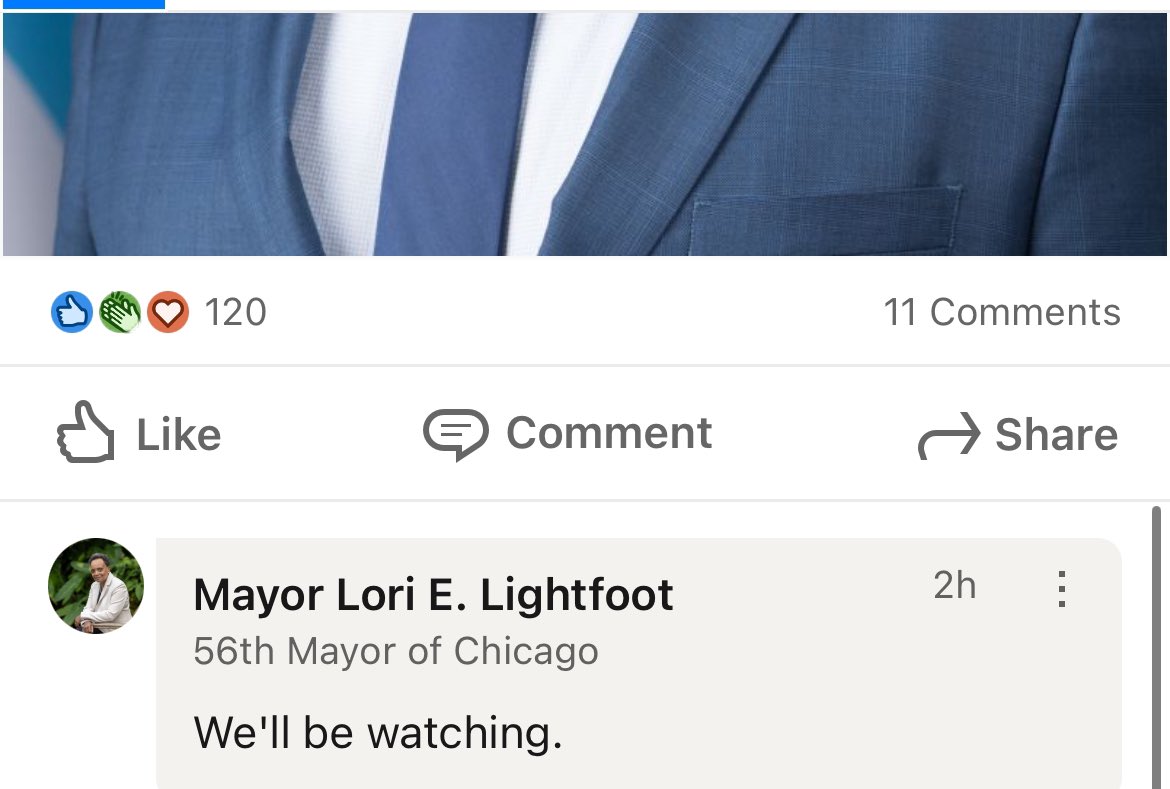
For the amusing file: Lori Lightfoot getting her early morning hating in on LinkedIn against one of her favorite people to hate

English
big nav retweetledi
Congratulations to Judge Susan Crawford on her victory, and to the people of Wisconsin for electing a judge who believes in the rule of law and protecting our freedoms.
English